Search Results
Search this site
874 results found with an empty search
- Chinese Robots Cause Alarm in US, Raise Concerns of Attacks by ‘Stealth Army’
The Chinese Communist Party is expanding China’s production of robots. These are designed for a wide array of uses, from working in warehouses to carrying out basic household tasks. However, concerns are now being raised that the CCP could potentially weaponize these robots as a kind of “stealth army” inside other countries. Similar disquiet is being expressed regarding Chinese-made vehicles—and not just concerning artificial intelligence for automated driving, but also with the software used in Chinese vehicles in general. We’ll discuss these topics and others in this episode of Crossroads. Views expressed in this video are opinions of the host and guests, and do not necessarily reflect the views of The Epoch Times. 🔵 Watch the full episode HERE 👇 https://ept.ms/3yQJA7B Stay Informed. Stay Free. https://www.joshphilipp.com/
- CCP Restricts Key Material Needed to Manufacture Ammunition
American ammo supplies could be at risk. One of the key metals used to manufacture c and other weaponry is antimony, and the Chinese Communist Party (CCP) is now restricting the supply of that key material. This takes place on the heels of a U.S. report saying that the United States may not be prepared for a large-scale war with China, and amid growing concerns over dependence on Chinese materials in the supply chain. We’ll discuss in this episode of Crossroads. Views expressed in this video are opinions of the host and guests, and do not necessarily reflect the views of The Epoch Times. 🔵 Watch the full episode HERE 👇 https://ept.ms/3AGMw7d Stay Informed. Stay Free. https://www.joshphilipp.com/
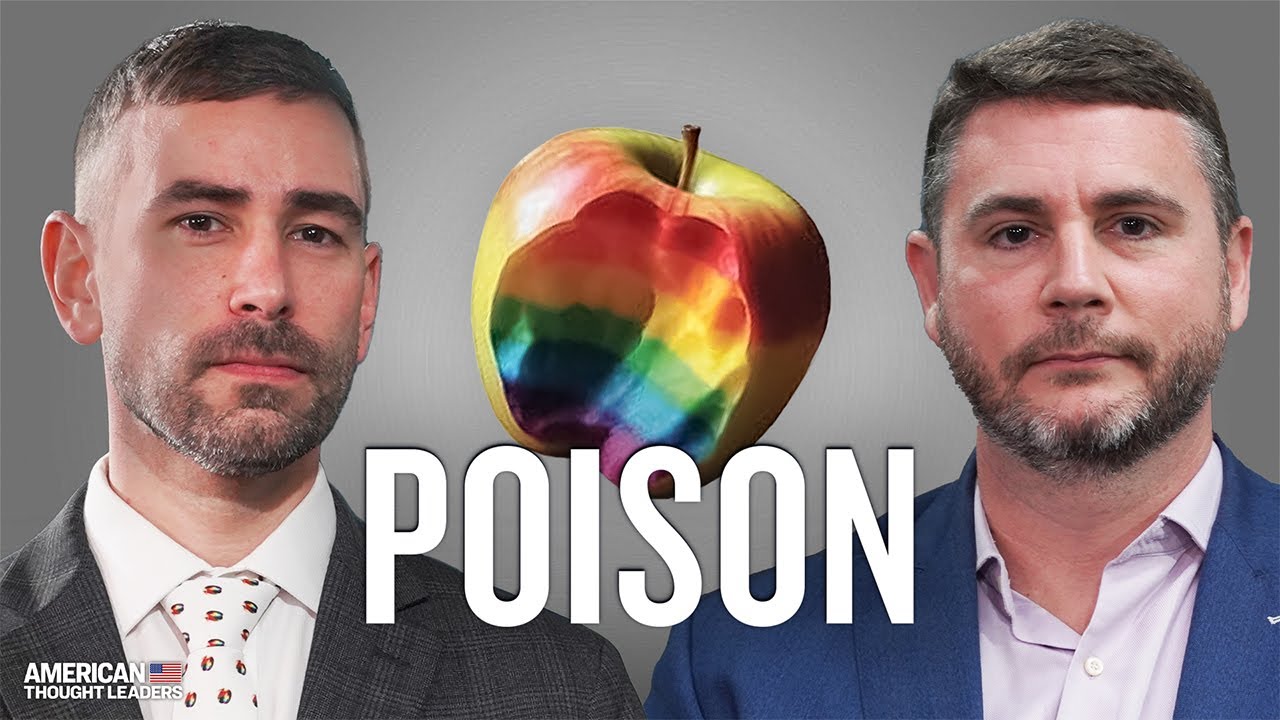
- James Lindsay and Logan Lancing Expose the Truth Behind Queer Theory
“They actually believe that all children are intrinsically queer, and that what’s happening is that normal society is ‘socializing’ them, which is a fancy word for ‘brainwashing’ them, to be normal, which means—for them—not queer, where queer is a political stance.” In this episode, I sit down with James Lindsay and Logan Lancing to discuss their new book, “The Queering of the American Child: How a New School Religious Cult Poisons the Minds and Bodies of Normal Kids.” “It took me less than one minute to find a whole suite of furry literature about children adopting ‘fursonas’, or furry personas, and identifying not as human, explicitly underwritten by queer theory in the doctrine,” says Mr. Lancing. What is queer theory? Who are its biggest proponents? And what practical impact has it had on America’s youth, our institutions, and society at large? “What they define for a pedagogy right from the beginning in 1993, was a radical form of educative activism, implemented deliberately to interfere with, to intervene in the production of normalcy in school subjects, which is just technical gobbledygook from queer theory. That means we are going to use critical pedagogy as a method and we’re going to make sure kids do not turn out normal,” says Mr. Lancing. “They’re going to turn out deviant, abnormal, perverse—whatever it is that is positioned against the norm, that is the goal. And they laid that out. Right at the very beginning. They also added that their goal was to make it explicitly activist in nature, so there is no room for interpretation.” “There are no brakes on the train. Yesterday’s radical is today’s conservative. It has to keep moving towards the direction of completely dissolving normalcy, boundaries, and legitimacy. So, don’t be surprised if it gets a bit crazier than even children biting other children while they’re dressed as dogs and cats and wearing tails,” says Mr. Lancing. Watch the video: “And it was meant to bring about what Paulo Freire’s vision was: a next generation, non-Soviet, Marxist revolution in the children, based off of an education system he derived from Mao Zedong, in his own words. What Mao had done in the 1950s successfully with children, he imported into his method,” says Mr. Lindsay. “But, of course, we know that Mao used that in the mid-1960s as the basis to create his Red Guard that then went and did exactly what we see schoolchildren in America doing today. Can they read? Not really. Can they write? Not so much. How are they at math? Failing. However, they know to show up on the statehouse steps when there’s some policy they don’t like or when something happens, so that they can do a die-in or they can do some kind of show of activism.” Views expressed in this video are opinions of the host and the guests, and do not necessarily reflect the views of The Epoch Times. FULL TRANSCRIPT Jan Jekielek: Logan Lancing, James Lindsay, such a pleasure to have you on American Thought Leaders. Logan Lancing: Thanks for having us. James Lindsay: I’m glad to be here. Mr. Jekielek: Let’s talk about childhood innocence, which you reference in your book. It is something that is sacred in most sane societies. You make the case that this is precisely what is targeted by queer theory and queer pedagogy. Please explain that to us. Mr. Lancing: Childhood innocence is targeted by queer theory because queer theorists do not believe that childhood innocence exists. They think it’s a social construct, so they don’t see anything wrong with targeting childhood innocence. They don’t see any barriers preventing them from doing that to children on a fundamental level. We learned from Eve Kosofsky Sedgwick, who was a foundational queer theorist, that queer theory sees innocence and initiation as a fundamental binary that must be overcome. All children are not innocent. All children, from the queer theory perspective, are initiated into some worldview. In that respect, innocence is just whatever normal people in society have illegitimately and unjustly and for self-serving purposes defined it to be, so that they can protect children from experiencing the queer that the queer theorists want them to experience, and so that they can grow up and turn out a certain way, which they define as cis-heterosexual, a person who identifies with the sex observed at birth, which they would call sex assigned at birth, and with heterosexuality. Mr. Jekielek: Queer and gay are not the same, and this is something that has been wildly conflated as well. James, could you speak to that? Mr. Lindsay: They actually believe that all children are intrinsically queer, and that normal society is socializing them, which is a fancy word for brainwashing them, to be normal, which to them means not queer, where queer is a political stance. The word queer is a term that is used to describe a society that is not queer. Queer is very distinct from being homosexual. A foundational work where queer is actually defined as it is used in queer theory is the book, “Saint Foucault,” written by Michel Foucault, the postmodern philosopher. In 1995, David Halperin wrote about a paragraph in this book that defines queer. That paragraph starts with the words, “unlike gay identity,” which is in giant bold caps. The first thing on the page says that queer is not like being gay. If all children are thought to be intrinsically queer, that would include straight children and gay children and anything else that they might imagine, as John Money phrased it on the cover of his most famous book, “Gay, Straight, and In-Between.” Unlike gay identity, which is rooted in positive fact and what he calls homosexual object choice, their idea is that queer is not necessarily based on any positive truth or stable reality. In fact, it has nothing to do with who you are. He says that it’s defined positionally, which means politically, vis-a-vis the normal. He then goes on to say that it is an identity without an essence, which means it’s not essential to who you are. Certainly it’s true that men are men, and women are women. There is an undeniable biological reality to male and female. It’s likely true that some people are homosexual as a matter of essence. It’s who they are, and we don’t necessarily know why. Queer is different. It has no essential connection to anything about the person, which means you cannot actually be queer. You can only act queer. It is a political stance. He asks, “What is that political stance defined by?” In his own words, he says,”It’s defined by whatever is opposed to the normal, the legitimate, and the dominant.” That is the definition of queer. It is a political orientation that is against the idea of normalcy and legitimacy in the world. This is their fundamental belief. One of their activists, Linds Amer, quite famously said on Twitter some years ago, “All children are queer. We’re not after gay kids. We’re after all kids because all kids are intrinsically queer.” She believes that childhood innocence is sacred and wholly protected by society, and that has to be disrupted. Hannah Dyer said, “It will straighten out kids if they’re allowed to grow up within a construct of gender equality and childhood innocence.” They want to queer that, or in other words, disrupt that as early as possible so that the children can be brought up free of the socializing effects of normalcy. Mr. Jekielek: Logan, the first finding of your book is that American education is in the grip of a religious cult. Mr. Lancing: Yes. We wanted to come out with that statement because we fundamentally believe it to be true. Queer theory has sold itself in education for the last 30 years as an academic discipline that can be deployed in schools to make them more inclusive and equitable and to build cultures where all students feel like they belong. But even a cursory reading of the academic literature queer theory by the authors we cite in the book; Michael Foucault, Judith Butler, Hannah Dyer, and David Halperin, reveals that queer theory is full of mystical teachings. That’s the reason for queer confessions of faith, demands for purity, religious rituals, and a collective call for action and activism by children. Fundamentally, it is an unsettling belief of what human nature is and what our purpose in life should be. The purpose of practicing queer theory and getting others to join this cult through various methods that anyone familiar with cults will find easily identifiable, is to convince primarily children that they are queer. The only reason they can’t accomplish this is because normal people in society have illegitimately and unjustly defined their lifestyles, their behaviors, and their love interests as being normal and legitimately defined. Therefore, there’s a conflict at the heart of society, and really at the heart of history, that must be resolved. The way queer theory can resolve this is by convincing people that they are queer. They’ve just forgotten it and have been brainwashed out of it by growing up a certain way. They need to develop this queer consciousness, much like a class consciousness, but in a different domain. They need to start tearing away all norms, all legitimate institutions, all values, and all common sense. Anything that can be defined, categorized, and that has a barrier around it, must be dissolved. In their view, if they can do that long enough, at the end of history, and all cults have views of the end of history, they will live in a world where they can experience their queerness. They can investigate what’s defined in the literature as their queer potentialities. It will be a perfect world where no one is leveling expectations, norms, values, or judgments on them. They will be liberated to become queer. There are other reasons why it’s justified to call it a cult, but if this doesn’t sound like a cult doctrine, I don’t know what does. Mr. Jekielek: That is quite compelling. It’s one thing to explain it this way, but it’s another thing to say that American education writ large is in its grip. It’s hard to imagine how something like that would even happen. Mr. Lindsay: We’ve talked in the past, Jan, about the trend of critical pedagogy. American education, at least at the level of colleges of education, by their own telling, has been in the hands of critical pedagogy since 1992, That turns out to be roughly the same year that queer theory earned its name. Critical pedagogy is a very different approach to education. The ideas that became critical pedagogy were originally developed by a Brazilian Marxist, Paulo Freire. He believed that the purpose of education should be, and I emphasize the religious and cult undertones of this word, the purpose of education should be conscientization. In other words, to conscientize and wake somebody up to a different view of reality, which they consider to be the true view of reality that’s suppressed in the world of education. He thinks the purpose of education is to awaken people to a different consciousness. Just to be clear, Paulo Freire explains this process of conscientization in education as literally a death and rebirth. He says that it’s dying to who you were, so you can be reborn on the side of the oppressed. He says that this new apprenticeship doesn’t count unless you experience your own personal Easter. In fact, he says that the Christian Easter is just another date on the calendar that’s dead to its true potential, with no possibility of being resurrected. This is an extremely strong indication of cult language. He was into liberation theology, and he developed this so-called method of education. The purpose of this critical pedagogy is actually simple. It is to use educational activity as an excuse to have politically radicalizing conversations with children, to conscientize them, and to wake them up. Isaac Gottesman wrote a book, “The Critical Turn in Education,” that’s very important reading if you want to understand what has happened in education. He was a professor at Iowa State and was a Marxist. In the first sentence of the book, he says that all the 1960s radicals went into education. Within a few paragraphs, he’s talking about how by 1992, Paulo Freire’s influence had arrived at where it is today. That’s what he wrote in 2015 when he published the book, which is to say, his influence is everywhere. The pipeline to produce teachers, to produce administrators for schools, to produce licensure, to produce accreditation was captured by critical pedagogy by the early 1990s. What’s contained within the critical constructivist epistemology that they now use in critical pedagogy? I’m being very technical, but they have words for this. What is contained in this critical pedagogy? All of your critical theories of identity are vehicles. What is the subtitle of Isaac Gottesman’s book, “The Critical Turn in Education?” The subtitle is, “From Marxist Critique, to Post-Structural Feminism, to Critical Theories of Race.” We’re all familiar with critical race theory. A critical theory of sex, gender, and sexuality would be called queer theory, so queer theory is contained within that same model. Judith Butler is considered to be the fairy godmother of queer theory and was also a post-structuralist feminist. All of this was directed into education. I would even argue that most of it was specifically developed to take over American schools and target American children with this cult awakening process. It’s meant to be a personal death and rebirth or resurrection and Easter for the children so that they wake up on the side of the oppressed in solidarity with them, giving up all of their old ways of thinking, all of their old assumptions and beliefs, and adopting new ones in solidarity with the oppressed. To be really clear, he calls this a prophetic education, so the religious language is not at all ambiguous. His acolyte, Henry Giroux, asks in the foreword to that book, “How is Paulo Freire prophetic? Giroux says that he’s prophetic because he’s calling us to build the kingdom of God here on earth in solidarity with the oppressed through endless activism. This can be seen as, A; a religious cult, but also, B; a deliberate capturing of the American education system through this pipeline that creates all of the curriculum, teachers, administrators, credentialing, licensing, and accreditation—and it’s now a 30-year-old project. Mr. Jekielek: Education by a religious cult is very different from what everyday parents would want for their children. Logan, could you speak to that, using a math class as an example? Mr. Lancing: Yes, there is an eye-opening book called, “Queering Critical Literacy and Numeracy for Social Justice.” In academic jargon, that means applying Paulo Freire’s method, this conscientization process. It does not teach children how to read and write, but teaches them how to read their world in specific, political, Marxist ways and write the new world order that comes after. She’s taking that method and then applying it to math class. The title says, “We’re not going to learn math in this class. We are going to learn how to use math for social justice.” It was absolutely eye-opening because it really gave life to the mechanics of how this actually operates in the classroom. In this math class, under the pretense of learning math, the students are told to read various articles. They can also select their own articles to keep themselves engaged, which comes directly from Freire. But some of the articles are also provided to them, which they’re supposed to read as a group, and come back with a math problem based on the article. Fourth and fifth grade children were given an article that compared marriage equality laws by state with suicide rates by state, ostensibly so the children could read this and then create a math problem that drew a link between the two, which is wholly inappropriate. What the author learned, and she admits this explicitly in the paper, is that the children usually did not finish their math problems because they were emotional wrecks. All they wanted to do was discuss the politics of marriage equality, transgender health care, and the various other intersectional oppressive forces in society, which she writes about a lot throughout her book. Paulo Freire’s critical pedagogy is applied in this context to use math as a mediator for a political lesson. In this case, it’s a queer political lesson, so that children can be initiated into queer theory. This is not new. By 1993, the first paper to take critical pedagogy and smash it together with queer theory to bring queer theory into schools was called, “Queering Pedagogy: Praxis Makes Im/Perfect.” Praxis is a Marxist word for activism. The word imperfect has a slash through it, so it’s a pun, meaning, “I’m perfect.” Right from the beginning in 1993, they defined queer pedagogy as a radical form of educational activism implemented to interfere with the production of normalcy in school subjects, which is just technical gobbledygook from queer theory. That means, “We are going to use critical pedagogy as a method, and we’re going to make sure kids do not turn out normal.” The goal is to turn out whatever is deviant, abnormal, and perverse, then position that against the norm. They laid that out right from the very beginning. They also added that their goal was to make it explicitly activist in nature, so that there is no room for interpretation. From the very beginning, this was designed to initiate these children into this way of viewing the world. Mr. Lindsay: This is very clear in Paulo Freire’s writing on education. He says explicitly in “The Politics of Education,” his book from the 1980s, that for the revolution to be authentic, it must be perpetual. The new normal soon becomes the new Right-wing, so that new status quo has to be overturned. Otherwise, it will become sclerotic and bureaucratic, and you’re going to need another revolution anyway. He had the Soviet Union in mind and how that became a bureaucratic nightmare. He nods very explicitly to the revolution in Mao’s China as his inspiration for his education method in the first chapter of his most famous book from 1970 called, “Pedagogy of the Oppressed.” That’s a very important part of the book. They know what they’re doing, and they’re building this out. I want to add some depth to this. Logan gave the example of fourth and fifth graders not being taught a math topic, but instead being given correlations between LGBT policy or suicidality. What the critical pedagogy method boils down to at its core, is what Paolo called the generative themes method of education. They’re supposed to pick things that are engaging to them or they are provided with things that are engaging to them. The idea is to get something that’s engaging not just to their minds, but to their levels of excitement and to their emotions. It’s supposed to stimulate their hopes and fears. They are actually explicit about this. It’s supposed to be emotionally engaging and meaningful to them. Paolo Freire said that it’s supposed to be from their real, lived experience and from their concrete existence. The goal is to bring up this topic, tie it into so-called LGBT topics, and then to implant the idea of suicide into fourth graders. That’s a generative theme. Now, they’re thinking about suicide where they may not have been thinking about suicide before. Fourth graders do not think about killing themselves, but now this is a topic that’s in their world. Their innocence has been stolen from them in this process. But this is how subtle this can be. This is a real example from a real teacher training that happened in Indiana. Jennifer McWilliams brought it to my attention after having gone through the training herself. It was a math example for second graders, and it was a word problem. I'll just very quickly relate it to you. Johnny is riding in the car on his way to an amusement park with his mom and dad. The amusement park is 50 miles away. They’ve already driven 30 miles. How much further is there to go? I used to teach math, so I know that the point of the word problem is to extract the numbers, set up the subtraction, solve the subtraction problem, then report back in words. The answer is, “They have 20 miles left to go.” But that’s not what the teachers are meant to do. They have to make it engaging, and to engage with the generative themes in the word problem. They say, “Hey kids, who has ever been to an amusement park?” Now, the kids are excited. Some raise their hands, and some don’t. Now, you have a difference. You have what they would call a stratified population or what Marx would see as a basis for conflict. This is now a conflict playing out in the classroom. They ask, “Why have some of you been, and some of you haven’t been to an amusement park?” You are taught as teachers to prime the students until somebody says, “Not everybody can afford it,” or, “My parents won’t let me because I’m not old enough.” Then you can have these discussions and ask, “What could we do to make it so everyone can afford to go?” Is parental authority the best way to decide who gets to go? But it’s not just about an amusement park, which is a very innocuous term that’s generative here. Mom and dad could be generative terms here as well. Then you could end up with a queer theory conversation and ask, “Does everybody have a mom and a dad? What are some different family models?” Then you’re off and running. You could actually prime the conversation off a car and have all the environmentalist conversations that they lay out in education for sustainable development, which is a big push now. These generative themes are tucked in throughout the pedagogy, suicidality being one in the example that Logan just gave. But this is how that method works. It was meant to bring about what Paulo Freire’s vision was, a next generation non-Soviet Marxist revolution in the children. He based it off of an education system derived from what Mao Zedong had done successfully with children in the 1950s. He imported Mao’s system into his method. We know that Mao used that in the mid-1960s to create his Red Guard that did exactly what we see school children in America doing today. Can they read? Not really. Can they write? Not so much. How are they at math? Failing. However, they know how to show up on the state house steps when there’s some policy they don’t like or when something happens so that they can do a die-in or have a show of activism. All the experiments that have happened throughout the world with this form of education successfully radicalize kids. They make them into emotional wrecks. Then in the words of the activists themselves, the goal when they enter into that crisis is to structure the environment around them so they resolve the crisis productively. That’s a direct quote from Kevin Kumashiro. In this case, to resolve the crisis productively means adopting the worldview of the woke cult. Mr. Jekielek: You wonder how drag queen story hour became a thing that people are fighting for. Of course, these days a lot of people are fighting against it, as well. But somehow, they say it’s a good thing that children should be exposed to. Mr. Lancing: Yes, absolutely. Drag queen story hour is a program that sells itself with a specific paper, “Drag pedagogy: The playful practice of queer imagination in early childhood.” It caught on a couple of years ago and it’s the justification for putting drag queens into schools. They say in that paper, “We use tropes of empathy to sell what we’re doing, but we just use that to justify its educational value.” That is a direct quote. They come right out and say, “We’re lying about how we’re getting this into schools.” But the purpose of getting the program into schools and having a highly sexualized male, a drag queen, reading books in front of children is to initiate them into the cult. Mr. Jekielek: The justification is that these drag queens are persecuted and we need society to accept them for who they are. That’s the purpose. Mr. Lancing: Ostensibly. In their own words, it’s because a drag queen reading to you in their own words is less boring. It’s dialed up because of the colors. This is how a lot of the surface of queer theory gets to children. It’s done through colorful cartoons, like the gender man, the bread man, and the gender unicorn. There are lots of colors, and they describe it as being dialed up. They use the technical term, alternative modes of kinship, which is a generative theme. They don’t explain that much further than to say that through alternative modes of kinship, children can be taught to live queerly. What it really amounts to is grooming. I don’t necessarily mean sexual grooming, but certainly at a bare minimum it is cult or worldview grooming. A child will ask themselves, “Why is this man in lipstick and this colorful costume reading books in front of me? Why is a man dressed like a woman?” Of course, the point is for them to then ask themselves, “If he can do that, why can’t I? He’s talking about his gender identity. Do I have a gender identity?” What is absolutely wicked about this is that in their own literature, they say, “We use tropes of empathy and inclusion to get into schools, but that is just to justify the educational value.” This is a huge problem. In New York City’s Department of Education, in the first six months of 2022, they had over 49 drag queen story hour performances in their public schools. Mr. Lindsay: We have mentioned Judith Butler, the fairy godmother of queer theory. Judith Butler’s entire body of work can really be boiled down to just a few things. One of them is a six-word sentence, “Drag is life, life is drag.” Her technical term for it is gender performativity. In other words, everybody is always acting and performing their gender. Her account would be that you’re born with a certain sexual anatomy. The doctor observes this and it becomes a sex assigned at birth that might be a right or wrong answer for who you really are. In the social reproduction hypothesis, society will reproduce itself from one generation to the next. Society will socialize a boy to wear boy clothes and do boy things. It will socialize a girl to wear girl clothes and do girl things. It’s like in a very old Simone de Beauvoir kind of way, one is not born, but becomes a woman. What makes you become a male or female, is that you’re doing a drag act all the time. Now, what does that mean for a drag performer? It means the drag performer is awakened. They know that life is a drag act, and they’re leaning into that. Now, they’re this awakened guru who is coming into the classroom to initiate children into the possibility of performing their gender, in any or all circumstances, or performing another gender, or trying them on like a dialed up outfit. Here’s an example of dialed up that is horrifying for people when they find this out. We’re all familiar with the pride flags. How many flags can there possibly be? We know the rainbow flag, we know the one with the wedge cutting in, and then some of them have a circle cut in it. There’s also flags for specific sexualities in all these rainbow colors. There’s the trans flag which is pink and blue and white. There’s the bisexual flag, which is red and blue and purple. There are all these flags. Did you know there is also a straight flag? Imagine that you’re a child in kindergarten or first grade, five or six-years-old. The teacher says, “We’re going to look at the different flags for the different sexualities. Here are all these colorful flags. Which one are you?” This is called comprehensive sexuality education, which came from the United Nations, by the way. They show the children flags with all these bright colors; a pink flag, a red, blue, and purple flag, and a bright rainbow flag. The straight flag is just stripes of gray and it’s the most boring flag possible. These kids are presented with this generative opportunity to pick a flag. What does this really mean? What is a demisexual, actually? You’re dealing with a six-year-old, so you start telling them all these fantastical things about it. It turns out that the drag queen and drag queen story hour plays the same role. The purpose of the drag queen is generative education. It’s a generative opportunity. The presence of the drag queen and his performance are specifically meant to generate the idea of a liberatory potential in the child’s mind and stoke those conversations. Even in states where these shows have been banned, which is a number of states now, in the schools, there’s usually a loophole in the law that’s called the doctrine of spontaneous utterance. If the student provides a spontaneous utterance and says something, then the teacher has license to talk about it, even if it’s a prohibited topic. That becomes a backdoor for them to continue having these political conversations, even where they’ve been banned. If they see a drag queen on TV, and they happen to say, “I saw a drag show last night,” now the teacher has a spontaneous utterance. The student brought it up and now the teacher can talk about it. If they put a drag queen into a county library and the kids attend, and then if they come to school and talk about it, now the teacher has the opportunity to go into the lesson and start doing some of the conscientization potential. All of this is very deliberate and very by design, but it all ties back to exactly the same thing. It is the overcoming of childhood innocence through the introduction of inappropriate themes that are then going to be contoured and structured in a productive direction, which means to radicalize our children, not specifically into a Red Guard like in China, but maybe into a rainbow guard. Mr. Jekielek: Are all teachers actually doing this? Mr. Lancing: All teachers do not do this. Many of them do it without knowing they’re doing it. They’ve only been taught to use Paulo Freire’s generative methods, which generally are no longer called critical pedagogy. It’s usually called culturally relevant pedagogy, which comes out of the same literature. The person who popularized it in 1995 was Gloria Ladson-Billings. She published a paper, “Toward a theory of culturally relevant pedagogy,” explicitly drawing references to Freire and the critical consciousness raising process. Most teachers have been taught culturally relevant teaching or pedagogy, because these things are pushed down from the Department of Education itself and its Office of Civil Rights. This queer theory is deeply ingrained into all of these credentialing bodies and into the Department of Education. It’s just not called queer theory. You may be a parent looking at your child’s assignments and asking, “Is there queer theory in my child’s school?” You’re not going to find it written on an assignment. But it’s certainly happening, usually through a back-and-forth conversational style. The technical term from Paulo Freire is called a dialogical process, but a lot of teachers don’t know this. They think they’re being empathetic and inclusive, because they’ve been sold a lie. If people aren’t familiar, Marxists are very good at redefining words without telling you. They share words, but they’ve got a different dictionary. They employ the motte and bailey form of argument rather well. Actually, one of the most ridiculous papers I read while researching this book was called, “Navigating Parental Resistance.” These two educators explicitly deal with the ways they overcome parental objections to what they’re doing in the classroom with children, which is queer pedagogy. One method they detail is couching queer pedagogy in larger learning objectives. They explicitly state that queer pedagogy has learning objectives, like becoming a problem solver. When the parents object, they say, “We’re just teaching your children to be problem solvers.” They’re not going to talk too much about solving society’s problems as informed by queer theory, like transgender discrimination. They will not talk about the fact that your child may have a gender identity that you don’t know about. They say, “We’re just teaching them to become problem solvers.” Who can possibly have a problem with that? Of course, that works on many parents. In the paper, they call parents significant gatekeeping mechanisms to the queer work that they need to do with children. They say parents represent the status quo power relations of the normal society trying to prevent this from happening. Mr. Jekielek: That sounds right, actually. That’s the job of the parent. Mr. Lancing: Right. What they’re admitting though, is that they know this is wrong and they shouldn’t be doing it. Their other method is to use the authority of their mandated curriculum from their Department of Education as cover for their queer work. Specifically, the example they cite is one dad who had an issue with his daughter being introduced to Alex Gino’s, “George,” which is a book about a transgender 10-year-old. The teacher said, “It’s mandated. This is my mandated curriculum. We have to do that.” Now, of course, she doesn’t need to use that book to accomplish her mandates for English language arts education, but that’s what she hides behind. There was a line in there that really cut at my heart as a parent. When the student returned to school the next day after completing the assignment, the teacher asked, “How did it go last night with your dad helping you with the assignment? Did he help you?” The little girl responded, “Yes, he helped me with the commas.” The authors celebrate this as an achievement, because parental resistance has been overcome. They say that this is an excellent way to help parents come to terms with the queer education their child is receiving. They use the word palatable. It’s a great way to make it palatable for parents who don’t want this to happen. They explicitly know what they’re doing. Many teachers just don’t know that they’re doing it because it’s hidden under a banner of inclusive teaching. Queer theory in schools is almost synonymous with inclusive policies, practices, and procedures. Mr. Lindsay: Just to be a little technical, and this is very familiar to a lot of people, so naming it may help clarify what they experience. They’re strategically switching levels of abstraction to confuse people. They say, “We’re just dealing with mandatory curriculum,” which might be to deal with reading lessons. But the problem is taking place on a lower level of abstraction with a more concrete example, “I don’t want you teaching this specific book to my daughter.” But then they abstract up one level in order to get around parental resistance, so what they’re doing is manipulating. The other example was a conceptual jump as well. They’re modifying which level of abstraction that they’re using at any given time, so that they can get away with doing some specific thing you don’t want them to do. They hide behind some generality. They say, “We’re just problem solving.” They don’t tell you that there are a lot of meanings in what they are saying. Problem solving could take on a lot of context in a more specific sense, but they’re doing a lot of abstraction. It could be solving society’s problems. It could be solving society’s problems using queer theory. Now, we are two levels down and they say, “We’re just working on problem solving.” When they do that, to steal the word from Marx, they are mystifying. If they have written a document about using strategies to overcome parental resistance to what they’re doing, they are intentionally mystifying. There are many teachers who are utterly opposed to this. There are a lot who are trapped by this value system of inclusion, and not able to discern that inclusion means including things that are inappropriate. But if you don’t do everything, you’ve got something wrong with you. You’re a bigot or some moral failing or intellectual failing. But at the same time, there is a small body of people in most school districts, if not all of them, who are activists and know exactly what they’re doing. It turns out that it doesn’t take that many activists to do this. In the book, we describe the structure of cults, where you have people who really know what the cult is about, and we call them the inner circle. Then you have people who understand and are caught by the cult doctrine and are really intellectualized by it. They have rationalized it. We call them the inner school. That’s actually borrowing from the Chinese term, which means the inside school, the disciples. Most of the people that are captured by this are actually socially and emotionally caught up in it. That would be an outer school or an outside school. Most of your teachers in schools are either going to be repellent to this or they’re caught up in it through policy or through values. They are not really meaning to do harm. Like Gloria Ladson Billings did in her 1995 paper, they think, “This is just good teaching.” Then you have some who have rationalized and intellectualized it. It’s a smaller percentage, and here the 80-20 rule probably applies. Then in any given setting, there’s a very small number who are hardened activists who are driving the agenda. It doesn’t take very many of them to be able to push this agenda in enough classrooms to create an inside/outside dynamic. You have this pressure from outside activists who say, “You need to make the school more inclusive. We need to do this. This is coming down from the government.” Then you have an inside dynamic where some proportion of the teachers, and some proportion of the students have been brought into it and start demanding it. They demand accommodation for their queer personalities or their queer identities. Now, you have this thing and they lean on it and say, “We’re just responding to student demand.” It’s a different domain. There was just a publication from the NEA [National Education Association] the other day saying that there’s a great inside demand for more environmental education by the students themselves. They find a few students who demand that they need this and then they assess this in some way through relentless surveying. Then they can say, “You might have gender confusion, so you need this kind of inclusive classroom.” This very small number of people becomes a demand base that creates an inside agitation and combines with an outside pressure. It squeezes the organization into changing and often adopting radical policies and training at extraordinary expense. They do this very rapidly before anybody can even know what’s going on. You can couple that with the fact that they’re trying to hide from parents that it’s even happening at all. They quite explicitly say that they have to hide it from the parents. They are caught on tape talking about how they have to hide it from the parents. When you combine those things together, you see that this is a very deliberate maneuver. Now, just to be very clear and fair one more time, not all teachers are deliberately involved. There are very few that are probably deliberately involved. There are some teachers who are putting up a good fight. I wish they were a little more vocal and had an organization like Moms for Liberty, except for teachers, where they could really support each other and articulate what’s going on in the schools from the inside. It’s great we have accounts like Libs of TikTok and others exposing this. But it would be even better if we had actual insiders showing us what’s happening in the schools and how it got there and what they’re expected to do. Mr. Jekielek: There are a few that I communicate with quite regularly. The HR departments, and not just in education, have this DEI approach to hiring. They select a disproportionate number of people who are the true believers. These are the ones who understand how it all works and structure their resumes correctly and have the right talking points. This pushes the whole DEI system along and grows it as well. Mr. Lindsay: Yes. This is a little bit of an either/or situation. This was simultaneously organic and deliberate. We have to acknowledge that the long march through the institutions is not a conspiracy theory. It was a deliberate strategy that was named in 1966 by Rudy Dutschke, who was a Marxist. What was he referring to? He was referring to the first successful long march through the institutions. He wasn’t riffing off of Antonio Gramsci, who had not yet been translated from Italian, and was still being held in prison. Gramsci was the father of cultural Marxism who said, “Infiltrate the institutions.” He was referring to Mao Zedong’s successful infiltration of institutions to control Chinese society when he took over, starting in 1949. The long march through the institutions is actually real. It was echoed in 1972 by the most famous and influential of the radical Leftists of the day, Herbert Marcuse, in his less read book, “Counter-Revolution and Revolt,” which was written after the attempt in 1968 to overthrow everything failed. He got all mad and had to say, “The counter revolution has come and now we have to revolt against that.” He writes this relatively short book, naming Rudy Dutschke, and naming the long march through the institutions. He says, “This is exactly what we should do. We should go into the professions. We should become computer programmers.” In particular, he says, “We should go into education at all levels.” Therefore, there is a deliberate pressure from the activists themselves to take these positions in these institutions, including HR. They want to do this. Mr. Jekielek: Marcuse was not a casual side intellectual. He was a rock star. Mr. Lindsay: He was the rock star. Yes, he is considered the father of the new Left. Basically, he’s considered the intellectual progenitor of all Leftism since the Vietnam War. I’ve done a podcast entitled, “We Live in Herbert Marcuse’s World.” He was extraordinarily influential. He called for this infiltration, so you have the activists trying to get in the institutions. We see that echoed in the first sentence of Isaac Gottesman’s book, “The Critical Turn in Education,” that says, “Where have all the 1960s radicals gone? Not to yuppiedom, and not to the religious cults, but to the classroom.” Being a cult, they disproportionately pick their own, whether they’re deliberately doing it, or whether they are finding people who share similar values to theirs and preferentially choosing them. Simultaneously, a lot of conservatives like to say that the HR environment changed radically with the passage of the Civil Rights Acts in the 1960s, but that’s not correct. What is correct is that civil rights law was very radically and very rapidly reinterpreted. When you read civil rights law, it’s pretty clear on its face that you have these protected categories. You can’t discriminate by sex and you can’t discriminate by race. It doesn’t say which races. It doesn’t say sex discrimination is only against females. There’s none of that in there. It’s very clear that these are categories that cannot be discriminated upon. In 1971, there was a very important Supreme Court decision called Griggs v. Duke Power Co. It was about race, and it set up the doctrine of interpretation that’s called disparate impact. It says that if there is some disproportionality, or what in the modern parlance is called an inequity in outcomes, like more white people than black people being able to get into management, even if you can find no evidence of discrimination in the test or the interviewing process or anywhere else, you can assume it must be there by default, due to the fact of disparate outcomes. Just a short time later, we went from the 14th Amendment equal protection clause understanding of the Civil Rights Act, to what doesn’t exist in the 14th Amendment, an equitable protection clause that sets up the entire diversity, equity, and inclusion industry that developed overwhelmingly within the HR and managerial field. It created a legal doctrine that overwhelmingly strengthened the pressure on institutions to bend toward diversity, equity, and inclusion. It’s all based on affirmative action, of course. That was the space in which critical race theory was developed. Critical race theory got its name in 1989, and queer theory in 1991. Read their own writings from the 70s and 80s, and these doctrines were developing in that space, leading up to the birth of critical race theory, which over time led to diversity, equity, and inclusion. It’s very clear that they’re very concerned with that particular legal doctrine, and they use the disparate impact of Griggs v. Duke Power Co. specifically to advance their agenda. That became law in 1991, I believe. Mr. Jekielek: Thomas Sowell says that it’s a preposterous idea to believe that disparate outcomes are caused by discrimination. Mr. Lindsay: Ibram Kendi’s bread and butter is that particular trick, which is to set you up to where you don’t have any good options. In the parlance, it’s called an affordance trap. They afford you too few interpretations for the data. Ibram Kendi says this about testing in his talks, articles, and books all the time. He says, “If there are disparate outcomes in the test, there’s something wrong with the test,” aka it’s racist, or, “You’re saying there’s something wrong with black people,” aka you’re racist. Those are the only two options he affords you. Now, you’re in this affordance trap. Mr. Lancing: This is precisely the argument that is specifically used in queer theory in schools in regards to gender identity and mental health outcomes. The affordance is that children are discriminated against, and that’s why they have poor mental health outcomes. Mr.Lindsay: It would have to be that either children are discriminated against, so they have poor mental health outcomes, or that you’re not inclusive enough, and that’s why they have poor mental health outcomes. Mr. Lancing: Yes. The mental health problems, psychopathologies, and trauma do not precede the gender identity, they are caused by the gender identity not being acknowledged. It is because they don’t feel like they belong in the school community. That’s been a huge trap that a lot of people have fallen into because many teachers are empathetic, and they want all of their children to feel like they’re included and belong. When they get a bunch of data thrown at them with these affordance traps, they say, “Clearly there’s a disparity here. The children who have adopted a different gender identity than the sex they were assigned at birth have these terrible mental health outcomes. There must be some discrimination in here. We’re not accounting more. We need to include more queer theory into the school. We need more inclusive policies.” We see it play out like that. Mr. Jekielek: As opposed to helping them with their mental health issues and resolving the situation. Mr. Lindsay: Right. It’s inverting the symptom and the cause. A gender identity disorder, as they used to be called, may be a symptom of other underlying mental health conditions, or a response to previous trauma. You'll find many people provide tremendous evidence that is very frequently what’s going on. But rather than saying that gender identity disorder is a symptom of an underlying mental health or trauma-based disorder, they will say that the gender identity disorder is the cause of the other comorbid mental health disorders. Mr. Jekielek: But then they’re also saying, “How dare you say that?” Mr. Lindsay: Exactly. There’s something stupid and evil about you if you disagree. Mr. Lancing: This is precisely the logic behind the DSM-5 [Diagnostic and Statistical Manual for Mental Disorders] in 2013 reclassifying sex confusion, which is what it really amounts to in children, from being a gender identity disorder, as in a disorder of your identity and internal processes, to one of gender dysphoria, where we are longer trying to help you address and overcome the root causes of your mental health issues or whatever is causing the sex confusion. Mr. Lindsay: Now, what has happened in the DSM-5 is truly exquisite. Mr. Jekielek: For our audience, what is the DSM-5? Mr. Lindsay: That’s the Diagnostic and Statistical Manual of Mental Disorders. It is the gold standard book for understanding and diagnosing and recommending treatment for psychiatric disorders. In the DSM-5, they literally rewrite the definition of gender dysphoria, which replaces the previous gender identity disorder. It is the distress associated with having a perceived mismatch between sex and gender expression. The disorder itself is the distress. The resolution is not to treat the underlying cause, but is rather to ameliorate the distress, and the only way to ameliorate the distress is affirmation. We always hear about gender affirming care that says, “We have to affirm. We have to celebrate belonging and inclusion.” These are all words that are related, but specifically the pathway to treatment is given as affirmation. If this was addiction literature, we would call that enablement. You have to affirm the gender confusion or sex confusion of the child in order to reduce the distress. That’s the entire corrupt understanding of this problem that is now an epidemic among young people, especially young girls. You affirm them when they repeat queer theory, and you correct them when they don’t repeat queer theory. In some sense, you’re exploiting their distress, and you’re exploiting that trauma specifically to bring them further along into the doctrine in the name of medical care. In all of psychological medicine, it is the only condition that’s treated that way. The reason is very simple. It is because queer theory has captured our schools. It has also captured our professional institutions like the American Psychological Association, which promotes this line relentlessly, and the American Psychiatric Association, which is even more strongly devoted to it. The American Medical Association, the Endocrine Society—name the professional organization and they are all captured across the board. Mr. Lancing: The American Psychological Association characterizes anything outside of affirmation as conversion therapy, if you are not affirming the cult identity of a child who has significant problems that need to be addressed to help them. That’s the most wicked thing about this. These kids have been traumatized and they’re hurt or something is wrong, and we need to help them. But all of these organizations are saying, “Trying to help them resolve those issues is conversion therapy.” To your point, they say that you must affirm. Mr. Lindsay: Multiple states are not just threatening to, but literally taking away the children of parents who don’t go along with this. It’s not just that states like California and many others have set up as sanctuary states. There is the famous case of Adam Vena in Los Angeles County. He lost his son because his ex-wife started taking the son down the path of transition. He disagreed and said that he is not affirming. Now, his son technically has a restraining order against him, and he hasn’t seen his son in years. This isn’t something hypothetical. The law has now gotten involved and says that you are committing child abuse if you aren’t affirming. Why? Because it’s written in the gold standard psychological care textbook that the goal is to ameliorate the distress associated with gender dysphoria. That means dragging in this cult doctrine through this practice of affirmation. Mr. Jekielek: I’ve spoken with a number of detransitioners on the show and they become apostates, which speaks to the cult characteristics of this ideology. I want to get you to comment on that. Also, the recent WPATH files work done by Mia Hughes has shown how ideological this is, and that there is no medical basis for it. The Cass Review final report came out more recently. It shows circular frames of reference where they cite each other’s papers to prove what has no basis in medical science. Can you comment on these two items? Mr. Lancing: We really need to pay a lot of attention to detransitioners. For someone who may be a scientologist, you can see how difficult it is for them to leave the cult that I believe they’re in. When detransitioners decide to turn away from the doctrine of queer theory, they are viciously attacked. Immediately, their stories are no longer credible. Immediately, they never really felt it on the inside. Immediately, they’re a liar. They must be relentlessly attacked and shunned. We need to support them. With detransitioners we can see that it is wholly unethical to not get informed consent from children, before giving them a cascade of puberty blockers, cross-sex hormones, and potentially removing their breasts and doing genital surgeries on them. We have evidence from detransitioners that they certainly regret it. They all say the same thing, “Where were the adults? I couldn’t possibly have given my informed consent. I didn’t know anything about sex or sexuality. My mind was still forming. How did you let this happen to me?” To your point, we need to listen to detransitioners. We need to elevate them because they expose the cult dynamics of queer theory. If you listen to them, they talk about the manipulations. They talk about all of the dynamics that kept them in the cult. If parents can learn this, hopefully they can prevent their children from falling prey to the same thing. Let me address the broader question of these circular citations. All of these organizations reference each other for their policies and procedures. The policies and procedures aren’t actually rooted in objective scientific analysis, because queer theory does not care about science and objective truth. Queer theory doesn’t think that objective truth exists, so they just reference each other. There is no science behind this. It’s just cult doctrine putting it out there. I often ask people, “Where do you think the American Psychological Association or the Endocrine Society got the idea of gender identity or gender expression? Where did they get these terms from? They say, “What do you mean?” I would say, “You’ve got to ask that question because those terms all come from queer theory.” It is pure ideology with no relation to objective fact or science. Clearly, some kids have sex confusion. I am not saying that’s not the case. Mr. Lindsay: You can give a concrete example of that. It’s not well known that the preponderance of the leadership of the Endocrine Society are currently WPATH members. WPATH will cite the Endocrine Society, and the Endocrine Society will cite WPATH. That’s a chain of two. This is just hypothetical, but imagine if you had four or five researchers or entities. Imagine that WPATH cites the American Medical Association, which has a group of activists that puts something out, then cites the Endocrine Society, then cites the American Academy of Pediatrics, and then cites WPATH. You can get the circle a little bit bigger that way. This is the mechanism of that circular logic exposed by the Cass Review report in particular. It is idea laundering, as Brett Weinstein originally named it some years ago. Ultimately, the postmodern philosophers called this legitimation by pyrology, which is a very fancy way of saying manufactured consensus. They invent the belief that everybody believes something by making it look official on paper with lots of citations. But with the citations, you can ask, “What do they go back to?” If you trace them back, you end up going in a circle. You come back to the same people in the same organizations. That’s what the Cass Review report was showing. These two things, the WPATH files and the Cass Review report are extremely important. We should be paying attention to this. We need the United States and Canada to back off from this. They’re probably the two most aggressive countries still pushing queer theory and gender ideology, into education and medicine. But the point about detransitioners is beautiful and very important. Detransitioners actually reveal something very important about the entire transgender phenomenon, and the minors in particular. Let’s say we have a girl, and maybe it’s our friend, Chloe Cole. At some point, Chloe Cole was 100 percent convinced that she was a boy. That was once her internal feeling, and that was once her truth. But presently, in alignment with her physical reality, she is 100 percent convinced that she is a girl. One of two things is true. One is that her internal sense of having been a boy during that phase, of which she was 100 percent convinced, was never veridical. The other is that it’s simply not possible to do an accurate diagnosis. There’s nothing upon which a diagnosis could be based, because it could later change. You are trying to treat a psychiatric condition as a physical condition, something that is rooted in her essence. But we already heard from David Halperin in, “The Definition of Queer,” that it’s an identity. Queer is an identity without gender. It’s not located in the body anywhere. It’s not even located in the brain. Then they’re fundamentally wrong about the nature of gender identity, because Chloe was born female, and then 100 percent convinced she was male. At which point everybody was expected to say, “She’s 100 percent accurate in her own assessment of herself.” Then later she said, “I was wrong.” That means gender identity cannot possibly be this kind of concrete thing. It’s ephemeral. It’s mystical or even spiritual. But maybe that’s not what they’re saying in the first place. They’re saying that maybe it is a little bit subjective and objective mixed together, so maybe it could change again later. Maybe she was just mistaken or lying, in particular lying. Then that means it’s not possible to diagnose it. The DSM-5 now says that she’s experiencing some kind of distress related to her sense of gender. They invert the symptom and the cause in order to justify a treatment. At the very least, the existence of detransitioners says it’s not possible for these doctors to accurately diagnose a condition and prescribe permanent treatments like cross-sex hormones or puberty blockers or surgeries. Because it cannot be known whether or not it is veridical or non-veridical. There was recently a paper that came out that said gender affirming care is not compatible with ethics, because it cannot distinguish between pathological and non-pathological. That’s the most important thing to remember, that there are many pathological ideologies of gender dysphoria. In other words, the question is, “When is it the cause and when is it the symptom?” Having just a single detransitioner says that this diagnostic method is unreliable. The fact that there are many detransitioners easily demonstrates that it’s simply not possible. This is witchcraft and witch doctors making decisions based on the sacred science of queer theory about who is veridically trans and who is not. Jan, if you said, “For the next five minutes, I’m trans,” they would say, “You’re lying.” Through the magic of queer theory, they can tell that you don’t accept the doctrine. But if you committed your life to it and made sacrifices to the cult, then you’re probably really transgender. Mr. Jekielek: Recently, there was a group of students walking out of their school because furry-identified children were harassing them, pouncing on them, and biting them. This actually happened. This reminds me of queer theory. Do you have a final thought? Mr. Lancing: When I saw that same report, I researched it online. It took me less than one minute to find a whole suite of furry literature about children adopting “fursonas.” They are furry persona, and not identifying as human. This is explicitly underwritten by queer theory and its doctrine. There are no brakes on this train. Yesterday’s radical became today’s conservative. It has to keep moving towards the direction of completely dissolving normalcy, boundaries, and legitimacy. Don’t be surprised if it even gets crazier than children biting other children while they’re dressed as dogs and cats and wearing tails. It may be absurd, but it is also really sad, because those children should be learning in school. Mr. Lindsay: There are no brakes on the queer theory train. Queer theory is opposed to any limiting principles, and people need to understand that. To be very blunt about it, will queer theory eventually go into defending pedophiles? Yes, absolutely. Will it eventually go into defending bestiality? Yes. Will it defend any perversion that anybody can possibly think of? Yes, 100 percent. Why? Because it must. Because the second somebody thinks of it and claims that it’s essential to their identity, nobody is allowed to tell them no and is a bigot for saying that you draw that line there. You can now look at the way that the radical feminists are being destroyed by the trans activists, and it’s the exact same progression. Gender criticality went into sex criticality, and there’s nothing they can do to stop the train from going to the human species criticality. There’s a pair of books written by Martine Rothblatt, who is the creator of Sirius XM Radio, is a billionaire, and sits on the board of the Mayo Clinic. The first book, “The Apartheid of Sex,” explains that the idea of men and women is identical to the apartheid in South Africa, and is a moral injustice. The second book,”From Transgender to Transhuman,” says, “If it turns out the body is not relevant to who we are in terms of gender, in other words, transgender ideology, then why does it matter what the body is at all?” Maybe we could be silicone bodies. Maybe we could be digital uploads. Maybe we don’t need a body at all, so we can move from transgender to transhuman. The book is very poor, very superficial, properly awful, and insane. I bring it up because this person has tremendous wealth and tremendous power, and is pushing these ideologies very vigorously, and now sits on the board of the Mayo Clinic, which is a very important medical institution, maybe the most important in North America. Will it condone any perversion or even outright transhumanism? Yes, 100 percent. There’s nothing in this ideology that will prevent it. Mr. Jekielek: Logan Lancing, James Lindsay, it’s such a pleasure to have you on the show. Logan Lancing: Thank you so much. James Lindsay: Thanks, Jan. Mr. Jekielek: Thank you all for joining Logan Lancing, James Lindsay, and me on this episode of American Thought Leaders. I’m your host, Jan Jekielek.
- From Rock Star to Dissident: Winston Marshall, Former Mumford & Sons Member
In 2021, Winston Marshall sent a tweet congratulating Andy Ngo for his book, “Unmasked: Inside Antifa’s Radical Plan to Destroy Democracy.” He soon found himself and his band, Mumford & Sons, at the center of a firestorm. Views expressed in this video are opinions of the host and the guest, and do not necessarily reflect the views of The Epoch Times. Watch the video: Three years later, he’s the host of The Winston Marshall Show and co-founder of the “Dissident Dialogues” festival of ideas, which held its first gathering recently in Brooklyn in New York City. FULL TRANSCRIPT Jan Jekielek: Winston Marshall, such a pleasure to have you on American Thought Leaders. Winston Marshall: Jan, thanks for having me. We've been talking about this for quite some time, and we finally made it happen. Mr. Jekielek: Now, you're here in New York. Mr. Marshall: I'm here with this beautiful skyline, on this lovely evening. Mr. Jekielek: It's fantastic to have you. It was amazing to attend Dissident Dialogues and see you on stage right in the thick of it. Just three years ago about this time, your life changed profoundly. Let’s go back there for a bit. You were a rock star and had four albums with Mumford & Sons. You were also a banjo player, which is rare among rock stars, as I understand it. Mr. Marshall : If you want to be a rock star, don't pick up the banjo. Mr. Jekielek: It was really wonderful music. You were basically at the top of your game, with Grammy awards and 20,000 people in stadiums. First of all, what's it like to have all that going on? Mr. Marshall: With three years away from it, I can appreciate it even more. What happened with the band was a bit of a miracle. I thought we were good. I was very proud of the music we made, and we worked very hard. But it's one thing to be good, and it's another thing to have success. We were so lucky and blessed and the stars just aligned. Maybe the world wanted that kind of music at the time. I was just reflecting on this because I saw a poster from our first U.S. tour. It was in September 2008, exactly the time of the Wall Street bailout. I was thinking, “Isn't that interesting that we came to America just at that time, and our success was in the same period as the beginning of the populist age.” There was a whole cultural movement against things that were synthetic, it wasn't just us with our music. There were bands like the Avett Brothers, the Lumineers, and the Old Crow Medicine Show, and other English ones as well. It was a kind of folk revival.Anyway, we were a good band, if I do say so myself. The stars were aligned, and America had an appetite for folksy music and returning to that. There was a period there where we had a really good run. You mentioned Dissident Dialogues, which also should be explained, because your viewers won't know what that is. It was a festival of ideas that we held in Brooklyn. The origin of that was from hosting festivals with the band. We were putting on festivals across America. We would work with the towns, bringing in local artists, local food, and local booze. We created this type of thing. Being in that kind of space, I thought, “There's a desire for community here. People want to go somewhere to commune and come together.” It’s a bit like how you might love a band and go to see the band, even though you don't have any friends who like them. Then at the concert you realize, “Oh, loads of people like this band.” That's what we wanted to create with this festival of ideas, so there's a continuation there. Also, you and I have been to loads of these conferences. Without dissing any of them, because it's a very hard thing to pull off, but some of them are just in stuffy buildings. We wanted to do a fun rock and roll version of that, so that's what this involves. Anyway, I've just painted a bunch of things for your viewers, but it's a sketch of how I got from there to here. Mr. Jekielek: I absolutely do want to talk about that whole evolution, but let's talk briefly about what happened recently, when you were at the top of your game. Mr. Marshall: Three years ago, it was the pandemic, so it was peak hysteria, and also music industry hysteria and BLM hysteria. You remember Black Square Tuesday which was in June 2020. While that was going on I was tweeting about the books I was reading through the pandemic. In 2021, I tweeted about a book by American journalist, Andy Ngo, which covers the BLM riots and the Antifa BLM, including the 19 deaths in the first 14 days, along with the siege of the Portland federal courthouse for the entire month of June 2020. This book documented all of these activities. Somehow, even though I only had 3000 followers on Twitter, 24 hours later it went up all the trending charts in America as well as in my country. By the end of the weekend it was a segment on Tucker and the View. It just completely blew up and it blew up my life. Long story short, I issued an apology. All these Antifa trolls were dogpiling me and my bandmates. I appreciated that I didn't know everything that was going on, so I thought, “Okay, maybe there's more here that I don't know about. Maybe I don't know this whole story.” So, I issued an apology under considerable duress I would say, but I still did it somewhat willingly. I then spent a few months researching and looking into this. I came to the conclusion that not only was it not wrong to tweet the book, but the stuff that Antifa had done was bad, and the BLM riots were bad, whatever the motives were behind them. I also came to the conclusion that it was bad that I had apologized, because by apologizing I participated in a lie. I came to the conclusion that I certainly had to retract the apology. But the band also made it perfectly clear to me that having those opinions wasn't fair to them, because it would have professional repercussions for them. It felt like the only way forward was to leave the band, sadly. Mr. Jekielek: Do you have any regrets at this point? Moments ago, you were looking back at those years and how amazing they were. Mr. Marshall: Regrets aren't particularly helpful. I look forward to how I can build and how I can grow. My big lesson in all of this is to tell the truth and play the chips as they lie. That's the only way through life. You don't know what's ahead. It’s like the story of Job, “The Lord giveth, the Lord taketh away, blessed be the name of the Lord.” You don't know what's going to happen. All you can hang on to is your soul, your dignity, and the truth. It's your character that leads you in all those things. Mr. Jekielek: We share being inspired by Aleksandr Solzhenitsyn, and especially the “Live Not by Lies” essay, which you have referenced. How important is that? Mr. Marshall: In that period between my apology and my retraction, someone sent me the essay, “Live Not by Lies,” which he published in 1974 as he was being exiled from Moscow. It's about five pages long and I must have read that at least five times in that period. I kept coming back to it because there's a paragraph that says something like, “How dare you call yourself an artist if you're not prepared to live by the truth or tell the truth?” He was obviously talking about life in the Soviet Union. That resonated with me so much because the role and the duty of the artist is to tell the truth. With this groveling apology that I issued that was not me and not real, it seemed to me that would detract from all work I would do going forward. Whether it was lyrics or songs, it meant that anything I did in the future wouldn't be genuine, because it would show an inconsistency in the pursuit of truth. Yes, in that sense, Solzhenitsyn had a huge impact on me. I then started a podcast and my first guest was Aleksandr’s son, Ignat, a phenomenal artist here in New York. That was another funny sequence of events and he's become a wonderful friend. Mr. Jekielek: His quote, “The line between good and evil cuts through every human heart,” is a very important principle that we forget. I have one more question about the music side. Is there some moment that you remember from that time that you cherish? Mr. Marshall: It was 14 years, so there are a lot of memories. Mr. Jekielek: You got to play with Bob Dylan, and that sounds almost cosmic. Mr. Marshall: Yes, that was at the Grammys and we couldn't quite believe it. As a boy, these people were just on posters on my bedroom wall, and then you meet them and they're real. We were lucky. One of the loveliest people was Robert Plant of Led Zeppelin. He was so disarming that he immediately started talking about football. It was very daunting meeting all these people. But he would just immediately say, “Ah, did you see what happened in the league?” I thought he was very sweet and a very nice man. Mr. Jekielek: You've also had a podcast in the Spectator. It's not necessarily obvious that a Grammy award-winning banjo player is going to become a meaningful podcaster. We've actually overlapped quite a number of guests between our shows and you’ve had some great minds on there. Who has been the most impactful on you? Mr. Marshall: At the beginning of this year I was in Israel and interviewed Douglas Murray. With no disrespect for my other guests, that must have been the highlight. It was so moving. He's so compelling and it was quite emotional. He has an ability with words and gets to the essence of things. He really gets to the heart and crux of the most difficult issues, whether it's Israel, Palestine, or the various issues we've had in Britain and in America. He has just put out an amazing documentary about the fentanyl crisis here. He's a fearless journalist. He’s such a wit, which is why he’s so funny. He's a profound man who has an ability to engage with all aspects of human nature. well. Mr. Jekielek: His book, “The Strange Death of Europe, the War on the West,” is very prophetic. He is unapologetic about saying what he understands to be the truth. I also find that very inspiring. Mr. Marshall: We need Douglas to run for office, because Douglas could save our country. Obviously we're talking about Britain here, but I want him to be our prime minister. It would be fantastic, because he's the guy. This is another thing about Westminster, no one speaks the truth, and no one says what they're thinking. They are so hamstrung by political correctness. I see the same thing here. Political correctness is a big problem. It's literally killing people. Mr. Jekielek: Do you find that critical social justice and wokeism, an American product from Herbert Marcuse at the Frankfurt School, has become massively influential in the UK political class and elite class? Mr. Marshall: Yes, I do. Here in New York, you can see it happening in Gaza Plaza at Columbia. It seems to me that it's still the same crowd as the BLM riots in 2020, the Summer of Love. It's all these over-educated children who have been spared from reality for so long that they live in another world. I can't quite work it out, and maybe I need to. But there is good in them, so how do we engage with that? How do we bring it out? Mr. Jekielek: They believe they're fighting the far-Right. What do you make of this far-Right moniker? When you wrote your Medium essay about quitting, you said, “The far-Left isn't good, but the far-Right is equally reprehensible.” Mr. Marshall: Yes, absolutely. Mr. Jekielek: That far-Right term is thrown around freely these days. Mr. Marshall: I agree. I have no problems condemning the far-Right. I do think that the term far-Right, just like racist or bigot or fascist, is used in the same way that Hillary used the word deplorable. These words are used to shut people down because they sting. I was called out for reading a book. J.K. Rowling is somehow far-Right and bigoted because of her pro-women positions. It's just utterly senseless. But it has a way of censoring the general population into keeping them out and making them want to avoid getting involved, which helps the ideologues keep winning the debate. Mr. Jekielek: In the U.K. right now, this political correctness, at least around speech, is really metastasizing. The police are arresting people for things which are kind of shocking. Mr. Marshall: Yes. Mr. Jekielek: It's very clear that the First Amendment is under assault here, but it has been taken to a whole different level in Britain. Why do you think this is happening? Mr. Marshall: We have a bunch of things going on at the same time. We have something called a non-crime hate incident. You'll notice hate crime is a word coming into the parlance. I'm not sure I can see the difference between a crime and a hate crime. A crime is a crime. I don't think it adds much to the conversation, knowing whether it's a hate crime or not. But in Britain, we have a non-crime hate incident, which means you can be reported to the police for having committed some instance of hate. You won't be tried for it. It's in the eyes of whoever's reporting you if they deem it to be hateful. You can't get rid of it off your record. You can't contest it. You don't even know it's there. But future employers can see whether it's there. You refer to incidents of insane free speech issues. I'll give you an example. There's a teenage girl in Liverpool that put some Snoop Dogg lyrics on an Instagram reel which might have included the N-word or something. Anyway, she was charged and then made to wear a collar on her ankle. There's another instance in Leeds where the West Yorkshire Police arrested a young girl who had autism. This young girl had pointed at a police officer and said, “Look, it's a lesbian like auntie so-and-so,” because the autistic girl thought that the police officer looked like her lesbian aunt. They ended up arresting her. There's a horrific video about it. At the same time, we see the horrific stuff going on in Londonwith very vile, anti-Semitic, anti-Israel protests and they’re just completely left alone. In fact, it's worse than that. You'll see in the pro-Palestine, anti-Israel marches in London, they are left alone. I would say to some extent they should be, except when they incite violence or support prescribed terrorist groups. But at the same time, there's an Iranian guy who holds up a poster that says, “Hamas is Terrorist.” On two occasions, he has been arrested. There is a ridiculous double standard here, and there is even more. There have been examples of Jews wearing yarmulkes or Magen Davids. In the police video, the police are asking them to either leave or they'll be arrested, or take the Magen David down, for fear their presence would incite trouble. It's a terrible time to be Jewish, and that's another conversation. It is a terrible time to be Jewish in Britain at the moment. Mr. Jekielek: When all this happened three years ago, you didn't expect to become a commentator on your own. You've had a column in the Spectator. Now, this is another issue you're commenting on. Mr. Marshall: I'll tell you something that I have observed. After that incident that happened three years ago, I now feel it's my duty to speak the truth as I see it. Why make that sacrifice and then not speak the truth? I've been outspoken on Israel issues for a while. I've published in the Jewish Chronicle. I've been outspoken throughout this latest Israel-Hamas war. I get private messages from Jewish people that I used to work with in the music industry and also some that I didn't work with. Some of them are in powerful positions, others not. But they can't speak out in the music industry. They thank me for writing and speaking, knowing that I can do that. It’s terrifying that there is a lot of self-censorship going on. That's because the young crop of artists, the 15 to 25-year-olds, are all part of that. They all have that same anti-Israel, anti-Zionist ideology. Jews in the industry are very careful not to speak, because they don't want to set those people off. I know you've interviewed so many people from different industries, and you have noticed that the academy is particularly bad. Now, it seems to me the academy is worse than the music industry, with some of the stories I've heard. The music industry is not far behind the creative industries. I would even say maybe theater is ahead of the academy. You just cannot speak. In the theater, there's one Jewish actress, Tracy Ann Oberman, that I interviewed. She said that Jews felt scared wearing a Magen David at work, and this is even before the war. They would get questioned just for wearing that and challenged on it. The anti-Semitism stuff was completely obvious to me when I was living in New York back in 2016 to 2018. People were talking about white privilege every bloody minute of the day. It was obvious to me that this ideology would end up in anti-Semitism. It's the same ideology that was being promoted in 1930s Germany. Mr. Jekielek: What do you mean by the same ideology as 1930s Germany? Mr. Marshall: It's an assumption that because some part of an identity group is overachieving in various sectors, then that whole group is not only overachieving, but also oppressing the others, even when most of the group is on the breadline. That's the same as white privilege concept, which says, “Look at all these white males in these top positions.” Okay, but you're ignoring the tens of millions of poor whites. The other aspect is, if you play that game out about white privilege and ask, “Which of the whites is achieving most? Which of the whites is oppressing?” The answer will be Jewish people, because Jews are a high achieving group. This was obvious and a lot of progressive Jews now see this. Bill Aikman is a famous example. He's speaking out against DEI. The reaction to October 7th was Holocaust denial in real time. That's when people saw that the white privilege ideology is actually pretty anti-Semitic at its core. Mr. Jekielek: You mentioned it's so hard for people to speak up in so many different industries. This extreme political correctness is a massive cultural phenomenon. It took October 7th to catalyze a whole bunch of people. Does it take something that extreme to catalyze people to speak up on things that they already know, as you did when you went through your situation three years ago? What would it take to shift them? Mr. Marshall: On what topic? Mr. Jekielek: There are so many rational approaches to the world as opposed to very extreme Left-wing perspectives on how the world should work, which is the one you’re allowed to speak about. Mr. Marshall: Rationality is something that Dawkins spoke a lot about at our festival. We're not rational beings. Humans aren't rational beings. I think we're spiritual beings and we're irrational beings. Being rational is the rare state of being, I guess. I would not say that I'm rational most of the time, but I try to be. I try to contain my emotions and passions and think about things carefully. But it seems every year we have a new thing that we're all being irrational about. In 2020, it was the pandemic and BLM. The same thing happened in 2016 with Brexit and Trump. Then it happened again on October 7th. Mr. Jekielek: What would you say to people who are in that state of being afraid to say something because there's such a cost? Mr. Marshall: Someone asked me that last night. I would say you don't need to recklessly tell the truth. My story is that I was essentially forced to lie. If I hadn't been, I think I would still be in the band because I wouldn't have had to retract anything. But it's important not to lie and not partake in the lie. To paraphrase Solzhenitsyn, when you find yourself nodding along to things that you know are not true, you might want to take the opportunity to have a look. I know a few people who are in that situation. If you're forced to wear rainbow shoelaces or post something on social media that you don't support, maybe stop and think. You don't want to participate in that. That's where your soul and your integrity is at stake, which is all we have in this world. Mr. Jekielek: Winston Marshall, it's such a pleasure to have you on the show. Mr. Marshall: Thank you for having me. Mr. Jekielek: Thank you all for joining Winston Marshall and me on this episode of American Thought Leaders. I'm your host, Jan Jekielek.
- Chinese Youth Are ‘Lying Flat’ and ‘Quiet Quitting’ the CCP Economy
Rebellion takes many forms. Counterculture movements tend to try to go against social norms and household values that teens especially might see as restrictive. But in China, a new type of rebellion is taking place. People are simply giving up and embracing a low-pressure lifestyle. This is part of the “lie flat” movement, where young people are refusing to compete, refusing to push themselves, and oftentimes refusing to work or study. And for the Chinese Communist Party, this represents a type of quiet rebellion against the high-pressure system that is nearly impossible to quell. We’ll discuss in this episode of Crossroads. Views expressed in this video are opinions of the host and guests, and do not necessarily reflect the views of The Epoch Times. 🔵 Watch the full episode HERE 👇 https://ept.ms/46T8TCM Stay Informed. Stay Free. https://www.joshphilipp.com/
- Inside California’s Open-Air Drug Markets and Booming Retail-Theft Industry: Leighton Woodhouse
“San Francisco is much more about organized crime, both cartel-backed organized drug dealing, and then the organized retail-theft industry, which is driven by the addicts who are supplied by those cartel-supply drug dealers. Oakland is different. Oakland is much more opportunistic, more entrepreneurial, if you will. I think it’s mostly just kind of self-organized crews of thieves who just drive around doing crimes: dipping, which is car break-ins, armed carjackings, home invasions …” Leighton Woodhouse is an investigative journalist, documentary filmmaker, and a native of Berkeley, California. He has been documenting the “street addiction crisis” engulfing the Bay Area, and the political culture and policies fueling it. “We don’t arrest people, and we certainly don’t send them to mandatory treatment. And what it means is that we’re just allowing the addiction to continue to consume them, because we haven’t forced them into sort-of that moment where they have to choose: Am I going to fight this addiction, or am I going to spend the next 10 years in prison? It takes that kind of a choice to break through the fog of addiction, and we’re not giving people that opportunity anymore,” says Mr. Woodhouse. Mr. Woodhouse is also the co-founder of the “Public” publication on Substack with Michael Shellenberger, and a key investigator of the Twitter Files. In this episode, we discuss the limits of free speech and dive into the Bay Area ideology of left-wing libertarianism. Watch the video: “Harm reduction has evolved into something much more—in my view—monstrous, where literally encouraging people to quit using drugs is seen as oppressive. It seems somehow, like ‘how dare you judge a drug user?’” says Mr. Woodhouse. FULL TRANSCRIPT Jan Jekielek: Leighton Woodhouse, it’s such a pleasure to have you on American Thought Leaders. Leighton Woodhouse: Thanks for having me. Mr. Jekielek: Over a year ago, you wrote a really thoughtful piece about marijuana being the new Oxycontin. Also, you view what has happened in the Bay Area as a nucleus for extreme progressivism. Let’s start with the reporting that you did on marijuana and how everything about it has changed in the present day. Mr. Woodhouse: I grew up in Berkeley, California, where most people would suspect there’s a lot of marijuana. California is famous for having the best marijuana because of Humboldt County. Even back then, it was pretty potent. I'd say it was probably around 10 percent THC [Tetrahydrocannabinol] for the stuff from Humboldt County that was famously strong. That would be considered a very weak strain of marijuana today, because what is being produced now and that really came into its own after legalization in California is just a completely different drug than what I knew when I was a kid. First of all, most of it is not the flower portion. It’s concentrated in products like edibles and even beverages. The way that they produce that stuff is they take the marijuana flower, they pulverize it, they put it in a tube, and they run chemicals like butane through it, which strips the THC out of the marijuana flower and distills it into a wax. Then they can make it even more potent by putting it in a high-pressure oven and get it up to its highest potency, 95 percent approaching 100 percent THC. Most of the stuff they sell at dispensaries is probably somewhere in the 60 percent range, maybe up to 80 percent for the very strong stuff. Maybe you can get stuff as low as 30 percent. Any of those is considered high potency THC. Anything above 15 percent is high potency THC. This stuff is not the same drug that Cheech and Chong were smoking. I learned about the medical effects of marijuana when I was writing the article and interviewing experts and researchers on it. When you get paranoid from marijuana, that is actually a symptom of psychosis. It’s a very low-level symptom of cannabis-induced psychosis. You may have had that experience where you smoked weed and got paranoid. I have definitely had that experience, and that’s why I don’t smoke weed. That’s how I experienced it when I was a teenager. If you’ve had that experience smoking weed, that means that you are susceptible to having a full-blown psychotic episode if you do high-intensity cannabis. If you have a full-blown psychotic episode and you continue to use the drug you’re vulnerable to becoming schizophrenic. There’s a lot of cases of people who have had psychotic episodes where they’ve committed suicide. There are cases where people just chronically having these psychotic episodes have threatened the lives of others. Then the long-term danger is that you can become permanently schizophrenic from cannabis abuse. I wrote that article and a lot of people accused me of reefer madness or of being a prude. I want to make it clear, I wasn’t writing about smoking a joint or even taking a bong trip and smoking flower. That doesn’t concern me and that stuff is irrelevant. I’m talking about this very, very high-potency THC made today that is totally unregulated and is legal. You can buy it at any dispensary. There are probably 15 dispensaries within three miles of here where you can buy these products. Mr. Jekielek: When you mention Oxycontin, you’re really talking about addiction. That’s where you’re making that connection. Mr. Woodhouse: There are a couple of comparisons. First of all, I want to be clear that this high-potency THC is an addictive substance. Everybody is used to the idea that marijuana is non-addictive or that it’s only psychologically addictive. This high-potency THC is addictive and people can go through withdrawal symptoms. As a matter of fact, people tend to smoke or consume edibles because they think that it relieves their stress, when in fact the stress is induced by withdrawal. It’s a vicious cycle. People think that it’s medication, but it’s actually medication for the withdrawal that you’re experiencing from not taking the product. It is addictive. The comparison to Oxycontin is really more about the marketing of the product and the way in which it has been propagandized as medicine. Just like Oxycontin, it is the cure for the pain and this chronic condition that we had ignored until now, but now we have a solution for it. A lot of these states initially passed medicinal marijuana legislation before it became fully legal with recreational marijuana. You can still go and get a medical card from a doctor. It’s completely bogus. Literally, there’s a website called NuggMD where you can call them within five minutes. They don’t turn down anybody. This is the only medicine where everybody can get it. You get a prescription to get as much as you want. You don’t have to refill it. You just have this card and basically the card is a discount card. You get a break from certain kinds of taxes. This whole idea that it’s medicine is a total pretense. A lot of the corporations behind alcohol and pharmaceuticals have heavily invested in this industry. There is corporate backing and a corporatization of this addictive and dangerous drug. That’s where the comparison to Oxycontin comes into play. Mr. Jekielek: Why are they investing in them so heavily? Are they looking for a new market? Mr. Woodhouse: I think it’s the future. There are a lot of people who might not drink a lot. They hear that marijuana is this natural product that’s medicinal and that will help with their stress or their back pain. It’s a whole new market of people who normally wouldn’t partake in substances that frequently. They’re very open-minded to cannabis. There’s a couple of things. First of all, it’s a way to access a new market. Also, it’s just the future, and it was inevitable. All these states are legalizing it. Of course, everyone is going to get into it and ride this train. A lot of states have legalized marijuana to revive their entire state’s economies. These local governments and state governments see this as a revitalization of the local economy, bringing back agriculture and manufacturing, whichever category you want to put marijuana cultivation into. This is a new tax base. This is seen as a panacea, not just in terms of health, but in terms of local and state economies. This is a huge opportunity for these corporations. Mr. Jekielek: This reminds me of gambling, but it’s sold as something healthy. Mr. Woodhouse: There has been this bait-and-switch around cannabis. First of all, there was this idea of a criminal black market of marijuana cultivation. The idea is that if you legalize it, then you’re going to get rid of that criminal element. You’ve heard this argument a million times. There was another argument that this is going to be a new tax base, as I just mentioned. What’s happening is that the black market for marijuana has not gone away. As a matter of fact, it has expanded. If you talk to people in Humboldt County, where traditionally the black market for marijuana was, the cartels are getting into marijuana cultivation in Humboldt County. Along with the cartels has come sex trafficking and all these other criminal enterprises that come along with that criminal industry. The footprint for black market marijuana has actually expanded in the United States. A lot of what was happening across the border in Mexico has moved to this side of the border. Now, these politicians are talking about cutting taxes for marijuana cultivation on the pretext that legal marijuana can’t compete with black market marijuana. We were promised the criminal element would go away and that it would be this new tax base. Now they’re saying we should tax marijuana less because the criminal element has not gone anywhere. This is a huge bait-and-switch. Mr. Jekielek: When I lived in Vancouver, people would say that the biggest cash crop in British Columbia was marijuana. Is that what is driving this? Mr. Woodhouse: I think it’s just business. It’s just good old-fashioned American capitalism. I was hearing stories about the consequences of this stuff. There’s a guy who lives not far from here whose kid just had a psychotic break and drove his car into the bay. A psychiatric social worker told me a story of a guy who climbed a 700-foot crane. He didn’t jump, thank God. He was considering jumping off, not because he was suicidal, but because he thought that he was in the matrix and that if he jumped off, he would just bounce right back. These are severe cases of psychosis. Then there is chronic depression and all these other mental illnesses that come out of this abuse. I wish that we hadn’t gone for straight legalization. I understand the argument for decriminalization and I support decriminalizing marijuana. People should not have been going to prison for 5, 6, or 7 years on a marijuana charge, which I think is ridiculous. Decriminalization and legalization are two different things. Decriminalization means you’re no longer going to lock people up for a marijuana offense. Legalization means the door is wide open. Corporations can come right in and market it all they want. Jumping straight to legalization was a huge mistake. We actually could have foretold that it would drive a lot of the innovation that has made the substance much more addictive, much more dangerous, and much more deadly. Mr. Jekielek: The ideology emanating from Berkeley and from San Francisco is that all drugs should be legal. Mr. Woodhouse: I’ve written about this before. The Bay Area has really unique politics. People tend to think of the Bay Area as very liberal, very progressive, maybe even radically Left-wing, and that’s true. That misses a big element of the politics here, because it is also very a libertarian culture. There is this Left-wing libertarianism here, which accounts for the fact that we allow open-air drug dealing without criminal enforcement. We allow open-air drug use. We allow people who are severely addicted to drugs to go untreated and just camp out on the streets. We simply have stopped prosecuting crimes in Oakland. Yes, all this stuff emanates from this progressive, Left-wing ideology. But it’s also more of a libertarian ideology that sees any constraints or acts of coercion or even institutional power as somehow wrong. You just can’t govern a society that way. Mr. Jekielek: Before we continue, please tell us about yourself, because you’re from the Bay area. You’ve seen how it has changed since your childhood. Mr. Woodhouse: I was born and raised in Berkeley at the tail end of the 60s. For me, the 60s feels like it was like a hundred years ago. Now, in retrospect, I think about how the classrooms all had the doves with the olive branch and all the peace signs. All the holdovers from the 60s were all over our classrooms and just everywhere in Berkeley. It’s not like that anymore in Berkeley. I grew up at the tail end of that generation that came through the Bay Area. A lot of that libertarianism, like the back-to-the-land movement and the entire new Left, was very much present during that era. The new Left of the 60s was very much an individualist, libertarian movement. There is the speech that Mario Savio famously gave on the steps of Sproul Hall at UC Berkeley where he talks about how we have to throw our bodies on the wheels of the machine and stop it from moving. There’s a moment before that, which is not so famous, where he talks about the union workers in Sproul Hall behind him. He says to the crowd, “These members of the painter’s union are up there. They have not agreed with our request to stop their work while we do this occupation.” Then he starts going off on the unions. Then he backs off and says, “We don’t want to blame the workers for the shortcomings of their union.” I found it really interesting because it was expressive of the break of the new Left from the old Left, that old materialist Marxist Left, which was very much embedded within the labor movement in the United States. The new Left was a reaction to that, and a reaction to the New Deal. The New Deal was about scaling up all these huge government institutions and these public works projects, and along with it came the scaling up of mass politics. The Port Huron Statement that Tom Hayden wrote starts off saying, “We’re the children raised in relative privilege.” It was about how our generation is about self-fulfillment and self-affirmation and not being part of this big war machine, and there’s a lot of noble sentiments in it. But it’s very much about declaring their independence from mass politics, from corporate culture, and from everything big and institutional and standardized and uniform. That was very much what Mario Savio’s speech was about. It was a very individualist and libertarian movement where they were freeing themselves from the shackles of this machine and the system. The most radical exponent of it were the hippies who literally went up to Northern California or New Mexico or the Hudson Valley and started creating their own little utopias outside of the oversight of government and the larger mainstream society. It has this Left-wing cast to it because it was the 60s and these were hippies. But it’s really almost like an Ayn Rand kind of thing, and you could see this being a Right-wing movement too. There have been Right-wing movements that are similar to this. That libertarianism was very much part of that new Left generation during their mobilization, and it is very much expressed in today’s politics in the Bay Area. Mr. Jekielek: What do you call today’s progressive Left? Is it still the new Left? They seem to be all about institutional power and coercion and affecting power by those means. Mr. Woodhouse: There are a lot of contradictions within this movement. I can speak most clearly about California and specifically, Northern California. There’s a really amazing book I read, an old book called Albion Seed, which is about the settlement of the United States in the colonial era by different waves of migrants from England. It describes the wave of Puritans who came into New England. The Puritans had this idea of ordered liberty. We usually think of the Puritans as very conservative because they were so strict and top-down and hierarchical, but they were actually very liberal as well. We can see that in how Massachusetts and New England have a very liberal political tradition. A lot of that comes from the Puritans. Their idea was that people have the potential for being bad, and you need to corral them and control them to bring out the goodness in them and to suppress the bad and the sin in them. The only way that you can do that is essentially by top-down structures. You have this very top-down government which bestows rights upon the individuals. They don’t have them inherently, the government gives you these rights. They had these ridiculous laws in colonial Massachusetts around things that you had to do to just go fishing in a pond. It was very much part of this ordered liberty idea. Then you had the Scotch-Irish who came into the Appalachians. They came from another part of England, Northern England, which has been a war zone for 500 years. It’s the borderland between Scotland and England, on the other side of Northern Ireland. Through hundreds of years of history, their only experience of government was at the point of a spear. They saw the government as a tyrannical force that came to suppress you, because that was their experience of the English and the Scottish crown for 500 years. They settled into Appalachians and they brought with them this very anti-government, libertarian culture and this idea that they had natural rights. They said, “We are born with our rights and the government doesn’t give us our rights. Government can only respect our rights. If the government intrudes upon our rights, then we have the right to rebel against them.” By the turn of the 20th century, the Puritans had migrated across the northern part of the United States through the Great Lakes region and the northern plains to the northwest and into this part of the country. The Appalachians had gone the southern route and the two groups merged here. Even in Southern California, you don’t see so much of the top-down thing. It’s very liberal in Southern California. I lived in LA for 12 years and you don’t see quite the specific mix that you see here. This became really clear during Covid, where in San Francisco you had open-air drug markets, people camping on the streets, people openly using drugs, and no criminal enforcement for any of this. At the same time, to walk into a bar or a restaurant you needed a vaccine passport, you had to stand six feet from each other, and you had to wear a mask. In San Francisco, it was more intense than the rest of the country. It wasn’t just the regulations from above. There was very, very intense peer pressure. People were being shamed for not wearing a mask while walking on a trail in a regional park. It was that confluence of this authoritarian top-down imposition of these rules and regulations on people. While at the same time, you have this completely libertarian, do-as-you-please attitude. They said, “We have no right to tell you that you can’t smoke fentanyl in front of an elementary school, or sleep on the sidewalk there.” Both of those attitudes are happening at the same time. That got me wondering about what the hell this political culture is about. Mr. Jekielek: You’re telling me that they took the worst of both traditions and merged them. Mr. Woodhouse: It’s not quite that anybody merged them, as that they just organically merged and created this specific confluence. If you look back to the 60s through all these layers of nostalgia, there’s a lot to admire in the 60s generation. You see maybe the best of that confluence in the 60s, although there was also a lot of horrible stuff happening in the 60s that we don’t remember as vividly. Now in San Francisco, just like in the 60s, there is the open drug use, the open drug dealing, and the free love, which in a lot of cases was the sex trafficking of drug-addicted young girls. We look back on it with nostalgia for the radical politics and the music and the art and all the great things about it, because the victors wrote the history. Now in San Francisco, you see all the dark stuff, and the politics are gone. There is a veneer of radical politics, but it’s just imbecilic. The radical, revolutionary politics are gone. The art and the music are definitely gone. You just have the open drug use and the sex trafficking. All the gross stuff of the 60s is still there, without any of the good parts. Mr. Jekielek: In Toronto, Canada, a childhood friend of mine was killed in the crossfire of a drug deal gone bad. It was in a residential neighborhood with one of these needle injection sites, created because of these harm reduction policies which came from this ideology that you’re describing now. Has this bizarre model been exported to other countries? Mr. Woodhouse: For sure. In my view, harm reduction is very much a part of that libertarian tradition. It started with very good intentions as an outgrowth of the HIV and AIDS crisis in the 80s. The idea was, “If you’re a heroin user, we can’t just shame you into quitting. If we’re going to stop the transmission of HIV through needles, then we need to give you clean needles to use, but use them safely.” That was the idea and it was a practical approach to the problem. Harm reduction has now evolved into something much more monstrous, where encouraging people to quit using drugs is seen as oppressive. They seem to ask, “How dare you judge a drug user? How dare you suggest that they be clean, let alone coerce them with things like mandatory treatment?” That’s just completely off the table, and that is practically considered to be fascist. The idea with harm reduction now is that drug users have a right to use drugs and you have no standing to judge them for it. Lest one be tempted to agree with that, just consider the death count from this ideology in San Francisco. More people died in San Francisco during the pandemic of overdoses than of Covid-19. There are people who have used heroin for 30 years, and even longer than that. It’s not good for you, but you can live a full life while using heroin. That is counterintuitive, but it happens. Nobody uses fentanyl for 30 years. Nobody uses fentanyl for more than three or four years. You’re going to die within three or four years. The harm reduction approach to the street addiction crisis is consigning people to death. I’ve called it palliative care for a non-terminal illness. This is hospice for these addicts, but these people do not need to die. They can recover. Many people have recovered, but it takes coercion to do it, and it takes forcing people to do it. Mr. Jekielek: Anyone who made it out of this cycle had someone come in and do a very serious intervention, saying, “You’re going to die unless you change. I’m going to help you, but you have to do your part.” Nobody got out of this addiction by people letting them continue. Mr. Woodhouse: It’s even worse if you’re living in a tent in the Tenderloin District in San Francisco, and you’ve gone beyond the point where anybody in your personal life is going to intervene. Your family probably doesn’t know where you are anymore and you’ve lost all your friends. You’ve been kicked out of every house you’ve freeloaded in. You have no more relationships with anybody from your pre-addiction life anymore. This is the typical scenario. At that point, your only friends are other drug addicts and these are just people you hang out with. They’re not really your friends and they don’t have your back. By the way, I say this after having interviewed many drug addicts about this scenario, so I’m not making this up. At that point, there’s only one intervention that is possible for you. I’m sorry to say that the only intervention is law enforcement. I’ve talked to many former addicts whose lives were saved by being arrested. That doesn’t necessarily mean going to jail or prison, but perhaps you go to jail for the pretrial period. This is what drug courts are for and this is what diversion is for. Diversion means going into functioning treatment units that keep you locked up and force you to get clean on a long-term basis. We don’t do that anymore in the Bay Area. We don’t do it at all. We don’t arrest people and we certainly don’t send them to mandatory treatment. That means we’re just allowing the addiction to continue and to consume them, because we haven’t forced them into that moment where they have to choose and ask, “Am I going to fight this addiction, or am I going to spend the next 10 years in prison?” It takes that kind of a choice to break through the fog of addiction, and we’re not giving people that opportunity anymore. Mr. Jekielek: We hear a lot of things about San Francisco. I’m staying in Mission Bay, which seems like a very nice neighborhood. I’m not seeing any of these things that I’ve heard about and that we’ve reported on from the area. Please give us a picture of how things exist now in the Bay Area, maybe starting with Oakland. Mr. Woodhouse: I don’t like to use the term homelessness because I think that implies that the problem is that people don’t have a home. First of all, a lot of the people who are living on the streets in San Francisco and Oakland do have a home. A lot of folks have parents who would welcome them back into their homes. They have beds to sleep on. They have loved ones who have doors open for them. One guy, Tom Wolf, was on the streets for six months or so in San Francisco. He literally had a home that he was paying a mortgage on, or at that point that his wife was paying a mortgage on, while he was sleeping in a doorway in the Tenderloin. The reason why people are sleeping on the streets in the Tenderloin is not because they don’t have a home to go to. It’s because if they relocate to some place that’s not five minutes from a drug dealer, when the drug lets off and they start getting dope sick, they get very, very, very sick to the point that they want to die. They need to be within walking distance of somebody who can resupply them to take that sickness away. That’s why they’re sleeping on the streets. They can have a home open to them in Beverly Hills, for that matter. But they need to be sleeping in the Tenderloin or south of Market somewhere in close proximity to a dealer. It’s a street addiction crisis. It’s not a homelessness crisis. San Francisco has clearly done a horrible job dealing with this crisis, but now San Francisco’s hands are tied. For once, we’ve reached a point where the political will is actually there in San Francisco to take dramatic measures to make a change. The political will is definitely there with the mayor and with the district attorney. But there’s an injunction on the city of San Francisco now, and it’s been in place for the last 10 months or so. A federal judge is preventing San Francisco from enforcing its own anti-camping laws and its own anti-vagrancy laws until the city has enough shelter beds in place to house every homeless person in San Francisco, which is an insane standard. The city attorney estimates that it would cost about a third of the city’s general budget to accommodate that. Then what will occur if that actually happens? At that point, you’ve got drug addicts from across the country who know that if you go to San Francisco, not only will you not be arrested, and not only are there drug dealers everywhere you can get drugs from, you can sleep on the street and there’s tons of services to get food and shelter if you want it. Also, the city is going to give you a free apartment, or at least free shelter. There will be a free bed for everyone who’s living on the streets. That’s just going to bring in more people. It’s a magnet for more drug addicts. I’ve interviewed a lot of these drug addicts. They’re from Arkansas and Alabama, and they tend to be from red states. They tend to be from states that don’t tolerate this stuff, and that’s why they come to California. It’s not just the weather, it’s also the permissibility. Mr. Jekielek: What are the laws that are creating this general environment? How bad is the situation? Mr. Woodhouse: It’s bad. Proposition 47 was actually passed by the voters in 2014. California voters are responsible for that one. We own it, and I think I voted for it. I don’t remember, because it was a long time ago. I believe I voted for it because it sounded great on paper. It said, “Mass incarceration is a big problem. Why are we prosecuting these petty thefts?” The unintended consequence of Proposition 47 is that now shoplifting is effectively legal. By the way, people have the wrong idea about what shoplifting is. Shoplifting is an industry. If you’re a drug addict in San Francisco and you’re living on the streets, you need to raise about 50 bucks, maybe 70 bucks a day to support your habit. You have to get that money from somewhere. The place you’re going to get is from petty crimes. There are layers to this industry. There are fences who operate in San Francisco who put out text messages to all the shoplifters, called boosters, who are drug addicts. They tell everyone what they’re in the market for. They say, “I’m in the market for cough medicine and laundry detergent and frozen steaks.” They put out a text message on Instagram or Snapchat. People get the message, and then they go and they boost those specific products. They usually go in with a shopping list in mind. They don’t steal everything, they steal just about what they need for their next fix. They'll steal maybe 60 bucks worth of merchandise and sell it to a fence. The fence usually sells it to a higher-level fence, and then there is a higher-level fence above him. At the top level, there are these wholesale fences that are running this multi-million-dollar industry. They sell the electronics to China and Vietnam and the luxury products go to Russia. The lion’s share goes to those little off-label stores on Amazon, and to Facebook marketplace. That’s where you will find insanely cheap stuff. That’s stolen merchandise and it’s a big industry. Proposition 47 has just enabled that entire organized retail theft industry to thrive. Proposition 47 also has legalized possession of what was sold as a small amount of drugs. The cap on how much drugs you can carry is now enough to be a full-time dealer. Essentially, there’s no point in prosecuting drug dealers anymore because it’s just a misdemeanor. It makes no impact and brings no particular glory to a cop to bust. The cops are after some level of professional merit. If you do a big felony bust, that’s a big deal. A misdemeanor doesn’t matter. All these cities in California just shut down their narcotics units. Richmond, California, is a very violent, famously high-crime city that just has no narcotics unit anymore. San Francisco has a handful of narcotics officers. Drug dealing, and I’m not just talking about low-level drug dealing, pretty high-volume drug dealing has effectively been legalized in California. Mr. Jekielek: We have these new types of drugs, like fentanyl and this high potency THC that cause psychotic breaks. We have this bizarre retail theft industry that has developed. Drug dealing is legal, basically. What else is there? Mr. Woodhouse: In Oakland, there’s a whole lot more. Oakland is a different beast than San Francisco. San Francisco is much more about organized crime, both cartel-backed, organized drug dealing and the organized, retail theft industry, which is driven by the addicts who are supplied by those cartel-supplied drug dealers. Oakland is different. Oakland is much more opportunistic and more entrepreneurial, if you will. It’s mostly self-organized crews of thieves who just drive around doing crimes; bipping, which is car break-ins, armed car-jackings, and home invasions. First of all, we’ve got this District Attorney, Pamela Price, who is the second coming of Chesa Boudin in San Francisco. Essentially, she doesn’t believe in prosecuting criminals. She does everything she can to reduce the sentence to the lowest one possible. As a matter of policy, she doesn’t do any sentencing enhancements. For the deputy DAs to do sentencing enhancements, you have to get the express approval of your superiors all the way up to Pamela Price, which means they almost never do it. She doesn’t prosecute juveniles as adults, even if they’re committing heinous crimes like murder. The DA is part of the problem. The other part of the problem is the Oakland police force is so understaffed that they literally just can’t respond to 911 calls, or even pick up your 911 call. I called 911 about a week ago, and it took five minutes for anybody to even pick up. The average is like 54 seconds, which is the second worst in the state, because the dispatchers are understaffed. Then once you get your call through, the police force is something like 200 officers. Depending upon what you think the metric should be, they’re understaffed by up to 500 officers. They just can’t get around to responding to any of these calls. You basically have to be in the process of getting murdered to be able to get the cops to respond to a call. The criminals know this, of course. Sorry, but with home invasions, you’re not going to get a response from the cops. They might show up five days later and take a report. The police are incapable of responding to crimes, and the DA is unwilling to prosecute the crimes, which means it’s just a free-for-all. Mr. Jekielek: If this is left unchecked, you’re talking about full-on anarchy. Mr. Woodhouse: There are scenes in Oakland that already look like anarchy. There are pirates now on the marina in Oakland. On the estuary, there’s people who now make a living going in and raiding the boats on the marina. There are train robberies, not just in Oakland, but all across the country, actually. That’s a thing—robbing trains for whatever freight they’re carrying. On Piedmont Avenue, which is in a nice part of town and a nice commercial corridor, people are constantly seeing car burglaries in broad daylight. The same car drives down the avenue, taking its time, casually bipping five cars in a row. Again, bipping is the term for car burglaries. They get out, smash, take the property, then pull up to the next one, smash, and take the property. Then they pull up to the next one and the next one and the next one, all in broad daylight. There are people standing on the sidewalk filming this. There are armed robberies of people in broad daylight in Rockridge, which is a really nice part of town. There have been violent robberies. A woman was knocked over and dragged by her hair across the street at 3:00 in the afternoon with tons of people standing around. It is everywhere, actually. It is everywhere, but just not all the time. There are moments where it does start to look like there is simply no law and order in Oakland, and you’re just on your own. A lot of people are getting guns, a lot of people. Since people do feel like that they’re on their own, people are getting armed. This problem is going to get much worse at this rate, because now the people committing the crimes are getting shot for it. The Oakland Police Department is going to have homicides on their hands as a consequence of this, because people just aren’t going to take this anymore. There have already been gunfights in downtown Oakland in the middle of the day in response to car burglaries, so it’s gotten pretty crazy. Mr. Jekielek: These are gunfights that are not gang-related, but this is someone trying to protect their property. Mr. Woodhouse: Yes. There was a gunfight about five months ago in downtown Oakland in the middle of the afternoon, and that was exactly the case. Someone saw their car being burglarized, and so they started shooting and the guys started shooting back. There have been other gunfights where one crew is robbing a cannabis dispensary. I’m not clear if it was another crew of thieves that were fighting with them, or if it was the owners of the dispensary, but there have been a number of gunfights. There are also rolling gun battles on the freeways. There’s that famous case of Jasper Wu, a two-year-old infant in his car seat in the back of his dad’s car, driving down the 880 freeway at 6:00 in the afternoon in broad daylight. There was a rolling gun battle between two rival gangs. The child gets shot in the head while sitting in his car seat. This has happened once a year in the Bay Area, where a child gets killed in the crossfire of a rolling gun battle on a freeway in the middle of the day. That’s insanity. Mr. Jekielek: In San Francisco, there is some political will to make some kind of change, but there are injunctions that prevent it from happening. How much of that is by design? Mr. Woodhouse: Do you mean like a controlled demolition? Mr. Jekielek: Yes. Mr. Woodhouse: A lot of elected officials in the Bay Area are captive. Some of them are captive to really crazy ideologies. Others are simply captive to organized activist bases, and they are not responsive to regular people. It may sound like a cliche to say that it’s by design, but it’s true. George Soros has been behind all these progressive DAs and the Drug Policy Alliance, which pushes a lot of these crazy harm reduction policies. There has definitely been an organized push towards all this radical decriminalization of everything. It definitely isn’t in the interests of elected officials to have this kind of mayhem in the streets. The day of reckoning is near for those folks. There’s a certain point where even the far-Left Bay Area voters start to push back. It happened in San Francisco with the recall of Chesa Boudin and the recall of three school board members before him. There was the election of Brooke Jenkins, his successor, who’s a much more traditional DA and the ouster of a couple of supervisors. It’s happening in the East Bay now with a recall effort for Pamela Price, the DA here. Politically, it doesn’t pay off for any elected officials to be pushing this stuff. It’s haplessness, it’s cowardice, and it’s an intoxication with really crazy ideologies. Mr. Jekielek: You mentioned the politicians being captured by activist interests. Mr. Woodhouse: With the homelessness problem in San Francisco, there’s a very thick layer of homeless services organizations and homeless advocacy groups which get city contracts. It’s a billion-dollar industry. I’ve referred to it as neoliberalism in disguise. In the United States, we like to subcontract our government services. Even in California we do this. We subcontract it out to nonprofits, so it’s not considered the same as subcontracting out to a private corporation. But I don’t see much of a difference. These nonprofit organizations have the same interests as a corporation does. They’re not seeking profit, but they do have responsibilities to meet their payroll and to pay rent. They have all the mundane needs of any organization with a professional staff. If you’ve worked for a nonprofit organization before, you know how much of the daily activity and energy is consumed by the need to seek grants and to seek government contracts to meet the next year’s payroll. These organizations have that same need. There’s a built-in interest not to fix the problem. I don’t think that these people wake up in the morning and say, ‘How can we keep homelessness going? How do we keep this racket going?” I don’t think it’s that crass. I don’t think it’s that crude. These people really do think that what they’re doing is making a difference. If you’re employed by an organization whose bottom-line interests align with keeping the problem going, it’s very easy to then adhere to a political ideology that justifies all of those decisions and that encourages all of those decisions. An example would be an ideology that says, “It’s wrong to arrest drug dealers and we shouldn’t coerce anybody into care. If you want to use drugs, that’s your right. It’s just a lifestyle choice.” That’s a happy convenience that just keeps street addiction going and therefore, keeps this industry thriving. The more this industry thrives, the more government contracts it gets. Not only do they have a bottom-line interest in it, but the more money they get, the more political capital they have. Then they have more lobbying power to be able to get favored officials elected and to exert influence over those elected officials. That’s what I mean about a lot of these politicians who become responsive to this activist lobby. It’s really no different from politicians who are bought off by corporate interests in Congress. It’s just a different organized special interest that has found a way to control these elected officials. Mr. Jekielek: There’s a huge problem that emerges when people creating policy are insulated from the effects of that policy. Politicians generally have to face these effects after a while. But this is something different. It’s almost like the ineffectual nature of the policy is actually a benefit. Mr. Woodhouse: Absolutely. It’s a market. The cynical way of describing a lot of these homeless services organizations is that they’re farming street addicts. I once wrote a piece on this. This might sound deeply cynical, and if this is offensive to people of a religious persuasion, this is not my intent. If you’re a religion and if you’re a church, then you need to have a flock. You’ve got pastors and their job is pastoral care. They go out and care for the sick and hapless masses. These activists, the ones who work for these organizations that do direct service to homeless people, are comparable to that pastor doing pastoral care. They are selfless in that regard, but they’re also self-interested in that regard. They are altruists because they’re helping people in need, but they also need the person who they’re helping. It’s not just because it’s their job. It’s not that cheap and crass. It’s more about their identity and the meaning that they derive in life. This is their vocation. This is how they define themselves. They say, “I am somebody who goes onto the streets and tends to these sick, needy people.” Without those people, they are also nothing. It’s not just about the money or the paying the bills and meeting the budgets of these nonprofit organizations. It’s also deeper and more spiritual than that. It has become the life’s meaning and self-affirmation for a whole personality type. Mr. Jekielek: With altruism, you genuinely want to help somebody. This is this false altruism where you’re actually helping yourself. Mr. Woodhouse: It’s like Munchausen syndrome by proxy. You keep the person sick in order to continue to regard yourself as their savior and to get that attention and that kind of narcissistic supply. It’s deeply selfish, honestly. There are people who call us names and think that we’re the ones who are being selfish. A common accusation is that we don’t want to see poor people. We just don’t want to see their plight. First of all, nobody wants to see that plight. Nobody wants to see somebody defecating on the street in front of a preschool. Nobody wants to see that, and one shouldn’t be ashamed to admit that. Those activists don’t want to see that, but they just won’t admit it. Those who are calling for somewhat strict measures, like mandatory treatment, want to clean up the problem in the city. They also want to save the lives of these people on the streets. It is not an act of compassion to advocate for policies whose foreseeable consequence is people dying on the street. Mr. Jekielek: We have relegated ourselves to a performative altruism. As long as we look like we’re doing something for the good of people, irrespective of whether it really is, that’s enough. I’ve seen that replicated in many areas, and it’s a disturbing trend. To some extent, maybe part of it is from living in a virtual world where you can lose track of reality. I asked Seneca Scott, “Why is there this disconnect with the working class? Why does there seem to be a war on the working class right now?” It is because working class people have to face the consequences of their own actions regularly. When they see these crazy policies and this performative altruism, they’re annoyed and insulted. They think, “Look at what crazy stuff these people are coming up with.” That’s what we should all be thinking. Mr. Woodhouse: A good example of that is the defund-the-police movement. We’re in East Oakland right now and it is traditionally and famously a very high-crime area. The council member for this district who ran for mayor ran on a platform of public safety and actually refunding the police. The current mayor did as well, but that’s because she made a complete about-face. She was one of the faces of the defund-the-police movement before she ran for mayor. The council person east of here, which is an even more high crime area, was also opposed to cutting the Oakland police budget. The votes that were in favor of cutting the Oakland police budget all came from to the west of here, including the highest income and whitest neighborhoods. The reality of crime is obviously much more immediate in East Oakland than it is in Rockridge and the Oakland Hills. I’ve interviewed violence interrupters and other folks who’ve told me about this. One guy told me, “My neighbors, sure, they’re afraid of the cops, but the cops don’t really do much policing around here. I don’t think anybody is that afraid of the police.” That’s another subject we can get into about the incentives for cops to even bother getting out of their car whenever they’re interacting with civilians. The incentive is just not there anymore. I don’t think people are getting hassled by the cops much at all anymore. Regardless, I’m not going to pretend that if you’re a black guy who lives in East Oakland that you’re not going to be somewhat anxious about a cop being around. That anxiety is still there and that distrust is still there. This guy was afraid of anyone pulling into his driveway. It’s like somebody might start something with them and get into a violent interaction. It could be a straight-up criminal doing an opportunistic crime, or somebody who takes offense at some minor transgression, and you get into an honor culture battle, which results in violence and possibly a homicide. This is what people are afraid of living in these neighborhoods. To your point, working class people have to deal with the real world as it is. They’re not calling for defunding the cops because that’s insane. More privileged people get these morality points for subscribing to these crazy belief systems that have really deleterious effects in real life. Mr. Jekielek: Luxury beliefs, as Rob Henderson defined them. You’re painting a very dark picture here, Leighton. Where do you see this going right now? Is there light coming from anywhere? Mr. Woodhouse: The Bay Area is in a pretty bad state right now. Seneca Scott’s organization, Neighbors Together Oakland, is pushing back and they’ve been very effective with their pushback. There’s also a recall effort against the DA, which has been very successful. They are still collecting signatures, so it’s too early to say. It’s pretty clear that it’s going to qualify, and I expect that she will be recalled. Most people are not focused on politics in their daily lives, and certainly not on local politics, until it starts actually affecting their lives. Mr. Jekielek: When the people who want to be left alone get activated, that is supposed to be a tipping point, but is it really? Mr. Woodhouse: I think it is. Again, the main thing standing in the way of San Francisco addressing its homelessness crisis is a judge’s injunction, it’s not the voters of San Francisco. They made it pretty clear in the last election what the political will is among the electorate there. In San Francisco and Oakland, arguably the most liberal cities in the country, the pushback has been pretty fierce. Normal people in Oakland, people down the street from here, are not radical leftists. If they’re straight Democratic voters and you ask them their policy preferences, they would recite back to you some pretty liberal points of view on most of the checkbox issues, but they’re not spending their day thinking about politics. They’re spending their day thinking about their families, their jobs, and whatever their hobbies are. They’re normal people, and they respond to things in a normal way. Even in Oakland, if you have a bunch of criminals running around breaking into cars and robbing homes, you want more cops. It’s not that complicated. There’s a point where the activist starts to become disempowered. The activist’s agenda starts to become politically risky, and starts to become a political liability. We’re rapidly reaching that point. I have a lot of faith in the normies. The more empowered normal people are, the better off our lives will be. Mr. Jekielek: Let’s switch gears to the Westminster Declaration, which both you and I signed. You were in the room when this declaration was being developed. Mr. Woodhouse: At the publication that I co-founded, Public, we’ve done a lot of coverage of what we call the censorship industrial complex. It is a constellation of organizations, think tanks, nonprofits, and departments on university campuses that have coalesced. They collaborate with government agencies to request or pressure or coerce tech companies, who have responded in varying degrees of willingness to go along with this. In some cases, they’ve been very happy to go along with this. In other cases, they’ve been more or less coerced into censoring speech online. This is an industry that has come to fruition since the election of Donald Trump. That’s really when it started. You could go back much further than that to the Patriot Act. It’s come into its own in the last few years, very much since the election of Donald Trump, and then it accelerated during Covid. This panic around election disinformation and then around Covid information and “misinformation” very much fueled the power of this complex. That’s something that we’ve reported on quite a bit. We were a part of the reporting on the Twitter files, and it was what inspired the Westminster Declaration. Mr. Jekielek: What is the right level of free speech? Because free speech, even under the First Amendment, isn’t all protected. Mr. Woodhouse: The courts have been very clear about the limits of the First Amendment, and it’s very, very expansive. It doesn’t violate the country, it’s just legally protected to say certain things. It’s legally protected famously for the Neo-Nazis to March through Skokie, Illinois, a neighborhood of Holocaust survivors, with the ACLU siding with the Neo-Nazis’ right to free speech. This stuff is constitutionally protected. I don’t have a problem with a private platform enforcing its own speech codes. The problem I have is when government agencies come in and start communicating with those platforms with a veiled threat behind them. The FBI comes in and has a meeting with you and says, “We want you to do this, that, and the other thing,” and they can argue that it’s purely voluntary. Anybody being visited by the FBI, including a major corporation, doesn’t receive the message quite that way. Also, when you have an administration which is threatening Section 230 protections against these platforms, then there’s a real threat standing behind the government’s request. That is a back door around the First Amendment and it’s how this censorship is coming from these government agencies, not just these private platforms. Mr. Jekielek: It’s really an outsourcing of censorship that the government is not allowed to do. Mr. Woodhouse: They’ve admitted as much. The Stanford Internet Observatory has described its purpose as filling a legal gap that the government cannot fill. The government can’t do this stuff, so they step into the breach to be able to do this for the government. That is unconstitutional, and I think it’s going to be struck down by the Supreme Court in the Missouri v. Biden case. Mr. Jekielek: In the meantime, while the Supreme Court is looking at all this, why has it allowed these actions that may be censorship to continue? Mr. Woodhouse: So far, the courts have sided very much with my point of view. In Missouri v. Biden, this court case came down at the district court level, which was just withering. It referred to it as one of the most important First Amendment cases in American history. It was a mixed case, but it largely sided with that point of view, although it made this exemption for CISA [Cybersecurity and Infrastructure Security Agency], which was a mistake. That will probably be undone at the Supreme Court level. Whatever you may say about the Supreme Court, they are very pro-free speech, and I think that they will rule as such. Mr. Jekielek: Why is this Westminster Declaration important? What is its purpose, really? Mr. Woodhouse: The United States has a First Amendment, but other countries don’t have that. In Europe, with their Digital Services Act, we’re seeing some pretty scary clampdowns on digital free speech. We have a shield that other countries don’t have. I hope that shield will be enough. As I said, the Supreme Court will probably side with the First Amendment in this case. We wanted to bring folks together from all over the world who are facing these kinds of attacks against their speech rights in order to draft a statement in opposition to it, and to sign a statement in opposition to it. That was the animating spirit behind it—everybody in the world should have free speech. Mr. Jekielek: In Canada, there are a lot of questions right now, and many people aren’t fully aware of them. There’s a manufacturing of perceived consensus happening through these systems. As human beings we’re very susceptible when we think everybody around us believes something to be true or takes a certain moral position. It’s something in addition to censorship in this new age of social media and internet technology. Mr. Woodhouse: There’s a more organic element to it, which is troubling. A lot of the debate behind “cancel culture” was about this. It’s a much more complicated debate than other arguments around free speech. Because as I said before, if somebody says something abominable, I’m okay with certain measures that are outside of the government to silence people’s speech, such as counter-speech and not employing somebody where one person’s valid response to abominable speech is another person’s cancel culture. We’re never going to agree on where to draw the line. The troubling thing about so-called cancel culture writ large, is that there does seem to be an appetite for making it very uncomfortable for people to express particular political views. Political views can switch. For the last few years, it has been conservative speech that’s been silenced by the Left-wing masses. There have been cases of the government censoring the speech of far-Left groups recently. That organic appetite that’s coming up from the population is a cultural switch, which I find very disturbing. There have been polls that have shown much less support for free speech among young people than older people. I don’t know if they’re going to grow up and become adults and start to change their views or if they'll carry this with them. If they do, we will have a real problem on our hands. Mr. Jekielek: Not only with that, but also with invasions of privacy. I remember seeing a poll where an astonishing number of young people would accept a camera in their home. Really, you would do that, because you have that much trust? Mr. Woodhouse: I don’t want to sound like a culture warrior, but the entitlement to being safe and comfortable has always been, in varying contexts, a condition that is conducive to authoritarianism, and which every authoritarian government justifies. It is all about national security and empowering these dictators to protect you from some invisible enemy within the population. I do see that in the vulnerable narcissism which is being encouraged and which is becoming endemic within our institutions. There is that soft conditioning for the rise of an authoritarian regime. I don’t think that it’s just around the corner. It may be fairly far off, but it’s looming in a way that I find very alarming. Mr. Jekielek: Leighton, as we finish up, what we just talked about is pretty grim. How do you keep yourself going in this climate and where do you find your inspiration? Mr. Woodhouse: It might sound like a cliche to say this, but I have a three-year-old son and another one on the way. Having a family grounds you. In one sense, it makes you worry more for the future for obvious reasons. In another sense, it orders your priorities where you don’t have to look out for the whole world. You don’t have to even think about the whole world. You just need to think about this child, how to take care of them, and how to make them happy day-to-day. I think that helps a lot. As I’ve said before, I find a lot of reasons for optimism. This ideology and this mode of governance is held together by bubblegum and duct tape. It’s imposed by a small faction of highly overeducated, activist types with some pretty out there ideologies who have an out-sized influence on our politics. That’s a precarious position for the elite to be in. Mr. Jekielek: They are backed by some pretty heavy dollars. Mr. Woodhouse: They are backed by pretty heavy dollars. We thought that when Citizens United happened, we were going to lose our democracy. I don’t see that big of a change, but I haven’t tracked it too closely. The sky didn’t fall in a lot of these cases where corporate money is supposed to transform the landscape of our politics. It just hasn’t happened, because money isn’t everything. George Soros has been trying to push through his drug policies for decades. Now, they are working, but it has taken decades for it to happen. I don’t think that money is everything. Thankfully, we still have a functioning democracy for now. Functioning democracies have to be responsive to ordinary people. Ordinary people tune in when things get to a point where these political issues are no longer abstract, and they’re actually affecting their day-to-day lives. In terms of crime, that is how everybody feels now. It’s time for change, and that change is afoot. Mr. Jekielek: Leighton Woodhouse, it’s such a pleasure to have you on the show. Mr. Woodhouse: Thank you so much for having me. Mr. Jekielek: Thank you all for joining Leighton Woodhouse me on this episode of American Thought Leaders. I’m your host, Jan Jekielek.
- CCP Cracks Down on Bond Market; Investors Drop China for India
The Chinese economy is becoming even less transparent. In what’s being deemed a highly unusual move, some Chinese banks were just told to not settle recent purchases of government bonds. And as the market in China is becoming more opaque and less predictable, investors are now pulling their money out of China in record numbers. We’ll discuss in this episode of Crossroads. Views expressed in this video are opinions of the host and guests, and do not necessarily reflect the views of The Epoch Times. 🔵 Watch the full episode HERE 👇 https://ept.ms/3X4XnAL Stay Informed. Stay Free. https://www.joshphilipp.com/
- How California’s Policies Forced Me to Give Up My Farm and Move to Texas: Mollie Engelhart
“I’m a vegan restaurant owner, an organic farmer—a true environmentalist that cares about the soil, the water, and the air. I employ 350 people. I feel like I should be exactly what California wants … But I literally can’t make payroll,” says Mollie Engelhart. Watch the video: A chef, entrepreneur, and regenerative farmer, Ms. Engelhart built an incredible farm-to-table business in California that had eleven years of year-over-year growth before the pandemic. But California’s policies ultimately strangled her business, she says. Now, she’s giving it all up to start from scratch in Texas. FULL TRANSCRIPT Jan Jekielek: Mollie Engelhart, such a pleasure to have you on American Thought Leaders. Mollie Engelhart: Thank you so much for having me. Mr. Jekielek: Please tell me about your farm. Ms. Engelhart: This is Sow A Heart Farm. This is in a dream taking shape, and an experience in the world. I owned restaurants. I was a chef and I was creating food waste. I realized that food waste was not the best thing, so I wanted to manage my own food waste. I got a farm so that I could keep the food in the loop. It evolved into this beautiful place where we grow food for our restaurants and for our community, and it became this community hub. People come and get their food here. We also use all the compost from the restaurants and turn it back into new food to send back to the restaurants. Mr. Jekielek: Where are we right now? Ms. Engelhart: We’re inside the greenhouse in a windstorm. If you’re hearing wind in the background, you’re not imagining it. Mr. Jekielek: Why the greenhouse? Ms. Engelhart: It’s a beautiful place on the farm and it’s a metaphor for anywhere that you can create shelter and grow something beautiful. This is a place where you create shelter and grow something beautiful. Mr. Jekielek: You’re growing some things in here that you couldn’t grow out there. Ms. Engelhart: Yes, you’re growing food inside. We have bananas, papayas, coffee, strawberries, spinach, broccoli, basil, things that you could grow here and also in New Zealand. Mr. Jekielek: Are you roasting your own coffee here? Ms. Engelhart: No, not yet. We won’t because we’re leaving, but we have a lot of really healthy coffee plants and somebody in the future could roast their own coffee here. Mr. Jekielek: Let’s talk about your journey. We know that you’re heading to Texas to rebuild. Please chart for us the path of how you got here. Ms. Engelhart: I grew up on a small farm in upstate New York. My parents were vegetarians. I came to Los Angeles to go to film school. I worked in the music industry, was a professional poet, and did a lot of different things. Finally, I settled into my love of food and my love of serving people. I love to feed people and I love to serve people. That led me to wanting to get back to the farm and wanting to know where the food that I was serving came from. It was all working really wonderfully for a little while. But now the restaurants are really struggling and the farm needs the restaurants. This kind of farm needs the restaurants to survive. Now, we’re pivoting and shifting and doing things differently. That’s why we’re moving to Texas. Mr. Jekielek: You were riding high before March of 2020 when the pandemic arrived. Ms. Engelhart: We had 11 years of year-after-year growth. We were in a deal with a big firm to sell the business for $31 million and we were doing great. We had four locations and a brewery. We had the farm with this farm-to-table concept. It very much resonated with people to know where the food was coming from, to know that when they were done eating that the scraps were going back to the farm, and to know if they had a beer that the grain from that beer went to feed cows. People liked that. Even the first quarter of 2020 was our best quarter ever in the 11 years leading up to that point. We were on a trajectory to expand to other states and do this on a larger scale, and really bring this kind of service to more communities. Mr. Jekielek: You would think this is exactly what Californians want. Ms. Engelhart: Let’s look it up in Wikipedia and find out what a Californian is. I am a vegan restaurant owner, an organic farmer, and a true environmentalist that cares about the soil, the water, and the air. I employ 350 people. I feel like I should be exactly what California wants. I have a medium-sized business that is doing good in the world, caring about their employees, caring about the environment, and caring about their community. But now it’s impossible, and the pieces no longer fit together here. It used to be that people who worked in my restaurants could live in the same neighborhood, could eat at other restaurants in that neighborhood, and could afford to go on vacation. All of that fit together. Those pieces no longer fit together. The people that work for me can’t afford to live in the neighborhood. The people that live in the neighborhood can barely afford to live in the neighborhood, so they can’t afford to pay much more for food. Over the pandemic period, the costs for food have gone up so much. There’s a top price that people are willing to pay for a burrito or a stack of pancakes, and I'd say it’s $19 or $20. Going above that is having us lose money with each takeout that goes out the door. Those pieces that used to fit so nicely together no longer exist. Mr. Jekielek: You mentioned that prior to the pandemic, there was a huge regulatory burden to make it all work, but you did somehow. Please tell us what happened through the pandemic that changed things. Ms. Engelhart: In some states, they were closed for three weeks up to three months. But we were closed to some degree for two-and-a-half years, but the regulations didn’t stay the same. It wasn’t they said, “Now you can get your bearings. You are just doing takeout,” and for two years you would just do takeout and you get your bearings. It would change every couple of weeks. First, it would be, “We’re only doing takeout.” Then it would be, “We’re going to let people go back to dine-in, but the tables have to be six feet apart. If you put in booze, they could be back-to-back with high backs. Never mind about the booze, we’re going to eight feet apart. Midnight on Friday, there’s going to be no more indoor dining.” It was always that phrase, “Midnight on Friday.” Then you get your whole outdoors done and you do umbrellas and you put up heaters and you do everything and you expand your outdoors and you get a permit from the city to change parking into seating. Then you get the rails and you get plants and you decorate it and try to make it feel like people are not eating in a parking place outside on the street. Then they say, “Midnight on Friday, no more outdoor dining.” We would spend a lot of money trying to pivot and go with what they were asking of us, and I never closed. I kept my employees that wanted to work employed the entire time during the pandemic, but we couldn’t recover from that. It was just endless money, spending on outdoor awnings or trying to fix this or that. We said, “We’re going to do a little store. There’s no groceries. We‘ll bring in produce from the restaurant. We’ll sell toilet paper. We have toilet paper. ” We just kept endlessly trying to give the public what they needed through this time, but the regulations kept changing. Then minimum wage kept going up and all of these other things were very volatile. Takeout boxes went from $30 for 400 up to $150 for $400 within a span of months. Cauliflower was vacillating between $9 a case to $130 a case. It was hard to price anything, and sometimes ingredients would just be gone. Then you couldn’t have these things on the menu and you would have to reprint the menus. We kept thinking it would recover and it would get better. Really, we have retrained the public to eat at home, to go out less, and to order from third parties that take 30 percent. Now, we have a strike in the film industry, and even the best paid people in LA are not having any income, and all the ancillary and support staff don’t have any income. Mr. Jekielek: It’s almost like a perfect storm with the prices going up. People don’t have the money to spend on things, and there are these strikes. Is this specific to California? Ms. Engelhart: I don’t know. I have not been to other places, but I know it’s highly exacerbated here. The workforce is different. The people that are coming into food service graduated high school during the no-school-for-two-years period. They kind of got pushed through. There were practically no expectations of teenagers for two full years, and then they went out into the workforce. That’s a different workforce than we started the pandemic with. People that have been two or three years into the workforce now once spent two or three years at home on benefits. I don’t want this to be misinterpreted. Everybody deserves the best, but we also need hard work to be a fundamental core principle in raising our children. Mr. Jekielek: It should be viewed as a virtue. Ms. Engelhart: Yes, it should be viewed as a virtue. Yes, that changed, so the amount of employees you need to do the same job has shifted. Everybody went through this thing together and it was some kind of trauma. Whether you were afraid of it or you felt it was being foisted upon you, it was a thing that happened. That is in everybody’s psyche in how they’re responding, so customers can also be less forgiving. This has been a perfect storm and we’ve had to close two of our restaurants. People said, “Can you sell your restaurants?” I replied, “There’s nothing there to sell. How can you sell a business that can’t make payroll? There’s nothing there.” I’m not alone, because I was just looking at the liquor license transfers. There are 40 liquor license transfers lined up in front of me before I can sell mine to somebody else. I have never seen that. I’ve bought multiple liquor licenses in my life, and I have never seen 40 liquor licenses lined up like that. Mr. Jekielek: Please remind us of the names of your restaurants. Ms. Engelhart: I own Sage Plant Based Bistro & Brewery. There used to be four of them, but we’re now down to two, plus a cloud kitchen that services the Culver City area where we used to have a brick-and-mortar restaurant. We still have Pasadena and Echo Park and the breweries in the Echo Park location. Mr. Jekielek: Do you think anyone is taking over the type of service you offered? Ms. Engelhart: Not exactly the type of service that I offered. I have gone to some of these webinars for restaurant owners and listened. What is considered sit-down casual is being hit the hardest, because people from the sit-down casual place are going down to the Chipotle’s and the fast casuals. The fast casuals are going down to fast food. The fast food people are not eating out at all as the money is shifting. But the people that eat at fine dining are not coming down to the fast casual places. They’re still eating at fine dining, so there’s nobody to come down into the casual sit-down restaurant. That is the market that is being desecrated the most, and you see it all over Los Angeles. Restaurants all over LA that had been open for 10 years with a line waiting outside are now closing with no notice. Mr. Jekielek: There is also this whole reality of increased homelessness and drug use. Ms. Engelhart: It’s all intertwined. At my Echo Park location, there are whole encampments of homeless people. I believe that we have to find places for people to live. I don’t know if it works to say, “They’re unhoused, so we can’t move them.” I could be delivering to my restaurant and park right behind this encampment on the street outside. I could forget my meter while I’m unloading pizza boxes and whatever else that I’m taking in. Then someone says, “Hey, a customer wants to talk to you,” and I get distracted. I get a $52 ticket, but they are ignoring an entire encampment that’s taking up three parking spaces right in front of my restaurant. Someone just set off the fire sprinklers in my restaurant. Someone else got naked on Mother’s Day inside of the restaurant, screaming at the top of their lungs, and spitting in the face of my manager. We don’t have as much of a late night clientele because people are not as inclined to want to go out late. Obviously, we have to do something. California spends more on homeless resources than any other state and has the most homelessness of any state. But yet, it just gets more intense year after year after year. In my Culver City location that we shut down, the walking through the neighborhood was all blocked off, because all of the underpasses had become permanent encampments that were sanctioned by the city. It’s a shelter that is cool from the heat because of the overpass, and I understand all of that logic. But then I see guests and say, “Oh, my God, I haven’t seen you in so long.” They say, “We would always come get a cocktail and an appetizer when we walked our dog at 8:00 pm, but we no longer walk our dog this side of the freeway.” How many other guests that I didn’t talk to now no longer walk in that area? Of course, the condition of the city impacts the ability to do business. It has been getting progressively harder, and clearly, I haven’t been great at navigating it. Mr. Jekielek: It really does feel like the perfect storm. You were telling me about all the regulations around this farmland here, never mind all the restaurant regulations. Let’s talk about that. Ms. Engelhart: Yes, there are regulations about everything in California, like who can live on your land with you. I can’t have any accessory dwellings or tiny homes. Nobody could live in an RV here, and I can’t build any guest houses. But that’s only one type of regulation. Then there is how tall your compost pile can be. There are rules about almost every single thing. If an avocado falls on the ground, you can no longer sell it. If I’m selling parsley at the farmers market, they can come here and measure it to make sure it’s the same parsley I grow, and that I’m not buying the parsley from somewhere else. Yesterday I got fined $150 because one piece of produce that’s on my list of 300 products that we grow somehow got missed by the inspector. Now, they believe I was selling something that I didn’t grow, so they’re going to come out and inspect and see if I am growing it. Once they do that, it will only be a $150 fine. It would have been a greater fine if I was selling someone else’s produce. It’s just on and on with all these regulations. There are no dairies in this whole county, because the regulations are so difficult. I have been making hot sauce for years in my restaurants in a commercial kitchen with my professional food handlers license. We did not know it was illegal, for sure. We had been selling hot sauce for years at the restaurants, no problem. All of a sudden, we got raided and they embargoed all the hot sauce and sent it to get tested in Berkeley. Then they realized that nothing had botulism or anything else wrong. Still, it was thousands and thousands of dollars worth of hot sauce that had to be destroyed in front of them, like a display of how bad we were, even though they tested it and there was no botulism. They wouldn’t even let me eat it with my own family. It’s just on and on, and every little thing is highly, highly regulated. I am an entrepreneurial spirit, and I have ideas that I want to put into action. In California, say I want to start doing a CSA [Community-Supported Agriculture] box. I need a walk-in cooler. Think about the amount of years it would take me to get a permit for a walk-in cooler. Then finally, I actually put in a walk-in cooler, because we’re going to be selling produce to the community. It’s going to be awesome. Then I’m in trouble with the county because my walk-in cooler is not permitted, and on and on and on. In Texas, I’m free to create something out of nothing. There are regulations that exist around your septic tank and your water wells, and that’s good. I agree with both of those things, water and soil. I do believe in protecting the environment. These other rules that supposedly are to protect us are really inhibiting us from being creative and creating great things in the world. Mr. Jekielek: I would say they are inhibiting human flourishing. Ms. Engelhart: Yes. Mr. Jekielek: Whatever government regulation is out there, it should actually be there to foster human flourishing. Ms. Engelhart: Of course, because wherever there is a flourishing community, it’s good for everybody. There are farms that have come into neighborhoods where there was nothing, no gas station, no anything. Take the White Oak Pastures farm in Georgia as an example. They revitalized the whole neighborhood and now the gas station is open. There’s a feed store and the whole community is thriving. If it is a farm with one man on a tractor spraying chemicals for hundreds and hundreds of acres, the local feed store, the local restaurant, and the local gas station cannot flourish. It is really with innovation and creation that the whole community can flourish. But if there is so much regulation that you are stopped every time you try to take a step forward, you can’t create that beauty in the world, and I believe that’s what we are here to do. Mr. Jekielek: Let’s talk about regenerative agriculture, which we have not covered on the show yet. Ms. Engelhart: Regenerative agriculture is agriculture that is fostering the soil first, and the priority is the soil. There are many principles of limited disturbance, no till or low till, and then bringing animals in to do rotational, holistically-planned grazing. Imagine how the buffalo used to come in and eat and pee and poop and stomp, and then they move on to greener pastures. They don’t eat it down to the bare ground. That is what we’re trying to reproduce with regenerative agriculture. It’s not an extractive economy. It’s where we’re leaving more in the soil than we’re taking out. By doing that, you create this ecosystem. Here, we haven’t paid for any fertilizers for almost four years, because I spent some years building great soil and getting that soil and microbial food web together. The microbiology in our gut, which is very integral to our entire health system and our brain function and mental health is all connected. It’s 70 percent the same microbiology in healthy soil as in a healthy gut, which means it is obvious that we were meant to eat directly from the soil. When we eat food that comes in a plastic container that has been sterilized for our health, yes, we’re not getting any of those bad bacterias. But we also are not getting all the good microbiology that our body is dependent on that is replenished by healthy soil. One of the most important parts about regenerative agriculture is really caring for the soil. It’s not like, “Let’s be afraid of climate change.” It’s a foundational way that says, “Healthy soil equals healthy plants equals healthy food.” It’s a logical way. We grow food for our restaurants and we have about 350 subscribers to our CSA. They get a veggie box delivered to their house once a week, once every two weeks, or once a month. We grow food for other restaurants locally, and then we do farmers markets as well. We really try to provide the healthiest food possible to the community and to my family. I want them to have the healthiest food as well. But regenerative agriculture as a whole is looking at how we farm for the future so that we are not looking at Dust Bowl type of conditions where our topsoil can just blow away. It’s very windy here today. You might have noticed that when you’re driving up here that you will see big plumes of dust blowing across the road. You will see much less of that here, because our soil is connected and is mostly all covered by a living root. It’s very simple. The carbon in the atmosphere is just carbohydrates. The plant takes the carbon out of the atmosphere, turns it into carbohydrates on its roots, and feeds it to microbiology in the soil. Then the microbiology in the soil turns it into waste, which is food for plants. Then plants use that in order to make a tomato, a cucumber, a strawberry, or coffee. The more living plants we have, the more we are cycling carbon. There should be no fear conversation about carbon because plants are here to cycle carbon. They are meant to do that. The reason we talk about carbon a lot is because it can sell batteries and solar panels. But we don’t talk much about methane, because there’s nothing to sell by telling people not to put their food waste in the trash. Regenerative farming helps with carbon because it’s cycling and intentionally drawing more carbon down than you’re taking out. But it also helps with methane, because food waste is the greatest maker of methane. But when you compost it into soil, then it becomes sequestered carbon, and it never putrefies and becomes methane. The old way of farming with a few animals and then making your own compost and then putting that compost back on the field, that’s the way we’re meant to do it. We’ve tried to out-science nature and we forgot that we belong here. We have to steward what is here. Mr. Jekielek: As you said, these conditions don’t work for you anymore. Basically, you can’t make ends meet. Ms. Engelhart: I cannot. Mr. Jekielek: So, you’re moving to Texas. Ms. Engelhart: It’s hard to even say that without wanting to cry, but yes, I am moving to Texas. I’m excited and brokenhearted at the same time, if that’s possible. I love what I created here and I love my community. I love my neighbors, but I literally can’t make payroll. I’m selling things off to make it all work. It’s not a regenerative system anymore, and it’s just not working. I was able to get much more land in Texas, and so I will be able to practice more of these regenerative principles on a larger scale. I will be able to feed more people free of excessive regulation. A few regulations can go a long way, but there’s no need for the way it is here. If they have chased me out of California, I don’t know what their endgame is. I have been here 20 years and I am deeply rooted in the community. What is their endgame? I don’t know. Mr. Jekielek: There is an ideology that believes that humanity is a pestilence on the world, and we need to bring it back to nature. That’s actually what the endgame is. Ms. Engelhart: Yes. It’s 30 x 30 by 2030, which means to rewild 30 percent of the United States. First of all, where are you going to get that land? You’re just going to repossess it from farmers. But secondly, if we really think carbon is the problem, then let’s use this lens. I can sequester much more carbon than rewilding can—just me in partnership with my animals. The psyop, though, is to make us believe we don’t belong here, and to make us feel like we are the problem, because then we become helpless. But when I learned about regenerative agriculture, a light went off in my head that said, “Wait, we’re not the problem.” But I had been apathetic and was living in liberal Los Angeles. I was driving my hybrid vehicle and had my reusable bags, but I was apathetic. I said, “The whole world is burning down and there’s nothing we can do. Ah!” Then I learned about regenerative agriculture and the cycling of carbon and how we can facilitate, how we can steward, how we can be part of that, and how we can be the apex species on the planet. At that moment, I realized that we are the ones we’ve been waiting for. Regarding that rewilding idea, you can look at that mountain over there and then you can look at this soil right here. There is no question who can sequester more carbon. We can, and it’s through regenerative farming. If that’s really the conversation, and we are looking through that lens, rewilding makes no sense. What makes sense is having us know we belong here, and then taking our role as stewards very seriously. But as long as we think we’re the problem, we‘ll be apathetic. We’ll be malleable to policies around climate change that are going to be similar to policies around Covid. They will tell us when we can drive, what we can do on certain days of the week, and how we must try to reduce the amount of carbon we’re putting in the atmosphere. People will agree to it, because they will have believed that they are the problem. They had too many children, their parents had too many children, and the baby boomers had too many children, but none of that is real. We are here and we are meant to be here. That 70 percent compatibility between the soil and our gut biome is an obvious sign that we are meant to coexist with healthy soil. If we could take that seriously, then we wouldn’t have to talk about all this nonsense about rewilding 30 percent of the land by 2030. No. Rewilding only works to draw down carbon in places like England or New York where there’s a rainy season. The thought leaders that are coming up with this mindset are coming out of think tanks in New York or London. Because in an arid climate like California, you’re not going to get any carbon drawdown from letting it go back to desert. You’re just not. Mr. Jekielek: You’re on record saying there are seven different agencies coming after you. Please explain that to us. Ms. Engelhart: At any given time in California, there’s a practice of making some part of your business illegal and then charging you for that illegal activity. The Inside California program from The Epoch Times has even reported on this. This is actually a revenue-making practice for California. It could be something as small as an electrical violation, but then they’re going to charge you for that. We had outdoor seating for Covid, but you were not allowed to have heaters outside or umbrellas, only tables and chairs. Then they would charge you for having heaters and umbrellas for your customers while they’re eating outside in a parking lot. There’s code enforcement and then there’s different kinds of street enforcement for restaurants. I’ve even been raided by the ABC [Alcoholic Beverage Control], with them saying we weren’t brewing our own beer, when we actually were. There are so many different regulatory hurdles to get over at any given time. Then there’s all the agricultural regulations. I got in trouble for any kind of thing. We were selling flowers at the farmers market, and we put the olive branches and eucalyptus as the greenery in the bouquets of flowers. I didn’t register eucalyptus as something that I’m growing. I got fined $150 for having eucalyptus in the bouquets of flowers at the farmers market. Mr. Jekielek: Mollie, it’s astonishing that someone actually noticed that. Ms. Engelhart: Yes. My tax dollars are going to someone coming to the farmers market and investigating my booth and looking through my CPC [Certified Producer’s Certificate] trying to find something. It’s onerous to do any kind of thing here. Sometimes I have a personal assistant, and it often feels like their job is just compliance and licensing. It feels like that is their whole job, because there’s a license for almost everything. We worked it out one time for Echo Park, which also has a brewery, so there’s a little bit more licensing. There are 16 licenses required to exist. Of course, there are the big ones like a liquor license and a health permit. But then you need an outdoor patio seating license, and you need all these different permits for all these different things, and then you need a cannery license for making your hot sauce. It just goes on and on and on. The thing about the cannery, when they destroyed all those thousands of dollars of hot sauce, I had to pay them $150 an hour. It was $500 to watch me destroy hot sauce that was perfectly safe to eat, and which had been tested by UC Davis. They find these ways to fine you if you’re not in compliance with these different regulations. It’s not just me. I have a neighbor who had too many head of cattle for his amount of land. If he had just a quarter-acre more, he could have an unlimited amount of cattle, and there would be no regulations. But because he’s just a quarter-acre less than the threshold for having no rules about how many head of cattle he could have, he’s getting fined. It’s just on and on and on about so many different things. It becomes like why would anybody want to be a business owner? When I talk to people that are very pro-regulation and pro-the way California runs, I often ask them, “What do you do for a living?” You can bet that they are an educator, a lawyer, they have an online business, or they’re an influencer. It’s rare that someone that has a brick-and-mortar business that’s doing something physical in the real world thinks that the regulations in California are working. Mr. Jekielek: Just imagine the infrastructure you need to enforce all this compliance. I wonder how big it is. I need to find that out. Ms. Engelhart: It’s huge, and government is supposed to be small. It says so in our Constitution. It is so overreaching and overarching, and it never makes any sense. Every time I get one of these letters that says I’m in trouble for this, that, and the other thing, I then call my dad. I say, “You want to hear about California? It’s never logical and it’s never helping anyone.” I never say, ”That law makes so much sense that I’m so sorry that I broke that law.” Mr. Jekielek: Right. It just feels arbitrary. Ms. Engelhart: It feels arbitrary. Mr. Jekielek: Please tell me about this concept of radical trust. Ms. Engelhart: I believe that if we can live being totally responsible for our lives. Then we have to look at how we got here with a government that’s telling me whether someone can live on my land or not, and how many people can live in my house. How did we get to this point? We got here because we don’t trust each other, we don’t trust God, and we don’t trust our gut. We just don’t trust ourselves. We have invited the government to be in every transaction. I could say, “Jan, I’m starting a business. Do you want to invest $20,000 in my business?” Then you'll go pay a lawyer $5,000 to look at the contract that is investing your $20,000 to make sure that I’m not going to do something wrong to you. It’s a level of needing all these layers, because we don’t trust each other and we don’t trust anything. I had a lesson around my family and choosing to marry my husband and have the life that we had, really trusting that there was a plan from God or divinity. There was a plan. I’ve tried to live my life trusting my gut and trusting that even if I feel sad or I feel scared or I feel alone, it doesn’t mean it’s not the best thing to do. Right now, the best thing to do for my family is to move to Texas. I’m taking a big risk at 45-years-old and I’m starting over. I literally thought I was about to retire a couple of years ago and just raise my children and be a mom. That’s not going to happen. I’m definitely going to be working for the next however many years, and that’s okay. It’s a reframe. I can trust that whatever’s on this next journey is going to be powerful for me, for my husband, and for my family. I’m trying to have radical trust in myself, in my community, and in God. Mr. Jekielek: I sense your spirit of entrepreneurship and your desire to contribute to the community. Earlier in this interview, I heard about how you are involved with the people around you. I imagine that’s exactly what you’re going to foster in your new adventure in Texas. Ms. Engelhart: It is what I will foster. I was having a conversation recently with a gentleman and we realized that during Covid people that were making a big contribution with their lives were less likely to buy into the fear and the narrative of, “You have to be masked. You have to be vaccinated. You have to do all these things.” Because as human beings, we want to contribute, we want to make a difference, and we want to be part of something bigger than ourselves. The masks, the vaccinations, and staying at home became a thing that you could belong to that was bigger than yourself. People that were steeped in community and making a difference every day were less likely to fall for the allure of that, because they were profoundly connected to their contributions, and the difference they were making every day. I love community, and I will foster it wherever I am. But it’s also heartbreaking to leave a community that you’re deeply rooted in. Mr. Jekielek: What is that characteristic that makes some people see through all of it and other people not see through it? Of course, many people came to it over time. Ms. Engelhart: Over time, yes. Mr. Jekielek: What’s in store for Texas? How is Texas going to feel the entrepreneurial spirit of Mollie Engelhart? Ms. Engelhart: We are really excited. We’ve started a ranch in Texas called Sovereignty Ranch, and we are currently building a brewery there. We'll be growing grains, brewing them, and then feeding the grain right back to the cows right there on the ranch. There is an event space where you could have weddings or parties or education or different kinds of seminars. We have 30 tiny houses for people to rent. You could have a wedding or people could just stay for the evening like in a hotel. We have a commercial kitchen with a restaurant-type environment there. All of this is going to be on the ranch. It’s going to be hospitality, but it is steeped in agriculture. Rather than going to the restaurant and seeing me on the screen talking about our farm, and how this food came from our farm, it’s going to be a little different. You'll make the effort to come to the farm and have a farm-to-table dinner or brunch or stay the evening in a hotel that’s a little tiny house and be really steeped in the agriculture and remember our connection to the earth. When you got here today, you said, “It smells so amazing.” I can’t tell you how many people get to the farm and have emotional experiences. They get teary and say, “I smell my grandma’s house,” or, “This is what my grandpa’s house smelled like.” There’s something really powerful about connecting with our agricultural past, which is not that long ago. A hundred years ago, practically all of our families were farming. Now, it’s a very small percent, just a couple percent. I want to create a space in Texas where people can come and immerse themselves in regenerative agriculture for an evening, for a weekend, or for a week. It will be a destination brewery with an event space. It is in Bandera, Texas, a beautiful place outside of San Antonio. I’m excited to be there, and I hope the community welcomes me. Mr. Jekielek: When do you expect all of this to launch? Ms. Engelhart: The event space is already open. We had our first event for the eclipse a couple of weeks ago, and 150 people stayed on the ranch. The tiny houses are not all finished, so we had glamping tents for 150 guests. We had different speakers talking about different things, everything from journalism to germ theory and everything else in between about the world that we’re living in. We had both interesting speakers and guests. That was our first event, and it was very affirming that people will travel to go to something like that. We’re in the money-raising phase for the brewery, but we are hoping to have the brewery open early next year. The event space is already open. With the tiny houses, we have about four of them installed, and hopefully, we'll have 30 by sometime in 2025. It’s already open to some degree, and it will continue to evolve. Once I get there full time, I’m sure it will kickstart faster, because I like to see results. Mr. Jekielek: I am absolutely certain of that. Mollie Engelhart, it’s such a pleasure to have you on the show. Ms. Engelhart: Thank you so much for coming all the way out here to see my little piece of paradise before we transition it to other stewards. Mr. Jekielek: Thank you all for joining Mollie Engelhart and me on this episode of American Thought Leaders. I’m your host, Jan Jekielek.
- US Looking to Crack Down on Trade Loophole Used by Temu, Shein
The trade loophole used by Chinese e-commerce giants, including Temu and Shein, could soon be closed. A bipartisan group of U.S. lawmakers is proposing a new law that would restrict the ability of Chinese retailers to ship goods while bypassing normal standards and not paying duties. Similar moves against Chinese e-commerce companies are being looked into globally, amid findings of toxic products, knock-off goods, and concerns over consumer safety. We’ll discuss in this episode of Crossroads. Views expressed in this video are opinions of the host and guests, and do not necessarily reflect the views of The Epoch Times. 🔵 Watch the full episode HERE 👇 https://ept.ms/3YMr8aO Stay Informed. Stay Free. https://www.joshphilipp.com/
- What’s Behind the Push to Stop Eating Beef?–Texas Slim
Across the Western world, we’re hearing growing calls to stop eating meat—and especially beef—to combat climate change. But is this really about saving the planet? “They’re trying to take the animal and the soil out of our consumption model, and turn it into basically something that’s grown and produced in the labs,” argues Texas Slim, founder of The Beef Initiative. Watch the video: The campaign against beef is just one part of a radical transformation that both our food and our health have been subjected to over the last half-century, says Texas Slim. A study in 2018 showed that 88 percent of American adults are metabolically unhealthy. What are the root causes? And how do we turn this situation around? FULL TRANSCRIPT Texas Slim: Welcome to Ginger Hill. Jan Jekielek: Thank you. Texas Slim: Thanks for coming. It’s a windy day, but here we are. Mr. Jekielek: That’s right. Texas Slim: It’s not bad though. We’re close to the cows. We’re standing close to the oldest established town in the United States of America. This is some of the most fertile land that we came from. How that land became to be in this nation was through something I call beef intelligence. What we’ve lost as a nation is that form of intelligence. What is a cow? What is soil? What is nutrition? What is food intelligence? What is health? Basically, it all starts with the cow. Mr. Jekielek: How are these cattle different from the typical cattle that we might get in a typical supermarket? Texas Slim: Basically, what these cows are doing right now, they’re land tools. We call it regenerative farming and ranching. They basically consume and process the grass and the soil. The global beef industry, which did start in the United States, was stewarded by the multinational corporations, and they have a different protocol. There is one thing I learned from my grandfather. I come from West Texas cattle country, and he always taught me that a cow is a land tool. What does that mean? It means that they allow us to eat the earth, and this is how we got here. The vitamins and minerals that we got from our ancestors comes from the soil. The cow basically rebuilds that soil. In today’s modern times, people have forgotten that. They don’t know what nutrition is. They really don’t know what food is. We can look at the cow as a steward of the land and stewards of our health. They were stewards of our community. They were the stewards of our nation at one time. What’s fascinating is that you can release these cows onto a pasture. They will go straight to the highest protein source and they will consume that. Then, they know how to deliver that protein through their systems to us. We honor them. We let them have a good life. I always say a cow that’s raised and stewarded in a regenerative way, they have one bad day and that’s it. The rest of their life is at peace just like right now. Mr. Jekielek: What does the regenerative way mean, and how is that different from the other ways? Texas Slim: Regenerative has a lot of different definitions and a lot of different meanings and I don’t like to generalize the term. But what it refers to is the input. You have very little input from chemicals to the grain, whatever that may be. Regenerative means regenerative. What does regeneration mean? It means that you have soil, you have grass, you have forage, and you have cows. You team them up together and they regenerate energy—energy from the soil, to energy in the cow, to energy for you and I. We don’t have to input into those cows, saying, “Hey, give me what I need from you.” We let them regenerate what they know how to do best, and that is to regrow the soil. The big conspiracy that’s going on right now is that a cow is a carbon hazard. No, they’re not. They’re the best thing that has ever happened to soil. With what is going on in the cattle industry, and basically the global industrial food shift that we’re going through right now, they’re going to increase the cattle production across the world. They’re going to eliminate market access to those cows in the western countries, starting with places like America and Australia. Then most Americans will not end up eating beef anymore. They will turn it into caviar and they will basically not allow us to have market access. Mr. Jekielek: Texas Slim, it’s such a pleasure to have you on American Thought Leaders. Texas Slim: Thank you for having me. It was a good drive into town today, and it’s good to see you. Mr. Jekielek: We’re here to talk about your initiative, The Beef Initiative. Beef has been getting a bad rap lately. People say, “There’s no reason to be cruel to the cow. Do we really need meat? We might as well be vegetarian.” I was in a library once, and I looked up the patent for something called the industrial hog stripper. This wasn’t beef, this was pork, obviously, but it was frankly horrifying. The idea is that at the scale we need to feed the planet, we need to have these industrial-level animal processing facilities. That’s often what you think of when you hear about inhumane treatment of animals. Texas Slim: If you look at the industrial food supply and the way that we’ve changed in the last 50 years, we used to have one microprocessing center in each area. Very few animals were processed each day, and we had a multitude of processing centers all across this nation. Animal welfare was far better before we industrialized our food supply. I agree, there’s a lot of nefarious ways to basically harvest an animal that should not be done, if you look at the poultry industry, and you look at the hog industry. In China, you have warehouses that have over a half-a-million hogs in them. It’s not anything that we recommend with The Beef Initiative. We agree with you. Let’s get back to the micro level where we came from. Let’s get back to the source of that animal welfare. I was just on a ranch this weekend, and those cows were the happiest cows I’ve ever seen. They only have one bad day, but they are honored and they are respected. You can look at the makeup of a cow, and the spirit of a cow. Whenever you do go through a harvest of that animal, if that cow is stressed and it has adrenaline going at the time that it is harvested, that meat is not going to be as good. There’s a deep dive that the American public needs in order to get back to what it means to have animal welfare. Let’s look at our consumption model and see why we have this type of animal welfare that people like to argue against. The Beef Initiative is basically taking care of livestock; lock, step, and barrel. That’s what we do. I’m a West Texas cowboy that knows how to take care of cattle. That’s something that this nation has lost. That’s the message that The Beef Initiative is going to start yelling from the mountaintop. Mr. Jekielek: There’s a huge separation between a lot of the population and the food supply, just even knowing where it comes from. There are young kids that imagine that food comes from the supermarket, because they just haven’t been taught anything else. Texas Slim: To give a little backstory, three to four years ago, I started driving across this country and I started talking to communities. I’ve done the back roads, and I’ve traveled around the world. I’ve gone on several trips across this nation, and I have found that most people do not know where food comes from anymore. I’m Generation X and I was able to grow up on a farm ranch. That was my life. I’ve seen how we’ve evolved when it does come to food. It’s sad that a lot of inner city kids or even kids in a medium-sized city have the response that food comes from the supermarket. That’s part of the industrialization of our food. It’s the highly processed product of the industrial food complex where we think this new concoction is food, because it has labels on it saying it is safe and heart healthy. We need to get back to understanding and reeducating a nation on where food comes from. I tell everybody to go shake a rancher’s hand and you'll understand where food comes from. Mr. Jekielek: A lot of people don’t have a rancher in their immediate vicinity. I’m talking about people living in the city. Texas Slim: You bet. Mr. Jekielek: Here in Washington, DC, many of them don’t head out of the city very much. This is where they live. Ranching is not a part of their frame of reference at all. Texas Slim: So true. Through The Beef Initiative and everybody that’s involved, we held probably seven to eight conferences last year alone. We’re opening the gates, and let’s put that in perspective. In New York City or in Washington DC, there are some people that don’t ever leave the city. We live in a digital world, correct? With The Beef Initiative, I wanted to look at how we consume. We consume audio, video and food. How can we bring everybody into the lifestyle that is ranching? Yellowstone is the number one TV show in America, so let’s open the gates. But you don’t actually have that access to an open gate of a ranch. You can come in through The Beef Initiative. I get asked all the time, “What is The Beef Initiative?” It’s about building relationships, and we can build relationships. I say, “If you can’t go out there and physically shake a rancher’s hand, come in through The Beef Initiative and shake a hand digitally, because we’re giving you full, clean market access to that rancher. Everybody loves to use Google. We have an index within The Beef Initiative where you can go and search for a rancher. You can establish that relationship. You can call a rancher, and you can reach out to them. It’s a peer-to-peer relationship that you can establish digitally, or you can get in your car and take your family. All these ranchers want to open their gates. I tell everybody it’s a new international lifestyle that you just don’t understand yet. Mr. Jekielek: In the current industrialized model, there’s the farm, then, there’s the multinational company that’s buying that cattle. The rancher is basically producing for that company. Then, that company will deliver via the supermarket to the consumer. You’re looking at the rancher and the community going back to these microproduction centers, and that creates a one-to-one relationship. On top of that, the means of production is done in a more natural and clean way. Please explain this to me. Texas Slim: The state of Texas has 254 counties. We used to have 254 microprocessing centers in the state of Texas. The bottleneck of all the lack of nutrition that we’re receiving as a nation right now is because we have scaled everything to a global size. We’ve taken that wholesome seed out of the community and our ability to process food in the community. Where I come from in the Panhandle Texas, we have all the multinational processing centers. There’s four of them that process 85 percent of the animal protein in the United States—four multinational corporations. Let’s refer back to the 254 counties with 254 microprocessing centers. Whenever you have microprocessing centers in your community, usually you have farmers, ranchers, processors, and distribution all focused within a 30 to 60-mile radius. That’s who they’re targeting to feed. That’s what my grandfather did. That’s what a lot of people’s grandparents and ancestors did in the United States, before they came in and took those microprocessing centers out. Let’s look at how they process that cow. I’m outside of a place called Hereford, Texas, in the Texas Panhandle. The cow comes into one of the multinational processing centers. They process thousands and thousands of cattle every week. We don’t even know where that beef goes anymore. A lot of times it goes overseas to the highest bidder in the global beef industry. We don’t have any say in where that beef goes. We don’t have a say in how we feed our children, because the bottleneck is that processing center. If we can revert back to that microprocessing center, we have control of the market access and the distribution of that beef. Then, we’re going to start with our community first, and then we will go out from there. Now, beef gets processed in my community, and then, it’s sent overseas. Sometimes it even comes back after it’s been highly processed into a different form with fake commodities added to it. We'll probably get into that a little bit later, but it’s pretty daunting. What we have to do is bring perspective on where we came from, and what strength and power our communities gave to the ranchers and their livelihood. Mr. Jekielek: This is a perfect opportunity to talk about where you came from and how you embedded yourself into a harvesting company and discovered some of the realities of food production. This isn’t on the meat side, this is on the oil side, correct? Texas Slim: I like to romanticize where I came from, because it’s West Texas, the desert high plains. It’s the end part of the breadbasket of America. My grandfather had two sections in a place called Lockney, Texas. I grew up in this small Texas town in small town America. I know tractors, I know cattle, I know animal welfare, I know combines, and I’ve worked harvests my whole life. With that side of my life and the roots of where I came from, I know how to go on a harvest. I'd had a health scare and I started doing a deep dive into our food systems, and looking at the health of the nation. I was looking at my health personally. I went to the accountability mirror and I said, “Okay, if you survive this health scare, you’re going to do whatever it takes to bring a new form of food intelligence to yourself, but then also to your family. You’re going to honor your grandparents.” The logical place to find the information that I was searching for was on a harvest. If you’re looking for a harvest, there are several harvests throughout the year. If you start in Texas, you can go all the way to Canada and come back. You start with wheat, and then, you do corn throughout the seasons. It’s a fascinating journey. One morning at about 3 am I got up with no rhyme or reason. I sent out a couple of emails and within probably seven hours I was going to Kansas to do a harvest. Mr. Jekielek: This is a canola harvest? Texas Slim: It was supposed to be a wheat harvest. When we went on a harvest, we ended up in North Dakota where you usually go on wheat harvest. They even called it a wheat harvest. By the time we got to North Dakota, usually the crops are about 80 percent wheat, and that’s what you’re going to do. That year it was fascinating, because all of a sudden we’re not doing wheat harvest, we’re doing rapeseed. Rapeseed is canola. Most of the general public knows what that is. Where I came from, rapeseed was outlawed by the FDA in 1956 because of its toxicity. All of a sudden on the radio they were saying there’s going to be a shortage of wheat this year. I started correlating everything they were reporting with everything the farmers were hearing, plus with what was happening in that harvest. The harvest that year was 45 percent wheat, and 55 percent rapeseed. You can look at rapeseed, and you can look at canola. Why would we be doing rapeseed over wheat? I talked to many farmers and they said, “We’re making more money off of rapeseed. They’re demanding that we plant more rapeseed.” Canola oil is a seed oil and it was introduced as one of the fake commodities that really took off in the early 1970s when we started monocropping as a nation. Vegetable oil has basically overtaken tallow, which is animal fat. The FDA has said that rapeseed is a toxic weed. Now, it’s an industrialized seed that becomes nothing more than motor oil. If that is becoming the majority of our harvest, we have an issue. It’s just as simple as that. Mr. Jekielek: It’s a big thing to say that canola is nothing more than motor oil, because it’s probably the most common oil used. Canola is a genetically engineered rapeseed, which reduces the toxicity. It has some wonderful properties which allow it to be grown at such a scale and used so prolifically. At least, that’s the story I’ve heard. Texas Slim: Right. Mr. Jekielek: But you said motor oil, and it’s not motor oil. I’ve used it a lot in my life. Texas Slim: Sure. You can’t put it in your car. It’s almost tongue in cheek, let’s say that. Mr. Jekielek: Okay. Texas Slim: It’s an oil and it’s industrialized. With the introduction of vegetable oils, a lot of people don’t know where vegetable oils came from. Procter & Gamble used to be the biggest candle maker in the world in the 1900s, and all of a sudden they quit selling candles. Why did people quit buying candles? We had electricity. What were the candles made from? They were made from industrialized cotton seeds that were made into an oil. That was kind of the first introduction. Vegetable oils go all the way back in the 1850s. But as we grew, we started industrializing more of the seeds. We were using all of the seed itself. Crisco was invented, and instead of candles, we basically started producing Crisco. You can look at vegetable oils and how they were introduced into our diets in the United States. They really ramped up after Ancel Keys said that cholesterol lie about animal fat. There’s been a long history of introducing vegetable oils into our consumption as a nation. Not to say that vegetable oil is horrible for you because we’ve all grown up consuming vegetable oil. If you look at any of the food labels right now, you will find some type of industrial oil basically embedded into every food product that we have. It’s a fake commodity. It is something that the industrial food complex makes millions upon hundreds of millions dollars on every year. Its introduction in mass quantities into our consumption models as a nation is really starting to have a detrimental effect on our health. This doesn’t come from this cowboy from West Texas, this comes from doctors and heart surgeons. There is a big anti-seed oil movement. We don’t need it injected into almost every food product you can buy at the supermarket. Mr. Jekielek: When you say fake commodity, what do you mean exactly? Texas Slim: In the early 1970s, we went off the gold standard. When we went off the gold standard in 1971, Earl Butz of the Nixon administration also said, “You’re going to go big, or you can go home.” He was talking to my grandfather and he was saying, “You’re going to go fence to fence with one crop,” and that was going to be a monocrop. You look at the food supply in the 1970s when our dollar got weaker. We went off the gold standard and we debased our dollar. At the same time, we debased our food in a way that we had never done before. You can go to Google right now and look at pictures of Venice Beach in 1969. You can look at the health of a nation and what we looked like in 1969 before we started introducing fake commodities into our food system. 1971 was the bellwether year when we did start introducing fake commodities. In my public school system in Texas, that’s when we started eating soy burgers. Fake commodities are the type of industrialized products that we started injecting into our food supply. Before 1971, whole food was what we ate. We basically ate from the ground up. We ate green beans that were grown right there. We didn’t have all these additives that were in our food supply. In the last 50 years, we’ve introduced more and more fake commodities that make hundreds of millions of dollars for the industrial food complex, and it’s only growing. Look at the attack on beef and the cow in general. What are they trying to do? They’re trying to make cows a carbon hazard, globally. They’re trying to say that cows are destroying the climate. They’re trying to take animal protein out of our consumption model. They’re going to insert some more fake commodities that are nothing more than industrial processed types of protein that don’t come from animal protein. Mr. Jekielek: Why is it fake? It’s still food. You can get tofu. I’m just thinking out loud here. Texas Slim: Sure. Mr. Jekielek: Tofu has actually been around for centuries, and it’s a very good source of protein. You just mentioned soy burgers, and I’m trying to understand why it is fake. Texas Slim: It’s because we’ve genetically modified everything. Before 1971, we weren’t genetically modifying everything. In talking about tofu and soy, let’s talk about Japan. They’ve been consuming soy for thousands of years. I guarantee you that the soy in Japan is not even comparable to the soy in the United States of America. With the type of soy that we’ve introduced that is making hundreds of millions of dollars for the industrial food complex, where they genetically modify that seed into a fake commodity, you can’t compare them. We’re comparing apples to oranges. That’s when we have to bring that perspective back. I’ve been to Japan and you’ve been to Japan. I’ve been to Asia. If we’re going to compare that soy to the soy that we’re consuming and giving to our children right now, it’s not a fair comparison. Mr. Jekielek: Is the comparison in terms of nutrition? Texas Slim: Sure. Mr. Jekielek: That’s what you’re talking about. Texas Slim: One hundred percent. You have to eat five apples now compared to when I was a child and you only had to eat one of those apples. Why did that happen? It’s because we started genetically modifying. We started introducing a massive amount of chemicals into our consumption models. As we’ve done that and industrialized our food, homogenized our food, and commoditized our food, the nutritional value of that wholesome apple is decreasing. At the same time our health is decreasing. At the same time, our dollar is debasing. When you look at that correlation, you will see this more and more. We’re in hyperinflation right now. Food is extremely expensive right now, but they don’t include that in inflation numbers. They don’t include it as part of the inflation model. Why is that? They were able to subsidize and commoditize food in a way that made it very cheap for them to manufacture. As they made the food cheaper, they made the nutritional value cheaper for the individual person consuming it. Mr. Jekielek: You’ve mentioned the term food intelligence a number of times. Texas Slim: Sure. Mr. Jekielek: Food intelligence is understanding what you’re eating, and how to find more traditional sources of nutrition. Am I getting that right? Texas Slim: You bet. One hundred percent. Mr. Jekielek: Having both the producer and the consumer within the community creates a certain kind of accountability, which might be absent in these larger scaled-up realities that we face today. There has to be more integrity because you have immediate accountability. Texas Slim: Yes. Mr. Jekielek: Does that make sense? Texas Slim: It really does. As you were speaking, I was reflecting back on small town Texas and much of the nation in the last 50 to 60 years. We used to walk through town and there would be a butcher. We don’t have butchers anymore. We have the people that wear white jackets. You can go to the back of a supermarket and talk to one of those people—and nothing against those that are working their jobs and providing for their families—but they don’t have that skill set anymore. You can look at obligation and accountability. Whenever you are part of a community, you have an obligation. There is integrity that comes with that obligation. There is authenticity that comes with that obligation. Whenever you have accountability to the people in your community and you want to provide them the best product you can, it brings a different type of responsibility. It gets back to where I have to bring integrity into what I am producing for my community. It is an obligation, and that’s how I was raised. We didn’t have to worry about diets. We didn’t have to worry about nutrition because the producer of that food product took on that accountability. That’s who they were, and that was their spirit. They loved it and they had a skillset that we’ve lost in this nation. That’s another thing that The Beef Initiative promotes—getting these skill sets back. We want to get back to where we can have that type of accountability. Mr. Jekielek: When it comes to working for a large company, they have rules and standards that you have to fulfill to maintain quality, because you wouldn’t want to have subpar things in the food system. But that might take away this accountability that you were just describing, where someone is proud of what they’re producing. They are doing the best they can with their skills, as opposed to just fulfilling this very specific set of rules and just being part of this industrialized system. Texas Slim: Let’s look at the industrialized size of processing centers right now. Who works in those processing centers? It used to be butchers. When I was growing up in West Texas, some of my best friends’ fathers worked in these processing centers. They knew how to cut up a cow. They knew how to create every cut of the cow—every cut, just not one cut. Now, if you go into a processing center, basically you’re going to have an assembly line that is long and daunting, and you’re going to have many, many carcasses hanging. That’s a lot of the propaganda. That’s what a lot of people like to show whenever they’re attacking the cow and the beef industry in general. Let’s talk about our society and how we’ve compartmentalized skill sets. In the processing center, you will have somebody that knows how to do one, or two, or three cuts at a time, and that’s it. They’re not going to know the full skill and artisanship of how to carve up a cow. Whenever you compartmentalize and you don’t have as much accountability, it becomes task-driven. That task is basically all you’re truly focused on. Your purpose is to complete the specific task. But that is nothing compared to what we came from. Once again, it was the artisanship of processing. Mr. Jekielek: I really enjoyed myself at the Cattleman’s Feast. I was actually sampling while the barbecue was on, so I was pretty full by the time the main course came along. But I found myself wanting to try every cut of meat that Ol’ Butch had put together. It was amazing to discover how different they actually are. You think it’s almost exactly the same, but you don’t really think about the texture and the flavor. It was very much an educational experience for me. Texas Slim: You and I were up there at the very beginning and we were talking to Ol’ Butch, and we had a half-a-cow there that day. Mr. Jekielek: Oh, wow, I didn’t realize this was full. Johnny Ochoa: Nothing is trimmed. Mr. Jekielek: Fascinating. Johnny Ochoa: Just sliding off, nothing taken off. That’s just basic caramelization. Again, I’m leaving that fat. Mr. Jekielek: It’s amazing. Texas Slim: All that healthy animal fat, that source of animal fat that we all need. Johnny Ochoa: That’s going right back into your body. Mr. Jekielek: It’s amazing. Texas Slim: The tongue. Mr. Jekielek: We’ve been taught that fat is terrible. Texas Slim: Yes. Johnny Ochoa: Exactly. Mr. Jekielek: Man, I can’t wait for later. Texas Slim: That half-a-cow was on the table and we had everything that he had on the grill. We had the fire going right next to it. We saw the kidney, we saw the heart, and we saw a tongue. We saw every part of that cow that we can use and we can consume. How much we have lost as far as knowing what’s available to consume on parts of the cow? Once again, look at the multinational processing centers. How many cuts of the cow do they offer us through the supermarkets? What do we have, rib eye, filet, and a New York strip? Ribs sometimes? Nobody really understands what we’ve lost when it comes to the cuts of the cow. The microprocessing center is going to be the center of the universe for the narrative moving forward. We need to get them back into the communities, and have no chemicals used during processing. Johnny Ochoa: The fact is that I work at a USDA packing plant and it’s a clean one. We’re traceable from entry to exit. It’s just really full circle. Texas Slim: Like you experienced firsthand, we left all the fat on most of the cow. That’s part of the cow that you can actually use to flavor and cook during the whole preparation. We’ve lost our beef intelligence in this nation. We need to get back to understanding the cow and how valuable it is to us and how valuable it is to our communities. We have forgotten how much of the cow that we can actually use to nourish our bodies and what we used to leverage the cow—the hides, the leather, and everything from nose to tail. That’s what beef intelligence is. A lot of people sampled heart the other day at the Cattleman’s Feast at Ginger Hill. They didn’t even know they were eating heart, and they were talking about how good it was. Mr. Jekielek: You’ve talked about how you expect a crisis in the food supply. Please explain that to us. ‘ Texas Slim: We’ve had a consolidation of multinational, industrial corporations when it comes to food. In 2017 and 2018, we had the last major consolidation of chemical and grain companies and with the industrial food complex. They are trying to basically create a one world food group. They are doing it, be it nefarious, or be it in a way that they are trying to change what we consume as humans. It’s happening, and the marketing behind it is big. I spent two months overseas, and I just got back from Australia and Asia. The marketing is coming. You have a lot of things that are happening at the highest level of our food supply chain lines. In the beef industry there is a lot of manipulation. We had a multinational corporation that got fined $56 million during Covid because of price manipulation. They made over $500 million in profit. They are able to decrease and increase the food supply in a way that is detrimental to the consumers. It’s also detrimental to the producers. Whenever you give them that much power, and I’m not going to say how it’s going to happen, there will be a shift in the food supply for a lot of people. They won’t even notice it because of the types of ingredients and the type of things that they’re introducing into our food supply. They are introducing a new fake commodity system, which is basically taking out animal protein and injecting soy protein into everything. When I was in Australia, every protein bar that my son and I looked for in Australia was soy protein. It wasn’t whey, grass-fed protein. With the shift, I don’t know if supply chain lines will be disrupted, but I know that nutrition will be downgraded even more than it already is. We have the proof. There was a report that came out saying 88 percent of Americans are now metabolically compromised. We have over 10 to 20 doctors that basically give data in reports to The Beef Initiative. The number one metabolic disease right now in the United States of America is fatty liver disease. It’s not because of alcoholism, it’s because of the industrial food complex producing what we consume. Whenever I say there’s going to be a shift, there’s going to be a shift in nutrition, and they’re going to come with marketing plans that say you are saving the planet. They are trying to take the animal and the soil out of our consumption model and turn it into something that is grown and produced in the labs. We all like to talk about Bill Gates. Why is he buying up all the farmland in the United States? Mr. Jekielek: Please give me a sense of that. How much farmland does Bill Gates actually have? Texas Slim: When I wrote, “The Harvest of Deception,” he had about 242,000 acres of farmland in the United States, and that’s a lot of farmland. Why is Bill Gates buying up a quarter-of-a-million acres of farmland across the United States? During Covid, China bought up about the same amount of farmland in the United States. It’s to control the food supply. If you’re buying up the best farmland in the world, in the middle of America and some of the best soil in America, what are your intentions? Now, Bill Gates is also one of the biggest investors in fake meat products that are coming to the storefronts. You have all the fake meat commodities that are being introduced into the supermarkets. But I believe that’s a distraction. You heard me say how we insert canola oil into almost everything that we consume right now. Let’s look at fake protein and how they’re inserting it into most of our products as well. We’re being told to eat bugs and they’re saying it’s saving the planet and it’s just as good as animal protein. That’s wrong, 100 percent wrong. Once again, fake commodities are being inserted into our consumption models. Mr. Jekielek: I have heard that cows produce too much methane and contribute to global warming, which is a crisis. I take it you don’t subscribe to that view. Texas Slim: No, I really don’t. You’ve been around the world and seen how much land is in this world. What is the number one tool to regrow soil? It’s the cow. The cows are land tools. They are the best thing that we have to sequester CO2. Cow farts do not produce methane, it’s from cow burps. They don’t have cow farts. That’s not what they’re talking about, but that’s what they'd like to push. I always say that I do not validate deceptions. I don’t argue with their agendas. The smartest thing for everybody to do is to laugh at them and mock them, because that’s probably the biggest lie that I’ve ever heard in my life. Good luck with that. Go ahead and try, and we'll see. Mr. Jekielek: This is exactly what I wanted to ask you about. Texas Slim: Sure. Mr. Jekielek: How exactly are cows the number one tool for sequestering carbon? Texas Slim: Once again, I grew up in the high plains desert. What was that? That was where the buffalo roamed. In the Panhandle of Texas, some of the most beautiful grasslands were there before any of us arrived. It was Comanche country. How did those grasslands survive? How did they thrive? It was because of the bison. They graze on the grass, they fertilize the grass, and then, they move on. What happens when you are able to take that energy out of the soil? The bison or the cow consumes that grass. What does that do to the root system of that grass? It makes it grow deeper into the soil. You’re able to have a grass system with a root system that grows deeper and deeper. Where do vitamins and minerals and nutrition come from? They come from the earth. Whenever you’re able to regenerate the grass and the forage by grazing with a land tool, then that root system goes deeper and deeper into the soil, and deeper into a density of nutrition, vitamins and minerals. In the 1930s, we were looking at soil because we were going through a massive drought in the Midwest. They brought a lot of experts into the Texas Panhandle, including Native Americans. The Native Americans looked at the root systems we had created and they said, “Upside down.” What did that mean? It meant how we were growing our food was basically upside down. Our root systems had gone from deep into the soil into more shallow in the soil. Therefore, we were not maintaining the density of the soil. We were creating a dust bowl. Whenever you are able to regenerate soil, you’re allowing the root systems to go deeper and deeper into the soil. That basically creates something that can’t blow away in the wind. Right now in West Texas, we’re suffering another dust bowl. We’re in another drought. Why is that happening? You can look at cotton, corn, and everything that we’re growing in the Texas Panhandle right now, and the root systems are only this long and this deep. The plants have grown much taller, and they look very good and pleasing to the eye. Where is the nutrition? Where is the soil? It’s not there anymore because we’re using herbicides, pesticides, everything we can besides the soil itself to grow those plants. If you look at soil and what it is, it’s not really dirt. It’s actually formed in a regenerative way. The root system is the bonding agent of those minerals which become our nutrition. They’re deep down underneath our feet. Mr. Jekielek: I’m still not clear on how that actually sequesters more carbon. How does that actually make it so that carbon is taken out of the system? Texas Slim: The root systems? Because it stays in the soil. The root systems are the delivery of the carbon. You have photosynthesis. You have plants that grow where they take in sunlight. It basically brings in carbon and it basically stays underground, so you’re taking carbon out. The cow is part of that system that delivers the CO2 back into the ground where it stays. I’m not a biologist, but what it does is stay within the earth. Carbon in the soil is something that we need, and that’s where we came from. Whenever you say that there’s too much carbon, let’s look at monocropping. How much do we plow our soil every year? That’s something that a lot of people don’t even realize. Our soil is dead, and our soil has run out. There’s a lot of people out there right now that say that we only have 20 years left of soil. That means we have 40 harvests left. You can look at climate change, and you can look at the people that are pushing climate change. It’s those who have destroyed our soil through monocropping. My grandfather didn’t know what the word regenerative was. He didn’t have to use that word. I just came back from the northern mountains of Thailand. They don’t know what the word organic means. They don’t know what grass-fed means. They don’t know what regeneration means. All they know is their elder’s doctrine of knowing where food truly comes from, and they all know that the food comes from deep within the soil. Whenever you look at good healthy soil, that healthy soil basically sequesters CO2 in the way it should, so as to not be a hazard, as they say. Mr. Jekielek: As we finish up, there has been a lot of consolidation as you mentioned earlier. The food system is very centralized as you’ve described. It can be daunting to imagine how you would take this on. Texas Slim: It is daunting. That’s why we have to get back to perspective. We need to replicate the successes of each small community, and we have proof from our work in The Beef Initiative from Hometown Meats in Luling,Texas, from Panhandle Meats in the Panhandle of Texas, and from one of the best ranchers I know in Colorado, Jason Wrich of Wrich Ranches. We have so many different stories. We have Brooke Miller and his family from the Ginger Hill Angus Beef Initiative Summit. We have all these wonderful success stories that are actually happening everywhere across the United States. I just came back from Australia where we had nine functions on farms in Australia. Look at what happened to Australia during Covid. Do you think that they’re not worried about their freedoms over there? They are. Where are they starting? They’re getting back to the farms. They’re going out there and they’re shaking the farmer’s hand. Here in the United States, go and shake your rancher’s hand. Don’t let it be daunting to you. Think about your child, because we’re saving children’s lives here. The children of this nation are starting to have ill health. Why is that, when we are the most advanced society that this world has ever seen? Why are we now the most unhealthiest that I’ve ever seen in my lifetime? A lot of people realize that we live in the shadows of our consumption model. Let’s not allow it to be daunting anymore. Let’s empower ourselves. Let’s cowboy up, because it is time. I’ve been doing this for three to four years. I’ve had a fascinating life. I’ve done many things, but I guarantee you the last three or four years of my life have been the most empowering. Once you take all of the propaganda and eliminate it out of your eyes and ears, then you will have the eyes to see and the ears to hear what is important in your life. Mr. Jekielek: You’re not actually looking to fight with these large multinationals or take them over, you’re just looking at another way. Texas Slim: Just another way. Times of mass prohibition require times of mass innovation. There’s no way that I’m going to fight the multinational corporations. They’re going to do what they’re going to do. They serve a purpose in some form or fashion. There are many parents that work for multinational corporations. It’s ludicrous to think that Texas Slim who created The Beef Initiative is going to go out and fight a multinational corp. That’s not what we’re doing. We have a business model that we like. It’s something that circumvents their protocols of producing food. We don’t have to participate, and I choose not to participate. That’s all I’m saying. I’m going to feed my child in a different way than you’re recommending and marketing to me. I’m choosing to say no. Go ahead and do what you’re going to do, because I know I can’t fight you, and this isn’t a fight. I’m innovating. Pay attention, and maybe you might learn something from us. Mr. Jekielek: Texas Slim, it’s such a pleasure to have you on the show. Texas Slim: Thank you for having me. This has been a pleasure, and I really want to show my gratitude and graciousness every time that we’re able to speak about what we’re doing at The Beef Initiative. It’s definitely an honor for me. This is nothing that was planned, but it’s something that is happening holistically because of people like you, so I really do appreciate it. Thanks, Jan. Mr. Jekielek: Thank you very much. Texas Slim: Thank you. Mr. Jekielek: Thank you all for joining Texas Slim and me on this episode of American Thought Leaders. I’m your host, Jan Jekielek.
- Trump Campaign Alleged Email Hack Tied to Growing Global Conflict
The Trump campaign says it has been hacked. It’s alleging that an Iranian hacker group stole internal memos, including a 270-page dossier on Republican vice presidential nominee Sen. JD Vance. Then, the alleged Iranian hackers leaked these documents to Politico. The breach follows recent warnings from the Director of National Intelligence, as well as Microsoft, that Iran was trying to tamper with U.S. elections. This recent breach is much broader than just campaign interference, as global conflicts rise around the growing axis of Iran, China, and Russia. We’ll discuss in this episode of Crossroads. Views expressed in this video are opinions of the host and guests, and do not necessarily reflect the views of The Epoch Times. 🔵 Watch the full episode HERE 👇 https://ept.ms/3M20h2S Stay Informed. Stay Free. https://www.joshphilipp.com/
- An Exclusive, Inside Look at Shen Yun Performing Arts | Special Episode
At a time when much of the performing arts seem to be on the decline, one company has experienced a meteoric rise. In less than two decades, Shen Yun Performing Arts has grown from one to eight companies touring the globe simultaneously—each with its own live orchestra. Shen Yun now travels to 200 cities and performs in front of over one million audience members each year. These artists are driving a restoration of authentic Chinese culture—yet they are banned in China. In this special episode of American Thought Leaders, we get an exclusive, inside look at the world’s premier classical Chinese dance company—through the eyes of its artists. Watch the video: How has Shen Yun achieved its remarkable success? What is the secret to its approach? And why does the Chinese regime feel threatened by their performances? FULL TRANSCRIPT Jan Jekielek: William Li, it’s such a pleasure to have you on American Thought Leaders. William Li: Thank you for having me, Jan. Mr. Jekielek: For many of the audience members, it’s unexpected that a show that focuses on traditional Chinese culture and dance and expression would be made in America. Mr. Li: Right. When I tell people that Shen Yun is made in America, a lot of people don’t believe it. People who don’t understand us think we’re from China. It’s like a breath of fresh air to those who have come out of China where you’re scared to say what you truly believe. But in America, you can speak freely. It goes back to how Shen Yun was founded in 2006 by a group of artists who fled China because they wanted freedom of belief. That’s pretty much the American dream. You’re a refugee, you come to America, you start with nothing, and then you build up your own company. You build up your life from scratch. Mr. Jekielek: It’s astonishing in a way because the performing arts are not growing at the moment at all, but Shen Yun is actually growing. Mr. Li: Shen Yun has really become a global phenomenon. I don’t think there’s anyone I talk to who hasn’t heard of Shen. Mr. Jekielek: You have been with Shen Yun for quite some time. Mr. Li: Yes. Mr. Jekielek: How many shows have you done? Mr. Li: I have been touring since 2007, and every year we put on about 100 performances per company, so I have 1,500 performances under my belt. Mr. Jekielek: This is a wonderful opportunity for American Thought Leaders to talk to several Shen Yun artists. You are a principal dancer, but you’re also a teacher, which is very interesting. Let’s talk about that, but before we go there, please tell us about who is here today. Mr. Li: Today we have principal dancers who have been with Shen Yun for a very long time, veterans Piotr Huang and Angelia Wang. Some of your viewers might even recognize their faces from billboards or posters from some of our past season’s advertising. Like me, both of them studied at the Fei Tian Academy of the Arts and earned their Bachelor of Fine Arts and Master of Fine Arts in classical Chinese dance from Fei Tian College in Cuddebackville, New York. We also have Marilyn Yang, Jesse Browde, and Lillian Parker. They are rising stars who have received international dance awards and have been accepted to study at Fei Tian and tour with Shen Yun as part of their practicum. Because we also have live music at our shows, we also have one of our musicians, a violinist, Sarah Veazey. Mr. Jekielek: Let’s imagine the first show of your touring season. You’ve been through a few seasons now, and so what’s going through your mind at that point? Angelica Wang: Excitement. In different cities and different countries, you feel a little different about bringing a whole new program to the audience. We’re really looking forward to the audience’s reaction. We wonder, “This year’s program, is the audience going to like it? Are they going to understand what we’re trying to convey?” Mr. Jekielek: Please tell us about the energy just before a show is about to begin. Do you get nervous? Piotr Huang: I’m always nervous. There’s always some butterflies. One movie director said that the beauty of a live performance is because there’s an exhilaration that comes from success. But there is also a certain fear of failure because you only have one chance. If you ever get a chance to be in the wings while we’re performing, you can see everyone saying, “Let’s go. Let’s do well.” When you have the whole team with you, it’s much easier to overcome the mental pressure. Mr. Jekielek: Before you became a dancer, you wanted to be a pro basketball player. How does Shen Yun training relate to the sports training for pro basketball? Mr. Huang: The similarities between the two fields is the physicality. For classical Chinese dance we use the natural muscles required for walking, climbing stairs, running, and playing sports. Being able to train for basketball at a young age actually helped me. Jesse Browde: After being accepted to Fei Tian Academy Arts, graduating, going to college, and then becoming a Shen dancer, now looking back, it’s been a roller coaster ride. Mr. Jekielek: Please tell us more. Mr. Browde: I started dancing when I was 14-years-old. Before that, I had been playing baseball for roughly seven years. Baseball is not a very physically demanding sport. There’s not that much high paced activity in baseball. When I joined Shen Yun as a dancer, I had to train every part of my body to be able to do everything; jump, flip, and dance. There is a lot of flexibility involved. My grandfather was into baseball, and my dad liked baseball. For many years it was always my dream to go professional as a baseball player, until I saw that Shen Yun show in the spring of 2018. I saw the passion in everybody’s faces. I saw that they genuinely loved what they were doing, and that changed my view. I wanted to do something more meaningful and impactful. I wanted to inspire people and change people in a way that I had been inspired and changed. That’s what moved me to become a dancer and say, “This is what I want to do.” Mr. Jekielek: Most of the Shen Yun performers are ethnic Chinese, but you don’t appear to be Chinese. Mr. Browde: I was born and raised in the West and had no concept of Chinese culture. That’s actually what we are performing, a Chinese dance form. When I started dancing, for the first few years, I could copy all the movements. I could do them with relative accuracy. But for some reason something was missing. It just felt a little bit off, and I was just a little different than my peers. Mr. Jekielek: How did you overcome that? Mr. Browde: It just came back to studying ancient Chinese history, diving into the histories of certain characters, the histories of different dynasties and the whole dynastic cycle. The more I learned, the more my dancing changed to embody certain Chinese principles like the balancing of opposites. Lillian Parker: Loyalty, faith, compassion, and forgiveness are the values we portray, and they are universal values. The culture is different on the surface, but everybody can connect to the things underneath. These are values that inspire people and that they can actually use in their lives. Mr. Jekielek: Lillie, you’re obviously not ethnic Chinese, but you’re a Shen Yun dancer. How did that come about? Ms. Parker: I often get asked that question, “Why are you doing Chinese dance?” Most kids would do ballet. Ever since I was little I liked dance, and I always took classical Chinese dance classes that my parents signed me up for. I just liked it, so I kept at it. Once I saw Shen Yun, I got the full picture of what it could actually be. It was just so expressive and so interesting. As a little kid I said, “Wow, that’s awesome.” I just wanted to keep doing it. Then eventually, that led me to Shen Yun, which is the biggest classical Chinese dance company right now. Mr. Jekielek: I take it your Chinese is pretty good. Ms. Parker: Yes, it’s okay. Mr. Jekielek: What is your favorite thing about being a dancer? Ms. Parker: There are many things that are great. I see and learn so much about dance and Chinese culture. I learn from the people around me because our dancers are from all over the world. I get to travel around the world and see how people in different countries live and how they react to things. That was really eye opening. Another great thing is hearing the audience reactions from interviews, because often you can’t really see the audience at the show. It’s just a sea of people, and we can’t really hear that much backstage. When you hear the audience reaction, then you know what you’re doing actually touches people or makes them laugh. That’s something you appreciate a lot. Speaker 8: I thought they were spectacular. Speaker 9: It was powerful, and it is something that is needed in today’s society. Speaker 10: Oh my gosh, it was a riot. I didn’t expect to laugh so much and also be touched so much. Speaker 11: I was literally looking for something which was magical, uplifting, and it was way more than that. Speaker 12: What you’re seeing in Shen Yun is an educational experience. You get to learn a little bit about Mandarin, you get to learn a little bit about ethnicity, a little bit about culture. Speaker 13: I saw that they were happy, they were joyful as they were expressing themselves, and they loved sending us that beautiful message of honesty and love and just focusing on knowing that there’s something bigger than us, a creator, a divine. Mr. Jekielek: What’s a day in the life of a Shen Yun dancer? Let’s start with when you’re not on tour, and then maybe when you are on tour. Ms. Parker: The whole morning is just dancing. Usually it’s dance class, which is barre and fundamentals. Next we‘ll have rehearsals for the show and then it’s lunchtime. In the afternoon we’ll have academics. In the evening, it’s usually more rehearsals. During breaks, we'll do our solo practice. That’s usually what a day on campus looks like. On tour it can vary a lot more depending on the schedule and the shows. If we have an evening show, we'll usually go to the theater in the morning and have a class. Then we spend the whole afternoon setting up the stage, setting up props, and rehearsing with the orchestra. We’re the dancers, so we don’t actually have to set anything up. But all the curtains, the whole orchestra pit, and everything is getting set up. We also get accustomed to the theater a bit because every theater is different. Mr. Jekielek: How tough is it to learn how to dance and hone your craft and become one of the best traditional Chinese dancers out there? Ms. Wang: For a dancer, there is the mental aspect and also the physical aspect. If you’re talking about it physically, it’s definitely tough work. But every profession has its hardships, so I don’t really think it’s a big problem. Just be tough, be strong, and get over the physical aspect. But mentally, the goal is to keep the passion alive for every show. That is the hardest part, because over time you play the character through rehearsal, dress rehearsals, and then finally you bring it to the audience. It has probably been a thousand times already, but you have to remind yourself that the audience only sees it once. Mr. Li: Dancing is just very, very physical. That is probably the most difficult thing. When you’re tired, when you’re down, what’s going to push you to get past that? Just get back up. At Shen Yun, we create an entirely new performance every year, and our standards are world-class. Of course, the training is rigorous and our schedule is busy, but what we do is deeply rewarding and fulfilling for us as artists. Mr. Jekielek: Please tell us about that. There will be great days where you almost hit perfection, but then there will be bad days as well. It is psychologically strenuous. How do you get through all that? Marilyn Yang: Everyone, no matter who they are, has to go through the hard days. You’re always going to have the bad days, the days you don’t want to get up. What really gives me hope and keeps me going is knowing that what I do is giving hope to others and realizing how people are so touched and changed by the show. It is understanding that what I’m doing can make a difference in other people’s lives. If that means me getting up and pushing through another painful class with more stretching through all the sore muscles, if that makes a difference in someone’s life, then it’s worth it for me. That’s really what keeps me going. Mr. Jekielek: What is the personal sacrifice that might be involved? What is that like? Mr. Huang: No matter what field you are in, if you want to achieve greatness, there are always certain sacrifices that you have to make. For me personally, I would say the thing that we sacrifice the most is time, whether it is your personal time, your free time, the time you spend on your hobbies, or time with family. But you can replace that sacrifice with the idea of investing. You’re investing time in the thing that you’re working on no matter what field. With the arts, you have to invest a lot of time in order to improve. Look at the artists from the Renaissance period. They spent years on just one piece of art, but what they came up with would go on to inspire people for generations. That’s what we are trying to achieve. Ms. Yang: If you want to have a taste of traditional culture and traditional art, perhaps you would go to a museum and look at the paintings. But in the end, it’s just a painting. But Shen Yun is like the canvas coming to life and the colors coming to life and hearing music with it as well. It’s not something that you’re just watching, it’s really an experience. Mr. Jekielek: For someone who doesn’t know anything about Chinese history and traditional Chinese culture, how would you explain that Shen Yun might be beneficial to their life? Ms. Yang: It may seem boring to young people who see it as ancient history. They think, “Why do we need to learn history?” But there are so many stories from history that we can learn from, and history always repeats itself. You can always look back and see how other people handled these situations. Today’s world is so fast-paced. With all the materialistic things people try to pursue, there’s a time window attached to it. These things are not going to last forever. What lasts forever are the core values that you hold inside. Sarah Veazey: In Chinese there’s a saying that literally means, “The instrument and the soul are one.” In order to be a musician and an artist, you will be channeling your inner self into your art in order to speak to your audience. Nowadays, a lot of people use it to vent their anger, vent their angst and vent their frustration. But someone like Mozart was really trying to reach a higher realm, bring it down to us, and then help us realize there is something bigger and more noble than us out there. We just need to try and reach it. Mr. Jekielek: I’ve spoken with many people about how Shen Yun seeks to portray authentic, traditional Chinese culture. But the orchestra seems to be a completely new art form. You have a full Western orchestra that incorporates traditional Chinese instruments, and the sound is something brand new. Please tell us about this. Ms. Veazey: Shen Yun Symphony Orchestra is definitely unique in that it has a really interesting blend of the Eastern and Western instruments. Eastern music and Western music each have a very different approach towards melody and harmony. Eastern music is mainly focused on the melody, the flow of the melody, and how that fits into the bigger picture. Western music has always been focused on harmony and how it can create tension and resolution within the harmony. By combining these two ways, Eastern with the melody, and Western with the harmony, you are actually creating something that is very traditional. Because what is music? Music is melody with harmony. Mr. Jekielek: People talk about how the flow of the performance is remarkable and how everyone is in sync. How is that achieved? Mr. Li: You have to really understand that when you’re presenting on stage, you’re moving together as a team. You’re dancing as a team, you’re not dancing as an individual. You have so many dancers on stage at the same time. You have to make sure that every single one of these dancers on stage is highly skilled, so it really goes back to our rehearsals. I actually lead a lot of the rehearsals, so I watch everyone dancing. One person might stick out. I have to fix that movement before we can move on. You can’t just leave that one dancer looking like that. If his movements look different you are not synchronized. Mr. Jekielek: That’s just the dance aspect. There is also the 3-D backdrop, which is totally immersive. It’s the backdrop, the dancing, and the orchestra all working together. It takes a tremendous amount of work and logistics to make this all happen. Mr. Li: The simple answer is that we put a lot of hours into rehearsals. From that aspect you'll see that the dancers look in sync, but on a deeper level, what’s really in sync are our hearts. The dancers and the musicians believe in the mission of Shen Yun. The mission of Shen Yun is to revive authentic traditional Chinese culture and to present that to the world. Why do we feel so strongly about this? It’s because traditional Chinese culture is something that was almost lost. It’s something that the CCP tried to destroy. In our hearts, we feel this is something that needs to be done. It’s something that the world should see. Mr. Jekielek: It’s important to understand why Shen Yun can’t perform in China. But at the same time, a lot of the dancers are originally from China. Mr. Li: That is very important. Why doesn’t the CCP want people to see authentic, traditional Chinese history? That’s because they are atheists and they don’t believe in the divine. They only believe in themselves. What do they want the Chinese people to believe? They want the Chinese people to only believe in the CCP. Going back 5,000 years, China has always been a spiritual nation. The people are not religious per se, but they have always been spiritual. They believe that there is the divine, and that there are spirits and deities that are watching over people, so it drives people to become better. If I’m in this room by myself and do something bad, I think that nobody is watching me, but the Chinese people believe that there is always somebody watching you. God is watching you and the divine is watching you. That is really a core part of Shen Yun. We want to show that authentic, traditional Chinese civilization has its roots in the divine and spirituality. The CCP is very afraid of that because it is the opposite of their ideology. Mr. Jekielek: Their ideology is so important to them. Mr. Li: Yes, they want control of the people. My faith and my belief is the practice of Falun Dafa. It’s a spiritual practice that believes in the principles of truthfulness, compassion, and forbearance. Many of the artists of Shen Yun practice Falun Dafa, and that’s one of the reasons why Shen Yun is based in New York here in America. The exercises and meditation of Falun Dafa were hugely popular all over China in the 1990s. The government estimated that a hundred million people were practicing Falun Dafa. Because it was so popular and because it was reawakening the spirituality of China, the CCP began a campaign against it similar to the Cultural Revolution and the Tiananmen Square massacre. In 1999, the CCP launched a persecution campaign against Falun Dafa. It was brutal, and it was nationwide. There are many artists now at Shen Yun who were persecuted, and the persecution is still happening today. When I was in China, when I was growing up, I was scared to tell people that I practiced Falun Dafa because the CCP was persecuting these people. Even when I moved over to America and I had some Chinese friends, I would be afraid to tell them. But now that I’m older, I say, “What is wrong with having faith? There’s nothing wrong with it. What is wrong with believing in truthfulness, compassion and forbearance? When I do things, if there’s someone higher up watching me, I should make better decisions. Thinking about society, what if more people were faithful? What kind of decisions would they make? Mr. Jekielek: I’ve been thinking a lot about elite military training. A relative of mine went through military ranger school which was very difficult. Very often people that are involved in these programs have something higher that drives them forward. Please tell us more about that. Ms Yang: It’s really important to have a compass inside that’s always pointing north or else it’s really easy to get distracted and lost in today’s society. Faith is what really grounds me. Mr. Jekielek: Please tell us about that faith. Ms Wang: When I came to school for Shen Yun I was not a practitioner. Most people were practitioners of Falun Gong, and they were very nice. They never said, “You have to do this and that.” But every day they studied the lectures of Falun Gong and did the meditation and exercises, so it was just a natural thing for me. Everyone here was so nice. I thought, “Let me try this too.” Truthfulness, compassion, and tolerance has guided me along my way in my dance career. Mr. Jekielek: In traditional China, scholars, musicians, and dancers would all practice meditation and centering. It would be a central part of their scholarship, of their dance, and of their music. How does that apply here? Ms. Parker: It’s actually very similar. Perhaps our methods are different in modern times, but the idea of meditating or reflecting is basically the same. The practice of just calming down is underrated. People today think, “That’s just a waste of time. You’re just sitting there and breathing.” But when you calm down, you can see the bigger picture. You can see everything clearly, and then everything else you do after that is going to feel very different. Mr. Jekielek: Perhaps there is some advice for people in what you just described. Please tell us about the culture of Shen Yun Performing Arts. Mr. Huang: Shen Yun has a culture of selflessness where you help each other, not just improve yourself. I remember during my first Shen Yun tour, after we finished in each city, we had to break down the show. I saw tenors, sopranos, conductors, and principal dancers all helping with the moving and loading. There are no egos and there are no prima donnas in Shen Yun. That’s why we are able to be so successful. Mr. Jekielek: I’ve seen you dance and you do very well at it. I can imagine many people saying, “Oh, you’re so great. You’re such a fantastic dancer.” How do you keep that from going to your head? Mr. Huang: What I try to do is block out the noise and block out all the praise, because that’s not going to help you. Mr. Browde: What I didn’t realize until a few years ago was how big of a problem ego can be. Because as you improve as a dancer, you start to think, “I am pretty good,” but then people start telling you your problems. One of the few ways that you can improve really quickly is when people see your problems and they point them out to you. If you don’t accept that, then there’s no way you can really improve. Ms. Veazey: Back at home I used to be involved in a lot of orchestras, and I found that there was a lot of competition about who gets the first chair, who gets the first violin, and who gets the solos. Here in Shen Yun, the culture is completely different. There is not even that unspoken kind of competition. Everyone is genuinely pushing each other to do better and wishing the best for each other. That’s the culture. If you get a solo, or if you’re sitting at the first chair, you’re genuinely happy for each other. We are genuinely happy for each other, and there’s no fighting for a certain position. Mr. Jekielek: What happens if someone does have an ego? I’m sure that must happen sometimes. Mr. Huang: There are those people, but it’s most common when they first come to Shen Yun. After time they are able to mesh with us, because they can see how other people carry themselves. If you’re the person with an ego, you stand out right away. For them it is also a process of learning and adapting and then letting go of that ego. Mr. Jekielek: What about you? Did you go through a process like that? Mr. Huang: Yes, definitely. During my first year of being a principal dancer we were performing in Sydney and I injured my big toe. It popped out of the socket, a sideways pop. I thought that I could keep going, but with every step I took the toe would pop out again, go back, and then pop out again. During intermission, in the middle of the show, we decided to switch positions to get me off stage. All the dancers, not principal dancers, they just learned my positions on the spot. They learned new beats. They learned my techniques in a span of 15 minutes. I realized at that point that no matter how good you think you are, you’re nobody without the people around you. You cannot do a whole show by yourself. It’s teamwork. Mr. Jekielek: It’s amazing to hear this insight and how people can adjust that quickly. Everybody is helping you in that moment when you are struggling. Mr. Huang: Shen Yun is more of a family than it is a company. Now we have eight companies and over 100 dancers, and I know every single dancer by their name. The bond that we have is so strong. No matter what happens on stage, like my injury that day, we’re always able to keep it together. Mr. Jekielek: Shen Yun has a beautiful campus in upstate New York. Can you walk me through what you see when you arrive at the campus and you start walking through? Mr. Huang: We’re located in New York state in the Hudson Valley, and our campus consists of two parts. One is the traditional Tang-style Buddhist temple grounds, and the other is the facilities where we train. Mr. Browde: The first thing you see are big, beautiful Tang dynasty temples. I remember my first time coming up and it was some windy road in the middle of the forest and I really didn’t know what to expect. Then we made a left turn and I was kind of awestruck at first, because it’s the type of architecture that you can’t really find anywhere else in the world. It’s very traditional and beautiful at the same time. Mr. Jekielek: What is it like having that architecture where you’re practicing? Ms. Parker: I find it really cool because a lot of the buildings are ancient Chinese temples, but then our training facilities are very modern, so it puts the two together. When you’re in the classroom there are really big windows and you can see all the mountains outside. Oftentimes in the hallways, they will have pictures of the previous training dancers throughout the whole school. You can spend 10 minutes just walking down the hallway looking at all the pictures and all the costumes and all the dancers. Mr. Jekielek: You must get a sense of the history of Shen Yun. We think of it as a relatively new phenomenon, but it’s got a few years on it now. Ms. Parker: Yes. You can say, “I saw that piece when I was a kid.” Ms Yang: There’s nowhere else in the world like this. Normally if you were to lose your wallet or drop a dollar, if you turned around to look for it, it would be gone. But on our campus, you’ll see on the bulletin board that someone has lost a $1 bill. It will stay tacked up there for months because no one will take it. It is just a really healthy environment. Ms. Parker: Nowadays in modern schools, a lot of kids just have no respect for teachers. But coming here, it’s also part of the dance training. You have this teacher-student relationship. You can see how the students respect the teachers and how they treat each other. They carry this respect, and that’s something that is deeply rooted in Chinese culture. Mr. Jekielek: At one point in Western culture that shifted. Shen Yun talks about traditional Chinese culture and it is portrayed on stage. At the same time, you’re also living that culture. How does that work? Mr. Li: In Chinese, we have a saying that can be roughly translated. “Before learning a skill, first learn to become a good person.” In classical Chinese dance, every single movement that you do portrays an emotion. More than that, what you present on stage with your dancing is actually a reflection of your character. It’s a reflection of who you are in real life. You’re not just playing a role, but you have to actually embody that role or that character’s values in your ordinary life. Mr. Jekielek: That makes sense to me if you’re playing a virtuous character. But what about if you’re playing one of these bad characters? Mr. Li: Honestly, playing bad characters is pretty difficult for some people at Shen Yun because you really have to think about how he was raised. What’s his motivation in life? How did he become that person that is now not such a great person? In Shen Yun, in our two-hour performance, we might present 20 different pieces, and in each piece you'll be portraying a different role, a different character from a different period of time in history. They could be a thousand years apart. In a movie you just portray one character. In Shen Yun, you might have to portray 10 different characters. Mr. Jekielek: Please pick one of the roles that you’ve played as a principal dancer, and tell us about how you prepare for that. Mr. Huang: I’ve been doing Monkey King for 10 years. For Chinese kids, everyone knows the Monkey King. When I was a young kid, I remember my dad would buy the DVDs and watch the whole series. The Monkey King started as an all powerful, very proud and arrogant character. He would challenge the gods. He thought he was above everyone else. When he changed his ways, he became, I want to say a better person, a better monkey. That applies to me as well, because when I first started portraying the Monkey King, I was very young. I was this hot-blooded youth. I thought that I could take on the world. That’s why I relate to the Monkey King a lot. Mr. Jekielek: I’ve seen you portray multiple important figures in Chinese history. Can you give us a sense of what you learned from one of them? Ms Yang: The 2023 season, I actually played two roles of being a mother. I’m not a mom and I’ve never been a mom. But when I think of the role now, I still get emotional because I get really immersed into these types of stories. The story that I was depicting isn’t fictional. It’s the story of a mother who raised her child until she was old enough to go to school. One day her daughter was persecuted to death because of her faith in Falun Gong. It’s actually happening to people that have the same faith as me. How do you portray the pain of a mother losing your child? My character was able to look past the hatred and was able to hold on to faith to pull herself through. She didn’t lose herself to the hatred or the resentment towards the people who took the biggest thing from her life away from her. Mr. Jekielek: I’m very touched by how deeply you try to resonate with all these characters. Ms Yang: Everyone cares about their family and children, so it was really important for me to be able to portray that realness and feel those raw emotions. Mr. Jekielek: Is there any particular show that you’ve done that you remember distinctly like something happened that makes it memorable for you? Mr. Huang: The most memorable show would be in 2018 when we were touring Europe. After one show my dad called me and said, “Hey, come backstage.” There he was with my grandpa that I haven’t seen in almost 10 years because he still lives in China, and I wasn’t able to visit him in all these years. Basically, he walked right past me because he didn’t recognize me. He was very emotional because it was the first time he saw me perform. He said, “Good job, keep going.” Then he said, “Shen Yun is hope.” That really touched me because he lives in China, and the message that we want to give out is a message of hope for the Chinese people. When he said that it meant the world to me, because it was the last time that I saw my grandpa before he passed away. I’m very grateful that this will be my last memory of him. Mr. Jekielek: Thank you for sharing that. That’s a very touching story, especially considering how significant it might be for someone living under the Chinese communist regime to say that Shen Yun is hope. Mr. Huang: This is really what we all want, that the people of China have hope. Mr. Jekielek: That’s beautiful. This has been a really wonderful opportunity to learn what goes on behind the scenes at Shen Yun, and to meet with the performers. William Li, it’s such a pleasure to have you on the show, and thanks again for bringing everybody with you. Mr. Li: Thank you so much. Mr. Jekielek: Thank you all for joining us on this episode of American Thought Leaders. I’m your host, Jan Jekielek.