Search Results
Search this site
874 results found with an empty search
- 2023 Florida Summit on COVID update: "Food, Family & Medical Freedom!"
Should we be scared about COVID today? What about the mRNA vaccines being forced into our food supply? How are we going to protect our children from harmful vaccine products? And how can we restore our medical freedoms? An upcoming summit in Florida aims to have an open dialogue about these questions. “Distrust of the healthcare system is at an all-time high,” said Dr. John Littell, organizer of the 2023 Florida Summit on COVID. “This is why this Summit is so vital,” said Dr. Littell. “Doctors need to have a dialogue and say, you know what…I was wrong about withholding ivermectin and hydroxychloroquine. I was wrong about remdesivir, I was wrong about the vaccine. But I'm willing to listen now.” Subscribe now for FREE access to the live stream. Get an all-access subscription for only $1/week. Enjoy all of our premium content. Limited time offer, act now! Date: November 11, 2023 Time: 9:00 AM EST Location: Livestream on Epoch TV
- Awakening America: Dinesh D'Souza's Gripping New Film 'Police State' | Watch full movie now
Dinesh D'Souza's latest cinematic endeavor boldly thrusts the spotlight on a looming peril to the cherished American way of life: the ascent of the police state. Through his feature-length documentary, the conservative filmmaker aims to sound the alarm and galvanize the public into recognizing the imminent threat posed by the burgeoning American police state. In a recent conversation with The Epoch Times, Mr. D'Souza reflected on his deep-rooted connection to America. As a teenage immigrant to the United States, he found himself not only captivated by the nation's promise of economic opportunity and upward mobility but also profoundly moved by the bedrock of individual rights that America's system offered. “These rights are enshrined in the Bill of Rights as unalienable, not open for negotiation. “The sad thing is none of these rights are safe today,” he said. The movie, titled "Police State," will be shown in hundreds of theaters across the nation for two days only, Oct. 23 and Oct. 25. Erosion of Civil Liberties “Bad actors are using many different pretexts and rationales, but the trend is unmistakable. Our liberties are being choked off one by one. “The situation is like a herd grazing and dozing peacefully in a field, oblivious to the presence of a predator lurking in the trees. “Police State is a wakeup call. It is an attempt to rouse America from its indifference and slumber,” Mr. D’Souza said. On an as yet undisclosed future date, the film will be available for viewing on several streaming services for a fee. Dictatorship in the Making According to Mr. D’Souza, “Ours’ is a police state under construction. It needs a constituency to help build and protect it. The Left and the Democrat Party are that constituency today. “They may say they are committed to rights like freedom of speech, but what they mean by that is freedom of speech for them, not for everyone. “Outwardly, they embrace these rights as a tactic and not as a genuine commitment to civil liberty. They are not committed in principle to civil liberty. They don’t like it because it slows down their agenda.” When asked to define the term “police state,” he said, “Look around the world. Look at China, North Korea, Iran, and the old Soviet Union. “They all have these things in common; the mass surveillance of their citizens, systematic censorship, political and ideological indoctrination instead of true education, suppression of opposition parties, the holding of political prisoners, and they all undermine religion. They also never allow people to leave freely. “All this prompts the question, ‘Are we hurdling toward a police state?’ “We certainly still have basic freedoms in America, such as freedom of movement. Yet, I estimate that on a scale of one through ten, our country is at a six or seven on the way to becoming a police state. “The situation is serious enough for us to have good reason to be alarmed, but we are not yet at the point where hope is lost,” he said. A Call for Courage Reaching decent, well-meaning people who may not realize what is happening is one aim of the film. “I hope it raises this question in their minds, ‘Do you really want things to go this way?'" said Mr. D’Souza. He added, “We also hope the movie will stiffen the spines of patriots whose opposition to the police state is weak, such as Christians, and Republican party leaders who are too timid and fearful that they will be attacked. “When Republican politicians do nothing, the message sent to the Left is ‘Go ahead and assault us with impunity because there will be no consequences, no penalty or price to pay.'" 'The Chinese Model' When The Epoch Times asked him why many American politicians, business moguls, and pundits so admire the so-called "Chinese Model," Mr. D’Souza answered, “They are enamored with the centralized control and the high degree of efficiency in policy execution that they see in the Chinese Communist Party. “The so-called ‘Chinese Model’ is the absolute opposite of the American Model. We have the separation of powers, which is decentralization. We have checks and balances, which means oversight and accountability. These two features of the American system were designed to protect liberty. “The Chinese Model is centralized, dictatorial power. “Our Founders bequeathed to us an arrangement to diffuse power. Our system relies on the rational fear that factions have for each other. “That results in mutual respect between the majority and the minority. The American Model discourages both sides from engaging in tyrannical behavior. Here, individuals have unalienable rights that cannot be voted away by the majority. Neither can our rights be negotiated away.” Mr. D’Souza said in a podcast that his team bought up all the theater seats in advance at a discount and is reselling them online. The practice guarantees theater management a sell-out. It is a way to encourage managers to run the film. He also told moviegoers not to look for the title on the marquee because it is a private showing. There will be no ticket sales at the door. Collaborating with Mr. D’Souza in the motion picture is radio talk show host and former Secret Service agent Dan Bongino, and there are powerful appearances by investigative journalist Peter Schweitzer. People interviewed in the film are Rep. Jim Jordan (R-Ohio); Kash Patel, a former chief of staff to the Secretary of Defense and Trump loyalist, and Sen. Rand Paul (R-Ky.), among others. Domestic Terrorism Our Greatest Threat? Mr. Schweitzer states in the publicity trailer of the movie, that the government security apparatus that used to be occupied with the threat of Islamic terrorism is now going after domestic extremism. “It really paints anybody that’s right of center, Mr. Schweitzer said. Besides interviews of real people who have suffered abuse at the hands of the police state, much of the film is a dramatization by professional actors of the attitudes and actions of today’s FBI. “In the movie, the lines spoken by the actors playing FBI personnel have been taken directly from the Bureau’s public statements, including testimony before Congress. “The agents’ actions and methods while planning and conducting the raids depicted in the film are based on completely authentic practices,” Mr. D’Souza said. Official Trailer: BUY DVD with a special coupon (Limited-Time Offer): PS4YOU Resource: https://www.theepochtimes.com/epochtv/police-state-documentary-5504121 https://www.theepochtimes.com/us/new-dinesh-dsouza-film-police-state-is-a-wakeup-call-for-america-5513400 by Steven Kovac Epoch Original Documentary DVDs:
- [LIVE ] Gov. Ron DeSantis Speech and Q&A : Mandate for Leadership Series
WASHINGTON—Florida Gov. Ron DeSantis will visit Heritage on Friday, Oct. 27, 2023, as part of the Mandate for Leadership Series. DeSantis will deliver a speech on foreign policy, followed by a question-and-answer session with Heritage President Kevin Roberts and Epoch Times Senior Editor Jan Jekielek. Members of the media wishing to attend must RSVP to HeritagePress@heritage.org. Only invited press with RSVP acceptance will be allowed in the auditorium. This Mandate for Leadership Series event will be streamed live by Heritage and The Epoch Times. EVENT DETAILS: WHAT: Mandate for Leadership Series WHO: Florida Gov. Ron DeSantis WHEN: Friday, Oct. 27, 2023, at 9:30 a.m. ET WHERE: The Heritage Foundation’s Allison Auditorium The Mandate for Leadership Series, presented by Heritage and The Epoch Times, features substantive public policy discussions with some of the most influential national leaders. LIVE Video: ABOUT THE MANDATE FOR LEADERSHIP SERIES: “Mandate for Leadership,” a book first published in 1981, has informed presidential administrations with principled policy recommendations for more than 40 years. Now, as then, we know who we are fighting and what we are fighting for: our Republic, our freedom, and everyday Americans. The next president will enter office on January 20, 2025, with a simple choice: greatness or failure. It will be a daunting test, but no more so than every generation of Americans has faced and passed. The latest edition, “Mandate for Leadership: The Conservative Promise,” was released in April and represents the best effort of the conservative movement. It includes contributions from more than 35 primary authors and hundreds of contributors, including former elected officials, world-renowned economists, and veterans from four presidential Administrations. This is an agenda prepared by and for conservatives who will be ready on Day One of the next administration to save our country. The Mandate for Leadership Series showcases this agenda, featuring policy conversations with national leaders and providing resources for the American people to understand the problems and solutions facing the country and drive the conversation around the most important issues. For more than 50 years, Heritage has played a pivotal role in shaping the future of the nation, leveraging its strength as a leading educational and research institution. We are joined by a trusted partner, The Epoch Times, which is dedicated to seeking the truth through insightful and independent journalism, standing outside of political interests and the pursuit of profit, in order to serve the public benefit and be truly responsible to society. ( Resource: https://www.theepochtimes.com/epochtv/ron-desantis-speech-and-qa-with-jan-jekielek-and-kevin-roberts-mandate-for-leadership-series-5515861 ) Filmmaker and Author Dinesh D'Souza Will Release his new Movie on EPOCHTV
- Here’s the Underlying Problem That Can Be Improved in Patients on the Autism Spectrum
Today, Dr. Jingduan Yang will talk about the difference between Asperger’s Syndrome and autism. What sort of biochemical disturbances do they have and by how much is it possible to reverse the symptoms? Dr. Yang is a psychiatrist and a fifth-generation practitioner of traditional Chinese medicine. He runs the Yang Institute of Integrative Medicine in Philadelphia where his team has been successfully improving the symptoms of patients on the autism spectrum. Watch the full interview: https://www.theepochtimes.com/epochtv/heres-the-underlying-problem-that-can-be-improved-in-patients-on-the-autism-spectrum-5511036 Medical Disclaimer: Frontline Health (the “Show”), its guests, and contributors provide the latest news on health and medical discoveries, and it is meant for informational purposes only. The Show does not provide medical advice, diagnosis, treatment, cures, mitigation, or prevention for any type of disease or medical condition. Similarly, it is not intended for self-diagnosis or self-treatment of any health-related condition. The information on the Show is gathered from reputable sources; however, neither Frontline Health nor The Epoch Times Association Inc. are responsible for errors or omissions in reporting or explanation, and will not be liable for any direct, indirect, consequential, special, exemplary, or other damages arising therefrom. Patients should always consult with a doctor or other health care professional for medical advice or information about diagnosis and treatment. To get notifications about new Kash's Corner and American Thought Leaders episodes, please sign up for our newsletter! Here 👉 Get Alerts - PRE-ORDER "The Shadow State" DVD: https://www.epochtv.shop/product-page/the-shadow-state-dvd The Real Story of January 6 | Documentary BUY Jan 6 DVD: https://www.epochtv.shop/product-page/dvd-the-real-story-of-january-6, Promo Code “Jan” for 20% off. - Follow American Thought Leaders on social media: Twitter: https://twitter.com/AmThoughtLeader Truth Social: https://truthsocial.com/@AmThoughtLeader Gettr: https://gettr.com/user/amthoughtleader Facebook: https://www.facebook.com/AmericanThoughtLeaders Gab: https://gab.com/AmThoughtLeader Telegram: https://t.me/AmThoughtLeader
- Exposing CCP Infiltration Operations in the West: Dean Baxendale
[FULL TRANSCRIPT BELOW] Dean Baxendale is the CEO of Optimum Publishing International, which has been at the forefront of exposing Chinese communist infiltration in the West—from money laundering to election interference. Optimum Publishing International's new book will be out soon, titled “The Mosaic Effect: How the Chinese Communist Party Started a Hybrid War in America’s Backyard.” Interview trailer: Watch the full interview: https://www.theepochtimes.com/epochtv/exposing-ccp-infiltration-operations-in-the-west-from-money-laundering-to-election-interference-dean-baxendale-5514054 FULL TRANSCRIPT Jan Jekielek: Dean Baxendale, such a pleasure to have you on American Thought Leaders. Dean Baxendale: Thank you, Jan. It's a pleasure to be here in Washington today. Mr. Jekielek: Dean, it's high time that I had you on the show. You've published a number of hard-hitting books on China and the Chinese Communist Party [CCP]; Hidden Hand, and Wilful Blindness. The one coming out most recently is The Mosaic Effect, by Scott McGregor. Let’s talk about The Mosaic Effect and some of the really interesting things you discovered in the process of researching this book. Mr. Baxendale: It goes back to the 2018 provincial election in Ontario, where the then leader of the opposition, the progressive conservative leader, Patrick Brown, had spoken in the legislature asking why the Ontario government was awarding billion dollar contracts to a casino operator from British Columbia that seemed to have a rather suspect business model. In fact, there were numerous reports by Sam Cooper, at that time with the Global News and The Province, that people were showing up with hockey bags full of cash with no providence whatsoever, coming into the casino and getting chips. When they would leave, they would cash out with a cashier's check, and that would possibly end up in some kind of real estate. I contacted Sam Cooper and we started talking about transnational organized crime. Optimum Publishing had been involved since the '70s in bringing forward these narratives about organized crime and the heroin business. Back in the '70s, we published, The Canadian Connection, and that's where it all started. Mr. Jekielek: What is the mosaic effect? Mr. Baxendale: The genesis of The Mosaic Effect book was The Mosaic Project. The Mosaic Project was an operation being conducted by my authors to get a better understanding of the connections between transnational organized crime, terror threat financing, the People's Liberation Army [PLA], election interference operations, and ultimately, money being used to suppress the China diaspora communities throughout Canada. The genesis of this money was coming from billionaire tycoons that are ultimately tied to the PLA and to organized crime in Canada. You have this backdrop that led the authors to do a deep investigation. Potentially, we could call it a counterintelligence operation that allowed them to really look at the United Front Work Department [UFW] and all of its various tentacles in Vancouver, which the authors suggested was ground zero for the infiltration operations of the CCP into the backyard of America to wage hybrid war against America. Mr. Jekielek: I want to dig into that further. Before we go there, there has been a lot of talk about election interference in Canada. Please break that down for me. Mr. Baxendale: Michael Chong, a Canadian MP, came to Washington today to speak about transnational oppression against him and the election interference operations and WeChat disinformation that took place in the 2021 election. There were a number of Conservative Party MPs that were targeted by the CCP, because the Conservative Party leader, Erin O'Toole, had taken a very strong stance on China, trying to combat China's coercive operations inside Canada and identifying these issues. The Chinese Communist Party doesn't like anybody speaking out against them. They ran WeChat campaigns against a number of MPs, including MPs from the West Coast, Kenny Chiu and Alice Wong. These campaigns, which the Conservative Party was not prepared for, or equipped to combat in the Chinese language, ultimately led to the defeat of multiple MPs. According to my intelligence and journalistic sources, they suggest that as many as seven electoral districts were turned by the Chinese Communist Party in our last election. That led to Sam Cooper releasing a bombshell report that suggested that an MP, Han Dong, in Toronto was involved with part of the funneling of money to various candidates in the Toronto area as part of this election interference operation. This was corroborated by Robert Fife and Steven Chase from The Globe and Mail as well. Mr. Jekielek: That's astonishing. Mr. Baxendale: It is astonishing. But according to Michel Juneau-Katsuya, who is the former Head of Asia-Pacific for the Canadian Security Intelligence Service [CSIS], this has been going on for 40 years. When we came here to Washington in March and you interviewed Scott, we talked about Operation Dragon Lord, which was an operation done by the Department of Justice. It was a multi-agency task force that looked into this nexus, what we call the unholy trinity, this connection between organized crime, the CCP, and key business and political elites inside Canada, Australia, and even the United States, but they were focused on Canada at the time. Election interference has been going on for over 40 years in Canada. As Michel Juneau-Katsuya said to the CBC, "Every prime minister, from Brian Mulroney to Justin Trudeau, has been compromised by agents of influence of the Chinese Communist Party for 40-plus years." When the CBC reporter repeated that, she was gobsmacked by this assertion. He went on to say, "Yes, every single prime minister." People getting close to the Prime Minister could be ministerial aids, could be agents of influence, or could be contributors to the party. Money has come into Canadian elections directly into both political parties, the conservatives and the liberals, and have ultimately compromised our election process for that many years. Mr. Jekielek: We'll actually roll that clip. Speaker 3: Every prime minister, you say, has been compromised by those agents? Michel Juneau-Katsuya: Every prime minister. Every government, every office was compromised and when we brought the warning, nobody listened. Mr. Jekielek: I remember watching it and just being shocked by it, not so much about what he was saying, because we both know how the Chinese Communist Party operates, but more so because he said it on live television. This is something that has been unspeakable for decades. Mr. Baxendale: One of the reasons why it has been unspeakable is because Michel Juneau-Katsuya, as does Scott McGregor, find themselves bound by the Official Secrets Act in Canada. Until something becomes public and is exposed, they have no ability to talk about it because they're under their duty and obligation to protect national security and intelligence apparatus secrets within the country. This provided a rare opportunity for somebody to come out and confirm that these kinds of operations were indeed being conducted by the CCP to undermine our democracy. Mr. Jekielek: In The Mosaic Effect, you're bringing out some new information. What can we expect from the book? Mr. Baxendale: What you're going to expect and what you're going to see is a comprehensive analysis of the UFW operations inside Canada, the two centers of gravity being Toronto and Vancouver. You will learn about the following UFW operations; election interference, transnational repression of the diaspora community, economic subversion, and purchase and acquisition of critical assets within the country. You will see the compromise of the mayor of Vancouver. You will see new information about the government's complicity in the police station apparatus with memorandums of understanding between the RCMP [Royal Canadian Mounted Police] and the Chinese Communist Party that allowed Ministry of State Security [MSS] agents to repatriate, shall we say nicely, a number of Chinese dissidents. The idea was they were repatriating criminals, but that's not the case. Mr. Jekielek: I want to clarify that for people that might not be familiar with the RCMP. You're basically telling us that the Canadian Federal Police had an understanding with CCP security services to repatriate people based on the word of those security services. They said they were criminals. The reality was they were whatever the MSS said they were. Mr. Baxendale: Yes. Under the Harper administration, which was very much a law and order government, this made sense. The CCP came calling to suggest that there were bad criminals inside the country and said, "We need to repatriate them. We need to locate them inside Canada, and you should therefore extradite them and allow us to bring them back to China to face charges." That seemed like a win-win proposition. Ambassador Guy Saint-Jacques later discovered that there was a lot more going on behind the scenes. My own author, Dolkun Is, who will be launching his book, The China Freedom Trap, My Life on the Run, was under a Interpol Red Notice for 21 years sponsored by the CCP under absolutely garbage claims. The Canadian government fell prey, as did many governments around the world. This was revealed by Safeguard Defenders, who has brought a lot of attention to these issues. But we speak about the MOU [Memorandum of Understanding] specifically in this book, which will be somewhat revelatory for many Canadians. It will help you to understand the level of participation that we had with the Chinese Communist Party, until we started to figure out that there was something much more sinister in their repatriation of supposed criminals from China. Mr. Jekielek: This wasn't just in Canada, but you may be more familiar with the Canadian story. How could the Canadian government imagine CCP agents to be good faith actors? Clearly, that would be an assumption that you would need to make to have this agreement. Mr. Baxendale: First, you would have to actually admit that there were agents inside the country. The idea of setting up police stations inside the country, which ultimately involved the Chinese Ministry of State Security, seemed to have some logic to law enforcement at the time. The establishment certainly went along with it because it was in their best interest and there was also potential financial remuneration. All of a sudden, the deal was going to be that 50 percent of the assets recovered would be shared with the government. Then there would be a financial windfall for the government for agreeing to go along with this. When my author, Dolkun Isa, was captured in Korea and was potentially going to be extradited, he would have faced the death penalty in China. That is what this regime is about. They're evil. I hate to see what the outcomes are for some of those people. I look at all of the great work that people in the Hong Kong freedom movement and the Tibet movement and the Uyghur movement are doing to bring light to these issues and tell the world that this is an egregious, atrocious regime that has no place on the world stage. Because of their influence with global agencies, it also gave them cover when they went to national governments to say, "Interpol says that this person is a criminal." They have used their influence over institutions at the international and national levels to get their way. Mr. Jekielek: People often forget that the head of Interpol, a Chinese national, actually disappeared in China while he was still head of Interpol. I can't believe I just said that, but that actually happened. Mr. Baxendale: It did indeed, and it speaks about Xi Jinping and this particular regime. Individuals that somehow run afoul of the regime are going to be accountable to Xi Jinping and the upper echelons of the Politburo. Ultimately, individuals who make transgressions that they do not condone will disappear. Mr. Jekielek: But the Chinese regime said, "This person is so trustworthy as to be given the job of the head of Interpol." Mr. Baxendale: Yes. What's more astonishing is that democratic nation states who are part of the decision-making process in terms of who they hire for that position, not only condoned, but also supported bringing in the top guy from the Chinese Communist Party. In of itself, that flabbergasted me that we have found ourselves falling prey to the trappings of the CCP and their influence operations within these organizations and within the nations. We've allowed them to run amok and ultimately control institutions. In this case, it is Interpol, one of the most important international agencies for looking at criminal activity. We're allowing them to pass judgment on individuals that may have spoken out, truth to power, against a nation state like China, Russia, or North Korea. All of a sudden, they're on the list and being hunted down. Imagine Dolkun Isa being on their list for 21 years. As a matter of fact, when he went to Taiwan just this past week, it took some intervention by the Ministry of State in Taiwan to get him into the country, because that was still hanging over his head. Mr. Jekielek: I'm glad that he got in, and hopefully, that notice can be removed off of his record soon. We've talked about Twitter censorship on this show. Your publishing house's Twitter account was censored a while back. Please tell me about that. Mr. Baxendale: This happened when we brought out Wilful Blindness by Sam Cooper. He had been on a podcast in Vancouver, ground zero for CCP infiltration operations and hybrid warfare. He had been on this podcast and people from the UFW and Beijing did not like what he was saying and what was being promoted. All I did was to simply promote this free and fair interview with my author. I was targeted by the UFW and ultimately, seven accounts of mine were taken down. They suggested that the content that I was promoting was violating Twitter policy. We believe this was done by the UFW and a sitting senator who was part of this. Mr. Jekielek: A Canadian senator, correct? Mr. Baxendale: It was Senator Yuen Pau Woo, who has come out against Sam Cooper and done a number of editorials along with other CCP apparatchiks to suggest that what we were saying were lies and that we were racist. They said the information we were bringing out tying together the transnational organized crime, business tycoons, and UFW people speaking on behalf of Beijing were all lies. Then two years later, it is not all lies. But at the time they censored my accounts. It took U.S. journalists to get on board and start exposing this, including NTDTV, who had a great interview on this issue. After about a week, they finally reinstated my accounts. But they gave me a warning that should I engage in such activity again, “promoting false narratives,” that I would be censored. I haven't been censored since, but it was because the journalistic community came to our defense that we were able to get our accounts reinstated. Mr. Jekielek: This was pre-Elon Musk's purchase. Mr. Baxendale: Correct. This was in 2021. Mr. Jekielek: Have you had any other brushes with censorship? Mr. Baxendale: After we published Wilful Blindness first time around, the Canadian Security Intelligence Service contacted Sam Cooper for a briefing specifically around the release of the book and the effect that the book was having on creating a narrative that the CCP was clearly not happy with. They started an operation to collect information on Sam Cooper and myself and to see if we were aligned with the, “five poisons,” Falun Dafa, Taiwan, Hong Kong, the Uyghurs, and the Tibetans. They wanted to know if I was working with them as a publisher. Actually, I'm representing all those viewpoints through the following authors; Benedict Rogers, Dolkun Isa, Clive Hamilton, and Mareike Ohlberg, who have all published on these topics. The answer is, “Yes, I am aligned to the so-called “five poisons.” What I'm actually aligned to is freedom of religion, freedom of expression, and democratic freedom. That is what we all should be supporting. Yet, our legislators in Canada, the United States, and around the world have been slow to come to the table to actually put the safeguards in place for people like Sam Cooper as a journalist and myself as a publisher being attacked and having lawfare used to silence us. As the Chair of the China Democracy Fund I worked on Professor Anne-Marie's case. Basically, she was being censored by our university based on UFW proxies who were professors at New Zealand universities. We had to fight back very hard. The CCP is going to put out as much as they can to disenfranchise, silence, and keep their critics in check. But the reality is that now we've moved a couple of years forward, and we've created our platform, I would say. Not that the gig is up, because China is redoubling their efforts all the time. But now, people in Congress, people in parliament in Canada, people in the UK and throughout the world, are very much aware of these tactics and see through them now, whereas a few years ago they did not. Mr. Jekielek: I'll direct our viewers to American Thought Leaders interviews, both with Sam Cooper and Scott McGregor. We were talking about some of the early work around The Mosaic Effect. You mentioned that your publishing house was already publishing hard-hitting stuff in the '70s. How did you get into all this? Mr. Baxendale: My father was in the publishing business starting in the '70s. He worked for Weekend magazine, which was the weekly magazine that was in every newspaper across the country back in the '70s and early '80s. He was the managing director of that, and then he started Optimum Publishing. The focus of Optimum at the time was around national politics and the environment. We did everything from cookbooks to social issues to public policy issues. But organized crime and true crime was one of the key areas that my father specialized in. That started in the '70s with his publishing of, The Canadian Connection. Interestingly enough, the actual Canadian connection was referred to in the movie, “The French Connection.” It was the back end of the heroin trafficking business that was ultimately being filtered through Montreal. The heroin was not getting through New York, because there were too many issues with the unions, and they didn't have control over them. In Montreal, they had complete control of the ports. The heroin was flowing in and then went to the United States through those ports. That's how we got started in these hard-hitting kinds of books. That's what Optimum Publishing had specialized in. When my father left the company to me after his passing, he suggested that I should do this because I could afford to be a publisher. He gave the rest of the money to my siblings. In that tradition and in that vein, one of the key things he told me about publishing about organized crime is that organized crime members love to read about themselves. He said, "They love the notoriety, and so it's fair game for you to publish about them because they really like it." I asked, "What's the downside?" He said, "The only downside is if you spell their name wrong." I said, "What happens then?" He replied, "Well, then they'll kill you." It was a bit of a joke. But they had actually threatened one of his authors, and they really took a shot at them just as a warning. In an upcoming book by Garry Clement called, Under Cover: Inside the RCMP and Organized Crime, Garry recounts the fact that the Hells Angels put a hit out on him. Being the cop that he was, he deals with it nonchalantly. He goes to the clubhouse, and says, "You guys want to come after me? You're coming after the whole force." They removed the hit from him right away. There's always a relationship between organized crime and police, and there's obviously a lot of things that go on. The police have a really tough job, especially in Canada these days, in terms of combating these organized crime groups. Because ultimately, it's all about the money and it's all about the money laundering operations. They're moving billions of dollars through real estate and banks inside Canada and around the world. As Sam Cooper pointed out, over a hundred billion dollars a year is laundered in Canada by organized crime. That also includes some very nefarious terrorist groups. There is an actual association, as Scott McGregor points out in The Mosaic Effect, between organized crime and terrorists. In the security and intelligence apparatus in America, no one believed that could possibly take place. This was also happening in the Middle East. He was part of a joint forces operation with the U.S., and they proved this to be true. It's very scary for us to safeguard freedom of democracy when we have criminals helping to facilitate the transactions and operations that may undermine our democracy. Mr. Jekielek: As you're talking, I'm thinking about Venezuela, which has made itself into a haven for money from all the illicit regimes. You don't usually think of Canada, you think of Venezuela. Mr. Baxendale: I've been coming to Washington for the past couple years and emphasizing the fact that Canada is your problem. Canada is the conduit and the success apparatus and mechanism. Vancouver is ground zero for the hybrid war against America. Between 20 and 30 percent of all the deadly fentanyl that is killing Americans is coming through Vancouver, with the precursors coming from Guangdong Province under the full guise and understanding of the Chinese Communist Party. In fact, in the book, Wilful Blindness, and we talk about in The Mosaic Effect as well, the RCMP asked for help from the CCP during the Meng Wanzhou incident. Basically, they turned a blind eye and said, "We're not going to do anything." In other words they are helping to facilitate this reverse opium war against the world. They're using it to destabilize and undermine democracies yet again. The 100,000 people dying from opioid fentanyl overdoses could be controlled and stopped by the Chinese Communist Party. The fact is, we have very little ability to interdict and stop the flow of these precursors coming into North America, Mexico, and Canada. Vancouver is the distribution point for many of these actually going back to Asia. The supply comes out of Vancouver, going back to Japan, Australia, and New Zealand. It's big business and there's a lot of money involved. But you can die with that $20 pill that you purchased on the street. Mr. Jekielek: Given the relationship between the CCP and organized crime, that flow could be stopped in an instant. Mr. Baxendale: Yes, it could be, but there's no willingness. It forms part of another tentacle of the hybrid warfare strategy by the CCP to destabilize democracies around the world. Mr. Jekielek: Please tell me what the China Democracy Fund is doing. Mr. Baxendale: The China Democracy Fund was formed by a number of academics, journalists, editors, publishers, and politicians. Our first case was defending Professor Anne-Marie Brady, when she was being censured by her university, the University of Canterbury, in New Zealand. Mr. Jekielek: By the way, for writing on Chinese party influence operations. Mr. Baxendale: Correct. Her paper was titled, “With a Pen in One Hand, and a Gun in the Other.” Ultimately, this was about academia in New Zealand transferring military secrets about weapons systems off to the Chinese military through universities doing research in New Zealand. She was calling out those professors and what was going on inside of New Zealand. That was the genesis of the China Democracy Fund. Most recently, I've been working on the case of Daniel Suidani, the deposed Premier of Malaita Province in the Solomon Islands. We know that the Solomon Islands ostensibly has been taken over by the PRC [People’s Republic of China] and that the Sogavare government is ultimately a puppet government of the CCP. I've written about this in The Sunday Guardian in Delhi. I'm working with those people to support their bid to put more democratic, democracy, ethically-based individuals back into their parliament in the Solomon Islands next time around. Hopefully, that takes place in April of next year. The Prime Minister had stopped the elections because he said, "We have to do the Pacific Games," which is highly sponsored by China. Saudi Arabia recently came through with an $8 million donation to those games. But China controls the infrastructure. It is actually a microcosm of what we call the Vancouver model for money laundering operations. They infiltrated the Solomon Islands through influence operations and bribes. It's a classic example showing itself quite readily there in the islands. Mr. Jekielek: What's next for Optimum Publishing? Mr. Baxendale: First of all, we've got a lot of work ahead of us. Our authors who have come to us recently are looking to bring out their stories globally. I'm working in the global political environment in London, Washington, and New York to bring these very important stories forward. When anybody is questioning or truth to power and ultimately trying to challenge the convention, or if people's voices have been silenced, they'll come to Optimum, because we're willing to work with them and take the risks together to bring their stories forward. I'm not brave. It's the people that I work for, my authors, that have all these stories. They have all these incidents and oppression against them. They are exposing organized crime, so that global leaders and citizens can understand what's going on behind the scenes. Mr. Jekielek: Dean Baxendale, it's such a pleasure to have you on the show. Mr. Baxendale: Jan, thank you so much for having me. Mr. Jekielek: Thank you all for joining Dean Baxendale and me on this episode of American Thought Leaders. I'm your host, Jan Jekielek. To get notifications about new Kash's Corner and American Thought Leaders episodes, please sign up for our newsletter! Here 👉 Get Alerts - PRE-ORDER "The Shadow State" DVD: https://www.epochtv.shop/product-page/the-shadow-state-dvd The Real Story of January 6 | Documentary BUY Jan 6 DVD: https://www.epochtv.shop/product-page/dvd-the-real-story-of-january-6, Promo Code “Jan” for 20% off. - Follow American Thought Leaders on social media: Twitter: https://twitter.com/AmThoughtLeader Truth Social: https://truthsocial.com/@AmThoughtLeader Gettr: https://gettr.com/user/amthoughtleader Facebook: https://www.facebook.com/AmericanThoughtLeaders Gab: https://gab.com/AmThoughtLeader Telegram: https://t.me/AmThoughtLeader
- The Truth About COVID Hospital Protocols: Stella Paul
[FULL TRANSCRIPT BELOW] During the COVID-19 pandemic, “patients lost all rights when they went in the hospital,” says Sen. Ron Johnson (R-Wis.) in the documentary “Making a Killing.” “They became prisoners.” In this episode, we sit down with Stella Paul, a medical writer who has been investigating what she describes as “deadly” hospital protocols during the pandemic—and the financial incentives behind them. “There were huge bonuses on what they were paid by the government if they used Remdesivir and if they ventilated—and both of those treatments are extremely dangerous,” Ms. Paul says. In this episode, she breaks down what she and others have uncovered. Watch the full interview: https://www.theepochtimes.com/epochtv/the-truth-about-covid-hospital-protocols-stella-paul-5510929 To get notifications about new Kash's Corner and American Thought Leaders episodes, please sign up for our newsletter! Here 👉 Get Alerts - PRE-ORDER "The Shadow State" DVD: https://www.epochtv.shop/product-page/the-shadow-state-dvd The Real Story of January 6 | Documentary BUY Jan 6 DVD: https://www.epochtv.shop/product-page/dvd-the-real-story-of-january-6, Promo Code “Jan” for 20% off. - Follow American Thought Leaders on social media: Twitter: https://twitter.com/AmThoughtLeader Truth Social: https://truthsocial.com/@AmThoughtLeader Gettr: https://gettr.com/user/amthoughtleader Facebook: https://www.facebook.com/AmericanThoughtLeaders Gab: https://gab.com/AmThoughtLeader Telegram: https://t.me/AmThoughtLeader
- Study: Without Hydroxychloroquine, COVID-19 Mortality Goes up
A new study published this month says that if you were treated with hydroxychloroquine when you got COVID-19, you would have a better chance of surviving. Hydroxychloroquine (HCQ), which is a widely used drug against malaria and arthritis, was given to hundreds of patients hospitalized with COVID-19 in Belgium. It's not like Belgium has more medical freedom. Just like in the United States, HCQ lost its authorization to treat COVID-19 in Belgium as well. That happened in June 2020. But right before that, there was a hospital in Belgium that was treating patients with HCQ, and they were getting good results. Not perfect, but better than the standard of care implemented in other hospitals. So why is this study important? Because these scientists not only looked at those 352 people who were treated with HCQ. They also found the data for patients who were treated during the same time of the pandemic with a standard treatment—meaning they could make a solid comparison between patients who got HCQ and the ones that did not. And the results? Well, they are clear as day. Interview trailer: Watch the full interview: https://www.theepochtimes.com/epochtv/will-anyone-trust-the-shots-again-how-the-cdc-hid-a-warning-5501436 Medical Disclaimer: Frontline Health (the “Show”), its guests, and contributors provide the latest news on health and medical discoveries, and it is meant for informational purposes only. The Show does not provide medical advice, diagnosis, treatment, cures, mitigation, or prevention for any type of disease or medical condition. Similarly, it is not intended for self-diagnosis or self-treatment of any health-related condition. The information on the Show is gathered from reputable sources; however, neither Frontline Health nor The Epoch Times Association Inc. are responsible for errors or omissions in reporting or explanation, and will not be liable for any direct, indirect, consequential, special, exemplary, or other damages arising therefrom. Patients should always consult with a doctor or other health care professional for medical advice or information about diagnosis and treatment. To get notifications about new Kash's Corner and American Thought Leaders episodes, please sign up for our newsletter! Here 👉 Get Alerts - PRE-ORDER "The Shadow State" DVD: https://www.epochtv.shop/product-page/the-shadow-state-dvd The Real Story of January 6 | Documentary BUY Jan 6 DVD: https://www.epochtv.shop/product-page/dvd-the-real-story-of-january-6, Promo Code “Jan” for 20% off. - Follow American Thought Leaders on social media: Twitter: https://twitter.com/AmThoughtLeader Truth Social: https://truthsocial.com/@AmThoughtLeader Gettr: https://gettr.com/user/amthoughtleader Facebook: https://www.facebook.com/AmericanThoughtLeaders Gab: https://gab.com/AmThoughtLeader Telegram: https://t.me/AmThoughtLeader
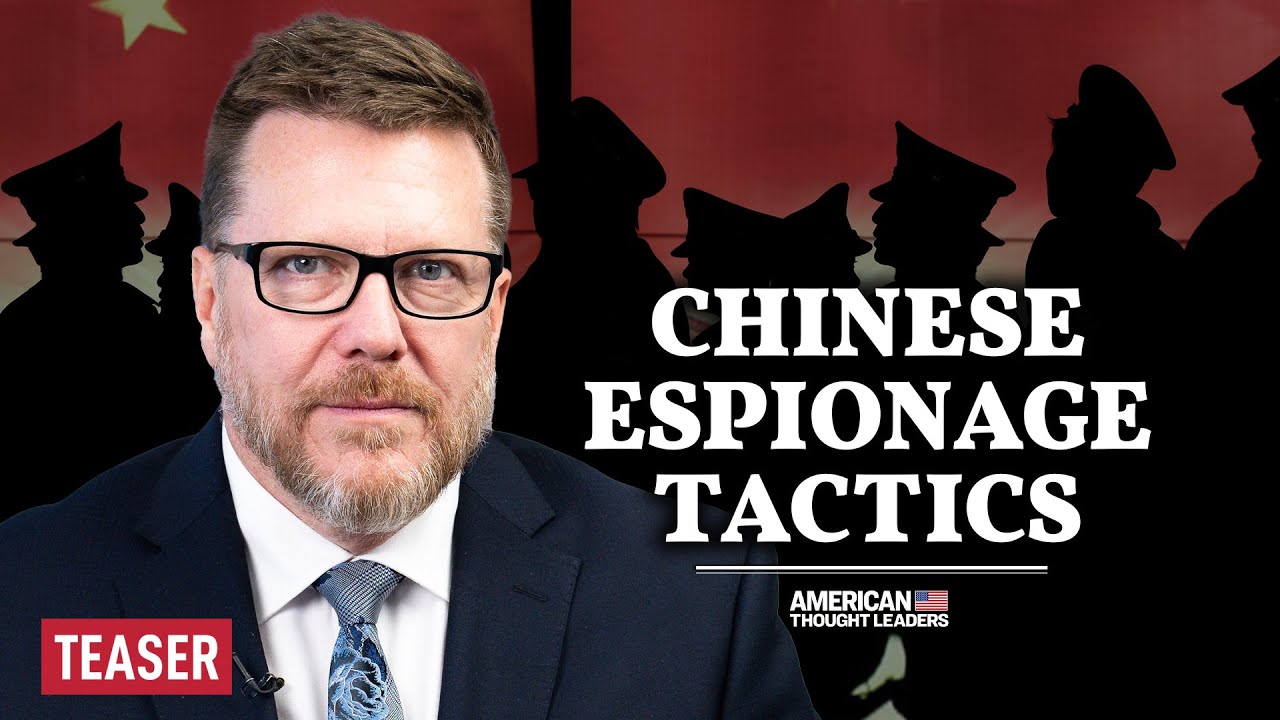
- Michel Juneau-Katsuya: Inside Communist China's Network of Dormant Spies
In this episode, I sit down with one of my personal heroes, Michel Juneau-Katsuya, the former Asia-Pacific Bureau Chief of the Canadian Security Intelligence Service. Over two decades ago, he authored the classified report dubbed Sidewinder, which uncovered for the first time the true depths of Chinese Communist Party (CCP) infiltration in the West and the workings of an unholy trinity—namely how Chinese intelligence, wealthy Chinese tycoons, and criminal triads work together. But “it became obvious that nobody wanted to hear about it,” Mr. Juneau-Katsuya says. “We were ordered to destroy the report, destroy our research notes.” The report never would have seen the light of day if it hadn’t been leaked to the public. Its findings, however, were soon overshadowed by the 9/11 terrorist attacks. What Mr. Juneau-Katsuya discovered forms the basis of the new book, “The Mosaic Effect: How the Chinese Communist Party Started a Hybrid War in America’s Backyard.” In this episode, Mr. Juneau-Katsuya breaks down the inner workings of CCP intelligence operations in the West. Interview trailer: Watch the full interview: https://www.theepochtimes.com/epochtv/michel-juneau-katsuya-inside-communist-chinas-network-of-dormant-spies-5509751 To get notifications about new Kash's Corner and American Thought Leaders episodes, please sign up for our newsletter! Here 👉 Get Alerts - PRE-ORDER "The Shadow State" DVD: https://www.epochtv.shop/product-page/the-shadow-state-dvd The Real Story of January 6 | Documentary BUY Jan 6 DVD: https://www.epochtv.shop/product-page/dvd-the-real-story-of-january-6, Promo Code “Jan” for 20% off. - Follow American Thought Leaders on social media: Twitter: https://twitter.com/AmThoughtLeader Truth Social: https://truthsocial.com/@AmThoughtLeader Gettr: https://gettr.com/user/amthoughtleader Facebook: https://www.facebook.com/AmericanThoughtLeaders Gab: https://gab.com/AmThoughtLeader Telegram: https://t.me/AmThoughtLeader
- Kash Patel: The Israel-Hamas War, the Defense Industrial Complex & Curbing the Deep State
[FULL TRANSCRIPT BELOW] “I don't think it's a coincidence that a month ago, 6 billion goes to Iran. And now their number one ally against the United States of America, writ large, Hamas, is doing a coordinated strike to America's number one ally, Israel.” Kash Patel has previously served as Department of Defense chief of staff and is also a former terrorism prosecutor. We discuss his take on the Hamas terrorist attack on Israel as well as his new book, “Government Gangsters: The Deep State, the Truth, and the Battle for Our Democracy.” In this deep dive, Mr. Patel explains his realizations about “the deep state,” how it functions, and possible strategies to deal with it. "The Defense–Industrial Complex, as President Eisenhower warned us 60 years ago, is the biggest behemoth in and around the swamp. I think it's worse than every lobbyist group combined,” Mr. Patel said. Interview trailer: Watch the full interview: https://www.theepochtimes.com/epochtv/kash-patel-on-the-israel-hamas-war-the-defense-industrial-complex-and-strategies-to-curb-the-deep-state-5509088 FULL TRANSCRIPT Jan Jekielek: Kash Patel, such a pleasure to have you back on American Thought Leaders. Kash Patel: This is awesome and I'm so thrilled to be back. I'm reminded of our fun times on Kash's Corner, so I'm looking forward to this. Mr. Jekielek: Absolutely. We're going to talk about your new book, Government Gangsters: The Deep State, the Truth and the Battle for Our Democracy. First, I want to get into what's happening in Israel right now. Israel has declared war. Essentially, they were invaded by sea, by air, by land, and there were towns occupied by Hamas. Mr. Patel: From a military standpoint, the planning, preparation, and operational preparation of the environment for an attack like this isn't a one-off. It's not a splinter group saying, "We're going to fire a couple of rockets from this location and do some damage and then we'll get some headlines." This was an air, land, and sea invasion through various vectors originating from Hamas and Hamas-funded groups as a coordinated strike plan into Israeli territories. That doesn't happen in a week. That is a lot of planning, but more importantly, that takes a ton of money. Hamas is a Foreign Terrorist Organization [FTO] under United States law. What does that mean? They're fully sanctioned, which means they can't bank with U.S. companies, they can't do business with U.S. allies, and their access to money is sharply cut off throughout the rest of the world. We do the same thing with Iran, because the Iranian Quds Force and the IRGC [Islamic Revolutionary Guard Corps] are all FTOs. A lot of other countries have sought the same recognition of Hamas. Where do they get their money? You're not talking a million dollars, you're talking hundreds of millions of dollars to mobilize this kind of effort. Mr. Jekielek: You were very critical of this recent decision to release $6 billion back to Iran. Mr. Patel: It was probably personal, because I was involved in hostage affairs for President Trump. I always lead with this—bringing home Americans is a great thing. It is good every time you bring one home who has been detained or held unlawfully overseas, especially by America's enemies or terrorist organizations. But you have to step back and look at the bigger picture. There are more hostages out there, and there are going to be more hostages in the future. You have to ask, “Did we harm America's ability to get those folks back, just for a headline? Did we harm future hostage-taking matters by going to our number one enemy on planet earth?” In terms of economics, we talk about Russia and China, but when we talk about sheer terrorism, it's Iran. Like Hamas, Iran is cut off from the world funding line. They are literally funded by flying in pallets of cash to continue to operate their economy and keep their currency afloat. What happened here that I thoroughly disagreed with is that the Biden administration gave Iran $6 billion, and we got some hostages back. Then the Biden administration lied to the world. They said, "We are going to dictate how that money is spent, and we've told them it's going to be on humanitarian affairs." Don't listen to me countering that headline. The day after the money transfer, the president of Iran, who works for the Ayatollah, said, "Iran will spend this money however we please." Speaker 3: What is your expectation of its use? We're told that it's for humanitarian purposes, food, and medicine. Do you believe you have the right to use that money in any way that you see fit? Speaker 4: This money belongs to the Islamic Republic of Iran, and naturally, we will decide, the Islamic Republic of Iran will decide to spend it wherever we need it. Speaker 3: So if I hear you clearly that it will be used for more than humanitarian purposes in your view. Speaker 4: Humanitarian means whatever the Iranian people need. So this money will be budgeted for those needs, and the needs of the Iranian people will be decided and determined by the Iranian government. Mr. Patel: They're right. There's no mechanism for the United States to control this. This $6 billion specifically came from Korean banking institutions. It was frozen for a long, long, time under all these sanctions against Iran. They released that money to the Middle East, but the Middle East is not going to be the referee. They're not going to say, "Okay. Here's $10 million for the food bank program. Here's $50 million for the homeless." Is the U. S. going to police the use of that money in Iran where we're not allowed, where we have no access to the intelligence infrastructure, banking infrastructure, or SWIFT [Society for Worldwide Interbank Financial Telecommunications] system? Of course, they are going to spend the money as they see fit. It's not a coincidence that a month ago, $6 billion went to Iran, and now their number one ally against the United States of America, Hamas, is doing a coordinated strike on America's number one ally, Israel. I talk about it in the book. There are no coincidences in government. At this level, there definitely are not, and I'll always stick by that. Mr. Jekielek: You did mention the declaration of war by the Israeli defense minister. Why does that change the equation in your mind? Mr. Patel: As you know in America, it takes an act of Congress to declare war. The president can't go out and declare war. It's not exactly the same in Israel. There, the authority that arises when you declare war gives the premier vastly expanded executive authority to conduct that war. That's his job. It's just like it would be here. If America formally declared war, the authority given to the Commander-in-Chief is massive. The options he has become exponential, not just with money, but also with equipment, with manpower, and how we operate with our allies. Israel is saying, "We're at war." They're probably going to look West next and say, "Europe, are you with us? America, are you with us? If so, how are you with us?" This is probably going to be the most difficult national security issue the Biden administration has dealt with to date. Of course, they will need to say, "We support Israel." The Israelis have a large hangover from how the previous Trump administration treated them. We had a very public, very global partnership with Israel. Let's not forget the Middle Eastern peace accords. Those have been completely lit on fire by this one strike, this one act of war alone. The Iranians and Hamas are already talking to the Saudis and saying, "What are you going to do?" Our goal was to continue full-on Saudi, Israeli, Middle Eastern peace negotiations, which were still developing. That's over now, at least for as long as this war goes on. We will be talking about this for a long time, with the amount of moving pieces that are now on the board, and have yet to even get onto the board. This is going to be for months and months and months in my opinion. I don't see a quick resolution unless one side decides to unilaterally surrender. Mr. Jekielek: Everything is currently developing as we speak. I've heard that Iran might be very close to having a nuclear bomb. Have you been following that? Mr. Patel: That's a great point. The police officers for the nuclear arsenal in Iran are the UN-sanctioned cops. They are allowed into Tehran and around the country to their various nuclear sites. Iran is publicly saying, "We're only making fissile material, which is nuclear, weapons-grade material, in order to power our country. I've always thought that was a total pretext sham, but let's put that aside. Americans weren't allowed in there, so we relied on the UN inspectors to go in and check what's the percentage, what's the weapons-grade, how far along they are, what their reactors are, if they are cooling, and all these indicators of how much stuff is being made and where. They tell Iran, “If you're doing it for energy, you need this much. If you're doing it for bombs, you need this much.” Iran kicked all the inspectors out of the country the day after the $6 billion and the hostage exchange occurred. We were not getting the full story when we had the UN inspectors in the country, and now we have nobody. It's going to be almost impossible for us to figure out how far along they have come. I've been away from the intelligence on this for a while since I've been out of government, but I've always thought this was their plan. I've always believed they were inching closer to making that material necessary for weapons, and that is very scary. It's an issue that doesn't get talked about a lot, but maybe it will be now. This administration, by permitting the funding of this proxy war by Hamas into Israel, also just gave Iran a huge cash injection for their nuclear program. This is Iran, and we know they lie to the world. They do it all the time. Even if they stand up and say, "No, it's only for energy," we have no way of knowing that, because we don't have anyone in there anymore. Mr. Jekielek: Any final thoughts on this? Then let's dive into the book. Mr. Patel: We talked about who Israel is going to look for in terms of public allies. Who is Hamas going to get? What are the Middle East countries going to do? What are the signatories to the Abraham Accords going to do? What is Turkey going to do? We know what Iran is going to do. Iran is going to go around and try to galvanize a group of countries to back Iran and to back Hamas because of their joint "hatred" for Israel or actions taken by the Israeli government, What is Jordan going to do? There are massive implications for Egypt. We don't have time to get into all the things involved. Remember how the Muslim Brotherhood caused the fall of the presidency in Egypt? Hamas is a Muslim Brotherhood organization. What are we doing with all that? The international implications are almost never ending. Mr. Jekielek: Let's talk about your book, Government Gangsters. Mr. Patel: Yes, let's do it, and I can't wait to dive in. We should tell our audience that I haven't been told what you're going to ask me, so this could get interesting. Mr. Jekielek: I have some very basic questions. As you're introducing the book, you say, "I didn't know there was a deep state until somewhat recently." You keep hearing about this deep state. Then you hear that it is a conspiracy. Some people equate it with the administrative state. Are they the same thing? What is the deep state? Mr. Patel: The definition will change, depending on who you ask. Having written the book and looking at it historically, we got signals about the deep state from President Eisenhower when he warned the world about the defense industrial complex, the behemoths that we have today. He saw it coming. He said, "The government needs to be aware of this. The government cannot be run by private sector organizations who continue to pay people who go in and out of government in a cyclical fashion." We'll circle back on the defense industrial complex, but that was the beginning of it. It's not like we got a deep state overnight. This is years of degradation by people in leadership service positions who failed to do the job that they signed up to do. I had personal experience being the lead prosecutor at Main Justice for Benghazi, being the guy that found Hillary Clinton's emails in the discovery process, not being able to run with that, and not being able to run that Benghazi prosecution the way I wanted to and get all of the foreign terrorists who killed Americans. It became a political thing in the Obama administration, and I was in the room when Holder was making these decisions. I thought, "Maybe that's a one-off of a really massive event.” But then fast forward, I leave the Trump Justice Department, I go to Capitol Hill, and I run Russiagate. That's when this all solidified for me. I saw the real nature of the FBI and DOJ that I worked with. We all know what happened afterwards when I was the chief investigator exposing it all. I even went to Devin Nunes, then chairman, who had hired me to run the investigation and said, "I don't even believe this. I think that maybe I'm the one who is lying." I remember one day specifically, and I think I put it in the book. I walked into Devin's office to give him my weekly brief on Russiagate. This was one of the big ones on the FISA [Foreign Intelligence Surveillance Act] warrants and how it was unlawful. Then we were putting out the facts about it, the withholding evidence of innocence and all the biases. He turns to me and says, "If you're going to start drinking this early in the morning, get out of my office," because it was crazy. The whole story of Russiagate that we now fully know today is almost unbelievable. It's like science fiction. But to me, it's not a Republican and Democrat thing, and that's one of the hitting points of my book. I said, "I don't care about Rs and Ds." I probably named more Republican government gangsters in the book than Democrats. I learned they were an entrenched class together. The FBI, DOJ, DOD, CIA, and NSA coupled with the media, the biggest conspirator around, that is the deep state. It was operating in a somewhat surreptitious fashion in the initial stages of the Trump presidency. After the four years of the Trump presidency, fast forwarding now two-and-a-half years into the Biden administration, it might need a new name, Jan. It can no longer be called the deep state. They're just out there doing it in public, because there's no accountability. That is what ticks off Americans the most. The question I get asked the most is, “Where's the accountability for these folks who held senior positions in the DOJ and the FBI that commit crimes and are rewarded for that action by the entrenched DC swamp bureaucracy, and where the media is their glorifying, ego-padding machine?” I don’t have an answer as to where that accountability is going to come from. Mr. Jekielek: I remember reading your very succinct explanation of Russiagate. Please try to recreate that, because it is incredible when you lay it out in these broad strokes in just a few sentences. Mr. Patel: Okay, you put me on the spot here. This is going to be a pass or fail situation. When I tell folks the following, they have to realize it took me two years to get there. Would you believe in the 21st century America, a political party would go overseas and buy fake intelligence from an overseas asset, then use campaign dollars to purchase that information, funnel it back to the FBI and DOJ here in the United States of America, appear before a federal secret court and a federal judge and knowingly present information they knew to be false, and withhold information they knew would exonerate the posed targets, all to get a surveillance warrant on their political opponent? That is Russiagate. Again, when you hear that, you think, "This guy is crazy." But multiple congressional investigations later, and the Durham report later, along with many other things that happened have degraded America's faith in the justice system. This causes a two-tier system of justice, which I often mention in the book. Mr. Jekielek: One of the things that I've been charting is the development of the disinformation industrial complex. It's the combination of government agencies working with quasi-civil society organizations and legacy media. It's unclear exactly where the lines are between some of these organizations. There is pressure being exerted, there are threats, but there is also some ideological alignment. In the end, you have suppression of all sorts of information and the elevation of other information to the point where it appears that everybody agrees on something that very few actually believe. Mr. Patel: I was talking about the cyclical nature of Washington, DC. If you're in a leadership position in government, you can leave only to come back in to help the people that were helping you along the way that knew where you were going to land. What do I mean by that? Let me give you an example that I raised in the book. Brennan and Clapper were the heads of the intelligence community under Obama, the CIA Director and the Director of National Intelligence, the top two dogs. They were going into an election cycle, and they briefed then President Obama about this Hillary Clinton/Russiagate scandal. They knew about it, and the president knew it was coming, and he allowed it to occur. They didn't warn the incoming presidency about any of it. In fact, they got the FBI, James Comey and company, to withhold that information from the incoming Commander-in-Chief. Why do I highlight Clapper and Brennan? Let’s fast forward and literally bring this up to a week ago. Brennan and Clapper were caught lying to Congress under oath; Brennan specifically lied to Congress about the CIA spying on Senate staffers, and Clapper specifically lied to Congress under oath about utilizing the FISA surveillance process to secretly surveil Americans. That happened and they both admitted it later. They both lied right across the street under oath in front of the whole world. What was their reward? They have been glorified with contracts in the media. Let's put that aside. Whatever your feelings are on the border, just to bring this thing full circle, the Department of Homeland Security just rewarded Brendan and Clapper with two senior level board positions at the Department of Homeland Security to adjudicate the border crisis. Two cabinet secretaries committed felonies by lying to Congress under oath, thwarted an incoming presidential administration with an investigation they knew was bogus and didn't tell anyone, and allowed the media to run that disinformation campaign roughshod over half of America so that they would vote in a certain way. That's the deep state out in the open, and that's what I mean when I say they're in it for themselves. You asked an interesting point. What is their unifier and what makes them come together? It is their get Trump attitude. I wish there was another answer, but every time we go down the road of asking why these bad actors do this, that's where the road leads. Of course, they won't publicly admit this. In some way, shape, or form, their personal dislike and their desire to "be the ones that get Trump" continue the deep state juggernaut. That is not going to stop anytime soon. Mr. Jekielek: A number of these people deeply believe and have a deep conviction that President Trump is an existential threat to America. But maybe for them is it just purely transactional, just business, and there's no belief involved? How do you see this? Mr. Patel: No one has ever asked me that. The deep state operators are not on a mission doing it for service. They are doing it with that as the pretext. What do I mean by that? They will say, "We are upholding the DOJ, the FBI, the DOD and the intelligence agencies," and all roads just happen to lead to Donald Trump. But these are known liars. These are people who knowingly broke the law. I'm not just talking about Brennan and Clapper, I'm talking about James Comey, Andy McCabe, Gina Haspel, and the 17 other people that got fired or relieved of duty as a result of our little congressional investigation. The media hires them and says, "This was the deputy director of the FBI. Look at what he has to say now.” They get six, seven figure contracts, and they'll continue their disinformation narrative by saying, "We believe in full commitment to the Constitution and accountability, and that's why we think Donald Trump is a threat." They have blended this narrative together with facts that don't exist. The media wants that narrative to proceed just as much as they do. Now the counter argument is, "Look at you, Kash Patel, attacking these brave Americans." Mr. Jekielek: There was a lot of information seeded into the system around Covid, saying, “You're supposed to use masks. These vaccines will be perfectly safe and effective.” A great number of people seem to be unable to accept new information that changes those statements. My view is they were propagandized into believing something that wasn't true. Maybe people wanted to believe it was true. It turned out not to be true, but now they are unable to change their minds. It's a scary reality. Covid wasn't the first blast of information. Before that, Trump derangement syndrome was a real thing. There are people that deeply believe things that do not comport with reality, specifically with respect to Trump. This is the ecosystem that we're in today. Mr. Patel: We talked about Russiagate. We now know that it happened just like you said. Half of America literally thought Donald Trump was a Russian asset. The media was pushing that and it was in the headlines over and over again. That was the justification to launch an investigation into a sitting president of the United States. That was the justification for the people that were fired and who led that operation to go to the media and say, "We did it because we thought Donald Trump was a Russian asset." We now know unequivocally from John Durham and our investigation that there was never a lawful basis to launch any investigation into Trump or any of his associates. Do you know how powerful that statement is for a prosecutor? They're saying you couldn't have done any surveillance, have any investigation made, have any phone call sent out, or issue any subpoenas. It was totally unlawful. That means he wasn't a Russian asset. He wasn't even close, and neither were any people in his universe. Look at the 51 Intel letter which was a similar type of operation. Three CIA directors, an NSA director, a Secretary of Defense, and senior level other intelligence officers signed the letter, knowing that a week before the election, the Biden campaign and Tony Blinken wanted the CIA to get in front of this and say, "Hunter Biden's laptop is Russian disinformation." Half of America believed it. If you go out there and talk to many Americans like you and I do, you find that they based their vote in that presidential election on that piece of disinformation. Now you have two major events that literally led to the rigging of presidential elections. The commonality is it's the get Trump thing, and the commonality is the characters that are involved. You see the same folks and their proteges coming up again. What do I mean by that? For example, the two individuals that are the number two and three at the Justice Department today, Lisa Monaco and John Carlin, were the heads of Homeland Security and the National Security Division when I worked at the DOJ, and they were the ones that launched Russiagate. Now, they're in charge of the DOJ. The point that you hit on that is of such consequential importance is America doesn't find out about this until two years later. America didn't catch on about Russiagate until 2018. They didn't catch on about Hunter Biden's laptop until two years after that Intel letter. They didn't catch on about the Covid origins, which Epoch has been reporting on truthfully, and one of the only places that has been doing so. They thought it was another Donald Trump conspiracy, and that it couldn't have come from this Wuhan lab in China. The intelligence community had no information to that effect. Whatever your belief is or thoughts are on the former president or the current president, this pattern of conduct and the people that walk through the revolving door in Government Gangsters is a reality that can only be created by this machine called the deep state. Mr. Jekielek: Kash, this topic of how our information ecosystem affects us is very important. There's a whole bunch of people out there who deeply believe that doing unethical things is actually the right thing to do. I'm still trying to figure out how to deal with that. I want to talk more about your formative years. You took a trip to Tajikistan. You had to return to the U,S. very quickly because a judge demanded it. Please tell me the story, because it’s one of the most enjoyable moments in the book. Mr. Patel: I'll give you the quick version. I was a national security prosecutor. We had just charged a terrorist in the state of Texas with a couple of terrorist offenses, namely, they were trying to figure out a way to blow up a shopping mall in Texas. We had finally indicted that guy after a multi-year investigation. You then take that case and put it on the side and get back to what else is still out there. At the time, we were chasing down the Amir for special operations for ISIS, and that led us to Tajikistan. We were building a prosecution on him. I thought, "Okay. We've got a little bit of time here. Let's go over there and do the work." We got over there, did the work, and then I got a phone call from the DOJ. On his own, the judge had issued a hearing in chambers, not in public, to talk about classified information and how we're going to handle it. That wasn't supposed to happen, and the attorneys in Texas didn't know how to handle it, so I had to get back. I was 22 hours away, but I got back. I was wearing this type of outfit, but I didn't have a full suit on. I had a jacket, a shirt, and pants. I go straight into the judge's chambers, and the first thing I do is apologize. I said, "I just came from the airport from overseas for this hearing. I would normally have a suit. I'm sorry, Your Honor." He didn't like that and proceeded with the hearing. I knew at the start what it was about then. We had been told this judge in Houston doesn't like DOJ attorneys for some reason, or doesn't like Washington. In the past, he had actually had some issues with Indian American lawyers that appeared before him, but I don't ever care about that stuff. I just didn't want this hearing to get messed up and the prosecution of this terrorist to get messed up. He ends up demanding to see my airport boarding pass and my passport. He launches into a barrage at me with the defense attorney there and my two guys that are supposed to be my colleagues from the Justice Department's Texas office. They're just sitting there and loving it. I could have blown a gasket, but I kept my cool because the mission mattered more. Fast forward, the guy eventually gets convicted, and no classified information was leaked. That was the win along with the conviction, and we maintained the integrity of that conviction. That was a win, so it couldn't be reversed on appeal, but what I did see was the cowardice of the DOJ. I came back here and they said, "Heads are going to roll." I even specifically discussed this matter with then Deputy Attorney General Sally Yates. They did nothing. You would think when a lawyer who does the job for them gets attacked by an Article III judge, they would do something, but no one wanted to take that on. The ironic thing is my colleagues tell me that because we were in chambers, there's a transcript of the entire hearing and it's public now. They used that transcript to train future lawyers on how to act in the most difficult of situations with the harshest of judges, even when you know that you are right on a fact of the law. I was pretty peeved when I got on the plane after that hearing, but it was a learning experience for me. It wasn't a political thing. This was before Trump. The question was, "Aren't you going to have the back of the federal prosecutor who's doing the work that the Attorney General and the DAG sent me out to do?" They all failed. They all shied away from it. I called them out for it, and then more fake news stories about me appeared. Mr. Jekielek: What was interesting in that story is that there was some activity internally. The problem that you had was that there was no action externally. Mr. Patel: Right, that's a great distinction. I told the leadership at the DOJ at the time, "Look, I don't care if this guy yelled at me." I’m an Indian American who grew up in Queens in the '80s and '90s, and I've been called a lot of things. I've been called a lot of nasty things by much better people than that judge.” But they just sent around a few internal emails and said, "This is horrible and this should never happen." If a judge overreaches like he did here, the point is that we need to protect our future prosecutors and to protect the integrity of the court system. Because as we are now quickly learning, judges have become activists. When they put on the robe, they're supposed to take off the R and D or whatever label they have politically and mete out justice. That taught me that maybe they will even inject politics or convictions that shouldn't be there to steer a case or investigation one way or the other. My main point was that this was going to come up over and over again as I went on in my career. This story was written up by national media outlets. They literally said I was incompetent because the judge said I was incompetent in that hearing, but they didn't bother to read it. This comes up time and time again. I don't care what people think about me, but if he did it to me, who else has he done it to, and who's he going to do it to next time? Then other judges might say, "I can get away with this.” Mr. Jekielek: In the end, you actually secured the conviction, which would suggest competence. Mr. Patel: Yes, but not if you ask the team down there in Houston. Ultimately, that's all that matters. That's why in the book you see the mission first approach over and over, whether it's at the DOJ, at the DOD, or the intelligence community. That's what you did because you signed up to serve the mission. I wasn't going to get into a personal political argument with this judge and jeopardize not just the conviction, but also classified information which we were using to prosecute other ongoing active terrorism cases. We didn't let that happen. Mr. Jekielek: Why did Congressman Devin Nunes want to bring you on for Russiagate specifically, before you even knew what it was? Mr. Patel: I'm embarrassed to say that I didn't even know who Devin was. I was an executive branch prosecutor guy, and had gone over to the military and civilian special forces stuff. I was just working on national security stuff. I didn't pay attention to the Hill or any of that, except maybe a headline story here or there. I met Devin because a mutual friend of ours wanted help getting a job in the Trump administration. It was just random. We were sitting in his office. I tell the story in the book in greater detail, but long story short, he just said, "What do you do?" He was just being polite. I said, "I'm a terrorism prosecutor. I was over at JSOC [Joint Special Operations Command] for a while doing Intel," He's like, "Oh, no way." This was before Russiagate was a thing, but House Intel had known that they were going to get charged with that investigation. On the spot, he and his team asked me, "Would you be willing to leave DOJ and come over and do this job?" I said, "Absolutely not." I enjoyed what I was doing, and I just didn't envision myself on Capitol Hill. That's how it started. Mr. Jekielek: What was the job that they wanted you to do? Mr. Patel: They said, "Since you had handled FISAs and used the FISA process to go after terrorists and been before the FISC [Foreign Intelligence Surveillance Court] and did the applications, and since you had an intelligence background with your time at JSOC, this is what we need for Russiagate." We were talking about the DOJ, FBI, and Intel coming together. They knew more than I did at the time because I wasn't really paying attention to much more than what's in the media. That's why they needed someone to lead the investigation who had done that work, so that Congress knew what to ask for during their constitutional oversight hearings. The rest is history. Mr. Jekielek: Why did you want to work in the Trump administration? Mr. Patel: The only job I ever wanted, Jan, was to run counterterrorism. I was a counterterrorism guy by background, and that's what I did. We manhunted terrorists. We figured out what to do with them, how to prosecute them, how to do a kinetic strike, how to give them to a host nation, and how to try them in some arena of justice. I thought that was the greatest job. I wanted to learn how to do it at the operational level and then build a bigger policy picture from the central government perspective to say, "This is what we should be doing with Al-Qaeda, with ISIS, with AQI, and with hostage affairs. I went over there to Devin, but I had never met Trump. I literally didn't know him. I told him, "I'll make you a deal. Whatever we find in the investigation, we put out." He says, "Done." He also said, "I will do everything I can to get you that job of Head of Counterterrorism in the White House." After we completed the investigation and after some stalling by Bolton at the National Security Council, I went over there, and shortly after became Head of CT. It was the greatest job, and I loved it. It was awesome. We had the greatest team. We changed the landscape of how we go after terrorists. For me, that was it, and I thought that I was good. I said, "I can just stay here and do this job." There were no plans. There was no, "What am I going to do next?" I got there and said, "This is great." Mr. Jekielek: In the book you talk about reforms, and I know these are very important to you. These have been percolating over the years and we've talked about some of them on Kash's Corner. You talk about the Justice Manual. I had never heard of that until I read your book, but there's a lot of policy in there that has to be followed. You were saying that very small changes to that manual could actually have very profound implications for getting away from the two-tier system of justice that has developed. Mr. Patel: Anybody can highlight the problems. The purpose of the book was to not just tick people off with what has happened, but how to fix it. That is the mission of my book, Government Gangsters. You can fix all the problems that we've discussed here and more. Accountability is at the core of that mission set. How do you execute that mission for justice, because we've seen the fracture in the system of justice? Whether you believe that or not, let's put that aside and look at the United States Attorney's Manual [USAM], the DOJ policy book that you're talking about. It has been in place for decades, and the last major change to it was from Attorney General Ashcroft. It talks about things that so many AGs and DAGs have referred to as Justice Department principles or Justice Department policy. I always thought that was ironic to hear from the head law enforcement officer. Shouldn't you be saying this is Justice Department law? I looked into why they weren't saying that, because they were basing that off the USAM, the DOJ policy book. Specifically, just to bring this thing all the way up to speed, Attorney General Garland just gave an interview on national TV where he said, "The DOJ's longstanding policy has been not to interfere in presidential elections, not to investigate people, and not to publicly announce investigations." We've seen how they've handled that with Trump and Biden. For the first time, I heard them say, "We won't do it if it's near in time to the election." But if you go back to the AGs before him, they would say, “One to two years before an election.” Where is this written down? Where is this timeline? I've been looking for it. Yes, the Attorney General is the only one that can change the United States Attorney's Manual. He can do it with a stroke of a pen. Has it been changed? I'll give you another great example—jurisdiction. Everybody asked me, “Why are all these Jan 6 cases being brought in Washington, DC?” Again, it's another legal fiction. In the United States Attorney's Manual, it specifically says we should bring these types of cases in Washington, DC, not that we shall, because the Constitution obliterates that. Jurisdiction lies where any component of the crime took place. If we're talking about a USB stick that was bought in a store in Arkansas and used in Washington, DC, the prosecution lies in Arkansas. It's just that the DOJ, whether it's Republican or Democrat, has metastasized policy to become tantamount to law, but it's not law. It hasn't been challenged and it hasn't been talked about. The power that those little tweaks wield is monumental. That same policy on special counsels is a whole other conversation. When it comes to special counsels the manual says, “You shall appoint one from without the Department of Justice. Why have the last three special counsels have all been current DOJ employees? The DOJ is literally violating its own policy that it says is the law, and we're not supposed to ask questions about it. Garland goes out there and says, "Weiss is a Trump appointee, and Durham was a bar appointee." That is a total deflection. If our institution of justice and its leader can go out there and lie about the law or manipulate it and have no consequences, that's why that manual needs to be put out. It's not classified and anyone can go get it. We need a uniform structure of law that governs, not DOJ principles and years-long policy, but this is just how we've done things in recent times. You've always heard people go to Congress and testify about it. It ticks me off to no end. You hear an AG or DAG go up there and say, "This is how we've done things." Not one member of Congress has said, "What's the basis for that in law ?" That to me is the deep state in action. Mr. Jekielek: You just alluded to the increase of administrative power in America. A lot of decisions that typically would be made by the legislative branch are being made by agencies, people that have been bureaucrats for a long time. There are even legal precedents that lead to this like the Chevron deference. One of the things you talk about is a Schedule F appointment. Please remind people what that is all about. Mr. Patel: If I can, I'm going to get a Schedule F appointment myself. It's one of the core solutions I talk about in my book. Another myth that decades-long government bureaucrats repeat over and over again is, “You can't terminate government employees.” I ask, "Where does it say that?” Are you telling me that if a government employee violates his oath of office, breaks his ethical duties, breaks the law, breaks the chain of command, that you can't fire them? Are they allowed to do that at the DOD? A Justice Department lawyer can just say, "I've got this job and I've been here for 20 years. It doesn't matter what I do." In my book, I highlight over and over again the people who did break their oath of office, the law, policy, ethics, or the chain of command, and then were rewarded for it, which is a whole other problem. When I was Deputy Director of National Intelligence in the Trump Administration, we were actually able to go to the DNI, the Director of National Intelligence, and eliminate hundreds of positions, because you can do this. But nobody wanted to be the guy or gal in the media saying, "You took away seats from the national security mission," which was the disinformation twist to what we were doing. We were reducing duplicative efforts and I outlined this in the book. If the CIA is doing one thing and they're doing it really well, I don't need 50 people doing the same thing in another building to jam up the process, so that it takes longer to get a question answered. That puts the national security apparatus in an empirically disastrous position. If you have a Command-in-Chief and an executive branch that are willing to have your back, you can do a lot of the work that leads us to Schedule F. Schedule F appointments were created because they got so tired of trying to remove the folks that had committed crimes. You're talking about McCabe, Strzok, Lisa Page, Kevin Clinesmith, and James Baker, all these bad actors. It ticks me off that we even needed to create a whole new Schedule F. But if that's the solution, that's what I push forward. It goes after the same endpoint that we are trying to get to—government accountability. I understand that people want anyone in government to be prosecuted if they break the law. But at the very least we can eliminate them from their government jobs. Taking away their security clearance is another thing I talk about in the book. If a president wanted to, he could reclassify the majority of these positions as Schedule F appointments where you would be hired and fired at will. What's scaring a lot of the public is that President Trump has put this policy forward saying, "We're going to do this." Then you start hearing that swamp policy that says, “You can't remove government employees.” It's a complete fiction. Whether it's Schedule F or a combination of the two, I'm obviously all for it, because we need to hold government more accountable than we do the everyday citizen. The deep state isn't just in the executive branch, it's in the judiciary, and it's in the legislative branch. We teamed up with Congress too, because they have the power of the purse and they pay for these positions. If you get Congress to zero out those positions that are unnecessary, that waste taxpayer dollars, and that slow down the national security mission, then you've also eliminated that position. There's a combined way to get to that goal. I don't want to be the guy that removes a parent's ability to take care of their family, but you signed up to serve. We're not forcing you to serve. If you fail the American people in the mission, you shouldn't be there. Mr. Jekielek: From your time working at a number of agencies, how much waste or how many excess positions did you see in these agencies? Mr. Patel: At least a third if you take every agency, combine them, and do the law of averages. That's a lot, and that terrifies people. The other thing I learned, whether it was at the DOJ, DOD, CIA, NSA, or ODNI or the White House, these agencies and departments saw that the public way to justify their existence was their expansion. They said, “We have to go to Congress and we have to ask for this amount of money.” After becoming part of that budgeting process, these agencies and departments actually had money left over. They would literally say, "If we don't spend this, we're going to get less from Congress next time. Somebody go spend it." That was insane. What do you mean you can't give taxpayer dollars back because you did a good job and did it for less? This problem metastasizes in the deep state. They get out there and say, "We need a thousand more positions because we need a thousand more FBI agents on the streets chasing down criminals." If that were the case and that was the purpose and there was a justifiable need for it, great. But you just keep expanding that again and again. This degradation of government isn't like a year or two old, it is decades old. You keep adding and adding and adding, and then you get what is called mission creep. I don't think I've discussed this before. Mission creep means if the DOD is doing it, then why is the IC also doing it? Why is one creeping into the other’s mission set? If the CIA is doing it, why is the ODNI also doing it? Each one of those agencies and departments have critical missions they do best. That's why they exist. Mission creep is this expansion of positions that allows people to say, "We're going to bring you this guy and he's going to be great. We're going to make this fusion cell and give it a fancy name like the Hostage Rescue Fusion Cell. It's going to be great." Sadly, what they're mostly doing is printing headlines for the media that don't accomplish the very objective they set out to. It all becomes political. That's another thing I get into in Government Gangsters. I ask, "What did this fusion cell solve? Who did you bring home? What's your justification for a thousand new DOD positions?" I'm not the guy that's ever going to argue against national security for America. But I am the first guy that says there is government waste, fraud, and abuse across the board, and a lot of positions just don't need to exist. The joint chiefs of staff are probably going to hate that, and I talk about that in my book. I say that we need to eliminate 50 percent of the positions of the joint chiefs. What is that? Those are the general officers, the flag officers, and the four-star officers in the Army, Navy, Marine Corps, and Air Force. It's too much of a fraternity. There is just too much glad-handing going on, "How am I going to get my next star? You got to give me this position. If I kiss up to you, then you’ll do it." People are put in command of large nodes of the United States military and have no experience doing it. I learned something as the Chief of Staff at DOD. The joint chiefs have zero role in the chain of command at the Department of Defense. That's not because I said it, it’s because Congress said it in 1951, and it's been the law ever since. The Chairman of the Joint Chiefs of Staff and everyone below him is there to advise the president upon request. We've seen the mission creep there spread, "If you don't do this, then the Air Force won't get their new planes. If you don't do this, you won’t get the funding to register new people to be in the Army next year." I've seen that game play out behind closed doors. I just didn't see a need for a lot of it, but I did see a need for some of it. This is how to sum it up. When you have these billets and positions added over years and years, each year they're looking to justify their existence. Every year, that's another cog in the process that either slows you down or gets you to no instead of getting you to yes. A big problem causing that is the Office of General Counsels at all these agencies and departments. As a former lawyer, I'm telling you that the biggest problem we have in some of these agencies and departments is the massive amount of lawyers that exist. It is mind-boggling. You have FBI lawyers pretending to be prosecutors, and you have prosecutors pretending to be the lawyers for the FBI agents. What are we doing here? Then you're fighting each other. That's Washington, DC, and it needs to change if we're going to help secure our national security mission, the law enforcement mission, the judiciary, and oversight in Congress. It's not an overnight fix, just like it wasn't an overnight problem. It's going to take a massive lift. Mr. Jekielek: Your boss at DOD, Chris Miller, believes that to make the U.S. military stronger, we need to reduce its funding, which is very counterintuitive. It sounds like you agree with this. Mr. Patel: Yes. The media will immediately take this clip and say, "Kash Patel is all for slashing the Department of Defense budget." Yes. The defense industrial complex, as President Eisenhower warned us 60 years ago, is the biggest behemoth in and around the swamp. It's worse than every lobbyist group combined. I'll be the first one to tell you that the Raytheons, the Lockheeds, the Boeings, the Northrop Grummans, and the submakers do great work. But I've literally seen billions of dollars set ablaze in the sky due to incompetence. Then we give them another $10 billion contract. Why? We need to eliminate some of this wasteful spending. I go into the defense industrial complex in massive detail in the book. We have these secretaries of defense who were once working in the defense industrial complex. They go into these senior level, under secretary or secretary positions. When they leave the DOD, they go right back to that defense company for a 10-figure payday. We have to break that cycle. Too many military uniformed officers are just setting up their next job, "Remember that big plane contract I got for company X? Now, I'm going to go work for Company X." There's nothing stopping that. The response in the media is, "Who's going to cut the Department of Defense's budget? They've got to keep growing and growing and growing and growing." Now, they're going to say, "Why are you giving so much money to Ukraine? The DOD needs a bigger budget." Mr. Jekielek: This stuff isn't really academic. Right now, we have this war in Israel. We have no idea where that's going to go. You suggested that it's a real possibility the U.S. may get involved. There is also a huge commitment to supporting Ukraine in the Russia-Ukraine War. Mr. Patel: I'll tell you just real quick on the Israel-Hamas situation. You know who's already involved? The defense industrial complex. The lobbyist industry and the DOD industrial complex are already ramping it up. We'll soon see it broadcast in the news, “We've got to send this and that over to Israel. We've got to provide them with equipment and manning and training. We thought we only needed 500 million widgets, but we need 5 billion widgets.” Mr. Jekielek: That might actually even be a good policy decision. Mr. Patel: Agreed. But this is our shortfall. If we bring aiding Ukraine into the discussion, we have depleted seven years' worth of our surface to air missiles. What does that mean? If the United States of America built surface-to- air missile defense systems at the rate we do now, in seven years we would be back to normal. That's not the only place this has happened. What are we going to give them? It's not like we can make this stuff overnight. We're pretty good at it, but these weapons are complicated, and these systems are complex. The training on upkeep and maintenance takes years for our allies overseas. You're going to see a knee jerk reaction. What I talk about in the book a lot of times is an overcorrection in government. They're going to come in big and fast to sell it to the media and say, "We're going to donate X amount of billions." Then you're going to ask, "Okay. What are you spending it on?" The real answer is that you are spending it at the DOD on multi-year contracts for defense industrial systems, and they're going to get paid no matter what. Who's going to oversee that money? Who's going to police that money year after year? By the time we catch up to it, we've got another Afghanistan costing two trillion, not to mention the blood loss there, and we have no oversight into where the majority of that money is going. Just like in Ukraine, we have no oversight or ability to see where that money is going. That's just a wrecking ball when it comes to accountability. But some in this complex prefer it that way because that's how they get the money. Mr. Jekielek: This feels like a difficult thing to unwind, especially when there's a lot of commitments that are made, some of which may be important. There is a lot of discussion about what the correct policy is. But when you're in the midst of all this, how do you make these changes? Mr. Patel: You got to go in with a multi-year, multi-branch plan to implement these changes. You need to get with Congress. You need to get rid of the lobbyists and the defense industrial complex noise for a little while. You need to sit down and figure out what we actually need in this country in every single line of effort, and then figure out how to fund it. This is a conversation for another day. We're being topical, so the speaker of the house just got ousted for the first time in U.S. history for the first time in 235 years. I'm not getting into the rights and wrongs of it, but what you have is a group of people who were supremely ticked off at continuing resolutions. Continuing resolutions are technically illegal by Congress' own law, but Washington has been governing in the CR fashion for 25 years. We don't have single-issue spending bills that they're supposed to appropriate and legislate and vote on one at a time. That has led to a fury among a lot of the American public, not the congressmen and women. That combines with what you're seeing in the Ukraine and what you might see with Israel and Hamas. You just have to say, "Why can't we just have a working Congress and an executive branch?" Imagine if we were actually passing budgets that we were supposed to be passing. You would be able to firmly reduce the amount of waste in agencies and departments. You took it head on and did not kick the debt ceiling can down the road yet again, and not had another CR in omnibus. Omnibus is just fancy for, "Here's a thousand pages of law. You have one hour to vote on it." That's literally what an omnibus is, and it covers every three letter agency you can imagine. How is that good governance? Now, I'm not saying what happened at the Capitol was right or wrong. These are the issues that have led up to today and they're all colliding together. This is a rare moment in our history to correct our course, and that's what I talk about in the book. Mr. Jekielek: Since we're talking about what happened in Congress and this unprecedented upheaval, let's talk about where the silver lining is in that. Mr. Patel: People have now learned that there's a good chunk of this country that doesn't want to see this type of financial waste, and that's what we've been talking about. A good amount of people have now become aware of how to prevent this, and how to make it so that Congress can’t do this. It's not a Republican and Democrat thing. This has been a major civics education, and that's always good. The more Americans you can educate on how the government works and how it should work is a massive win. The flip side is also true. What if the Republicans install a speaker that underperforms? You've taken on a majority position, and what are we doing with just running the government? Is it going to stall for long? Maybe they will get a better speaker. I don't know the answer to that. From a political standpoint, I was talking to a lot of my friends who are elected officials, and their concern was that the Republicans have a very small majority. Kevin McCarthy was able to raise a prolific amount of money, and that's what it takes to win elections. I'm not saying that's right or wrong. A lot of the seats won that gave the Republicans the majority was because they hit the fundraising hard. They were able to travel and go through their districts and get with people and message and advertise, and that's what elections take. Their message to me was that we're in jeopardy of losing the majority, and that's the balance. I keep telling people you can't have 100 percent of 100 percent. Our founding fathers never wanted this country governed in that fashion. We shouldn't vote based on that fashion because you're never going to find another American who's 100 percent on 100 percent. Compromise is a big part of it, but what we're seeing in government these last few decades is not compromise. There are people being bought from outside influence that has been coming in. That means Congress has been stalling everything from budget to constitutional oversight. You're seeing a mechanical failure of the legislative, judicial, and executive branch, and it's come to a head. It's going to be a rough year. I don't know what's going to happen in the next election cycle, but there is a lot at stake. The reality is that when things are so bad, you can find the solutions, but you have to be in a position to implement them. We'll see how that goes. Mr. Jekielek: The number one reform that you mentioned in your book is aggressive congressional oversight. You have argued many times on Kash's Corner that that isn't happening. Mr. Patel: This is one thing I learned firsthand from my time running the Russiagate investigation. I learned it again from looking back into what the Democrats had been doing with the Jan 6 committee when they had the majority. I am now looking at the Republicans with the oversight investigations of the DOJ and FBI. I've seen two different ways in which constitutional congressional oversight has been conducted. The Republicans have failed to meet the mark on a lot of factors. Again, it’s the two-tier system of justice. This deep state is not just in the courtrooms, it's here in Congress with our constitutional oversight. You have individuals holding senior positions in government who are subpoenaed, and they violate those subpoenas by not producing the documents. They owe this to Congress under the authority of a subpoena, and they violate this continuously. This is eroding the Constitution and setting it on fire. Congress has all but ceded its constitutional oversight authority to the executive branch that is actually supposed to report to Congress. These folks like Garland and Ray have come in and made it almost beneath them to go over there and testify. Then it takes a literal act of Congress to get one document from one subpoena, and then it's 60 percent redacted. The question is, why is Congress allowing this to occur? They've done some great work. There's been some brave whistleblowers, and I used to work with a lot of these people. But the amount they've left on the field has left constitutional oversight in tatters in Congress. Maybe that's one thing the new speaker can perform better on. I was a target of the Jan 6 committee and the first guy subpoenaed, and I have no problem with that. They could have just asked me to come in, and I would've come in and told the truth. That's their job. But how they went after people who didn't show up for subpoenas or didn't cooperate or who didn't produce documents was drastically different from what we've seen in these last 10 months. The last check was the judiciary, but that's a different conversation. Mr. Jekielek: Different in that they were very serious about doing it? Mr. Patel: They were overly aggressive. Those committees abused their constitutional oversight authority to personalize and politicize and mete out a weaponized system of justice from Congress, but they also showed you what the actual authority is if you were to use it appropriately. I haven't seen a lot of that authority utilized here. I talk about one in particular, fencing, which is taking pockets of money from agencies and departments that are not doing their mission, that are not complying with Congressional subpoenas, and not providing the witnesses that Congress wants to talk to. It keeps coming back to the question of how it will reflect on a current election cycle, but it's not the role of the executive branch to make that decision. I've told members of Congress, "You're doing some great work, but you really got to go all in and get aggressive, because a lot of America has realized over these years that you are responsible for keeping these agencies and departments in check. When you don't, the system fails. The media is okay with that because it advances a certain political narrative. That is completely destructive to our constitutional republic.” Mr. Jekielek: Has the fencing of money ever been applied? It really isn't something that's been used very often, but it seemed to be very effective. Mr. Patel: Fencing is congressional terminology. It is a mechanical maneuver in Congress to take pockets of money. You need the speaker's permission to do it. We only got it once, but we saw thousands of documents come in the next day, so it worked. But this Congress, when they issue these new CRs, these new budgets, they haven't trimmed any of the fancy government-funded private jet rides. I'm not talking about defunding the police or the FBI or the DOJ. I'm actually the guy that tells you you can't do that. But I'm the guy that tells you there's waste, fraud, and abuse. I ask, “Why is this guy flying away on vacation on a G5 that we pay for, but you can't take that line item out of the budget and ground the jet until he at least complies with all the subpoenas that are out there?” Why can't I say, "The FBI is not going to get a new headquarters department that's twice the size of the Pentagon in Maryland until you reform this FBI"? This is simple stuff, and it begs the question, “Why hasn't Congress acted?” They have the power of the purse, but they haven’t used it to maximize constitutional oversight. It's another thing I talk about in the book. Mr. Jekielek: What's your theory? Mr. Patel: On where it goes? Mr. Jekielek: No, your theory on why. Mr. Patel: It revolves around the lobbyist industry and the defense industrial complex. A lot of it is fundraising for campaigns, and what PACs are getting money from who. The Amazons and Googles and Facebooks and Twitters and every small company underneath them are spending money to make sure laws go in place that help them increase their bottom dollar. That's part of the American process. That has overtaken the powers that members of Congress should be executing. They have become beholden to these companies for that financing and that funding to be reelected. It's just completely out of control. Mr. Jekielek: Your book is finally out and I really enjoyed it. I hadn't realized how important our adventure at Kash's Corner was to helping set up your broad themes. It was a pleasure and an honor to see that. This book took a long time. It was completed a lot earlier and we thought it would be published a lot earlier. Mr. Patel: You're right, Kash's Corner was critical to writing this book. The fun part was sitting down every week and asking what we can do better and how we can go forward. We were able to stitch the book together in relatively short order. We wrote it in about three to four months. This goes back to the central point of the book, the deep state. The administrative state is in random places of government. There's a book review process if you need a security clearance, which I'm all for. If you leave the government, you submit the manuscript and it takes two to three months. They want to make sure no classified information slips out. I get that. I used to be on that side doing that. It's totally fine. This is what happens 10 months later. Your manuscript has been frozen, by the way. The book is out in October of this year, and I had finished my manuscript in October of last year. Just think about that for a second. I couldn't change the manuscript for a whole year, and they wouldn't let me release it until now. I had to file a federal lawsuit against the Biden administration and the nine agencies and departments that had my manuscript for review. That's unheard of. It usually goes to the last station of service. For me, that would have been DOD. They sent it to eight more. When we pressed them on it they said, "There's a lot of classified stuff. We got to review this. You're talking about Baghdadi and Soleimani and hostages." I responded, “With my background, I am competent enough to make sure I didn't put in classified information. but if I did, just tell me what it is. Block it out or delete it, and we'll move on." After we finally filed the lawsuit, it was shocking to see how fast they worked. They returned it, and the word count is less than 0.05 percent of my book is redacted. I'll be able to tell you someday the words that were redacted. My attorney and I were literally laughing out loud. We knew the whole thing was a setup and a delaying tactic, because what they redacted was completely meaningless. We just said, "We'll accept this." I don't think anyone's ever done this in the history of a government review. I took DOD's letter and pasted it right into the front of the book, so that the American public can see what they tell you needs to be done and how they delayed the book. I'm just glad it's out. I don't know that I'll do it again, Jan, but I'm very thankful to the team at Epoch for making this a reality, because it's hard to sum up 16 years. Mr. Jekielek: Kash Patel, it's such a pleasure to have you on the show. Mr. Patel: Thanks for having me back, my friend. This has been a delight for me. Mr. Jekielek: Thank you all for joining Kash Patel and me on this episode of American Thought Leaders. I'm your host, Jan Jekielek. To get notifications about new Kash's Corner and American Thought Leaders episodes, please sign up for our newsletter! Here 👉 Get Alerts - PRE-ORDER "The Shadow State" DVD: https://www.epochtv.shop/product-page/the-shadow-state-dvd The Real Story of January 6 | Documentary BUY Jan 6 DVD: https://www.epochtv.shop/product-page/dvd-the-real-story-of-january-6, Promo Code “Jan” for 20% off. - Follow American Thought Leaders on social media: Twitter: https://twitter.com/AmThoughtLeader Truth Social: https://truthsocial.com/@AmThoughtLeader Gettr: https://gettr.com/user/amthoughtleader Facebook: https://www.facebook.com/AmericanThoughtLeaders Gab: https://gab.com/AmThoughtLeader Telegram: https://t.me/AmThoughtLeader
- 22,000 Women Studied–Here's What Happened After COVID-19 Vaccines
Researchers in Norway studied 22,000 women during the pandemic. They wanted to understand what happened to their menstrual cycles after they took the COVID-19 vaccine. They looked at women of different ages, including many who had already gone through the menopause. The study lasted for about nine months. Here’s what they found: 13.1% of women who hadn’t hit the menopause experienced at least one unexpected bleed after receiving a COVID-19 shot. Half of those bleeds occurred within the first four weeks after getting the vaccine. Compared to previous vaccination campaigns, the reports of menstrual disturbances came in at frequencies that had not been seen before. Interview trailer: Watch the full interview: https://www.theepochtimes.com/epochtv/22000-women-studied-heres-what-happened-after-covid-19-vaccines-5507625 Medical Disclaimer: Frontline Health (the “Show”), its guests, and contributors provide the latest news on health and medical discoveries, and it is meant for informational purposes only. The Show does not provide medical advice, diagnosis, treatment, cures, mitigation, or prevention for any type of disease or medical condition. Similarly, it is not intended for self-diagnosis or self-treatment of any health-related condition. The information on the Show is gathered from reputable sources; however, neither Frontline Health nor The Epoch Times Association Inc. are responsible for errors or omissions in reporting or explanation, and will not be liable for any direct, indirect, consequential, special, exemplary, or other damages arising therefrom. Patients should always consult with a doctor or other health care professional for medical advice or information about diagnosis and treatment. To get notifications about new Kash's Corner and American Thought Leaders episodes, please sign up for our newsletter! Here 👉 Get Alerts - PRE-ORDER "The Shadow State" DVD: https://www.epochtv.shop/product-page/the-shadow-state-dvd The Real Story of January 6 | Documentary BUY Jan 6 DVD: https://www.epochtv.shop/product-page/dvd-the-real-story-of-january-6, Promo Code “Jan” for 20% off. - Follow American Thought Leaders on social media: Twitter: https://twitter.com/AmThoughtLeader Truth Social: https://truthsocial.com/@AmThoughtLeader Gettr: https://gettr.com/user/amthoughtleader Facebook: https://www.facebook.com/AmericanThoughtLeaders Gab: https://gab.com/AmThoughtLeader Telegram: https://t.me/AmThoughtLeader
- Currency of Control: How CBDC Implementation Is Leading to Global Tyranny–Aaron Day
[FULL TRANSCRIPT BELOW] “They're cracking down on cryptocurrency so that they can usher in Central Bank Digital Currency. So … what central bank digital currency really is, is it's digital money that’s programmable, that can be monitored by the government, and can be censored by the government.” In this episode, I sit down with Aaron Day, a serial entrepreneur and author of “The Final Countdown: Crypto, Gold, Silver, and the People’s Last Stand Against Tyranny by Central Bank Digital Currencies.” “I see Central Bank Digital Currency as the single biggest threat to human liberty,” says Mr. Day. Aaron Day is a 2024 presidential candidate running on a platform of ending fiat currency, which he says is the only way to stop America from moving into a centralized, technocratic, one-world system. “Between now and the next election, there’s going to be another 40 million surveillance cameras installed. Our pictures are taken 75 times a day. This is in the United States," says Mr. Day. "The China system—they have 626 million surveillance cameras. They'll track every aspect of your day. If you cheat in a video game, you'll get punished. If you don't visit your elderly parents enough, you'll get punished. They're tracking what you're putting in your shopping cart at the store—and not buying. Literally everything is tracked." Interview trailer: Watch the full interview: https://www.theepochtimes.com/epochtv/currency-of-control-how-cbdc-implementation-is-leading-to-global-tyranny-aaron-day-5505354 FULL TRANSCRIPT Jan Jekielek: Aaron Day, such a pleasure to have you on American Thought Leaders. Aaron Day: Thank you for having me. Mr. Jekielek: You are one of the most knowledgeable people on CBDC [Central Bank Digital Currency]. It's a catchphrase, but many people are not really clear on what it is. It's not just another type of currency, that's for sure. Before we go there, I want to talk about your journey to becoming an expert on CBDC. Mr. Day: I have been a serial entrepreneur since I dropped out of Duke University at age 19 and started my first company, an e-commerce company, right around the time Amazon was started. I recruited six of my former high school classmates to drop out with me, or it was more like I convinced their parents to allow it. I always had a passion for entrepreneurship. I sold that company and then got involved in investing. Then I started another company in 2004 in the healthcare sector focused on solving the number one health problem in America, which is obesity. The interesting thing about this model is that it was a very simple business. We used financial incentives to reward employees for losing weight if they were overweight, or maintaining a healthy weight if they were at a healthy weight. We used team incentives as well, so you could have healthy weight and overweight employees working together. The program was incredibly successful, and we had clients in 43 states. We were signing up Fortune 500 companies and they were seeing a real return in investment in terms of a reduction in healthcare costs and an increase in productivity. Our company was destroyed in three different ways by the federal government, and the first was by Obamacare. Obamacare came in and said, "You can't use health plan dollars to reward people for actual measured success." They came in and said, "You can only offer participation trophies to people. You can only reward people for trying to lose weight, not for actually losing weight." In essence, that destroyed our business model, because the entire point of the business model was to improve health and reduce cost, and that obviously removed the entire incentive structure. Mr. Jekielek: It was an incentive structure and you would reward success. Mr. Day: Their progress was cumulative, and then we rewarded people. The issue with weight loss is that it's not about losing weight upfront, it's about losing weight and keeping it off. The more you would lose and the longer you would keep it off, over time, you would earn more rewards. This was more of a longer term program where people would be involved for 3, 4, or 5 years, because that's where you're going to see the health improvements and the healthcare savings. As to the incentives themselves, we would reward people by using debit cards that could be reloaded every quarter, checks that would be mailed, or points that could be redeemed for merchandise. Because of the Dodd-Frank Act, the bank we were working with could no longer afford to be in the debit card business, and so they had to cancel us under emergency terms. Then we had tens of thousands of people across the country that had been engaged in the program for years that could no longer receive additional funding on debit cards. We had a check vendor in Connecticut that had been in business for 30 working with thousands of clients. Attorney General Eric Holder came in and said, "We think one of the customers or a handful of the customers that used this check writing service was involved in offshore gaming," so they seized the funds of all of the customers. We were bouncing checks to nurses all over the country. We were presumed guilty because our check writing service vendor had allegedly been involved with providing check writing services for offshore gaming. It was those three things; Obamacare, the Dodd-Frank Act, and Attorney General Holder that destroyed my profitable business that was having an impact in the healthcare arena. That got me heavily involved in liberty activism and trying to understand why the government would do such a thing. Obviously, I was already a small government kind of person to begin with, because I had started a company at age 19. I was influenced by Ayn Rand and libertarian philosophy early on. I got involved with a number of liberty organizations, and at one point I was the chair or CEO of five different organizations at the same time. I moved to New Hampshire as part of the Free State Project, a group with a mission to get 20,000 people to move to New Hampshire and make the state a concentrated place for liberty. Mr. Jekielek: Like Galt's Gulch? Mr. Day: It's like Galt's Gulch in a way, but it's not like we're taking over the state. The state motto is already, “Live free or die.” We're just kind of an insurance policy bringing people in to buffer against the people moving up from Massachusetts into New Hampshire. I got involved in a number of political organizations like the Republican Liberty Caucus. I started a super PAC [political action committee] called Stark 360. I was running a nonprofit called the Atlas Society, focusing on limiting government and promoting libertarian philosophy, all while trying to understand Obamacare. We ended up trying to stop Obamacare and Medicaid expansion in New Hampshire, and we could talk a full hour on that. I won't go into that, but that led me into running for United States Senate as an independent. During this process of being involved with the Free State Project, I was introduced to cryptocurrency in 2012. I got my first Bitcoin in 2012. In fact, New Hampshire has been on the cutting edge of cryptocurrency adoption for a long time. There are restaurants and shops in New Hampshire that have directly accepted Bitcoin and other cryptocurrencies for over a decade. This is something that's just part of this liberty movement. I decided to get out of politics in 2018 after beating my head up against the wall. The fundamental issue is there's a belief even at the state level that you can do things from the bottom up at a grassroots level, but it turns out everything is top down. Even at the state level there's a huge influence from the federal government and beyond. I exited politics and went 100 percent into crypto. I basically moved everything into crypto, gold and silver, but predominantly crypto, seeing crypto as the opportunity to separate money from the state. There are other things that you can do with crypto. It’s the underlying technology to improve capital markets and supply chains. My focus was on how you could apply this new technology. I was out of politics and out of activism. Then Covid hit in 2020, and we saw the complete erosion of individual rights. I remember going to my daughter's ballet in February in New Hampshire, and they had to have the ballet outside. All of the dancers had to wear masks. All of the parents had to bring their own lawn chairs and socially distance. I wanted to understand what was causing this? What was motivating this? I also started to see a huge crackdown on cryptocurrency in a way that directly impacted me, having been involved in this Free State Project for such a long time. In fact, the person who introduced me to cryptocurrency is a guy named Ian Freeman. Tomorrow, I'm going to a hearing for his sentencing. He is facing up to 70 years in prison for selling Bitcoin. In essence, that is all he did. He sold Bitcoin either through ATMs or person to person exchanges, and he's looking at 70 years in prison. We're going to his sentencing hearing tomorrow. Another Free Stater who was into blockchain technology early on, Jeremy Kaufman, started a company called Library. Library is a decentralized, censorship-resistant version of YouTube. He was targeted by the SEC [U. S. Securities and Exchange Commission], and for five years they went after his business. They basically won their case against him, pushed him out of business, and drained all of his funds in the process. I'm out of politics, because I know politics doesn't work. I'm in crypto, and I'm seeing there's a complete top-down crackdown on crypto. I started asking, “Why are they cracking down on crypto? In these examples that I have given, these are people that are promoting liberty. These are people that are promoting voluntary trade. These are people that are promoting sharing information in a way that is censorship-resistant. These aren't the bad guys. It turns out they're cracking down on cryptocurrency so that they can usher in central bank digital currency. My process of living with crypto led me to research what's going on with central bank digital currency, and that's how I got into this topic. Mr. Jekielek: Please explain what central bank digital currency is. Mr. Day: Sure. The propaganda version is that it's a form of digital money that you can use that is not cash and it's really convenient, cheap, and easy. It's digital money that's programmable, that can be monitored by the government, and that can be censored by the government. In other words, imagine a society where you no longer have cash, and literally every financial exchange you have is monitored by the government. If you've ever had a health savings account, they are usually debit cards that you can only use to buy certain healthcare-related items already on a list. Imagine if all of the money worked like this—the government even decides what you can buy. You can only use your programmable money to buy things the government decides they want you to buy. Mr. Jekielek: There is a system now being used by millions of people that works in exactly this way, the WeChat digital yuan in China. It's a CBDC that is currently functioning, and it works just like that. People can't buy a train ticket if they don't have a green light on their vaccine passport, which is all integrated. IThere are multiple instances of this, and the whole system is structured like that. Mr. Day: I'm focused on CBDC as somebody that's a proponent of liberty and has moved to New Hampshire because of my libertarian values. I see central bank digital currency as the single biggest threat to human liberty. It is the gateway to everything that you just described. Once your money can be monitored, controlled, and censored by the government, that ties into social credit systems, vaccine passports, and digital IDs. That is the plan. This is something that's actually been worked on. We are 50 years into a plan to push for a one world, global, technocratic form of government with this level of top-down control. Mr. Jekielek: That is a big statement, and please explain why you think that. But first, going back to CBDC for a second, would you actually call that a currency? Because when I think of a currency, I think of a dollar. I can give it to you, and you know that I gave it to you. I tend to use cash myself whenever I can, because I don't want to be tracked, which is already the case with credit cards, correct? Mr. Day: Yes. I would say it's more of a control system than a currency. In no sense is it actually a currency based on any traditional understanding of what a currency is. If they want to stimulate the economy, then they'll tell you, “If you don't spend the CBDC that you have in your wallet, we will just simply take it away.” You have no ownership or no actual custody of this so-called currency. This is just ones and zeros on a ledger somewhere that you have no control over one way or the other. Mr. Jekielek: Ultimately, the government will be able to decide whether you have it or not, and without recourse. Is that what you are suggesting? Mr. Day: Yes. They already have this idea put into EU legislation regarding digital currency. Several years back, Cyprus actually did a bail-in. Their financial system wasn't working well, so they just took a percentage of all of their customers' deposits and said, "You're helping us with a bail-in.” They weren't really given an option. That has worked its way into legislation and into the framework of how CBDC actually works. But it's the ideology that pushes this. The question you might ask is, “Why are they doing this? Why are they implementing the CBDC?” It is because their view is that we should be living in a technocracy, a form of government where elites pick scientists and engineers to make the best decisions for everybody, from the top down. It's not a system that values individual rights or property rights. It's a system that says, “We're going to have the smartest people telling you how to live your life, what foods you can buy, how you should spend your money, and when you should spend your money.” It's done under the guise of perfecting humanity by applying technology and using the best minds that we can come up with. Mr. Jekielek: To sell this CBDC, people will say, “Look at how much fraud there is, and look how much control we'll have over that. We'll be able to prevent fraud. This is a very powerful and attractive tool." My question is would that be beneficial? Is there some sort of cost-benefit analysis to be done around CBDC, or is your position it's all cost? Mr. Day: It's all cost because you can see that it's all part of a control system. You understand that at the highest level this is the reason they're actually doing this. It is part of the rollout of a technocratic system where they will track everything. This is what's motivating it, regardless of what they say when selling CBDC to the individual. All the way back to 2000, they have been putting in tracking systems through the Patriot Act. Every day in America, there are a hundred thousand surveillance cameras installed. Between now and the next election, there are going to be another 40 million surveillance cameras installed. Our pictures are taken 75 times a day, and this is in the United States. The China system has 626 million surveillance cameras and they track every aspect of your day. If you cheat in a video game, you'll get punished. If you don't visit your elderly parents enough, you'll get punished. They're tracking what you're putting in your shopping cart at the store. Literally everything is tracked. Mr. Jekielek: They're also using your manner of walking to track you. The cameras can identify who you are based on the way you move. It's all individualized. This is a highly personalized surveillance system, even if your face is covered. Mr. Day: This has been the intent going all the way back to 1974; being able to track, monitor and surveil your every personal detail. Mr. Jekielek: What was the moment when you realized there was a serious push towards global government? This isn't something that most people today can accept. Mr. Day: Most people don't accept this, and a lot of this is new to me. I track down and figure out what has happened, and I just keep on asking questions. That's what I have always done. Why did they implement Obamacare and how did that all work? Even that led up to this current situation, and I just keep asking questions. Part of this is from having been in cryptocurrency and knowing what an innovation that is. To be clear, most of the cryptocurrency projects are actually scams. There are only a half a dozen projects out of 20,000 that are suitable replacements for money. I lived that for 10 years and then basically saw that CBDCs were the antithesis of that. A cryptocurrency like Bitcoin is decentralized, and it actually allows for the separation of money and state. CBDCs are the exact opposite of that. It's a centralized currency with complete control and complete programmability. I just started asking, “Who are the people that are behind this? Who is pushing CBDC?” To start, I didn't necessarily think that this was a one world, global conspiracy. In 2020, there were only 20 countries globally that were even exploring this. At that point, just three years ago, nobody was implementing a CBDC. They were just saying, “Maybe this is something we should look into.” Mr. Jekielek: Aside from communist China, because it was proceeding very much according to their plan. Mr. Day: That's true. China actually started exploring this in 2014. Mr. Jekielek: But free countries weren't thinking about this. Mr. Day: No, free countries weren't thinking about this. About 20 countries were looking at exploring this in 2020. It's now 2023 and 130 countries are exploring CBDC, and 20 countries will have implemented a CBDC by the end of this year. Over a billion people on this planet will be using a CBDC by the end of this year. What's more alarming is that the United States has actually conducted three pilots. The official view that you will hear from the chairman of the Federal Reserve is, “We don't know if we will be looking at this. We don’t know if we're going to be seriously pursuing this.” The reality is they have conducted three successful pilots and they already have the technology needed to roll out a CBDC in the United States. That's the discrepancy that we have. Mr. Jekielek: Please tell me more about that. Mr. Day: There are three pilots. The first one is a pilot called Project Hamilton. The MIT multimedia lab was involved in all three of these pilots. Interestingly, the guy that was the chair when these things were started had visited Epstein's Island twice. You can't make this stuff up. It sounds like a conspiracy theory, but there it is. This MIT group has been involved in each of these projects. Project Hamilton is a retail central bank digital currency. That simply means this would be the replacement for what we consumers use on a day-to-day basis as cash. They did a pilot from 2020 to 2022, and this pilot was able to handle 1.7 million transactions per second. I'll tell you why that's important. If you look at Visa, MasterCard, and now this FedNow thing, which I could talk about separately, the current, traditional financial system can do between 50,000 and 100,000 transactions per second. This Hamilton Project pilot can do an order of magnitude more than the traditional financial system, and that technology is sitting on the shelf. In the conclusion they said, “While we have the technical details worked out, there's still a few things we might want to tweak. The real next step is figuring out the legality of how to roll this out, and the marketing of how to get people to accept this.” People can be complacent and say, “This will never happen in America. They don't have the technology yet.” No, it's literally on the shelf. Project Cedar was a wholesale CBDC pilot. This is basically a CBDC that's used for banks to communicate with one another for larger transaction volumes and to do transactions across the border. That pilot was concluded. There is another one that's even more dystopian, which was why they gave it a bland name. It's called the Regulated Liability Network. The idea behind that one is to create one ledger that tracks all CBDC transactions. It's basically a way of consolidating and managing all transactions and all digital assets, whether they are CBDC or non-CBDC. It has taken me a while to summarize all this. I'll give you an example of what it means and why it's important. Imagine a future where there is no more cash, and the only thing that you can use to make purchases is CBDC. For instance, you go to the Apple Store and use your CBDC to buy a computer, and now your computer is given a digital token. That digital token is tracked on a ledger along with your CBDC purchase of that computer. If the government decides they don't like something that you've said online, or if you have a social credit score like they have in China where you have dipped below a certain level, they can not only shut off access to your money, they can shut off access to your computer, because your assets are actually assigned digital IDs. That is what is being contemplated with the Regulated Liability Network. Mr. Jekielek: That is astounding, but that is not existing technology. That's something that's in development as a pilot. Mr. Day: That is in development as a pilot. The Bank for International Settlements is developing a competing uber-architecture to basically track and control. We talked before about what could be bad about a CBDC vs. what could be good in terms of convenience. With this Regulated Liability Network, you could have multiple governments or third parties monitoring and tracking your behavior. It's not even just one government, you might have multiple third parties doing this. Mr. Jekielek: We hear a lot about smart appliances, and in fact, many of us have them. You can talk to them and turn on your AC if you're not at home. Your smart appliances are seamlessly plugged into the CBDC. Mr. Day: Literally every asset can be digitized, tracked, and put into the system. Mr. Jekielek: They are all attached to the network because you have to be able to turn them on or off. There would be a record of your every purchase that lasts forever. You would have an ever increasing ledger of everything you have ever purchased with your CBDC. Then an AI would be scrutinizing all this to understand you better. Mr. Day: The whole point of the technocracy movement was to move from a price-based system to an energy-based system. This actually started in 1931, if you can imagine that. The whole concept of controlling energy and controlling all of the information about energy was actually developed in the early 1930s. When you look at ESG, it is just a way of saying, “We're going to be able to track everything that you can do. We can track your energy expenditure. We can track everything that's connected to a smart grid. Then we can use that as kind of the focal point for monitoring and controlling. Mr. Jekielek: A number of people have pointed out a quasi-religious ideology that says energy use is bad. The climate movement and the different green movements say, “We just need to reduce energy use, period.” They would create a command and control system that would allow the people that took control to essentially implement their agenda, whether you wanted to or not. Mr. Day: Yes. That's what they intend to do. Again, let's look at their charitable explanation for why they are doing things. Their view is they're helping humanity because they believe we have scarcity. Their entire model is actually built on scarcity and fear. They believe that because of this scarcity, the only way that humans can move forward is by managing that scarcity. The only way you can do that is from the top down through the application of technology. I disagree with scarcity as a concept. If you have that as a belief system, then you are only going to find solutions that feed into your paranoia about scarcity. Whereas, on the other hand, what we don't know is much more vast than what we do know. But they're trying to enforce their ideology and their limited perception of the world on everyone else from the top down. Mr. Jekielek: Why do you believe there is a push for one world government? In your mind, what evidence is there for that? Mr. Day: I started looking at some of these CBDC pilots. For instance, I talked to some people in the crypto community in Nigeria where a CBDC was being implemented, maybe last year. They said, “We’re in Nigeria. Nobody in Nigeria was asking for a CBDC. Nobody voted for this.” In fact, Nigeria didn’t have the technical infrastructure to implement a CBDC, and the rollout actually hasn't been that successful. He asked me, “Where did this come from?” Then I looked up where it came from. The IMF [International Monetary Fund] and the World Bank were responsible for promoting, designing and pushing a CBDC in Nigeria. This has been the case for a lot of the countries that are piloting this. Then you might ask, “Okay, who are these organizations? What is the IMF all about? What is the World Bank all about?” These are two organizations that were formed after World War II as part of the reconstruction effort. You also have the UN, which is also a big focal point for a lot of this. The UN Agenda 2030 has 17 sustainable development goals. These 17 sustainable development goals cover pretty much every aspect of human behavior; where you will live, what your job will be, how you deal with equality, and even how you deal with things like diversity and inclusion. All those are UN sustainable development goals. The regulation of the land, the air and the sea are all part of this. How will they implement those 17 sustainable development goals? They ask, “If we were going to implement a social credit system, what would we track? What would we monitor based on those goals? What types of behavior would we reward or punish based on those goals?” When you go through that intellectual exercise, what comes out the other end is something that looks a lot like what China has already built. This is the evolution of my research on that. The liberty community will say, “But they're incompetent and they will fail. We've seen people at the UN. They're not going to be able to implement this.” But are they the ones driving the strategy? They are not the ones driving the strategy. It turns out the elites behind the scenes are using the UN, the WEF [World Economic Forum], the World Bank, the IMF [International Monetary Fund], and the Bank for International Settlements to implement their agenda. They're essentially pushing their technocratic agenda and getting us to pay for it through these international organizations that are funded with taxpayer dollars. Specifically, what I found was that this technocracy movement really took off in 1973, a pivotal year. The Trilateral Commission was formed in 1973 by David Rockefeller and Zbigniew Brzezinski. Brzezinski literally wrote a book about technocracy and was the intellectual force of the day for promoting globalism and technocracy. The Trilateral Commission literally drafted what is called the New International Economic Order, which was adopted by the United Nations in 1974. Again, the UN wasn't sitting around a table and saying, “We came up with this New International Economic Order.” The Trilateral Commission is a group of elites, roughly 300 to 350 people. It wasn't that big at the time, but driven by Brzezinski and others they developed a platform called the New International Economic Order. It was adopted by the UN, and it promoted globalism. It promoted the idea of international corporations and banks and the erosion of sovereignty over time through trade deals. That new international economic order is the basis for the UN Agenda 2030 and the 17 sustainable development goals. This is a direct path and there are a few groups behind the scenes. There is the Trilateral Commission, the Council on Foreign Relations, and the Club of Rome, which is a huge group that promotes this scarcity concept regarding environmentalism. Then there's the Bilderberg group. While they don't publish their full lists, you can start to research and collect some of the overlap. There are people like Kissinger and Rockefeller who have been associated with and on the boards of all four of these organizations over time. Members of the Trilateral commission include the the CEO of BlackRock, Jamie Diamond, the CEO of JP Morgan Chase, and the former chair of BAE systems. These are the people that are developing the strategy and pushing it through these global organizations for implementation. For 50 years, it's always been an explicit push towards one global government, and an explicit push for tracking and recording information about people. This is baked into it. I don't have the quotes, but they themselves all say this is what's driving it. In the end, multinational, corporate elites are driving all of our decisions and how our lives function from the top down through the application of technology. Mr. Jekielek: After what we saw over the last three-and-a-half years, it's a lot less difficult for some people to accept what you're saying. We did see unprecedented coordination around really bad policy around the world. It was bizarre to see and to try to comprehend what was actually happening. Mr. Day: It's easier for people to accept, but it has still been written off as just greed or a few bad apples. People need to understand this is a deliberate, coordinated, sustained strategy that has been rolled out for the last 50 years. Regarding the magnitude of this, those five organizations I talked about employ 65,000 people and have an annual budget of $35 billion. The top 10 WEF partner companies have a combined market cap of $8.8 trillion. They employ 6 million people and they have $1.5 trillion worth of cash on hand. In some cases, these global groups are funded by our own tax dollars, and this is something that we need to start taking seriously. I am sounding alarm bells because in 1974 Brzezinski was talking about how we need to have records on everybody, but we didn't have the technology for that back then. We now have the technology to do that. The gateway to this digital tyranny is central bank digital currency, because it will be hard for us to protest, and it will be hard for us to resist if they can shut off access to our money. Mr. Jekielek: You're expecting this is going to be pushed hard in the not too distant future. Mr. Day: When I started writing my book, I didn't have the person who introduced me to Bitcoin being convicted and looking at 70 years in prison. My other friend who started the Library platform, his company hadn't been shut down by the SEC. What has happened in just the few short months since I've written the book is breathtaking. I originally thought we had one to three years, but there's a high probability CBDC will be rolled out in the United States before the next presidential election. I say that because the technology exists, as I've just described. Biden has issued executive order 14067, authorizing the government to explore CBDC and authorizing the government to explore the regulation of digital assets, which is why we are getting this complete and total crackdown. The intent has been expressed in the technologies that are here. Based on what we saw with Covid, we're one emergency away from this being rolled out. Mr. Jekielek: Let's assume that your premise is correct. What can everyday people do in this situation? Mr. Day: This is controversial, but what I propose is that people actually exit the dollar. This is going to take a little bit of explanation, but exchange your dollars for either self custody crypto, gold or silver. I don't want to make this just about crypto. Have an alternative form of currency in your own possession that you can use to engage in voluntary trade with other people, so that you don't get stuck in a position where your only choice is this censorable, programmable form of money. Now, you might find yourself in a situation where the next time they try to push a vaccine mandate, you have no choice. Mr. Jekielek: But what about cash? Mr. Day: Cash doesn't work because they will ban cash. They will just come in and outright ban cash. Now, there might be a market for people to continue to use these paper notes, but frankly, there's counterfeit ability and there are some issues with fiat currency. This is the hardest part of this for me to explain. In fact, I actually believe if only three percent of people exchange their fiat dollars for these alternatives, that would actually grind the existing system to a halt. That sounds ridiculous. You're probably saying, “What? Three percent?” But every fiat currency in human history has failed. It has a zero percent success rate. This guy wrote a book called Dollar Days where he analyzed 750 fiat currencies. The average government backed currency only lasts 27 years and it has a zero percent success rate. Then people will say, “Yes, but this is different, this is the dollar. We're the greatest country in the world and we're the largest economy.” Then I have to walk them through this process and say, “Yes, we have been the global reserve currency for 103 years.” For the audience that is watching now, the dollar has been the global reserve currency for their entire lives. But if you go back and look at the five previous global reserve currencies, the average global reserve currency only lasts 94 years. Before the dollar we had the British pound, the Dutch currency, and the French currency. Let's look at the dollar itself. The dollar used to be backed by gold. Nixon got us off the gold standard 52 years ago, and we've seen inflation and a whole variety of things since then, but it gets worse. In 1992, banks were required to hold 10 percent of customer reserves in order to be able to meet withdrawal requests. Because of Covid, there are no longer any reserve requirements for banks. Just think about that for a second. In fact, this is actually true, and I have experienced this watching people on social media. Depending upon your bank, If you want to take out $10,000 to $15,000 in cash, you may need to schedule an appointment three days in advance, because they actually don't have the physical cash. On top of that, they don't have a lot of reserves. It's not backed by gold. We have no requirements for reserves. How are banks able to satisfy requests if people come in to take money out? They're counting on their customers making their interest payments and principal payments on the loans that they've made. What are their loans? They are for commercial real estate, which is in a state of free fall. Residential real estate is in a state of free fall. Starting in October, student debt will have to be repaid again. Everything that the bank is counting on for money coming in to satisfy customer withdrawals is in a state of free fall. Right now, 61 percent of Americans are living paycheck to paycheck, and that's before the $1.75 trillion owed in student loans starts coming due again. Mr. Jekielek: You just stated three things, commercial and residential real estate in free fall, and the student loan question. Commercial real estate is definitely underpriced compared to before, and that's a big deal. Is residential housing really in free fall? What about the student debt? Please tell me more. Mr. Day: Residential real estate is definitely moving into that direction again. If 61 percent of people are living paycheck to paycheck, you will see that impact on residential mortgages as well. That has already started to pick up in certain regions. With the student loan situation, I saw a statistic that 45 percent of people believe they're going to default on student loans immediately, once they become due again, because they're already living paycheck to paycheck. They've had this pause and now all of a sudden they have this increased financial liability. Mr. Jekielek: You're expecting there's going to be a financial crisis, and then you're suggesting that people make it worse? Mr. Day: I'm suggesting that there is a financial crisis right now, but this isn't a utopian solution. I'm not actually suggesting that if you do this it will be great. To point this out, I've been solely living off of crypto since 2019, and by the way, it's not easy. It is incredibly inconvenient to do this. I'm doing this because I believe everything that I'm saying to you today, and everything that I wrote about in my book. Mr. Jekielek: You're living it. Mr. Day: I'm living it, but it's not convenient. By the way, if people do this, it's not going to make your life any better. You are not all of a sudden going to make all kinds of money and have things turn out great. What we're fighting against here is complete global tyranny. Mr. Jekielek: You're suggesting that the collapse of the system is deliberate and this will be the solution that you have to accept if you want to keep living. Mr. Day: Yes. Once you study the technocracy movement and what they're trying to do, it’s about elites making decisions from the top down and large multinational corporations doing this. What are we seeing with the bank failures that went on earlier this year? We're seeing the consolidation of bank deposits into companies like JP Morgan Chase, and the largest banks, which are likely the owners of the Federal Reserve. Coincidentally, they also happen to be WEF partner companies and people that are associated with and on the board of the Trilateral Commission. Mr. Jekielek: What about our elected officials? What do you want from them? Mr. Day: I've been a political activist for a long time. In fact, my stepmother was the co-chair of the RNC and was the ambassador to Costa Rica under Trump. I have watched politics for 30 years at all levels, and I've participated in running PACs, recruiting candidates, and being a candidate. The simplest thing that I could say is voting doesn’t work. Boycotts work. We are at a point right now where I don't care what a politician says, because they have no ability to actually execute on what they are saying. Let's go back to everything from read my lips, to there are weapons of mass destruction in Iraq, to you can keep your doctor with Obamacare, to we're going to drain the swamp to make America great, to we're going to build back better. None of it has come to fruition. In part it's because we have reached this point where even if you get elected, you're going to have a uniparty in Congress, and you're going to have a deep state that is permanent that you can't navigate around. We have politicized courts. All of this is in a context of $33 trillion worth of debt and $160 trillion of unfunded liabilities with World War III breaking out on two fronts. What could somebody do if they got elected? They're not likely to have a mandate knowing that two years later there will be midterms and they're going to be neutered. I'm running for president to bring awareness to this issue. I haven't had issues getting coverage for political activism in the past. I've actually been running since February, and no one wants to touch this concept. I've been promoting this idea of exiting fiat. I have this thing called the Bank Run Manifesto on Twitter, which has 1.25 million views now and grew organically. No one wants to cover and discuss this because it goes right to the heart of what the actual issue is. Mr. Jekielek: You described a situation where you believe there's not a lot of options, but it's a bit different for me. I believe we have to do everything we can using the existing structures. But there's a kind of inherent nihilism when you are participating in pulling the bottom out of a system that's obviously in big trouble, which everyone agrees on. Mr. Day: It's hard, and this is coming from the guy who ran these political organizations. I had people living in my house. I bought a digital printing press. I believed what you're saying right now for 15 years. I got involved with the Tea Party in 2008. I have lived this and pushed this strategy and seen that strategy. I have seen this through my stepmother for 30 years and then directly experienced it myself for 15 years. I've exhausted that and seen about as much as I can. Most people are not aware of how this all works. Let me explain. I will tell you who's going to win the next election and then I'll explain why, and we'll see if this turns out to be correct. The Democrat is going to win regardless of who is running. There's also this statement that says, “You can indict a ham sandwich.” The Democrats can elect a ham sandwich. Why? Because voting all comes down to getting out the vote. In 2008, the Democrats built a system based on technology for targeting voters and getting people to the polling places, and it was vastly superior to anything that the Republicans had. Trump was an outlier in 2016 because he had his own brand and his own following, and that was enough to overcome the difference between the get out the vote structure between the two parties. But with that not being in the race, it now doesn't matter who the candidate is. This probably does sound nihilistic, but again, please find the flaw in what I'm saying. Two thirds of Americans can't identify the three branches of government. Only 20 percent of eighth graders are proficient in civics, and 13 percent in U.S. history, but their vote counts as much as yours or mine. In fact, on voting day, the majority of people who vote are low or no-information voters. You'll have a situation through targeting where the Dems will literally go to a nursing home with a flyer that says, “Unless you vote for ham sandwich, you're going to get kicked out of this nursing home and you're going to starve on the street.” Then they say, “By the way, here's a van, let's go to the polling place.” This is how the mechanics of this work on the ground for get out the vote. When you're in a system where you have this level of lack of civic engagement and civic knowledge, then what can we possibly expect the outcome to be? I don't think I'm pessimistic at all. I believe in free will, and I believe in love over fear. I believe in abundance over scarcity, and I believe that this is something that is possible. We don't need a turnaround specialist. We actually need an entrepreneurial mindset. We need America 2.0 from first principles. We need to be talking about how to understand what has happened. I love America, and I love its revolutionary period. I love the founding of America, but we have failed. At some point, we're going to have to admit we screwed this up. You need to know that for 50 years there has been this insidious movement that has been infiltrating not just the United States government, but also other governments. The Trilateral Commission essentially recruited Carter to be president. Every single member of Carter's cabinet was a Trilateral Commission member except for one. The Trilateral Commission has infiltrated both political parties, the presidential cabinet, and the highest level of government in the United States. They've done it that way in Europe and Asia as well. We have had this infection from within, but we are at that point right now where voting is just rearranging the deck chairs on the Titanic. We are at that point where it needs to be about radical non-compliance and civil disobedience. In the end, we can get to a place where we can have free will, love, abundance, and decentralization, but it's not going to be through voting. Mr. Jekielek: Something you said really resonated with me, which was America 2.0 from first principles. That's something I hope that a lot of people could get behind. A final thought as we finish up? Mr. Day: America is not going to remain the way that it is right now. The default situation is that we move into global tyranny in this one world form of government based on fear, centralization and complete authoritarian control. The basis for that is central bank digital currency. Once central bank digital currency is implemented, then the social credit system and vaccine passports will limit our ability to even protest or change America. Mr. Jekielek: You're talking about a complete erosion of the First Amendment all the way down the line, correct? Mr. Day: Hasn't that already happened? In 2020 I put out a series of videos in March at the very beginning of the pandemic. The whole purpose of the videos was to show people the decentralized technologies they could use instead of Facebook and Twitter. I did one on how you can use Signal, and how you can use something called Twitch instead of Twitter. In March of 2020, I saw that they were not going to let us talk to our own friends and our own families about what was coming with the pandemic, which I didn't understand at all. I had Facebook pages that had a combined 100,000 subscribers. They limited my speech to 40 viewers per video. They cut that off at the very beginning. Do we even have free speech? Do we really think we have free speech now, when you start looking at what technocracy is all about? In the end, this movement is about giving more power to multinational corporations. I can tell you personally from my own experience that Twitter is shadow banning people. Do they have algorithms that determine what content goes viral and what doesn't on all of the social media platforms? The power isn't even necessarily with the government. The power is already with the multinational corporations. With these different AI systems like OpenAI, or Anthropic has something called Claude, whoever is controlling the mechanism that filters responses, that is a complete restriction of free speech right now. It doesn't require any government. They've designed whatever their own viewpoint is, and they've already put that filter on what information you can get out of these systems. It's frightening. In the videos that I did in 2020, I actually talked about why we need decentralized alternatives. In the early days of Facebook, 40 percent of your followers would see a post. Now it's down to one percent of your followers. You can't even communicate with your own friends on your own social network. With Twitter, even if somebody turns on all their notifications, they're still not getting all of your stuff. They have already restricted our ability to speak with and communicate on a reliable basis with our own personal social networks. Mr. Jekielek: I agree with you, and a push to decentralization makes a lot of sense. Perhaps this is where we should leave off. Aaron Day, it's such a pleasure to have you on the show . Mr. Day: Thank you for having me. To get notifications about new Kash's Corner and American Thought Leaders episodes, please sign up for our newsletter! Here 👉 Get Alerts - PRE-ORDER "The Shadow State" DVD: https://www.epochtv.shop/product-page/the-shadow-state-dvd The Real Story of January 6 | Documentary BUY Jan 6 DVD: https://www.epochtv.shop/product-page/dvd-the-real-story-of-january-6, Promo Code “Jan” for 20% off. - Follow American Thought Leaders on social media: Twitter: https://twitter.com/AmThoughtLeader Truth Social: https://truthsocial.com/@AmThoughtLeader Gettr: https://gettr.com/user/amthoughtleader Facebook: https://www.facebook.com/AmericanThoughtLeaders Gab: https://gab.com/AmThoughtLeader Telegram: https://t.me/AmThoughtLeader
- 14,615 Reports of Mental Disorders Overwhelm Vaccine Injury Historic Data
Maybe you know someone who completely changed after a vaccine. Maybe that person even had to go see a doctor for mental health reasons. We have been recording vaccine injuries in the national database for 30 years now—including vaccine injuries that caused psychiatric disorders. And COVID-19 vaccines are now responsible for half of them. That’s not half since the pandemic began. That’s half of them since 1990. Some doctors completely dismiss any connection between psychiatric disorders and COVID-19 vaccine injuries. They only look at it as a mental disorder and treat it accordingly. Here’s a problem though. If the doctor gets the treatment wrong, and the person is actually suffering from a COVID-19 vaccine injury, then in some cases it can make the mental disorder symptoms even worse. In this episode, we go through different case studies of post-vaccine mental disorders and how some doctors are helping patients get their lives back. Interview trailer: Watch the full interview: https://www.theepochtimes.com/epochtv/14615-reports-of-mental-disorders-overwhelm-vaccine-injury-historic-data-5505631 Medical Disclaimer: Frontline Health (the “Show”), its guests, and contributors provide the latest news on health and medical discoveries, and it is meant for informational purposes only. The Show does not provide medical advice, diagnosis, treatment, cures, mitigation, or prevention for any type of disease or medical condition. Similarly, it is not intended for self-diagnosis or self-treatment of any health-related condition. The information on the Show is gathered from reputable sources; however, neither Frontline Health nor The Epoch Times Association Inc. are responsible for errors or omissions in reporting or explanation, and will not be liable for any direct, indirect, consequential, special, exemplary, or other damages arising therefrom. Patients should always consult with a doctor or other health care professional for medical advice or information about diagnosis and treatment. To get notifications about new Kash's Corner and American Thought Leaders episodes, please sign up for our newsletter! Here 👉 Get Alerts - PRE-ORDER "The Shadow State" DVD: https://www.epochtv.shop/product-page/the-shadow-state-dvd The Real Story of January 6 | Documentary BUY Jan 6 DVD: https://www.epochtv.shop/product-page/dvd-the-real-story-of-january-6, Promo Code “Jan” for 20% off. - Follow American Thought Leaders on social media: Twitter: https://twitter.com/AmThoughtLeader Truth Social: https://truthsocial.com/@AmThoughtLeader Gettr: https://gettr.com/user/amthoughtleader Facebook: https://www.facebook.com/AmericanThoughtLeaders Gab: https://gab.com/AmThoughtLeader Telegram: https://t.me/AmThoughtLeader