Search Results
Search this site
874 results found with an empty search
- Study: COVID-19 Vaccine Caused Rare 'White Dot Syndrome'
In a perplexing medical case, a previously healthy 28-year-old woman began experiencing alarming visual disturbances in her right eye. The onset of dark blind spots, phantom light flashes, and a noticeable decline in her overall vision occurred shortly after she received her second dose of the Pfizer-BioNTech COVID-19 vaccine. Doctors swiftly diagnosed her with an uncommon condition known as Multiple Evanescent White Dot Syndrome (MEWDS). In this video, we'll delve into the details of the case and the link between the vaccine, the virus, and this rare eye disorder. New Zealand scientists documented the case, which raised questions about the possible connection between the vaccine and the subsequent COVID-19 infection that the woman suffered a year later. The problem resurfaced when, a year after receiving the Pfizer-BioNTech vaccine, she contracted COVID-19. This time, she experienced similar symptoms, but in her left eye. These symptoms manifested approximately seven days after her COVID-19 diagnosis, prompting researchers to consider a potential link between the two incidents. The good news is that MEWDS, although unsettling, is treatable. Fortunately, after approximately three months, the woman's symptoms began to subside, and the vision in her right eye gradually returned to normal. really be? Interview trailer: Watch the full interview: https://www.theepochtimes.com/epochtv/study-covid-19-vaccine-caused-rare-white-dot-syndrome-5496104 Medical Disclaimer: Frontline Health (the “Show”), its guests, and contributors provide the latest news on health and medical discoveries, and it is meant for informational purposes only. The Show does not provide medical advice, diagnosis, treatment, cures, mitigation, or prevention for any type of disease or medical condition. Similarly, it is not intended for self-diagnosis or self-treatment of any health-related condition. The information on the Show is gathered from reputable sources; however, neither Frontline Health nor The Epoch Times Association Inc. are responsible for errors or omissions in reporting or explanation, and will not be liable for any direct, indirect, consequential, special, exemplary, or other damages arising therefrom. Patients should always consult with a doctor or other health care professional for medical advice or information about diagnosis and treatment. To get notifications about new Kash's Corner and American Thought Leaders episodes, please sign up for our newsletter! Here 👉 Get Alerts - PRE-ORDER "The Shadow State" DVD: https://www.epochtv.shop/product-page/the-shadow-state-dvd The Real Story of January 6 | Documentary BUY Jan 6 DVD: https://www.epochtv.shop/product-page/dvd-the-real-story-of-january-6, Promo Code “Jan” for 20% off. - Follow American Thought Leaders on social media: Twitter: https://twitter.com/AmThoughtLeader Truth Social: https://truthsocial.com/@AmThoughtLeader Gettr: https://gettr.com/user/amthoughtleader Facebook: https://www.facebook.com/AmericanThoughtLeaders Gab: https://gab.com/AmThoughtLeader Telegram: https://t.me/AmThoughtLeader
- Study: Daily Soda Drinkers Have an 85–Percent–Higher Risk of Developing Liver Cancer
According to the Centers for Disease Control, 63 percent of adults aged 18 or older drink sugar-sweetened beverages daily. It is widely known that drinking soda, or pop, can cause you to put on some extra pounds. But a recent study also linked these types of sweetened drinks to liver cancer. Let's go through the details of this study and have a look: How bad can soda really be? Interview trailer: Watch the full interview: https://www.theepochtimes.com/epochtv/study-daily-soda-drinkers-have-an-85-percent-higher-risk-of-developing-liver-cancer-5494246 Medical Disclaimer: Frontline Health (the “Show”), its guests, and contributors provide the latest news on health and medical discoveries, and it is meant for informational purposes only. The Show does not provide medical advice, diagnosis, treatment, cures, mitigation, or prevention for any type of disease or medical condition. Similarly, it is not intended for self-diagnosis or self-treatment of any health-related condition. The information on the Show is gathered from reputable sources; however, neither Frontline Health nor The Epoch Times Association Inc. are responsible for errors or omissions in reporting or explanation, and will not be liable for any direct, indirect, consequential, special, exemplary, or other damages arising therefrom. Patients should always consult with a doctor or other health care professional for medical advice or information about diagnosis and treatment. To get notifications about new Kash's Corner and American Thought Leaders episodes, please sign up for our newsletter! Here 👉 Get Alerts - PRE-ORDER "The Shadow State" DVD: https://www.epochtv.shop/product-page/the-shadow-state-dvd The Real Story of January 6 | Documentary BUY Jan 6 DVD: https://www.epochtv.shop/product-page/dvd-the-real-story-of-january-6, Promo Code “Jan” for 20% off. - Follow American Thought Leaders on social media: Twitter: https://twitter.com/AmThoughtLeader Truth Social: https://truthsocial.com/@AmThoughtLeader Gettr: https://gettr.com/user/amthoughtleader Facebook: https://www.facebook.com/AmericanThoughtLeaders Gab: https://gab.com/AmThoughtLeader Telegram: https://t.me/AmThoughtLeader
- Dr. Aaron Kheriaty: Why Totalitarianism Doesn’t Require Gulags or Concentration Camps
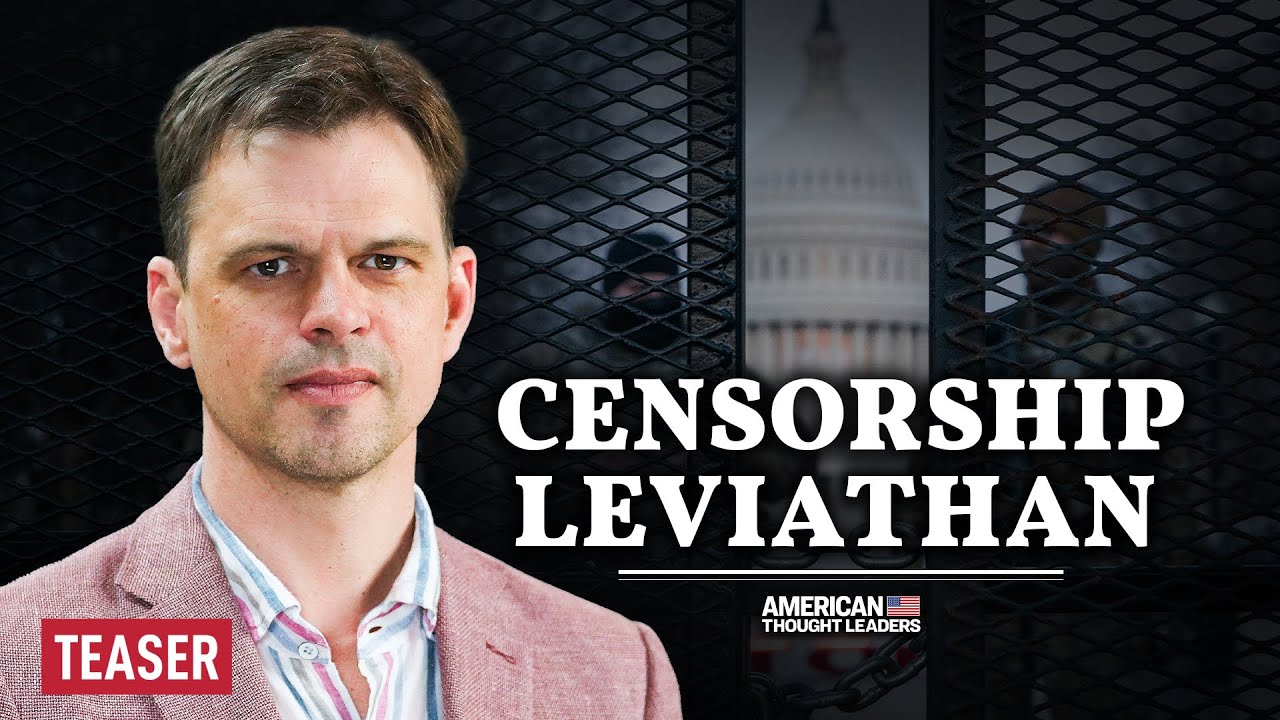
[FULL TRANSCRIPT BELOW] What is the difference between totalitarianism and dictatorship? What is an unjust law, and how do you identify it? What makes some people more prone to being manipulated than others? And what is the antidote to tyranny? We speak with Dr. Aaron Kheriaty, author of “The New Abnormal: The Rise of the Biomedical Security State,” a former psychiatry professor at the University of California Irvine, and the former director of the medical ethics program at UCI Health. Now, he is a fellow and director of the Program in Bioethics and American Democracy at the Ethics and Public Policy Center. Dr. Kheriaty is also one of the plaintiffs in the landmark Missouri v. Biden free speech case. Interview trailer: Watch the full interview: https://www.theepochtimes.com/epochtv/dr-aaron-kheriaty-why-totalitarianism-doesnt-require-gulags-or-concentration-camps-5493512 FULL TRANSCRIPT Jan Jekielek: Dr. Aaron Kheriaty, it's such a pleasure to have you back on American Thought Leaders. Dr. Aaron Kheriaty: It's always great to be with you, Jan. Mr. Jekielek: Earlier today, you said the totalitarian systems of the 20th century always begin by monopolizing what counts as rationality and what counts as knowledge. First of all, please explain that and let's use it as a jumping point. Dr. Kheriaty: When people hear the word totalitarian, they often think of secret police, men in jackboots, concentration camps, gulags, or mass surveillance. All those features are important, but the real starting point and the core of a totalitarian system is an ideology that monopolizes what counts as rationality and what counts as knowledge. What counts as a legitimate question to ask? If you raise your hand and ask an inconvenient question, the Marxist ideologue or the Nazi ideologue or the fascist ideologue doesn't say, "Hey, Jan, let's sit down and debate this question. You present your evidence and I'll present mine and we'll try to learn from one another." They simply say, "You're questioning the ideology because you're infected with bourgeois consciousness." The Nazi will say, "You're just infected with Jew consciousness. You're protecting your own class-based interest. You're protecting your own interest to advance your aims, and therefore you're not worth talking to. You're not part of the enlightened elites that understand the direction of history, and that understand where things need to go. I'm not going to debate you, I'm just going to exclude you from public conversation." That's where the concentration camps, the gulags, and the secret police come in to enforce the ideology. Today, in Western countries, which we don't tend to think of as totalitarian, I'm very concerned about the direction that we're moving in, because if you look at new phenomena and new trends like government-sponsored censorship, they mirror that starting point of totalitarian systems. They put forward a particular ideology or particular public policy proposal and say, "Citizens are not allowed to question this. Citizens are not allowed to present evidence that might call this public policy into question. In fact, if they do so, we're going to label them as dangerous. On social media, we're going to algorithmically exclude them from the realm of public conversation. We're going to limit their reach. We're going to limit the ability of other people to hear their ideas." This is where totalitarian systems always begin. In fact, this is where totalitarian systems always end up. Once the ideology is sufficiently adopted by enough members of the population, once people get used to the idea that they are not allowed to ask questions, they just internalize those prohibitions. At the end point of that process, you don't even need concentration camps, secret police, or mass surveillance anymore. Every citizen becomes a member of the Gestapo or the KGB. Every citizen starts silencing their fellow citizens if they raise any inconvenient questions that might challenge the ideology. According to Hannah Arendt, who studied the totalitarian systems of the 20th century, this becomes the worst form of imprisonment. She draws a distinction between dictatorships that rule through external force and by instilling fear in the population. The citizen thinks, “I'm not going to say the wrong thing because I don't want to get punished by the regime. I'm not going to challenge the dictatorial ruler and his ideas because he might then come down on me or do something to harm me or harm my family.” A totalitarian regime uses external force initially to try to funnel people into the ideology, but eventually, the totalitarian system no longer needs to use external force because people have internalized the ideology. In a dictatorship, at least you still have the interior freedom, even if your exterior freedom is constrained. You still have the interior freedom to think your own thoughts, to have your own opinions, and to have your own judgements. You might voice them only very carefully, and you might not voice them at all, but you can still think about them on your own. But in a perfectly enacted totalitarian system, you don't even have that, because the ideology has become so internalized that the questions no longer occur to you. The dissenting thoughts no longer occur to you. You're in a prison with invisible bars without even realizing that you're in prison. Your interior freedom has also been subsumed into that totalitarian system. Mr. Jekielek: We both have become aware of these parallel tracks, but people are not all the same. There are some people that are incredibly suggestible. In fact, they are so suggestible that if it seems like the societal consensus, the next day they might change their mind. There's another group of people that is somehow immune. We know a lot of these people are just wondering, "What the heck is going on?" Then there's a middle group. In an interview from the 1960s, Aldous Huxley talks about a quarter of the population being easy to hypnotize. There is another quarter which is immune. With everybody else, it just depends on the situation. I've also seen this in Lobachevsky's work, where he talks about how he saw the totalitarian system coming into Jagiellonian University where he was studying psychology. He watched a similar dynamic. There are people that are freedom-oriented or just reality-oriented. I don't know. A freedom-oriented person might say, "No, I'm not going to accept this thing that I'm supposed to believe." I would expect those people will continue to exist. Of course, in these totalitarian states, they're marginalized or even killed. If you agree with me, please account for this. Dr. Kheriaty: Yes, I do. This does seem to be a recurrent phenomenon where 30 percent of people are highly hypnotizable and prone to mass formation. Those that are going along with whatever the authorities are saying or whatever the general consensus appears to be are going to have a diminished ability or diminished interest in questioning that consensus. A smaller proportion of the population, maybe 15 percent, are the people who are less prone to think, "I have to affiliate with the group. I have to go along with the consensus.” They are capable of standing against that tide and that social pressure and really having independent ideas. It doesn't mean that all of their ideas are good. Their ideas may be wrongheaded as well. However, by some combination of temperament and experience, they're not prone to move in that direction. The rest of the folks in the middle, whatever the remainder would be, can go one way or the other depending on their situation and interests. Just putting on my psychiatrist hat for a moment, this probably has something to do with innate temperamental traits that make some people have a stronger felt need for group affiliation, which all of us have. No human being can exist in perfect isolation. John Donne said, "No man is an island sufficient unto himself." Solitary confinement is one of the worst punishments we can inflict on human beings because human beings are social animals. Our bodies and our brains do not function well in isolation from other human beings. We're built to be in relationships. But you could have variation within the population with the need for strong affiliation. You can have some people that feel like, "I can maintain my relationships. I can maintain my place in the social realm without having to agree with other people, without having to hold the same opinions. I can stand against some degree of social pressure that others might find intolerable." With that 15 percent of dissidents in societies who move in authoritarian or totalitarian directions, it's hard for me to identify one particular personality type or one particular type of life experience. You can't identify them based on political affiliation. That group cuts across the typical Left-Right distinctions that we see in American political life. What makes up that group of people that is different from the rest? It's really interesting how the dissidents came to their dissenting opinions. After talking to many of them over the last three years, some of them have experiences coming from a prior totalitarian regime. They know what it was like to live under Soviet communism, one of the Eastern Bloc states, or Cuba under Castro. They say, "I look around now and I can see many of the things that I was fleeing from." You can hear that from people coming to the United States from China these days. There is a convergence between the way in which ideologies are functioning in China with the Chinese Communist Party controlling the flow of information and how people think, with trends that are now developing in Western nations, including the United States. Sometimes it's the life experience of seeing the way that these things can go really, really bad, and lead to seriously harmful directions for society. Other people come at this forged with other life experiences that made them willing to stand up to other kinds of challenges. They decided, "No, I'm not going to go along with this thing. I'm not going to compromise my integrity or pretend to believe something that I have serious doubts about." We need to try to figure out what makes those people tick so that we can cultivate more of that in our system of education, which we're clearly not doing now. Mr. Jekielek: Another trend that I've noticed is that people that have strong faith aren't as impacted. Maybe that could help people who are in the middle group to be inoculated in some way. Dr. Kheriaty: Yes, I agree with you. Very often, it's people of faith that are willing to stand against a regime and question it. Human life is extremely complicated, and no one individual human being is able to figure out everything in terms of how to live and what is true and what is not true. We like to think of ourselves as hardheaded and empirically-minded when testing ideas. But the fact is, most of what we hold to be true is based on faith. By faith, I don't necessarily mean faith and divine revelation, but faith in what other people have told us. I have not actually gone to outer space and definitively seen that the world is round, but apparently some people have. I have no reason to believe that they may be deceiving me about the fact that the earth is round. When you go through any of the subjects you learned in school and most of the science you learned in school, you didn't run those experiments yourself to confirm those findings. You're taking it on the authority of people who are supposed to be experts and who are supposed to know. Most of what we know operates in that fashion, because we're social animals and we're not capable of wrapping our heads around all the complexities of life. People intuitively understand that people want an authority that they can trust. Americans tend to think of themselves as anti-authoritarian and willing to be independent-minded and to challenge consensus. But even rugged American individualists still want a news source or source of information that they can trust. They still want to believe that public officials who have responsibility for this or that aspect of our lives more or less know what they're doing and are doing a decent job. Otherwise, what's the alternative to that? The alternative to that is pretty terrifying—you can't trust anyone, and nobody knows what the heck is going on. If I don't have faith in something transcendent, then the highest authority is going to be some form of human authority. The highest entity, institution, or individual that I trust is going to be whoever society puts forward as the ruling or the governing class. Whereas if I have faith in a transcendent god, or if I have faith in a transcendent moral order that goes beyond my particular society, my particular culture, or my particular moment in history, that allows me to challenge a human authority that also has something above them that they also need to be responsive to. That allows me to understand that there can be such a thing as an unjust law. Martin Luther King Jr.'s, “Letter from a Birmingham Jail,” articulates the idea of civil disobedience. He said, "There are some situations in which citizens are morally permitted and may even be morally compelled to disobey a law that has been enacted by a governing authority." Then the question is what is the criteria for doing that? How do I know if a particular law is just or unjust?” The legal ideology of legal positivism says, "The law is whatever the ruling authority says it is, and you can't really challenge it. The law is just the law because it's declared and there's no higher authority that it answers to.” The older tradition of the classical philosophy of Martin Luther King draws on the ideas of Thomas Aquinas who said, "There is a higher law. There is a higher authority that human law has to be responsive to." There is an idea of justice that is knowable, and that is inscribed on the human heart. This comes from the natural law tradition and philosophy that human laws are either in accord with or they're in violation of the natural law. If they're in violation of the natural law or the higher moral law, then they're not legitimate. “A law that is not in accord with the natural law is no law at all,” would be the formulation from Thomas Aquinas. That is the basis for being able to challenge what otherwise we would take to be the highest authority, which is whatever the government enacts. They are going to punish me if I don't follow it. It's the be-all and end-all of what's right, good, okay, and just. This older classical traditional philosophy says this is true, and you should generally obey traffic laws and criminal laws. But in some circumstances, there are situations in which a law that is passed by a duly elected legislative body may be something that you're actually permitted or maybe even required to disobey. If you have faith in something that transcends your particular historical moment, for most people, that's going to be God. But it could also be a Platonic idea of justice. There were ancient philosophers like Plato and Aristotle who came to many of these same conclusions without faith in divine revelation or a faith that would be analogous to Judaism, Christianity, or Islam. But for most people, that's going to be faith in a transcendent God that allows them to question and to hold up an ideal that is higher even than my own life or my own physical wellbeing, and something that I would be willing to even die for. The highest form of witness to something like that, to a higher truth that should not be violated, are people who are willing to give their lives for that, the people who are martyrs for the sake of the truth. There are dissidents like Aleksandr Solzhenitsyn who said, "Rather than violate my conscience, rather than violate what I hold to be true or what I know to be true, rather than lie publicly or take an oath that I don't actually believe in, I'm willing to sacrifice everything, including my life." There is a film, “A Hidden Life,” which came out a few years ago about a young Austrian man named Franz Jagerstatter. After Germany's takeover during World War II, like all young men in Austria, he was conscripted into the German army, and he was actually willing to fight for the German army. But he was unwilling to take an oath of fidelity to Adolf Hitler, which all the members of the Army were required to do. He said, "No, I'm not going to take that oath because I don't believe it, and because I don't want to pledge fidelity to that man or to his ideology." As the film depicts, he's met with increasing pressure, including pressure from the people around him. His wife supported him and he had two young daughters. But the local mayor, his friends, and even some of the local religious leaders were telling him, "Look, you can believe whatever you want, but just sign the oath. Just do this to save your own skin because you have to take care of your family. You have your whole life ahead of you." The other thing they told him was, "If you dissent and if you're imprisoned or worse for refusing to sign this oath to Adolf Hitler, nobody's going to know about it, because you're nobody. You're an ordinary farmer. You're going to be forgotten by history. Nobody is going to care. It's not going to have any effect on the dynamics of world history or on this war or on anything else. It will just be a useless gesture that will not make any difference." There's a very powerful scene in the film where he's in prison and he's being beaten by one of the prison guards. He's crumpled down on the floor after being bludgeoned and beaten. His face is bloodied and his eye is swollen. He's looking up at his tormentor, and the prison guard says, "If you just sign this piece of paper, then you can be free." My favorite line in the whole film is when Franz looks up at his tormentor in prison after being beaten senseless and says, "But I'm already free. I'm already free because you cannot coerce me to violate my conscience. I have this interior freedom that even this totalitarian regime cannot take away from me." He ends up dying. He ends up being executed by Hitler in the end. He ends up giving his life for the sake of that. He's probably thinking that his friends were right, "Nobody is ever going to know about me. They're not going to make a film about me one day." Yet, he was willing, for the sake of his own integrity, to stand against that regime when everyone else was going along with the flow. Mr. Jekielek: In a sane society, these are the people that we valorize. Dr. Kheriaty: That's right. People today can look back and recognize that was heroic, but dissidents of the current day that are standing against an increasingly authoritarian regime, they very often don't recognize them, or they actually vilify them. It's very ironic. Mr. Jekielek: You mention that he had to pledge an oath. These days, what you need to do to get into a particular university or get a particular job involves signing a cookie cutter, boilerplate statement that, in effect, functions as a loyalty oath. Have you thought about that at all? Dr. Kheriaty: Yes, this is really important. There is a strong argument that in these kinds of circumstances, it doesn't matter what you say. You can believe whatever you want, interiorly. This is just an exterior formality that doesn't really matter. The problem with that argument is, going back to where we started, if totalitarian regimes are grounded in a lie and then defended by prohibiting anyone from questioning that lie, then people have to live in an unreality that everyone knows is unreal, and that everyone knows is not true. Everyone knows it's not just or good, but nobody can say it. That's precisely what sustains that harmful, oppressive regime—the willingness to go along with the lie. Solzhenitsyn, the great Soviet dissident, has a short essay. For those who don't want to wade through the thousand pages of The Gulag Archipelago, it’s a short essay. It's called, “Live Not by Lies.” Rod Dreher wrote a book of the same title a few years ago. Solzhenitsyn asks, “What can ordinary people do in a situation like Soviet communism?” Then he says, “You may not be able to vocally protest and resist the regime, but at the very least, what you can do is refuse to publicly lie." It doesn't mean you have to always tell the truth. There is prudence, there is trying to navigate, and there's a duty to try to not throw your life away arbitrarily when it's not going to do any good. But you have to draw the line where no one can force you to publicly say something that you don't actually believe. Vaclav Havel, the great Czech dissident who later became president of the Czech Republic after the fall of communism, wrote another very powerful essay called, “The Power of the Powerless.” In this essay, he talks about a grocer who runs his little corner store, selling his food and selling his goods. At one point, even though he's not necessarily forced to, there is social pressure around him to go along with the communist regime and to fly the flag. The analogy today would be that everyone during the month of June has to put up the rainbow flag as part of their endorsement of the LGBT ideology. A lot of corporations and individuals will go along with this, whether they actually fully endorse this particular movement or this particular ideology or not. But in his day, it was communist ideology. This grocer puts up a little sign that says, "Workers of the world unite." That may sound innocuous, but it was a Marxist slogan from the Communist Manifesto. In the course of the essay, Havel describes the effect of that little act of compliance from someone who didn't actually believe that slogan or the ideology behind it at all, the effect that it has on his soul and the effect that it has on the wider society when everyone starts behaving in that way. The reason it's important not to lie publicly, to live not by lies, doesn't mean speaking the truth in all circumstances all of the time or saying every single thought that pops into your head in every public or social circumstance. But at the very least, it means not saying something that you know to be false. A society that becomes characterized by that is a society where people end up in that interior prison that I described earlier. It is the interior prison that Franz Jagerstatter saved himself from. He's there in prison and all of his external freedoms have been taken from him. Even his freedom to exist in his body without being subjected to pain has been taken from him. He's being tortured, but he maintains that interior freedom. He's able to look up at the prison guard and say, "I don't need to sign anything. I don't need to tell a lie publicly. I don't need to make this oath because I'm already free." Mr. Jekielek: Someone sent me a recent interview that The Telegraph did with Jordan Peterson. It starts playing and I hear his familiar voice. He says that the totalitarian system is ruled by the lie, which was an absolutely fascinating and apt formulation. I had just never heard that, but this is the exact question. Who actually rules a totalitarian state? Is it Stalin, or whoever? No. I've spoken with a number of solidarity dissidents. During the 1980s, there was a very short time period that was spurred on to some extent by the murder of Popieluszko, the well-known Polish priest who gave his life. In a scenario similar to what you’re describing here, the Solidarity Trade Union grew massively in the span of a month or two. It was some kind of tipping point, and suddenly a third to a half of the population wasn't ready to go with the party line anymore, and they joined the Solidarity Trade Union. At that point, it was over. Sure, the Soviet Union could have come in with the tanks, but for the ruling class at the time it was all over. We're now looking back at history through the events of the present day and wondering how this is all going to play out. Dr. Kheriaty: That's exactly right. The totalitarian regime is ruled by the lie. Stalin's going to die. He's going to be replaced by Khrushchev, and yet the regime soldiers on under the lie of the ideology. If that's the case, if totalitarian society is ruled by the lie and sustained by the lie, then the only thing that can ultimately bring it down is the truth. This is one of the reasons why, when the Polish bishop, Karol Jozef Wojtyla, was elected Pope John Paul II in 1978, the KGB was terrified. The Soviet regime was very concerned because they knew that, at some point, he was going to return to Poland. Napoleon once made the snarky remark, "How many troops does the Pope have?" Of course, the answer is zero. This is not a man who has temporal power. This is not a man who has an invading army that could overthrow any particular regime. He was going to return to Poland, which he did shortly after his election. He was going to stand up and he was going to speak. Given who he was and given his position, he was a person in a position to simply speak the truth. He came back to Poland for his first visit, and that was the seed for the beginning of the solidarity movement. The first thing he said to the Polish people was, "Be not afraid. You're afraid to speak the truth because of this regime, and the first thing that you need to do is to overcome your fear." Then he told religious truths that were obviously from the Catholic faith. It was very influential in Poland, and historically, Poland is a very strong Catholic nation. Obviously, he was talking about Christ, and he was talking about the gospel and divine revelation. But he was also speaking about some basic human truths about what it means to be a human person, to be rational, to be free, to be oriented toward love, and to be fulfilled by being in communion with other people. These are basic human truths that certainly many non-Catholics can understand and accept as well, even if they don't embrace divine revelation or the Christian faith. He spent a lot of time talking about what it means to be a human being, and what it means to live in society without getting political. He never directly criticized the regime, but everyone knew exactly what he was doing, and there was widespread panic in Moscow. That's one example. There were other examples of heroic individuals in Poland and elsewhere in the Eastern Bloc standing up and being willing to speak the truth. In a sense, that avalanche can start with one person. You mentioned someone who had been martyred. Martyrdom is the highest witness to the truth. It is someone who believes something so strongly that they're willing to make the ultimate sacrifice rather than deny it. Mr. Jekielek: Pope John Paul II was known for his integrity, and there's general agreement around Popieluszko, as well. There have been a lot of attempts to dirty up people who are known for their integrity, perhaps because they have this ability to push things in a different direction as they hold their moral ground. Dr. Kheriaty: Yes, that's right. The regime that is based on lies is always going to want to tar and feather and undermine anyone who's willing to tell the truth. You can find something on everyone. Nobody's perfect. Even a great man like we've been talking about, or a great woman of tremendous integrity, is going to have flaws. If you have a regime based on lies, they have no scruples about simply making things up and propagandizing and telling straight-up lies about a person to smear them and tarnish them. This is very characteristic of totalitarian societies. They don't want martyrs on the other side that inspire movements or embolden people. Cowardice is contagious, but courage is also contagious. They will do everything that they can to silence that person or to tarnish that person's reputation. Mr. Jekielek: Initially, you had no intention of becoming a lightning rod. You were at University of California, Irvine, and in charge of the medical ethics department. You lost your job because you took a stand. I encourage others to look back at some of our earlier interviews and learn about your story. Today, you're in the midst of everything again. You’re one of the private plaintiffs in the Missouri v. Biden lawsuit. Where are things at with this lawsuit? Dr. Kheriaty: Government-sponsored censorship and even censorship by large, extraordinarily powerful private entities like social media companies, even if they're doing it on their own and not at the government's bidding, both of those things are actually happening now. The issue of censorship is so vital. First Amendment and free speech rights are so vital right now because of where we are at. We're at a hinge point, Jan, in the sense that there are two paths that we may go down. It's not yet been determined or decided which direction that this country and other western nations are going to move in. One direction would be in a direction that is totalitarian in spirit, in the sense that we would end up being ruled by technocrats and by so-called experts. Most of them are unelected and are working for public, private, or quasi-private entities that are publicly funded. Mr. Jekielek: Public-private partnership is now the favorite term. Dr. Kheriaty: They could be called corporatists. The melding of state and corporate powers is corporatism, or another word for that literally is fascism. That was Benito Mussolini's definition of fascism, the merging of state and corporate power. We are moving in that direction where, basically an elite group of supposedly enlightened, agnostic elites decides what direction history is moving in and where things need to be going. That's a society that most Americans don't want to live in. We have already moved in that direction, certainly in the last four years, but even in the last 20 years, beginning with the War on Terror and the Patriot Act. They built on the threat of terrorism, and then the threat of danger to public health and safety. These things have been used as a fulcrum, as a kind of lever to increase the powers of surveillance and control by means of digital technologies, by means of financial instruments, and by increasing centralized power and control over people's lives. With censorship, you get to the point where you build a system that is capable of sustaining lies, that is capable of sustaining ideologies and obstructing anything that would question that ideology by not allowing certain ideas, by not allowing certain questions, and by not allowing evidence that might contradict this regime to ever emerge into public consciousness. If that is done with a sufficient level of intensity and that system is perfected, it really becomes impossible for people to find sources of information and to track down dissenting opinions or ideas. It becomes virtually impossible for those ideas to spread when most of the communication is happening online. In this major ruling from the Fifth Circuit Court, which was reviewing the injunction that the district court had placed against the government, the court was telling the government, "You have to stop pressuring social media companies through coercion or even through what the law calls significant encouragement." That also violates the Constitution. The court said "You have to stop coercing or even significantly encouraging social media companies to censor content that is protected by the First Amendment." The government appealed that decision to the Fifth Circuit Appellate Court, and the three judge panel in the Fifth Circuit upheld that injunction against the government. They ruled that the White House, the Surgeon General, the CDC, and the FBI were clearly in violation of First Amendment rights when they pressured social media companies. Even before the case goes to trial, even at this very early stage of discovery, plaintiffs have already presented enough evidence that those four agencies and likely more that were named as defendants were engaging in unconstitutional behavior, violating the highest law of the land, and the First Amendment of the United States Constitution, and that they needed to stop. I trust that eventually this case will end up at the Supreme Court in terms of the final ruling, if not the injunction, and eventually we'll have a landmark-setting case at the Supreme Court, which will hopefully set a precedent that will push back on government overreach and government attempts to operate an Orwellian ministry of truth. Mr. Jekielek: You're a private plaintiff in this Missouri v. Biden case. What does that mean to you personally? Dr. Kheriaty: It means a lot to me, because I was personally censored for information that turned out to be true, and I have now been vindicated. The information is widely accepted and endorsed by the CDC and other mainstream public health agencies. Mr. Jekielek: Which information is that, by the way? Dr. Kheriaty: I was censored on things related to natural immunity for Covid. I was censored on concerns about the safety and efficacy of vaccines, which have turned out to be quite legitimate and supported by plenty of research. I was censored for my ethical opinions on vaccine mandates. The first time I was censored was a conversation I had with an independent journalist who actually got fired by her employer after having that interview. That profoundly affected her life, and she was fired. The interview was taken down off YouTube. What's interesting about that interview is that I was not discussing any safety or efficacy issues related to the vaccines. I was just discussing ethical issues related to vaccine mandates. It was just an ethical analysis. Mr. Jekielek: Which, by the way, is your expertise, and this is what you teach. Dr. Kheriaty: Yes. At the time, I was the director of the medical ethics program at the University of California, Irvine. I was on the Orange County Healthcare Agency's Vaccine Task Force. I had the expertise to speak on the issue of the ethics of mandates. They were not just censoring scientific information or information claiming to argue different scientific viewpoints, they were censoring philosophical arguments about ethics and about public policy. This is important to me as a confirmation that not only were the social media companies doing this to me, but they were actually doing this to me at the direct behest and under the directives of the federal government, who were clearly violating my constitutional rights. But it means even more to me because we recently petitioned the court to convert this to a class action lawsuit, which means the five of us private plaintiffs are now not just representing ourselves who are censored. We're representing all Americans who were censored under this regime. I'm very happy about that. I'm very proud to be a stand-in for anyone who doesn't have a public voice, who doesn't have a microphone, and who is not being interviewed by journalists like you to represent their interests. These are the people that felt powerless in the face of the censorship leviathan. These are the people who were hammered. Censorship affected their small business, censorship affected their ability to share information, and censorship affected their ability to share their political opinions. It's those folks that need a voice out there. I'm very happy that the five of us private plaintiffs are able to represent all Americans who are affected by this censorship leviathan. Mr. Jekielek: It's fitting that in your role of running this medical ethics program at UC Irvine, you felt compelled to act on those ethics that you taught, and ultimately get fired by not following the vaccine mandates that were imposed on you. Now, you are in a position where you have a platform to once again teach ethics through not just theory but action. Dr. Kheriaty: Yes. God's providence is very mysterious, and so it's humbling to be here having this conversation with you. It's humbling to be part of a case that probably will go down as a landmark free speech case in United States history. I'm glad our case is bringing attention to these issues. I want to also thank the Twitter Files journalists, my friend Andrew Lowenthal, Matt Taibbi, Michael Shellenberger, Paul Thacker, and others who have done great work on the journalistic end to draw attention to what Shellenberger calls the censorship-industrial complex. This is going to take journalists, and it's going to take legal action. It's going to take people talking around the water cooler and sharing this information with their friends and colleagues to fight this battle, not just in the courts but also in the court of public opinion. Both of those are equally important right now if we're going to start dismantling this censorship regime. We have a large segment of people in Western nations who are now questioning things that they never questioned before, after their experience of what happened during Covid, which is a good thing. Some people are emerging from that fog and saying, "Wait a minute. I never used to question what came out of the CDC and never questioned the integrity of our public health agencies or the integrity of other federal agencies. But now, I'm wondering if there's some corruption going on there. I'm wondering if what I've been told about the science is actually trustworthy." That's a good thing. I don't know what percentage of the population, but a significant segment of people have been chastened by the disaster of our Covid response. It's now time for those people to recognize that the problems that we saw for the last three years go well beyond Covid. In the Missouri v. Biden case, the private plaintiffs were initially focused on Covid censorship because that's what we were censored on; Covid-related content or content challenging the government's preferred pandemic policies. But what we've uncovered on discovery in that case is that there are many more federal agencies involved in this censorship machinery than we initially thought. Initially, we were focused on public health agencies like the CDC or the NIH and the White House and the Surgeon General, but now there's at least a dozen federal agencies that have been named as defendants in this suit. They range from the FBI to the Department of Homeland Security. Even the Treasury Department and the Census Bureau were involved in censorship. The range of issues where the government was censoring the speech of Americans online goes far beyond just dissidents challenging Covid policies. Basically, it could be almost any contentious political issue in American public life, from foreign policy issues like our withdrawal from Afghanistan to the Ukraine War to monetary policy. You might have been censored by the government about gender ideology or abortion. These are highly contentious issues of great public importance in American life, and the government was engaged in putting its thumb on the scale and controlling what could and could not be said online. Americans need to realize that this has been happening, wake up to it, and recognize that, "Sorting through a complex sea of information is a difficult problem, but this can't possibly be the right solution to that problem." Mr. Jekielek: We are currently seeing the beginning of a messaging campaign similar to the beginning of Covid, talking about the need to have a mask mandate. Some institutions have started doing that again. What are you seeing right now? Dr. Kheriaty: There are certainly rumblings now. There are trial balloons going up to see if the powers can reassert another level of control over micromanaging human behavior, from masks to vaccine mandates to some of the other things that we saw during the pandemic. Now, there is less public willingness now to go along with those things. There's a lot of people who are at least saying, “I’ll see what I will do.” Others are saying, "I complied with that in the past, and I regret having complied with that. I'm not going to do it again in the future." Mr. Jekielek: A number of institutions have actually put in the mask mandate, and a few days later dropped it. Dr. Kheriaty: They withdrew it. The solution to this now has to be behavioral. It's not enough to say that you're not going to comply. You actually have to not comply. You have to walk into the public space, and when you're told to wear a mask, just simply and flatly refuse, like the old lunch counter sit-in of the civil rights movement. You can say, "No, I'm not going to move. You could send in the police here to arrest me if you want, but you're going to have to use force to either make me put this thing on my face or remove me from this place where I belong just like everyone else." Mr. Jekielek: It seems like such a small gesture. Again, this is what we've been talking about during this interview. It's all about the small gesture. Dr. Kheriaty: Yes, that's right. It’s refusing to move to the back of the bus, and refusing to leave the lunch counter. Anyone who participated in that movement knew that one gesture alone was not going to accomplish anything, and that one gesture alone could easily be crushed by the powers that be. But they had enough trust in their fellow members of society and the others in this developing movement to think, "No, I'm not going to be the only one. I'm not going to be standing alone." The one small gesture of just this one ordinary individual does in fact matter. People need to develop that confidence today and that trust in each other. In fact, what ordinary Americans do matters very much. If a sufficient number, and it doesn't have to be a majority, just a sufficiently strong minority simply refuses to comply, these kinds of authoritarian measures will actually disappear almost immediately. There is insufficient force to crush everyone in the resistance. If it's just one or another dissident here and there, they can take them out. They can fire them. They can silence them. They can censor them. But if it becomes 5, 6, 7, 9, or 10 percent of the population, then it’s game over. Mr. Jekielek: Dr. Aaron Kheriaty, it's such a pleasure to have you on the show. Dr. Kheriaty: Thank you, Jan. Mr. Jekielek: Thank you all for joining Dr. Aaron Kheriaty and me on this episode of American Thought Leaders. I'm your host, Jan Jekielek. To get notifications about new Kash's Corner and American Thought Leaders episodes, please sign up for our newsletter! Here 👉 Get Alerts - PRE-ORDER "The Shadow State" DVD: https://www.epochtv.shop/product-page/the-shadow-state-dvd The Real Story of January 6 | Documentary BUY Jan 6 DVD: https://www.epochtv.shop/product-page/dvd-the-real-story-of-january-6, Promo Code “Jan” for 20% off. - Follow American Thought Leaders on social media: Twitter: https://twitter.com/AmThoughtLeader Truth Social: https://truthsocial.com/@AmThoughtLeader Gettr: https://gettr.com/user/amthoughtleader Facebook: https://www.facebook.com/AmericanThoughtLeaders Gab: https://gab.com/AmThoughtLeader Telegram: https://t.me/AmThoughtLeader
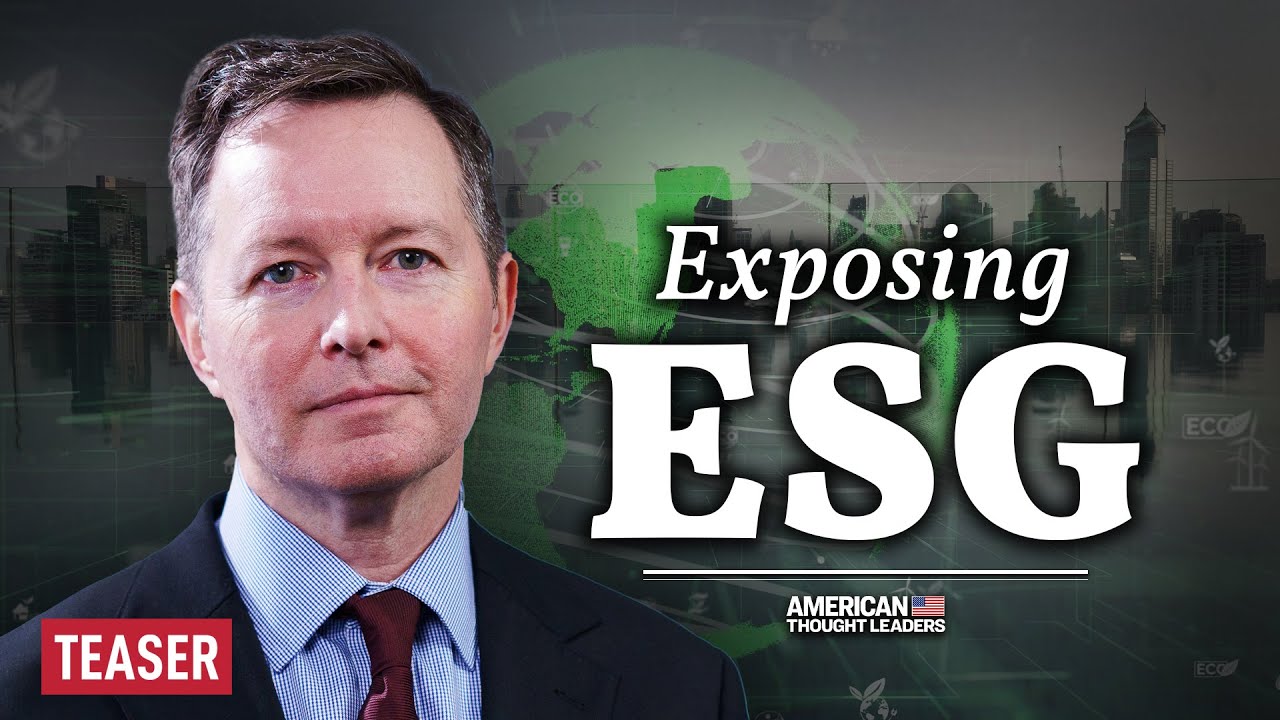
- Kevin Stocklin on the ESG 'High Priests of Society' Transforming Corporate America
[FULL TRANSCRIPT BELOW] “The genius of the ESG movement—and we have to recognize how clever this movement actually is—is they are able to find the pressure points. And so they’re able to find who can we go to to essentially get leverage over these companies.” In this episode, I sit down with Kevin Stocklin, writer and producer of "The Shadow State," an EpochTV documentary that investigates the industry of environmental, social, and corporate governance, also known as ESG. “If you're a farmer, you pretty much have to dance to their tune. And they have gone out and they've said to their farmers as a result of the ESG movement, ‘This is what we want you to do. This is how we want you to produce. These are the processes that we want you to follow if you're going to sell to us,’” says Mr. Stocklin. “It's the banking industry, it's the asset management industry, and it's the insurance industry. And if you can get these folks on board, you can control everything else.” How does the ESG mechanism work? Who are the players involved? And is there a way to push back? “We're starting to see the power that private industry has to control us in a way that, in the West at least, the governments legally can't do,” says Mr. Stocklin. He explains how ESG is both an industry and an ideology. Put simply, it is a way to use consumer money to impose a progressive agenda on the private sector in America. “Even though it's our money that's funding the whole thing, they basically are the ones that have the votes, and they're able to put pressure on companies to essentially do what they want them to do,” says Mr. Stocklin. Interview trailer: Watch the full interview: https://www.theepochtimes.com/epochtv/is-esg-illegal-kevin-stocklin-on-the-new-high-priests-of-society-transforming-corporate-america-5491828 FULL TRANSCRIPT Jan Jekielek: Kevin Stocklin, it’s such a pleasure to have you on American Thought Leaders. Kevin Stocklin: Thank you for having me on. Mr. Jekielek: You've had The Shadow State documentary out for quite some time. You've also been writing on all issues related to ESG for The Epoch Times, and I've learned a lot from your writing. ESG is still kind of amorphous in a lot of people's minds. As with a lot of things in our current cultural moment, it hides behind high-sounding words. Please explain what this is. Mr. Stocklin: We have to understand ESG both as an ideology and as an industry. As an ideology, it’s an umbrella of progressive issues. It's everything from climate change and reducing carbon emissions to social justice, racial equity, and economic equity worldwide. That's the ideology of it, but it's also an industry. It has tens of trillions of dollars behind it, and these trillions are used to really arm-twist corporate America into getting behind the program. The simplest way that people can understand ESG is that it's a way to use other people's money, effectively our money, to impose a progressive agenda on the private sector and on the United States. Mr. Jekielek: It's hard to imagine how corporate America has come on board with all of these ideological agendas. Please trace how that happened, because it certainly wasn't like that 20 years ago. Mr. Stocklin: The big picture of this is really a shift in how Americans save their money, if I could just take a step back and put it that way. There was a time when if you wanted to save for your retirement or your kids' college or to buy a house, you might buy shares in AT&T or GE. But over the past several decades, we've seen the rise of the fund industry, whether that's mutual funds, ETFs [Exchange-Traded Funds], index funds, or pension funds. This means that there is now an entire industry between us and the company. Before we would have been shareholders in AT&T, but now we are no longer shareholders. We are now what is called the end investor. We don't own shares in AT&T, we own shares in these funds. The fund managers, BlackRock, Vanguard, or State Street, are the ones who buy shares in these companies. They're the shareholders and they have all of the votes when it comes to voting those shares. In addition to the whole industry that's sprung up between us and the companies, we also have rating agencies and all sorts of nonprofit pressure companies. They are able to act on these companies, even though it's our money that's funding the whole thing. They basically are the ones that have the votes and they're able to put pressure on companies to essentially do what they want them to do. Mr. Jekielek: It's the rise of these middlemen. In the case of BlackRock, does it have the level of assets of the entire U.S. economy under its management? It's some astronomical number that is almost unfathomable. Mr. Stocklin: It is close to that. Depending on how the market is doing on any given day, BlackRock has between 8 and 10 trillion dollars under management. The three largest index fund managers are BlackRock, Vanguard and State Street. Between the three of them, they have close to $20 trillion of assets under management. That's about equal to the U.S. GDP. Just to give you some stats on this, 75 percent of all the shares in U.S. companies are currently owned by these institutional asset managers vs. private people going out and buying shares directly. Those top three asset managers, Vanguard, BlackRock, and State Street, are the largest shareholders for about 90 percent of the companies in the S&P 500 today. One or some combination of those companies are the largest shareholders in those companies, whether it's Apple or Alphabet. It gives you a sense of the power that a very small number of these asset managers have over private industry. Mr. Jekielek: There's an example of that power where the Exxon board was reorganized by these asset managers. Do you remember that? Mr. Stocklin: Yes. It was a very small activist investment firm and shareholder called Engine No.1, and their plan was to put environmental activists on the board of Exxon. As we know, it's an energy company, and they produce oil and gas. They were able to leverage their relationships with BlackRock, State Street, Vanguard, and also with some of the activist state pension funds, CalPERS and CalSTRS out in California, and put together a coalition of shareholders that essentially forced Exxon, against the wishes of management, to put these three activists on their board. Their goal was to divert Exxon away from producing oil and gas towards producing so-called renewable energy. Mr. Jekielek: I never imagined that a company with the size and stature of Exxon could be coerced into doing anything. Mr. Stocklin: That is the genius of the ESG movement, and we have to recognize how clever this movement actually is. They're able to find the pressure points where they can go to essentially get leverage over these companies. They found that they can't talk to the however many millions or billions of shareholders or consumers out there. But they can find this shortlist of asset managers and pension fund managers who actually pull the strings when it comes to shareholder votes. They were able to do this with a company as large as Exxon, one of the largest companies in the world. Mr. Jekielek: You were showing me how the World Wildlife Fund thinks about this in their own words. Let's roll that clip. Audio: We actually need collusion around sustainability at every level with every type of institution. Where do we start? Who do we work with? How do we work on these issues? This is new ground for us. We decided we needed to map it out. There's 6.8 billion consumers, give or take, maybe closer to 7 billion today. Do we work with all those? Do we work with the 1.4 billion producers of all these different products? Do we change the way they produce things or do we focus on the narrower neck, the pinch point in each of these commodities where 300 to 500 companies control 70 to 80 percent of each of those 15 commodities that we care about? We decided that this is the strategy that we could actually get our arms around. Mr. Jekielek: They're talking about the actual pinch points, and have figured out if you can get the right leverage in the right places in the system, you can exert an incredible amount of control, but not even be that significant in the system. Mr. Stocklin: This is another case of someone in a moment of hubris saying the quiet part out loud. First of all, he talks about collusion between companies, which is illegal, but he's not worried about that. He's also not concerned about the billions of consumers out there and doesn't bother with them. Neither does he want to bother with all of the farmers out there who are actually producing beef, in this case. They're trying to control the beef industry. They say, “We're not concerned about them either. We're going to go to the very large food manufacturers and food processors. There's just a few of them that control the buying and the selling of agricultural products. We're going to go to them and we're going to get them on our side.” It speaks to the underlying beliefs of this ESG movement that we as consumers, farmers, and small family-owned companies shouldn't have a voice in any of this. We should not have a say in any of this. We should do what we're told by these key industry insiders. Fundamentally, this is one of the most anti-democratic movements that has ever arisen. Mr. Jekielek: I rewatched The Shadow State recently, and I was reminded that Nestle has become the largest food company in the world. I knew about them from years ago because they were very interested in cornering water sources, which a lot of people were very concerned about. I was at a primatological society conference a long time ago. One of my advisors was the guy that was running UNICEF at the time. He wanted to get me to put some disparaging remarks about Nestle's behavior into my speech. At the time I was thinking, "Should I really do this? Do I really want to have Nestle on my case?" Of course, there was definitely some questionable behavior there. Fast-forward to today, and we have these Agenda 2030 sustainable development goals, and a company like Nestle is completely on board. It signals a really huge shift over a relatively short period of time. Mr. Stocklin: The food companies, Nestle, Danone and General Mills are supplied by hundreds of thousands of small farmers, but they are what's called a monopsony. They are a very small list of buyers, so if you're a farmer, you pretty much have to dance to their tune. The ESG movement has said to their farmers, "This is what we want you to do. This is how we want you to produce. These are the processes that we want you to follow if you're going to sell to us." If a farmer doesn't want to sell to Nestle, they're out of business unless they can build up a local clientele to buy their products, so farmers are really held hostage to this. But again, it speaks to the graph that the gentleman in that video clip put up. He asks, “Why should we bother with all the hundreds of thousands of small farmers when we can just go to Nestle? If we can get Nestle on board with the agenda, the farmers will follow suit because they have to.” One of the things that this movement really hates is animal agriculture, particularly beef. They feel that it’s too polluting, and they also don't want things like synthetic fertilizers. They're able to go to Nestle and companies like this and get them to lean on the farmers, in addition to everything that's coming down through laws. Mr. Jekielek: You make the case in the film that these sustainable development goals are driving a lot of this. This is an international institution and these are international goals. Are things somehow coordinated around these sustainable development goals at the UN? Mr. Stocklin: ESG originated back in 2005 at the UN. The UN has their sustainable development goals, environmental and social and economic, but ESG developed as a way to get the private sector on board. It's one thing for governments to make laws, but in a country like the United States, so much of our society is outside of government control. It's privately-owned companies and private decisions made by individuals. The whole ESG movement was set up to address the question, “How do we get the private sector on board with this ideology, while at the same time getting government in lockstep with the ideology?” Those are the roots of the ESG movement. Then the World Economic Forum set up a strategic partnership with the UN and said, "We're going to push this as well." You have WEF members such as BlackRock that are happy to then filter it down. But again, the genius of the movement is the search for these pinch points in the world of finance. It's the banking industry, it's the asset management industry, and it's the insurance industry. If you can get these folks on board, you can control everything else. Mr. Jekielek: Kevin, how did you come to be thinking about all these things? You were in finance, and quite liking it. How did this all come about? Mr. Stocklin: I'll try to give you the short version. My career in finance actually started in Prague, and I was working with Citibank there. That was such an education because they were rebuilding an open society, a democratic system, and a free market system. Mr. Jekielek: This is right after 1989. Mr. Stocklin: Yes, exactly, in the early 1990s. They were recovering from decades of socialism and communism. They had to set up a currency, a legal system, and property rights. They needed to get people to have faith in the system, start their own companies, and confidently feel that they could speak freely. I was watching them try to rebuild this system from scratch. After that, I moved back to New York and worked on Wall Street. Today what I am witnessing is that we are working in reverse in many ways in this country. We are recentralizing authority, and we are losing free speech and property rights. That led me to start investigating and writing and speaking out on these issues. But with ESG specifically, in company after company, whether it's Coca-Cola, Disney, Target or Anheuser-Busch, they're starting to behave in very strange ways. They are doing things that are alienating huge portions of their customer base, and they're wading into these very controversial political issues. For example, Coca-Cola decided to fight the state of Georgia over voter ID laws, when the overwhelming majority of every racial category supported them. The question in my mind was, "Why are these companies behaving in such a strange way? It's so punitive for shareholders. It's hurting their sales, and it's destroying brands." That was the question that brought me to the ESG industry. I asked, “Why would companies behave in such an irrational way?” Then you realize that they actually are behaving very rationally, and they are doing what their shareholders want them to do. Even though it's our money, we're just the end investors, and we're not the shareholders anymore. All of those trillions of dollars are going through these small asset managers. They are the shareholders, and these companies are responding to what the shareholders want them to do. Mr. Jekielek: Just to clarify, the small asset managers, is that BlackRock? You said that it's going through these small asset managers. Mr. Stocklin: The large asset managers are the big players. We always single out BlackRock just because they are the largest and have been one of the most vocal, but they're not the only one by far. Quite a few other asset managers are on board with this, along with state pension funds. BlackRock has really just become the lightning rod, but they're not behaving that much differently from many other asset managers today. Mr. Jekielek: I do have this clip with Larry Fink of BlackRock talking about the mentality or the approach that's used in this context. Let’s roll that clip. Audio: Behaviors are going to have to change, and this is one thing we're asking companies. You have to force behaviors, and at BlackRock we are forcing behaviors. 54 percent of the incoming class are women. We added four more points in terms of diverse employment this year. What we are doing internally is that if you don't achieve these levels of impact, your compensation could be impacted. You have to force behaviors, and if you don't force behaviors, whether it's gender or race, you're going to be impacted. That's not just with recruiting, it is also development, as Ken said. Ultimately, it's still going to take time. But I am just as much shocked as Ken is that we have not seen more opportunities, and that we're going to have to force change. Mr. Jekielek: First of all, he's talking about how we have to be into everything, even stuff we don't like, which is interesting. Then he's talking about the thing that we can use is our vote, and then he's talking about forcing behaviors. Wow. Mr. Stocklin: What made these firms as rich as they are and as big as they are was the rise of the index funds. An index fund basically buys every company in an index. If it's the S&P 500, you go out and you buy those 500 companies. The point that Larry Fink is making is that if I don't like what Exxon is doing, I can't really divest out of Exxon. They're in the S&P 500 index, so I have to own them. The only power that he really has as an asset manager is the shareholder vote. Again, this is a case of saying the quiet part out loud. A proxy vote is BlackRock, Vanguard and State Street and pension funds voting on our behalf, voting on the behalf of the end investors. That's where the power is, and that's explicitly what he said in this interview, "That is the power that I have, and I'm going to use it to the nth degree." In addition to the asset managers, there are the proxy advisors, and this is a duopoly. There are two companies, ISS and Glass Lewis, and together they have about 98 percent of the proxy advisory vote. What do they do? All of the state pension funds that cannot necessarily research the tens of thousands of shareholder votes that may come up across their whole portfolios, they go to these advisory companies and say, "How should we vote on this issue?" Then the advisory companies advise them. It turns out both of these proxy advisory companies are supporting all of these sustainability goals. They have said, "They don't necessarily have to follow our advice," but it turns out more than 90 percent of the time, all of these state pension funds and all these other asset managers do follow their advice. It speaks to the power of the proxy vote and how you are able to control corporations through this system. Mr. Jekielek: Please explain to me how these asset managers have gotten behind this ideology. You mentioned the World Economic Forum, which is a favorite punching bag these days. It's like people ascribe all sorts of things to them. Who are they, and what role do they actually play in influencing this behavior? Mr. Stocklin: It's very interesting to try to assess the motives in all this and what drives them, and there certainly is a profit motive. It's very good to be in business with the government. When it came to handing out a lot of the Covid relief funds, BlackRock was chosen as the gatekeeper of who's going to get money. There's a revolving door between the Biden administration and BlackRock officials, who are very much moving back and forth. The ties are very close. To what extent are these people true believers, and do they actually believe that these are worthy goals? I think a lot of them do. A lot of them may feel that because of climate change or because of racial inequities that they are doing God's work or acting morally and that they are kind of the high priests of society in some ways. I think there may be some true believers as well. The companies that go along and play ball, they tend to do very well. The government shines on them, the government doesn't regulate them, the government doesn't question their monopolistic positions, and the government might give them a lot of subsidies. It's a combination of goodwill and profit-seeking. Mr. Jekielek: But the reverse is also true. The ones that don't play ball may suddenly invite some regulatory oversight. Mr. Stocklin: We've seen cases of that too, and Elon Musk is a high profile example. He acquires Twitter and it becomes a free speech platform, and then suddenly he's subject to a government investigation. Isn't that interesting? With his ESG rating for Tesla, which makes EVs, you would think this would be at the top of the ESG scores. Tesla is well below companies like GM, which predominantly makes internal combustion engine cars, but GM is willing to play ball. GM is willing to build EV factories. GM is willing to say, "We're going to convert our fleet to electric cars within the next decade." Then you have Elon Musk who exclusively makes electric cars, but he's doing all this nasty stuff with Twitter. He’s letting people say what they want to say, so he's being punished for that. Mr. Jekielek: It was kind of nuts for Bud Light to do that particular marketing campaign with Mulvaney. It just made no sense at any level, except for to keep your ESG score up. Mr. Stocklin: Yes, and there are outside pressure groups as well. The Human Rights Campaign has been very active in rating companies. They have their corporate equality index and you want to score high on that. If you're a CEO, that's essentially going to make your life a whole lot easier. Disney is an interesting case study. Disney has been destroying their brands for years now, whether it's Star Wars, Indiana Jones, or Snow White. They pursue the progressive stories that they feel that it's important for them to tell. But the cost of this to Disney is losing subscribers and losing visitors to their park. Their sales are down, and their share price is down. None of this is good for the end investors, but it may be fine for the shareholders. BlackRock doesn't care either way about the share price, they're going to get their fees either way. An issue came up with Florida parents' rights laws. Basically, the law said, "Don't teach or raise or discuss sexual topics to kids in school between kindergarten and third grade." Most people would think this is not too crazy, and most parents seem to support that. Bob Chapek, the CEO of Disney, Initially said, "We're going to stay out of this. We're a media company. This is not our thing." As time went on, he got a lot of pressure from some internal employees, but we weren't privy to those conversations. Presumably, he got some pressure from some outside groups as well. He was forced to change his ways and jump in and fight Florida over this. This has turned out to be a huge mess. He lost his job a few months after that. The returning CEO, Bob Iger, then said, "We wish we were never dragged into that controversy," as if anybody ever dragged them into it. This is a case study of how a CEO is trying to run a company profitably, and then is being dragged into, and effectively arm-twisted into jumping into these highly controversial political issues that end up costing them sales, costing them profits, and hurting their share price. Mr. Jekielek: These companies themselves will have activists. They know they have the weight of the system behind them, so they can be very vocal and they'll get supported. Then you have these activist organizations that have indices, like Human Rights Campaign that are on the same team. You have a company like Vanguard or BlackRock also exercising their vote to push the same agenda. Then you have the government, or at least the administrative state saying, "Yes, this is exactly what you need to do, and don't worry, we won't regulate you." All of this is essentially working in the same direction. The only thing that's working in the opposite direction is the consumer. Mr. Stocklin: Yes, there has been a philosophical shift behind all this. If you're managing a company, the philosophy is what's called shareholder capitalism. You manage a company for the owners. You manage a company to maximize profits and maximize the share price for the benefit of the owners. There were some problems with this, some externalities with pollution and things like this, but the idea was that it imposed discipline on a company. It was a very quantitative clear assessment of what your job was and whether or not you were performing your job. But then there was a shift to what is now called stakeholder capitalism, and everybody got on board with this. This was officially approved by Jamie Dimon, the CEO of JP Morgan Chase, who was the head of the Business Roundtable at that time. He announced, "We're now shifting to stakeholder capitalism. Instead of managing the company for the benefit of the shareholders, we're now going to manage it for the benefit of the stakeholders." Who are the stakeholders? It's everybody. It's the employees, it's your neighbors, it's the environment, and it's whatever activists may be out there. Mr. Jekielek: In many cases, as we've learned on this show throughout the years, communist China is also a stakeholder. Mr. Stocklin: In some cases, yes, they can be. However, there are two elements of society that have absolutely no say anymore. They are the consumers who buy these products, and they are the end investors, the people who put up the money. Those two have been completely boxed out of this whole process. Mr. Jekielek: Which is counterintuitive. Mr. Stocklin: Yes. One thing that is so important to understand about U.S. society, it's not just about political freedom, it's about economic freedom as well. That's what we're losing here as consumers and as savers. That we've lost our vote in terms of what we want to buy, what we want to have supplied to us, what kind of food we want to eat, and what kind of cars we want to drive. We've lost our vote as investors as well, because now we're end investors, and we're not shareholders anymore. Mr. Jekielek: You said that BlackRock collects their fee anyway, and they don't actually care about the value of the company. How can that be? Please explain that. Mr. Stocklin: If I'm an asset manager, and I'm paid a fee on investments in my fund. I would like that fund to go up because if it goes up 10 percent, my fee is 10 percent higher. If it goes down 10 percent, my fee is 10 percent lower, but I'm still getting a fee either way. On the other hand, if I am an end investor and Anheuser-Busch's share price tanks by 20 percent, that's a direct loss for me, and I've lost that much money. People often think of shareholders as wealthy Wall Street fat cats, and why should we care about them? Now, we are the shareholders. We are the retirees. Whether we're saving for pensions or our children’s college or to buy a house, this is our savings. What it means is when a company's share price is less valuable, we have less money for retirement, to pay for education, to buy a house, or do anything else that we want to do with our savings. The pain when a share price tanks like that is felt by us much more than an asset manager that may have 500 companies across the S&P 500 in their portfolio. Mr. Jekielek: This is a good explanation why BlackRock might be pushing all sorts of money into an incredibly exposed place, and creating a lot of unnecessary exposure for its shareholders, because they get paid anyway. If they get paid a lot by communist China, which they do in huge amounts, that changes the equation somewhat. Mr. Stocklin: It does. The interesting thing about ESG funds is they actually tend to get higher fees, and the reason is that an index fund is what is called a passive fund. They just go and they buy the index, and you can automate that to some extent. But if you are looking at an ESG fund, you have an asset manager that's actively going and choosing companies. They're assessing how compliant they are with ESG. Those tend to be higher fee funds, and asset managers tend to get paid a higher fee if it's an ESG fund vs. just a straight index fund. There's certainly a motivation, and the trend has been towards the index funds, because they are lower fee funds. As it turns out, they perform just as well as the managed funds. ESG was a way to revive the asset management industry. Now, we have a new opportunity to earn those fat fees that we were losing by everybody shifting to index funds. That was also part of the motivation. Then there's a whole industry that is now earning their income from this. There are all the ESG rating agencies that now exist and attached to them are these ESG consultancies. You can hire ESG consultants to advise you on how to get your ESG scores up. There are the ESG accountants. We are going to be seeing green accounting according to the new SEC regulations, so there's a whole new industry. A lot of people's livelihoods are now dependent on keeping this ESG business going. Mr. Jekielek: We've seen these backlashes with Target and Bud Light have to do with people becoming aware of this outrageous behavior. Mr. Stocklin: There are isolated cases of that. Bud Light is probably the most high profile example right now, and also Target and Disney to some extent. The issue is that those are consumer-facing companies. Disney is a family entertainment company, and Bud Light also has their clientele. In these cases, they were really hurting themselves by taking on these political campaigns. On the other hand, you have a company like Nike that probably actually did well from their support of Colin Kaepernick and all of the positions that they've taken. It really does vary. Here's a case in point on consumer choice. Ford makes all their money from these big trucks and SUVs. They are being pressured now to shift their fleet to EVs. How are they being pressured? One, there are new EPA emissions regulations that are coming out that basically the only way that they can comply is if two-thirds of their fleet within the next 10 years will be EVs. Two, there are tens of billions of dollars in subsidies coming out for them to build EV plants and then to transition to EVs. Ford will lose $4.5 billion on their EV fleet in 2023. This is a huge money loser for them. Consumers don't seem to want these things, but here's a company that is being pushed to do this transition. Where's the consumer's voice in this? If I want to buy an internal combustion engine car, the strategy is that they just won't be available within the next decade, or they will go up in price because they're subsidizing all the losses that they're incurring on their EV fleets. In this way, consumers are losing their choice. It's not that there's a ban on internal combustion engines, it's just that nobody's really making them. They're doing the same thing with gas stoves. There are all sorts of new regulations on refrigerators and dishwashers and washing machines. Consumers are starting to see that all these products they like and value are suddenly disappearing because manufacturers can't make them anymore. Mr. Jekielek: On a number of American Thought Leaders episodes, we've talked about luxury beliefs. You can enjoy having these beliefs without a lot of personal cost. In fact, there is a personal benefit for participating in all the ways that we've just been describing. You don't want to get on the wrong side of the Human Rights Campaign, or any of these other rating agencies, because they could create a huge potential backlash. They can motivate a large number of activists to make your life absolutely miserable. Mr. Stocklin: The Achilles heel of this whole movement is to simply shed light on it. It's to simply look at the economics and ask the question, “How is this actually supposed to work?” For example, we can look at EVs. We know the consumer demand doesn't seem to be there. These things are backing up on dealer lots. They're not selling anywhere near the numbers that the Biden administration wants them to. The auto companies are not going to be able to source these raw materials to even build these things in those kinds of numbers. Why? Because you have to mine cobalt and lithium and all these other rare earths to make these batteries, and it all goes through China. The majority of these things are all refined in China. At this point, the mining industry is saying, "We just can't do enough strip mining to get you enough lithium and cobalt and all of these other minerals that you need to build these things." The third thing is the electric grid. I have spoken to some folks at the FERC [Federal Energy Regulatory Commission] and the NERC [North American Electric Reliability Corporation]. The NERC basically is in charge of monitoring the reliability of the North American electric grid. They said there's not a single region in North America that has the capacity to charge these EVs in these kinds of numbers. We start by asking the question, "Economically, how is this actually supposed to work, this transition to EVs?" The whole narrative starts to fall apart. Then you can go even farther and ask, "How is this helping the environment, because you're strip mining, you're poisoning rivers, and you're polluting the air to extract all these minerals?" It's very often done with slave or child labor in places like the Democratic Republic of Congo. To make one EV battery, you have to move about 250 tons of earth to get all the minerals that you need. Out of that, you get about 50 usable tons that you will ship to China, processing it there with energy from coal-fired plants that create more CO2 emissions. Then you ship it back to the U.S. where it's going to be assembled. By the time you've done all this, you have produced so much CO2 that you will have to drive that car for about six to eight years before you break even with an internal combustion engine car. Therefore, we're not actually helping the environment. This is a long answer, but we need to start just looking and asking questions about how this ideology is good for anybody. It will then start to fall apart pretty quickly Mr. Jekielek: According to the ideology, the way people who are pushing this stuff justify it to themselves by saying, “We're doing something right. This is just the collateral damage of our moving towards our utopian society.” They think it is the proposed outcome of the fourth industrial revolution, as it's been described. Again, the idea is that to make an omelet, you have to break a few eggs. Mr. Stocklin: ESG is fundamentally a central planning ideology. It's the idea that smart people and experts should be coming up with the plan. For the rest of us, it's our job to follow. Whether it’s with the cities, the automotive industry, or fossil fuels, it's a central planning ideology. Central planners brought us concepts like collective farming, which produced famine and led to tens of millions of deaths in Russia. After they had done that, 20 years later, they did it again in China, even after having seen how damaging it was. The collateral damage is often immense. We're already seeing the collateral damage in the United States with the increase of prices, inflation, and the unaffordability of food and gas. It flows to the entire economy. The war on fossil fuels is not just affecting the price at the gas pump. Farmers use diesel and fertilizers derived from natural gas. These prices go up and then food becomes unaffordable. This is the result that we're seeing for all of their good intentions, if they're even good intentions at all. Mr. Jekielek: The unspoken thing is that our energy use needs to go down. A number of people have argued that it's a naturist philosophy, and that humanity is actually the blight on the earth, and we need to kind of prevent that blight. Mr. Stocklin: Currently, we've got close to 8 billion people on the earth and nearly half of them are fed by synthetic fertilizers derived from natural gas. If you take those fertilizers out of the equation, we just can't feed the people that are on this earth today. Mr. Jekielek: Sri Lanka tried it, as you point out in the documentary. Mr. Stocklin: Famine ensued. They followed the UN directives. They did what the ESG industry wanted them to do. They banned the import of synthetic fertilizers. Within a year, their crop yields collapsed, and they were facing famine and starvation. The government actually was overturned and booted out of the country as a result of that. We're much more efficient here in the West, so we're not really seeing the effects to that extent, but we are seeing prices go up. We are seeing farmers in places like the Netherlands and even Canada being pressured to go out of business, especially if they're beef farmers. Mr. Jekielek: In The Shadow State documentary, Alex Newman, a regular contributor to The Epoch Times, makes the case that centralized planners create a crisis so they can be the solution for that crisis. He uses Venezuela as an example. He says, "Look at what happened there. That's the outcome of ESG programs." Is that really a reasonable assertion? Mr. Stocklin: It is. The government is a very poor manager when it comes to private assets and investment. But when the government gets involved in the economy, the result is inevitably you divert resources from what consumers want. The result of that is shortage. As a result, prices tend to go up. This is what we're seeing in the U.S. with fuel and with food. The next step is that the government will say, "Who did this to us? It's these greedy capitalists. They're making too much profit, and we need price controls." Now, the government has stepped in and they're going to control the pricing mechanism. We know when we set price controls, the result of that is more shortage because people are not going to produce things if they can't make a profit. Then it tends to get into an even deeper crisis. Every solution is always that the government needs to step in and solve this, whether it's subsidies, price controls, and more taxes so that we can pay people so they can afford to buy food and gas. It is very much a vicious cycle. The solution to the problem is always more government intervention. We're hearing this even now from people like Bernie Sanders and Kamala Harris and Elizabeth Warren. They say, “It's these greedy oil companies. They're making too much profit, and we need to get them. We need to set price controls on them and stop them from making profits. “ They are completely ignoring the fact that they have been working on them for the past few decades, getting them to produce less oil. That's the whole point of the ESG movement. Mr. Jekielek: Does that end up in a society that is on the so-called Maduro diet? Mr. Stocklin: Yes. Hopefully we never get that far here, but in the case of Venezuela, that was it. That was a very, very wealthy country. It was one of the richest countries in South America at one point. They have huge oil wealth and a very prosperous middle class. Now, there's people that are starving and they're trying to get across the border to get food and medical supplies. We've seen that on a bigger scale in countries like China and Russia, the famine that results from central planning, and all of the societal dysfunction. With a large country, tens of millions of people can die as a result of this. History tells us how this game ends. It's a shame that we have to relive it again and again, but that seems to be the case. Mr. Jekielek: Looking at this globally coordinated pandemic response that we had, particularly the lockdown policies that nearly destroyed all the economies that participated, it fits into this whole ESG construct perfectly. What's your reaction to that? Mr. Stocklin: It speaks to the darker side of ESG, and that is the collaboration and the partnership between large corporations and government. Covid was a fascinating case study. These lockdown policies that came out of government, who did they apply to? They didn't shut down Amazon, they didn't shut down Walmart, and they didn't shut down Target. No, they closed all of the little mom and pop shops, restaurants and bars, and family-owned businesses, and they went out of business. There was a shift of wealth from small-time business owners and family owners to these big corporations like Apple, Amazon, and Walmart, who made profits off of Covid. All of these big companies did very well. They had record profits from that whole Covid lockdown policy. With all of these small business owners, it’s very difficult to control them. There's just too many of them, and they don't necessarily buy into the ideology. But you can work with Amazon and Apple to get them on board. It shows that companies that play ball can have a lot of profitability. There's a lot of upside to being one of the insiders in this whole game. The more pernicious element is the fact that this partnership has allowed or created a situation where corporations have really kind of become executioners for the government. One of the biggest problems and impediments for the ESG movement is the United States. It's our Constitution, our Bill of Rights, and all these limits that we've placed on government. It says the government can't censor, can't take your property away, and can't surveil you. Now, corporations can do all this, and they have been doing it on the government's behalf. This is really the dark side of the ESG movement. We're seeing the tech industry censoring Americans during Covid. Any commentary questioning the source of the virus or the vaccines was censored. It was not censored by the government. It was censored by YouTube and Facebook and Twitter. In terms of surveillance, we have the Fourth Amendment that says the government can't do unreasonable search and seizure. They need a warrant. They need some proof of a crime before they go and search people's houses or their private information. But the banks have all this information and they routinely hand it over to the government. Around January 6th, Bank of America is now accused of data mining all of their customer accounts, with no evidence of a crime from any specific customer. The bank searched for who was in Washington at this time and who might have bought a firearm around this time. They handed over a shortlist of customers to the FBI and the DOJ of customers who might have behaved this way. We saw a case with the credit card companies that they now want to start tracking firearms purchases. But all of this is legal behavior. You can go out and you can buy a firearm. We have the Second Amendment. Mr. Jekielek: What about the banks closing trucker and trucker-affiliated accounts during the Freedom Convoy in Canada? Mr. Stocklin: In a way, that was the most blatant example of the power of the finance industry over people. The truckers in Canada were protesting the Covid vaccine mandates. How did the government get them to stop? It went to the banks and said, "Freeze their accounts. Cut off their access to their own money. Cut off their credit cards, so they can't buy food and fuel." Suddenly overnight, they are instantly impoverished. They have no money, they have nothing. The government can't do that, but the banks can, and they did. We're starting to see the power that private industry has to control us in a way that, in the West at least, the governments legally can't do. Mr. Jekielek: I've had on the show a number of people involved in using the power of the purse of the state government to limit some of these policies. They say, "If you're doing this ESG stuff, you're not working for us." How has that evolved? Mr. Stocklin: Yes, this is where the pushback is coming from. It's all coming from the state level, and it's coming in a couple of forms. A lot of state asset managers, state treasurers, and state financial officers are saying, "If you're pushing these policies, we don't want to do business with you in our state. You're not going to manage money for us, and you're not going to get any banking contracts.” For some states, it's a matter of life and death. If you are in West Virginia and your banks are saying, "We're not going to lend any money to the coal industry," or asset managers saying, "We're going to cut off the coal industry," that's going to cost you jobs and people's livelihoods. Texas is another example. These states are pushing back at that level. The other way that they're pushing back is state attorney generals are actually starting to say, "We need to enforce U.S. laws." There are two ways in which this whole movement is highly illegal. One is antitrust laws. According to the Sherman Anti-Trust Law and other antitrust laws in the United States, it is illegal for companies to collude with each other to take down another company or another industry. What could be a more obvious example of collusion than joining the Net-Zero Banking Alliance, the Net-Zero Asset Managers Alliance, or the Net-Zero Insurance Alliance? These are all UN climate clubs where they pledge that they are going to reduce the use of fossil fuels across their entire portfolios. We're seeing state AGs starting to do discovery for some antitrust actions against some of these companies. The second way that they've been violating the law is on civil rights, not only our federal civil rights laws, but a lot of state civil rights laws that prohibit discrimination on the basis of race or gender or nationality. If you have corporate quotas that say X percent of our new employees are going to be from a certain racial or gender group, all of that is illegal. The Supreme Court just re-emphasized that point with Harvard University. We're going to start seeing some actions there as well. Just recently 23 State Attorney Generals as well as the House Oversight Committee sent letters off to the UN Net-Zero Insurance Alliance saying, "What are you guys up to? We'd like to understand how this organization works." Immediately, about half the insurance companies who were members quit the club. I find it very interesting that a simple letter that asks about what they are actually doing causes half the membership to just say, "Hey, we're out." Mr. Jekielek: They say sunlight is the best disinfectant, and it's so incredibly important. But a lot of this is often hidden behind all sorts of opaque structures, and it's very difficult to penetrate them. Mr. Stocklin: Yes, the world of finance is very opaque. For people who are investing their money, it's difficult for them to understand how all this works with these proxy advisors and these asset managers. That's why we made the documentary, The Shadow State. It was to lift up the hood and shine a light and let people know in fairly intelligible terms what the industry is all about, what their goals are, how it works, and how it affects you personally. It is an arcane system, but it's not that difficult to understand. Mr. Jekielek: Let's say you're not a state AG or a state controller. You're just a consumer, and you don't like what's happening. What do you do? Mr. Stocklin: That's a difficult question. At some level, there's not a whole lot you can do. If you want to buy a car, you have a very short list of car companies that you can go to, and they're all more or less on board with this. That's not to say there's nothing you can do. You can look into whether your bank is supporting ESG goals, and most of the big national banks are. Your alternative is you can bank with a community bank, or you can bank with a local credit union. Patriot Mobile is a conservative mobile phone operator, so you can shift your service to that. If you for some reason don't trust the Walt Disney Company to produce content that's appropriate for your young children, you might look at some alternative content creators who are producing more viable content. There are things that consumers can do on this level. Obviously, if a lot of these efforts are coming at the state level, that is more power that you have at a local level. You can support state officials and reach out to them and get involved in state elections. There's so many families, and I would include mine as well, that might not have been all that political 10 years ago. Because of all the things that were revealed about what's being taught in schools during Covid, parents are suddenly becoming political and getting involved with school boards. These systems are very huge, and there's tens of trillions of dollars and the full weight of the government against you. But we're not completely helpless in this, and there are things that people can do even on a local level. Mr. Jekielek: That's the message that I've been hearing from a lot of people—if you see things you don't like, get involved at the local level. There will be a trickle up effect if a lot of people actually do that, whether it is leveraging their purchasing power or exercising their ability to gain political office. Mr. Stocklin: As we saw with Bud Light, with Target, and even to some extent with Coca-Cola, they had 30 percent of their customers saying, "We don't appreciate that you're getting involved in state issues with voting rights laws." Consumers can make individual decisions. My sense of this is that consumers are not actually saying, "We want this company to be conservative, to be Christian, or to have any particular view on gender. What consumers are saying is, "If you make beer, just make good beer. That's all I want you to do. If you're Coca-Cola and making fizzy drinks, and just do that. We don't want to have politics shoved down our throat." Mr. Jekielek: Kevin, this has been a fascinating conversation. Any final thoughts? Mr. Stocklin: Fundamentally, this is a clash of ideologies. On the conservative side, we have people that believe the purpose of government is to secure our rights, and the purpose of companies is to serve the shareholders. The ESG movement comes from the progressive ideology, which basically believes that we should have experts in companies or government that tell us what to do. They come up with the best policies, whether it's Covid or ESG. This is the clash of the two ideologies today, much more than Left-wing or Right-wing. This is going to heat up quite a bit in the coming years. You're going to see more state officials speaking up and getting involved. You're also going to see a lot of pushback from the ESG industry to continue to further all this, despite the opposition. Our founders believed that the government exists to secure individual rights. They don't exist to invest in cars or tell us what kind of cars or stoves we should buy. The best policy is decided at the local level, whether that's education or healthcare. Hopefully, we can get back to a point where the government is doing what it's supposed to do and doing it well, instead of doing a lot of things that it's not supposed to do and messing them up. Mr. Jekielek: Kevin Stocklin, it's such a pleasure to have you on the show. Mr. Stocklin: Jan, it's been a pleasure talking to you. Thank you so much for having me on. Mr. Jekielek: Thank you all for joining Kevin Stocklin and me on this episode of American Thought Leaders. I'm your host, Jan Jekielek. To get notifications about new Kash's Corner and American Thought Leaders episodes, please sign up for our newsletter! Here 👉 Get Alerts - PRE-ORDER "The Shadow State" DVD: https://www.epochtv.shop/product-page/the-shadow-state-dvd The Real Story of January 6 | Documentary BUY Jan 6 DVD: https://www.epochtv.shop/product-page/dvd-the-real-story-of-january-6, Promo Code “Jan” for 20% off. - Follow American Thought Leaders on social media: Twitter: https://twitter.com/AmThoughtLeader Truth Social: https://truthsocial.com/@AmThoughtLeader Gettr: https://gettr.com/user/amthoughtleader Facebook: https://www.facebook.com/AmericanThoughtLeaders Gab: https://gab.com/AmThoughtLeader Telegram: https://t.me/AmThoughtLeader
- Study Found Unsettling Results in Children Vaccinated Against COVID-19
Researchers from Australia took blood samples of 29 children before and after COVID-19 vaccination. They wanted to see if the vaccine might have other beneficial side effects. Vaccines can trigger an immune response in your body that can help fight off additional viruses or bacteria—not just the one specific disease you were vaccinated against. Think of it as your body's defense mechanisms getting wiser. It’s called heterologous immunity, and it can happen with natural infections too. The scientists noticed that nobody looked for this effect in COVID-19 vaccines for children. But when they ran the experiment, what they found was exactly the opposite of what they expected. Instead of seeing any improvement, they saw a reduced immune response toward other viruses, fungi, and bacteria. This was a big surprise for them. But it was not surprising to the doctors who have been speaking out about mRNA vaccine safety. These doctors already have a name for this: vaccine-acquired immune deficiency syndrome, or VAIDS. Interview trailer: Watch the full interview: https://www.theepochtimes.com/epochtv/bad-news-for-children-who-got-the-covid-19-vaccine-5491115 Medical Disclaimer: Frontline Health (the “Show”), its guests, and contributors provide the latest news on health and medical discoveries and it is meant for informational purposes only. The Show does not provide medical advice, diagnosis, treatment, cures, mitigation, or prevention for any type of disease or medical condition. Similarly, it is not intended for self-diagnosis or self-treating of any health-related condition. The information on the Show is gathered from reputable sources; however, neither Frontline Health nor The Epoch Times Association Inc. are responsible for errors or omissions in reporting or explanation and will not be liable for any direct, indirect, consequential, special, exemplary, or other damages arising therefrom. Patients should always consult with a doctor or other health care professional for medical advice or information about diagnosis and treatment. To get notifications about new Kash's Corner and American Thought Leaders episodes, please sign up for our newsletter! Here 👉 Get Alerts - PRE-ORDER "The Shadow State" DVD: https://www.epochtv.shop/product-page/the-shadow-state-dvd The Real Story of January 6 | Documentary BUY Jan 6 DVD: https://www.epochtv.shop/product-page/dvd-the-real-story-of-january-6, Promo Code “Jan” for 20% off. - Follow American Thought Leaders on social media: Twitter: https://twitter.com/AmThoughtLeader Truth Social: https://truthsocial.com/@AmThoughtLeader Gettr: https://gettr.com/user/amthoughtleader Facebook: https://www.facebook.com/AmericanThoughtLeaders Gab: https://gab.com/AmThoughtLeader Telegram: https://t.me/AmThoughtLeader
- Angela Wulbrecht: A Nurse’s Journey Through Vaccine Injury to Becoming a Voice for the Injured
[FULL TRANSCRIPT BELOW] "Within 12 minutes of getting my vaccine, I was on the ground. This warmth kind of took over my body. I became numb. I started shaking uncontrollably. I felt like something really bad was going on. At first, I thought maybe I'm having an anaphylactic reaction. So, the paramedics were surrounding me. I had all these people there that were taking my vitals. My vitals were extremely unstable. My blood pressure was so high, I could have stroked out. My heart rate was really high. And things went downhill from there, and I eventually was taken away by ambulance to the hospital. And that was the first of, I think, five 911 calls—five hospitalizations." At the age of eight, Angela Wulbrecht already knew she would become a nurse. A serious car crash had brought her to the emergency room, where she was treated by especially kind and compassionate medical staff, profoundly inspiring her. She has worked in the hospital system for over two decades. "I was really looking forward to this vaccine coming out when the clinical trials were done and they told us they were safe and effective. I believed every single bit of that as truth. I never questioned anything, and so I rushed to go and get my vaccine," says Ms. Wulbrecht. But after suffering a severe injury from the shot, her view started to change. She received excellent medical care, but became appalled to see that others weren’t getting the same. Today she works for the Vaccine Safety Research Foundation, where she advocates for her vaccine-injured patients and friends. "My whole perception of these people caring for us and putting us first and putting our health and safety first was not that. And that there was maybe, potentially, greed and money and power that came before what actually was happening to us," says Ms. Wulbrecht. Watch the full interview: https://www.theepochtimes.com/epochtv/angela-wulbrecht-a-nurses-journey-through-vaccine-injury-to-becoming-a-voice-for-the-injured-5490889 FULL TRANSCRIPT Jan Jekielek: Angela Wulbrecht, such a pleasure to have you on American Thought Leaders. Angela Wulbrecht: Thank you so much, Jan. It's a pleasure to be here. You are a hero of mine. I am just so grateful to be here speaking with you, and it's a pleasure. Thank you for having me. Mr. Jekielek: That’s very kind of you to say. You're here because you're one of the stars of the film, “The Unseen Crisis,” which is screening this evening at a New York City film festival, and actually up for best documentary. You're going to be up there with us doing our Q and A. Before we cover all the wonderful things that you're doing with the Vaccine Safety Research Foundation [VSRF], let’s talk about how you became a nurse and how this all started. It's an amazing story, so let’s start there. Ms. Wulbrecht: Yes. It's a very touching journey for me, and a really important one. I'm from two nationalities. My mom is from the Seychelles Islands, a little group of islands off the east coast of Africa in the middle of the Indian Ocean. My father was American, and I was born in the U.S. When I was eight years old, my father and I were in a car accident, and unfortunately it was a fatal car crash. I survived the accident with a fractured vertebrae. Unfortunately, my dad did not. He was killed instantly on the scene, and I was rushed to a children's hospital. My mom wasn't in the states at the time. It was very terrifying being a little girl and learning that my father, who I loved tremendously, was gone. I didn't understand what was happening. Obviously, I was in pain and black and blue from the collision, and I had these nurses who were taking care of me. They treated me like I was their little girl and their family member. I just remember waking up and my room was decorated with balloons and teddy bears. They just loved me so much and gave me the best care and really got me through the most tragic time of my life. At that time I had nobody, my dad was gone and my mom was on her way. At that point, once I healed from my back injury, I decided I was going to be a nurse. I was not just going to be a nurse, I was going to be an amazing nurse. I was going to give back what was given to me, this incredible gift of love and compassion. I trusted them. From a very young age, I knew that's what I wanted to do. Mr. Jekielek: There's another fascinating element in your story. Your uncle in the Seychelles took power in a coup and was the dictator of the Seychelles for quite a number of years. This was part of the reason why you ended up spending so much time in the U.S. Please tell me about that, because it might factor into your story as well. Ms. Wulbrecht: In 1977, my uncle was the vice president of the Seychelles Islands, and James Mancham was the president. With the help of the U.S. and the Nigerian military, my uncle decided to do a coup d'etat, and take over and become the president, although it was a very peaceful coup. He ran the country for 27 years, and the first 16 of those years was a dictatorship. Back home in my country, we all lived together. My grandmother lived at the house with my uncle and my aunts and my cousins, and my life was very sheltered there. We were surrounded by military and bodyguards, and I wasn't allowed to play outside for fear of all the weapons around us. From a young age, both my mom and I knew that even though my uncle did amazing things for the country and I loved him dearly, that's really not how I wanted to grow up. I wanted to grow up in a democracy where you could speak out against the government and there was freedom of speech. Yes, it is an interesting story. After my father passed away, my mom had no family here in the U.S. She wanted to go home and be closer to her family, but at the same time she realized that it wouldn't be a good life for me. I also didn't like that lifestyle either, so I grew up in Europe. I did junior high in Copenhagen, Denmark. I did some high school in Switzerland. When I graduated at the age of 17, I wanted to go to nursing school. I decided that the best place for me would be the U.S., number one, because of the medical care. I thought the U.S. was the greatest in the world as far as medicine. Number two, it felt like the place to be for my values, especially California. I was a Democrat. I was for women's rights, gay rights, and black rights. I wanted freedom and to be able to disagree with the government. I didn't ever want to be in that situation where I'd be in a country where somebody could just take power. I chose to come to the U.S. and started my nursing career. I did six years of school, and that's where it all began. Mr. Jekielek: At eight years old, you knew what your life trajectory would be, and you decided that it would be in the U.S. Ms. Wulbrecht: Yes. Mr. Jekielek: You figured out how to do nursing well, and you quickly became a manager in your hospital in your early 20s, which is remarkable. Ms. Wulbrecht: Yes. I graduated at 23, and I started working as a labor and delivery nurse. I loved birthing babies. I loved helping women at one of the most beautiful times of their lives, but also a very scary time. I started off as a labor and delivery nurse. Within a year I was a charge nurse for pediatrics, for the neonatal intensive care unit, for labor and delivery, for antepartum, and for postpartum. I pretty much was a charge nurse for the whole Department of Women, Infants and Children. That still wasn't enough for me, because I felt like there was an aspect that I was still missing. Remembering my accident, I still felt that I wasn't giving back around the trauma aspect of it. I then took it upon myself to become trauma certified and get my trauma license. I wanted to be in the emergency room anytime a trauma came in that involved a child or a pregnant woman. Even when the shifts were quiet in our unit, I would go down and help in the ER, because I knew that that's where I could make an impact. I was an overachiever at a young age, but it's because of what happened to me. I knew right away what I wanted to do. There wasn't that question of “What should I do with my life?” I knew right away and I went for it. Mr. Jekielek: Let's fast-forward to when you were in a hospital in Sonoma, California. Ms. Wulbrecht: I was at the main campus of UCSF [University of California at San Francisco] for about five years. Then I was at Marin General, a branch of UCSF in Marin County, California, for 17 years. Mr. Jekielek: Please tell me now about what happened, and how you came to think differently about the world. Ms. Wulbrecht: I was actually in the Tubbs Fire in California, the huge fire that blasted through Sonoma County where I lived. I would commute into work, and I actually got slightly injured in the fire. I tore a muscle off my hip. Our home was burned, and 6,000 homes were destroyed in one night. I took some time off because I had to heal from my injury and rebuild a house. Then the pandemic hits. I'm hearing about this deadly virus and everything shuts down in California. The beaches are closed and then everything is closed. My daughter has to be pulled out of school and homeschooled. I got through that, I was terrified, and I took it really seriously. When the government told us that this was bad, I completely believed them. When things started to open up again, I wanted to get back. I knew I had to come and help the medical community and the nurses deal with this pandemic, so I was ready to come back to work. I was really looking forward to this vaccine coming out. When the clinical trials were done and they told us they were safe and effective, I believed every single bit of that as truth. I never questioned anything, so I rushed to go and get my vaccine. I actually drove three hours to get it because I was that eager. This was the first place that I could get it since I wasn't actively working at the hospital at the time. Within 12 minutes of getting my vaccine, I was on the ground. This warmth took over my body and I became numb. I started shaking uncontrollably. I felt like something really bad was going on. At first, I thought maybe I'm having an anaphylactic reaction. The paramedics were surrounding me and I had all these people there. They were taking my vitals which were extremely unstable. My blood pressure was so high that I could have stroked out. My heart rate was really high and things went downhill from there. Eventually, I was taken away by ambulance to the hospital. That was the first of five 911 calls and five hospitalizations. Those first few weeks I was at the doctor's office every single day if I wasn't in the hospital. I was so fortunate because I was so valued in the medical community where I lived and worked. They were eager to take care of me, and I was one of the first ones to really get injured that they knew of. This was really early on when only nurses could get the vaccine, along with doctors and medical staff, so they were all over me. They took care of me like I was theirs, and they were aggressive with treatments. They were doing all sorts of testing to try and figure out what was going on. I was very, very lucky in that sense. My journey with this vaccine injury all began with getting injured. At the time, I really believed that it was rare, and so I was still pro-vaccine at that point. I looked at it like it’s similar to giving penicillin to me, when I'm actually allergic to penicillin. For me, if you give me penicillin, I can die. Whereas, with the majority of the population, it's a lifesaving drug if you need it. At that point, I was still encouraging people to get it. I was actually saying to my family, you guys need to get this vaccine, because I obviously can't have another dose, and you need to do this. We need to protect each other. We need to protect our elders and our immunocompromised. I was very much still for the vaccine, and I was very saddened by the fact that my body reacted that way to it. Mr. Jekielek: This was one of the times where suddenly you were in the media. Ms. Wulbrecht: Kaiser News wanted to interview me. I really had no idea. I've never been in the media. I've always been a medical person. I've never been featured or highlighted, and they wanted to share my story and my perspective. At that point, I started to learn of others that were getting injured and they weren't being helped and they weren't being compensated. They weren't being cared for properly. My goal in this interview was to highlight that. But I still was very much pro-vaccine. The article hit major newspapers all over the world, in different languages. It was on the front page of the LA Times. I talked about how I was pro-vaccine, and I still wanted my family to get it. From there, we all became this community. I started to realize that there were thousands and thousands of other people where this exact same thing was happening, and the problem was bigger than me just having a rare allergic reaction. By that point, I was hoping that it was an allergic reaction, because if it was, I would have been fine within a couple of days. You give somebody steroids and within a few days they're fine. But the problem took quite a while for me to get through. I went through all of the symptoms that the majority of the vaccine injured are dealing with. I had cardiac issues, neurological issues, brain fog, tinnitus, numbness, tingling, weakness on one side of my body, and difficulty breathing. I went through all of it, and I'm so grateful to have fully recovered. I don't have any of those symptoms anymore, thanks to early intervention, which the majority of the vaccine injured don't get. My view of what was going on started to crumble. It became apparent to me that things were not as I thought they were. Mr. Jekielek: Some doctors in your local hospital, the hospital that you've been working at with this team for a long time, figured out how to help you. How did they do that exactly? Because with most people that we've spoken with for The Unseen Crisis documentary and in interviews that I've done, the doctors really have no idea. Ms. Wulbrecht: They ran every single test on me. I was with the top allergist immunologist at UCSF and the top allergist immunologist at Stanford Hospital. UCSF even referred me to Stanford Hospital because they wanted all hands on deck. I was like their baby, and they wanted every single doctor in every specialty taking care of me. I was in neurology and I was in cardiology. I had three or four different cardiologists working on me. I went to get testing at Stanford, a four-hour cardiac test workup. What was key for me was that on the first night of my reaction, they realized that the vaccine injury was an inflammatory issue. With a lot of these injuries, it's an inflammatory response. That's why we're seeing myocarditis and issues like that. The immune system goes into this overdrive and you have this massive inflammatory reaction. Immediately, they started giving me high dose steroids to calm down my immune system so that my immune system wouldn't continue to attack itself. I was being monitored daily. I was in the doctor's office every single day, and they were adjusting meds. They were giving me really high dose antihistamines to deal with the histamine response that my body was going through, and it was very aggressive. I had the best of the best care, and I got through it. I was worse off than some of my friends who weren't that bad in the beginning, but literally got no care. Today they are falling apart. Two-and-a-half years later, they are very, very ill, and progressively getting worse. I had maybe 40 to 60 doctors looking at me from various specialties; hematology, gastroenterology, and multiple different types of cardiologists. I saw an electrophysiologist, and I saw a neurologist that specializes in the heart. I really had incredible care. Mr. Jekielek: Has someone written up your case? It seems like there's a lot of material here that was developed. Ms. Wulbrecht: They could really learn from my case by taking a close look at what they did and how it went well. The other thing that was so wonderful is that the doctors trusted me 100 percent because I never missed a day of work, unless I was giving birth and having my daughter. Even if I wasn't feeling well, I still showed up to work. For me to be that sick, they took it really seriously. I was researching all sorts of things. I would call my doctor and say, "I want this test, this test, and this test. I don't even know what these are, but we should do them." I ordered every test under the sun, just to make sure that there weren't other things going on. I was very fortunate and very lucky. Mr. Jekielek: There is this body of knowledge around just one case that might be helpful to the research that's being done. This is an example of the system working like it is supposed to, isn't it? Ms. Wulbrecht: Yes, absolutely. Mr. Jekielek: The reason I'm remarking on this is because I've heard so little of that over the last few years. Ms. Wulbrecht: I really feel like I'm the only one. Maybe there are others, but I really feel like there are not too many. The one case that I know, there was a little girl who had symptoms very similar to Maddie- Mr. Jekielek: That's Maddie de Garay. Ms. Wulbrecht: Maddie de Garay, yes. She was in the clinical trials and was injured and it was horrific. She got the worst care of almost anybody that I know, if not the worst. But there is another little girl that I know who had very similar symptoms to Maddie de Garay, and she got treated right away, and she's doing remarkably well. She's back in school. She had been in a wheelchair, she was in diapers, and she regressed. She was also diagnosed with functional neurological disorder. She got early treatment and she's back to normal again. It just goes to show that in medicine, if you make a mistake or if things go wrong, you fix it right away. The sooner you correct issues for any disease process, the better chance you have of surviving it and having a good outcome. Mr. Jekielek: I'm getting a tinge of hope because it means that the system can function well. A lot of people that I've spoken with believe that it's broken. Ms. Wulbrecht: That's one of the reasons why I am doing this and speaking out. I want awareness, and I want help for those people. I'll never leave anybody behind. There is a little bit of survivor's guilt when you go through something with all of these people, and you're the one that makes it out okay, and all these people are left behind struggling. I lay awake at night because I'm so devastated by what's happening to them. I can help bring awareness that we need to do better for these people, and that we need to help them. We need to get them treatment, we need to get them diagnosed, and there needs to be urgency in this. I'm happy to share my story with as many people as I can, because I do feel in my heart that they can heal and they can get better. There is hope for them. Mr. Jekielek: A number of people reached out to you after this Kaiser article because it was so prominent. These were people who had been injured and just weren't getting the kind of care that you did. Please tell me about that. Ms. Wulbrecht: There wasn't much in the media about vaccine injuries because all you heard was that the vaccines were safe and effective. It was being told to us everywhere, every single day. People that were getting injured, they would type in Google and ask, “Are there any vaccine injuries out there?” My name would pop up, my number was not blocked, and they could find me. I was getting calls from people. I had one friend, Ray Galvin, who's a very dear friend of mine. He lived close to me and we spoke almost every day. He has a beautiful family, we shared doctors, and we did treatments together. He didn't get treated until later on in the game because he hadn't found me. That article might have hit maybe four to six months later. He was just suffering and not knowing what to do. The most heartbreaking thing is he passed away a year after his vaccine injury and I lost him. That was really difficult for me to go through. Recently, I've lost friends who have ended their life. I had a very dear friend in Los Angeles who ended her life because she couldn't take it anymore. It has been really heartbreaking, and it haunts me. I have to keep on fighting because I won't be able to sleep at night if I don't get help for these people and try to prevent this from happening. Mr. Jekielek: At one point you began to think about the prevalence of these injuries after a number of children in your area had vaccine injuries. Ms. Wulbrecht: That was about the time when things began to crumble. In my little area of Sonoma County, we had a 15-year-old boy named Odin Robinson who got his second vaccine. Two days later after his second vaccine, he was found unresponsive by his parents. The coroner's report showed that he had cardiomyopathy and coronary artery inflammation in the setting of a vaccine two days prior. Other than that, he was perfectly healthy. We also lost a seven-year-old little girl who will remain nameless because her parents are undocumented and are afraid to speak out because they'll get deported back to Mexico. There was another case of a 15-year-old in my neighborhood who was playing basketball with a group of friends, and then went into cardiac arrest and collapsed. Fortunately, his friends were smart, brave boys who performed CPR on him. They were at a high school and got a defibrillator. It was like early treatment and he survived, but he was very lucky. With the loss of two children and a potential close call for a third, I started to realize they weren't being talked about and nobody knew about these kids. These are not parents that speak out. I began to wonder how many other kids this was happening to in other neighborhoods. I couldn't just sit back and be quiet anymore. It was a much bigger problem than I realized. I was invited to speak to the CDC [Centers for Disease Control & Prevention] and the FDA [U.S. Food & Drug Administration]. Another vaccine injured, dear friend of mine who has connections with HHS [Dept. of Health & Human Services] called me and said, "I really would like you to speak with them." I have an opportunity where we can talk to them for an hour, all the heads of the CDC and the FDA.” I was invited there, along with Dr. Malone, Dr. Ryan Cole, and Dr. Jessica Rose. Maddie de Garay was there with Martha, another vaccine injured. I was really happy that they were going to listen to us and this was going to be the end of it. I felt in my heart like this was going to be the end of it, because we are going to present all this evidence to them and talk to them. They were very nice to us during the interview. They spent a good hour with us. They listened to us and they let us ask questions. They gave us their email and told us they would have a follow-up meeting. They promised us that they would really take a close look at what we were telling them. We never heard back from them. I emailed them multiple times, asking them to please follow up and that I would like to be in communication with them. Basically, I never heard from them after that meeting. Mr. Jekielek: We reached out to the FDA about Angela Wulbrecht's story, but the FDA declined to comment, saying the FDA does not disclose personally identifiable information. Ms. Wulbrecht: That was really difficult, because I felt like I was a part of their team and on their side, and they were going to be there to fix us and to save us. That was a very hard realization for me, because my whole identity, other than having a baby and being a mother, my whole identity was being a nurse. That’s who I was, almost to the extreme. Dancing was a passion of mine, but being a nurse was number one for me, so that was really, really difficult for me. I decided at that point I was going to reach out to the NIH [National Institutes for Health]. There was a small group of 11 vaccine injured people that were being studied there. I thought, “If the CDC and the FDA are not going to listen to me, the NIH will, because they are doctors. We're in this together.” I reached out to Dr. Nath, who's the head of neurology at the NIH. I sent him all my credentials from the hospitals, showed him the type of nurse that I was, and that I needed his help. He was wonderful. He would email back right away. I would present him with cases of vaccine injuries that were really, really bad, actually some that are in the documentary. I said, "This person is really bad, Dr. Nath." I sent him videos of what they looked like and asked, “What do you think we should do? Is there a doctor in their area that can take a look at them?” He would send me doctor recommendations. These communications would go back and forth, and I was so grateful. Then it got to the point where the injuries were just beyond what I could take. These injuries were horrific. I had never actually seen anything so shocking in medicine. At this point, I was flying around seeing the vaccine injured. We had done the defeat the mandates movement. I had to carry Angelia Daselle off the stage because she started shaking uncontrollably. Amanda, who was our event planner, was having these apneic, seizure-like episodes, and it just became so bad. I was getting frustrated that I was seeing more and more of this. In one of my emails, I said, "Dr. Nath, I really want you to take a look at all of this data compiled by Steve Kirsch. It's a much bigger problem than you may be aware of.” What I was hoping for is that he'd start screaming, like we do in medicine—if we observe something is wrong, we speak out, and we do the right thing for patients. My first response back from him was kind of generic. I don't know if he responded back to me or if it was someone else. It was this generic email saying that he does not treat vaccine injuries and that if I had any further questions to look at the CDC website. That was basically the gist of it. At that point, I realized I was up against a beast. My whole perception of these people caring for us and putting our health and safety first had not been not true. Potentially, it was greed and money and power that came first. Then I decided to join the VSRF team and really go big and get out there. Because I had tried talking to these agencies, and I had tried emailing them. I had tried to do what you generally would do when something goes wrong—have a face-to-face conversation. When I realized that just wasn't going anywhere, I joined the VSRF team that was founded by Steve Kirsch. It lit a fire in me to move mountains. Looking back a year ago, we were a team of less than 10 people. None of us had a background in event planning and media. We were from all walks of life, and just really passionate about caring for people. Within a year we put on two defeat the mandate events with tens of thousands of people. We were deep in the heart of Texas where we brought Assem Malhotra out from the UK for the first time to meet up with Dr. Peter McCullough. We did the first Covid litigation conference. We're actually planning a second Covid litigation conference in March of next year in Las Vegas. We are planning another conference called Replatform, where we are creating a parallel economy for freedom thinkers. That's what I do. I spend my days talking to the vaccine injured, helping them find doctors, helping them with testing, helping them with medical care, and being a friend that they can call on. Mr. Jekielek: A huge silver lining of the whole madness of this recent time is meeting some really fantastic, principled, dedicated people, which I'm very grateful for. Ms. Wulbrecht: I just got back from the Seychelles Islands taking care of my vaccine injured mom. I got home three days ago, but it was so important for me to come out here to New York. I'm still completely jet-lagged. I flew from the Seychelles to California and then to New York because this documentary really means so much to me. It's something that I am so proud of. This documentary filmed by Cindy of NTD News and The Epoch Times reveals who we truly are. Our vulnerabilities are very intimately in the documentary. For the first time, I read a letter that I wrote to my daughter when I thought I was dying. I didn't think I was going to survive. The whole crew was so wonderful. Here we were being filmed, but I felt like I was with family. I felt very safe. It's a really important documentary because it shows that we're human beings and we're real people. We get labeled as anti-vax and Right-wing, which I am not. I was pro-vax. If people really sat down and watched this and saw who we are, it could change the minds of a lot of people who might be in the middle. I hope doctors out there will watch this because it's really impactful. For me personally, this documentary really helped heal one of the conditions left from my vaccine injury, that being post-traumatic stress. I went through hell and back, and it was the scariest time of my life. I was able to share my story with such a loving group of people who cared about us. I had never met you all and had never met Cindy. The love and compassion that they showed as we told our story meant so much that it was really healing. After being in that documentary, I felt more relaxed and less anxious. It really was the last bit of the puzzle of getting through this. Mr. Jekielek: That's amazing. I'm so glad that it could play that kind of a role. We have heard things in this realm from some of the other folks that are in the film. With any luck, it will reach a wider audience. If they're a bit open-minded, it could be for people that still don't know what to think about this. Ms. Wulbrecht: I think we're born good, and there's goodness in the majority of people. They could just tap into that and see us as human beings that wanted to do the right thing and that wanted to help. We all went into this because we wanted the vaccine and we wanted to make sure that we were protecting grandma and grandpa. We went into it with a good heart. I'm hoping that people will see that and want to help with their good hearts as well, knowing that that's where we came from. We didn't come from a group of angry anti-vaxxers that wanted to destroy the narrative. We didn't want that. We wanted it to work. I was so hopeful that these vaccines were going to be the end of this pandemic. Mr. Jekielek: I keep thinking about these various pejorative terms like Right-wing. How is that a pejorative term? I don't even understand. Ms. Wulbrecht: I know. Mr. Jekielek: Anti-vax is this blanket statement to put you in a category that people are supposed to hate. Ms. Wulbrecht: It's very discriminatory. In California, New York, and in so many places, if you didn't get the vaccine, you couldn't do certain things. You couldn't go to gathering places and you couldn't go out dancing. You couldn't do the enjoyable things in life that other people could do. You couldn't go to work. Some people couldn't go to work because they didn't get the vaccine. I had never seen such discrimination in the medical community. We're supposed to take good care of people. People were being denied organ transplants because they chose not to take an experimental shot that has known adverse effects. We're discriminating against them and not saving their life. Aren't we supposed to save everybody's life? In the hospital, in the ER, we wouldn't care if you had insurance, if you were undocumented, if you were black, white, or gay. There is actually a law that says you have to help everybody. Mr. Jekielek: Even if you did really dumb things to get yourself into the ER. Ms. Wulbrecht: Absolutely. Mr. Jekielek: You would never say, "Sorry, you were dumb and we're not going to help you." Ms. Wulbrecht: Absolutely. I took care of criminals. The hospital at the UCSF campus that I was at was three minutes down the road from San Quentin, the big prison where they had death row. The hardcore criminals would end up there and they would come into our ER. These are people that are mass murderers and did horrible things in their life. I took just as good of care of them as anyone else. I gave them nurturing, love, respect, comfort, protected them, and kept them safe. For me to see this level of discrimination is really truly shocking. The best way to describe it is that I wake up every day and think, “I'm in a nightmare. This can't be real." Then I realize that it is real. It has been two-and-a-half years living in this nightmare. This is all really interesting for me, coming from a country that I wanted to get away from. I almost feel that what I ran away from, I'm now actually living with the same thing here in this country. If you don't have a choice, you have tyranny. Where is our freedom? Where is our freedom of speech if we are all being censored, and we can't share what really happened to us? Where is democracy? Where is the government that cares about what happened to us, when we did what they told us to do? My hope and goal is that I come into this with love. I came into the world with love and I'm going to go out with love. I'm going to keep on trying to help them see us. If one thing fails, I will go on to the next. Last year I joined a lawsuit with some of the best attorneys that we have in our country that are fighting these unlawful mandates. Warner Mendenhall and Jeremy Friedman are our attorneys in California. There's a whole team of them, and it is a class action lawsuit. I am one of six plaintiffs that are suing the whole UC system. The six of us that are suing are all nurses and doctors, and we all have our own horrific stories. The one thing that we all share in common is the hurt that was caused by these unlawful policies. I am really hopeful, and I believe that we will win it. Mr. Jekielek: But you were actually treated well. If I may ask, which harms are you talking about here? Ms. Wulbrecht: The main focus of the lawsuit is the right to privacy, which is in our California Constitution. The other thing is the international norm against human experimentation without complete informed consent. When it comes to informed consent, in order to give consent, there cannot be any fraud. There cannot be any force or any coercion when you're giving medical consent. These UC employees were forced to get the vaccine. If they didn't, they lost their job, they lost their livelihoods, and they lost their access to healthcare. There is that aspect. Then the other more important aspect of it is the informed part. That's where I come into the lawsuit. We believe that the UC system knows about the negative efficacy as well as the harms. What did they know before they started mandating their employees get this vaccine? I had wanted to go back to work there. I had been working there for 17 years. I got my vaccine so I could go back to work. What did they know before I came back in? Then also, what happened afterwards? For example, in my department, Women, Infants and Children, the doctor who delivered my baby was given the vaccine. He went into AFib immediately, had to get cardioverted, had to have surgery, and had to get an ablation. They thought it was just a coincidence because AFib can happen to anybody. He got his second vaccine three weeks or four weeks later and went right back into AFib again. The cardiologist recognized he had a reaction to the vaccine. Tragically, his son got the vaccine three months later, felt ill, and died of cardiac issues. We had that happen. Dr. Jan Maisel, one of the plaintiffs in the lawsuit, is a highly respected pediatrician. A super intelligent, smart woman, she had been a molecular biologist at Berkeley, and then decided to become a pediatrician. She got the vaccine and immediately had the exact same reaction that I had. She was in the hospital, and unfortunately she was forced into early retirement because she did not recover. Then my injury happened a couple of weeks after that. Since then, I've heard that one of our OR techs in the unit where I worked missed over six months worth of work due to his vaccine injury. Because I was getting all this incredible care, every time I would go to the hospital, I'd go to radiology to have an MRI on my heart, and the radiology tech doing my test said, "I just have to tell you, I got injured as well. I missed work. We're seeing all sorts of things here in the radiology department." I would go in for an ultrasound, because I was having the usual menstrual issues that so many women deal with. My ultrasonographer would tell me, "We're seeing this like crazy. We have a problem here." I would go to my treadmill stress test to check that my heart was okay, and my technician would tell me, "We're seeing a lot of people come in with palpitations and we're really busy." We believe that the UC system has a treasure trove of medical data and epidemiological data that the court and the jury needs to take a close look at. That's where I come into it. I wasn't an employee at the time when it happened, but I had worked there for 17 years. It's unlawful in medicine if you know of something that's going on and you don't share that with the community. We hear it all the time that these doctors are slammed and they're busy. They know, but they can't speak up, especially in California, because if you speak up in California, they go after your license. Mr. Jekielek: The son of your OB-GYN passed away after the vaccine. There has been discussion of a genetic correlation with people who have these reactions. You mentioned that your mom is vaccine injured. Please tell me about that, if that is okay. Ms. Wulbrecht: Yes, absolutely. Back when the vaccines were rolling out I was encouraging all my family to get it. My mom was in her early 70s at the time, decided to get both of her shots, and I was fine with that. She did perfectly well with both of them and had no issues whatsoever. It came time for her booster shot and she decided to get it because she figured, "I had the first two. I was fine, so I'm going to get the third one." I did try and talk her out of the booster, and she just really didn't listen to me. She got it, and immediately had a reaction. She felt horrible, she had joint pain, and she sent me pictures of her eye. She didn't know what it was, but she had severe pain in her face and she had all these lesions, which ended up being shingles. Mind you, she had already been vaccinated with a shingles' vaccine. She had this horrific case of shingles, which is so common with the vaccine injured, because it dampens and weakens your immune system. All these dormant viruses come to life. She had the shingles, but unfortunately it didn't end there. She started noticing that she was losing her peripheral vision in her right eye. She couldn't see, and she couldn't drive. I brought her to the U.S. I have access to medical care here, the best of the best, so I brought her here. She had a blood clot in her retinal vein, and we treated that immediately. Fortunately, her vision did return. I had her go through a whole bunch of other testing and she had developed an autoimmune condition called antiphospholipid syndrome. Now, she's on blood thinners for life. That's also another autoimmune condition that we are seeing. My dear friend Cody, who is 21-years-old, got the J&J. He had a stroke, had blood clots, and is just a warrior of a kid. We're seeing this now, and my mom has the same thing. Her first message to me afterwards was, "Angela, I might be having a vaccine reaction." I said, "You are, mom. I'm so sorry, but you are," so my mom is vaccine injured. It would be really helpful if they looked at the genetics of is there a predisposition of some of us to have these injuries? There's so many things that they could be doing. Mr. Jekielek: You've had two incredibly traumatic experiences in your life, both of which have put you into the service of a great many people who have benefited a lot. I don't want to make light of the trauma, but there's something kind of beautiful about that. Ms. Wulbrecht: If I'm never allowed to work in another hospital again for speaking out, for doing the right thing, for helping the helpless, that's okay. If they want to come after my nursing license and take it away from me for exposing the truth and trying to help people, that's okay too. I went into this to care for people. I went into this to do my duty, to put patients first, and to protect them. If they want to take that away from me, I will go out with that. I really want to instill these values of mine into my child. I also want to be an example for the medical community, for nurses and doctors out there that if we all collectively speak up, if we do the right thing, we can get through this. You can make mistakes and you can admit to your mistakes. In medicine, when you make a mistake, you can admit it and then you have to fix it. I want help for all the vaccine injured. I want compensation for all those that have been hurt, and for all the lives that have been lost. If I can accomplish those things, which I will die trying to do, this vaccine was worth it. It was worth every bit of it. I'm grateful that it happened to me, because if I can do those things, I will be very blessed. That's my goal. Mr. Jekielek: Angela Wulbrecht, it's such a pleasure to have you on the show. Ms. Wulbrecht: It’s such a pleasure to be here. Thank you so much for all that you do and for creating this safe space for us. All the vaccine injured really appreciate you. Thank you so much from the bottom of our hearts. Mr. Jekielek: Thank you. Thank you all for joining Angela Wulbrecht and me on this episode of American Thought Leaders. I'm your host, Jan Jekielek. To get notifications about new Kash's Corner and American Thought Leaders episodes, please sign up for our newsletter! Here 👉 Get Alerts - PRE-ORDER "The Shadow State" DVD: https://www.epochtv.shop/product-page/the-shadow-state-dvd The Real Story of January 6 | Documentary BUY Jan 6 DVD: https://www.epochtv.shop/product-page/dvd-the-real-story-of-january-6, Promo Code “Jan” for 20% off. - Follow American Thought Leaders on social media: Twitter: https://twitter.com/AmThoughtLeader Truth Social: https://truthsocial.com/@AmThoughtLeader Gettr: https://gettr.com/user/amthoughtleader Facebook: https://www.facebook.com/AmericanThoughtLeaders Gab: https://gab.com/AmThoughtLeader Telegram: https://t.me/AmThoughtLeader
- New Study Could Turn Autism Research On Its Head
The Centers for Disease Control and Prevention (CDC) released a new statistic in April. It showed that one out of every 36 children suffered from autism in 2020. When we look at the same number two years before that, it was one in 44. And when we look back to the year 2000, it was one in every 150 children. Many people have been arguing that it's because we have much better screening and diagnostic tools today. Meaning that the numbers are increasing because we can detect autism better than we used to. But the surging numbers defy this simplistic explanation. The current understanding is that autism depends on your genetics—so there’s nothing an individual can do about it. But a recent meta-analysis of 25 autism studies could shift this understanding. It could fundamentally change the focus of research into the cause of autism from genetics to certain factors in your external environment. And that important shift could open up new, revolutionary avenues for potential treatments. But does that mean we can treat autism, or at least decrease the severity of the symptoms? One doctor has been doing just that. Join us as Dr. Jingduan Yang, a psychiatrist and a fifth-generation practitioner of Traditional Chinese Medicine, shares his understanding on autism. Make sure to subscribe to his YouTube channel “Dr. Yang Health Talks.” Dr. Yang will be releasing a series there on treating children and adults with autism, as well as what couples can do before and during pregnancy. Interview trailer: Watch the full interview: https://www.theepochtimes.com/epochtv/this-new-study-could-turn-autism-research-on-its-head-5490829 Medical Disclaimer: Frontline Health (the “Show”), its guests, and contributors provide the latest news on health and medical discoveries and it is meant for informational purposes only. The Show does not provide medical advice, diagnosis, treatment, cures, mitigation, or prevention for any type of disease or medical condition. Similarly, it is not intended for self-diagnosis or self-treating of any health-related condition. The information on the Show is gathered from reputable sources; however, neither Frontline Health nor The Epoch Times Association Inc. are responsible for errors or omissions in reporting or explanation and will not be liable for any direct, indirect, consequential, special, exemplary, or other damages arising therefrom. Patients should always consult with a doctor or other health care professional for medical advice or information about diagnosis and treatment. To get notifications about new Kash's Corner and American Thought Leaders episodes, please sign up for our newsletter! Here 👉 Get Alerts - PRE-ORDER "The Shadow State" DVD: https://www.epochtv.shop/product-page/the-shadow-state-dvd The Real Story of January 6 | Documentary BUY Jan 6 DVD: https://www.epochtv.shop/product-page/dvd-the-real-story-of-january-6, Promo Code “Jan” for 20% off. - Follow American Thought Leaders on social media: Twitter: https://twitter.com/AmThoughtLeader Truth Social: https://truthsocial.com/@AmThoughtLeader Gettr: https://gettr.com/user/amthoughtleader Facebook: https://www.facebook.com/AmericanThoughtLeaders Gab: https://gab.com/AmThoughtLeader Telegram: https://t.me/AmThoughtLeader
- What Would Life Be Without Farmers?
No Farmers No Food: Will You Eat The Bugs?” is an Epoch Original documentary exposing the hidden agenda behind global “Green Policies,” the untold stories of farmers forced out of business, the disruption this will have on our food supply, and why edible bugs are suddenly being pushed to the fore as a "Global Green Solution." EpochTV program “Facts Matter” host Roman Balmakov investigates the rapidly changing landscape of our global food source—the farming industry—through interviews with farmers in The Netherlands, Sri Lanka, and the United States. This is the next global crisis that is being ignored by the world’s media. [PREMIERING SEPT. 25, 8:30PM ET] No Farmers No Food: Will You Eat The Bugs? | Documentary 🌽 Watch the Full Documentary 👉 https://ept.ms/46chEWE 🌽 Get Involved 👉 https://www.epochoriginal.com/nofarmersnofood What Are People Saying About the Documentary? Watch Red Carpet Premiere—No Farmers No Food: Will You Eat the Bugs?
- PART 2: Jacob Siegel on Pandemic Censorship & Technocratic Betrayal of the American Voter
[FULL TRANSCRIPT BELOW] "The single most—I would say—significant whole-of-society initiative carried out by the counter-disinformation enterprise was the 2020 Election Integrity Partnership." In part two of my interview with Jacob Siegel, senior editor at Tablet Magazine, we dive deeper into technocratic information control, exploring how the Election Integrity Partnership and U.S. agencies colluded with media and Big Tech to socially engineer the populace—using anti-democratic means. "We need to permanently end the relationship between the federal government and the technology sector as it exists now," says Mr. Siegel, who argues that the censorship enterprise is operating on the China model, having adopted the Chinese Communist Party's methods of surveillance and social control. "The danger is that in competing with China, we’d become like China. And that's what has been happening so far," says Mr. Siegel. If you enjoyed this episode, check out Mike Benz (Part 1): The West’s Burgeoning Censorship Industry and the Government Funds Pouring In–From DHS to DARPA to National Science Foundation Interview trailer: Watch the full interview: https://www.theepochtimes.com/epochtv/part-2-jacob-siegel-on-pandemic-censorship-and-the-technocratic-betrayal-of-the-american-voter-5488754 FULL TRANSCRIPT That's an expression of your freedom. Without that, you're an automaton. Mr. Jekielek: You said wildly wrong, but you also have a right to be loudly wrong. Mr. Siegel: Yes, absolutely. Wrong in public, and not only in your home. Mr. Jekielek: Loud in public is where more than one person hears it, but there is the ability to algorithmically dial back inconvenient topics. We're in a brave new world here. Mr. Siegel: We are indeed in a brave new world here. The other part of this that relates to counterinsurgency is, again, a topic for another day, but the invention of the internet in the United States, which grew out of a number of different military projects that converged. Some of them were dealing with how to automate radar systems. A problem that emerged out of World War II was to have effective anti-aircraft systems. The old analog system had it so that when radar pinged the location of an enemy aircraft, there were human beings who transcribed that location, marked the grid coordinates, and then had to continually update that to keep track of where all these different aircraft were in the sky so that they could then be targeted. The effort to automate that radar system is one of the precursors of the internet. Another precursor was an effort to create a decentralized communications network that would survive nuclear war. Finally, and crucially, in a history that's largely been lost or buried, there was a counterinsurgency dimension really beginning in the Vietnam War that fueled the creation of the internet and was absolutely present and explicit from the beginning. You can get this in books like, The Pentagon's Brain, by Annie Jacobsen, which is a history of DARPA [Defense Advanced Research Projects Agency], and in a book called, Surveillance Valley, by journalist Yasha Levine, that excavates some of this history. Counterinsurgency is an approach to warfare that attempts to manage human populations toward a political goal of some sort. In doing so, it presumes that the key to victory is ultimate knowledge of a form, and that ultimate information control and ultimate knowledge yields ultimate control. That's quite different from conventional views of warfare which typically see the destruction of the enemy or the seizure of a particular piece of land as the path to victory. But counterinsurgency is not like that. Counterinsurgency attempts to understand a population to win over hearts and minds, to bend them toward the will of the counterinsurgency. The internet automated that function and it automated a grand project of social engineering. Counterinsurgency and social engineering are essentially two sides of the same coin. The effort at information control and the effort at big data-driven governance are two sides of the same coin as well. I fear that what is occurring now is that as we enter the next stage of the information war, the big attention-getting, headline-grabbing incidents like the suppression of Hunter Biden's laptop are going to quickly become relics of a bygone age. We won't even have the brazen violations of the Constitution to contend with. Instead, we'll have a far more cryptic effort and information suppression and control that is embedded in the infrastructural layer of the internet through artificial intelligence algorithms that are constantly tweaking and recalibrating the information that is reaching us. Who's to say that outward messages can't be censored before they reach their intended recipients? That kind of all-pervasive, much more subtle, but ultimately, perhaps far more destructive information system, is the one that we're entering. Mr. Jekielek: One of the few ways you could deal with this is to figure out how to inoculate oneself. It's hard to deal with the censorship, but at least you could figure out a way to inoculate yourself from the information manipulation, from the persuasion, or even algorithmic persuasion somehow. What are your thoughts on that? How does an average person deal with this? Mr. Siegel: At the risk of putting us out of business, one of the ways to inoculate oneself is to consume less news. Much of the national news is just a hair off from being hysterical propaganda or pure entertainment. Much of what fills the national news cycle is essentially emotional manipulation of one form or another. I'm not suggesting that people should cultivate ignorance. But the total immersion in news as a primary form of identity seems pretty unhealthy and directly lends itself to manipulation and to making oneself susceptible to these wild swings in the news. I take very seriously the warnings from the American historian Daniel Boorstin about the manufacture of what he called pseudo-events. There are a lot of pseudo-events these days. There's a temptation to try and get to the bottom of every pseudo-event and expose the truth of this or that hoax. Maybe there are cases where that's critical. Obviously, I think there are. I just wrote this long piece exposing the hoax of disinformation. But in many cases, you would be better off just detaching and going to shoot a game of pool or taking a walk with a friend or whatever suits your fancy, but not attempting to delve ever deeper into the mystery and the puzzle to unlock the ultimate secret. There is a false hope in that, and the ultimate secret is never to be found in the news. The ultimate secret is to be found in our own lives, our families, and the people we love. I have a lot of respect for reporters who do the real job of reporting, but they are not the people who you love, nor do they love you. Part of it is to break that cycle. The other part of it is that we need to permanently end the relationship between the federal government and the technology sector as it now exists. The injunction on July 4th to ban the Biden administration from directly communicating with the social media companies is a good start, but it is only the first shot in what needs to be a much longer, more comprehensive effort to break this relationship, to break the alliance between the tech companies and the federal government. Ultimately, that will require a restructuring of both the government and the tech sector. The restructuring of the government is going to have to deal with the out of control power of both the intelligence agencies, which have, to my mind, forfeited their jurisdiction and authority based on their actions over the last six years, these federal agencies created to be the thought police for Americans. CISA [Cybersecurity & Infrastructure Security Agency] doesn't need to exist. This is an organization that was founded on a lie and on a hoax about the threat to infrastructure from disinformation. It doesn't need to exist. There are enough federal security agencies. On the other side, the way in which the tech companies could be so easily co-opted is not only just a function of certain political sympathies among tech executives for the anti-Trump resistance or the neoliberal establishment. It also has to do with the fact that they are operating private surveillance firms. These companies collect information that would put most military surveillance operations throughout the world to shame. The only way we're going to effectively deal with that is to grant property rights for data. In the same way that we understand property rights to be essential to the American conception of liberty, we need to extend that to data. Until people have real rights over their own data and some proprietary relationship to their data, it's always going to be possible for companies to rip it off of them and use it against them. Mr. Jekielek: We have the Chinese Communist Party across the Pacific Ocean pursuing incredibly effective infiltration operations here in the U.S. and Canada and the West. They very much have a whole of society approach and an extensive social credit system. It's a very real, serious threat to this nation and the free world. I imagine, again, that the folks that are in the American ruling class are looking at that and saying, "We need something. We need to have some kind of consensus on our end to face that." We do have to face that somehow. Mr. Siegel: Absolutely, we have to face it. I'll tell you what the danger is and then I'll tell you what we ought to do. The danger is that in competing with China, we become like China. That's what has been happening so far. Everything that I have just described could be simply placed in a single basket that says, “America is becoming more like China.” The approach to the internet from the American ruling class, which was to enforce an official uniparty ideology over the whole country to demand that corporations obey that party ideology to break down the barriers between war and peace, and between public and private, all of that is operating on the Chinese model. It doesn't matter whether we become more like China because we're competing with China or because we're explicitly emulating China. If we're becoming more like China, we're doing something wrong. If the result of that competition is that we are adopting the Chinese methods of governance and social control, it would be better off not competing with China in that way. This is only going to become more of a challenge as Chinese advances in artificial intelligence pull ahead, as it seems likely that they're going to do. China is taking AI more seriously than the U.S. is in some ways. There will become even more of a temptation to emulate the Chinese model. You get quotes from people like the head of CISA, Jen Easterly, who famously talked about policing the cognitive infrastructure of the U.S., how the Chinese have already sort of shaped their internet to their national priorities, and that we need to do the same. There is an explicit model for the emulation of China along these lines that will only become more powerful as the AI competition gets more intense, which is going to happen. I'm not a policy expert, and I don't even do it as a hobby. I am much more interested in describing the reality in front of me than in making recommendations. Insofar as I have a recommendation to offer, it's that America should go the American way. The nation's strength lies in its uniqueness and in its innovative spirit, in its independence, in its ability to absorb different kinds of people with different kinds of ideas and synthesize new things out of that, out that new world mentality. If the Chinese pursue a uniform, industrial, nationalized approach to AI, for instance, there will be people here who say, "We need to do the same, but even better." But the thing we need to do is to run in the other direction, not to not develop our own AI, but to develop it in the American way, which is through American gumption and ingenuity and freedom, and to trust in that. The American people still trust in that. America's leaders have to regain their trust in the American way. Mr. Jekielek: Jacob Siegel, it's such a pleasure to have you on the show. Mr. Siegel: Jan, thank you for having me. Mr. Jekielek: Thank you all for joining Jacob Siegel and me on this episode of American Thought Leaders. I'm your host, Jan Jekielek. ... To get notifications about new Kash's Corner and American Thought Leaders episodes, please sign up for our newsletter! Here 👉 Get Alerts - PRE-ORDER "The Shadow State" DVD: https://www.epochtv.shop/product-page/the-shadow-state-dvd The Real Story of January 6 | Documentary BUY Jan 6 DVD: https://www.epochtv.shop/product-page/dvd-the-real-story-of-january-6, Promo Code “Jan” for 20% off. - Follow American Thought Leaders on social media: Twitter: https://twitter.com/AmThoughtLeader Truth Social: https://truthsocial.com/@AmThoughtLeader Gettr: https://gettr.com/user/amthoughtleader Facebook: https://www.facebook.com/AmericanThoughtLeaders Gab: https://gab.com/AmThoughtLeader Telegram: https://t.me/AmThoughtLeader
- Jacob Siegel (Part 1): ‘Disinformation’ Warfare: A New Weapon of Mass Destruction
[FULL TRANSCRIPT BELOW] "The single most—I would say—significant whole-of-society initiative carried out by the counter-disinformation enterprise was the 2020 Election Integrity Partnership." In part two of my interview with Jacob Siegel, senior editor at Tablet Magazine, we dive deeper into technocratic information control, exploring how the Election Integrity Partnership and U.S. agencies colluded with media and Big Tech to socially engineer the populace—using anti-democratic means. "We need to permanently end the relationship between the federal government and the technology sector as it exists now," says Mr. Siegel, who argues that the censorship enterprise is operating on the China model, having adopted the Chinese Communist Party's methods of surveillance and social control. "The danger is that in competing with China, we’d become like China. And that's what has been happening so far," says Mr. Siegel. If you enjoyed this episode, check out Mike Benz (Part 1): The West’s Burgeoning Censorship Industry and the Government Funds Pouring In–From DHS to DARPA to National Science Foundation Interview trailer: Watch the full interview: https://www.theepochtimes.com/epochtv/jacob-siegel-part-1-disinformation-warfare-a-new-weapon-of-mass-destruction-5486733 FULL TRANSCRIPT That's an expression of your freedom. Without that, you're an automaton. Mr. Jekielek: You said wildly wrong, but you also have a right to be loudly wrong. Mr. Siegel: Yes, absolutely. Wrong in public, and not only in your home. Mr. Jekielek: Loud in public is where more than one person hears it, but there is the ability to algorithmically dial back inconvenient topics. We're in a brave new world here. Mr. Siegel: We are indeed in a brave new world here. The other part of this that relates to counterinsurgency is, again, a topic for another day, but the invention of the internet in the United States, which grew out of a number of different military projects that converged. Some of them were dealing with how to automate radar systems. A problem that emerged out of World War II was to have effective anti-aircraft systems. The old analog system had it so that when radar pinged the location of an enemy aircraft, there were human beings who transcribed that location, marked the grid coordinates, and then had to continually update that to keep track of where all these different aircraft were in the sky so that they could then be targeted. The effort to automate that radar system is one of the precursors of the internet. Another precursor was an effort to create a decentralized communications network that would survive nuclear war. Finally, and crucially, in a history that's largely been lost or buried, there was a counterinsurgency dimension really beginning in the Vietnam War that fueled the creation of the internet and was absolutely present and explicit from the beginning. You can get this in books like, The Pentagon's Brain, by Annie Jacobsen, which is a history of DARPA [Defense Advanced Research Projects Agency], and in a book called, Surveillance Valley, by journalist Yasha Levine, that excavates some of this history. Counterinsurgency is an approach to warfare that attempts to manage human populations toward a political goal of some sort. In doing so, it presumes that the key to victory is ultimate knowledge of a form, and that ultimate information control and ultimate knowledge yields ultimate control. That's quite different from conventional views of warfare which typically see the destruction of the enemy or the seizure of a particular piece of land as the path to victory. But counterinsurgency is not like that. Counterinsurgency attempts to understand a population to win over hearts and minds, to bend them toward the will of the counterinsurgency. The internet automated that function and it automated a grand project of social engineering. Counterinsurgency and social engineering are essentially two sides of the same coin. The effort at information control and the effort at big data-driven governance are two sides of the same coin as well. I fear that what is occurring now is that as we enter the next stage of the information war, the big attention-getting, headline-grabbing incidents like the suppression of Hunter Biden's laptop are going to quickly become relics of a bygone age. We won't even have the brazen violations of the Constitution to contend with. Instead, we'll have a far more cryptic effort and information suppression and control that is embedded in the infrastructural layer of the internet through artificial intelligence algorithms that are constantly tweaking and recalibrating the information that is reaching us. Who's to say that outward messages can't be censored before they reach their intended recipients? That kind of all-pervasive, much more subtle, but ultimately, perhaps far more destructive information system, is the one that we're entering. Mr. Jekielek: One of the few ways you could deal with this is to figure out how to inoculate oneself. It's hard to deal with the censorship, but at least you could figure out a way to inoculate yourself from the information manipulation, from the persuasion, or even algorithmic persuasion somehow. What are your thoughts on that? How does an average person deal with this? Mr. Siegel: At the risk of putting us out of business, one of the ways to inoculate oneself is to consume less news. Much of the national news is just a hair off from being hysterical propaganda or pure entertainment. Much of what fills the national news cycle is essentially emotional manipulation of one form or another. I'm not suggesting that people should cultivate ignorance. But the total immersion in news as a primary form of identity seems pretty unhealthy and directly lends itself to manipulation and to making oneself susceptible to these wild swings in the news. I take very seriously the warnings from the American historian Daniel Boorstin about the manufacture of what he called pseudo-events. There are a lot of pseudo-events these days. There's a temptation to try and get to the bottom of every pseudo-event and expose the truth of this or that hoax. Maybe there are cases where that's critical. Obviously, I think there are. I just wrote this long piece exposing the hoax of disinformation. But in many cases, you would be better off just detaching and going to shoot a game of pool or taking a walk with a friend or whatever suits your fancy, but not attempting to delve ever deeper into the mystery and the puzzle to unlock the ultimate secret. There is a false hope in that, and the ultimate secret is never to be found in the news. The ultimate secret is to be found in our own lives, our families, and the people we love. I have a lot of respect for reporters who do the real job of reporting, but they are not the people who you love, nor do they love you. Part of it is to break that cycle. The other part of it is that we need to permanently end the relationship between the federal government and the technology sector as it now exists. The injunction on July 4th to ban the Biden administration from directly communicating with the social media companies is a good start, but it is only the first shot in what needs to be a much longer, more comprehensive effort to break this relationship, to break the alliance between the tech companies and the federal government. Ultimately, that will require a restructuring of both the government and the tech sector. The restructuring of the government is going to have to deal with the out of control power of both the intelligence agencies, which have, to my mind, forfeited their jurisdiction and authority based on their actions over the last six years, these federal agencies created to be the thought police for Americans. CISA [Cybersecurity & Infrastructure Security Agency] doesn't need to exist. This is an organization that was founded on a lie and on a hoax about the threat to infrastructure from disinformation. It doesn't need to exist. There are enough federal security agencies. On the other side, the way in which the tech companies could be so easily co-opted is not only just a function of certain political sympathies among tech executives for the anti-Trump resistance or the neoliberal establishment. It also has to do with the fact that they are operating private surveillance firms. These companies collect information that would put most military surveillance operations throughout the world to shame. The only way we're going to effectively deal with that is to grant property rights for data. In the same way that we understand property rights to be essential to the American conception of liberty, we need to extend that to data. Until people have real rights over their own data and some proprietary relationship to their data, it's always going to be possible for companies to rip it off of them and use it against them. Mr. Jekielek: We have the Chinese Communist Party across the Pacific Ocean pursuing incredibly effective infiltration operations here in the U.S. and Canada and the West. They very much have a whole of society approach and an extensive social credit system. It's a very real, serious threat to this nation and the free world. I imagine, again, that the folks that are in the American ruling class are looking at that and saying, "We need something. We need to have some kind of consensus on our end to face that." We do have to face that somehow. Mr. Siegel: Absolutely, we have to face it. I'll tell you what the danger is and then I'll tell you what we ought to do. The danger is that in competing with China, we become like China. That's what has been happening so far. Everything that I have just described could be simply placed in a single basket that says, “America is becoming more like China.” The approach to the internet from the American ruling class, which was to enforce an official uniparty ideology over the whole country to demand that corporations obey that party ideology to break down the barriers between war and peace, and between public and private, all of that is operating on the Chinese model. It doesn't matter whether we become more like China because we're competing with China or because we're explicitly emulating China. If we're becoming more like China, we're doing something wrong. If the result of that competition is that we are adopting the Chinese methods of governance and social control, it would be better off not competing with China in that way. This is only going to become more of a challenge as Chinese advances in artificial intelligence pull ahead, as it seems likely that they're going to do. China is taking AI more seriously than the U.S. is in some ways. There will become even more of a temptation to emulate the Chinese model. You get quotes from people like the head of CISA, Jen Easterly, who famously talked about policing the cognitive infrastructure of the U.S., how the Chinese have already sort of shaped their internet to their national priorities, and that we need to do the same. There is an explicit model for the emulation of China along these lines that will only become more powerful as the AI competition gets more intense, which is going to happen. I'm not a policy expert, and I don't even do it as a hobby. I am much more interested in describing the reality in front of me than in making recommendations. Insofar as I have a recommendation to offer, it's that America should go the American way. The nation's strength lies in its uniqueness and in its innovative spirit, in its independence, in its ability to absorb different kinds of people with different kinds of ideas and synthesize new things out of that, out that new world mentality. If the Chinese pursue a uniform, industrial, nationalized approach to AI, for instance, there will be people here who say, "We need to do the same, but even better." But the thing we need to do is to run in the other direction, not to not develop our own AI, but to develop it in the American way, which is through American gumption and ingenuity and freedom, and to trust in that. The American people still trust in that. America's leaders have to regain their trust in the American way. Mr. Jekielek: Jacob Siegel, it's such a pleasure to have you on the show. Mr. Siegel: Jan, thank you for having me. Mr. Jekielek: Thank you all for joining Jacob Siegel and me on this episode of American Thought Leaders. I'm your host, Jan Jekielek. ... To get notifications about new Kash's Corner and American Thought Leaders episodes, please sign up for our newsletter! Here 👉 Get Alerts - PRE-ORDER "The Shadow State" DVD: https://www.epochtv.shop/product-page/the-shadow-state-dvd The Real Story of January 6 | Documentary BUY Jan 6 DVD: https://www.epochtv.shop/product-page/dvd-the-real-story-of-january-6, Promo Code “Jan” for 20% off. - Follow American Thought Leaders on social media: Twitter: https://twitter.com/AmThoughtLeader Truth Social: https://truthsocial.com/@AmThoughtLeader Gettr: https://gettr.com/user/amthoughtleader Facebook: https://www.facebook.com/AmericanThoughtLeaders Gab: https://gab.com/AmThoughtLeader Telegram: https://t.me/AmThoughtLeader
- When to See a Doctor of Traditional Chinese Medicine–And What to Expect
We return again with Dr. Jingduan Yang to address some of your questions about Traditional Chinese Medicine (TCM). What should you expect from your first visit to a TCM doctor? And when would you need to see one in the first place? Is there any use in seeing a TCM doctor if, for example, you break your leg? What if you have cancer, or long COVID? What if you’re afraid of needles? Does acupuncture hurt? Dr. Yang will answer all of these questions, and will also explain a little about Qigong: Just like there are physical exercises for your muscles, there are also energy exercises for your energy. TCM doctors usually recommend that their patients practice Qigong—but how can you know which one is best for you? Interview trailer: Watch the full interview: https://www.theepochtimes.com/epochtv/why-to-see-a-traditional-chinese-medicine-doctor-and-what-to-expect-5489307 Medical Disclaimer: Frontline Health (the “Show”), its guests, and contributors provide the latest news on health and medical discoveries, and it is meant for informational purposes only. The Show does not provide medical advice, diagnosis, treatment, cures, mitigation, or prevention for any type of disease or medical condition. Similarly, it is not intended for self-diagnosis or self-treatment of any health-related condition. The information on the Show is gathered from reputable sources; however, neither Frontline Health nor The Epoch Times Association Inc. are responsible for errors or omissions in reporting or explanation, and will not be liable for any direct, indirect, consequential, special, exemplary, or other damages arising therefrom. Patients should always consult with a doctor or other health care professional for medical advice or information about diagnosis and treatment. To get notifications about new Kash's Corner and American Thought Leaders episodes, please sign up for our newsletter! Here 👉 Get Alerts - PRE-ORDER "The Shadow State" DVD: https://www.epochtv.shop/product-page/the-shadow-state-dvd The Real Story of January 6 | Documentary BUY Jan 6 DVD: https://www.epochtv.shop/product-page/dvd-the-real-story-of-january-6, Promo Code “Jan” for 20% off. - Follow American Thought Leaders on social media: Twitter: https://twitter.com/AmThoughtLeader Truth Social: https://truthsocial.com/@AmThoughtLeader Gettr: https://gettr.com/user/amthoughtleader Facebook: https://www.facebook.com/AmericanThoughtLeaders Gab: https://gab.com/AmThoughtLeader Telegram: https://t.me/AmThoughtLeader
- Many Unaccompanied Minors Sent to Traffickers: HHS Whistleblower Tara Rodas
FULL TRANSCRIPT BELOW] “We're incentivizing the traffickers … The United States government is paying for the flights and the bus tickets to deliver these children to people who view children as assets,” says Health and Human Services (HHS) whistleblower Tara Rodas. A federal employee for two decades, including 17 years in the inspector general community, she was among a number of people who answered a call from the Biden administration to help with the crisis at the border and a surge in unaccompanied minors. “Everybody just believed we were reuniting children with families … I thought I would be able to help, you know—be that smiling, welcoming face to the children when they came. I just had no idea that the children didn't know who they were going to,” Rodas says. Large numbers of unaccompanied minors are being sent by HHS to sponsors that are not being properly vetted, Rodas says. In some cases, kids are being released to apartment buildings where dozens of other children have also been released. In other cases, there are sponsors using multiple addresses to sponsor children, she says. And in some cases, sponsors are submitting fake documentation—that no one is checking. Interview trailer: Watch the full interview: https://www.theepochtimes.com/epochtv/many-unaccompanied-minors-sent-to-traffickers-not-family-members-hhs-whistleblower-tara-rodas-breaks-down-red-flags-5424219 FULL TRANSCRIPT Jan Jekielek: Tara Rodas, such a pleasure to have you on American Thought Leaders. Tara Rodas: Jan, thank you so much for having me on to talk about government-sponsored, taxpayer-funded child trafficking. I appreciate it. Mr. Jekielek: When you say those words, they are really hard to comprehend. I watched your testimony in Congress a couple of months ago, and it blew my mind. How did you come to discover what you just spoke about? Ms. Rodas: I'm a federal employee. I've been a federal employee for more than 20 years, and 17 of those years have been in the inspector general community. An IG [Inspector General], for those people who know, combats fraud, waste and abuse in government programs. Today, I'm talking to you as an average citizen who witnessed trafficking through a detail in the U.S. Department of Health and Human Services [HHS]. I volunteered to help. You may recall that the Biden administration at the beginning of 2021 made a call to all federal employees to come help with the crisis at the border. Specifically, they needed federal employees who were vetted to work with the children and place those children with sponsors here in the United States. I thought, "Wow, what an incredible service I could do by helping reunite children with their families." And that's what I did. Mr. Jekielek: What was your work before this? Ms. Rodas: I'm a trainer. I train people within the inspector general community on how to do their jobs better, so that we can be the best at combating fraud, waste, and abuse. Mr. Jekielek: That's fascinating. Of course, I'm familiar with your story as well. You are very good at this, having taught it and getting into the nitty-gritty and seeing things that don't quite fit. Ms. Rodas: Yes. Mr. Jekielek: These things might tell a story that you need to uncover. Ms. Rodas: Right. Most people know there's fraud, waste and abuse in the government. Most people know that. But when you're actually working in a particular program, sometimes you might not realize what the fraud in that program might lead to, or what the waste or abuse in that program could eventually lead to down the line. Everybody just believed we were reuniting children with families, and that is a great mission. What better mission? That's why I volunteered to do that. With my husband being from El Salvador, and being a Spanish speaker, I thought I would be that smiling, welcoming face for the children when they came. I just had no idea that the children didn't know who they were going to. Mr. Jekielek: We know there's a statistic out there right now that 85,000 children are unaccounted for. When did you first realize there was something amiss? Ms. Rodas: It only took a couple of weeks working in case management, actually looking at the cases, seeing the faces of the children, and then seeing the children crying. I saw the case managers distressed and saying, "I don't understand. It seems like the child doesn't know the person they're going to." I remember thinking, "What do you mean the child doesn't know the person they're going to?" That's when we, as the federal team, started looking into the contract case manager's work, and we were double checking what was happening. I said, "I want to see the ID of the person." I wanted to match this paperwork of where we're sending the child. What was happening? Then we had case managers with stress. We had a case manager who had to be hospitalized for stress because she felt so strongly that her child was being trafficked. This is when I first realized that something was wrong. How could this be family reunification if the children didn't know who they were going to? Honestly, if I had not seen this with my own eyes, I simply could not have believed it. I could not believe that the U.S. government was taking a child from the border, and then taking this child into the care of the government. We have the child, and they're safe with us. Then within 10 to 14 days we send them on buses and planes to people who are unvetted, to homes that have not been seen, and to sponsors who have not been seen. It doesn't pass the common sense test for me. Mr. Jekielek: How prevalent is this, because some children are actually being reunited with families, right? This is such a fraught topic. Even as we're talking about it, I find it difficult to understand the term trafficking. What does that actually mean? Are you saying they are willfully wanting people to be used? Or are you saying that they end up that way and the government knows about it? What do you actually mean? Ms. Rodas: Yes, there's a big difference. I didn't know this before going on this mission, but there is a big difference between smuggling and trafficking. They are two different things. Smuggling simply means moving the child from one location to the other. You're moving the child. Trafficking involves three things; force, fraud or coercion. There has to be this luring element. There has to be deception, and there has to be a reason. That would mean they're using this deception for a purpose. That purpose could be labor trafficking. It could be sex trafficking. It could be organ harvesting. It could be that they're just trying to make money off of the children. It could be them being in debt bondage and having to pay their debts back. There's all sorts of reasons, but trafficking means that force, fraud or coercion was used for a purpose like labor, sex, or other unspeakable things. Mr. Jekielek: Let me get back to that question. Do you have a sense of the prevalence of children being united with people who they simply don't know. Second, does that always happen in a fraudulent way? Ms. Rodas: I can talk about the 8,314 cases that went through the Pomona Fairplex in Los Angeles County. I can also point to other stories that have been done and senate reports and congressional testimony. Right now, anybody could go to the HHS website and they can see the percentage of children that get a category three sponsor, meaning they are completely unknown to the child and unrelated. It's an unrelated sponsor. But that data alone doesn't tell the full story, because on our site, we witnessed many cases of people submitting fraudulent documentation in an attempt to sponsor children. If you can imagine, we have a child that we're about to send to someone based on photographs of birth certificates that have been sent to us. No one sees the sponsor, and no one sees the home of the sponsor. If the sponsor claims, "This is my sister," then that's how we treat the case. Mr. Jekielek: There is really no way for HHS to keep the children because the volume that's coming across is so huge, correct? That's the reason they have so much pressure to keep them moving. Ms. Rodas: Yes, exactly. Jan, hundreds of thousands of children have come across the border into the care of HHS—hundreds of thousands. Hundreds of thousands have been sent out to sponsors, some of whom we know are criminals. They are traffickers. They are members of transnational criminal organizations involved in sex trafficking. Once they're gone, they're gone. HHS has no requirement to follow up with these people. Because they're not here legally either, how can they be tracked? Who's checking their backgrounds? No one. Then you have the whistleblower from DHS saying, "These people are on the TOC watch list," meaning the transnational organized crime watch list. No one is going after them. It's very concerning, and that's why I blew the whistle on HHS. Mr. Jekielek: Have you met others who have found the same thing at other field sites? Ms. Rodas: The one good thing is, as a result of coming forward with Project Veritas and James O'Keefe, people saw that video and did contact me. I do know there are people who have come forward. People have talked to prosecutors in various states. It has sparked some action. But these people are afraid to come forward and put their face on camera for fear of retaliation from their agency that they were detailed from. Let's just say you were working for the DOJ. You don't want to come forward now, because the DOJ might fire you for telling the truth. There are a lot of people who don't want to have their faces shown. But they are still coming forward and talking with prosecutors and turning over data and information that we hope will eventually prosecute criminals, and reform this unaccompanied children program. It must be changed. Mr. Jekielek: You've talked about these different fraud schemes. You said there are two methods that are used. Please give me an example of something that you actually saw in action. Ms. Rodas: We had a trafficker in Austin, Texas. This gentleman, a citizen of Guatemala, actually owns a coffee farm in Guatemala. He has children working on his coffee farm in Guatemala. He's paying those children $2.50 a day to work on his coffee farm in Guatemala. He says, "You're special. I'm going to pay you $6 an hour when you come to the United States. If you come to the United States, I'll give you a place to live, and you're going to make $6 an hour." These children, thinking about $2.50 cents a day to $6 an hour, then say, “I'm going to be rich. I'm going to be able to take care of my family. I'm going to be able to look after my brothers and sisters.” These children take this journey knowing they have a debt to pay. We found out at our site that we had one of these, and that the Pecos site in Texas had three others. I said, "We need to interview all of these children separately. We can't have them cross-contaminate the information. We have to be certain what they're saying is their own true story." I talked with all the case managers, and they all interviewed the children again. They all told the same story. "I was promised $6 an hour to come here. I was working for $2.50 cents a day." The case manager said that all the children told the same story. One case manager said, "Tara, I was so sad thinking that these children were going to be put to work." I said to the child who I was responsible for, "What happens if you get to the United States and you meet a girl and you want to get married?" She said that the little boy looked at her and said, "Oh, no, we cannot leave the sponsor." This is a real case. These are real children going into these circumstances. The United States government cannot be complicit in this activity. Mr. Jekielek: This reality has been around for a while, and it's just that the scale of it has changed. Do I understand that right? Ms. Rodas: Yes. If we go back to 2014, they were trafficking children through the program then. Under the Obama administration, in a very high-level case in Marion, Ohio, they found boys who were living in these squalor conditions in a trailer, and they were being threatened. They had guns pointed at them, and were told that their parents would be killed. The traffickers told them this, and they were working on this egg farm in Marion, Ohio. These people were caught, arrested and charged, but it all took time. In 2016, Senator Portman had a Senate hearing and he explained exactly how all of this was happening. That exposé is called Trafficked in America, and anybody can see it for free on YouTube. Mr. Jekielek: But for some reason, steps weren't taken to deal with the incentive structures. What happened? This was Senator Portman. He was running the subcommittee on investigations at the time. Presumably there should have been some action after the investigation reveals all this. Do you know what happened then? Ms. Rodas: They were putting in the background checks of household members, but then when this administration took over, they removed all those policies. They changed the policies. They put in field guidance to no longer require background checks on household members. We saw cases where you had more than one person living at an address, and each of those people were sponsoring children. That just doesn't make sense. Mr. Jekielek: That sounds like a big red flag to me. Ms. Rodas: Yes, it should be a big red flag. When a child is going to a person that they don't know, that should be a red flag. When a sponsor is sponsoring children at two different addresses, that should be a red flag. If you have 40 children that have all been released to one apartment complex, that should be a red flag. In Austin, Texas, we found a block that had four apartment buildings where over 100 children had been released. Mr. Jekielek: Although conceivably, this could just be a community of migrants or a community of illegal immigrants. Ms. Rodas: It's possible, but not probable. In this particular instance, we had a person in one apartment building who was sponsoring a child, and in another apartment sponsoring a different child. If somebody is sponsoring at two different addresses, that's fraud. Mr. Jekielek: Obviously. Ms. Rodas: Yes. Mr. Jekielek: What has been the reaction to you going public with these disclosures? Ms. Rodas: Some people believe it's a conspiracy theory. They think there's no such thing as child trafficking, and that immigrant children are not being trafficked. I'm unclear as to why somebody would think that. Then there are people who obviously care deeply about the children, not just here, but also in their home country. They are trying to determine, "What can we do now?" Fortunately, there are people who are saying, "What can we do to rescue the children? What can we do to find out who's involved in all of this and what laws we need to change?" It really runs the spectrum. Jan, and it's a hard subject to look into. At times, I wish I never knew this happened. But if I had to do it all over again in order to stand up for the children, I would. I wish I never knew these things. I wish I never knew that somebody could do these horrible things to a small child. One of my case managers came to me in tears and said, "Tara, I just don't understand how somebody could do this to children." I said, "What happened?" I try to help the people around me, as I myself was in crisis. She said, "Tara, the little boy whose case I worked on today, he's only eight-years-old. He was prostituted the entire way across Mexico. He's in diapers now because he can't control his bowels." This is the level of evil that is happening. This is what happens to them on the journey. What's going to happen to them here? This is not the American dream. Again, it's a very difficult thing to accept that there are people who view children as assets. They're trying to accumulate assets to earn residual income off of the children. It's unthinkable, but this is how they think. It's about making money. They don't care about these children. Mr. Jekielek: What are the immediate things that could be done to remedy this? Ms. Rodas: The first thing is to turn the data over to the inspector general community. There are data analysts in the inspector general community who could detect the hotspots just like that. They could crosscheck the data with criminal records. They could quickly see who the bad actors were. They could immediately rescue children. They could also prosecute criminals. They would be able to see the high-level criminal actors on the transnational organized crime watch list who are attempting to get children. We need to go get them now. We can't have these people running operations inside the United States. That's absolutely unacceptable. That's an immediate quick fix. They could stop the release of children and change the rules. They could no longer release children without background checks. That would make sense. Why are they not DNA testing? There are no children in the United States today, where if a child was found on their own, we would just give the child to anyone. No, we would want to make sure what is the relationship with the child? How do you know them? We would want to make sure that they can care for their needs. These are two simple things that could be done. Stop and change the rules, and then turn the data over to the inspector general community. They could find children and prosecute criminals quickly. Mr. Jekielek: Here is a bit of a light thought as we're discussing. Have you ever seen the film The Incredibles? Ms. Rodas: I did a long time ago, yes. Mr. Jekielek: Remember Mr. Incredible, he's given this bureaucratic job at an insurance company. But he's Mr. Incredible, and he can't just do his usual job. He's basically educating all the people that are coming in. He's the case manager to help you get your claims processed properly, because the system is set up to prevent that from happening. Ms. Rodas: Wow. Mr. Jekielek: When I'm talking to you, I'm remembering these scenes. Of course, his manager's really unhappy with him for doing that, and then humor ensues. But in all seriousness, it feels like a blessing or providence or serendipity, that you ended up in this situation, because you were able to help a whole bunch of people try to make a difference in a seemingly hopeless situation. Ms. Rodas: Yes. Mr. Jekielek: Has anyone said this to you? Ms. Rodas: Some people have said, "Wow, you get on stage with other whistleblowers and everybody wants to say you're a hero." I don't see myself like that. I see myself as a person who is looking at the very desperate situation of a child and saying, "I'm going to be the person to stand in the gap." To me, that just seems like what any reasonable person would want to do. If you've looked into the little face of a child, and if you've heard a child screaming for their parent, you just want to help. I would think anybody would want to do this. Mr. Jekielek: Tara Rodas, it's such a pleasure to have you on the show. Thank you. Ms. Rodas: Jan, thank you so much for the privilege of being able to tell the story, and thank you for highlighting what we now know is government-sponsored, taxpayer-funded child trafficking. Mr. Jekielek: We reached out to Health and Human Services. Health and Human Services did not immediately respond to our request for comment. Thank you all for joining Tara Rodas and me on this episode of American Thought Leaders. I'm your host, Jan Jekielek. To get notifications about new Kash's Corner and American Thought Leaders episodes, please sign up for our newsletter! Here 👉 Get Alerts - PRE-ORDER "The Shadow State" DVD: https://www.epochtv.shop/product-page/the-shadow-state-dvd The Real Story of January 6 | Documentary BUY Jan 6 DVD: https://www.epochtv.shop/product-page/dvd-the-real-story-of-january-6, Promo Code “Jan” for 20% off. - Follow American Thought Leaders on social media: Twitter: https://twitter.com/AmThoughtLeader Truth Social: https://truthsocial.com/@AmThoughtLeader Gettr: https://gettr.com/user/amthoughtleader Facebook: https://www.facebook.com/AmericanThoughtLeaders Gab: https://gab.com/AmThoughtLeader Telegram: https://t.me/AmThoughtLeader