Search Results
Search this site
874 results found with an empty search
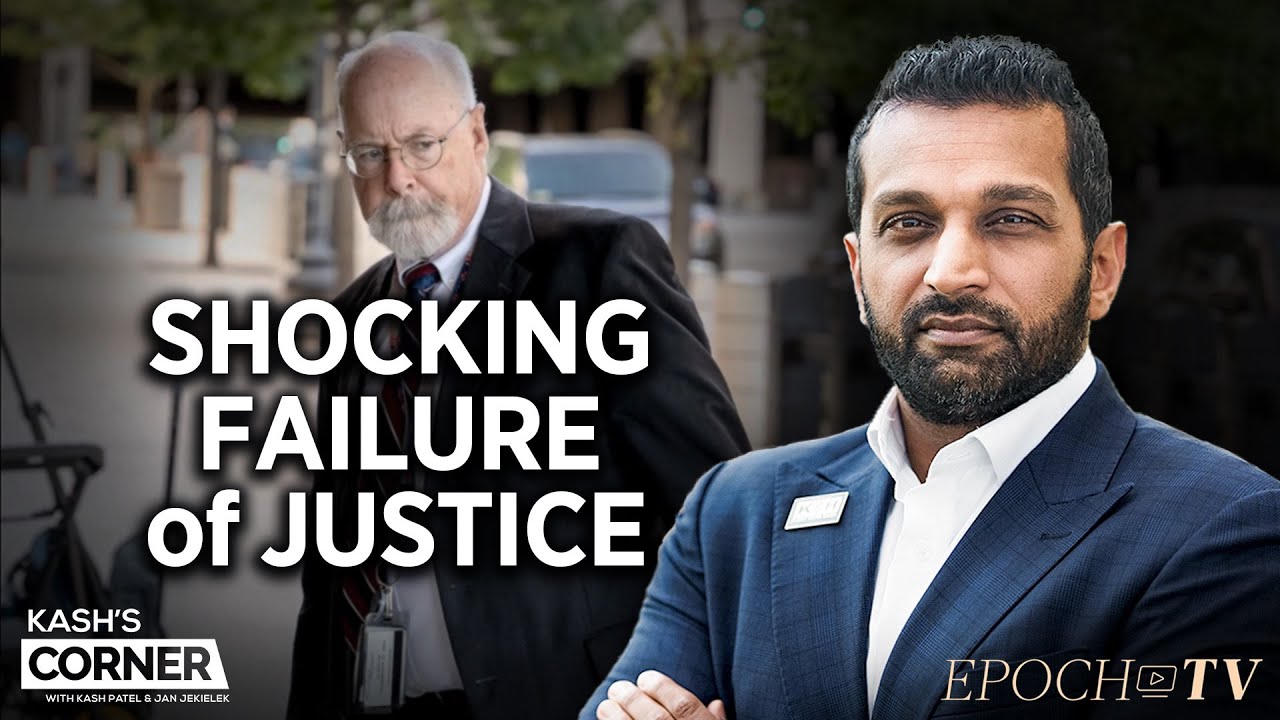
- Kash Patel: Durham Failed. The Russiagate Playbook Will Be Repeated
“This was the one opportunity for John Durham to fix the two-tier system of justice. He was the man charged with that duty. And he had that opportunity. And in my opinion, Jan, he failed. And this will only degrade the FBI and DOJ and our intel communities further,” says Kash Patel, who was the chief investigator of the House Intelligence Committee’s Russiagate investigation back in 2017 and 2018. “In the Durham report, it states that Kevin Clinesmith declined to participate. What do you mean ‘declined to participate’? Jan, do you remember the Mueller investigation? Was anyone allowed to decline their participation?” Patel says. “Individuals like Kevin Clinesmith, Peter Strzok, James Comey, Andy McCabe … none of them were brought under subpoena and compelled to testify,” Patel says. So what’s next? And in particular, for the Americans who feel increasingly disillusioned about accountability, what does Kash Patel see as the way forward? Interview trailer: Watch the full interview: https://www.theepochtimes.com/kash-patel-durham-failed-with-no-real-accountability-the-russiagate-playbook-will-be-repeated-again-and-again_5276005.html FULL TRANSCRIPT Kash Patel: Hey everybody, and welcome back to Kash’s Corner. The long awaited episode is here. John Durham’s report is out. We are going to dive into it from wire to wire. What may surprise you is not the extent of the fraud and corruption and unlawful activity that John Durham exposed in his report, but my reaction to it specifically in its failure to hold people accountable and John Durham’s shortcomings. It’s not a criticism of John Durham directly, rather it was a moment in history where we had an opportunity to fix the two-tier system of justice that Jan and I have been talking about on our show for years. This moment may have slipped us by because John Durham failed to act. Why did he do that? What were his justifications and what is the outcome of the Durham report? Jan has a lot of pressing questions and we have a lot of things to cover. Where would you like to start, Jan? Jan Jekielek: Kash, yes, absolutely. We’ve been talking about the Durham report and different iterations of new information, like the Horowitz report back in the day. We’ve been actually looking at this for five years. I have a headline on my wall from 2018, and I’m going to read it to you. This was the front page headline of The Epoch Times print edition, “Obama officials spied on Trump campaign using at least five methods.” This was in May of 2018. We’ve known a lot of what was in this report already over the past five years. However, we have a lot of viewers that actually may not even know the core substance of what Russiagate is and how it happened. Why don’t you start us off right there. Mr Patel: Let me see if I can give you five years in five minutes. As the chief investigator on the House Intel Committee, we put a lot of this information out that’s in John Durham’s report years ago. What was Russiagate? Russiagate was a political operation launched by the Democratic Party and the Hillary Clinton campaign to unlawfully utilize campaign dollars to go overseas and purchase false information from Christopher Steele, an FBI informant and former British Intelligence officer. They take that information and have it synthesized into a document and have it intentionally placed in the hands of the FBI. The FBI takes that document and other information and launches a full scale investigation into Donald Trump, knowing the information in the document is false. If that’s not bad enough, they then increase their investigation and its capacity and take it to the max by going to the Federal Intelligence Surveillance Court. That’s just fancy speak for a court that is secret. Its authorities are so expansive in intelligence collection that not everyone has access to it, and its inner proceedings are held behind closed doors. Once they go to the court, the FBI says to the judge, “We have all this information that Donald Trump is a Russian asset.” At that time, before the judge, they lie about the information, the facts, the biases, and most importantly, they do not give the court evidence of the innocence of the targets in that very investigation, one of the most fundamental requirements in a judicial warrant process. The FBI has now knowingly lied to a federal court to ultimately achieve the objective that it wanted from the beginning, which was to surveil a political candidate that they did not like, and they succeeded. That’s Russiagate in terms of how it got off the ground and what steps the FBI took. The rest is the autopsy on how could that have occurred in the United States of America in 2023? How could the premier law enforcement agency under James Comey and Andy McCabe allow themselves to lie and break the law to achieve a political objective? That’s exactly what happened and that’s what unfolded in the years since the Nunes memo and our corresponding report were put out, and Inspector General Horowitz’s report was put out. Now, we end up with John Durham’s special counsel report on the matter. The FBI was so concerned with covering its own corruption that one of its deputies actually put out in writing that there’s to be no more documentation from the FBI on how to justify the Russiagate investigation. That’s in the John Durham report and we’ll put it out for our audience. Just think about that, Jan, the FBI who’s supposed to document everything, specifically had its leadership come in and say stop documenting, so that the cover-up could continue and they could never be exposed. Mr. Jekielek: I want to highlight two things. The first one is that Russiagate goes in two stages. The first stage is the Clinton campaign opposition research. I use the research word in quotes here because of course it was all fabricated. The second part is where the DOJ and FBI pick up where the Clinton campaign left off once Trump wins. That is an astounding realization. I hadn’t fully grasped how it played out. That’s one. Number two, that FISA [Foreign Intelligence Surveillance Act] warrant was for a Trump campaign staffer, Carter Page, and not Trump himself. Because of the nature of these FISA warrants, it allowed them to be one hop away. Basically, surveillance on the entire campaign was allowed through this one FISA warrant on this one pretty low-level Trump campaign staffer. Mr Patel: You’re absolutely right. Having done FISA warrants when I was a national security prosecutor, that’s exactly what they are for. You utilize your investigative prowess to lawfully target an individual that’s operating in a ring or an entity or a conspiracy. You target the weakest link, the one that you believe is easiest to get the warrant on. Once you flip it on, you can collect on everybody else, because of the sensitive nature and authority that that warrant provides. That is why it should never have been rubber-stamped like it was with the Carter Page warrant. Many individuals thereafter helped provide an unlawful justification day in and day out, for over a year. Mr. Jekielek: Lee Smith noted that the only actual Russian intelligence that was collected in this whole thing was that Russia knew about the so-called Clinton plan as it was described in Durham’s report, which was the plan to smear Donald Trump and his campaign with the idea that he is a Russian asset. Mr Patel: Yes, it turns out the only Russian assets were the FBI and the DOJ. Mr. Jekielek: That’s a pretty strong statement, Kash. Mr Patel: Let’s break it down for our audience. John Durham will give us the ability to do that, but I think our audience might know that I’m probably going to be a little harsh on Mr. Durham in this episode. Mr. Jekielek: Kash, I’m seeing some really dramatic opposing views on this Durham report. On one side people say, “This is a complete failure. We have known all this information for years. This is falling flat. Where is the accountability? There is no accountability.” That’s one side. On the other side people are saying, “Wow, we have this codified in an official DOJ document that there was no predicate.” Now, basically the world is forced to admit to this. To that effect, we even see headlines on CNN which talk about this, that there was no basis for this whole investigation in the first place. Mr Patel: There are two main takeaways, Jan. With an investigation like this involving presidential candidates, presidents of the United States, and future presidents of the United States, there’s a political analysis to be made, and then, there’s a substantive legal analysis. We’ll focus mostly on the latter, but let’s just take care of the first one out of the gate. The central question for special counsel John Durham for the entire Russiagate matter was the same question any prosecutor should have been asking themselves in any case, “Do they have the justification under the law to open this investigation? We answered that question with a resounding, no, after our investigation concluded back in 2018 with the Nunes memo and the corresponding Russiagate report that we publicized to the world. The media didn’t want to believe that fact. So, they carried the water for the deep state and the DOJ and the FBI who were conducting this investigation. Through the process of Adam Schiff and company going to the world and continuing to lie that there was ample evidence and information that Donald Trump was a Russian asset, many people believed it. Now, we get to John Durham. He was supposed to be the final arbiter of that question. Did the DOJ and FBI lawfully open this investigation into Donald Trump in the first place? John Durham answered that question with a resounding, no. If you don’t believe us or the report, CNN let this out after the Durham report was published. We’ll put this up for our audience. Jake Tapper said that this was devastating. Jake Tapper: Devastating to the FBI and to a degree it does exonerate Donald Trump. Mr Patel: The John Durham report is devastating to the FBI, and the FBI had no predicates to open this investigation. Those were the findings and reporting from John Durham and that’s how CNN covered it. Now, if the investigation should never have happened, then nothing after it should have been permitted out of the DOJ and FBI for law enforcement purposes. It was permitted. It was permitted for political purposes. What you have here, from President Trump’s perspective, is the political point. He will now go out there as he’s done the last four or five years and say it has now been definitively proven that Russiagate was a total fraud. There was no predicate to launch the investigation, because the FBI and DOJ did not have the facts to do so. That’s the political side. Now, the law enforcement, DOJ, and intelligence community side is much more complicated. The short answer is they didn’t have the facts to present enough information to a FISA court to surveil Donald Trump’s campaign in the first place. They didn’t have those facts because the DOJ and FBI lied, broke the law, violated their oaths of office, and submitted fraudulent information they knew to be false, because they wanted to achieve a political end. There you have the confluence of the political and the legal from the John Durham report. As CNN put it, the underpinnings of this report are devastating to both the FBI and the DOJ. As I will put it, the underpinnings to this report are a complete failure from my perspective. This was the one opportunity for John Durham to fix the two-tier system of justice. He was the man charged with that duty and he had that opportunity. In my opinion, Jan, he failed. This will only further degrade the FBI and DOJ and our intel communities, which will only disserve the American public when it comes to protecting our nation and upholding our laws. Mr. Jekielek: Kash, first of all, the one person charged and convicted in this whole scheme is Kevin Cleinsmith. Going back to Carter Page for a moment, Kevin Cleinsmith altered an email that made it so that the FISA court believed that Carter Page had nothing to do with the CIA. When in fact, it was known that he actually was a CIA asset at the time. But there didn’t seem to be heavy consequences. Mr Patel: Just think about it. An FBI attorney involved in the Russiagate investigation lied to a federal court intentionally, and altered a document knowing it to be false, just so the FBI and DOJ could cross the threshold of probable cause and submit it to a judge and get their warrant. That guy was convicted in federal court, but he’s also an example of where John Durham succeeded and where John Durham failed. He was convicted because the document speaks for itself. What John Durham then did was a total failure. He did not bind Kevin Cleinsmith’s cooperation in the plea agreement thereafter. In the Durham report, it states that Kevin Cleinsmith declined to participate. What do you mean declined to participate? Jan, do you remember the Mueller investigation? Was anyone allowed to decline their participation? You as a federal prosecutor with federal subpoena authority, you go and subpoena that individual. If they do not comply, the United States Marshals go and get them, place them under oath in a grand jury proceeding or at trial, and then you continue your investigation. Hans Mahncke at the Epoch Times had a great post on social media the other day, and we’ll put it up now. He listed the folks that John Durham failed to gain participation from; Kevin Cleinsmith, Peter Strzok, James Comey, Andy McCabe, and a few others. The special counsel for the Russiagate investigation failed to commit these individuals to a grand jury—the architects of the biggest fraudulent conspiracy in DOJ and FBI history. John Durham refused to bring in the director of the FBI and the deputy director who launched this investigation and signed the bogus warrants, along with participants like Kevin Cleinsmith and Peter Strzok, who orchestrated the entire counterintelligence narrative. None of them were brought under subpoena and compelled to testify. To me, that is a shocking failure of the first order as a prosecutor. I don’t see any justification for it. I’ll give you one vignette that was produced in the John Durham report. Andy McCabe, the deputy director of the FBI, was so hell-bent on getting this investigation off the ground that when that infamous fabricated piece of evidence came in from London from Australian government employees that somehow Papadopoulos and Trump and company were going to utilize Russia to upend an election, Andy McCabe admits that he never spoke to the person who provided that information. Nobody at the FBI spoke to the person who provided that information. Jan, that just doesn’t happen at any level of the FBI. When you open a case based on source reporting, you go speak to the source. This is how in bed they were with the Clinton campaign and others, or more clearly, how much they wanted to defeat Donald Trump. That led to the opening of the investigation. It is spelled out in the Durham report that James Comey had this desire to see the FISA warrant occur. That is the investigation that Andy McCabe opened. James Comey so wanted to take it to the next step, as we highlighted in the opening of the show, that he literally kept begging him for it. That’s all in the Durham report. The two people in charge of our law enforcement community launched a fraudulent investigation, lied to a federal court just to augment that investigation, leaked about it to the press, allowed it to continue for over a year, and John Durham didn’t even speak to them. That tells me everything you need to know about his failures from an investigative standpoint. Mr. Jekielek: Is there some way that the higher level officials at DOJ could have somehow prevented him from doing this? I don’t actually understand how this works. Do you understand how it works? Mr Patel: You’re asking if there is a mechanism at the DOJ to have stalled John Durham or to have obstructed his investigation? That rests with the Attorney General. Every special counsel appointed in U.S. history under the law reports to the Attorney General. John Durham answered that question for us in the opening of his report. He said that Merrick Garland essentially allowed him to do whatever he wanted. Either John Durham is lying and put that in there anyway, or Merrick Garland somehow obstructed his investigation. Maybe we’ll find that out when John Durham testifies before Congress, which I’m sure is coming. Taking his report on face value is why I’m so critical of John Durham. He says he was allowed to do everything he wanted to do and no one got in the way. That’s almost as upsetting as the Russiagate investigation conducted by the FBI and DOJ itself. Mr. Jekielek: As you discuss these different facts it’s really bizarre. How is it even possible that he didn’t talk to these people? Mr Patel: If I’m being honest, Jan, which I try to be, calling it bizarre is being kind to John Durham. John Durham is a 30-plus year prosecutor, the U.S. attorney for the District of Connecticut, where he ran an entire federal prosecutor’s office, serving multiple jurisdictions and different administrations, both Democrat and Republican. There’s no way he doesn’t know how to use the grand jury process and subpoena individuals. If it finally comes out that these individuals told him that they were going to plead the fifth, you know what to do. You take that individual before a federal judge and you give them immunity, and then they must testify. That’s how it works. I know that because I was a former federal prosecutor. I also know that because of the January 6th committees shenanigans and how they abused the subpoena process and compulsory process. There’s no excuse for John Durham here. That is the purpose. It doesn’t mean that the witness has to volunteer and submit and request immunity. A federal court and the Department of Justice can force it upon you. Then, once you have immunity, you can’t be prosecuted. He didn’t even want to take those steps and get the answers to those questions. That tells me everything I need to know. Like Bill Barr and Rod Rosenstein and Chris Wray and Merrick Garland and James Comey and Andy McCabe, he cared more about protecting the institution than fixing it. The two-tier system of justice today continues because John Durham failed. Mr. Jekielek: It seems at the very least we have it codified what actually happened in this official DOJ document that Attorney General Merrick Garland did sign off on. You mentioned Congressman Schiff earlier. We recently got an exclusive with Congressman Schiff where he basically cast doubt on this. I’m just going to tell you what he said. He said, “If you read Mr. Durham’s report, what he said is that there wasn’t evidence of collusion before they began the investigation. That’s obviously a very important distinction.” What’s your reaction, Kash? Mr Patel: Adam Schiff is the largest purveyor of disinformation and falsehoods in United States history. We should play the clip right now for our audience where Adam Schiff went to the microphone four years ago holding a manila envelope and said, “There is more than circumstantial evidence of Donald Trump’s involvement with the Russian collusion operation. I’ve seen it. I have it.” Speaker: So, you have seen direct evidence of collusion. Congressman Schiff: I don’t want to go into specifics, but I will say that there is evidence that is not circumstantial and is very much worthy of investigation. So that is what we ought to do. Mr Patel: Then, fast-forward to your statement, which just happened this week and was given to Epoch Times. That is the lens through which any party should view Adam Schiff’s statements. He’s now putting an arbitrary date that the collusion started after the investigation. Then, you agree, Adam Schiff, that John Durham found the FBI and DOJ had absolutely no basis to launch that investigation. By your own admission, Adam Schiff, you lied to the world for the five years before John Durham’s report was published. Which version do you want us to believe? That’s why Adam Schiff, Eric Swalwell, and the rest of the individuals in Congress who allowed the FBI, DOJ to be politicized and weaponized are equally as culpable in this criminal conspiracy as the individuals we’ve talked about on this show, both in the past and today. Mr. Jekielek: I had an episode with Hans Mahncke and Jeff Carlson, some of our top Russiagate researchers, from the little corner of Twitter. We often talk on this show about how the hashtag unleashed the sleuths. We want to get information so folks who have incredibly analytical minds can look at that information. Their take was, “Where is the accountability then? We know it’s real, and we know what happened. It’s intimately spelled out.” The FBI is basically saying, “Yes, there were problems, but we’ve rectified these problems and we’re going to make sure that it doesn’t happen again.” This is the statement for the general public, but there seems to be an accountability gap here. Mr Patel: I’m so glad you brought this up, Jan. We’ll get back to the latter part of your question involving the FBI’s statement. Let’s start with accountability. That is the whole point and the whole reason that you have a special counsel is because you want accountability for people who broke the law. They need to be punished. What Hans at The Epoch Times and everybody online were talking about was the frustration that so many are venting after the Durham report, “Where are the arrests? Where are the prosecutions? Especially since you, John Durham, in your 306-page report, have outlined a staggering amount of criminal conduct by the Russiagate characters; Comey, McCabe, Strzok, Lisa Page, Bill Priestap, Bruce and Nelly Ohr, Fusion GPS, Perkins Coie, Rodney Joffee, and Stefan Halper.” And the list goes on. John Durham listed them all and explained in excruciating detail what we all knew this entire time. They lied to federal courts, withheld evidence, used the media to leak sensitive information, lied to the world, and rigged a presidential election. Now, they are going to continue to do it, because you, John Durham, held no one accountable, and arrested nobody of substance. To me, Jan, that is his biggest failure. In his report he goes to great lengths to talk about DOJ policy and the reasoning for bringing prosecutions and charging decisions and the reasoning not to. You want to know when you bring a charging decision as a prosecutor—it’s when the facts support it. John Durham’s whole report supports an entire charging document against a slew of individuals. Then, he hides behind bogus DOJ policy, which is not the law by the way, and provides a myriad of deflections and reasonings to not bring criminal cases. John Durham didn’t want to complete the mission he was asked to take on. In large part it’s because he didn’t want to be the one to tear down the DOJ and FBI, but that’s what was needed based on his report. Now it’s not fixed, which leads us to the FBI statement, which in my opinion is more lethal than the FBI’s conduct during Russiagate. Chris Wray, the director of the FBI and his comms department, gave The Epoch Times and the media a statement on the Durham report. In summary, it says “The FBI already implemented so many changes that had they been in place back then in 2016, there would have been no corruption by Comey and company and the DOJ.” He has the gall to go out there and say, “We’ve already fixed it,” when you, Chris Wray, were part of the coverup, which is my next biggest complaint about Russiagate. Not just that it happened, but that DOJ, FBI that allowed it to be covered up on Chris Wray’s watch. Are we to take your word that you fixed it? No, John Durham had an opportunity to achieve something that is probably never going to happen again in U.S. history—a moment when you could have fixed the FBI and DOJ wholesale and returned them to conducting law enforcement investigations and charging decisions based on law and not politics. Not only did you let the architects of Russiagate get away with it, but you let the coverup operators like Chris Wray and Rob Rosenstein and company get away with it. Now, they put out bogus statements like. “If we were in charge back then, it would never have happened.” The coverup was worse than the crime, as is always the case. Mr. Jekielek: On many of our episodes in the past, you were a real fan and booster of Durham. Frankly, in many cases, there were a lot of people saying, “Nothing is going to happen with this.” You said, “No, no, no.” You thought something would. This must be hitting you particularly hard. Mr Patel: Yes. Look, I was John Durham’s champion. I was the guy in the arena saying, “No, he’s got it. He has a background. He’s apolitical. He knows how to conduct these types of investigations.” I thought he would apply that skillset and not be swayed by media politics in the current environment. I was wrong. That’s why you’re right, Jan. It is frustrating for me to see. But it’s not about me being right or wrong. The loss here is for the United States of America. The loss here is that while the Democrats and the Hillary Clinton campaign and the FBI and Comey and Brennan and Clapper and all these individuals knew about the crime of the century and permitted it to occur—the crime of the century being Russiagate, not that Donald Trump was a Russian asset—when Durham had the opportunity to restore faith in our judicial process, he failed. There’s one more residual effect that he failed to cure, and it’s already happened again. We’ve talked about it on past shows, and I’ve dubbed the 51 Intel letter as the Steele Dossier 2.0. It’s by the same perpetrators who ran the same exact playbook back when they ran the Steele dossier to rig a presidential election wire to wire. Here’s what’s worse, Jan. They’re probably doing 3.0 and 4.0 because they are all sitting there saying, “We got away with it. Not only did we get away with it, James Comey has been telling tall tales for years and making millions off his book.” Andy McCabe had his pension restored after he was fired by Donald Trump at the FBI. This administration restored his pension and rewarded him for breaking the law. That’s just naming three individuals who were rewarded for their malfeasance and unlawful conduct, all because John Durham failed to act. Who’s going to be next? I’m sure we’ll be talking about it on our show. What’s the next iteration? We already have the 51 Intel letter. But as I said, I’m sure 3.0 and 4.0 are on the way. That, Jan, is the biggest harm to America. Our judicial system is not even tier one, tier two, or tier three—now it doesn’t even rank anymore. Mr. Jekielek: Kash, the 51 intel letter, as you call it, amounts to significant election interference. Many people have been saying Russiagate itself amounts to significant election interference, as you just said earlier on the show as well. You expect there will be future variants. A lot of people at this point are wondering about the civic process. We keep hearing about it in the comments on different episodes. What’s the point in participating in the electoral process if things like this happen? How do you respond to people like that? Mr Patel: Simple. If you bend the knee to these criminals, then you’re worse than these criminals. The fight was never meant to be easy and it was never meant to be singular. My advice is that if you give in, you’re worse than they are. This country and this judicial system in our law enforcement community can go back to being the premier ones in the world, but it requires a significant course correction. Here’s the one thing, and it goes back to the political portion of the analysis. So many people this past week are sitting there saying, “We were lied to for four or five years. This election rigging thing isn’t a conspiracy. This Russiagate stuff is real. It wasn’t Donald Trump, it was the FBI and DOJ and the intelligence community.” Now, we have to utilize that information that is unequivocally true and go out there and say, “If you want to restore faith in the FBI and DOJ, then you need to put people in charge who are going to do that.” We have identified chapter and verse individuals that never should be in the United States government again. Some are still serving and they should be removed immediately. When you do that lift, when you undertake that gigantic measure, then and only then can you restore our faith in our republic. It’s not easy, Jan. I’m sure a lot of people will say, “I just don’t want to do it.” To me, if you don’t do it and you don’t keep fighting, then I’m putting you in the same basket as the conspirators and criminals that committed Russiagate at the FBI, DOJ and cia. Mr. Jekielek: I just want to see if I got this clearly. You’re saying be active civically, vote, and participate in the electoral process as much as you can. Am I reading that right? Mr Patel: Yes. You can do so knowing that Russiagate happened, a version of it happened again, and the next iteration is probably going on already because there was no punishment and accountability. So, it’s your job to educate the people in your community and around you about it, especially around election time. We’ve talked about it in the past how the House of Representatives has a responsibility here to start subpoenaing these individuals. They should start with the list that John Durham failed to even talk to, that Hans Mahncke publicized, and they should add Gina Haspel to that list, the former station chief in London who allowed the Russiagate narrative to be launched, and who permitted the 51 Intel letter to be penned on her watch as director of the CIA. It should also include the likes of Chris Wray, and that’s not all. The list must continue on. Peter Strzok, Andy Mccabe, James Comey, Brennan, Clapper, Lisa Page, Fusion GPS, Michael Sussman, Marc Elias, Bruce and Nelly Ohr all must testify. That is an intense list of individuals who have lied and broken their oaths of office and the law in the service of this country. The very least the United States Congress can do is subpoena them and make them testify before the public so that we can continue the civics process we are discussing now. We are not going to get it from the FBI and DOJ. Mr. Jekielek: This concept of civic engagement has been coming up again and again in both American Thought Leaders episodes and other writing that we’ve been doing here at the Epoch Times. I will put my stamp of approval on that one. Kash, it’s time for our shout-out. Mr Patel: Indeed, it is Jan. This week’s shoutout goes to Rory Rea. Thanks so much for your comments on our quote board at Kash’s Corner. Thanks so much to everybody who leaves commentary and questions there. We read them all, and I know Jan and I learn from you as much as you learn from us. We also appreciate everybody that participated in the live chat on Friday night. We look forward to seeing you all next week on Kash’s Corner. This interview has been edited for clarity and brevity. To get notifications about new Kash's Corner and American Thought Leaders episodes, please sign up for our newsletter! Here 👉 Get Alerts - PRE-ORDER "The Shadow State" DVD: https://www.epochtv.shop/product-page/the-shadow-state-dvd The Real Story of January 6 | Documentary BUY Jan 6 DVD: https://www.epochtv.shop/product-page/dvd-the-real-story-of-january-6, Promo Code “Jan” for 20% off. - Follow American Thought Leaders on social media: Twitter: https://twitter.com/AmThoughtLeader Truth Social: https://truthsocial.com/@AmThoughtLeader Gettr: https://gettr.com/user/amthoughtleader Facebook: https://www.facebook.com/AmericanThoughtLeaders Gab: https://gab.com/AmThoughtLeader Telegram: https://t.me/AmThoughtLeader
- Karol Markowicz: ‘Ultimate Revolutionaries’ - How The Woke Regime Indoctrinates Kids
“This happened in a red enclave, in a red hamlet, in a red town, in a red county. I need these people to understand that this could happen anywhere.” New York Post columnist Karol Markowicz was a self-described “New York supremacist,” having spent all of her life in the Big Apple. But she uprooted her family to Florida after the coronavirus pandemic opened her eyes to what she saw were “Soviet patterns” across American culture. “I saw very clearly, for the first time, that even free people can act like authoritarians and turn on their neighbors at a moment’s notice,” says Markowicz. She considers these patterns part of a larger cultural revolution sweeping the nation, in which woke institutions are increasingly separating children from their families, whether it be through the indoctrination of gender ideology, critical race theory, or pandemic measures. “If parents see this kind of thing going on, where somebody’s asking their kid to keep a secret from them, I think they should imagine for themselves what else is happening,” says Markowicz, who is the co-author, with Bethany Mandel, of the new book, “Stolen Youth: How Radicals Are Erasing Innocence and Indoctrinating a Generation.” “The woke are a very small segment of the population. And yet, they’re able to control so much, and they do that through this forced conformity,” says Markowicz. “When we treat kids like little adults, we instill all of our problems and issues on them. And that really does mess them up going forward.” Interview trailer: Watch the full interview: https://www.theepochtimes.com/karol-markowicz-ultimate-revolutionaries-how-the-woke-regime-indoctrinates-children_5262903.html FULL TRANSCRIPT Jan Jekielek: Karol Markowicz, such a pleasure to have you on American Thought Leaders. Karol Markowicz: Thank you so much for having me. Mr. Jekielek: I’m really enjoying reading your book. I’ve done a lot of interviews related to woke ideology, to gender-affirming care, and to disastrous Covid policy. You put all these themes together into a book, which I really appreciate. Please tell us about how you first learned that all these things are related. Ms. Markowicz: It was definitely Covid that opened my eyes to a lot of what was going on. I started to see patterns across our culture that I thought were part of a larger cultural revolution that is happening in the United States. Things like during COVID, you weren’t allowed to speak and say what you really thought. You had to conceal your actual opinion, lest you be shunned by your community and neighbors, or worse, you could be fired from your job. It reminded me very much of the stories I heard from my family. I was born in the Soviet Union, and the stories that I heard from my parents and from my grandmother suddenly resonated in a way that they never had before. I recognized things that were going on in American culture that were very similar to those Soviet stories. While I had always dismissed the idea that any part of American culture could be Soviet, I saw very clearly for the first time that even free people can act like authoritarians and turn on their neighbors at a moment’s notice. My co-author Bethany and I started throwing stories around that we were hearing. We didn’t necessarily have an overarching theme, other than bad things were being done to children, and we needed to say something about it. The original title of our book was, Keep Your Village Off Our Children. When we were writing it, that is what we were thinking. We saw that Covid had exposed so many different ways that kids were being targeted for indoctrination and treated so poorly in our society, that we felt like we had to say something. Mr. Jekielek: On one hand, there’s the whole idea that children are little adults and should be taught about adult things as early as possible, and all boundaries should be removed. At the same time, during Covid it was the children that were subjected to the most harsh restrictions and the greatest boundaries. I subscribe to this idea from Scott Atlas that adults use children as shields for themselves. How do we square these two things? Ms. Markowicz: That’s the problem here. Adults use children for their own purposes. I don’t know that they use them for shields. Did the adults think that the kids were particularly dangerous? I’m not sure that they did. It’s just that the kids were easier to control. That’s the whole problem with this ideological push at children. Kids are much easier to persuade than a full grown adult who has their own ideas and concepts and thoughts. If you start the indoctrination early, you can ideologically capture most children. You can feed them ideas throughout their schooling and make them believe what you want them to believe. What Americans might not realize is that this has been done many times in the past. It’s not a unique thing that is just happening right now. The only unique part is that it’s happening in a free country where you get to hear about it as it’s happening. With a lot of the places where these revolutions have taken place and where kids were targeted for this indoctrination, people can say, “I didn’t know about that.” The reason we wrote Stolen Youth is that you won’t be able to say you didn’t know. We’re telling you that this is happening. We’re telling you this is going on in your kid’s school and at the library and at their pediatrician’s office and everywhere else. You can’t look away, and you have to fight back. Mr. Jekielek: One of the examples you bring up a number of times is one of those things that you’re not supposed to talk about—what happened in Nazi Germany, and how children’s perceptions of Jews changed, specifically because of this indoctrination. Please tell me about that. Ms. Markowicz: There’s so much evidence that what the kids pick up in society as it’s being pushed on them really does resonate. You might believe that you can just fight back against this indoctrination at home. In free places you might be able to do that to a larger extent. But in places like Nazi Germany, this was uncontrollable. They were picking up the idea of anti-Semitism in their schools and in their culture as a specifically targeted viewpoint. You had that generation of children growing up and being far more anti-Semitic than previous or post generations. The fact that they were pushing these ideas on them was extremely important and it resonated. I also talk a lot about the Soviet Union in the book where kids were seen as the ultimate revolutionaries. They were the ones who were going to carry forward the bright future. The targeting of children was not accidental, and the breaking up of families was not accidental. They tried to separate kids from their parents for indoctrination. But even in the Soviet Union, they had to be sly about it. They couldn’t say, “These are our children now. These children belong to all of us,” which Joe Biden said recently. He said, “These are not your kids. These are our kids.” Joe Biden: There’s no such thing as someone else’s child. No such thing as someone else’s child. Our nation’s children are all our children. Ms. Markowicz: Even in places like the Soviet Union that idea would have gotten pushback. So, they couldn’t do that. They had to say that we’re all in this together and we’re going to help you raise your children. It’s not about separating you, it’s about us growing together. Mr. Jekielek: At one point, parents were instilling values onto children, and that changed to being friends with children, andthen, being equal with children. It’s a very different mentality of upbringing. Ms. Markowicz: It seems like we’re raising kids based on some book that we haven’t finished reading. It’s like we just keep throwing out theories and philosophies of parenting that we can see aren’t going to work out. There was a story recently where a doctor said that a child had come to his office with the mom and had a sore throat. The doctor said, “Okay. I’m going to check your throat. Open wide.” The child refused to do so, and the mom said, “It’s his body, his choice.” The doctor was like, “What? I need to check the kid’s throat.” But this is the natural progression of this thing where the kid’s in charge. They get to tell you what they believe and what they think, but you are the parent. Kids need parenting. Something that I think parents take for granted is how much kids need them. They need parents to show them the way. They need parents to teach them. Parents are really abdicating that duty and it’s going to have bad repercussions. Mr. Jekielek: There isn’t a one-size-fits-all solution. Some kids are just incredibly responsible from a very early age, and it almost makes sense to have that relationship with them, of course, with some boundaries, But they are already developing their own boundaries. There’s other kids who have none of it, like zero. Ms. Markowicz: Yes. Look, I have three kids. They could not be more different. They literally seem like they have two different parents. All of them were born the way that they were born, that’s true. But we have helped shape their responses, if not their personalities. Sure, some may still have the personalities they arrived with. But the goal is to raise resilient children who can go out into the world and not feel a level of anxiety that debilitates them, or have them be extremely worried about climate change in college, where they feel a level of worry that prohibits them from living their full lives. When we treat kids like little adults, we instill all of our problems and issues on them, and that really does mess them up going forward. But it seems like the parents are just as ideologically captured, like the story about this mom, where they have stopped thinking reasonably. That should concern all of us. Mr. Jekielek: The people who believe in this ideology would say that we all do indoctrination, “Karol, you’re indoctrinating kids with your ideology. I have a better ideology. I want them indoctrinated with mine. That’s just a fact. Aren’t you indoctrinating your kids?” Ms. Markowicz: I’m sure I’m influencing them. Listen, I would love to indoctrinate my kids. It isn’t reasonable that kids will follow everything that a parent tells them, but when you have every force in society pushing them in one direction, that’s very powerful. The idea that you should be able to indoctrinate my children is one that I find abhorrent. No, you can’t indoctrinate my children. You’re not their guide. You are their teacher, and you are their doctor. You don’t get to implant ideas into their head that I then need to cancel out at home. I have to say that my kids do move through the world because of my indoctrination, or whatever you want to call it, my teaching. They do move through the world being very aware of when somebody is trying to convince them of something. My older two come home from school and they will say, “I heard this in class today. Is this something I need to think about or that you are worried about?” I jokingly call them the woke police, because they’re very aware when a concept is being pushed on them or when they’re getting someone’s opinion and not fact. That’s good. I want them to be aware. Bethany, my co-author, and I are on very different paths. I have three kids. Until recently, they were all in public school, but now one is in private school. She has six kids and she homeschools them. She pre-watches their movies, and she pre-reads the books. I don’t do any of that. I give them a longer rope and I say, “I trust you. I want to hear what you’re learning out there.” But I provide the foundation at home, as we both do. She would say that no matter how much she protects her children, she can’t protect them from this woke mind virus in every way. At the pediatrician’s office she says, “I homeschool them and we do everything outside of the culture.” But she still needs to take them to the doctor. If you have a pediatrician who has been ideologically captured, which many of them have been, you’re going to run into some issues. Mr. Jekielek: Yes. It’s interesting. I like how you want to inoculate them with some level of this vocalism so they can actually see for themselves. You made a very, very interesting distinction with the whole perception of what you’re supposed to believe. This is the perceived consensus which is pushing in a certain direction, and you’re being taught that this is exactly how it’s supposed to be, as opposed to, “I’m going to give you the skills to evaluate these things,” which just sounds exactly like what you’re doing. Ms. Markowicz: That’s definitely the goal, to give them the tools to evaluate what they hear out in the world. But I would also say that this new wokeism, as opposed to liberalism or the old Leftism, walks such a narrow line that you have to parrot the words in exactly the right way. You need to have the ideas very specifically outlined. You can only speak about them in a certain way such that you can’t say, “I’m not racist.” You have to say, “I’m anti-racist.” I don’t have that rigidity with my kids. I want them to explore their own ideas, and have their own thoughts, and have their own concepts. That used to be the goal. We wanted our kids to have a wide range of opinions presented to them where they could pick their own and learn on their own. Now, we don’t have that, because everybody has to think the exact same way under this woke regime. Mr. Jekielek: Please explain where you’ve come from, and what are some of these ideas that your parents taught that made you think this looked familiar. Ms. Markowicz: I was born in the Soviet Union and came to the U.S. as a small child. I wasn’t quite two yet. I grew up in Brooklyn and I lived in New York for most of my life with some little gaps here and there. I was a lifelong New Yorker. We were going to raise our children in New York. Then, a little over a year ago, we made the decision to move to Florida, which was a startling decision. We had just built our dream home in Brooklyn. We really did have a plan to spend our lives there. But we felt like New York had lost its grip on reality, particularly under Covid, but also with lots of other issues around Covid. It wasn’t just Covid, but that did play a large role. We felt like Governor Ron DeSantis in Florida was doing some really normal, sane policymaking that we appreciated. We made the move, which was very public, because I’m a New York Post columnist, and again, a New York supremacist. The idea that I was leaving New York was big, and people wanted to hear the story, so it’s been amazing. It’s just been really freeing, and our family really found a way to be free. Mr. Jekielek: You were reporting during Covid. That’s when I started reading you more, because I thought you were ahead of the curve and very thoughtful. What did your parents teach you that made you more aware of what was happening? I’m sure there was some moment when you were speaking about what was happening, but the people around you were saying, “What are you talking about?” Ms. Markowicz: There were quite a few moments. I would see things on Facebook groups. My very liberal neighborhood suddenly was no longer interested in providing education to the poorest members of society. They didn’t care at all that kids in poor neighborhoods all over New York City did not get to go to school. In fact, it became part of their philosophy to keep them out of school. Meanwhile, with their own kids, they sent them to private schools, which were obviously open. Public schools were very dangerous, but private schools were allowed, or they got them a tutor, or they moved to their beach house and sent them to the school there. But they didn’t say a word for the poor kids all over the city. That was a very Soviet moment for me. You said one thing, but you believed something else entirely. Also, the telling on your neighbors. People would call the police and say, “There’s too many people in this backyard.” They seem to enjoy it so much. It was really full of zeal. Another thing was the shutting down of conversation when somebody would say, “I think schools should open.” I didn’t understand why liberal Europe had schools open, but in America, it became an idea that only Donald Trump supporters believed in. Basically, they would say, “You’re a rightwinger.” They would kick them out of the club and this person would say, “I’m a lifelong liberal. I believe everything you believe. I just don’t understand why we can’t open the schools.” They would get seriously harassed. Some people got fired for these beliefs. It was a really serious time. But then, crime started to spike. New York had been doing so well for so long, that we all expected that to just continue. When it didn’t, it was like they refused to accept it. They refused to admit that crime was going up. You would see posts, “I’m afraid to walk around by myself after dark, or my teenager’s cell phone got stolen at the local subway station.” They would get comments like, ‘No. Don’t believe the Right-wing media about crime.” But the stats are the stats. They would say things like, “Look, in the 1990s, crime was higher.” But that was during an extremely bad time in New York City history. By 2020, we had 20-plus years of relatively low crime in New York City. You’re just going to deny that over ideology? You’re saying this doesn’t exist, because you’re on the side wanting to pretend this doesn’t exist? I just saw the conformity that I had heard about my whole life where you had to believe and you had to make a spectacle of it, which I address in the book. I talk about stolen youth a lot, and where the spectacle means survival. It’s part of what makes these totalitarian societies thrive. For example, when the George Floyd killing happened there were these riots, and everybody put Black Lives Matter signs in their window. I thought to myself, and I say this in the book, “Black Lives Matter is a really uncontroversial idea. When you’re putting the sign in the window, who are you talking to in your ideologically homogeneous neighborhood? Who are you trying to convince with your sign?” Of course, they’re not trying to convince anybody. They’re trying to say, “I’m on the team. I’m part of this, and please don’t come for me. Look, I have the sign in my window.” That felt very Soviet to me. My grandmother’s father, my great-grandfather, was killed in Stalin’s Gulag. But when Stalin died, my grandmother and her sister made a scrapbook of his glorious life, because that’s what you do when the spectacle is what matters. I saw it in so many different ways, and then I couldn’t unsee it. Mr. Jekielek: Did you ever have this situation in your family, where it was treason to talk about things from inside the family, outside of the household? Did you grow up with that? Ms. Markowicz: I didn’t have that. My parents were not afraid of what I would say outside of the home. My kids are 13, 10, and seven. Recently, and I don’t remember what it was exactly, but we made some kind of gender joke. My seven-year-old says, “I want my nails painted like my sister.” He’s joking. I’m joking. Everybody’s joking. But I said, “No, in this family we follow really strict gender roles and I wouldn’t let you do that.” We were just playing around. My daughter says to him, “Make sure not to say that outside the house. Don’t tell anybody mom said that.” It’s funny because I don’t worry about that. Why is she worrying about that? Why is she worrying that somebody might take our jokey family behavior and do something bad with it? Mr. Jekielek: Something that you mentioned earlier was this zeal with which some people were doing that so-called tattletaleing on others. It empowers these obsessive people that typically don’t have a lot of power, but suddenly they can become the people who are the enforcers. In every communist society, those people are the people that rise in the communist ranks. When I saw these people doing the tattletaleing with zeal, what is that? Why the zeal? Ms. Markowicz: Yes. They had been waiting for their moment to tell on their neighbors. Mr. Jekielek: Isn’t that so troubling? Ms. Markowicz: It is. Before COVID, I wouldn’t have thought that I would see that in American society, and it is troubling. It’s troubling how quickly and how easily so many people fell into that and did tell on their neighbors and tried to get people fired for the wrong opinion and called people’s jobs. Yes, it’s unbelievable that happened, that it is happening in America, and that people are standing for it. The woke are a very small segment of the population, and yet, they’re able to control so much. They do that through this forced conformity. Mr. Jekielek: This idea is that freedom is only ever one generation away. Ms. Markowicz: I always felt so lucky to be here. I obviously still do, but I feel like there’s a really troubling trend happening in American society. You’re right. It isn’t something that we should just dismiss or not worry about. This could all end tomorrow. This is already one of the longest running experiments in democracy and freedom in world history. I think it may be the longest. I don’t think anybody has beat us. It could end tomorrow, and we can’t let that happen. Mr. Jekielek: It can happen with elections and it has happened all around us. You can look at Venezuela where this really thriving free society voted itself into a totalitarian dictatorship. Ms. Markowicz: There is that joke, “You can vote yourself into it, but you are going to have to shoot your way out.” Mr. Jekielek: You and Bethany have this comprehensive picture of wokeism. What is it? You reference all sorts of people who have done excellent work. Ms. Markowicz: Wokeism is the combination of Leftist ideology with this forced conformity. Old Leftism definitely tried to push its agenda, and did so successfully at the college level. But the new wokeism won’t allow any room for conversation. It’s like Leftists would not be able to argue with Leftists about different perspectives. Wokeism walks a very narrow path. The joke is that with the new wokeness you might get a women’s studies degree, but you can’t define what a woman is. That’s important. It’s something that the old Leftists would be shocked by. Now, the woke say they are not sure what a woman is, and they are not sure what it means to be a woman. They cannot define it. The feminists of the sixties and seventies would find that shocking. That’s really the difference between old Leftist ideology and this new wokeism. Also, the discussion of equality versus equity is another great example. The old Left used to be for equality, whereas equity is the buzzword of the woke. It’s not about equal opportunity, it’s about equal outcomes. Anybody who has ever lived in a communist country can tell you equal outcomes are not a thing. It does not happen. It is impossible. Some people will have different outcomes than others, and that’s just how it goes. Mr. Jekielek: I noted some themes as I was reading. One of them has to do with the preposterous medical prescriptions for children. Ms. Markowicz: Yes. What we’re doing to kids medically is a gigantic problem, specifically for boys. We’re way overmedicating them and we’re taking away the natural way that boys behave. Again, I have a girl and two boys, and they are different. They’re not the same. My girl can sit for hours and read, and my boys would destroy half the house if they had to sit for hours and read, and they all come from the same parents. The overmedication of boys is a big problem. You are seeing this use of medication on kids enter into the gender ideology debates about what is acceptable to do to children, and whether it’s okay to stop their puberty or give them hormone treatments. It’s wild because it has only been recently that we’ve begun to say this is not okay. Hormone treatments for kids had been prevalent for any kid presenting as gender dysphoric for a long time. Now, it’s finally being challenged and challenged fairly well. It’s amazing to me that we’ve let it get this far. Mr. Jekielek: In Europe, on the gender medicine side of things and Covid medicine side of things, there were many more science-based policies created, but for some reason we didn’t know about them over here. Ms. Markowicz: We knew about them. We just chose to full on ignore them. It’s crazy to me to give Europe credit for something, but they did so much better than us on Covid. I was just astounded that so many countries in Europe never masked children at all. When the vaccines arrived, they said, “No, kids don’t need this.” Which is what I was saying, and that was considered a really far out thing. I was actually pro-vaccine. I just thought kids didn’t need it. I don’t know that I would be pro-vaccine if I had to do it over again, but I was then. It was already so obvious to me that the risk of a poor Covid outcome was zero. You can’t reduce it any lower. It’s not like you can make zero less. Yet, Europe figured this out fairly quickly. They’ve also really inoculated themselves from a lot of the wokeness. They are a very liberal continent. Most of the countries there are fairly liberal, but that’s the whole thing—they’re liberal, they’re not woke. They’re not in the grips of a mania, this ideology that is really manic. They’re not having the same kinds of issues that we are. Their gender dysphoria numbers are nowhere near ours, which just shows that it’s a social contagion, and it’s not something that is happening naturally. Europe is very accepting of transgender kids in general, and yet they’re having a far lower instance of transgenderism in their children than we are. People on the Left in America should wonder why they used to follow Europe on everything, but now they don’t. Nobody’s allowed to even ask these questions. Mr. Jekielek: Also, the shift is now accelerating away from this whole gender-affirming care idea where you can’t have anything different from the norm, which is to affirm, affirm, affirm. Ms. Markowicz: Europe is moving away from that, and Britain for sure is moving away from it, because it didn’t work. Mr. Jekielek: It caused huge problems and they saw that. Ms. Markowicz: Yes. It’s causing huge problems here and we’re not doing anything about it. Mr. Jekielek: The third theme that I noticed is this general idea that parents should be excluded from decisions about their children, and this is actually an okay thing somehow. Ms. Markowicz: Yes. That should scare parents. We used to believe that if somebody is asking a child to keep a secret from their parents, that person is doing something bad. But we’ve gotten to where that has become acceptable, where parents don’t need to know what the child is doing in school. If the child has decided to become a different gender in school, to go by different pronouns, and to dress up as the opposite gender, that should motivate parents to understand that there’s a bigger issue at play here. The separation of the family is what happens in these kinds of revolutions. If parents see that somebody is asking their kid to keep a secret from them, they should ask themselves what else is happening? If this is happening, what else is going on out there? Mr. Jekielek: Is this a cultural revolution? Ms. Markowicz: Yes. Mr. Jekielek: It really doesn’t feel like it. We’ve seen them in the Soviet Union, and we’ve seen them in communist China. And yes, it was the young people. Mao’s Red Guard were young people putting the older generation who were not living according to the rules through the ringer. Ms. Markowicz: It is a cultural revolution happening here, and it’s very similar to those revolutions. The only real difference is that we know it’s happening here. We are aware of it. Stopping it should be easier than it was elsewhere. We draw these historical parallels in the book, because they’re instructive. They’re trying to alter our culture towards their vision. If we allow it, we’re not going to be able to stop it once they succeed. It has to be stopped now. When you see it happening in different facets of our society, it should be stopped as soon as possible and people should take it seriously. Before I wrote this book, I would not have agreed there was a cultural revolution happening, but now I see it clearly. It has taken over everything, and that’s not a conspiracy theory, it really is happening. We also talk about how the Left uses children to be their activists. We get so many comments or letters saying, “This is ridiculous. It’s ridiculous to imagine that this is really what’s happening. It’s a conspiracy theory.” Bernie Sanders recently put out his book and said, “Yes, we should make children into activists. Absolutely. That’s the goal.” Is it a conspiracy theory, or did one of the top leaders of the Left just admit this is going on? You’re not going to get admission about everything, so parents will have to think it through for themselves. But this is what’s happening. Mr. Jekielek: You have a really excellent chapter looking at things in a way that I haven’t seen anywhere else called Child Soldiers. This is what you just discussed. I didn’t fully grasp the significance of the Parkland shooting and how that catalyzed the idea of using a child as an activist who can’t be argued with. Ms. Markowicz: How can you argue with a child? Mr. Jekielek: Please tell me about that. Ms. Markowicz: It was the first time that teenagers could speak out and say what they believed about guns, and the media immediately fell in love with them. They were articulate and they were bright, and they had just survived something very traumatic. When CNN proposed a town hall, these teenagers got to confront various politicians on a stage in front of everybody. They also confronted Dana Loesch, who was the NRA [National Rifle Association] spokesperson at the time. There was also the sheriff on the stage who had failed to go into the building for hours. His team let this go on for a really long time, and yet he was spared their criticism. They really tore into the politicians on the stage like Senator Marco Rubio. What’s interesting is that they were clearly traumatized. Some of them went on to become activists, but at least one of them really regrets that appearance and regrets that whole episode, because he feels like he was pressured into it. You can see similarities with Greta Thunberg talking about climate change. Mr. Jekielek: Who was inspired by what she saw at that town hall. I didn’t know that. Ms. Markowicz: She was inspired by Parkland. I didn’t know that either until we started looking into this. It was a direct line. It was a grownup in her life who knew that she was passionate about climate change. They saw the Parkland kids as activists and the reaction that they were getting and said, “I have someone who can do the same thing.” So, she became an activist on climate change. How are you going to argue with this pigtailed little girl who is afraid that the world is going to end? They have set up a situation where their opinions are impossible to confront. It’s impossible to argue with small children. Mr. Jekielek: As you’re talking right now, I’m thinking back again to Scott Atlas’s assertion that we use children as shields for adults. Isn’t that exactly what is happening here? Ms. Markowicz: That is exactly what is happening here. That is a classic example of how we’re using children in this way, and we’re seeing it with gender ideology. They definitely have kids who proclaim themselves trans in the public eye and talk about these trans issues, because what are you going to say to this child who says, “No, I was born in the wrong body.” It’s something you can argue with an adult about, but are you going to argue with a child that’s not yours? You’re not. It shuts down the conversation. Mr. Jekielek: You talk in the book about groupthink, and then, there are people who believe in this wokeism or critical social justice. Is it the same thing, or is it different? Ms. Markowicz: In the woke world, you cannot say things that aren’t specifically already pre-approved for you to say. You cannot draw a new parallel or use language not already used. Mr. Jekielek: But somehow they’re ever-changing. They are updated. Ms. Markowicz: They have been changing, yes. We talk about this in the book as well, but the jargon has to change so that you know who’s in the ingroup. It’s an idea that my friend Michael Malice wrote about, and I think it’s so right on, where it’s very easy to change your language. It’s easy to change one word or two words. That’s why they have to keep changing the jargon so that they know who belongs and who doesn’t. One of the predictions that I’ve made is that the word trans will be out of favor very soon. Right now, you have to call them a transwoman or a transman. Very soon, the fact that you’re even qualifying that they’re not actually a man or not actually a woman will be unacceptable. I could see it heading in that direction, just like the way vagrant became homeless, then became unhoused. Mr. Jekielek: What is appropriate to teach children at a young age? Ms. Markowicz: Math or science? It’s things that we always knew would be appropriate, like reading. I’ve gotten to the point where I don’t think we should be teaching climate change to small children anymore. The argument for teaching them is, “They need to know what’s going on with the world.” Why do they? Why? Why do they need to know that? We don’t tell them about car crash statistics before they get in a car and say, “Hey, by the way, a lot of people die in these things.” No, we don’t do any of that. The idea that we need to terrify them and make them think that the world is ending, which is what they think, doesn’t make any sense to me. They’ve had so many studies where teenagers have high anxiety rates because they’ve been told their whole lives that climate change is happening, and that it’s going to destroy everything. Maybe we can save that conversation for when their cognitive abilities can accept it. Mr. Jekielek: Except that there’s no evidence that there’s 12 years left, or whatever it is. That is just not supported. Ms. Markowicz: Every 12 years, they say 12 years from now. Meanwhile, we’re barely teaching any history at all. I would love to see any approximation of historical education in our schools, which really doesn’t happen. Mr. Jekielek: I’ve also been thinking about guidelines, whether it’s from the CDC or from the American Association of Pediatricians, which is one of the groups you believe has been heavily captured. The guidelines somehow become policy. It just dawned on me, this forced conformity is the tool for that. Ms. Markowicz: In order to get into medical school, you need to address how you are going to support diversity and inclusion in your medical practice. It immediately produces control of what you’re allowed to think. Is anybody going to write, “I don’t think diversity is that important in my practice?” No, of course not. They’re all going to parrot the same thing. Mr. Jekielek: I’m going to read a quote from Dr. Jeffrey talking about this topic of gender dysphoric youth. He says, “The parallels with the opioid epidemic are astonishing. It’s the same deal. You’ve got a group with a vested interest, you’ve got weak data, you’ve got ideological capture, you’ve got mass psychosis, and legions of unthinking clinicians doing what their medical societies are telling them to do.” Ms. Markowicz: The real problem with this woke capture is that you’re not allowed to step outside the line. If you know something bad and crazy is being done, you’re not allowed to say anything. You have to tow the line. What happens is you end up having a whisper network of where the normal sane doctors are, because you can’t tell based on their practice anymore. That should scare people. That should really scare people that we’re putting ridiculous ideas like this ahead of actual hard science and actual medicine. The fact that your doctor can’t say what they really think should really scare people. Mr. Jekielek: One of the reactions to this from people in the heartland is often, “Wow, people on the coast are pretty nuts, but we don’t really have to worry about that here.” Ms. Markowicz: This is the trial of my life. I find it much easier to get people in blue areas to believe what I’m saying than I do people in red areas. That is so wild to me, because the people in red areas intrinsically agree with me, but they just don’t think it’s happening there. I’m constantly pulling out examples. A few months ago, there was a little girl who was transitioned at school, behind her parents’ back. She was in fourth grade, 9 or 10-years-old, and they started calling her by her boy name. She starts wearing boy clothes, and the parents are only brought into the conversation when she draws a picture of a little girl who wants to kill herself, and the parents finally get called and brought in. This happened in a red enclave, in a red hamlet, in a red town, in a red county. I need these people to understand that this could happen anywhere. These teachers get ideologically captured themselves at their teacher’s colleges. They, themselves, are indoctrinated. Then, they’re taking these ideas and going throughout the country. The idea that this is only happening on the coast is just untrue. It’s probably happening more on the coast. Your child is more likely to have a cluster of kids in their class who declared themselves transgender in San Francisco or in New York City, but it’s still happening in other places. We have examples in the book where in a small town girl scout troop, a bunch of girls declared themselves trans all at the same time. It absolutely happens. Mr. Jekielek: How does that happen? It’s like an epidemic, and it’s a mind virus. How does that work? Ms. Markowicz: It’s social contagion, for sure. It’s really that one person says it, and then a bunch of other people fall into it. Mr. Jekielek: For example, one of the influential girls in the group. Ms. Markowicz: Preteens are feeling uncomfortable in their bodies, a tale as old as time. We used to have cutting as an epidemic when I was a teenager, and in my twenties. This is a similar thing where they’re being caught up in something. In this case, what they’re being caught up in can have real lifelong implications if they take the next steps. When you have a medical system that does nothing but affirm them, there’s no other option. If you come to a doctor with your child and the child says, “I feel like I’m in the wrong body,” the doctor does not have any other options. Again, the problem with woke medicine is that the doctor can’t say, “She’ll grow out of it.” No, the doctor has to affirm what’s going on and provide suggestions on next steps. Mr. Jekielek: There are these unbelievably pornographic books that end up in children’s libraries all over the place. You think to yourself, “Did someone look at this book and really think it was a great idea for an eight-year-old?” I just can’t imagine it. But you actually explain how this happens. Ms. Markowicz: It happens because these books end up winning awards. It’s an award-winning book, so obviously we have to have this pornography in our school library. A main thing that Bethany and I talk a lot about is that they use the fact that these books are LGBT as a shield. They would never allow a book that showed pornographic images of straight sex in a library meant for ages 11 and under, which are elementary school libraries. But because it’s gay sex, it becomes okay. They will say, “What are you homophobic?” They use that as a shield. Actually, you just don’t want that porn in your kid’s library. The question for us as we move forward is not even how the books get there, although it is interesting why these books are chosen. But why do they stay there after we discover what is in them? Why do they become the model of what we should have in our school library? If you don’t want that, then you’re banning books, which is ridiculous. Mr. Jekielek: It is somehow managing to conflate age appropriateness with banning books. Ms. Markowicz: Yes. We don’t let kids watch rated R movies. Why are we letting them see books that are extremely inappropriate? Mr. Jekielek: It’s not a free speech issue. Ms. Markowicz: It’s not, for sure. It’s not really a book banning issue. Just because your book is not available in a children’s library doesn’t mean your book is banned. I’m sure my book is not in an elementary school library. Does that mean my book is banned? No, of course not. It’s not for kids. Not everything is for kids. Mr. Jekielek: It’s just that these narratives are so powerful that you get caught up in them. How does media fit into this whole ecosystem? Ms. Markowicz: Media drives a lot of it. The media is obviously in the woke camp. If you question any part of the agenda, they will come for you. J.K. Rowling, who wrote Harry Potter, is a great example of that. I challenge anybody to find anything that she said that is really actually controversial. It’s just the fact that she says things like, “Women need their own female-only spaces.” It’s not a controversial idea at all. It’s an idea that most of the world believes in. But the media portrays her as this firebrand who says crazy things, when she really doesn’t. The media is responsible for so much of this. They push this conversation along, and they push it towards the Left, and they don’t feel responsible for the repercussions of it, but they are. Mr. Jekielek: Because it comes out of the academy. It’s in the schools. It’s taught in the universities. The teachers that come out of teachers colleges disproportionately believe in it, or at least believe that this is what they should be teaching. Then, it’s amplified dramatically by the media. There is a mechanism for manufacturing perceived consensus in society. I call it the megaphone, and it’s a very powerful thing in our society, and some of us are susceptible to it. They’re very dramatically susceptible. That’s something that Covid taught me. Ms. Markowicz: Yes, absolutely. In the book, we go through a lot of the conformity experiments where people are asked to give an answer to something and they give the correct answer. But then, they see everybody else in the experiment, which is staged, giving the wrong answer, and they’ll often adjust their answer to fit in with the group. We’re very social creatures. We want to belong. We want to believe what our peers and neighbors and community believe, and it’s hard to be the one who has a different answer. That’s something important that I teach my own children. It’s okay if you are the only one with a certain answer. It’s okay to stand alone and believe what you believe. Mr. Jekielek: There’s a very interesting chapter where Bethany talks about her own struggle, how she developed her resilience, some of the most challenging moments in her life, and the struggle with her mother’s passing in very difficult circumstances. I’m curious as to why you chose to include this. Ms. Markowicz: We thought it was important, because that was the overall message of our book. We want to raise resilient children. We don’t necessarily want to raise conservatives. That would be great. I would love for my kids to be conservative, but I would most like them to be resilient. At our book party in New York, we had protestors who threw drinks and threw books at us. I would be heartbroken if those were my children. I would think, “Wow, I did not prepare them for a world in which other people have other ideas.” For us, the resiliency chapter was really important, because you want to raise children who are resilient, who will grow up into resilient adults, who are able to live their lives to their full capacity, and not be hindered by bad ideas. Mr. Jekielek: What are your prescriptions at this point? Ms. Markowicz: Bethany and I have different prescriptions. Again, she pulls her kids from the culture. Whereas, I leave mine in, but provide a foundation at home. We give parents a lot of different ideas on what they could be doing. But if you find yourself in a place where you are unable to speak freely, and you’re unable to challenge the bad ideas that your kids are being subjected to, absolutely, one of the prescriptions is moving. It might not be moving to another state like my family did. It might be moving to the next town over, or into a different neighborhood. But a family who is free is the goal, and that’s what you’re looking for. You’re looking for a situation where your family can be themselves and you can raise your children according to your own philosophy. Mr. Jekielek: What is your most essential message to parents? Ms. Markowicz: This is going to be a fight, no matter where you are. Whether you’re in a red area or a blue area, this is going to be a fight, not only for your children, but for the culture and for the future. Don’t imagine somebody else is going to mount this fight for you. It’s going to have to be you. It’s going to have to be for your own kids. Once you wrap your mind around the idea that fighting is necessary, that fighting back and saying what you really mean and standing up for yourself and for your family is important, you’ll find that other people will join you. But you have to be brave, and that’s when people will gravitate to what you’re saying. When they see that you are brave and not afraid of the slings and arrows, you’ll find a community of people willing to do the same. Mr. Jekielek: Karol Markowicz, it’s such a pleasure to have you on the show. Ms. Markowicz: Thank you, Jan. Thank you so much. Mr. Jekielek: Thank you all for joining Karol Markowicz and me on this episode of American Thought Leaders. I’m your host, Jan Jekielek. This interview was edited for clarity and brevity. To get notifications about new Kash's Corner and American Thought Leaders episodes, please sign up for our newsletter! Here 👉 Get Alerts - PRE-ORDER "The Shadow State" DVD: https://www.epochtv.shop/product-page/the-shadow-state-dvd The Real Story of January 6 | Documentary BUY Jan 6 DVD: https://www.epochtv.shop/product-page/dvd-the-real-story-of-january-6, Promo Code “Jan” for 20% off. - Follow American Thought Leaders on social media: Twitter: https://twitter.com/AmThoughtLeader Truth Social: https://truthsocial.com/@AmThoughtLeader Gettr: https://gettr.com/user/amthoughtleader Facebook: https://www.facebook.com/AmericanThoughtLeaders Gab: https://gab.com/AmThoughtLeader Telegram: https://t.me/AmThoughtLeader
- Dr. Pierre Kory: Deadly Conflicts of Interest & the Global Coverup of a Failed Experiment
“Looking at the data from a totality of sources, I mean, the signals were absolutely alarming … You saw a failed medical experiment being covered up on a global scale,” says Dr. Pierre Kory. We discuss the COVID-19 vaccine rollout, what Dr. Kory describes as a decades-long war on repurposed drugs, and the information warfare tactics that have been deployed these last 3 years. And we also take a look at an interesting and perhaps not well-known part of Dr. Kory’s medical experience—he was an expert medical witness for the George Floyd civil case. Dr. Pierre Kory is a pulmonary and critical care medicine specialist and co-founder of the Front Line COVID-19 Critical Care Alliance (FLCCC). “Once you read a study, and you see that they have numerous conflicts of interest with the actual molecule or compound or medicine that’s being studied, you cannot trust that paper,” Dr. Kory says. He’s the author of the upcoming book “The War on Ivermectin: The Medicine that Saved Millions and Could Have Ended the COVID Pandemic.” Interview trailer: Watch the full interview: https://www.theepochtimes.com/dr-pierre-kory-deadly-conflicts-of-interest-and-the-global-coverup-of-a-failed-medical-experiment_5266434.html FULL TRANSCRIPT Jan Jekielek: Dr. Pierre Kory, such a pleasure to have you back on American Thought Leaders. Dr. Pierre Kory: Thanks, Jan. It’s a pleasure as well to be back. Mr. Jekielek: I want to start with something that I didn’t realize until yesterday. You were one of the expert medical witnesses at the George Floyd trial. Please tell me about this. Dr. Kory: In the middle of my Covid journey, I had just done a month in New York City running an ICU for five weeks, and I was exhausted. I was an emergency volunteer there, and then, I went back home to Wisconsin. One Saturday, I got a call from the agency that usually asks for me to be an expert witness on various medical malpractice cases. It’s a little odd because they called me on the phone, and it was a Saturday. I didn’t even notice the number, because I don’t even answer those calls anymore. But I answered the phone and a woman started to tell me that they were looking for an expert for a case, and requesting three things. They were looking for someone who could maintain confidentiality to the highest degree. I thought, “This is interesting.” Then, she asked if I could do the full report within 10 days. The third thing was asking if I had any conflicts of interest with the Minnesota Police Department. As soon as I heard that question, I said, “This is what’s going on.” I realized that it was George Floyd. There was already a lot of unrest around George Floyd. I was intrigued, and I wanted to know what happened in that case. I had seen things on the news, plus I like challenges. I said, “Sure.” Now, they had to interview me. They had a big, high-priced law firm, and I sat for an interview the next day on a Sunday. They liked my background and my answers, and I got hired. The next 10 days were spent reading about a lot of things, and the 100-year history of the Minnesota Police Department. I had to learn about different methods of restraining suspects. In particular, I had to learn about what’s called prone restraint, when you put a suspect down on the ground, and how that’s a never event in policing. Properly trained police officers would never do that. Then came reviewing the facts of the case, which was largely video evidence with some audio. I had to watch it over and over and over again. There were medical records, and there was an autopsy. Let me just say one thing, Jan, because I’ve talked about my involvement with George Floyd before. I almost feel like I have to make a disclaimer, because it was such a contentious and volatile case, and I suddenly get attacked and accused of all sorts of things. It’s very strange. Here’s what I want to say about the case. I get that it’s very controversial. I get that people have strong opinions. But I was really interested in bringing all of my professional medical knowledge to bear in trying to produce as accurate an interpretation of what happened. I’ve never known a saint. I know a couple people who come close, but I’ve never met Mr. Floyd. I was not a judge in the case, or a lawyer, or a prosecutor, or a jury member. I was a medical expert, and I did my job. I’ll briefly tell you what I concluded, based on a review of all of the evidence available to me. There are a couple of things, because there are some misunderstandings of this case. Number one, I could find no rational reason to argue that he died of a drug overdose. People will point out the drug levels of the fentanyl and a couple other substances that he had in his blood were actually quite high. What people don’t recognize is, those levels are not predictive in a chronic drug user. That’s number one. Number two, drug overdoses occur within seconds to minutes of administration. If you smoke it, or inject it, the absorption is rather quick, and it’s always preceded by unconsciousness. You don’t just suddenly stop breathing. First, you lapse into unconsciousness, and then the breathing slows and stops. He had used drugs before his apprehension, but the prolonged arrest before he was put into prone restraint was an inordinate amount of time. First, they put him into a police car. He was claustrophobic. He tried to get out, then they moved him. They put him on the sidewalk. He was upright and talking. Even if he was impaired, you cannot argue that the drugs were the cause of his arrest, based on everything that happened. Then, there’s the temporal association. There is also another common misunderstanding in that case. My professional opinion is that it was not just Officer Chauvin’s knee on the neck. Clearly, I don’t think that was enough, because of a couple of reasons. He could phonate and make sounds, so his trachea was not completely occluded. It was the cumulative pressure of three officers, and if you look at some of the videos, it was actually four. He was placed prone, which is a never event, because of the suspects that have died in prone restraint. But it was quadruply worse, because he had pressure on his neck. He had an officer who had two knees on his back, another one on sort of his waist area, and then, a fourth officer restraining his legs. He had zero ability to relieve the restriction on his thorax for breathing, which is probably one of the most distressing symptoms to feel. Even in my report, I gave an example of that. If you can recall as a child roughhousing with a bunch of children, if you’ve ever found yourself under a pile, as soon as you sense you can’t get enough air in, you start to scream, “Get off of me. Get off of me.” It’s a very distressing symptom. Mr. Jekielek: I’ve been there. Dr. Kory: We all have been, right? Mr. Jekielek: Yes. Dr. Kory: I remember as a child getting really scared, because there were three kids on top of me and I couldn’t breathe. Similarly, did you ever get an overexuberant bear hug? As soon as that hug comes, and you suddenly can’t breathe, it’s instant. It was clear to me what happened to Mr. Floyd. He was in extreme distress. He was asking for his mommy. He was repeatedly saying that he couldn’t breathe, and it was because he knew he was not taking in enough air to survive. The prolonged minutes of that cumulative combined pressure eventually led to excess carbon dioxide in the blood. That’s really what he died of. When the carbon dioxide gets high enough, it’s called CO2 narcosis. That’s when he became unconscious, and eventually his heart stopped. I will tell you, it was a pretty traumatizing case to have to watch over and over again. The thing that I will never forget is that there was a bystander who apparently had gotten some training. He kept yelling at the officers, “You’re not supposed to do that. Get off of him,” because he knew that the prone restraint they were doing was highly dangerous. People were yelling, “Check his pulse.” People were yelling, “He’s dead.” They never moved, and they never checked the pulse. As a physician who does CPR, which is one of my areas of expertise, it was really, really hard to watch. I watched a man essentially suffocate through the combined weight of officers, who were either callous or just poorly trained. The last thing I want to say is I was the expert witness in the civil case, which led to a monetary compensation judgment for the family. I had nothing to do with the criminal case. It was judged to be a homicide in the criminal case, and that was by a jury of peers. I just gave a medical opinion in the civil case as to what was the proximate cause of death. I didn’t do it for the family to win money. I did it because I was asked, and I thought it was important that I bring an objective and expert insight into the case. It was a very emotional time for me and I’ll never forget it. I can’t even really talk about it without people getting really, really upset. The other controversy was the national unrest that was occurring with people in the streets, and with the two sides of the political aisle. Everyone saw it as black and white from two different sides. I didn’t know if I was inserting myself into that. To this day, it’s still not an easy topic to talk about, because there are so many emotions involved in that case. Mr. Jekielek: Thank you for sharing it with me. I believe that you offered your absolute best expert opinion from everything I’ve come to know about you. It’s interesting that this happened early in Covid. You have this book coming out, The War on Ivermectin. In the book, you talk about both the old you and the new you. This was still part of the old you. Dr. Kory: Oh, yes. At that time? Mr. Jekielek: Yes. Dr. Kory: I was still the old me at that time. With most of what I have learned and how my life has been transformed, very little had occurred by that point—a lot more was to come. Mr. Jekielek: Of course, and to get the details, people will have to read this book. But please tell me about that transformation. Dr. Kory: At the time when Covid started, I was a regular New York Times reader, and I believed it to be the paper of record and a symbol of top journalism. If you really wanted to know what’s going on, you read The New York Times. I felt similarly about medical journals, in particular the high-impact medical journals, like the New England Journal of Medicine and JAMA. I thought the best scientists were published there. I believed that the health agencies had the primary focus of protecting the public health of our population, and they were the most expert at doing that. I believed very strongly in those things. I was also a believer in the concept of good government. I was a Lefty liberal. One thing that hasn’t changed is that I was distrustful of big pharma. I was taught that as a Lefty and a liberal, corporations were not cool to some degree. But I really thought the government could fix things and that government would probably be the best way to provide the solution. I thought it was supposed to be there to level the playing field. I had that general political orientation. Obviously, politics is more complex than that, but that’s where I started. Now, I’ve been subjected to immense amounts of propaganda and censorship for three years in almost every august media outlet of journalism. I got transformed by becoming an expert on a few very important things around the science of Covid. I became deeply knowledgeable. If you become an expert and you generally know the scientific truth of something is how everything gets exposed. I saw lies and misrepresentations and censorship. I saw things that were really important for the public to know that were actively being censored, widely and repeatedly. Being exposed to the control of mass media has been really disorienting. It’s frightening to think that I’ve been relying on them as a source for accurate information for most of my life. I’ve been a New York Times reader since I was a child, and I found out that they were capable of being complicit in mass propaganda and censorship. It’s not just The New York Times, it goes across the mediascape. That’s what I’ve come to today. I know how to spot narratives, or at least I think I do. I’m sure we’re all still at risk of falling for narratives, but I have a sense of what propaganda is, and how it’s deployed. I’ve learned to be much, much more skeptical, if not just plain ignoring, of what the media says. I have to do my own deep dives and do my own research. I’m not going to believe anything just because it’s printed in some newspaper. That’s just the media. With the journals, you’ll have to read my book. What I learned about high-impact medical journals was not new, but it was new to me. It has not been new in science. A former editor of one of those high-impact journals, Marcia Angell, resigned in 2001. She wrote a book about her experiences as the editor of the top medical journal in the world. She said, “You cannot believe half of what is published in these journals, because it is manipulated and censored.” I always knew pharma was bad. I didn’t understand that they are literally a criminal syndicate, who have been committing crimes for decades. They pay fines, then move on and continue their standard operating business. We have talked about the media and the agencies. When it came to government, I wasn’t aware of how corporations have literally taken over almost all the agencies of government. The response to Covid was controlled and conducted by the pharmaceutical industry, with probably even bigger powers behind them. But to understand the pharmaceutical industry, I looked at three years of every policy issued by those agencies. All you had to ask yourself was, “What would a pharmaceutical company want?” Voila, there was your policy. Every single policy was in line with serving the interests of a pharmaceutical company. Guess what that brought us? It brought us multiple humanitarian catastrophes, millions of lives lost from the suppression of early treatment, millions of people dead around the world from the vaccines, and now epidemics of vaccine injury and long Covid with very little treatment. That’s why we’re here at this conference. To say I’ve been transformed is an understatement. With a lot of folks that I know, the adage is about going from blue pill to red pill. The journey has been very disturbing with what I’ve had to see and had to learn. It has been quite frightening and even dystopian, but I wouldn’t trade it for the world. That’s number one. Number two, some of the beauty has been in connecting with people who didn’t fall for those lies, and who could spot the propaganda. They taught me things and made me understand things that maybe I didn’t want to understand, but that I’ve come to understand now. I now have a huge network of colleagues that I trust. I trust their counsel, their insight, their objectivity, and their desire to really make things right and put out information. Ultimately, it was a war of information. All of the destruction was about information and how it was controlled. I was already transformed before the Twitter Files. The Twitter Files are just absolutely astonishing. Government intelligence agencies and health agencies were literally controlling Twitter, and what was showing up on Twitter. That was also happening in the media. You heard about the billion dollars from our government. It wasn’t really from our government. It was from the corporations that are running our government. The corporations are sending money to media agencies to promote a vaccine campaign, and to censor anything that would elevate vaccine hesitancy. It’s almost like you’re watching a military operation, and they’re using all of the institutions of society. If I sound crazy, that’s just how I’ve interpreted these three years, and there’s no other way to explain it. If you look at the history of propaganda and censorship, we usually relate it to certain countries like WWII Germany and the former Soviet Union. But suddenly, for the first time in history, we had technology and we had a consolidation of power on a global level. You had these industries that had the technology and the global reach both to censor and spread propaganda. I saw a global propaganda and censorship campaign, which made the world go mad. I saw them do things with this blanket of propaganda and censorship, like mandating these vaccines for young children, who had basically zero risk of anything serious happening to them from Covid. They mandated these vaccines and people lost their jobs. They were victimized and vilified for being unvaccinated, along with those who were adjacent to them. If you were anywhere near an unvaccinated person, you still got attacked. The most absurd thing was the people who got vaccinated and then got injured. One of the most telling cases was the mountain biker who got vaccine injured. He recorded a video of what he was going through. He was so sincere and he was tearful because his career was decimated. Then, he started to cry, because of all of the attacks on him for being an anti-vaxxer. This young professional athlete was just trying to share what happened to him, and he received a mass of attacks calling him an anti-vaxxer. I never saw anything so absurd. People were whipped up into doing these things, and again, this was a blanket of fear. The other ingredient that you saw was the fearmongering. By the way, I was also scared. I saw stuff that made Covid really, really scary. But actually, when you let the dust settle and saw everything, it wasn’t as scary as it was first advertised to be. But the fear and dangers of Covid were constantly propagated. We started to discover that you really only had to worry about it in certain strata. You really only had to worry about it in people who were untreated. If you treated it early, it was nothing. Jan, you’ve interviewed so many people who have treated thousands and thousands. So many times doctors in this movement have said, “We’ve treated 2000, 3000, 10,000,” and no one is going to the hospital.” What happened? The reply was, “That’s misinformation.” We were accused of being misinformationists. It was a war where the voices of truth and sanity were getting drowned out by lies that were told for different objectives. The CEO of Moderna has $4 billion of wealth. The pharmaceutical companies made tens to hundreds of billions, with this massive transfer of wealth. It has been a really difficult three years. Most of the population thinks it was a rough time and we’re just going to move on now. That’s not what my experience was. The last thing was reading the books and articles by former high-level academics and editors of journals, and seeing what the journals did. The high-impact medical journals played a massive role in the human toll of Covid by censoring positive studies of repurposed drugs like hydroxychloroquine and ivermectin. They published clearly fraudulent trials that were designed to fail; to show that ivermectin didn’t work, and to show that hydroxychloroquine didn’t work. They also manipulated trials showing the safety and efficacy of the vaccines. I saw this corrupted science being held as the truth and being arrogantly determined by all doctors. Here’s where the doctors messed up. They were like me in the beginning. They were too trusting of the institutions of science, the agencies, and the journals, where they placed an immense amount of trust. They didn’t understand why there were so many people in the population saying, “Yes, we see your journals.” “You say the vaccines are safe and effective, but that has not been our experience here on the ground.” You had this discord between the top scientists and what the doctors were saying. The institutions would say it so arrogantly and smugly and definitively, and then, what they would say would change a few days later. Remember 95 percent effective, then to 70, 50, 30 percent? Then, they said, “Okay. It doesn’t work for transmission, but it still protects against hospitalization and death.” The reality is that nothing was ever true, and they were just shifting their stories. That has left me where I can’t really read high-impact medical journals now. When I read a study, the first thing I read now is about the conflicts of interest. That’s all you have to read. Once you read a study and you see that they have numerous conflicts of interest with the actual molecule or compound or medicine that’s being studied, you cannot trust that paper. It may be true. It may not be true. But I refuse to act on a paper whose conclusions were reached by investigators who have direct conflicts of interest with their findings. There’s no more objectivity. I’ve seen too many lies being published. I’ve seen things that were determined to work and things that were determined not to work, and both were lies. Every time the investigators were reeking and drowning in conflicts of interest. The most troubling one is the ACTIV‑6 protocol. The National Institutes of Health finally did get around to doing a large randomized controlled trial on ivermectin. Who did they choose as the principal investigator? A woman from Duke who they gave a $140 million grant to, who has stock in a competitor to ivermectin. She has conflicts of interest with Gilead Sciences, who manufactures remdesivir. She’s got a long rap sheet of pharmaceutical industry influences, as does almost every other investigator on that trial. What are they studying? They’re studying a drug that would decimate the Covid market for every single one of those pharmaceutical companies. Can anyone actually believe they’re going to lead to anything but a predetermined result? By the way, disinformation is actually defined in an article that I always cite by the Union for Concerned Scientists that says, “The tactics used by industry when science emerges that is inconvenient to their interests.” Disinformation was actually invented in the 1950s by the tobacco industry. They hired a PR firm, and they started using these five tactics. The first and most effective tactic is called the Fake, and the Fake has three different ways it is run. It’s conducting and designing trials with predetermined results, censoring positive reports of your competitor, and then promoting negative editorials and selectively publishing only negative studies. I detailed how they did all of this. I have huge collections of rejection letters from these journals to investigators that had done good randomized controlled trials, showing phenomenal benefits of ivermectin. The rejection letters were all the same, “I’m sorry, this topic is not of sufficient interest to our readers at this time.” You either want to laugh at that or cry, because in the middle of a global pandemic with people dying across the world they said that a positive trial of ivermectin was not of sufficient interest to their readership. This is how it’s done. When I decided to write this book, I was angry. I said, “I am documenting what these criminals are doing, and how they’re corrupting the science around a life-saving drug.” I started to document everything. I read the Disinformation Playbook in March of 2021. I gave testimony in December of 2020 when everything was going sideways. I didn’t understand what was going on. I didn’t understand why people weren’t just looking at my paper and the immense amount of evidence showing it worked. Yet, there was nothing but attacks on ivermectin. I couldn’t figure out why our advice wasn’t being openly embraced. One day, I got an email from Professor William B. Grant, who’s one of the world experts on vitamin D. It was a two-line email, and I didn’t know who he was. He said, “Dear Dr. Kory, what they’re doing to ivermectin, they have been doing to vitamin D for decades,” and he included the link. It was only when I read that article that the world made sense. It’s a short and very powerful article, and they outlined each tactic. I said, “Wait. I’ve seen this. I’ve seen that. They did this yesterday. They did that to me two days ago. This is what they’re doing to the FLCCC [Front Line Covid-19 Critical Care Alliance].” It was almost like getting the teacher’s edition to the world. Suddenly, it was like a light went on. I said, “That’s what is happening. The FLCCC and I have launched ourselves into the middle of a decades-long war on repurposed drugs. This is not about ivermectin, and it’s not about hydroxychloroquine.” However, my book is a case study around ivermectin, because it’s a really good case study. The disinformation has been going on for a long time. Another example is the NFL [National Football League] with chronic traumatic encephalopathy. With the researcher who first tried to publish his results that the football players were developing these microhemorrhages and suffering all these illnesses, do you know what happened to him? Oh boy, did the NFL go after him. They made a movie about it. That’s just one tactic called the Blitz. You go after the researchers who produce inconvenient results, like me, who lost three jobs and I’ve also been attacked widely in the media. But it’s what they do. Mr. Jekielek: But you found a new job. Dr. Kory: I found a new one. That’s the thing, and I’m happy now. That’s what I said. The transition was rough, especially when I didn’t know what was going on. Once I knew what was going on, I fought as valiantly as I could in that war. Ultimately, I’m unemployed by the system, but I love my nonprofit. I love my private, fee-based practice where no one can touch me. I actually practice under the jurisdiction of the Crow Indian Tribe now. The states don’t have any jurisdiction over me. My patients are all tribal members. Once I’m a Certified Tribal Practitioner, and as long as I’m treating a tribal patient, the states have no jurisdiction. I found that parallel system where I’m safe for now, and I’m helping a lot of people. I’m very happy with what I do. Mr. Jekielek: Let’s just say that’s a fascinating solution. Dr. Kory: It is, yes. Mr. Jekielek: You made friends. Dr. Kory: Definitely. Mr. Jekielek: You mentioned this, “aha,” moment when you read this article, and we will include a link to it in our piece here. Dr. Kory: Wait. Can I interrupt you for a second? Mr. Jekielek: Yes. Dr. Kory: I am very curious as to whether you’re going to be allowed to include that link in your piece, and I’ll tell you why. I just finished the book in a two-week marathon with my co-writer. In my book, I had numerous references to that article, including an image of the cover, the title of the article, and where you could find it. I literally cited the names of each tactic and used their definitions. One of the last little checklists in writing our book was asking permission of the Union for Concerned Scientists to cite their article. The first response from this organization was, “I don’t think that will be a problem. Let me just check.” A day later, we got a very stern email, “You do not have permission to use any material from that article.” Can I ask you a question, Jan? What do you think happened? Originally they had said, “Sure, you can use our article.” My co-writer said, “This actually sounds like the Union for Unconcerned Scientists.” I thought, “Why are they doing this?” It was because of the controversy around me. It’s so odd because they wrote an article about disinformation, but I’m literally the target of that disinformation. I’ve suffered a lot from it. I wanted to use their article to show what they did to me. Yet, they’re believing this stuff about, “Oh, he’s controversial. We saw that he tried to publish a paper without listing something.” It was because there was a little episode where we published a paper and I got attacked, because I didn’t include the fact that I use ivermectin in my private practice, and that I’m part of the FLCCC, which is a nonprofit. I’ve never heard of that being a conflict of interest in a paper. They literally made up the fact that I’m trying to hide my conflicts of interest. Those aren’t conflicts. Working for a nonprofit organization is not a conflict of interest, nor is using a certain medicine in your practice. I don’t make money off of ivermectin. But the people at the Union for Concerned Scientists apparently thought I was some sort of controversial, bad guy, and they just did not want me to cite their work in the book. We had to vaguely reference it in the book. I was actually pretty upset about this. I said, “I can’t believe it.” Mr. Jekielek: This was a key moment for you, profoundly inspiring, and profoundly changing. Ironically, you are not allowed to reference it directly. Fascinating. Dr. Kory: It is fascinating. The other thing is, I’ve gotten to know Bill Grant, the professor who sent me the link. He and I now are good pen pals, and he sends me articles all the time. What he said was also equally interesting, “They’ve been doing this to vitamin D for decades.” When you do what’s called meta-analyses of vitamin D for any condition, whether it be cancer, infectious illness, or anything autoimmunity, the literature is polluted with trials designed to fail; giving too low of a dose, giving at too late of a time, and the wrong formulation of vitamin D. You have tons of negative trials that have been published over decades. With those trials, they knew what they were doing. They don’t want you to believe that vitamin D is protective of your health. In the entire system, no doctors tell people to take vitamin D. Sometimes they’ll check if the level is low. Also, they artificially set the levels too low. They say 30 micrograms or nanograms per deciliter is normal, which is not true. People would do much better with higher levels. Vitamin D has been a long-standing object of a war from the pharmaceutical industry. That’s why I said the war on ivermectin is not about ivermectin. They’ve been doing it on numerous repurposed drugs. Let’s be clear. A repurposed drug is one that’s generally off-patent. It does not hold out profits. They want to bury the older drug to make you always want to take the newer, patented, profitable one, and they will go to any lengths to do that. Mr. Jekielek: We reached out to the Union of Concerned Scientists for comment, but did not immediately receive a response. The deployment of the Covid genetic vaccines happened at a scale greater than any other previous medication, probably even close. Doesn’t the raw scale of it reveal so much that was hidden in other similar contexts in the past. What do you think about that? Dr. Kory: That’s a brilliant point you just made. The scale helped expose it, but also the fact that it failed. You could see that it failed early on, and how much they had to do to hide that. If it had been a success, it would not have exposed anything. In fact, it would’ve entrenched it even more. They would have said, “See how well our system is working? It produced a vaccine in record time, and it obliterated case rates.” If it had been a success, I don’t think it would have exposed anything. What exposed it is how a tiny minority of deeply researched laypeople and doctors in every country around the world were aghast at what they were seeing. When you started to look at the data from a totality of sources the signals were absolutely alarming. Yet, you never heard that in the media, and you never heard it in the journals. That was what exposed it. You saw a failed medical experiment being covered up on a global scale. It was the cover-up. There is the old adage, “It’s not the crime that gets you in trouble, it’s the cover-up.” It was the fact that they had to cover up a global catastrophe, and there’s no way to do that. The truth is starting to come out now. You’re starting to see more and more investigations. I wouldn’t call them tribunals, but some of the state legislators are starting to look harder. Even Fauci with his never-ending victory tour has had a rough go of it in the past week . By the way, I just published an op-ed on FoxNews.com, where I detail how things aren’t going so well for Fauci. He’s starting to see questions from formerly friendly news outlets that are a little challenging for him, and he’s getting very defensive. Things are changing, but this was a cover-up of a failed medical experiment. I like your point. We’ve never seen anything like that, with the scope and scale of what they tried to do—vaccinate the entire world, like overnight. The entire world? Mr. Jekielek: There are different theories about how and why all this happened. You’re pretty strong on the corporate takeover of government being the central driver. One of the theories is that this is just raw incompetence on a mass scale. But you don’t think that. Dr. Kory: We’re getting into some complicated stuff. I would say the pharmaceutical industry and its tactics were the final driver. That was actually the instrument they used. Who is behind pharma? Actually, this wasn’t pharma. Pharma was working for the military to make these vaccines. The contracts were all from the Department of Defense. That was a Department of Defense contract. The Department of Defense did not do their due diligence in ensuring safety. The manufacturing of these products violated every CGMP [Current Good Manufacturing Practice] standard, which is an FDA regulation. This is from experts like Sasha Latypova, who’s an expert at good manufacturing practice. There’s never been a product, even a baby seat, a car seat, a car, a can of peaches, nothing has had this level of adverse events reported, including deaths and the variation between lots. It was a manufacturing catastrophe. If the pharmaceutical industry was working correctly, those things would’ve been stopped and taken off the market immediately. But it was just an unrelenting push through the media, even the government and the Department of Defense. I don’t understand what this was. It definitely came out of a lab, and that’s already settled science, but was it leaked or was it an accident? Let’s say it was an accident and our government had been preparing for this massive countermeasure, and it really was the military that was employing a military countermeasure. That actually makes some sense, because when you see all of the medical ethics that were violated, that’s telling you it’s not healthcare. We still have a sense of ethics, and they forgot it overnight. It sounded like a military exercise, where you have to sacrifice 100 people to take that hill. The VAERS [Vaccine Adverse Event Reporting System] exploded, and with the amount of deaths that were reported within the first weeks, nobody looked at it. It was nothing but attacking VAERS as a source of data, “Nothing to see here.” It was like the military seeing the battlefield strewn with soldiers and just moving ahead, “You have to get your objective.” Do you understand what I’m saying? The corporations benefited and profited greatly, but the conduct was like nothing we’ve ever seen before. When you think about the case of Vioxx compared to the vaccine, with Vioxx they certainly suppressed the adverse event data. Between 50 and 60,000 people in the United States died during the time that they knew that Vioxx was causing deaths. Eventually, that case was brought to court. They paid the biggest fine ever at that time. There were some checks and balances in the pharmaceutical industry. Whereas, here it seems the guardrails were removed, and there was no data coming out that was going to stop this train. It’s even somewhat bigger than the pharmaceutical industry. The government was complicit. The military was complicit. Whoever was manning this operation was basically giving out orders to ignore all warnings and move ahead with this unrelenting vaccine media campaign, which whipped up people into craziness. You’ve heard all the stories where the unvaccinated were not invited to Thanksgiving. Many of my friends and colleagues were crying. They were the mothers of daughters who didn’t want their grandmothers to come to the house. How much discord and enmity in society did it sow? It was carnage. It was carnage. That’s just not a dangerous pharmaceutical product, it’s bigger than that. I want to say that for a long time. I put everything at the feet of, “This is just pharma doing their thing to make money.” But I do get a sense that it’s much bigger than that. But pharma is the best industry on earth at doing disinformation. They have been doing it the longest. I wouldn’t count tobacco as the pharmaceutical industry, but they’re close. They are absolutely expert at this. With modern consolidated media technology and control, it’s immense what they can do. When you think of technology, actually, there was an enemy to their control, which is social media. Social media is the wild West. Look at what they did to control social media.That is evidenced in the Twitter Files concerning Facebook, LinkedIn, and Twitter. Because if you don’t try to control and censor in social media, the truth will spread like wildfire. Those social media companies ended up being the enemy to their objectives. However, the Twitter Files shows you the extent to which they tried. They used a central clearing house at Stanford, where every agency with that hub linked, every governmental agency, intelligence agency, with every social media company. Stanford was algorithmic monitoring all these communications and trying to snuff out information that would be inconvenient to their goals. It looked like a military operation to me. Mr. Jekielek: To your point about it being something bigger, a number of guests on this show have convincingly shown that the apparatus of censorship and manufacturing perceived consensus pivoted from doing this around election issues, into doing it around Covid issues. This thing was already developed. Dr. Kory: Correct. Mr. Jekielek: It’s different elements of society; government, corporate, and nonprofit. Dr. Kory: That’s the history of the Trusted News Initiative, which first convened around controlling information around elections. I find it absurd on its face. You literally have the top journalism organizations in the world get together and decide they have to control the flow of information. I thought freedom of the press and speech were central to an election. It’s almost like a doctor saying, “Yes, I don’t think the patient is my primary consideration anymore.” Freedom of the press is suddenly not sacrosanct? You saw that, and then, they pivoted to Covid. But there’s a difference, though. Manipulating information around elections does cause great harm. However, it does not lead directly to death. Whereas, here you’re talking about censorship and propaganda around something that was causing an immense amount of death, either through the suppression of treatments, or the propagation of a toxic intervention. The harm was at catastrophically different scales. But you’re right, both of these are wrong. Mr. Jekielek: At the very least, it’s a lesson that if you create a monster for maybe even the best intentions, it’s still a monster. Dr. Kory: Yes. I agree completely with what you just said. Mr. Jekielek: Here’s the challenge, and you talked a little bit about this in your speech earlier. The challenge is that, in theory, there’s a whole lot of money out there to study vaccine injury as it exists right now. It’s not really being used. You end up having smaller organizations who don’t have huge access to funding trying to figure things out. These large-scale RCT trials, which are very expensive, really aren’t happening. Because how would they happen? What is the path forward in trying to understand what’s going on? Because in many cases, we still don’t know. Dr. Kory: Jan, I don’t want to answer by saying, “I hate that question,” but I find it the most difficult one to answer. I wish I knew. I think of more in terms of big concepts like, “Is this about tearing down and rebuilding the system?” I don’t know if that’s a viable path. Is it about building a parallel system anew that people will flock to when they see that the present system has failed them, and has been corrupted and controlled by industry? People need truth and good information and good guidance. They’re going to go where that’s provided. But first, they have to understand where bad information is coming from. I don’t know. I don’t have the answers for the world. I just know what has worked on this journey, and our organization has done really good work. The impact of our work has saved a considerable amount of lives. Mr. Jekielek: Earlier, you said old gumshoe medicine was a factor. Dr. Kory: Yes. Mr. Jekielek: Let’s finish with that. Dr. Kory: Even though I was a believer in evidence-based medicine and randomized controlled trials and picking apart studies, I also knew about things that didn’t come out of studies. It came out of clinical experience, observation, and trying different approaches where you could find things that worked. People like to believe that anecdotal evidence doesn’t work, like if a doctor gives someone a medicine or a treatment and sees them improve in a way that’s palpably different from how they’ve seen other patients behave, that’s not to be trusted. It’s not real, unless it has been tested in a large, multicenter, double-blind randomized controlled trial. That’s absurd. We have hundreds of years of medicine where doctors discovered different treatments. Were they always right on everything? No. But are we right now with these randomized controlled trials? Absolutely not. That system has been corrupted. Old gumshoe medicine is just leaning on the powers of observation, clinical reasoning, understanding mechanisms, understanding the action of interventions, and then using risk-benefit analysis and trying things until you figure out how to get patients better, while always trying not to harm the patient. But also, untreated disease is harmful. Doing nothing is not really ethical when someone is deteriorating. That’s why that whole “Go home and wait till your lips turn blue,” is so absurd. There is no disease that you can’t try to treat using a sensible, prudent approach. That’s where we are with long Covid and vaccine injury. With the research funding from the government, that $1.2 billion that I cited, they haven’t enrolled one patient in a trial yet. We have to rely on the older methods that we have as doctors. The other thing that we can do is collaborate. My partner and I are always sharing clinical experience when we find something that works, or a new strategy. I talk to doctors who’ve been dealing with chronic illness for decades, and I learn new tactics from them. I have to tell you, it’s really fun. We don’t have to deal with these trials that we need to be skeptical of. That’s the other thing, Jan. With the $1.2 billion that they funded for these trials that they’re supposedly doing for long Covid, do you know what the first one is that they decided to do? It’s the trial that’s on Paxlovid. The results you get are from the way the system is designed. Of course, they would choose Paxlovid as the first thing, but it makes no scientific sense. I have no idea why they would think Paxlovid would work for long Covid. I guess there’s a couple of rationales, which I don’t think are correct. It’s a pricey, patented, pharmaceutical drug with more drug interactions than I’ve ever seen. These patients are chronically ill. How long can you give Paxlovid for? Long Covid is a chronic illness, and they want to test Paxlovid, which is a short course. Don’t get me started. Because of the way the system has failed and been captured, we have to rely on older, time-tested methods like good reasoning and collaboration. We are figuring this out. I’ve been in practice for 15 months, and with each month that goes by, I get better and better at what I do. Mr. Jekielek: Dr. Pierre Kory, it’s such a pleasure to have you on again. Dr. Kory: Thank you. Great, Jan. Mr. Jekielek: Thank you all for joining Dr. Pierre Kory and me on this episode of American Thought Leaders. I’m your host, Jan Jekielek. This interview has been edited for clarity and brevity. To get notifications about new Kash's Corner and American Thought Leaders episodes, please sign up for our newsletter! Here 👉 Get Alerts - PRE-ORDER "The Shadow State" DVD: https://www.epochtv.shop/product-page/the-shadow-state-dvd The Real Story of January 6 | Documentary BUY Jan 6 DVD: https://www.epochtv.shop/product-page/dvd-the-real-story-of-january-6, Promo Code “Jan” for 20% off. - Follow American Thought Leaders on social media: Twitter: https://twitter.com/AmThoughtLeader Truth Social: https://truthsocial.com/@AmThoughtLeader Gettr: https://gettr.com/user/amthoughtleader Facebook: https://www.facebook.com/AmericanThoughtLeaders Gab: https://gab.com/AmThoughtLeader Telegram: https://t.me/AmThoughtLeader
- Alan Dershowitz: The Anti-Trump Obsession Is Undermining Rule of Law and Civil Liberties
“Independent voters will look at some of these charges and say, gee, where there’s smoke, there’s fire. But of course, where there’s smoke, sometimes there’s arson,” says Alan Dershowitz, professor emeritus of law at Harvard Law School. “I think a lot of these fires have been set politically in order to get Trump,” Dershowitz says. He’s the author of the new book, “Get Trump: The Threat to Civil Liberties, Due Process, and Our Constitutional Rule of Law.” We discuss the many cases being litigated against former President Donald Trump, what his vulnerabilities actually are, and the broader assault on civil liberties. “Justice Thurgood Marshall said the First Amendment has two sides: one, the right to speak, and two, the right to listen and the right to hear. And the right to hear is just as important as the right to speak. And so people who have been denied the right to hear have the power to bring lawsuits,” Dershowitz says. Interview traier: Watch the full interview: https://www.theepochtimes.com/alan-dershowitz-the-anti-trump-obsession-is-undermining-americas-justice-system-civil-liberties-and-rule-of-law_5259693.html FULL TRANSCRIPT Jan Jekielek: Alan Dershowitz, such a pleasure to have you back on American Thought Leaders. Alan Dershowitz: Thank you. My pleasure. Mr. Jekielek: Alan, in your new book, you make the case that the emergence of Trump onto the political scene somehow uniquely broke the system and threatens the very basics of civil liberties right now. Let’s start with this. What caused this break in the system? Mr. Dershowitz: People who oppose Trump think that he poses a unique danger to American democracy. They are ahistorical. They don’t look back. Since the beginning of the American Revolution, there have been those who’ve tried to suspend the Constitution based on the fear that there is something unique happening. Of course, the Constitution is designed for unique experiences. It’s designed to protect Japanese Americans from being put in camps during the Second World War. It’s designed to protect against McCarthyism. It’s designed to protect against President Wilson’s efforts to try to prevent immigrants from coming to the United States. It’s designed to protect against Jim Crow. It’s designed for crises. It’s supposed to be a constant that we don’t alter and change to deal with crises, except through constitutional amendment. There’s nothing unique or special about Donald Trump. I voted against him twice. I’ll vote against him a third time. He was defeated in the presidential election. The system is working. We don’t need to suspend the Constitution. We don’t need to pretend that there are no more civil liberties in order to protect ourselves against the candidate that some of us don’t like. The answer is to vote against him. Mr. Jekielek: We’ve seen this very significant erosion of civil liberties. This is one of the themes throughout your book. You trace different ways in which this has happened. Where do you see this being most acute or most problematic at the moment? Mr. Dershowitz: The title of my book is, Get Trump. It’s not that I’m a creative title-maker. Get Trump comes from the campaign promises of both the Attorney General and the District Attorney of New York. They both campaigned on the promise to get Trump, regardless of the facts. “Show us the man and we’ll find you the crime,” is what Lavrentiy Beria said to Stalin. These two elected officials, both of whom I know and like personally, decided that the most important thing for their election, and now their reelection, is to assure the American public that they will get Trump and Trump will not be allowed to run for president. They investigated and investigated and investigated. The Attorney General of New York found nothing criminal and didn’t go after him criminally. The District Attorney of New York Alvin Bragg made up a crime never before used in American history, that is, failure to disclose an affair and paying hush money to cover up that affair, and then not listing it on corporate forms. This has never happened before. We’ve had cover-ups and hush money since Alexander Hamilton paid the Reynolds family a fortune of money to prevent his adulterous affair from coming out. Can you imagine how history would have been changed if Hamilton was required to disclose that on his forms? He actually decided to disclose it in a pamphlet, but that was his decision. But never in history has anybody ever been indicted for a misdemeanor or a felony for failing to disclose an adulterous affair, and then have all kinds of criminal cases built around it. The theory is, “He didn’t disclose it because he was trying to cheat on his taxes two years hence, or he didn’t disclose it because he was trying to cheat on electoral rules.” It’s all speculative. It’s the worst indictment I have seen in 60 years of practicing and teaching criminal law. When a Democrat who is elected goes after the man who’s about to run against his boss—the head Democrat, Joe Biden, who I intend to vote for—when you go after the man who’s running against him, you better have the strongest case in American history. Instead, they have the weakest case in American history. It is destroying the trust that Americans have in our criminal justice system. It’s weaponizing our criminal justice system for partisan and political ends. Mr. Jekielek: James Comer, the head of the House Oversight Committee, said that he has subpoenaed the FBI director to turn over this unclassified document, which he believes, based on whistleblower information, will show a criminal scheme that perhaps President Biden or his family were involved in. The reason I’m asking about this right now, this also involves a sitting president. It involves potential political machinations, and also involves potential criminal behavior. How do we deal with things like this? Mr. Dershowitz: First of all, I’m not in favor of targeting Hunter Biden or Joe Biden. Let the investigations continue and let the chips fall where they may. But Hunter Biden should not be prosecuted unless others have been prosecuted for similar conduct. This tit-for-tat, “We’ll go after you, you go after us,” is hurting our system. Today it helps the Democrats. Tomorrow it will help the Republicans. But everyday it hurts Americans. Mr. Jekielek: This is a situation where there would be a credible allegation that involves criminal conduct. At the same time, there’s the reality of someone being a sitting president, which you outlined in the book. There’s a different reality for presidents or even presidential candidates that have to be considered, because of the gravity of what they’re doing in their office. Mr. Dershowitz: Right. At the very least, you have to make sure this is not the first time these laws have been used. In the Hunter Biden case for example, it seems fairly clear that he made a mistake when he said he had no drug problems on his gun application, when in his book he admitted he had serious drug problems. Do people get prosecuted for that? Probably not. But if your name is Hunter Biden and you’re the son of the President, people are going to look extra carefully at your conduct. But the law should apply equally. No one is above, but no one is below the law. We shouldn’t have different rules. But in one sense, we do have different rules. If you are the president, or you’re running for president, the case against you better be very strong. It has to pass what I called in my book, Get Trump, the Clinton test and the Nixon test. The Nixon test is that the reason he was almost impeached, and would have been impeached, is because Republicans, people in his own party, were demanding that he leave office. It was so clear it was bipartisan. That isn’t the case here. The Clinton test is that she was not indicted, even though what she did according to Comey was wrong, but it wasn’t criminal—her handling of classified material and her computer and her server and all of that. You have to demonstrate that what Trump did is considerably worse than what Clinton did. I don’t think either of those tests were surpassed. In my book, Get Trump, I go through them in great detail and show why those criteria have not been met. I would like to see a disarmament on both sides, and an end to weaponizing the criminal justice system against Donald Trump, Hunter Biden, or Joe Biden. Let the public decide. Let’s have elections. The public decided one way in 2016 for Trump, and another way in 2020 against Trump. I predict that if Trump runs against Biden again, Biden will win again this time. But no one knows. No one knows how the health situation will develop. No one knows how the China situation and the economic situation will develop. No one knows if there will be, God forbid, another pandemic. Elections are unpredictable, but elections are the constitutional method of deciding who should be president, not some local DA sitting in his office in downtown New York rummaging through the statute books and trying to figure out if there’s any conceivable case against them, and if there isn’t, then making one up. That is such a distortion of the American criminal justice system, something I’ve been familiar with for more than 60 years. I’ve taught criminal law to 10,000 students, including several who are now serving in the United States Senate, in the White House, and on the Trump campaign team. I know a little bit about criminal law historically. We’ve never seen anything like this in our history. It’s worse than McCarthyism, because McCarthyism looked to the past. It was an old phenomenon. It looked to find the people that had been communists in the 1930s. This new McCarthyism is much worse, because it involves the future— young people who will be our next presidential candidates, who will be the editors in the New York Times, and who will be involved in the most critical positions of government. They are living at a time when free speech is being neglected, due process is being ignored, the Constitution is being stretched, and criminal law is being abused. That’s a heck of a way to send young people into positions of power and governance. That’s why I’m so concerned for my children and grandchildren’s eras. I’m at the end of my era. I can fight back, but I’m worried about people today who are in their 40s, and 30s, and 20s, and even younger. The future that they face in academia, and the future they face today in science has become so distorted by politics that nothing today is not political, and nothing today is not partisan. Mr. Jekielek: Alan, you prompted me to look at how many cases Trump is actually involved in at the moment. It’s an amazing number at multiple levels, both criminal and civil. I want to cover at least a few of them with you in a moment. The thing that I wanted to touch on is not so much the Hunter Biden situation specifically, but what happens in a situation where there are credible criminal allegations toward a sitting president? There are political motivations involved, as well. This is something that had been done when they were vice president, or at an earlier time. How do we deal with that in this current environment? Mr. Dershowitz: Nobody knows the answer to that question. The Constitution is not clear as to whether a president can be put on trial or indicted while he is the sitting president. There are some precedents. President Clinton was allowed to participate in depositions and civil proceedings for allegations of events that occurred before he was president. That was a 9-0 Supreme Court decision, and it was dead wrong. Every single one of the justices got it wrong. I predicted that over the next 10 years, that 9-0 decision will be reversed, and a sitting president will not be subjected to lawsuits based on his sexual misconduct allegations from 10 or 20 years earlier. That was a serious mistake by the justices of the United States Supreme Court. As Justice Jackson once said, “We’re final, not because we’re always right. We’re always right, only because we’re final.” They were wrong. They just got it wrong. The Justice Department has now said that you cannot prosecute a sitting president for conduct that occurred while he was president. The question is, can you indict a sitting president for conduct that occurred before he was president? Of course, that happened with Spiro Agnew. He left the vice presidency because he was threatened with prosecution for corrupt conduct that occurred while he was governor of Maryland. The law is not completely clear, but it looks like there can be some legal actions taken against the sitting president. That’s a mistake. Everything should be put off, and they should wait until after he finishes working for the people, because the presidency is a 24/7 job. I was one of Clinton’s advisors and lawyers when he was impeached. I could see what an impact it had on his ability to govern. He was thinking about his cases all the time. That shouldn’t be the way somebody who’s elected to work for the people has to spend their time. Mr. Jekielek: I can’t help but think about the Trump presidency and how a very significant portion of it was spent dealing with impeachments and special counsel investigations into Russiagate. Some people argue that it ate up at least half of the time. Mr. Dershowitz: It ate up some time, there’s no doubt. I can give you my own personal experience. In my case, I agreed to represent President Trump on the floor of the Senate on the one condition that he not in any way interfere with my representation; that I’m going to plan my defense, I’m going to make my talk and I’m not going to show it to him or his legal team before I do it. Either he has to trust me or I won’t do it. He accepted that condition. We literally had no contact in the days before I spoke for him on the floor of the Senate. The next day, he called me and thanked me. Then, he asked me to thank him for making me famous, but that’s typical Donald Trump. But it did take time and energy. There were calls and meetings with his lawyers. In both cases, the impeachments were unconstitutional. In the first case where I defended him, the impeachment simply was not for treason, bribery or other high crimes and misdemeanors. In the second case, it was for protected speech, speech that was protected under the First Amendment. The Democrats in Congress acted unconstitutionally in going after Donald Trump, which is why I became involved in the first case. I didn’t become involved in the second case for two reasons. First, I don’t generally represent people a second time. I like to represent people only once. Second, I did not want to be in any way involved in any claims that the election was unfair. I think the election was perfectly reasonable. I think that Trump lost legitimately, and Biden won legitimately. I didn’t want to be associated in any way with claims that Biden was not a legitimate president. Mr. Jekielek: I’m very familiar with your position on the election. Let’s look at these indictments. The one that you focus on involves the Mar-a-Lago raid. You say that the fault was with the Justice Department for seeking the search warrant in the first place. I thought that was fascinating. Can you explain this whole picture to me? Mr. Dershowitz: Yes. Normally in a situation like this one, the government just gets a subpoena. It’s easy to get a subpoena. You serve the subpoena and then the president or whoever gets the subpoena is obliged to turnover the material. Merrick Garland himself said that search warrants are a last resort, because they are lawless. Essentially, police go into the house, search for everything and take everything. They take lawyer-client privileged material, spousal-privileged material, and they could take religiously-privileged material. That’s why subpoenas are preferred over search warrants. In this case, they claim that they’re worried that the president might destroy material. There’s now an ongoing investigation, which is the one investigation that I think poses some danger to Donald Trump. The investigation called for subpoenaing and giving immunity to former employees or even current employees of Mar-a-Lago to try to prove that he moved boxes, or ordered boxes to be moved. I don’t know whether any of that’s true or not. But if it were to be proved true, that could pose a serious problem of criminal liability under obstruction of justice for President Trump. But at the time when I was writing my book, Get Trump, that investigation was not ongoing. All the investigation was focused on was the failure to disclose the fact that he had classified material in his possession. I don’t think that would result in a criminal prosecution, because President Biden and former Vice President Pence also had classified material in their possession. You can’t go after one without going after all three. Mr. Jekielek: What would it look like if the shoe were on the other foot? I find this to be an extremely useful question in many parts of life, not just in the legal context. Mr. Dershowitz: Yes. Mr. Jekielek: This is the perfect example because we have disclosure from the Penn Biden Center about the mishandling of classified information. We have these two cases, and you juxtaposed those in your book as well. Mr. Dershowitz: Yes, you have to do that. The shoe on the other foot test is a variation of a book written by the great philosopher, John Rawls, who says that rules have to be applied absolutely equally and without regard to who they’re being applied to. The shoe on the other foot test is simply a colloquial way of demanding absolute equal justice for all, regardless of race, gender, party or any other irrelevant factor. We live in a world today where those are the factors that matter. Today, it matters more whether you’re a Democrat or Republican or black or white or a male or a female as to whether or not you’ll be sued or indicted, then guilt or innocence sometimes. We live in a post-equality world today where equity has taken over equality. I don’t even know what the word equity means. In practice, what I know it means is inequality. It means judging people based on the color of their skin or their gender or their religion or their political affiliation, rather than our neutral principles. I’m opposed to the way in which diversity, equity, and inclusion have been used to create a systemically racist country. We were a systemically racist country up through the 1950s and maybe even into the early 1960s. Then, we became a systemically anti-racist country from the 1960s on, basically into this century. Now, we’re going back to being a systemically racist country where everything is seen through the prism of race. You can call it reverse racism, but it’s racism. It means that people today are being judged by race. Martin Luther King’s dream has become a nightmare. Today, medical students are judged by their race and by their gender and by their sexual orientation. Scientific papers are being judged by the race of the people who wrote them, rather than the quality of the science. Einstein’s theory of relativity would probably be rejected today because he’s a white, Jewish male in today’s hierarchy of identity politics. Mr. Jekielek: It is the politics that actually matter most, because you can look at how black conservatives are treated by the system. Mr. Dershowitz: Yes, there’s no question about that. When you group people, when you say, “The blacks, the Jews, the gays,” you’re being a bigot. There’s no such thing. I’m a Jew and I don’t speak for other Jews and they don’t speak for me. We happen to share a common heritage and a common religion, but our politics, and our life experiences are quite different. Please don’t group me. I’ve heard the same thing from many of my African American friends, “Don’t group us.” I’ve heard that from my feminist friends. Feminists can be very different in their orientation. I’ve heard it from my gay friends. One of the great problems in our new racism and our new identity politics is that we don’t treat individuals as individuals and as people, we treat them as members of a group that they can’t get out of, because we’re stereotyping them and putting them behind the prison walls of that group. Mr. Jekielek: In the process, we lose all semblance of nuance. You give the example of how you opposed many of the Trump administration policies, but you’ve supported their Middle East policy and Israel policy, including the moving of the embassy to Jerusalem. This is what one would expect. We would normally pick the things that we value and promote them, and not pick the things we don’t like and act to subordinate them. Mr. Dershowitz: I voted for John Kennedy in 1960, so in the 63 years that I’ve been voting, I’ve never liked a candidate. I’ve never liked a political party. I’ve always picked the lesser of the two evils. I evaluate all the factors. I liked a lot of things about John Kennedy. There are a lot of things about John Kennedy I didn’t like, particularly regarding his personal life. There were a lot of things about Lyndon Johnson I liked, and a lot of things I didn’t like. I would say every single candidate that I’ve ever voted for, I voted for based on nuance. But today, nuance is out the window. You have to pick sides. I once said it’s like the Red Sox and the Yankees. You have to pick a team, the Red Sox or the Yankees. But even that’s not true. I was a Red Sox fan, but when Jeter or Mariano Rivera came out, I would give them a standing ovation. I understood what greatness was in players on the other team. Today, that couldn’t happen Today, if you’re a Democrat and you say Donald Trump did anything good, you’ve committed some kind of political treason. The same thing is true on the other side if you say anything good about Biden. That puts me in a situation where I’m a man without a country. I have a country, but I’m a man without a political party, because I don’t agree with everything Biden has done. I don’t agree with everything Trump has done. On balance, I prefer the Democrats to the Republicans, but it’s oftentimes a close balance. As I’ve often said, if I were living in Britain, I would be voting conservative. The Conservative Party in Britain is closer to my values than the Democratic Party in the United States. The Conservative Party in Britain opposes the death penalty, is in favor of climate control, is in favor of gay rights, and is in favor of choice. It’s in favor of separation of church and state. It’s in favor of all the things I favor, but it has a tougher economic and foreign policy. That’s me. I’m a kind of Jacksonian Democrat—Scoop Jackson, not Andrew Jackson—but I have no party in the United States. The Conservative Party in England is closer to my views than probably any other political party in the world, closer than any of the French parties are, and even closer than some of the Israeli parties are. That’s because of nuance, but I’m not allowed to be nuanced anymore. Back when I was teaching at Harvard, for 50 years, I taught nuance. I don’t know whether students would accept the teaching of nuance today, and the teaching of calibrated compromised solutions to problems. We live in a world of deep, deep, deep division. It’s a poor world intellectually, and it’s a poor world in every other way. Mr. Jekielek: You mentioned John F. Kennedy. His nephew has thrown his hat in the presidential ring. Actually, from what I’ve heard, many of his policies echo what you were just describing. Mr. Dershowitz: Except for issues regarding vaccines. He and I are friends, and we’ve known each other a long time. I knew his father and I met his uncle, but I didn’t know him. I don’t agree with him on issues regarding vaccination, and we debated that. You can get that debate. It was banned on YouTube. His part of the debate was banned on YouTube. Mine was allowed, but I refused to allow mine to be shown without his being shown too. But you can get it on Rumble. We disagree, but we’re friends. I admire many of the things he does, particularly for the environment and in other areas. I don’t think he’ll win. But with Joe Biden being as old as he is, younger than me to be sure, but still old by political standards, no one can predict what the world will look like one year from now, which is really when the election begins. Mr. Jekielek: One of the things you outlined in the book is the 65 Project, and I found this whole initiative incredibly disturbing. Could you outline that for me here? Mr. Dershowitz: The 65 Project is McCarthyism on steroids. It’s a group of radical, Leftist, bigoted lawyers who have determined that they will go after and punish any lawyer who defended Donald Trump or anything relating to the Trump administration. It’s as close to McCarthyism as anything I’ve seen in the years since McCarthyism. Yet, people in the 65 Project think of themselves as God’s gift to the world and to civil liberties. They’ve gone after every lawyer who has ever defended Donald Trump or anything related to Donald Trump, including me. They filed a bar complaint against me. I haven’t gotten any notice of it, so I don’t know if it was actually filed. I read about it in the newspapers, but I haven’t gotten notice from any bar association that a complaint has been filed against me, the first complaint ever filed against me in my 60-some years of practicing law. The motivation behind it, which they’re very clear about, is because I defended Donald Trump on the floor of the Senate. They search and go through anything and everything that they can possibly use as a basis. It’s just like McCarthyism, but it’s worse. Because again, these are young lawyers, people who look to the future and people who think they’re doing the right thing. It’s one of the most disgraceful episodes in American history. Lawyers ought to distance themselves from the 65 Project. Bar associations ought to look into the 65 Project, because it is hurting the right of individuals to be defended. Today, it’s Donald Trump. Tomorrow, they’ll draft the lawyers who defend people they don’t like, people who are conservatives. We must attack that, and we must attack on the basis of principle. Mr. Jekielek: You say that the transformation of the ACLU [American Civil Liberties Union] away from its original mandate is another one of these foundational threats to democracy. Mr. Dershowitz: It is. The ACLU was a wonderful organization. It was started by a socialist, but he didn’t allow his own socialism to interfere with the mission of the ACLU, which was to defend the rights of all; free speech and due process particularly. I served on the national board of the ACLU. I was one of its youngest members and certainly one of its most vocal members. When I was on the board of the ACLU, I was one of those who supported defending the rights of Nazis to march through Skokie, Illinois, even though much of my family was murdered by the Nazis in Europe. I hate Nazis more than anything else in the world. But if Nazis aren’t allowed to march, then Martin Luther King would not be allowed to march. I was an active member of the ACLU, an active supporter financially, politically, and in every way. The ACLU is now dead in the water. It has transformed itself into a Leftist organization that supports only Leftist causes, many of which I support; gay rights, abortion rights, and things of that kind. But it neglects freedom of speech and due process. It’s not present on college and university campuses today where the greatest threats to free speech and due process exist. Fortunately, another organization called FIRE [Foundation for Individual Rights and Expression], founded by two friends of mine, Harvey Silverglate and Alan Kors, has been taking over, and has been doing a great job. I support them wholeheartedly, and I hope everybody will stop supporting the ACLU. The ACLU doesn’t need your money. They are one of the wealthiest organizations in the world. They’ve sold their soul to the devil in order to make more and more and more and more money. They became more and more an anti-Trump organization which cares far less about the Constitution than it does about defeating Donald Trump. The American Civil Liberties Union is a disgrace. I don’t want to in any way be associated with its demise. Mr. Jekielek: This is actually a very interesting question. We’ve seen many institutions captured by this way of viewing the world. Much of it is ideological young people being hired into positions, who believe they’re doing the right thing with this kind of radical transformation of society. Everyone has to believe in this one world view. If you believe otherwise, you’re out and you should be attacked. It’s actually something that has been financially beneficial, which is what you’re arguing to some extent regarding the ACLU. Mr. Dershowitz: It’s both. It’s a combination. The leaders of the ACLU are more interested in the money than they are in the ideology. A lot of the young people are more interested in the ideology than the money. There ought to be an organization that supports women’s rights and gay rights, but it shouldn’t be the ACLU. The ACLU should support everybody’s rights to free speech and due process whether they agree with their politics or disagree with their politics. When I was on the board, the first fight I had with the ACLU was when Nixon was being impeached. He was named as an unindicted co-conspirator. I was in favor of Nixon’s impeachment, because I believe he had committed high crimes and misdemeanors. But I was opposed to him being named as an unindicted co-conspirator, because that violated his civil liberties. That was a big fight. I don’t even remember whether we won or we lost, but at least it was a debate. Today, there would be no debate about that. They would say, “Of course, Trump should be named as an unindicted co-conspirator,” as he actually was, without a peep from the American Civil Liberties Union or other civil libertarians. It’s not only the ACLU. It’s Professor Laurence Tribe at Harvard. It’s other professors around the country who used to be civil libertarians. Today, their get Trump attitude in every way trumps their civil liberties. For example, in my book, Get Trump, I quote Professor Tribe. We were friends for many years. I quote Professor Tribe as urging Merrick Garland, the Attorney General, to go after President Trump for attempting to murder Vice President Pence. I mean, can you imagine any civil libertarian supporting that kind of a stretching of the criminal law? Now, I’m an expert in criminal law. Professor Tribe is not. But with the idea that he would even suggest the possibility of using a criminal law to go after Donald Trump for attempting to murder, doesn’t he understand what attempted murder is and what the criteria are? It’s Trump derangement syndrome. Tribe is a perfectly rational person. You can talk to him about almost any other subject. But when you talk to him about Donald Trump, his brain becomes a scrambled egg. By the way, I invented the term derangement syndrome maybe 20 years ago, and it wasn’t in relation to Trump. I invented the term in relation to Israel. I described it as Israel derangement syndrome. I talked about people like Noam Chomsky who you can have a rational conversation with. We were once friends too, and could have a rational conversation about anything. But you mention the word Israel and their brain scrambles and they can no longer have a coherent conversation. They throw out terms like fascist and apartheid and ethnic cleansing and absurd terms that bear no relationship to the only democracy in the Middle East, the nation state of the Jewish people. So, derangement syndrome, from my point of view, started with Israel and then moved to Trump. It probably started early with communism. I think that the McCarthy people had communism derangement syndrome. Look, I hate communism. It’s a horrible thing. I opposed it, and I opposed it when I was a student in college. But I defended the rights of people to be wrong. But people had a derangement syndrome when it came to communism. They thought that communism was posing an immediate threat to the United States, and therefore one that justified bending and stretching and distorting the Constitution. I disagreed with that then, and I disagree with it now. Mr. Jekielek: Let’s touch on the most recent derangement syndrome, Covid derangement syndrome, with an incredible loss of civil liberties surrounding Covid policy, much of which hasn’t even come back yet. Mr. Dershowitz: We’re going to disagree about that. I wrote a book called, The Case for Vaccine Mandates. I’m not in favor of mandating vaccinations, certainly not under the current situation. I don’t think that Covid has posed the kinds of danger that smallpox posed back in the early days of the 20th century. I do think there still has to be some more scientific research. But if we ever did get to a situation and we’re not there, we’re not close to it, but if we ever did get to a situation where the spread of Covid was endangering the lives of millions of Americans on a daily basis, and the only way of dealing with it was to mandate vaccinations, and the vaccinations were absolutely proven to be perfect without any side effects, what I wrote is that the Constitution would permit mandating vaccinations, with exceptions for religious views, and certainly for medical conditions. I have a member of my family who can’t be vaccinated for medical conditions, and certainly I would exempt them. I wore a mask. Nonetheless, I got COVID going to a big party that I shouldn’t have gone to, and where I didn’t wear a mask for the whole time. My wife and I both got Covid. Look, when you get a situation like Covid, you do get exaggerations on all sides. We’ve seen exaggerations on both sides. What I would like to see is Covid dealt with as a medical issue with the best scientific minds. At this point, let each of us make decisions that best serve our interests. I go to the theater now, but I wear a mask when I go to the theater. I have friends who go to the theater and don’t wear a mask. I have friends who don’t go to the theater at all. That’s what democracy is about. Make your own choices at the level of risk that you are prepared to take. Mr. Jekielek: Yes. We certainly disagree on the mask issue. I’ve tried to follow the scientific literature around that issue. The biggest issue is that the would-be authoritarians in our society want to take every opportunity and not let a good crisis go to waste, basically to advance a more authoritarian and less civil liberty-oriented agenda. That’s what I’m concerned about. Mr. Dershowitz: I am too. It was Justice Brandeis, a great liberal, who once said, “The greatest danger to liberty lurks in people of zeal who are intending to do good, and think they’re doing good, but without understanding of the implications of what they’re doing.” Those are the hardest people to attack. In my book, Get Trump, I make that point. I say the people who are out to get Trump, many of them are good people who really think they’re doing the right thing. You can apply that as well to Covid. There have been mistakes made with Covid. I know that from personal experience involving a member of my own family. Donald Trump did a good thing by rolling out the vaccination process as quickly as possible. The ideal is to balance health and civil liberties and never allow one to dominate, without considering the other. Did we get it right? That’s for historians to determine. You and I can continue to disagree about that. But the point about our disagreement is that it’s a rational disagreement. We can have this disagreement, and if you come to New York, we’ll have a drink and shake hands. I’m not going to cancel you and you’re not going to cancel me, unlike what happened to me on Martha’s Vineyard where I’ve been going for 53 years. People forget that I went to Martha’s Vineyard to represent a Democrat, a man named Ted Kennedy, who had driven off the bridge in Chappaquiddick. That was my first visit to Martha’s Vineyard. I’ve been there almost every summer since. Now, I’m a persona non grata in the town of Chilmark in Martha’s Vineyard. The library has banned me. The library has banned my books just because I defended Donald Trump. People won’t talk to me. People have said to the restaurant that I frequent, “If you ever serve Alan Dershowitz in this restaurant, we won’t come here again.” It’s pure Left-wing McCarthyism. You and I can disagree without refusing to have dinner with each other. I hereby accept any dinner invitation you offer to me, and I hope you would do the same for me. Mr. Jekielek: 100 percent. Let me ask you about this. We’ve just completed a documentary on the phenomenon of people who have been vaccine-injured and are not getting the societal and/or medical support that they need and deserve. Mr. Dershowitz: They should. Mr. Jekielek: This is actually a widespread phenomenon and much larger than I even realized and expected. Because there is this kind of social stigma, a lot of people are afraid to talk about it. When they do talk about it, some of the doctors don’t even realize this could be a reason why the person is exhibiting certain symptoms, because of their social conditioning. Mr. Dershowitz: Good point. It’s an interesting and good point. Again, I’ve experienced this with a member of my family. Fortunately, we have the resources to get the best medical care. But there have been people who have been hurt by the vaccine. That’s inevitable. There’s no such thing as a free lunch. I grew up during polio. A childhood friend of mine died after being in an iron lung for several weeks. It was a terrible, terrible time in America. Philip Roth wrote a great, great novel about the polio epidemic in the United States. Then, the Salk vaccine came along and everybody blessed Salk, and he was the American hero. But inevitably, some people were hurt by the vaccination by the Sabin vaccine. With every vaccine in history, that has been the case. I have a letter on my wall. I have a wall of historical documents. There is a letter, dictated by George Washington, and signed by him, but written in the hand of his young assistant, the kid named Alexander Hamilton. In the middle of the war, he urges that all of the troops be inoculated against smallpox, essentially saying, “We won’t lose the war to the British, but we might lose it to smallpox if our soldiers can’t fight.” There is a place for inoculation, and there’s a place for vaccination. But I can assure you that some of the soldiers who were vaccinated against smallpox either died or suffered serious injuries. There are tradeoffs. Both sides need to understand that compromises are essential, and they have to be done consistent with civil liberties. The people who have been victimized have to be given the best treatment. They are heroes in this process. In the same that way soldiers are injured during a war, these people have been injured as we fight a contagious illness. Mr. Jekielek: A lot of the data that I’m seeing coming out lately really makes me concerned about the most recent round. Mr. Dershowitz: One thing that I do want to make is that science has to provide the answers to empirical questions of this kind. There was an article recently in the New York Times about how science is becoming politicized, and how papers are being rejected because they weren’t written by people with the right identity or the right background. We see now that Oscars are being awarded based on identity politics. All kinds of medical school residencies are being granted based on identity politics rather than on meritocracy. We’re seeing a major attack on meritocracy and on science. We can all agree that the answers to these questions have to be based on the best non-politicized science. Mr. Jekielek: On this point, Alan, we are in 100 percent agreement. I deeply hope that we can get back to that, and certainly hope that public health can get back to that, because this is one of the institutions that’s been deeply harmed over the last several years. I want to jump back to some of these indictments related to Trump. It’s a stunning number of cases running simultaneously. Of course, the people who are running them would say, “Look at all the terrible things he has done. Of course, he deserves all of this.” Mr. Dershowitz: Joe Biden had a good line during that humorous press event in Washington. He said, “Employment is way up, and that doesn’t even count all the lawyers who have been employed to defend Donald Trump.” He agrees that there have been many, many, many legal proceedings against Trump. In my book, Get Trump, I point to all of them and argue that if this man were not running for president, none of this would have been happening. If he had decided to stay in the building business, he would have had a happy retirement with his children and family, and he never would have seen the inside of a courtroom. Now, all he seems to be looking at are lawyers and courtrooms. Mr. Jekielek: You mentioned Bragg’s case. We’ve talked about the Mar-a-Lago raid. That was at the federal level. What about this case brought by New York Attorney General Letitia James? Mr. Dershowitz: That’s a civil case. It will be resolved civilly, probably by some kind of a settlement. I don’t think he has anything to worry about with that except time. With the other two cases that he does have to worry about, one is the Fulton County case. But there’s no way he can be successfully prosecuted there, because what he said on the recorded tape was, “I need to find 11,000 votes.” He didn’t say invent or concoct. He said find. Find means that they’re there, and you just have to look hard to see if you can find them. I think that’s a complete defense there. There is also a complete defense to the January 6th investigation that’s occurring in Washington. In his speech, he explicitly said he wanted the people to go to the Capitol to exercise their First Amendment right to protest peacefully and patriotically. That is constitutionally protected speech. His only vulnerability is the trial in New York, because in New York, you can get a grand jury to indict a ham sandwich. In Manhattan, you can probably get a petty jury to convict a ham sandwich if his name is Donald Trump. He’s at risk there, but I think that case will be reversed on appeal if there is a conviction. His greatest vulnerability now may lie in the Mar-a-Lago case in Florida, not for possessing classified material, but if they can prove that he obstructed justice after he received his subpoena, and after he was aware that the government was interested. If there is proof that he moved or ordered the moving or hiding of classified material, that would present a serious problem for him. Mr. Jekielek: What about this case that seems like it will be soon resolved, Jean Carroll suing Trump for battery and defamation. Actually, there’s two cases. There is another one where she’s suing him for defamation again. Mr. Dershowitz: Those cases never should have been allowed to be brought. The historical purpose of a statute of limitations is to make sure you don’t have to stand trial for something that occurred 25 years ago, and in this case, even longer than that. How do you remember things? How do you know where you were? Maybe he was in Europe at the time. She hasn’t even given the dates and the times or the year. She remembers it was a Thursday or a Tuesday or something like that. It’s a case that normally would be thrown out. But again, it’s Donald Trump. There may very well be liability. Again, it’s not criminal. He would have to pay some money and go through the appellate process which would take several years. It’s the piling on. It’s the fact that we have all these cases coming together at a time when he’s trying to get the Republican nomination for president. This will help him get the Republican nomination for president, because you don’t need a majority of people in the country to get you the nomination for either party. You need a majority of the people voting in primaries for a particular party which usually amounts to probably 20 or 25 percent. He’ll get that. These cases help him. They hurt him in the general election, because independent voters will look at some of these charges and say, “Gee, where there’s smoke, there’s fire.” But of course, where there is smoke, sometimes there is arson. A lot of these fires have been set politically in order to get Trump. Mr. Jekielek: I want to jump back to the concept of free speech, which you actually described very curiously as a dangerous experiment, which almost sounds like you’re against it. But you’re one of the biggest champions of the most free speech possible. Let’s start there. The other thing I want to touch on is that people who are advocates of unfettered free speech will say, “Everything, except what is illegal.” That feels like an odd caveat, because it’s like saying, “I can make all sorts of things illegal, if that’s convenient for me.” Please explain this. Mr. Dershowitz: That’s the way they went after communists. Communists were just people who advocated a different form of government, which I despise, but they had the right to advocate it. But by making communism illegal, they were able to go after people who advocated communism. There is a historical precedent for that, and a bad precedent to be sure. I’m in favor of unfettered free speech. There have to be some limitations. You can’t pull a fire alarm improperly. They say shouting fire in the theater. That’s a very bad analogy, because shouting fire in the theater isn’t speech. It’s the same as pulling an alarm, and pulling an alarm isn’t protected. The functional equivalent of shouting fire isn’t protected. Shouting fire is not intended as a message to the brain. It’s intended as a message to the legs to run, to the adrenals to run. You don’t debate fire, “No, I don’t think there’s a fire. I think we ought to stay here and burn alive.” That’s an exception that I think doesn’t work. I wrote an essay about that some years ago, and I wrote a book about it called, Shouting Fire. But there are other exceptions that are acceptable. Direct incitement, like if a crowd is surrounding somebody and about to beat them up and you yell at the crowd, “Kill him, kill him, kill him,” and the crowd then kills him, one can easily see how that should not be protected. Extortion should not be protected, like a statement to somebody that says, “Unless you give me $100,000, I will either make up a story about you, or tell the truthful story about you.” There are very, very limited exceptions. Child pornography is an exception as well. But for the most part, I’m in favor of untraveled free speech. Now, I have to admit one thing. You can have a democracy even if there are some restrictions on free speech. Canada is a perfectly viable democracy and they have restrictions on hate speech. Germany today is a viable democracy and they don’t permit Holocaust denial for understandable reasons that they were there. They were the ones who caused the Holocaust, the German government, not necessarily the German people. There are understandable exceptions. You can have a viable democracy with some exceptions. The problem is the slippery slope. If you start making exceptions for some, you have to make exceptions for others. I used to teach a class in which I would start by saying, “How many of you favor free speech?” Everybody raises their hands. “How many of you would exempt Holocaust denial?” Well, some hands went up. “How about racism?” Hands went up. “Sexism?” Hands went up. By the end of the class, there were more exceptions than there was the rule. That’s why I worry about the Canadian approach, even though Canada is a viable democracy. Mr. Jekielek: They’ve just passed a bill, C-11, that curtails the free press significantly, I would argue. Mr. Dershowitz: Many countries have done that as well. Ireland has done that. There have been other countries that have passed restrictions on free speech. We live in an age where free speech is under attack. For the first time in my life, academics are writing against free speech and academics are writing against due process and academics are writing against meritocracy. Again, that represents the future, because the academics are writing for students, and the students will be our future. There will be less appreciation for free speech, due process, and meritocracy. Mr. Jekielek: That was a very powerful thing you noted. You said that the hard-Left extremism is much more of a threat, because these are people that are going to go into the future, whereas the hard-Right extremism is something that’s much more of the past. Mr. Dershowitz: Of course. Nobody supports shooting into synagogues. Nobody supports beating up Jews or beating up gays. That’s a law enforcement issue. But today on college campuses, people support the anti-Semitism and anti-Zionism of the hard-Left. They support anti-conservatism. They support many of the most fundamental denials of civil liberties. You get support, even from members of Congress. Whereas, you get no support, obviously, for the real extremism of the hard-Right, the violent extremism. That is why Left-wing McCarthyism is more dangerous than Right-wing McCarthyism. Mr. Jekielek: Yes, it just stuns me. I always think we’re living in this logic of Herbert Marcuse’s repressive tolerance. Mr. Dershowitz: Nobody knows about Marcuse. I knew Marcuse. He was at Brandeis when I was a young professor at Harvard. I disagreed with him then, and I disagree with his influence now. The same thing is true of Hannah Arendt and many others who were horrible, awful people who did awful, awful things. Because they wrote beautifully, they were supported. Hannah Arendt is a perfect example. Here was a woman who had an affair with the leading philosopher of Nazism, and then tried to recreate his reputation after the war. Gertrude Stein was a Nazi, a supporter of the Gestapo, and yet people forget about that. There are no perfect people in history. I wrote a book about that, suggesting to my students that they have no heroes because almost all heroes have clay feet. Again, it’s nuanced. Thomas Jefferson was a great man, but he owned slaves. Nelson Mandela was a great man, but he supported terrorism. Abraham Lincoln was a great man, but he wanted the African former slaves to go back to Africa. Find me a person in history who is perfect. One of the reasons I love the Old Testament more than the New Testament and the Quran is that all the heroes of the Old Testament are flawed. Every single one of them is deeply, deeply flawed. You would not want your child to be like Moses or Abraham, and certainly not like David. Whereas, the heroes of the New Testament and the Quran are flawless. Of course, anybody would want to have a child with the virtues of Jesus, of Muhammad. The real world is better reflected in the Old Testament in many ways, than in the New Testament and the Quran. We have to understand that the world is filled with flawed people, and nuance is the essence of any democratic discussion. Mr. Jekielek: One of the things you ask in the book is, “Why is the Left so afraid of Twitter?” That was an interesting rumination. Since you wrote that, a lot more information has come out on how closely the government, civil society, and these fact-checking organizations funded by the government were working to suppress all sorts of inconvenient speech on all sorts of issues. They actually shifted topics over time. There are disclosures from Missouri v. Biden in the discovery materials showing similar things. It’s not just the Twitter Files. There is a mechanism to manufacture perceived consensus in society, and these groups are part of it. The reinforcement of it in various institutions that are ideologically aligned helps with that. We as human beings are somehow incredibly susceptible to this, some of us a lot more, and some of us a lot less. Perhaps some of us are just inherently very skeptical. Nonetheless, very good, decent people are susceptible to believing all sorts of things that might be untrue. Sometimes overnight, they change their minds. Your thoughts? Mr. Dershowitz: I see that all the time. I have friends who live by the New York Times and National Public Radio. If it’s on National Public Radio, it’s true. If it’s in the New York Times, it’s true. These are people who need to have the truth told to them with a capital T. Most people are not skeptical. Most people want to have answers to their questions. Some people look to the Bible. Some people look to the Quran. Some people look to the New York Times. Some people look to National Public Radio. It’s the same phenomenon. I have a woman friend who is very, very smart. She’s very skeptical of religion, “Why should we listen to the rabbis? Why should we listen to the priests? But if it’s in the New York Times, I’m not going to question it.” There’s a lot of that going around. Noam Chomsky, many years ago, when he was still writing rationally about things, wrote a book called, Manufacturing Consent, which dealt with some of these issues. Again, Chomsky did a lot of good, did a lot of bad, and continues to do a lot of bad. You need nuance, and we’re not getting it. Mr. Jekielek: As we finish up here, Alan, one of the things you mentioned is that the effect of this whole get Trump mentality creates a situation where it’s very, very difficult to escape this partisanship to develop nuance again. Perhaps the purpose of some of these people is indeed to exacerbate the division, to create division, to shake the foundations of our society to the ground to rebuild something new, a beautiful new utopia afterwards. How do you deal with that? Mr. Dershowitz: There’s no doubt about that. Look, Ralph Nader basically justified making a Republican president. He could have had Gore as president had he not run. People on his side were saying, “We needed to get a Republican,” or, “We needed to get Donald Trump, so that the revolution can come more easily.” There are those extremists, of course. Most people are well-intentioned and just don’t understand the implications of what they’re doing. I’ll give you an example just from my own experience. My book, Get Trump, was a bestseller on Amazon. As we speak today, it is a bestseller on Amazon, but you can’t buy it in a local bookstore. You can’t get it in many local libraries, because local libraries today, including my library in Chilmark, Massachusetts, censors books based on their political content. They censor speakers based on their political content. People have told me they cannot buy, Get Trump, in a local bookstore, because a bookstore won’t sell a book with the title, Get Trump. They have to get it on Amazon or on Barnes & Noble. We see this kind of self-censorship going on. If you talk to the bookstore owners, they’ll tell you, “Of course, we’re not going to carry book titles that we don’t agree with. We’ll get protests. People will get upset with us.” Self-censorship has become a very, very serious problem. I speak to college students all the time who say they’re afraid to speak up in class, because they’ll be totally dissed and canceled by their fellow students and graded down by their teachers. We’re in a crisis of free speech and due process and equality and meritocracy in America. I hope people will read my books, because I’m one of the few people today who is liberal, who’s from the Left side of the spectrum, who is a Democrat, who is today speaking up against these dangers. Most of the people who are speaking up against these dangers today are conservatives, because they’ve been the victims of the cancellation and the repressive society. One thing we can all get together and agree on is that America is far better if we are an open, free society with free speech and due process. Mr. Jekielek: One final thought as we finish. One thing that you mentioned in the book is there’s a right to speak, but there’s also a right to hear speech. Mr. Dershowitz: Right. Mr. Jekielek: That’s the piece that we often don’t think about and that you actually explore quite a bit. Please leave us with how that other part works. Because a lot of people say, “I have a right to deny. If I have a large platform, I have a right to deny whatever speech I want.” Mr. Dershowitz: When I defended Donald Trump, I was denied the right to speak in various venues to people who wanted to hear me speak. I can deal with it. I can write op-eds. But what about the people who want to hear me speak, or who want to hear you speak, or who want to hear other even more controversial speakers speak? Under the First Amendment, Justice Thurgood Marshall said the First Amendment has two sides; one, the right to speak, and two, the right to listen, and the right to hear. The right to hear is just as important as the right to speak. People who have been denied the right to hear have the power to bring lawsuits and to challenge censorship, as much as people who have been denied the right to speak. The vast majority of Americans today are denied the right to hear points of view that are disagreeable to the people in power. That’s true in universities. That’s true of newspaper readers. That’s true of others as well. Ultimately, a majority of Americans can get together and can fight back. It shouldn’t just be the people who are actually censored. Thank you for allowing your listeners to hear my voice. You can disagree with me. We had some disagreements, and some agreements. Thank you for your very intelligent questions. I’m looking forward to coming back again and having another exchange with you. Mr. Jekielek: Alan, thank you so much. At the Epoch Times we’re going to keep offering these differing viewpoints as much as we can. Alan Dershowitz, it’s been such a pleasure to have you on. Mr. Dershowitz: Thank you. Mr. Jekielek: Thank you all for joining Alan Dershowitz and me on this episode of American Thought Leaders. I’m your host, Jan Jekielek. To get notifications about new Kash's Corner and American Thought Leaders episodes, please sign up for our newsletter! Here 👉 Get Alerts - PRE-ORDER "The Shadow State" DVD: https://www.epochtv.shop/product-page/the-shadow-state-dvd The Real Story of January 6 | Documentary BUY Jan 6 DVD: https://www.epochtv.shop/product-page/dvd-the-real-story-of-january-6, Promo Code “Jan” for 20% off. - Follow American Thought Leaders on social media: Twitter: https://twitter.com/AmThoughtLeader Truth Social: https://truthsocial.com/@AmThoughtLeader Gettr: https://gettr.com/user/amthoughtleader Facebook: https://www.facebook.com/AmericanThoughtLeaders Gab: https://gab.com/AmThoughtLeader Telegram: https://t.me/AmThoughtLeader
- American Values on the Line: ANTI-WOKE BOYCOTTS OVER TARGET, BUD LIGHT
WOKE Culture Is DYING - A Look Inside | Crossroads Disney’s Buzz Lightyear film was previously slammed for featuring a homosexual kissing scene. The film was a box office failure. Amazon’s $1 billion Rings of Power series likewise was criticized for pushing woke ideologies over story and adherence to Tolkein’s imagined world, and it also failed spectacularly. Even video games aren’t free from this. A game from Square Enix which cost an alleged $200 million from creation to marketing also turned into a massive failure and woke culture is again being called out as the cause. Well of course see where things go from here. But it looks like the culture in America is shifting. Companies are going against the tides, and are breaking in the waves. And it’s very possible that if the culture shifts, well, we’ll see what this means downstream. 🔵 Watch the full episode 👉 https://ept.ms/WokeCultureIsDying_YT - American Values on the Line: Anti-Woke Start a Culture War | Crossroads Target has joined Budweiser in the anti-woke panic. The retail company released a whole new line of clothes to push transsexualism, which included women's swimsuits with “tuck-friendly” features so men can hide their genitalia. And also among the collection were clothes with graphics from London-based designer Abprallen, which critics discovered was openly promoting Satanism alongside transsexualism. 🔵 Watch the full episode 👉 https://ept.ms/WarOnWokeCR_YT - Target's Stock Price TANKS: Pride Month Items REMOVED from Stores after Boycott Calls | Facts Matter When millions of Americans went into a Target store over the past week, they found gay pride and transgender clothing displays aimed at children. This was Target’s 2023 “Pride Collection,” which included items such as onesies for infants with a bunch of different pro-gay and pro-trans slogans, books for children like “Bye Bye, Binary” and “What Are Your Words?”—which helped to instruct children on using transgender pronouns—chest binders being sold for girls, and female swimsuits that had a “tuck-friendly” label—meaning that the swimsuit has enough additional fabric to cover male genitals, worn by young boys who want to pretend that they don’t have boy parts. That’s just a small sampling of the things that people were finding in the so-called Children’s Pride Collection. And this wasn’t some small retailer in some progressive part of the nation. This was Target—the massive chain with nearly 2,000 locations across the nation. 🔵 Watch more Exclusive videos on EpochTV: 🧶 How Google Broke the US Patent System 👉 https://bit.ly/3I9gyl2 🧶 Watch the Shadow State documentary 👉 https://ept.ms/44voxme 🧬 mRNA Vaccines in Livestock 👉 https://ept.ms/3nHQ6YM 🧬 Nanoparticles in Food (and other things) 👉 https://ept.ms/3VmzaDr 🧬 Watch The Unseen Crisis documentary: https://ept.ms/3MIveu3 The Unseen Crisis: Vaccine Stories You Were Never Told | Documentary A Vaccine Documentary That Reveals the Truth, Is Being Censored! A documentary so powerful and revealing that YouTube doesn’t want you to see it—they even removed the trailer immediately after it was posted. An NTD Original documentary “The Unseen Crisis” provides an intimate, uncensored look into the lives of those who live with the debilitating after-effects of the COVID-19 vaccines. It also reveals evidence of fraud in the vaccine clinical trials and the indifference and inactivity of government agencies. Watch it now to find out what they don’t want you to know.
- Thomas Harrington: ‘The Treason of the Experts’ and the Cudgel of ‘Misinformation’
What happens when large swathes of society stop trying to make sense of the world themselves and simply defer to “experts”? What happens when those “experts” actually have no moral grounding or sound scientific reasoning? And what happens when young people are trained to self-censor to the point that they don’t even notice that that’s what they’re doing? In this episode, we sit down with Thomas Harrington, senior scholar at the Brownstone Institute and author of the new book, “The Treason of the Experts: COVID and the Credentialed Class.” “There seems to be almost a perversion and a joy in making us obey and be compliant for compliance’s sake,” Harrington says. We discuss what Harrington sees as the infantilization of society, the techniques of information warfare, and the cudgels of “disinformation” and “misinformation.” Interview traier: Watch the full interview: https://www.theepochtimes.com/thomas-harrington-the-treason-of-the-experts-and-the-cudgels-of-disinformation-and-misinformation_5252442.html FULL TRANSCRIPT Jan Jekielek: Tom Harrington, such a pleasure to have you back on American Thought Leaders. Thomas Harrington: Very nice to be here, Jan. Mr. Jekielek: Tom, I’ve been reading your book, The Treason of the Experts: Covid and the Credentialed Class. I’ve been thinking about all sorts of problems with experts. Over the last few years, if there was ever a reason to not trust the experts, we have seen it in ample detail in almost every area. What is your book about? Mr. Harrington: The book is about looking at things in terms of how we create social realities and who creates them. Sometimes, there’s this idea that reality just is. That’s partially true, but in the cultural realm, there’s always someone developing it and distributing it, who has more access to power. Those people generally are well-educated people who we hold up as exemplars of knowledge. They have a lot of power and they are deferred to quite readily. In fact, these last three years, we’ve seen constant appeals to defer to experts. But what happens if the experts are not guided by a moral vision or not even guided by a sound scientific vision, and yet we continue to demand deference to them? That is what we’ve seen in these last two years, and it raises very troubling issues for me. It raises issues of trust. It raises issues of moral coherence on their part. To whom much is given, much is expected. We are delivering a lot of our power into the hands of experts, and it seems there’s a flipness with which they have used the power we have given them. Worse than flipness, there seems to be almost a perversion and a joy in making us obey and be compliant for compliance’s sake. This is very troubling in a society. You need the intellectual class or the credentialed class to have the reality of their status back up the title of their status. It seems to me these two things have separated in these last few years, and that’s really troubling to me. Mr. Jekielek: I want to qualify this. You’re not saying that all reality is subjective, and there’s no objective reality. You’re talking about the fact that, inherently, there’s always some sort of filter through which we see things and perhaps we aspire to see that reality more clearly, but you can’t see the entirety of an imperfection at any given point. Mr. Harrington: This is one of the things that I’ve started to call the crisis of literalism. There’s the idea out there, and who knows whether it comes from multiple-choice tests or social media that says, “Yes, no. Thumbs up, thumbs down.” The process of seeking the truth is always an open-ended one, which, again, I won’t confuse with pure relativism. But it’s one of always getting closer to the mark, knowing full well that you never arrive at the mark. It’s a journey that is very complex and always incomplete. It seems we’re being told, “There’s truth that is easily known and certain people have it.” Then, there’s the untruth of other people who are said to not have it, because only these people who say they possess it have it. That’s very dangerous on many levels for a society that wants to be democratic. But it’s also very dangerous on a cognitive level, because it sends a very troubling message to a young person trying to negotiate the world. It says, “There’s nothing I can trust in my own sensorial experience of life that can get me to the truth. I always need to defer to someone else, and there’s a simple, packageable answer.” That is a great fountain of abuse, and I would even argue it’s a bellwether of a generalized cognitive decline. One of the big words that we learned in graduate school back in the day—you learn the jargon in the world of literature studies and cultural studies—was polysemic. That is, a given word is polysemic. It simply means that it has various meanings and various levels of meanings. One of the things you need to become a good writer and a good observer and a good critic is that you have to be as aware as possible of all of the possible layers of meaning that a given word has. Poetry is about unleashing your mind with its polysemic understanding of words, looking at if something tells you a very literal story or not, and then, being asked to employ what other hidden meanings are there. We’re slipping away from the search for hidden meanings. It was saying, “What’s the answer?” Well, the answer might not be apparent yet. You might have to go through three readings to get to the answer. You might have to go through a whole checklist of what word A, word B, or image A, image B could be. You might have to collate them and think about it. You still might not be at the definitive answer, but you’re on the path toward a definitive answer. That’s the process of dealing with the complexity of the world as I see it. The message we’re getting is, “No. These people have the truth, just defer to them.” You are told, “You just need to just shut up and do what you’re told.” Mr. Jekielek: There is this strong push towards an identitarian vision of the world. If you are a certain type of person, then you have access to the truth. It doesn’t matter whether you actually have that access or what you’re really thinking. It’s your identity, according to some of these popular ideologies today, that gives you that access to the truth. Mr. Harrington: It’s rife with contradictions, however. On one hand, I can go along with the idea that identities are constructed. That’s how we got to all these identitarian things, they are constructed. One of the big breakthroughs was that, “Identity isn’t necessarily always just there. It’s constructed.” Now we’ve gone 180 degrees in the other direction. Identity is now seen as essential and clouding out of all the other parts of your being. Identity is always multilayered, polysemic, if you want to use that term again. It’s always multilayered and complex, and you have a number of identities that are always dancing within you. But now we’re saying, “No. One particular trait, skin color, sexual preference or sexual performance is the essential and immutable thing that needs to be respected.” It has a whole series of implied demands that go with it.” We see this demand for being treated in a certain way. That gets to another big question, which is, “Do you really have a right to be treated the way you want to be treated all the time ? I don’t know that I do. I know in some fantasy world, I have that need or desire. I would love that. But in a complex society, tolerance is often the best we can get. You can’t demand that other people reify or affirm the thing that you’ve decided you are, and then on command, have people embrace what you say you are. It’s taking away our freedom to interpret the world, in a certain sense. That’s one of the ultimate freedoms we have. Mr. Jekielek: This is a sort of cognitive brutalism, for lack of a better term. This is what comes to mind. Mr. Harrington: Yes. That’s a great term. It’s a dumbing down. It’s a flattening out. It’s a decoloring of the world. You can use all the metaphors you want. When I think of decoloring, I think of the images we were shown of regimes during communism, of decolored places. I finally went to Poland during communism. Of course, I found there was color there, but it was in a different key. Life was flattened out in the public space because of fear, because of the idea that you might say something wrong. I’m not trying to say we’re in communism or necessarily going toward it, but there seems to be a prescriptiveness that leads to a tamping down on many of the joys of life. It is inducing a sort of sullenness. What’s the joy of talking to someone? To try out things, to spar in a friendly way, to do so in the context of trust, and to do so in a way that’s playful. Play is often imperfect. But what if you’re told that if you’re being playful and you happen to go over a line with someone else, terrible things can happen to you just on the level of a verbal exclamation? That is inhibiting people in their most basic sense. It seems a lot of people want us to become comfortable with that. The process of knowing the world is being mediated. Of course, we’re always mediated. There’s no such thing as the virgin gaze. But it’s the question of how much mediation? How much real experience are we having? The real experience of friendship and dialogue is to let it rip and to enjoy it with the fewest number of inhibitions at that particular moment. Now, we’re being told, and it seems young people have almost internalized the idea that one should always be on guard, because something could go wrong. You could say something that someone might not like. This is tremendously inhibiting, and it really stops the process of exploration in terms of the building of an identity. Mr. Jekielek: You mentioned there’s a similarity with communist reality. I often recommend the film, “The Lives of Others.” Mr. Harrington: A wonderful film. Mr. Jekielek: It offered a window into what it would be like cognitively. What is it like to live in a society where you have to be on your guard constantly, because if you say the wrong thing, you could go to jail or worse? And that’s just life. Mr. Harrington: Yes. Of course, that goes along with censorship. Censorship is the cudgel that is out there. Censorship and cancellation are the two cudgels that are being used against us. It’s absolutely remarkable how easily we’ve gone from free speech to asking, “How can I make my way around the censorship that’s here?” We have skipped over the outrage phase, which might have led us to a more vigorous protection. Granted, a lot of boiling frog-type dynamics were built into the censorship regime. But if you’ve been looking for the last 20 years at our press, September 11th brought a quantum leap in this need to marshal people into categories and to prohibit certain things and certain words and certain positions from entering into the public sphere. In 2001, Susan Sontag, one of the great American intellectuals, wrote about having some questions about the way the new war on terror was being pursued, and she was hooted down. We’re beginning to see that a lot of this hooting down is not as spontaneous as many of us would like to believe. With the recent Twitter Files, and the case that the attorney generals of Missouri and Louisiana are trying now, we’re finding out that this was anything but spontaneous. There were a number of government actors working in concert with private actors to achieve a censorship that, frankly, for those of us of a certain age, is unimaginable. You used to be able to say, “I have the First Amendment. Screw you. I’m going to say what I’m going to say.” We’ve gone from that to, “I have to be on guard because someone’s always watching me.” We went down this hole fairly quickly, and it’s very troubling. Mr. Jekielek: This is the treason of the experts, I suppose. Mr. Harrington: Yes. If you have been lucky enough to have a mentor in your life, what is a mentor? A mentor is someone who leads you along, who suggests, who looks at you and says, “What skills does this young person have that they are not aware of ?” They do an inquiry into that person and suggest and lead along, and then say implicitly, “How can I help this young person be the best version of themselves as I see it?” That is what an expert does. They do not impose a reality on anyone. They are very aware of the power they have through their social title, but more often through their moral force. They realize that it’s a sacred thing that they have, and that it needs to be treated with the care that you treat treasures in your life, and that you don’t abuse it. They need to be very rigorous and be able to look at and check some of their ego impulses, and then ask, “Am I using this power to satisfy my ego gratification, more than I am to help the people that I say I am helping?” It seems that that line has been crossed. There’s a lot of ego gratification that is interfering with what should be a real sober taking of responsibility for a gift of power. Power is a gift in a democratic society. It’s not something you own, and it’s not something there to make people obey you. It’s a gift you have that hopefully you can use in constructive ways that preserve the dignity of those who don’t have as much power as you do. With the term treason of the experts, I’m playing with history a bit here with the title. It’s from a famous book that was written by Julien Benda after the First World War. He was an intellectual. As you know, the First World War was one of the great cataclysms in the history of the world, with violence that few people had ever seen. When you go back and study it, you can look at what the violence was about, and the cynicism with which the violence was employed. Leaders marched their hundreds of thousands of troops so that they could get a tiny strip of land. It was an open auctioning of soldiers to be fed into the machine. Benda wrote this book in 1927 called, “La Trahison des Clercs,” the Treason of the Clerisy. What he’s playing with is that in the world after the late 19th century, the church clerisy began to recede as an important element in society, to be superseded by the intellectual. The independent intellectual was made possible through newspapers and the publishing industry. The new clerisy, as he’s suggesting, are the free intellectuals. He suggests that the role of the free intellectual is to always be rigorous and to always place themselves above their passions to the best extent they can and say, “What’s really going on here?” He wrote a devastating critique in the mid-1920s in which he takes on both the French intellectuals and the German intellectuals. He said, “They betrayed our trust. They acted as cheerleaders. They sent young men off to war to get destroyed, and became cheerleaders of gross propaganda.” He said, “Come on. We’ve got to reassume the responsibility that goes with having been granted a credential or a moment in power.” The first thing I thought about when this began three years ago was World War I. Mr. Jekielek: This being Covid? Mr. Harrington: Covid. The Covid triennial that we’re in now. In March of 2020, and you’ll see it in the first essay in the book where I say, “What’s going on here?” My mind immediately went to World War I. There were big forces that were pushing us in ways that didn’t add up. There were hidden hands in places making us do things that simply were not justified at the level of pure rational analysis. I was very grateful that I had studied a bit of World War I. There’s another wonderful book where you can see some of the madness. It’s by Stefan Zweig, who was a wonderful intellectual back in that time. He talks about what happened in 1914 in Vienna. He thought, “We’ve reached the highest civilization that the world has ever seen.” He was a Viennese Jew. His friends had been integrated into Viennese life, and they were leading Viennese life in many ways. All of a sudden, they were saying, “Don’t you want to go off to the trenches? Shouldn’t you be going off to the trenches? Shouldn’t you be excited? I’m going to go. Isn’t it wonderful?” He began to say, “What’s going on in this world that I thought was civilized?” I had the very same reaction in March of 2020. Mr. Jekielek: Some people think that this is being done for their own good. It’s not that there are nefarious forces with their own agendas. A lot of these folks genuinely believe in this incredibly dystopian vision of the world, that this is really the right thing to do, and that it will be good for me and good for you. There is a line that I flagged in the book, “Ever more open disdain for the intelligence of the citizenry.” There’s hubris here. That’s particularly infuriating, isn’t it? Mr. Harrington: Absolutely. It’s condescension, and I’ve always had a very thin skin for people being condescending to me. One of the nice things that my parents did in general was they talked to us as sentient beings almost from the beginning. It’s one of the things I’ve sought to do with both my children and with my students. The condescending idea is that you need to dole it out and say, “If I told you, you might not understand. I’m coming from a place of complexity that you can’t understand. You’ll just have to trust me.” This is very insulting to people, and it’s antidemocratic. That’s just a fact. The premise of democracy, as we understand it, and as it was formed in this country in the late 18th century, was that the farmer, the worker, and the lawyer were all citizens in the same measure. Granted, there would be a natural pecking order in terms of certain skill sets that would emerge. But in the public space, no one was inherently better or in a place to tell someone else what they need to know and how they need to live. It’s one of the great things about this country. Now, there seems to be among the credentialed class an attitude that says, “Yes. I’ll be polite to people. I’ll be polite in a basic social sense. But in my heart, I know that poor person really doesn’t know what’s good for them. After all, I have nice degrees. I went to the right schools. I’ve really thought a lot more about things than other people.” That is very irksome to me, but it’s something that I see and feel all around me. If you carefully watch our credentialed elites, it oozes out of them. It’s incredibly paradoxical that those who knew better than us got everything wrong. It was often people who live in a more direct physical world, who were using their inherent observational skills as to how dangerous this really was, who got it right for the most part. They were able to look past the hysteria that was induced and got it right. The smart people, who were quite strident in telling us to get with it or be declared an idiot, got it wrong. That gets to a really interesting question as to how much our intellectual class has turned into a sort of self-referential hothouse where they all do each other favors. They say, “You’re in the club now. You have your degree. You’re of the good people. You know what the good things are. You know what quality is. How can we nudge these other people, who obviously don’t have the input that we do?” What never comes up is that the world of input and the way of becoming intelligent in the world is multi-faceted. Learning to listen to your body and the whole series of experiences that you have is very important. Mr. Jekielek: Tom, you just elucidated why our credentialed class is easier to manipulate than the typical people on the ground, like the truckers that manifested in Canada and changed the world. Mr. Harrington: In the book, there’s an essay called, “The Frightened Class.” I talk about this frightened class and the irony that the most privileged people in our society were the most frightened people in our society. The people that were benefiting most from this crisis were the ones who were the most frightened. In the essay I explain that it gets into a question of physicality. In other words, when you went to college 20 and 30 years ago, there was the expectation that you would work a summer job. It wouldn’t necessarily be pointing toward the great doctor or lawyer you thought you were going to become. You were out there working as a mason’s helper in the hot sun. Was it a brief thing? Did you know you were going back to school in the fall? Yes. But it opened your eyes to other ways of living and talking with real human beings who have a different intelligence built from different experiences. Christopher Lasch wrote about it in The Revolt of the Elites. Suddenly, you didn’t work in a hard job during the summer anymore. You got an internship at an investment office. All year round, you were at your college, then you went to the investment office, and then you were back at your college. In the meantime, you didn’t have any experience with the other ways that people have to earn a living, and what that means. If nothing else, you can call it a lack of empathetic imagination, a term I love. In other words, imagination is the only way we can empathize. We need to have a vision of what that person is going through with an eye on their dignity, and that they’re inherently the same as us. They’re having a different experience, but how much tougher is it? How much more difficult are their lives? And then, bring it back in and reflect on it. At least in some way, that seemed to mitigate this tendency to declare oneself as all-knowing and all-seeing, and to create these hothouse environments where you hire your friends with the same credentials. You create bastions of groupthink in which going against the tide of what the supposed top dog thinks is very seldom seen as a good thing. We’ve created cells of groupthink that are, to a large degree, based on the socialization of our educational system. Think of the desperation with which parents, I guess it would be my generation of parents, began obsessing about getting their children into school A, or school B. There was a time when you said, “Go where you can go. Learn things. See what happens. Ultimately, it comes down to your ability to perform as a thoughtful or effective person in the world.” That’s the compact that I remember. That’s not to say there weren’t some people who wanted to go to Harvard, and some who wanted to go to the state college in my town. The idea was, “We’re all going to take a path and we’ll find a way.” All of a sudden it became, “No. If you’re not going to Harvard, you’re missing out.” The question becomes, “Why this desperation?” A lot of it has to do with our decline as a culture. Empires decline. Empires begin to produce parasitical classes at their endpoint. The Spanish Empire did so. “I want my child to get on the train, because I know the train might not stop again.” That may be, in all fairness, one of the things that is happening. When I was graduating from high school in 1978, there was the idea, “You can go to college. You can get a job, one way or the other.” Maybe that desperation of seeing that there’s some people who get money and some people who are never going to get it began to induce a desperation. That, in turn, induced a sort of uber-fetishization of the college degree, and that created this sense of being all-seeing. After all, we went through the competition. We got into Harvard. Who could really be our rival? Mr. Jekielek: You have a deep concern about the dehumanization of people based on identity and based on medical status. It’s not something that is not wholly expected in this society. We’re probably in the same boat here. Mr. Harrington: Yes. Mr. Jekielek: But somehow, even at the highest echelons of power, people felt comfortable dehumanizing others. Mr. Harrington: Yes. You’re right at the basis of so much of what I write about, which gets into fundamental issues. If you’re talking about dehumanization, you have to ask the question, “What does it mean to be human?” Then, it begs that you go into the history of what it has meant to be human, what people have said about what it means to be human. You can ask how we humans are different, how we flourish, and how we feel when we are flourishing. There’s a word that I always tag along with it—dignity. It is a very difficult word to define, but if you say it and reflect upon it, a person will know if they feel that they’re in a state of dignity vis-à-vis the world. I agree with what you said. There seems to be a flippancy about the dignity of others, “Oh, vaccine-injured people, we’ll censor them and keep them out of the limelight.” But what about the suffering they’re going through? What about the people who lost jobs because of a vaccine that turned out not to have any social function, because it didn’t stop infection? And this was known. Where is the dignity for the people that had to suffer from that? Where is the apology to those that had to suffer on the basis of this know-it-all-ism that turned out to be completely wrong? It’s amazing to me. If nothing else, for your own moral sanity, you would feel a need to repair this, or at least say, “I was wrong,” or “We were wrong,” and then, “We got things wrong.” But what’s so striking to me is they have doubled down, “We’re not going to talk about it. We’re going to pretend it didn’t happen. On we go. Yes, there were a few things that happened then, but we’re not going to talk about that.” I don’t think this is new in American culture. This is something I’ve written about recently. We have been trained to become good forgetters. Whatever you think about the wars initially in the Middle East, the facts are pretty clear. We destroyed a country called Iraq for no terribly good reason. We largely destroyed Libya for no good reason. At least, that has been divulged publicly. There may be private reasons why, in the case of Iraq, and you could argue in Syria as well, depending on how you look at the insurgent groups in that place. Have we had a national conversation about the destruction that we inflicted upon the Iraqi people, and then said, “Oh, well. Sorry. Didn’t work. Bye.” If you can do that, what are a few vaccine-injured people? You can go in on false pretenses, destroy a country, lead to the destruction of one of the most ancient cultures on Earth, and then pretend it was a mistake. You can make a few light words, maybe at the highest levels, and say, “It was a mistake. They didn’t have those weapons after all. Oh, well.” Dead Iraqis. Destroyed country. Mr. Jekielek: And dead Americans. Mr. Harrington: And dead Americans who were put up to this task on false pretenses. You begin to ask, and this is where I go back and forth, “Were we ever able to atone? Was atonement ever a part of public life? Or was it always this way?” I have wanted to believe in my life that atonement is possible even in public life. We have these atonements 75 years later to the Japanese who were interned. We have the atonement for the bomb in Japan 75 years later. That’s the easy stuff. How about the duty to repair all who were brought into these things and whose lives were shattered on false pretenses? This is serious stuff. What I don’t understand is how the elite class that made this happen through the collaboration of our media and government think they’re going to suppress the subterranean rage that is clearly out there. Do they think that they can suppress it into nonexistence? It seems that they think they can. It seems that they think with just perfecting censorship, which they call weeding out misinformation and disinformation, they can disappear these things. They’re getting frighteningly good at doing so. But people know, if they trust themselves, what has happened to them. Then, we get to another problem. The powers that be have to make people so that they don’t trust what they see with their own eyes and feel in their own bodies. This is what I’ve talked about as a hyper-mediated experience in life. You try to divorce people from their primal understanding of the world and what has happened to them. Another book I’ve been reading is by an Italian psychiatrist, Casolari. He talks about the intelligence of desire. It’s this idea that if we get to know our desires and trust them and then learn how to ride them in a responsible way, we can begin to clear out a lot of the mediations and screens that powerful people want to put between us and what we know to be true. That’s a very important idea. How are we going to get back to helping young people listen to or experience unmediated things without a screen, and without someone telling them what is the correct thing to think, even before they’ve had a chance to explore the issue at hand? It’s really a hard problem. How do we get back to that? Through nature. I’ve never been a nature freak, but I find myself more and more drawn to nature. I’ve always loved it. But these last three years, I’ve made an effort to listen to nature, because you can have a more unmediated experience. Then, I come back to the more mediated world with a clarified mind. I’m more able to tease out what is real, and what is verging on direct experience and what is not. It becomes a sort of game you play. You can say, “How can I get back to direct experience? How can I taste this glass of wine as if it’s the first glass of wine I’ve ever tasted? How can I look at the sunset as if it’s the first time I’ve ever seen the beauty of light, and thought about the immensity of where that light is coming from?” For some people, it probably sounds like pie in the sky. I was never necessarily this type of person, but I find myself being drawn to it, because I feel the encroachments of this hyper-mediation on what used to be fairly direct experiences. Mr. Jekielek: There’s a relationship between this mediation and censorship. Mr. Harrington: Absolutely. Mr. Jekielek: There’s a choice being made about what is being presented, what isn’t, and what’s being filtered. You mentioned the Twitter Files. It’s not just censorship we’re talking about. We’re talking about the shaping of a whole reality. Mr. Harrington: Exactly. Mr. Jekielek: Many in this credentialed class of experts believe in this certain reality. Those of us who were more skeptical at the beginning have learned over time that it is kind of an unreality. We have all these different competing attempts through consumer culture to tell us what to think about, so that we believe, we buy, we consume, and we comply, all the while thinking that we’re doing it authentically. Meanwhile, there is an incredible amount of information constantly being thrown at us like we’ve never seen before. There isn’t time to sit down and reflect on what is the meaning of all of this? Is this particular interpretation reasonable? Then, if you go on this journey with skepticism, you realize there are all sorts of shibboleths, and not reality. Mr. Harrington: Exactly. To turn a phrase, it’s a commandeering by interested parties of our desires that should be genuine, and that should be springing from a place of genuineness inside us. How do you get back to listening to that, and then, sorting out all of the attempts to channel that energy toward ends that benefit powerful people? It becomes even more challenging if you’re not even aware that the process is going on. That’s when it becomes really frightening. I refuse to use the term misinformation and disinformation, which are just ways of covering up censorship. They can censor enough so that a person growing up has very few experiences of direct sensory and intellectual engagement with the world. Will the memory of that sort of behavior continue? Will it be there to access at a later time? I’ve been going at misinformation and disinformation. When the term came out in 2016, I said, “What is this?” In some ways, this gets us back to where we began this conversation. It presumes a single meaning for every given statement. In other words, the existence of misinformation presumes the existence of pure information that is unambiguously understood. No information is ever unambiguously understood, simply because of the incapacity of people to see it in exactly the same way. We’re all different. The idea of misinformation depends on a very primitive idea of information. The fact that they could get so far, by telling people, without inviting them to engage in any inquiry of their own, by successfully casting aside information, not even giving people the chance to look into it, and censoring the ability to look into it, is simply amazing. All inquiry is torturous. All inquiry takes a path. You go down one path and you see if it works. You go down another path, and if it doesn’t work, you go down the next path of interpretation. But it’s about interpretation, not the endless lack of truth, but knowing that the interpretive process is, in and of itself, always complex. What may seem self-evident at one stage of the process of inquiry might turn out to be completely false later on. And yet, you have someone intervening and saying, “No, that’s definitely nonsense.” What kind of society, other than an infantile one, is that going to produce? I just wrote another piece called, “Infantilized R Us.” We have become infantilized. We allow these experts to say, “Don’t go near that. Don’t go near that man behind the curtain, because it might not be good for you.” “Huh? I’m an adult. I have thinking capabilities. Do you? Why am I being asked to not even go near what is clearly a complex problem that I, like many other people, have the ability to think through?” Someone doesn’t want us thinking things through if they are using these cudgels, as I call them, of misinformation and disinformation. They are like, “Don’t go near the fire, child. Don’t go near the busy street, child.” Yet, so many of us accepted this and said, “Okay, okay. You’ve got credentials. You can warn me off. Thank you very much for warning me off, because I might not have been able to handle it.” What kind of citizenry is this? Mr. Jekielek: Tom, as we finish up here, I’ll mention that this whole process of the last few years for me has made me much more of a free speech absolutist than I was before. There are things I find very reprehensible, like Holocaust denial, for example. In my mind, I thought, “There are certain things that are just beyond the pale.” But then, that means you’re giving the power for that decision-making to someone else. That’s an issue. Mr. Harrington: Yes. Mr. Jekielek: That’s much more of an issue right now. At the same time, it may be misinformation. Misinformation is a weaponized word, obviously. I often think about Communist China and the incredible amounts of weaponized information they use to affect behavior in incredibly destructive ways. It’s a reality that there are other powers at play which have incredibly malign intent. They have weaponized information itself. It could be partially true, but it’s mostly false. It doesn’t matter. The point is to elicit particular responses. Mr. Harrington: Absolutely. Mr. Jekielek: As a society, we don’t know how to deal with that. Mr. Harrington: Right. Mr. Jekielek: Our credentialed class hasn’t known how to deal with that. Maybe it’s a susceptibility to manipulation that we’ve been talking about. Maybe that’s actually been a part of it, but we need to deal with that. Mr. Harrington: I couldn’t agree with you more. I am a free speech absolutist, if I had to define myself. I’ve been saying in various writings over the years, going back to 2015 or so, that this is one of the most heavily propagandized societies in the world. It’s a very effective propaganda system. Then, the question becomes, and you’ve posed it very nicely, “What do you do?” Do you grow up and say, “This is the world I’m living in, in which information warfare is constant, and therefore I’m going to have to develop some tools?” Or do you say, “That’s hard. I would have to really be on my toes. I’d have to engage parts of my brain that I’ve never engaged before. Can an expert just tell me what’s the good information and what’s the bad information?” I understand that impulse. But what I don’t understand is that people don’t think through the implications of that impulse. Because when you outsource your critical faculties to other people, you’re outsourcing your power, and that power is not going to come back to you. You’re not only outsourcing your power, but you’re outsourcing practice in skills that you need, and that are going to atrophy through lack of exercise. It can turn into a very vicious cycle. I fully believe that we are under information warfare from many sources, including from our own government. One of the things that’s self-evident over the last three years is that many of the information warfare techniques that were used on other people during our imperial missions have been brought home to be used on the American people. That’s a very threatening and disturbing idea. The tendency is to say, “Oh my gosh, is this really my country? I don’t want to hear anything more about that. I can’t deal with thinking that my government is playing informational warfare upon me, a citizen.” But it’s a fact. Robert Malone said, “We’ve been subject to industrial-grade psychological operations from a combination of forces, including our own government.” So then, what are you going to do? Are you going to continue to defer to the very people who are carrying out information warfare to tell you what to think? Or are you going to break away and tell yourself, “I’ve got to get back to basics about how I collate and observe information”? It’s a lot of work, but democracy is a lot of work. I don’t see any way you can preserve democracy when large swaths of the population are outsourcing their critical faculties to supposed experts who have their own institutional interests, and not necessarily your own, at heart. We’re at a turning point. Those of us that have the time and energy to do so, we have to say, “No. I’m not going to swallow their mediated realities. I’m going to go back as much as I can to the source and make my own decisions.” Mr. Jekielek: We have to have trust in someone, and we have to carefully create fellowships, perhaps with the Brownstone Institute or with my colleagues at The Epoch Times. Because we can’t go out and try to figure out every single thing. There’s a reason I go to Harvey Risch for understanding certain elements of science, because I can’t always go to first principles. Mr. Harrington: I agree with that in a practical sense. Maybe I should have said that you need to chase back your sources as best you can. You need to look at who are the power centers behind them, these censoring organizations. You do a little bit of digging, and you can find out exactly who’s funding these people that are telling us what’s true and what’s false. They are very self-interested entities. Yes, that’s a good amendment to what I said. First principles would drown us all perhaps, but we need to perhaps refine and trust our instincts about what types of people are trustworthy. I was talking to one of our colleagues here yesterday, and we were saying, “If you get along in age and you observe people carefully, you can develop a certain way of understanding whether this person is rooted in a genuine, truthful approach to life or not.” That takes instinct. That instinct, unless you exercise it over the course of a lifetime, you’re never going to develop it. Words are only one part of the communication that we get from people. I say that as someone who’s learned other languages, by also looking at the body and other things. We need to keep those skills alive. Mr. Jekielek: All the more reason to limit this screen-mediated experience, because that prevents us from being able to exercise those instincts as much as we should. Mr. Harrington: Yes. It flattens them out. It flattens out our human experiences. Mr. Jekielek: Tom Harrington, it has been such a pleasure to have you on the show again. Mr. Harrington: It’s been a delight, Jan. Thank you. Mr. Jekielek: Thank you all for joining Tom Harrington and me on this episode of American Thought Leaders. I’m your host, Jan Jekielek. This interview has been edited for clarity and brevity. To get notifications about new Kash's Corner and American Thought Leaders episodes, please sign up for our newsletter! Here 👉 Get Alerts - PRE-ORDER "The Shadow State" DVD: https://www.epochtv.shop/product-page/the-shadow-state-dvd The Real Story of January 6 | Documentary BUY Jan 6 DVD: https://www.epochtv.shop/product-page/dvd-the-real-story-of-january-6, Promo Code “Jan” for 20% off. - Follow American Thought Leaders on social media: Twitter: https://twitter.com/AmThoughtLeader Truth Social: https://truthsocial.com/@AmThoughtLeader Gettr: https://gettr.com/user/amthoughtleader Facebook: https://www.facebook.com/AmericanThoughtLeaders Gab: https://gab.com/AmThoughtLeader Telegram: https://t.me/AmThoughtLeader
- Kash Patel: Release Full Bank Records of Biden Family; New Hunter Laptop Coverup Details
This week on Kash’s Corner, we discuss a major new House Oversight memorandum released on Wednesday. Investigators say millions of dollars from China and other foreign entities went to President Joe Biden and nearly a dozen members of his family. New details have also emerged surrounding the origins of the “51-intel letter” discrediting the Hunter Biden laptop story in 2020. The CIA expedited review of the letter for confidential information, allowing former acting CIA director Michael Morell to successfully get it published in Politico just days before the final presidential debate between then-President Donald Trump and Biden, according to a new House Judiciary report. At the debate, then-candidate Biden cited the letter as evidence that the Hunter Biden laptop story was “a bunch of garbage.” Furthermore, the report also says that a CIA official helped recruit signers for the letter. Interview traier: Watch the full interview: https://www.theepochtimes.com/kash-patel-release-full-subpoenaed-bank-records-of-biden-and-his-family-new-details-emerge-in-hunter-laptop-coverup_5259944.html FULL TRANSCRIPT Kash Patel: Hey everybody, and welcome back to Kash’s Corner. It has been an explosive news week with a verdict in the E. Jean Carroll case in New York, and also with Chairman Comer’s presentation of evidence and more information from Mike Morell through the House Oversight Committee and Judiciary Committees on the extent of the involvement of the Biden campaign in producing the 51 Intel letter as we call it. Jan, where do you want to kick things off? Jan Jekielek: We already covered E. Jean Carroll with your initial reactions in some detail on our new show, American Thought Leaders Now. That’s the Epoch Times show that’s going to be coming out throughout the week with very short American Thought Leaders style episodes. But please give me your quick summary on the E. Jean Carroll case. Mr. Patel: Absolutely. Jan, congrats on your new show, and I encourage our entire audience and everybody to watch the new show that Jan has over there. It’s going to be fun. On the E. Jean Carroll case, it was a New York case that President Trump was found civilly liable for a purported assault that occurred sometime in the nineties, even though the alleged victim in the case, E. Jean Carroll, can’t recall the year in which the incident took place. I want to just highlight a few inconsistencies with both the law and the facts and then we’ll move on. The verdict found President Trump libel not for sexual battery or sexual assault, but for simple battery and for defamation. Legally speaking, from the perspective of a former federal prosecutor and public defender, that’s not factually consistent. How can the jury find someone who’s accused of sexual assault, guilty of battery, but not the assault itself? Are there any legal deficiencies there? This is what we call jury nullification, Jan. It’s basically a jury disregards the facts from the law and bases a decision on emotion alone. We’ve talked about the problems of bringing cases in New York. President Trump has talked about it a lot, whether or not he could receive a fair jury, a fair trial and I think this evidence is a situation in which both the State and the private sector and the jury have combined to reach a verdict that isn’t supported by the law. The other thing I wanted to talk about is that New York State and the law that they were bringing this under, not they New York State, but E. Jean Carroll was bringing this up was a recent change. There’s a statute of limitations on most all criminal cases, which means you have to prosecute someone criminally. This wasn’t a criminal case, but you have to within a certain time period—five, 10, 15, 20 years. Things like murder don’t have a statute of limitations, but remember, we’re in the civil world. In the civil world, the statute of limitations is even stricter because we’re talking about monetary judgements that are at stake here, not someone’s liberties. The law was recently changed in New York to allow someone who is accusing a perpetrator of sexual assault to bring a lawsuit at any time without a statute of limitations. You could bring it 50 years later. Remember, the reason these statutes of limitation exist is because the courts want these cases brought in a timely fashion. They’re not saying you have to bring it the next day or week or month or even year. You’ve got five or 10 years usually to bring it. So when this case goes on appeal, I think there’s going to be a lot to say from both the legal courts to say, is that law constitutional? Did the jury nullify the verdict? Did they act on the law and the facts that’s presented? I think there’s a lot of legal questions up in the air and it should and only will be resolved in the appellate process. I do not agree with the verdict based on the facts that were put forth and the evidentiary rulings by the judge in this case, allowing matters that had nothing to do with the alleged assault such as President Trump’s statement to a sportscaster from years ago, in my opinion, only prejudiced the jury to say, “Please convict Donald Trump of this matter because he said something years unrelated to it.” That’s what we call a more prejudicial than probative piece of evidence. Anyway, lots to discuss in this episode. I just want to touch on that real quick. Mr. Jekielek: Absolutely. If you want more details, you can look up our recent American Thought Leaders Now episode that’s in the American Thought Leaders section on EPOCH TV. Check it out. Let’s jump quickly to this startling and new information in the report before we go to House Oversight. Basically, a CIA official helped recruit signers for this letter that basically said the Hunter Biden laptop had all but earmarked the story, so he had all the earmarks of Russian disinformation. Another startling development, it seems to me. Mr. Patel: Yes, what you’re talking about is Mike Morell, the former acting head of the CIA, the former deputy director of the CIA. We’ve covered him extensively on how he was triggered to produce that 51 Intel letter, what I call the Steele Dossier 2.0. He was triggered at the behest of Tony Blinken. Since we’ve talked about it last, Jan, Congress has uncovered more emails that show direct engagement from Tony Blinken to the agency and Mike Morell and others about this matter, and we’ll put those up for our audience. Tony Blinken has a lot of questions to answer because he came out and vociferously said he had nothing to do with that letter. Emails from him to the agency seem to contradict that so he’s got a big problem. Ron Johnson, the senator from Wisconsin, has called him out for lying to Congress on it at the very least. Mr. Jekielek: What about this letter to Mike Morell? Mr. Patel: Right. We had thought it was just that back and forth between Biden Camp and Morell, and then he just went over and got 51 signatures and put it out. But when you are a government employee, and I know this personally, and you produce a manuscript or letter or anything for publication, you have to submit it back to your home agency of last report, for Mike Morell it was the CIA, and say, “I’m going to put this out. I needed it approved.” That is what is legally required. What’s shocking to me that I learned was, he received almost instantaneous approval, which never happens. Literally overnight. Just to give you an idea, an average manuscript takes three months. Now I know this is a letter and it’s much shorter, but it still takes months to go out because it has to go to the rest of the Intel community, not just the CIA. They have to send it out to the NSA, to DOJ, to FBI, to DOD, and all these other agencies for equities checks. That’s the whole reason that exists. Putting aside the fact that they motored through this document to help put out a false narrative to which I think Gina Haspel owes Congress and the American public a whole host of answers as to why she, as director of the CIA, allowed the process to be broken for partisan gain. Now we have employees under Gina Haspel’s directorship at the CIA, not only reviewing it, Jan, but taking the document and saying literally, “Look at this. I think you, the other CIA operative I know, should sign it and maybe your friend should sign it and I think this is a great idea, Mike Morell.” Of course I’m exaggerating a little bit, and we could put the letter out for itself in the emails, which we actually now have. Essentially, the CIA is congratulating Mike Morell for putting together this document and congratulating themselves for moving it through the process with such speed and then getting other people to weigh in on it. Jan, you’re probably going to ask me, so what? What’s the big deal? Remember, since its inception in 1947, the CIA has a legal mandate to never interfere domestically, especially with partisan politics. This letter shows that Gina Haspel’s CIA broke that mandate, that legal mandate, and did just that. Her employees went out and had signatories added to a letter that they knew contained false information that Mike Morell wanted out for political reasons at the behest of Tony Blinken, at the time then Biden’s senior campaign aide so that they could counter the narrative about Hunter Biden’s laptop. Remember, that’s what it all came down to and the timeline is critical, Jan. The Blinken contact to Morell is in October, and in a four day span, they have 51 signatories. They have the letter approved from the CIA saying you can publish this information even though it’s sensitive. The CIA participated in partisan politics and then Candidate Biden used it in a presidential debate and said, “Our intelligence community even says my son’s laptop is Russian disinformation.” That is the definition of election rigging and there better be a whole host of subpoenas going out to Gina Haspel, her leadership team, and every one of those people that have now been identified on that email chain adding signatures to that letter. Mr. Jekielek: I want to touch on one thing that you mentioned. You said that they knew it was false, and then you also talked about how they really fast tracked this. I do want to touch on the juxtaposition of how quickly a document like this might have gone through versus how slowly a document like your book is going. But let’s talk about that a little bit later. Mr. Patel: Sure. Mr. Jekielek: Right? At the moment, is there some issue there with the fact that they knew it was false and as a reminder, how did they know that and then that it was fast tracked so quickly? Mr. Patel: That’s a great point, Jan. How is it that our intelligence agency, our lead intel agency, was able to determine overnight instantly that Hunter Biden’s laptop was Russian disinformation? Did they have the laptop because by all public accounts it was at the FBI lock and key and they hadn’t provided it to anyone else because it was supposedly under investigation of Hunter Biden and related evidence, and therefore they had not distributed it to anybody else. Who, at the CIA, authorized such an expeditious review? Jan, having been in government for 16 years and having handled matters with Gina Haspel, who by the way was station chief in London in 2016, the head intel officer for the United States of America, when the FBI launched its campaign against President Trump to unlawfully surveil him and his colleagues or his campaign advisors, I should say. Remember the whole Papadopoulos incident happened in London under Gina Haspel’s watch, and it cannot happen without her saying so. Connecting the dots from her being a political operative back then, in my opinion, to her agency continuing to be a political operative against the same target, President Trump, tells me one of two things. Either everyone at her agency was undercutting her authority and not telling her a single thing about such a high level, high octane matter, or I think the more probable and likely believable is that Gina Haspel and her CIA were coordinated in an effort to continue to target a political candidate and misuse, abuse and break the law as to the mandates of the CIA. There are so many more questions than answers I have right now, and I know everybody’s focusing on the contents of the letter and how it rigged the presidential election. But to take a page out of Comer’s book today, what’s the fix? What’s the legislative fix? How did this happen? How did it happen in 2016? How did it happen under the watch’s director of the CIA, and how do we make sure it never happens again? We can only get to that if we hold these people accountable, so whoever’s listening in Congress, your subpoenas have only begun. We need more live testimony. You need to get every email of every signatory on that letter and Jan, this is a critical point, the subpoenas need to go out to get every document, every email, every handwritten note, every letter, that back channeled the fast tracking of the 51 Intel letter through the system so we can see who else was in on it, who knew about it, and how far up the chain it went. Mr. Jekielek: Yes, with this whole situation, I’m with you. There are a lot more questions than answers, but there is an opportunity to get some answers. Mr. Patel: That’s what constitutional oversight is for at Congress, right? I don’t expect any answers from this DOJ and FBI, and we’ve talked about that extensively in the past. Why? We’ve talked about the two-tier system of Justice, Jan, and it seems to be a common theme, and it doesn’t just apply in judicial proceedings. Now we’re seeing it apply in administrative proceedings outside of the judicial process at agencies like the CIA, the NSA, the DOD; all who had equities in a letter like this that was signed by the 51 Intel heads. When you see that administrative bifurcation of a system that’s supposed to be on one track, you now have a repeated pattern of conduct from Russiagate on forward where you say, it’s not just in the courts. How come this letter can receive such preferential treatment? Why is it always that President Trump is the target of every single instance of a two-tier system of justice? Here’s the kicker, Jan, and we’re going to get to this in a minute. How is it that a sitting president, President Biden, the Commander-in-Chief, the head of the DOJ and the IC [Intelligence Community] and all of the U.S. government can come out and declare his son’s innocence before the investigation is even concluded? That is the destruction of due process. Jan Jekielek: It’s interesting that you asked that question because I just sat down with Alan Dershowitz for a very long talk on American Thought Leaders. It’s going to be broadcast on Saturday night at 7.30pm and a lot of it is about his book titled,Get Trump.” It talks about how all sorts of structures in society, legal and beyond that, have been co-opted by the idea that President Trump was some sort of existential threat, and all sorts of rules and checks and balances could be tossed out to deal with him, so to speak—he makes that case. Mr. Patel: Yes. He’s one of the preeminent legal minds and scholars of the time. I’m very interested to see what he has to say about all that. Mr. Jekielek: Before we jump to the House Oversight Committee work, I wanted to actually ask you about your book because it struck me as you were talking about the fast tracking of this letter. You don’t grasp these things unless you’re deep in the system—what seems very fast and what seems very slow. The flip side of that is, and of course this is with DOD, not with the FBI, is that your book seems to be stuck in limbo, and I’m unhappy about that because I want to read it. Mr. Patel: I appreciate that, and I won’t belabor too much since it’s about me and my book, but my book is called, Government Gangsters, and as I said, you have to submit it per the requirements of your government tenure back to the government for approval and usually a book takes about three months. I agree with the process, Jan. It’s done so you can protect the privacy rights of certain individuals. It’s done so you ensure classified information doesn’t leak out and things like that. It’s in place for a proper reason, but when folks like Barr and Pompeo, and I’ll just give you the facts rather than my opinion on this and let the audience judge for themselves. Former AG Barr, former Secretary Pompeo, former SECDef Esper all had their books reviewed and put out in three months. Former NSA Bolton, he just put his book out and released it with classified information and the DOJ failed to prosecute him upon it. Having written my book and having my experience, I know it doesn’t contain classified information, but it’s been in limbo for over six months. We’re going on month seven of review. Remember, just because it was submitted to the DOD, that’s my last position, like the 51 Intel letter was submitted to the CIA, it’s supposed to go out to all other agencies who have an equity in it. The FBI most certainly has an equity in both my book and the Intel letter, but why do I have to file a federal lawsuit, go out and hire lawyers, which I just did last week, and I’m suing the federal government for the release of my manuscript because they have slow rolled the release of this book, which as you and I have talked about, exposes government corruption and how we solve those problems—some of the problems we just highlighted on this show. I don’t know where it’s going to go, Jan, but it’s an example again, of the bifurcation or the preferential treatment of one manuscript versus another document that was submitted for review because of who the target is and because of who might be exposed to have held a high government position but broke the law or broke their oath of office, so we’ll see how it all shakes out. Mr. Jekielek: Kash, let’s jump to the House Oversight Committee now. In the inaugural episode earlier this week on Wednesday of American Thought Leaders Now, you talked about the need for the House Oversight Committee to provide full banking records. The report which they presented, the so-called banking memo, provides some snippets of this information and frankly, a lot of details. You talked about why it’s important to publish the full banking information. You mentioned how it’s important to release this information to be sure that the committee can’t be accused of basically having false information or something like that and then of course, there’s also the issue of the whistleblower. What’s your take? Mr. Patel: Jan, money doesn’t lie. It just doesn’t. I’ll rewind the tape a little and give you my perspective from the guy that was in charge of running the Russiagate investigation. What did we do? We subpoenaed the banks based upon our sources uncovered during our investigation to find out that the DNC and Hilary had paid for the Steele dossier and laundered it through a law firm with the assistance of Fusion GPS, then tunneled it into the FBI to unlawfully surveil a presidential candidate. Sounds like crazy stuff, right, but we followed the money. Here’s the other thing we did. We put out the Nunes memo outlining akin to what Chairman Comer has done, we’ll call it the Comer banking memo, and we summarized for the American people our investigation to date. I think that’s a great first step because as Comer and as then Chairman Nunes and I were talking about, this is thousands of pages of stuff. It’s good to put out a summary on the one hand, but what we also did back then was methodically release the documents in a legal way so that the American public and the world could just see here’s the banking document, here’s the FISA warrant, here’s the FBI 1023 or 302. You all read it for yourselves and see if our summary document holds water. The summary is important because what the summary shows right now is that there was a years-long campaign between at least two countries and the Bidens. Romania and China, more specifically the CCP and the amount of money to the tune of tens of millions of dollars coming in for what Chairman Comer described as bribery and pay for play schemes with not just Hunter Biden, but eight other, at a minimum, Biden family relatives. Jan, that is a massive scale if it’s true bribery and pay for play scheme because they’re saying, Chairman Comer is alleging in this memo, it happened when President Biden was Vice President Biden. Just think of that for a minute. In 21st century America, we have a chairman of one of the most prestigious committees in Congress saying, and I believe credibly, I don’t think he’s making it up, that during the Obama administration, our number two in command of the United States and his family were taking bribes. Just let that settle in. I don’t want that to happen whether you’re a Democrat or Republican or whatever and so this is the most shocking investigatory work by Congress since Russiagate. What I want to see, Jan, are the banking records. What I want to see are the source reporting that James Comer and his committee have taken in from government and private entities through their subpoena process so that the online sleuths, as we always refer to them as, and the American public, can look at them and say, “We believe you,” because here’s what we don’t want, Jan. Comer referenced this in his presentation. We don’t want another Adam Schiff moment. We don’t want an envelope that’s blank where he lies to the world and says, “I have all the evidence,” and there’s nothing in there. I don’t think Comer is doing that, for one instance. Look at what the White House did right before Comer took to the sticks, as we say, took to the microphone. They put out an excoriating pre-rebuttal of Comer’s presser by saying, “James Comer is conducting a political witch hunt, a politically driven, made up investigation of the Biden family.” They did that before he even went out there because that’s the narrative they want the legacy media to carry and make no mistake about it, Jan, the mainstream media will carry that narrative unless we have the documentation. I know I was involved in Russiagate and was one of the lead guys in it so it’s what I know and it’s what I reference. Remember what happened back then? We put out the information and we put out the documents, and the media still came in over the top and only years later did most of them come around to the fact that they were completely wrong and completely lied to. Comer has a unique opportunity to build off of that and say, “We learned, we the media learned from Russiagate. We’re giving you the information now, and if you ignore it now, you will have established more than a pattern of conduct of putting out disinformation for political achievement.” I think that is the fulcrum in which Comer has to balance his investigation. I think within a week, certain documents have to come out, and I think there’s just got to be a timeline, a methodical production thereafter, every other week, a bulk of documents every month, but there’s got to be a continued dispersal. Mr. Jekielek: One thing I want to mention, and of course we talk about this often on Kash’s Corner and American Thought Leaders. There’s this incredible citizen journalism and citizen deep analysis of documentation that’s going on as we speak in all sorts of areas of FOIAs and this is a great opportunity to have the raw information available for some of these sleuths who have shown to be incredibly astute to see what they can find. Mr. Patel: I’m all in. I’m all with you and that’s why I think it has to come out in this fashion. I don’t know if anyone’s listening over there, but start putting out the documents. It’s great work to date, but you got to start giving us the raw material. Mr. Jekielek: Kash, what about this whistleblower and what about this evidence that’s supposed to come in? We’re taping here on Wednesday, perhaps we’re going to see some subpoenaed material from the FBI. Mr. Patel: Just to narrow it down, I know the whistleblower you’re referring to, but for our audience, there’s been multiple streams of whistleblowers: the IRS whistleblower, the FBI whistleblowers. What Jan is referring to is that Senator Grassley and Chairman Comer took the extraordinary and I think right step in subpoenaing a very specific whistleblower’s documentation from the FBI. A whistleblower that they say they believe provided credible reporting to show that there was an FBI source who provided information directly to the FBI that alleged the bribery scheme that Comer is unveiling today. Now, what we don’t know is the following, Jan. Is it the same whistleblower that has assisted Comer in this investigation? Is it another one? We can’t make those assumptions just yet. Are they talking about Romania? Are they talking about the CCP or are they talking about something totally different? We don’t know just yet, but with the totality of information we have right now, it’s logical that that whistleblower has provided specific information to what has been presented to the public today. Let’s talk about the documentation and how this works. Back in Russiagate, we were the first committee in Congress to subpoena what’s called an FBI 1023. That is fancy FBI code terminology for a confidential human source report. It simply means that an agent at the FBI came into contact with a recruited source of the FBI and received information and then put it in a memorandum, a FBI 1023 of that source and said, “This is what I was told on this and this date,” and he conducts almost an interrogation in private, of course, and documents it and files it away. That’s what a 1023 is. Just to hit pause on that for a second, we now know that happened. To remind our audience, an FBI agent ingesting that information from an FBI informant means that that informant was verified, proved to be credible by the FBI’s own internal audits and possibly and likely on the FBI payroll or receiving some sort of benefit outside of pecuniary to provide that information. I’ll remind the audience. That 1023 that Comer is referring to is from 2020. It’s been sitting in the FBI vaults for what, three some years, Jan. If this whistleblower provided information to the FBI three years ago, did they act? Did they fail to act? Did they not act because they made a political decision not to act? There are so many more questions that come into play and 2020 was when I believe Bill Barr was the AG and Chris Wray, the director of the FBI. They’re probably going to have a lot of questions to answer like Gina Haspel that I referenced at the top of the show. That leads me to a story that broke over the past week about the former DOJ prosecutor who submitted information in 2018 about the Biden corruption scandal. He’s not a whistleblower because he just came out publicly and said, “This is what I did.” He’s not the whistleblower in the traditional sense, meaning he’s seeking anonymity and protection. He’s just saying, “I did this,” and someone at the DOJ in 2018 when Rod Rosenstein was running the place, made a decision to quash, to stop that investigation wholesale. Are the two related? I don’t know. Maybe more subpoenas are going out in relation to what that individual prosecutor put out in 2018. We’ll see. Will they intersect? There are so many more questions we have with the one whistleblower, this prosecutor’s revelations. This is what Congress must do. I’ve talked about it on prior shows. It’s what we did in Russiagate. You’ve got to take their money. I’m not saying you take all the operational funds of the FBI or the IC or anything like that. You take pockets of money where these individuals in senior government positions are just irking to have, and that is a 20 new fleet of Cadillac Escalade suburban vehicles, a brand new headquarters building out in the beachfront properties of Maryland or the like. You say, “Until you give us the lawfully subpoenaed information we have un-redacted, we’re going to put a fence around this money, we’re going to seize this money, and you’re not going to be able to use it for what you need.” You will see how fast those guys come in and operate. I don’t know that the FBI’s going to produce this. I think this is what they’re going to do. Just a hunch based on the past. They’re going to produce either a 90 percent redacted document or they’re going to say to Chairman Comer, “You and one other person can come see this in private, but you can’t take notes and you can’t talk about it,” or they’re going to come up with some ruse like, “Let’s talk about it. It might be involved in an ongoing investigation we can’t show you.” Chairman Comer and company and Chairman Jordan have to have the audacity to cut through that government bureaucratic nonsense so that the American people can get the answers they’re owed. The January 6th committee showed us the power of a congressional subpoena and now we’ll see if the Republicans who have the mandate will utilize that subpoena process to its fullest power. Mr. Jekielek: All right, Kash. We’re going to find out what happens. It’s time for our shout out. Mr. Patel: Indeed it is, Jan. This week’s shout out goes to Kim Broloff. Thanks so much for your comments on the board for Kash’s Corner. Thank you everybody else who provides Jan and I invaluable insight and feedback to our weekly show. It helps us make the show better, it helps us serve your needs and let us know what you want us to be discussing and diving into next. Also, thanks to everybody who participated in our live chat and does so on a weekly basis, and we’ll see you next week on Kash’s Corner. This interview has been edited for clarity and brevity. To get notifications about new Kash's Corner and American Thought Leaders episodes, please sign up for our newsletter! Here 👉 Get Alerts - PRE-ORDER "The Shadow State" DVD: https://www.epochtv.shop/product-page/the-shadow-state-dvd The Real Story of January 6 | Documentary BUY Jan 6 DVD: https://www.epochtv.shop/product-page/dvd-the-real-story-of-january-6, Promo Code “Jan” for 20% off. - Follow American Thought Leaders on social media: Twitter: https://twitter.com/AmThoughtLeader Truth Social: https://truthsocial.com/@AmThoughtLeader Gettr: https://gettr.com/user/amthoughtleader Facebook: https://www.facebook.com/AmericanThoughtLeaders Gab: https://gab.com/AmThoughtLeader Telegram: https://t.me/AmThoughtLeader
- Misinformation’ Will End Once the FDA Releases These Records, Says Vaccine Investigator
FORT WORTH, TEXAS—Death records of Americans and their vaccination status must be released to the public in order to end the “ambiguity” that surrounds the safety of COVID-19 vaccines, said Steve Kirsch, the country’s top independent vaccine investigator. “If it’s really safe and effective, why would [the government] keep that data hidden? Why wouldn’t they produce that data and say, ‘See? We were right.'” The ambiguity lies in the fact that mainstream scientists, the FDA, and the CDC are in lockstep with a narrative that mRNA vaccines are safe—despite the mounting evidence saying otherwise. And because of this narrative, citizen journalists like Kirsch have been labeled by the mainstream media as “misinformation superspreaders.” His Substack—where he posts his research—has over 220,000 followers. And in 2022, Kirsch learned that his Substack had been blocked at the CDC for being “unsafe.” “We all want to end the misinformation. We just disagree on who is saying the misinformation. We think it’s the CDC and the FDA, and they think it’s us,” Kirsch said on Frontline Health. “Well, let’s have a discussion. But you see, we can’t do that, because they never show up.” We spoke with Steve Kirsch at the Front Line COVID-19 Critical Care Alliance (FLCCC) second Education Conference. Interview trailer: Watch the full interview: https://www.theepochtimes.com/misinformation-will-end-once-the-fda-releases-these-records-says-top-us-vaccine-investigator_5255518.html Medical Disclaimer: Frontline Health (the “Show”), its guests, and contributors provide the latest news on health and medical discoveries and it is meant for informational purposes only. The Show does not provide medical advice, diagnosis, treatment, cures, mitigation, or prevention for any type of disease or medical condition. Similarly, it is not intended for self-diagnosis or self-treating of any health-related condition. The information on the Show is gathered from reputable sources; however, neither Frontline Health nor The Epoch Times Association Inc. are responsible for errors or omissions in reporting or explanation and will not be liable for any direct, indirect, consequential, special, exemplary, or other damages arising therefrom. Patients should always consult with a doctor or other health care professional for medical advice or information about diagnosis and treatment. To get notifications about new Kash's Corner and American Thought Leaders episodes, please sign up for our newsletter! Here 👉 Get Alerts - PRE-ORDER "The Shadow State" DVD: https://www.epochtv.shop/product-page/the-shadow-state-dvd The Real Story of January 6 | Documentary BUY Jan 6 DVD: https://www.epochtv.shop/product-page/dvd-the-real-story-of-january-6, Promo Code “Jan” for 20% off. - Follow American Thought Leaders on social media: Twitter: https://twitter.com/AmThoughtLeader Truth Social: https://truthsocial.com/@AmThoughtLeader Gettr: https://gettr.com/user/amthoughtleader Facebook: https://www.facebook.com/AmericanThoughtLeaders Gab: https://gab.com/AmThoughtLeader Telegram: https://t.me/AmThoughtLeader
- Jeffrey Epstein Allegedly Blackmailed Bill Gates Over Affair
Bill Gates’s past with Jeffrey Epstein is again boiling to the surface. It was already known that Gates had connections to the accused sex trafficker and convicted pedophile. In fact, Gates’s wife previously said this was a key reason she divorced him. But the new evidence is exposing even more. Not only is it now apparent that Gates met with Epstein more than was previously thought, but it also appears that Epstein had tried blackmailing Gates over an affair with a Russian bridge player. Meanwhile, the nation watched last week as FBI whistleblowers made shocking allegations on how the agency has been punishing agents for refusing to break the law, or for refusing to carry out orders they view as unethical. They spoke during a hearing from the House Weaponization of the Federal Government Subcommittee. One of the agents was Stephen Friend, an FBI whistleblower, who joins us for a discussion. EPSTEIN’S ATTEMPTED BLACKMAIL OF GATES ONGOING MYSTERY OF EPSTEIN’S FULL CRIMES WSJ INVESTIGATIONS REVEAL EPSTEIN’S MEETINGS REPORTS CORROBORATE KEY ACCUSATION ON EPSTEIN HOW GATES MISREPRESENTED HIS EPSTEIN MEETINGS WSJ: GATES CONNECTED TO EPSTEIN THROUGH Nikolic JEFFREY EPSTEIN’S RUSSIAN CONNECTIONS MAXWELL’S ACCUSED FOREIGN AGENT FATHER ROBERT MAXWELL A SOVIET AGENT? SOVIET PROGRAMS TO USE PEDOPHILIA FOR BLACKMAIL FBI WHISTLEBLOWER EXPOSES POLITICIZED AGENCY 🔵 Watch the full episode HERE 👉 https://ept.ms/GatesEpsteinConnection_YT 🔵 LIVE CHAT WITH JOSH: Jeffrey Epstein Allegedly Blackmailed Bill Gates Over Affair 👉 https://ept.ms/JoshLive0523CR_YT -- Bill Gates ‘Blackmailed’ by Epstein Over Alleged Affair With Russian Bridge Player | Facts Matter New revelations have just come out—they not only shed new light on the relationship between Jeffrey Epstein and Bill Gates, but they also shed light on how Epstein actually operated things, meaning how he was able to hold sensitive information over the heads of very wealthy individuals. Now, these revelations came in the form of new emails and documents that were reviewed by the Wall Street Journal. And these emails reveal how, after Epstein discovered that Gates had an alleged affair with a young Russian woman, he used that piece of compromising information to then turn around and threaten Gates, who was married at that time. 🔵 Watch more Exclusive videos on EpochTV: 🧶 How Google Broke the US Patent System 👉 https://bit.ly/3I9gyl2 🧶 Watch the Shadow State documentary 👉 https://ept.ms/44voxme 🧬 Watch The Unseen Crisis: https://ept.ms/3MIveu3 -- 🔴 Get unlimited access to EpochTV for just $1: https://ept.ms/1For2Months_YT
- The DC Handshake Coverup and the Hunter Biden Scandal
“I believe Hunter Biden will be charged, and soon, but I think they’ll roll it up into what we call this global plea agreement, where he basically gets charged with some Mickey Mouse lower-level offenses, walks into a super light sentence, and then they will cover up the cover-up,” says Kash Patel. This week on Kash’s Corner, we discuss recent statements by Secretary of State Antony Blinken and Attorney General Merrick Garland related to investigations into President Joe Biden’s son Hunter Biden, the end of federal vaccine mandates—with some key exceptions—and the Biden administration’s recent announcement that the United States is sending 1,500 more active-duty troops to the U.S.-Mexico border. Interview traier: Watch the full interview: https://www.theepochtimes.com/kashs-corner-the-dc-handshake-coverup-and-the-hunter-biden-scandal_5245038.html FULL TRANSCRIPT Kash Patel: Hey everybody and welcome back to Kash’s Corner. Jan, I know you have a myriad of topics to talk about. Where should we start? Jan Jekielek: I’m particularly happy to see that this federal vaccine mandate has finally ended, but it has not actually ended for everybody. We’re going to talk about the implications of that. Then we have this 51 Intel letter and also discussion about potential obstruction around the Hunter Biden laptop investigation. Someone’s lying around that, and we don’t know who it is. How do we actually get to the bottom of it? I’d love to know about that. Finally, there’s 1500 active troops heading to the border, and that’s not something I ever thought I’d see, but it might be desperately needed. Mr. Patel: We’ll start at the top with the end of the COVID mandate requirements. As you said, it’s for the most part ending, at least as it revolves around federal government operations and federal government agencies and departments. How can the Biden administration on the one hand say “Fauci is the most brilliant medical expert we’ve ever had. We must listen to him,” and at the same time, end the COVID mandate across the board, which I agree with. It should end. It should have ended a long time ago. But Fauci is out there on national TV as recently as a week or two ago, saying “There’s going to be yet another outbreak.” Anthony Fauci: So if we really want to prevent the next pandemic, and there will be one, there will absolutely be an outbreak of another pandemic. It may be next year or it may be in your grandchildren, and your great grandchildren’s lifetime. We don’t know. Mr. Patel: Again, the theme of this show is—let’s find out who the liar is and what we do with them once we find them. We have talked on this show in the past about instances where Fauci has been caught lying, whether it’s about the mandates, the vaccines, social distancing, what private companies should do, what the government should do, and what kids should do at school. I find it ironic that now the Biden administration is saying, “COVID is over.” I want it to be over. It is over. It was over a long time ago when it came to all these mandates. But it’s especially curious that they left some exceptions, though that’s not surprising for government work. They seem to always carve out exceptions that most of the time don’t have sound logic. In this instance, they’ve carved out an exception for the National Institutes of Health [NIH], and said, “We will let them decide.” That’s a little weird if they’re saying it’s over. Then, on the other hand, they’re also saying the Department of Veterans Affairs, which is a massive operation that takes care of our soldiers, both active duty and after service for life—everyone has driven around America and seen VA hospitals all over the place—we’re going to let them decide whether or not COVID mandates are ending, when the government has already said they’re ending. That sets up a whole other legal construction that I find problematic. Now, you’re saying if you work at the FBI, there’s no mandate. But if you’re NIH or you care for soldiers at the VA and those agencies and departments institute a mandate, then you have to give up your job. But if you just worked at the other agency, you’d be fine. That doesn’t seem to be, in my opinion, a legal hurdle that they can surmount. Mr. Jekielek: The other question I have is does that mean that another agency could just decide, “Actually, we want to have a COVID vaccine mandate.” Mr. Patel: That’s the thing. They could go to court. Mr. Jekielek: Hypothetically. Mr. Patel: Right. Hypothetically. They could go to court and be like, “Wait a second. The Biden administration carved out an exception for them. What about us? I want an exception.” They could sue. It almost creates more issues that are going to go to court. I can’t imagine an employee at some of these agencies and departments not raising the legal issue. As you pointed out, what about a separate agency that is saying, “No, we want the mandates. The government acted improperly. The mandate should be across the board.” Those questions can only be answered in court, so we’ll see how it goes. Mr. Jekielek: What about people who were let go? I had someone on American Thought Leaders just the other day who was given a command in the Marines. Within days of that, he had to decide to leave the Marines, because they wouldn’t give him the religious exemption for the vaccine mandates. What happens to people like that? Mr. Patel: That’s where I go first, as the former chief of staff of the Department of Defense. Thousands of soldiers had to make that decision, and thousands did make the decision to abide by their religious beliefs or affirmations and not take the vaccine mandate, and they were terminated. The Air Force particularly sticks out on that. You can’t rewind the clock. What are you going to do? You should give them their careers back, put them back in the rank and file system to where their promotion should have been, and give them back pay. None of this stuff has been sorted out. Maybe I’m biased, but I talk about the military first before anything else. In my opinion, we treated them unlawfully, and forced them to choose between faith and service, improperly and unlawfully. Many people were terminated, and lives were ruined as a result. You can’t just flip the switch and say, “Okay, everybody’s back in the club now. We’ll just put you back at the stations you were at. We’ll move your families again. We’ll never do this to you again until the next outbreak occurs, and then we’ll mandate it all over again.” It’s just an ugly end to an ugly situation that was politicized to the max for narrative gain, and that didn’t serve the actual needs of the American population. Mr. Jekielek: There is this theme of where are the lies coming from? I’m producing a documentary on vaccine injury as we’re speaking. It’s called, “The Unseen Crisis.” I was reflecting on the fact that it certainly appears that Anthony Fauci lied about there being no transmission. There are other clips that have been up, looking at former acting director of the CIA, Mike Morell. His testimony doesn’t seem to comport with what Secretary Blinker’s response was. How do we deal with questions like that? Mr. Patel: Unfortunately, it’s a systemic problem, not a political problem. It’s not a Democrat or Republican problem. But it’s a problem. In large part, it stems from the Capitol building back there and the people who go in there and testify. We’ll get to the 51 Intel letter and the Lincoln situation in a second. Government officials, especially cabinet secretaries who run agencies and departments that actually run our government are never supposed to lie under oath, or to the public for that matter. That’s why it’s a federal offense. That’s why it’s a felony. Too often we’ve been plagued with cabinet level officials or senior secretaries that lie. We’ve pointed out on the show numerous occasions where James Comey, former director of the FBI lied, where Chris Wray, the current director of the FBI, lied, and where Rod Rosenstein, then acting Deputy Attorney General of the DOJ lied. Those are all Republican appointees. I don’t want it to be as if we’re just attacking Democrats. The whole point of that statute having been passed by Congress is to make sure people don’t lie. When they do, they should go to jail. The problem we’ve had, and a lot of the frustration that our audience expresses week in and week out is, “Where’s the accountability? Everyone knows they lied.” This is not like a Kash’s Corner, Epoch Times thing. These are proven facts that they went in and lied under oath, whether it was Chris Wray on retribution to whistleblowers, whether it was James Comey and the bogus FISA warrant that he wrote up and signed for Donald Trump, and whether it was Rod Rosenstein and the fact that he lied about who he was surveilling on Devin Nunes’s team while they were investigating his own corruption. Not to mention the fact that Rod Rosenstein lied by signing the ultimate FISA warrant that was rescinded by the FISA court itself, because it was improperly done. That’s governmentspeak for “You lied to us, you the FBI, DOJ lied to us. You put your signatures on it. We’re pulling the warrant back and saying it’s canceled.” Okay, that’s an internal step of accountability. But where is the outward public-facing step? Nothing has happened to any of those folks. It was one of the reasons I took on that mission. I didn’t expect to encounter that level of depravity at the top. But then, you expect action from your government. Paul Ryan decided to take none as a speaker of the house back then. Again, a Republican majority and a Republican Speaker of the House failed to hold those guys and gals accountable for lying to Congress under oath. Fast forward to today, and we’ll remind our audience, we covered the Morell situation in depth in last week’s episode. If you missed that, go check that out. What has happened during the week since, Tony Blinken, the current Secretary of State, has come out and made a statement in a public interview. Tony Blinken: With regard to that letter, it wasn’t my idea, didn’t ask for it, didn’t solicit it. And I think the testimony that the former deputy director of the CIA, Mike Morell, put forward confirms that. Mr. Patel: His response was like this Washington DC handshake, hand wash, hand rinsing operation. He basically said, “What Mike Morell said, exonerates me.” It makes no sense. Both you and Mike Morell cannot both be telling the truth, because you are saying diametrically opposite things. Mike Morell is saying “You, Tony Blinken, while senior campaign advisor to then candidate Biden in 2020-ish called me and said, ‘We need a counter-narrative to the New York Post reporting on the Hunter Biden laptop.'” The solution was that Mike Morell and 51 other people penned the Intel letter that we talked about. Tony Blinken says, “I never talked to Mike Morell about it, and that what Mike Morell said exonerates him.” It’s not logically possible. Let’s give Blinken the benefit of the doubt and say he didn’t lie. Okay, let’s figure out who did. We have sworn testimony locked in place from Mike Morell. Now, Tony Blinken must come in and swear under oath to a line of questioning that was brilliantly laid out in the letter penned by Senators Johnson and Grassley on the Senate side. If he’s correct, then everything Mike Morell said under oath is a lie, and Mike Morell has to be prosecuted. It just doesn’t seem like with the information we have right now that this is the case. I’ve dubbed this 51 Intel letter operation as Steele Dossier 2.0. In my mind it is similar to how the Steele Dossier was dumped into the FISA warrant. If you look at it from that perspective, you have Tony Blinken receiving a letter from 51 Intelligence Officers; Secretary of Defense, CIA director, NSA director, Deputies Chiefs, and Mike Morell. Joe Biden then takes that letter and holds it up at a presidential debate and says, “Look, anything anyone says about Hunter Biden’s laptop is false. It’s Russian disinformation. Here’s the letter.” They manufactured information like they did with the Steele Dossier. The only difference was in the Steele Dossier, they gave it to both the FBI and the media. They just gave it to the media and the candidate used it. They knew it was false. Because now, we have sworn testimony that shows Mike Morell, the architect of the letter, saying that he did it for political reasons so that Joe Biden would win and Donald Trump would lose. They can’t both be telling the truth. As a former government official and a guy who’s investigated criminals, cops, FBI agents, the DOJ, and the FBI, there can’t be a two-tier system of justice. Circling back to the Senator Grassley and Johnson letter, which we’ll put up for our audience, we know that especially with Senator Grassley’s work with whistleblowers, he’s very methodical and not in a rush to go to the media, and he’s definitely not in a rush to send out a letter like that. But when you reach a certain point, which I think we’ve passed, you have to now go after them. The problem is, as we’ve highlighted in the past, they’re in the Senate, and the Republicans don’t have the gavels. They can send a letter that Tony Blinken doesn’t have to respond to, and nothing will happen. What should happen in the House of Representatives is that the Judiciary Committee, the Weaponization Committee, the Intel Committee Oversight Committee, a number of committees should subpoena Tony Blinken, and subpoena all the emails. Remember, Tony Blinken, at the time that he was in communication with Mike Morell about the 51 Intel letter, wasn’t a government official. We’re not going after Tony Blinken, Secretary of State. We’re going after Tony Blinken and investigating him as a private American citizen. Get his emails, and get his wife’s emails. If he did nothing wrong, then those emails won’t exist. This is the only way to actually get accountability. We know having covered this Justice department and the FBI, that they are never going to prosecute anyone at a senior level in the Biden administration. They’re not going to, just like they failed to prosecute anyone at a senior level position in the Trump administration. Because the DOJ has become completely morally bankrupt when it comes to policing its own, that is, its own government employees at senior level positions. It’s left to Congress and it’s up to Congress to get the truth out to the American people in the form of subpoenas. You get the emails, you get the text messages, you get the call records, the money records of who paid for what, and then, talk to the people that signed the letter. That’s the big component to this that no one has done in Congress yet. Why aren’t there 51 subpoenas from the House of Representative side? Have everybody that signed that letter come in and testify under oath. There’s only 50 left now. Mike Morell already came in. Call in the other 50 people and ask them what happened. Why did you sign it? Did you know it was false? If you knew it was false, why did you sign it anyway? Are they going to say the same thing that Morell said, “To rig a presidential election.” Were they working for the Biden campaign? Did they have contact with Tony Blinken or his wife or other senior level officials in the Biden campaign? These are all answers that we are owed, and the only way we’re going to get it is through Congress. The next step that Congress must take on the 51 Intel officials, if it plays out the way we have seen the facts roll out here, they should be permanently stripped of their security clearances. These 51 intelligence officers have left the government. They have high-flying, big paying jobs because of their prior positions, and because they have a top secret SCI active security clearance. They cannot be allowed to put out disinformation knowingly to rig election cycles and then profit from that. Technically, taking away someone’s security clearance is a job for the ODNI [Office of the Director of National Intelligence] through their coordinate agencies and departments or the White House. But we know that this ODNI and White House aren’t going to do anything. People always ask me, “Well, how do you do that?” You zero out the funding for the security clearances that are hosted for these 51 intelligence officers. It’s a specific line of funding. The government still has to host that. They have to pay to have that done. If you take away the money, then you take away their clearance. Mr. Jekielek: What about this IRS whistleblower that came to Grassley? Mr. Patel: Yes. The theme of the episode is, “Who’s lying, and once we catch you, what happens? Is there going to be any accountability?” Now, we have Merrick Garland, the number one law enforcement officer in the country, our attorney general. He has said in the past that the Hunter Biden laptop investigation, whether it’s the IRS component of it, the firearms component of it, the fraud component, or any other crime on there is being run by the U.S. attorney in Delaware. He reminds us that it’s a Trump appointee. I’m not sure that matters. He has said in the past, “There will be no interference.” That’s good. That’s what we want. We don’t want any political interference of any kind. Here’s the problem. This IRS whistleblower comes forward and we don’t have all the information, because he’s doing it under the Whistleblower Protection Act, or at least trying to divulge information in that fashion. He’s gone to multiple inspector generals, including the DOJ and IRS and his lawyers trying to get more of what he has over there. But essentially, what this IRS whistleblower per Grassley has said is there has been political obstruction in the investigation into Hunter Biden, at least as it relates to the IRS tax fraud component of that criminal investigation. Again, is he lying? By all accounts, no one has been able to point out that the IRS whistleblower is a political figure or active in the GOP or Democratic side or donating a lot of money. He just seems to be a government career guy. But just today, Merrick Garland has doubled down. Right before we were filming Merrick Garland was asked at the Justice Department about the Hunter Biden investigation, with a reference alluding to this IRS whistleblower. He said, “There has been none and there will be no obstruction of the Hunter Biden investigation.” Now, we have a problem. Again, who’s lying? The IRS whistleblower is willing to come forward, wants to divulge this information, and wants to submit to under oath testimony in Congress. Good. We need that. That has to happen. Now. We have to subpoena Merrick Garland and put him under oath. Mr. Jekielek: Is it possible that he just doesn’t know? We have a very large set of departments. You’re absolutely right, he’s on record talking about that today. But this might be happening independently of anything Merrick Garland is doing. Mr. Patel: It’s possible. Of course, the Attorney General is not supposed to know about the inner workings of every criminal investigation that’s being undertaken by his department across the country and around the world. Of course not. He probably shouldn’t even know about a fraction of them. His job is not the everyday line prosecution matters. His job is macro level, but this isn’t an everyday case. This is the son of the sitting president, and he has repeatedly made public statements on it. He has taken more than just an interest in this case, and the public has an overwhelming interest in this case. When he finally testifies, if he says, “I didn’t know that that was going on,” I don’t believe that. But he’ll probably get away with saying that under oath. Because how are you going to prove otherwise unless this whistleblower somehow comes forward and says, “I was in a room with Merrick Garland,” or “Here’s an email from Merrick Garland to the office of the Attorney General,” or something like that. It would be difficult to prove. What I’m more concerned with is the constant DC laundering of the truth and the DC handshake. If you go back to Tony Blinken, he comes out and says, “Mike Morell exonerated me.” That doesn’t make any sense. But the media picks up on it and gives him the benefit of the doubt and just says, “Okay, Tony Blinken is not lying. Next.” Merrick Garland comes in twice and says, “This investigation is free from political obstruction of any kind.” Now, you have the whistleblower. He doubles down and makes the statement again. Why can’t these folks just say, “We are going to submit to an investigation. Congress you don’t even have to subpoena us. We’re going to come. We owe you answers. We owe you documents. You are our constitutional oversight, and you report to the American people. Here is all the information.” At least the public knows what happened. But they care so much about what’s going on, that they do it to themselves. With the government, the coverup is worse than what actually happened underneath. Whether it is Russiagate, Jan 6th, Ukraine, or impeachment, the coverup constantly trips people up. Because in my opinion, they don’t want to tell the truth. They don’t tell the truth. They get caught. Then, they make these blanket statements to say they’re somehow above board. Tragically, the media carries that water for them given their political orientation. It’s going to be tough to get the answers to some of these questions, but they are the only guys and gals behind us that can do it. We’ve outlined it all before. On the show, we’ll keep outlining where we think they should send subpoenas. But the simple matter remains. An IRS investigation is based on numbers, money, and bank documents. Money doesn’t lie. It’s pretty simple. Either he got income and paid his taxes or he didn’t. It’s not like, “I saw him in the bank with the gun, but it might have been the other guy who pulled the trigger. I couldn’t tell, they had ski masks on.” Hunter Biden has already admitted to receiving all this income. He already admitted to not paying the taxes on it. Then, he had some third party come in and pay the tax bill. What are we waiting for? It begs the question, “Why is this criminal investigation taking so long if he has admitted to it? Here’s the kicker Jan, and I don’t think we talked about this before. Hunter Biden’s attorneys went to the Department of Justice a week or two ago and received a high-level audience.That almost never happens. Having been a defender myself, if I said, “My client wants a meeting with the senior leadership at DOJ, so we can discuss the price of tea in China,” they would have laughed me out of the building. But they got an audience. You don’t go into the Department of Justice representing the president’s son under criminal investigation unless you are trying to resolve the matter. The prediction I have made is that Hunter Biden will soon be charged. But I think they’ll roll it up into what we call this global plea agreement, where he basically gets charged with some Mickey Mouse lower level offenses, and walks into a super light sentence, and then, they will cover up the coverup. Merrick Garland and Company will go to the podium and say, “We prosecuted Joe Biden’s son, even though he’s the president of the United States.” They’ll gloss over the fact that any other individual who committed those crimes would’ve been treated differently. That’s what is happening right now. That’s why that meeting occurred, because the lawyers are smart enough to realize that there’s no way he won’t be charged with anything. We’ll see what Merrick Garland has to say about it. I think he should be subpoenaed. Mr. Jekielek: Well, and I really do hope this gets resolved. However it plays out, or whatever we learn, I’m open to finding out what the truth is in these situations. Overall, as these types of things keep happening, it undermines Americans’ faith in their system. I find this deeply troubling. Mr. Patel: That’s the most detrimental consequence of all this. It’s not, “I told you so,” or “Look, we caught the secretary of this lying, or this senior official lying.” That’s a failure of government. Whether you’re a Democrat or Republican, that is a monumental failure in your oath of office and your duty to the American people each and every time it occurs. What’s an even bigger failure? Them getting away with it. That is what frustrates the American people even more than the underlying crime itself. They are subjected to a different level of scrutiny and system of justice than anyone else would have been, had they gone across the street here and lied to Congress under oath. That’s just one example. We’ve talked about all the others on how disparate people have been treated across different instances of criminal conduct, be it the Molotov cocktail, NYPD, flamethrowers in New York City, vs. the Jan 6 folks, the Minnesota rioters vs. the folks in Portland, Oregon, who literally burned a federal courthouse, and just how differently the Justice Department treated all those cases. That’s why most people are saying crazy things like, “Disband the FBI.” I don’t believe that. It needs monster reforms and headquarters needs to be moved out of Washington DC, and the agents need to be sent to the field to do criminal work. That’s a whole different conversation. But it leads to that conversation that’s dangerous to the republic, which is the overcorrection of the problem by saying, “Just get rid of everyone. We don’t need this agency or that agency at all.” I’m the first one to say there’s massive abuse. But it needs reform and it has to be thought out in a methodical fashion. The problem is, when we say stuff like that, we lose credibility in the public eye. Maybe rightfully so, because they say, “Look, you keep relying on this government that keeps lying to us and applying the law selectively. I’m sorry, I can’t believe what you’re saying anymore.” That’s what I mean when I say it’s so destructive. It’s destructive from both ends. Both the government officials and the American public are on this crash course to slam into each other. It’s probably going to happen soon. I don’t know what the outcome of that will be unless we have actual accountability from one of the only places we have left to get it, so we can actually show the American public, “This is what happened. This person lied, this person didn’t. We may not be able to indict him, but now you know and now you know the truth.” That to me is the hardest fight we have. Mr. Jekielek: It feels like a much needed pressure release valve. Mr. Patel: The truth would be nice, but I don’t know if it’s coming. Mr. Jekielek: Let’s jump to our final topic. From what I understand, 1500 troops are heading to the border. It seems like they’re actually needed. The reports we get from our reporters at the border are very serious. What do you make of this? Mr. Patel: Again, who’s lying? Either there is a crisis at the border or there isn’t. It’s one or the other. Mr. Jekielek: I think it’s very clear there is a massive crisis at the border. Mr. Patel: You and I have been clear on the fact that we believe there’s a narcotics crisis. There’s an illegal immigration wave crisis, there’s a criminal crisis, and there’s money laundering. There’s tons of Chinese Fentanyl killing Americans, destroying our economy, and bringing down our justice system. But the Biden administration, and I’m sure we can find a clip from either the press secretaries or Biden himself saying in the past, “There is no crisis at the border.” If that were the case, then you as the commander in chief do not dispatch active duty soldiers to the southern border. Now, they’ve caveated again, going back to this government handshake, government laundering cycle of, “We’re just sending them, because DHS asked us for them. They’re just going to walk around.” Why are you sending active duty soldiers on a deployment cycle to the southern border? They both can’t be true. On this one, there’s a little more clarity because the documentation is so prolific on the crisis at the southern border, literally weekly. Now, they’re getting ready specifically for the Title 42 to expire, which is that executive authority that President Trump implemented about keeping illegal immigrants at bay during COVID. You’ve seen reporting that there’s this massive caravan set to hit the United States southern border in a week. Are these thousands of people running up to America? Is that fake? Is that not happening? I have a wry smile on my face and I’m joking about it, but sometimes you have to posit it that way to people who for years have said, “There is no crisis.” It’s another one of those points where you have to take it as a journalist and put it forward and say, “It’s not a Democrat or Republican thing.” It’s a fact that the White House lied to you for so long about it. And then now, in my opinion, it’s a variation of the lie by them saying, “We’re sending top cover, but not really. We still think everything’s okay. They’re just going to be down there just in case.” Both of those things can’t be true. We’ll see how that plays out. As the former chief of staff at DOD, you never send active duty soldiers anywhere just for the heck of it. It’s not what we train our men and women for. Mr. Jekielek: Within the country, right? Mr. Patel: Right. Mr. Jekielek: Yes. Mr. Patel: Whether it’s within the country or overseas, you’re not just like, “Yes, just go hang out there for six months and maybe something will happen.” That’s not the purpose of the United States Department of Defense. People might be saying, “Oh, it’s the National Guard.” No, this isn’t the National Guard. That’s a whole different thing. We’ve talked about it extensively in the past. The National Guard is utilized for a very different purpose when called upon. This is active duty military. Some might be in the reserves or majority might come from the reserves, but they’re still active duty. They’re the United States military being deployed by the commander in chief exclusively to the southern border. That is a direct action-oriented maneuver of the Department of Defense pursuant to Joe Biden’s instruction. Mr. Jekielek: As I said at the beginning, it seems like a good idea at this point. Mr. Patel: I’m not arguing against it. We need more DHS down there, and we need more FBI down there. We need way more border patrol. We need more money, and a whole host of things that need to happen down at the southern border. We’ve talked about that in the past. We’re addressing it in the media, rather than addressing the problem. That seems to be another theme, as I do a quick rewind of the show here. Whether it’s Blinken or Garland or Biden, they seem to make these statements or maneuvers in the media to address the matter in the media, and it seems to be the improper decision at every turn. We’ll see how it all shakes out. Mr. Jekielek: Kash, it’s time for our shout out. Mr. Patel: Indeed, Jan. As we always do, we’ll stay on top of this. It is time for our shout out this week. The shout out goes to Chad Demiano. Thanks so much for your nice note on our comments board. Yes, I am more articulate than Jan. No, I’m just kidding. Jan and I are very humbled by all the commentary that everyone provides. It’s very nice to know that we have such a great audience who is so engaged at the detail level. It’s what makes us keep putting out the show week after week. So, we appreciate everybody’s comments. We appreciate everybody that participates on the live chat during the show. We will see you next week on Kash’s Corner. This interview was edited for clarity and brevity. To get notifications about new Kash's Corner and American Thought Leaders episodes, please sign up for our newsletter! Here 👉 Get Alerts - PRE-ORDER "The Shadow State" DVD: https://www.epochtv.shop/product-page/the-shadow-state-dvd The Real Story of January 6 | Documentary BUY Jan 6 DVD: https://www.epochtv.shop/product-page/dvd-the-real-story-of-january-6, Promo Code “Jan” for 20% off. - Follow American Thought Leaders on social media: Twitter: https://twitter.com/AmThoughtLeader Truth Social: https://truthsocial.com/@AmThoughtLeader Gettr: https://gettr.com/user/amthoughtleader Facebook: https://www.facebook.com/AmericanThoughtLeaders Gab: https://gab.com/AmThoughtLeader Telegram: https://t.me/AmThoughtLeader
- How an Ex-CIA Boss ‘Rigged’ Three Election Cycles
Former acting CIA director Michael Morell was recently asked under oath about the origins of the intel letter discrediting the Hunter Biden laptop story as possible Russian disinformation. He testified under oath that a call from now-Secretary of State Antony Blinken “triggered” the creation of the letter, which was signed by 51 current and former members of the intelligence community. When questioned further, he said, “one intent was to share our concern with the American people that the Russians were playing on this issue; and two, it was [to] help Vice President Biden.” “I wanted [Biden] to win the election,” he testified, according to a letter sent to Blinken by House Judiciary Chairman Jim Jordan and Intelligence Chairman Mike Turner. This isn’t the first time this ex-CIA boss has stirred up hot-button issues in the lead-up to a presidential election, according to John Solomon and Nick Givas’s reporting in Just the News. In 2012, he edited official talking points about the deadly 2012 Benghazi terrorist attack to remove references to al-Qaeda. And in the summer of 2016, he was one of the first major figures to publicly claim Trump was a Russian asset in a New York Times op-ed. In this episode of Kash’s Corner, we also take a look at Sen. Chuck Grassley’s recent allegations that the FBI falsely labeled information as Russian disinformation “to bury it”—and Manhattan District Attorney Alvin Bragg’s seeking to prevent Trump from speaking about the evidence in his case. Interview trailer: Watch the full interview: https://www.theepochtimes.com/kash-patel-how-an-ex-cia-boss-rigged-three-election-cycles-from-benghazi-to-russia-collusion-to-hunters-laptop_5228690.html FULL TRANSCRIPT Kash Patel: Hey everybody and welcome back to Kash’s Corner. Jan, what are we going to talk about this week? Jan Jekielek: My goodness, do we ever have a lot to talk about this week? The big thing I want to talk about is Michael Morell and his recent disclosures under oath, and I have many questions for you about this. This is a big thing. We have to talk about Tucker Carlson leaving Fox. We’ll also talk about Senator Grassley saying the FBI has been using this moniker of Russian disinformation to shield the Biden family. He hasn’t provided any evidence yet, but he seems to have made good on everything else he said up to now. Finally, the Manhattan DA Bragg basically is saying that he wants to restrict some of the evidence from Trump’s side of the lawsuit. We got a lot. Mr. Patel: We got a bunch, and for a lot of it, it seems all roads would lead back to Russiagate, but we’ll get there. Mr. Jekielek: It does seem that way, doesn’t it? Let’s look at Tucker Carlson. This is something everybody’s been buzzing about for a few days now. You have an interesting theory. Tell me about that. Mr. Patel: Look, I’m not on the inside. I don’t have any inside narrative or take, but I’ll just give you my thoughts on it. These are facts, whether they’re coincidence or not, we’ll leave for the audience. But the fact remains that Paul Ryan is on the board of Fox News Corp. and one of the largest voices at Fox News Corp. The CEO is Rupert Murdoch’s son, Lachlan Murdoch. It’s no surprise that those two individuals who are in charge of Fox News have a heavy dislike of President Trump. I’m not saying that for them. They’ve said that publicly. Take that fact and couple it with the coverage that you’ve seen Fox News undertake in the last year, which has been, in my opinion, a pivot away from all things President Trump. A guy like myself was on the Fox primetime shows on a near weekly basis, and has not been on a single Fox primetime show in nine months. Yes, these could all be little coincidences along the way, but you can start adding those facts together, and you can then add on the removal of Tucker Carlson and the departure of Dan Bongino, two of the largest voices. You can call them pro-Trump or not, but there’s probably a better way to characterize them. Maybe you can just look at their audiences who are very favorable of President Trump and his reelection status, and want to hear news that reflects that audience base. Tucker’s show was the largest news show in network news. Why would a news company who’s in news to make money rid itself of its number one money-making show? There has been for some time at Fox News Corp, a pivot away from, again, however you want to use the verbiage, Donald Trump, MAGA, America First, to become a more, in their eyes, neutral media network. I’m not saying it’s good or bad. I’m just saying that when you add up these facts, and maybe they are all a string of coincidences, but in my opinion, I think they have done it as a tactic from the top, the board, the CEO, and others to make these maneuvers. There’s also, it’s not a secret, it’s public now, that a female employee or former employee of Fox is suing both Fox News Corp and Tucker independently to abuse and harassment. Fox, of course, has known about this lawsuit for a long time. In government, we say there’s no such thing as a coincidence. In the private sector, there may be, and I’m not an expert on this. But I just take my time and say a lot of these facts add up to a departure at Fox that points in one direction, and that is the pivot that they wanted to make as a news organization in how they cover news going forward. Mr. Jekielek: One thing just comes to mind. On American Thought Leaders, we recently published an interview with your friend and former boss, Chris Miller, who pointed out that Trump has this neo-isolationist approach to foreign policy. That’s definitely something that Tucker Carlson shares. I’ve heard different takes on how pro-Trump Tucker Carlson was. I haven’t watched the show enough to know that. Mr. Patel: Yes, and I don’t know Tucker well enough to say what his vision is on Trump specifically. I was more speaking to his audience, the 3.5 million average viewers he gets per night. It’s a fair analysis to say many, if not the overwhelming majority, of that audience is very pro-Trump. Mr. Jekielek: What are the bigger implications of it being the number one show or the number two show? There’s some discussion around that. One of the biggest shows on television right now is leaving the organization. What is it, like a billion-dollar loss as a result in terms of stock value? That is somewhat of a reflection of his value. What does this say about what’s happening? Mr. Patel: I don’t entirely know. I’m not a media mogul, but it shows you that there’s an intentional pivot. What that pivot fully looks like when the rotation is done, I’m not really sure. There’s going to be more moves made over there. Ultimately, at the end of the day, they’re a media company in the middle of what’s going to be the most consequential election of modern history, the most covered, the most watched, and they are going to have to be all in on its coverage. Maybe that pivot will reverse course sometime down the road. You’ve seen enough decision making over there to tell you which direction it’s going for now. Mr. Jekielek: Let’s jump to Michael Morell. Mr. Patel: Michael Morell, who is he? Most of our audience probably doesn’t know him, nor should they. He’s an almost 30-year intelligence officer in the intelligence community in the United States government. During the Obama administration, he rose to the highest ranks of the CIA as acting CIA director, the man in charge of the Central Intelligence Agency. Prior to that, he was the deputy director of the Central Intelligence Agency. He had risen to two of the most prominent seats in the entire intelligence community. What’s interesting, and I don’t believe they are coincidences, is the three data points that we’re going to talk about here specifically involve Michael Morell and elections in the United States of America. Mr. Jekielek: It’s amazing that we can go all the way back to Benghazi. This is a topic that just keeps rearing its head, and it’s never fully settled. Mr. Patel: Yes, as the deputy director of the CIA, Michael Morell specifically changed the intelligence presentation about the attacks on the U.S. Consulate in Benghazi, and removed the verbiage that said Al-Qaeda had ties to it, which was the actual intelligence. That’s what was happening. You remember the whole Susan Rice debacle where she went on the world stage and gave a news conference that was largely false, and she’s been attacked for it ever since. The question is, and it was posed to Michael Morell back then 7, 8, 9, years ago, “Why did you change key points of data of intelligence as the deputy director of the CIA, knowing it was going to the White House to be utilized to brief the world essentially on what happened when an U.S. ambassador and three other Americans were killed in Benghazi, one of the most horrific attacks in modern U.S. history on Americans?” Some of our audience might ask, “Why would he do that? Why would he take out Al-Qaeda and any references to them?” Because as you recall, Jan, but maybe some of our audience doesn’t, originally the Benghazi attacks were not styled as a terrorist attack, as it was first reported. That’s what the Obama administration wanted out there, that it was not a terrorist attack. Yet the Obama intelligence community had absolute intelligence at the time of the reporting to show it was an Al-Qaeda-related terrorist attack. Of course, now it’s been investigated and prosecuted to show just that. Why would he do that is a great question, but unfortunately, one that can only be answered in terms of politics. He wanted to fit a political narrative that the people in charge of the U.S. government wanted out there. He did it, and he shouldn’t have done it. Mr. Jekielek: What’s really fascinating is that you can potentially trace some of the politicization of the CIA to that time. Mr. Patel: Yes. It was a very consequential piece of information that would be utilized in an election. Benghazi was a significant part of that election cycle way back in 2012. We’ll call that Exhibit A. Mr. Jekielek: Let’s jump to the 2016 election. At that time, he’s writing op-eds. Mr. Patel: Exhibit B. At this time, Michael Morell, to the best of my recollection, is retired from the U.S. government and is writing op-eds, appearing on news shows as a lot of former senior intelligence officials do, talking about intel, defense and national security. Interestingly enough, he has something to say about Donald Trump and whether or not he’s a Russian asset. Just hit pause on that for a second. At this point in time, it’s summer of 2016-ish if I have my dates right, nobody had actually labeled President Trump a Putin asset. To do so is a significant step. It’s to say in U.S. intel-speak that a foreign premier of Russia had recruited an American citizen running to be president of the United States, and he was on the Russian payroll to be an intelligence asset against America. That’s what it means. It sounds crazy. The former deputy director and acting CIA director, Michael Morell, at that time in the summer of 2016, was the first one to prominently posit that into the mainstream media cycle before a presidential election. He literally wrote that in his experience, it was likely that Donald Trump was Putin’s asset. Then what happens? We’ve seen this narrative before, Jan. The mainstream media comes in and laps it up, and barrages the public with the false headline that Donald Trump was somehow a Russian asset. You have a second interference based on false information by a former high level intelligence officer to meddle in a presidential election, and it just happens to be the same Michael Morell. That’s exhibit B. Mr. Jekielek: Exhibit C was John Solomon’s bombshell reporting a few days ago that Morell was basically a key person in the creation of this letter that discredited the Hunter Biden laptop, when the New York Post had published its findings. Mr. Patel: Yes, it is exhibit C. It’s interesting, Jan. If you look at exhibit A, B, and C, we have interference and meddling all the way to election rigging. In my opinion, they’re essentially the same. It’s a distinction without a difference. I don’t think it was ever an escalation on his part. In his mind, he was doing the exact same thing. He wanted to directly influence the consequences of an election based on false information he put out there utilizing former titles to sound credible in the matter. John Solomon’s great reporting is based on Chairman Jordan’s work over in the House of Representatives. He was the one who has been leading the charge on the intel letter from the 51 intelligence officers, including a former CIA director, a former Secretary of Defense, a former NSA director, and other senior intelligence officials. Michael Morell, signed the letter five days after, and this is the timeline that a lot of people forget. The New York Post put out the story that Hunter Biden’s laptop was being utilized to show crimes that Hunter Biden and the family had committed either with Russia, Ukraine or other adversaries. Five days later, this letter authored by Michael Morell and 50 other individuals came out and said that it had the hallmarks of Russian disinformation. It was very craftily done, because immediately the mainstream media, specifically Politico, jumped on it and said what those 51 authors wanted—that Hunter Biden’s laptop was Russian disinformation. We’ve heard it a million and one times ever since that day. That was the objective. Make no mistake about it, because these people in intel space know exactly what they’re using and what words they’re using and why, and they know what the mainstream media’s going to do once they have a letter that’s out there. With Michael Morell, you have to ask what was his involvement in this letter? That’s what Jim Jordan was getting to the bottom of. He found out that Michael Morell had been contacted by then Biden campaign advisor, Tony Blinken, who is now the Secretary of State for Joe Biden. Michael Morell came in and testified under oath to the House Judiciary Committee that Jim Jordan was chairing. Michael Morell was specifically asked by either a member of Congress or staffer under oath, “What triggered you to do the 51 intel letter,” as we call it. He said, “Tony Blinken.” Now, we have learned that Tony Blinken and Michael Morell were communicating at the time of the campaign. Tony Blinken basically gave him one of these wonderful Washington handshakes as you call them, to say, “Hey, I’m not asking you to do this, but it’d be good if we had a narrative out there to run against the New York Post reporting.” Of course, Tony Blinken is going to go out there and say, “I never asked him to do this.” But it’s curious, Jan, that you have the former acting Central Intelligence Agency director Michael Morell saying under oath it was Tony Blinken who triggered him to author the letter with 51 intelligence officials and to get it out with such speed and alacrity. I have a whole host of other questions, but staying on Michael Morell, why did this guy do it? Not once, not twice, but three times? Jim Jordan asked him, or his staff asked him under oath specifically, “Why did you, Michael Morell, the former acting CIA director, write this letter knowing it to be false?” That was another admission. He knew it was not Russian disinformation. He said simply because he wanted Joe Biden to win. That is the very definition of election rigging. When we talked about it on this show and this great network and so many other media outlets, we were called conspiracy theorists. We were called the liars. We were called the libelous, defamatory authors. It turns out we were always reporting the truth. Michael Morell has now been exposed. There’s a separate question we can get to as to why would he all of a sudden just come out and do that? But before we get there, I have to hammer this home for our audience. What if a prior central intelligence agency director had come out and authored a false narrative against Joe Biden prior to a presidential election? What would the world say about that? The exact same thing we’re saying about Michael Morell. Mr. Jekielek: In these hearings, we hear a lot of people say, “Well, I don’t recall.” We hear that a lot, and you don’t really know whether they recall or not, but pretty often you think they might actually recall. But in this case, he just said it outright. Why is he doing this now? Mr. Patel: It’s an interesting question, Jan. I just want to give our audience two data points. Remember when James Comey, one of the smartest men supposedly that had ever served in the U.S. government, came to testify for Congress and said 173 times under oath that he didn’t remember. I don’t believe that for a second. Neither does the rest of America. Remember when Anthony Fauci came before Congress and testified under oath? It was like north of 200 times that he said, “I don’t remember,” or “I don’t recall.” That’s governmentspeak. You are obfuscating the truth and failing to execute your duties as a former or current government official. Why did Michael Morell just do that? It’s an interesting investigatory outlook. From my perspective, having been a former federal prosecutor, the guy that ran Russiagate and a public defender, I’ve interrogated thousands of people under oath. What you do before you sit that person in the chair and make them swear in is you collect all the documents you can and all the other investigatory materials surrounding that individual so you know the answer to the question before you even ask it. I don’t have an inside track on this one, but what I think happened was the committee probably obtained material, whether there were emails or memorandums from Michael Morell himself where he was communicating with Tony Blinken or others in the media or the people that signed that letter and basically said, “I know this is BS, but we just need to do this. I’ve been asked by the Biden campaign to do so.” They had either collected that information, or had pieced it together. There was a document that said that, or there were other witnesses involved in the creation of that 51 intel letter that said, “Yes, that’s what happened.” When you do an investigation thoroughly, it’s no longer, “I don’t know or I can’t recall,” because it then becomes, “Here’s your letter, here is your email, here’s your memo. Here’s the 15 people that said you were in the room with them and that you said X, Y, and Z.” Are they all lying or are you? Michael Morell, like other government officials, isn’t dumb. He does not want to go into Congress and lie under oath and commit a federal felony. What they astutely did was put him in a position to give the truthful answer, which is what you want government officials and former officials doing, not obfuscating it like Comey and Fauci. In this instance, they were able to pin him down, as we say, and elicit the actual response. In my opinion, had he said otherwise, they could have impeached him or just hit him with the truth in another form, whether it’s documentary evidence or testimonial evidence from other people. It would have created more problems for him. The other thing is people are starting to realize more and more that it could be for political reasons. The reason Michael Morell was talking to one of Joe Biden’s most senior campaign managers in Tony Blinken at the time was probably because he wanted a job in the Biden administration. Remember, this is a guy that said he wanted Hillary Clinton to win. This is the guy that said he wanted Donald Trump to lose. This is the guy that said he wanted Joe Biden to win and acted intentionally to achieve those ends. People might say, “No, that was the furthest thing from his mind.” But that’s just not the case with an individual who has a track record of rigging elections with false information and admitting to it. Now, you have to ask yourself what’s on the other end? Maybe he wanted to be the permanent CIA director. Maybe he wanted to be the head of the IC at the office of Director of National Intelligence. Why else would he just randomly help Joe Biden? It could be he would have been satisfied with just having Trump lose. Maybe. But maybe there’s more to that transcript. I’m sure there is, and it just hasn’t been released yet. Chairman Jordan and Chairman Turner of the Intel Committee issued a joint letter to Secretary Blinken based on Michael Morell’s testimony. They smartly said, “Not you Secretary Blinken in your capacity as Secretary of State, but you Tony Blinken in your capacity as senior advisor to Joe Biden on his presidential campaign, why did you have these conversations? Please produce these documents. What emails did you have? What memorandum do you have? Who are you talking to about this? Who in the media did you go to and you owe us all this information.” We have a ways to go, but they also need to subpoena Tony Blinken and see what he has to say about the matter, because now you have Michael Morell’s sworn testimony. Tony Blinken should have to come in and answer these hard questions. Because it’s not like you have a very pro-Trump anti-Biden figure saying this under oath. You have a very pro-Biden, anti-Trump figure saying this under oath. His credibility is augmented in the public sphere automatically, because they can’t say, “You’re biased. You love Trump and hate Biden.” It’s the complete opposite. Whether Tony Blinken comes in, it will remain to be seen whether subpoenas are issued, but he owes the American public an answer. Was Tony Blinken in on helping to rig a presidential election with false information? Let’s give him the benefit of the doubt. I don’t know what he’s going to say. I don’t know the extent of the interrogation that Mike Morell submitted to, because I don’t have the entire transcript. I don’t think anybody does. We just have snippets of it. There could be more in there, and hopefully the committee will release that to the American public. But gone are the days where people who say elections are rigged are called the crazy conspirators. We have concrete evidence in this one episode of our show, Jan, that it happened three times in three election cycles in modern U.S. presidential history. Mr. Jekielek: Let’s just remind people what you mean by election rigging. Mr. Patel: It’s a very unfortunate, tragic, un-American concept that is simple to define. There are two people running for an office and one side goes after the other. Okay, that’s politics. But what is election rigging? When you create a completely false narrative knowing it’s false just to go out there and defeat your opponent, that’s election rigging. That’s what happened here. It’s what happened with Michael Morell in Benghazi. It’s what happened with Michael Morell parading Trump as a Putin asset. And it’s what happened here again in the Joe Biden-Donald Trump prior election when Michael Morell falsely defined the Hunter Biden laptop as Russian disinformation. He admitted it, and he admitted why. He wanted Joe Biden to win. I just want to add one more thing. I want to draw an analogy to the whole Hillary Clinton-Christopher Steele dossier election rigging Russiagate narrative. Did the Biden campaign use any campaign dollars to facilitate the creation of this 51 intel letter and its publication? I hope that’s a question the committee asked Michael Morell and others involved. I hope they’ll be subpoenaing everyone involved in that, including Leon Panetta, the former Secretary of Defense, and the former director of the NSA who all signed this letter. I want to know their answers, because what are they going to have to do? This is an interesting sort of juxtaposition. You already have one of their former colleagues who thinks the exact same way they do politically and has shown his dislike of President Trump publicly. Are they going to come in and call Michael Morell a liar and say, “We signed this letter and it was true and it’s still true?” It’s going to set up an interesting contradiction when you have cabinet secretaries now forced to answer the question they’ve been not willing to answer. I hope the subpoenas go out fast and quickly to the Leon Panettas and Michael Haydens of the world because they need to answer this question. Did they knowingly sign on to an “intel” letter that they knew was false in order to rig a presidential election? Mr. Jekielek: Let’s jump to a related matter. This is Senator Grassley basically coming out, and he’s got a good record on this, saying that he has evidence that the FBI basically labeled evidence as Russian disinformation in order to ostensibly shield the Biden family. If I understand what Grassley said and Margot Cleveland’s reporting, who’s been doing some fantastic work recently. Mr. Patel: Senator Grassley, whether you’re a Republican or Democrat, has been one of the most ardent supporters of the whistleblower program in congressional constitutional oversight in modern history. He has a staff dedicated to it, some of whom I’ve worked with, not on this matter, but on others in the past. When he comes forward, he doesn’t just say, “I think we found something, or maybe we got something here.” It’s fully baked if Senator Grassley is coming forward and saying, “We have information from whistleblowers that demonstrate the FBI falsely labeled information during a political campaign as Russian misinformation to achieve a narrative to defeat Donald Trump.” Senator Grassley: Based on protected whistleblower allegations. I know the FBI falsely labeled that evidence as Russian disinformation to bury it. Mr. Patel: That’s the short summary at the end of it. How did he get there? It’s my understanding that through numerous whistleblowers in the FBI, some of them that have been publicly outed and some that maybe not have, the senator has been working meticulously to piece together that information. Senator Grassley has asked Christopher Wray under oath, at least on one occasion that I can recall, “Will there be any retaliation against whistleblowers in the FBI?” Chris Wray flat out said, “No.” But as we have seen, there has been retaliation against whistleblowers, whether they were the ones Senator Grassley is talking about here or others that relate to events we talked about on prior shows about January 6th and other narratives, domestic violence terrorists or Russian disinformation. All of these things need to be dealt with in public, because it’s great that Senator Grassley has done this investigation. I want to know when those individuals are going to come forward and testify. If that’s the case, again, Jan, no coincidences, Chairman Jordan just this week subpoenaed the head of the FBI Human Resources Department, because he said she did not comply with her obligations to submit to an interrogation under oath. She sat down for it, but she refused to answer questions related to FBI employees who were terminated or adverse action was taken against them for providing information to Congress in the form of a whistleblower. These two things are directly related. Having worked in the United States Congress in an investigatory capacity, you generally always reach out to your counterpart. If you’re Senate staff, you’re reaching out to your counterparts on the Hill on the House side to say, “I’m on this intel committee. You’re on that intel committee. Let’s work together.” It’s how we did Russiagate. It’s how the judiciary committee is talking on the House side to the judiciary committee on the Senate side. There’s going to be a point where these come together. The reason they need to come together is because in the Senate, the Republicans don’t have the majority. They don’t have the gavels, and they don’t have the ability to issue subpoenas. But in the House, they do. You’re seeing a tandem at play here that I hope to see continue with not just the subpoenaing of this person in charge of Chris Wray’s hiring and firing of FBI personnel, but other individuals related to these narratives that are out there. Because it all relates to the thing we’ve been talking about, election rigging. This is a whole other topic for another day, but the question you’re asking is did the FBI and its employees undertake a conspiracy to block information, manipulate it, and distort it so that it would be put out on the public side to favor a political narrative, even though they knew that information was false? It seems like they have time and time again, and this is one line of effort that Senator Grassley is exposing. I hope he works faster. Mr. Jekielek: Right. It just highlights this kind of broader issue you have. Of course, Morell has been singled out as someone who’s on record now as being engaged in this sort of activity. But now, here’s another example. We have yet to see the details of this in the FBI. Mr. Patel: You can’t say anymore, “It’s never happened. It could never happen in the United States of America. It’s not possible. The agencies and departments of the government don’t do that. Cabinet secretaries won’t do that. The FBI would never.” We’ve shown time and time again, whether it’s Russiagate or anything else from then. Unfortunately, it has happened too often and it needs to be corrected. Mr. Jekielek: Let’s jump to what Manhattan DA, Alvin Bragg, is doing with this Trump case. Mr. Patel: Yes. Quick update for audience. It didn’t get much attention this week, but Alvin Bragg as the prosecutor or his office filed a motion before the court and the judge that’s hearing the Donald Trump case. What the prosecutor’s office is asking for is essentially the equivalent of almost a gag order on Donald Trump. If you recall, Jan, we said on this show initially when that was brought, that I want the discovery process to play out. I want to see the evidence that Alvin Bragg has, and I want the public to know what he has built his case on, because I, as a former federal prosecutor, think it is a sham that he has built it on faulty evidence. Now, we’re at the point where discovery is supposed to actually get traded. That means mostly the prosecution is supposed to provide the defense, Donald Trump, with all the evidence. He has not yet done so because he’s filed this motion saying, “Before we do, judge, we want you to tell Donald Trump that he can’t talk about it, that he can’t post about it, that he can’t publicize it, that he can’t go out and give a press conference about it in any way, shape, or form.” That is essentially a gag order on the discovery process. Why is he doing that? To me, there are exceptionally rare cases where that sort of ruling is necessary, but in this instance, when you have a case of this public importance, literally the most important case going on in the USA right now, why wouldn’t the prosecuting attorney want his evidence shown so that everybody can see the case he’s brought is a righteous case against an individual who is not only a former president of the United States but a candidate to be the next president of the United States? That’s what makes this case so exceptional. It’s also for that reason that I don’t believe the judge should grant that motion. It makes it seem as if the DA has something to hide, and it’s one of the reasons I came out early and often saying, “I want all the discovery out there.” It’s one of the reasons why I took the rare position saying, “I don’t want a motion to dismiss filed right away. I want to see the goods.” This would block us, the American public, who has a right to know what’s going on in this case. We are going to make a determination based on that and a lot of other factors, who they should vote on for the next president of the United States. That information can’t be kept from us. Maybe there are small snippets of information that could harm a person unrelated to the case individually. Okay, I can get on board with that. Sure. But a wholesale blocking order to prevent President Trump from talking about the evidence in any way, I couldn’t disagree with that more. It’s curious that he’s done that. It’s not surprising, but to me, it speaks to the fact that he doesn’t want his evidence further examined by the public. If that were the case, he should have thought about that before indicting a former president of the United States who happens to be running again. We’ll also see what kind of judge this individual is going to be on this very ruling in short order. He has asked for both sides, the attorneys, to come in and litigate, argue the motion this week. We should have an answer on it, but it’s an interesting update. Mr. Jekielek: Kash, I for one, am really excited that in all of these investigations, the discovery in the Trump case, Senator Grassley’s investigation, and Jim Jordan’s look into Morell’s testimony and beyond, there’s a ton of information we’re going to learn here. Mr. Patel: Yes, you’re absolutely right. We’ve learned a ton, a lot. We talk a lot about tying themes together, and Russian disinformation seems to be one of them. I just want to make sure we connect it for our audience. It’s interesting that what Michael Morell was doing with the 51 intel letter and encapsulating that as Russian disinformation, the FBI is using that same theme to encapsulate information about Hunter Biden and Joe Biden and his family as Russian disinformation. It seems to be the theme of the cover-up operation, whether it’s a former current senior intelligence official or current FBI officials. There’s a lot of investigation that needs to happen. Mr. Jekielek: Russian disinformation has just become the ultimate boogieman. Mr. Patel: We’ll stay on top of it all as always, and I’m sure come next week, we’ll have some more information. Mr. Jekielek: Time for our shoutout. Mr. Patel: Indeed it is, Jan. This week’s shoutout goes to Kathy Bowlby. Thanks so much for commenting on our Kash’s Corner quote board. Thanks so much to everybody who participates in our live chats every Friday night in parallel with our show. We look forward to seeing you all next week on Kash’s Corner. This interview has been edited for clarity and brevity. To get notifications about new Kash's Corner and American Thought Leaders episodes, please sign up for our newsletter! Here 👉 Get Alerts - PRE-ORDER "The Shadow State" DVD: https://www.epochtv.shop/product-page/the-shadow-state-dvd The Real Story of January 6 | Documentary BUY Jan 6 DVD: https://www.epochtv.shop/product-page/dvd-the-real-story-of-january-6, Promo Code “Jan” for 20% off. - Follow American Thought Leaders on social media: Twitter: https://twitter.com/AmThoughtLeader Truth Social: https://truthsocial.com/@AmThoughtLeader Gettr: https://gettr.com/user/amthoughtleader Facebook: https://www.facebook.com/AmericanThoughtLeaders Gab: https://gab.com/AmThoughtLeader Telegram: https://t.me/AmThoughtLeader
- Asra Nomani on the ‘Unholy Alliance’ Between the Woke and the Islamists
“He came to visit a home that I was renting in Karachi, and he went off for an interview. And he never came back. The man whom he was supposed to interview had set a trap for Danny. It was actually a kidnapping scheme. And Danny was never to be seen again.” In 2002, Wall Street Journal correspondent Asra Nomani was in Pakistan to investigate the Islamist ideology behind the 9/11 attacks—in defiance of State Department warnings—when her colleague, Daniel Pearl, was kidnapped by ISIS terrorists—and brutally beheaded. “That was the moment that I knew, deep in my heart, that we were in this war with this extremism. And what was that extremism defined by? It was defined by sectarianism and it was defined by the most illiberal of ideas, which is that there is a hierarchy of human value in the world,” explains Nomani. “And that’s when I first confronted the fundamental idea of ‘identity’ as a weapon.” Since then, Nomani has become an activist on many fronts, first as a Muslim reformer—“I, as a Muslim feminist, was declared ‘Islamophobic’ because I dared to challenge the sexism within my faith and the intolerance,” she says—and now as an ardent advocate of parental rights. “They want a dumbing down of the United States of America, and that is why they came after my son’s school,” says Nomani. She is the author of “Woke Army: The Red-Green Alliance That Is Destroying America’s Freedom.” We discuss her book and talk liberal values, the line between free speech and character assassination, Big Tech, and soft power. “Soft power can be more damaging and can weaken a nation and a people even more than bullets or bombs,” says Nomani. Interview trailer: Watch the full interview: https://www.theepochtimes.com/asra-nomani-on-the-unholy-alliance-between-the-woke-left-and-the-islamist-right-that-is-destabilizing-america_5246700.html FULL TRANSCRIPT Jan Jekielek: Asra Nomani, so good to have you back on American Thought Leaders. Asra Nomani: Thank you so much, it’s my honor. It’s so nice to have you in my home. Mr. Jekielek: It’s fantastic to be here. It’s a difficult time in American history. This is something you have been charting, and that we’ve discussed numerous times. You’ve always identified yourself as a classical liberal. Is this whole idea of classical liberalism here in America coming to an end? Ms. Nomani: There’s a war for the values of classical liberalism. What are they? They are simple ideas like individual freedom, free speech, and the actual value of family. Also, there is something else really important to me, which is a sense of equality, and a sense that there is no hierarchy of human value. That to me is the greatest tragedy right now, because we are in this existential threat to that kind of value system in which we really do view each other for the human beings that we are. Unfortunately, I see the kind of sectarian, divisive ideologies that so many of us have fled in order to find homes in America. I see that now taking root in the United States. Mr. Jekielek: You’ve approached this question from a number of different vantage points. I remember we were on a panel about religious freedom together. Then, you’ve been in the parental rights movement. How did you become this fierce defender of classical liberalism or cognitive freedom? Ms. Nomani: To me it’s about cognitive consistency. It’s about living with ethical congruity. How did this happen? It happened through a childhood and young adulthood of living in the freedoms of America, but also an incongruence with many of the messages that I was getting as a young Muslim girl. I was born in India and my family came here to the United States to enjoy the freedoms that America has provided us because of the values of classical liberalism, and the opportunity for equal opportunity. Indeed, the hierarchies of human value that have existed in so many nations around the world were ones that we were abandoning, like women’s rights, equality, and free speech. These were just joyful experiences that I had as a young girl growing up in the United States. But I was feeling an incongruence with some of the ideas that I was hearing and that were actually embedded inside of me from being a Muslim. Inside of the very traditional and fundamentalist interpretation of Islam, you are denied principles like free speech, because you are ruled by laws of blasphemy that can judge you and criminalize you. You are denied individual rights, because you are now defined by the collective sense of how you’re supposed to live, how you’re supposed to marry, where you’re supposed to travel, and what you’re supposed to do for a living. Through most of my life I was trying to find peace, and it was actually in tragedy that I found the greatest clarity of my life. Mr. Jekielek: Please tell me about that. Ms. Nomani: It was a reality I could never have imagined in my life. I had become a reporter for the Wall Street Journal. I have been able to rise to the highest levels of journalism in the United States of America. In the summer of 1969, I had arrived as a girl who knew not a word of English. Then, at the age of 23, I got a job at the Wall Street Journal. How? It was because I had been affirmed and celebrated in the classrooms in which I had grown up, and by a lovely teacher named Mrs. Alki in seventh grade who handed me and all our classmates little green journals. With it I would become a young writer. That was the America in which I was able to prosper. Then, all of a sudden on 9/11, I saw this collision course between the most extreme interpretation of my faith of Islam and America. I got on a plane to Pakistan like so many journalists did, defying all the state department warnings. A colleague of mine also headed to Pakistan, a journalist by the name of Danny Pearl. Danny was a great friend from the newsroom in Washington, DC. We bonded over beach volleyball and he introduced me to American music. I learned how to go to open mic night with him in this neighborhood called Adams Morgan. Danny was just a great guy. On January 23rd, 2002, he came to visit a home that I was renting in Karachi. He went off for an interview and he never came back. The men whom he was supposed to interview had set a trap for Danny. It was actually a kidnapping scheme and Danny was never to be seen again. He never came back. Instead, what we saw instead were these things that they call sign of life photographs. The photographs had a gun to Danny’s head. They had his hands in shackles. Literally, they held his humanity hostage, everything that was the beauty and joy that I knew of as Danny. Then, Jan, you know what we got? We got the ransom notes. First, they said that Danny was a spy for the United States. They used his American citizenship, and by proxy, him being white, to demonize him as a spy for the U.S. A couple of days later, the local press reported that Danny was Jewish and that put a target on his back. He went from being a spy for the CIA to a spy for the Mossad Israeli Intelligence Agency. Danny was none of that. He was just a good guy who had learned to write using the pen for truth and justice in the world. In the weeks that followed, we learned that Danny had been slain, brutally beheaded. That was the moment that I knew deep in my heart that we were in this war with this extremism. What was that extremism defined by? It was defined by sectarianism and it was defined by the most illiberal of ideas, which is that there is a hierarchy of human value in the world. Danny, because of being American, white, Jewish, and by being of Israeli ancestry, was now at the bottom of that hierarchy of human value. That’s when I first confronted the fundamental idea of identity as a weapon to lay siege on not only the spirit and the soul, but also the body. Danny’s identity was used to justify his being taken from this earth. Jan, that is when I really came to recognize those classical liberal values that had allowed me to be the strong woman that I had become in the United States of America, were values worth fighting for. My first terrain was within my Muslim community. Mr. Jekielek: Then, you became a Muslim reformer. In the process of doing that, you faced a lot of personal attacks. You’ve done some amazing investigative work figuring out what actually happened to you as a Muslim reformer. I want to touch on that as well. First, I want to jump into your work here in Fairfax County, Virginia, where we are now, and in nearby Loudoun County, where you became a parental rights advocate. It very much centers around this idea of identity that you just pointed out. It’s the uniting issue. Ms. Nomani: Out of Pakistan, my niece likes to say I brought back a souvenir and that was a little baby. I found out in the days that we were trying to find Danny that I was pregnant with a boyfriend that didn’t work out. But my parents embraced this new chapter in my life, welcomed me back to my hometown in West Virginia, and I brought this little baby into the world. I chose to raise him in America and brought him here to Virginia to go to the great public schools of Virginia. There I believed that I could raise him with those same classical liberal values with which I had been raised and with which America had embraced me. He was a successful little boy. I became his Lego robotics coach and helped coach boy’s volleyball. It was here in this house that I worked with him on algebra, and we just had our own little life. Then, we had the great success of my son being accepted into the Thomas Jefferson High School for Science and Technology. Like its name sounds, it’s for kids that are really smart in math and science, and entry was based on a merit admission back then. My son worked hard, and so did all the other kids. In the fall of 2017, he walked through the doors of the school. I became a PTA mom. I learned that some of the most diverse communities in any school in the country were within those walls. We had sugar cane juice at the parent teacher meetings. We had biryani from India because the school student body is 70 percent Asian, 10 percent black, Hispanic and other identities, and 20 percent white. Of the white students, many of them are from Eastern European countries, children of immigrants who have fled communism. Many of the Asian students are from India and from China. Many families had fled communism in China to create, just like my family, a new reality in the United States. Here we are, living a nice regular life. Then, the killing of George Floyd happens in the spring of 2020. All of a sudden there was a new race war launched, and guess what? Our kids at TJ were in the crosshairs. On my birthday, June 7th, 2020, the principal of the school, Ann Bonitatibus, sent all of our families an email. I thought it was like my little birthday email, and I got it that night. But it was a scolding in which she said that families from such diverse backgrounds and with such stories of struggle coming to the United States needed to check our privileges. She said that we needed to change the racial demographic of the school, so that it would match the racial demographic of the county. What is the racial demographic of the county? 20 percent is Asian, whereas, 70 percent of the school is Asian. We were the wrong kind of minority now. It was for 18 years then that I had been seeing this reality of identity politics inside my Muslim community, and a new identity politics emerging in the United States. Now all of a sudden, I was in the crosshairs, and so was my son and all these amazing families. That summer I recognized really fast that the same type of identity politics that had targeted my friend Danny Pearl, had shifted to a new group in the United States; Asian families, immigrant families, and anybody who refused the narrative of this network that I call the woke army. A new fight began. Mr. Jekielek: You found yourself in the crosshairs. On the other hand, you jumped in and started working on it. Ms. Nomani: Honestly, Jan, I didn’t even know the extent of it. It’s like everything where you just jump into the deep end and you don’t even know where the waters will take you. I didn’t realize the abyss that it is. You can use so many metaphors. It’s like jumping into quicksand, because it will suck you up. It’s like going into these dark waters of poison and toxicity that will try to spit you out so hurt and so damaged. But the lesson that I had learned from my years earlier fighting for Muslim reform was that you just have to stick to your core values, and you have to be unapologetic for what they are. That requires a lot of meditation and reflection so that you are always guided by those values and not any kind of negative objectives. Because those that oppose you will try so hard for you to abandon your values so that you will become like them. That’s a constant mental check every day. Mr. Jekielek: There’s an alliance of people with illiberal values. Please tell me, what is this woke army? It doesn’t make sense that there would be such an alliance. Ms. Nomani: Yes. When you think about it seems contradictory. That is partly why this alliance is unholy—they really contradict each other’s values. Half of this unholy alliance that I confronted is the Islamists, which describe those people in Islam who believe in political Islam, the Muslims who want theocracy, and people who believe in religious law as the law of the state. That’s a very, very dangerous prescription for the secular democracies that we have. It’s also a destructive order for any nation. Think of Iran, Qatar, and Saudi Arabia and how their regressive interpretations of Islam have become just inhumane forms of denying people’s human rights and civil rights. These Islamists have now aligned with the Leftists in the United States and around the world. They manifest in so many different forms like socialists, communists, and even Antifa sometimes. They work together to undermine classical liberal values and the freedoms that we know in the United States. Mr. Jekielek: As we were preparing for this interview, I learned that this whole alliance was catalyzed to some extent by the Trump candidacy, and then the Trump presidency. Please explain this to me. Ms. Nomani: In the early days of the Muslim reform movement we were challenging the Islamists in the way that they’re interpreting the religion in mosques, in the political states, in the world like Saudi Arabia and Qatar. You’re going to just swoon at the idea of this, but I was glamourous, the hero of the month. That was what our liberal community embraced, where the values of women’s rights challenged tyranny. It was a really fundamental idea that you think would be consistent all through the history of the United States. But something really frightening happened. I noticed with the start of the Obama administration that the Islamists were now aligning with the Democratic Party, and they were entering into this unholy alliance of values. They actually do not believe in ideas like my body, my choice. They do not actually believe in equal rights or the kind of LGBTQ rights that the Democratic Party was embracing. I saw that build up. I saw money start flowing into the Muslim organizations from traditionally liberal philanthropists. I wondered how they could justify it. I realized they were using race. What the Islamists had started to do was take this really complicated legal theory of critical race theory and declare that Muslims were a race, and you were being racist if you dared to criticize extremism within the faith. What they developed for themselves in the war of ideas was a shield. That kept developing through both the Obama administrations. When the 2016 election was happening, that alliance first tried to defeat Donald Trump as president. When he won, on the night of the election, I saw the battle cry go out from the Islamist organizations for literally an overthrow of the government. They were chanting the same chant that they had been chanting in Tahrir Square in Egypt to overthrow the Mubarak regime and bring in the Muslim Brotherhood. Concurrently, most people know that the Democrat groups and the far Left in the United States were rallying against Donald Trump. An activist named Linda Sarsour in Brooklyn put out the battle cry from the East coast, and rallied people to the streets of New York to join the resistance. That’s when “The Resistance,” was coined. Donald Trump isn’t even in office yet. He has simply been elected, but now the woke army has been galvanized to go into the streets. We all know what happened in the weeks and months that followed. Linda Sarsour became a leader of this new movement called the Women’s March. It wasn’t just a march for women, it was a march for women opposed to Donald Trump. Who were they starting to exclude? They wanted to exclude Jewish feminist women from Israel. In this woke armies’ new order, there was a hierarchy of human value, and in their universe of intersectionality—the new term that they were introducing to the political landscape—Israeli feminists were at the bottom. Because to women like Linda Sarsour from the Muslim establishment, they were the colonizers, and they were the white supremacists. Jan, it was just so obvious to me that this new network was now going to work to not only undermine Donald Trump, but also the freedoms that we know in the United States. Because they were now aligned with people with very illiberal ideas, with a vision for the world that is not one of equality and human rights. That’s when I really became aware of the threat that we were facing as a nation. Mr. Jekielek: What is the vision of the woke army? Ms. Nomani: The common vision as I can now see it unfolding on the political landscape and in our K-12 schools is multifold. There is this real hope to bring the sectarianism that divides a nation to our country. We can see it happening everywhere now. We see it from the workplace to K-12 schools. We see segregation and separation of people based on identity. It’s so disheartening for me to see this, as a young girl who grew up in the United States where we had defeated those ideas. They want a dumbing down of the United States of America. That is why they came after my son’s school, where they were coming against the idea of meritocracy, including merit-based education and admission. We have seen that whittling away in our system with the absence now of advanced placement classes and honors classes. There’s a new concept called equitable grading, which is getting rid of Ds and Fs, because it makes kids feel bad. There are concepts like equal outcomes for every child. They are bringing into their universe a dumbing down of the United States. Finally, the thing that I want to really emphasize is with my friend Danny, they slayed him. They took his body from this earth. What we also have to take seriously is the slaying of people’s spirits, and the demoralizing of human beings to the point that it is spiritual death. I don’t say that lightly at all. So many people feel helpless and hopeless against this woke army. They are living in fear of being canceled for what they say. They work in jobs where they sought to accomplish, and where they spent their entire lifetimes. Now, they live in almost intellectual prisons and spiritual prisons, because they are not self-expressing. I know what it can mean to the soul to live in shame. In those months after my friend Danny’s murder, as I lived with this reality of that murder and the prospect of bringing my son into the world as a single mother, I knew shame. I know how much of a dark shadow it can cast on our lives. It can plunge a person into depression and anxiety, and these are crises that we’re facing in the United States. It is a war on the spirit of America and Americans. I don’t want to see that happen to a single child, let alone a human being. Mr. Jekielek: I want to clarify one thing. Initially, when you were talking about the people that killed Danny, you were talking about Islamic terrorists. Then, you’re talking about the woke army in general, but it’s a leap to go from one to the other. People may say, “Asra, you’re conflating two very different things here. These people, maybe they’re misguided, but they’re going for social justice.” But on the other hand, you have these violent extremists who decapitate people. Ms. Nomani: A lot of people have seen the ways that totalitarian regimes and tyranny ultimately do lay claim to people’s lives. We have the testimony of the parents from China who fled the Cultural Revolution as children. At that time, it started as ideas and then children had to turn their parents in. Parents were also cast as the enemy of the state. Lives were lost. We can see on the streets of our cities that people think they can lay siege on other human beings, sometimes because of their identity. That kind of racial injustice was one that I thought we had rejected as a society. I thought we were all connected by the idea that nobody could be targeted because of their identity. But now, we see targeted assaults on Asian families and on immigrants, not by the far-Right, now as it’s so often cast, but by activists of the woke army. I’m so impassioned about it, because I do know that violence happens only after you have embedded really divisive ideas in a society that pit people against each other. Mr. Jekielek: Do you have a chapter in your book about character assassination? This is something that you yourself experienced. You went on this journey with the help of a lawsuit to try to figure out who was behind this. Those are two things I want to explore. Ms. Nomani: I had been a young student of the art of propaganda as a master student at American University. I had actually studied it from a professor who had come to the United States from Iran who had witnessed the Iranian revolution. It was a propaganda that brought the Ayatollah Khomeini to power and brought this Islamist interpretation of Islam to power. I knew how propaganda can be used in the war of ideas, and then also be weaponized to slay enemies of the ideas that these character assassins are promoting in the world. The first witness that I had of that was my friend Danny Pearl. Before Danny’s killers slayed him, they waged a character assassination campaign on him; first as an American, then as a Jew, and then as a son of Israel. That was used to discredit him as a human being and to dehumanize Danny. When I came back to the United States, I started challenging the interpretation of Islam that was used to dehumanize Danny. What did my enemies do? They started their campaign to dehumanize me, and they assigned all sorts of ulterior motives to my campaign. They turned the word Zionist into a slur and used that to discredit me. I knew that character assassination has been used since the beginning of time against any political enemy to try to eliminate them. But the internet had allowed these assassins to be anonymous, just like you said. They wore masks and I didn’t know who they were. In the summer of 2017, I learned that there had been an article published about me on an anonymous website called Loonwatch.com. It had been created literally on April Fool’s day 2009 to smoke out the so-called loons, who they called Islamophobic. Who was in that category? None other than me. I, as a Muslim feminist, was declared Islamophobic, because I dared to challenge the sexism within my faith and the intolerance. Their new allegation was that Muslim reformers are funded by the government of Israel. That was enough for them to try to eliminate us as credible voices in our community. In the larger narrative in the United States, I was going from a glamor hero to zero. I wondered, “Okay, what is this? Who are they?” I learned that in the U.S. you can file a John Doe complaint. It’s a complaint of defamation that I was alleging against these anonymous character assassins. Mr. Jekielek: The defamation, to be clear, is that you’re funded by Israel. Ms. Nomani: Yes. Mr. Jekielek: It’s a falsehood, as I understand it. Ms. Nomani: Yes, exactly. I’m an open book. I was ready to have them go through my bank accounts. I feared nothing in terms of disclosure. So, there I was. Here at my dining table, the same one where I taught my son math and reading and writing, I filed subpoena after subpoena against the platforms that are called internet service providers that gave voice to these people. Who are they? Folks like Facebook, Twitter, and places where they could have their anonymous identities. There was one platform that a lot of people might have heard of called GoDaddy, where you can register a website. They had registered Loonwatch.com at GoDaddy. I sent off my little subpoena. The anonymous accounts have a certain number of days where they can fight your subpoena. They didn’t fight it. One day, Jan, I got a thumb drive. In that thumb drive was all of the backend documentation for the people who held that account at Loonwatch. It was every phone call they had made to the customer service office. It was every complaint that they had filed. I went through the hundreds of pages, and in the U.S. you got to pay with a credit card when you sign onto these subscriptions. There, I found that this character assassination campaign had been led, funded, and run by an organization called the Council on American-Islamic Relations [CAIR], an organization that touts itself as a civil rights organization for Muslims. But what they had been doing for years, and what they continue to do, because Loonwatch continues to stay alive as a website, is run this domestic disinformation and character assassination campaign, not only against Muslim reformers, but also ex-Muslims, conservatives, the Republican Party, nations like Israel, India, and anybody who dares to challenge their Islamist interpretation of the Muslim faith. Speaker 3: We reached out to the Council on American Islamic Relations, CAIR, but did not immediately receive a response. Ms. Nomani: That was a really liberating day. You might wonder why should I bother? Why did I spend this time? Character assassination is a weapon of war. It was really important for me to understand who the combatants were in this situation. It led me to half of the woke army, because CAIR had now embedded itself in the Democratic Party, and in the far-Left and progressive organizations of the United States. They were now laying siege on America. I put them in my book and I documented them, because I want people to read the book and see the blueprint for how the woke army works in the United States. I want to save readers the suffering that I’ve experienced in order to learn these lessons. I also want folks to understand this tactic of character assassination is so often used to make you lose your own confidence about your value system, and to make you wonder and doubt yourself. Because trust me, when they did this to me, there were many, many moments when I felt so just defeated. I put my pen aside, I was paralyzed. I couldn’t write. There was one time when I remember laying in the fetal position on my bed. It was my mother, who is now 83, who stood at the frame of the door and said to me, “Asra, you don’t live in a village. You live in the United States of America. You do not have to live with shame.” I wiped away my tears and acted even in the face of my fear, because that’s what I’ve heard courage is. It doesn’t mean that we don’t feel fear. It doesn’t mean that we aren’t scared, but we still act. That’s what I wanted people to really witness, because it’s those tactics of character assassination that are now being used against parents. I went from being called a Zionist as a slur, to now being a white supremacist. Mr. Jekielek: I’ll jump in with one more, Islamophobe. You have certainly been called an Islamophobe, and you’ve been called many other things. How do you respond when people say this? Ms. Nomani: I thought about it, and I researched it. I looked at how the word had evolved over time, and then, I saw it was just another weapon of war for these Islamist nations. It was a term that had been created in the 1990s as some Muslim groups were looking at the dynamic of racism inside the UK. In 2005, after the 9/11 attacks, governments like Qatar and the United Arab Emirates and Saudi Arabia were facing real economic consequences of the fact that extremists from within Islam had created tension for Muslims inside the West. They had to find a defense. It was with this organization called the Organization of Islamic Cooperation, like a mini-UN for all the Muslim majority countries in the world. They decided that they were going to run a 10-year campaign waging a war on Islamophobia. They are the ones who weaponized it in order to then shield themselves from criticism for the way that they run their countries. What has that meant? When the Islamic state was merging, President Obama went to the microphone and said that there was no Islamic in Islamic state. Barack Obama: ISIL is not Islamic. Ms. Nomani: He had been duped by these Islamist countries and organizations into thinking that it would be racist to call out the Islamic state. Fast-forward to today, we now have an international day by the United Nations for fighting Islamophobia. It just was celebrated, because they’ve institutionalized it as a way to keep any kind of criticism from their nation states. Qatar sponsored the World Cup, and they have had such a shoddy record of labor rights. It became Islamophobic to talk about those laborers that had been killed in the building of the stadiums. It was something that I learned in the early days of the parent movement in fighting against any of the smears about us being racist. We have to be unapologetic in our values. To me, it became the most important strategy against those accusations and that character assassination. You have to lay your head to rest every night on your bed, and live with the values that you have, and the values that you practice every day. If you know in your heart that you are motivated by these classical liberal values that align with the conservative values of equality and justice and individual rights, then you can withstand all of those smears, because they’re just used as weapons. Soft power can be more damaging and can weaken a nation and a people even more than bullets or bombs. Mr. Jekielek: Indeed. We just had an episode recently about the Chinese Communist Party’s United Front Work Department, which is all about wielding soft power. It has had an incredible impact on the West, the U.S., and Canada. I don’t blame this umbrella group of the different Muslim organizations for wanting to protect themselves, like in the wake of 9/11, which I observed myself. In fact, I was quite concerned that people that look Middle Eastern or Muslim would be targeted in some way in a North America reeling from 9/11. I was motivated to try to help people who might find themselves in that situation back then. My point is, Islamophobia feels like a real word. Ms. Nomani: The term that should have been used, and that we should use to address the reality of this hate that does exist in the world is anti-Muslim hate. If somebody is hating on another human being because they are Muslim or look like they’re Muslim, then it’s anti-Muslim hate, just like if you were racist against somebody for any identity that they may have. But what they were able to do in a very clever way was not only protect this very justifiable point that you’re making against hate, they were also able to then create a shield for the very intolerant and illiberal ideology that they embrace. That’s the problem that I have with it. My solution is a really simple one that would have had a dual purpose of protecting Muslims from any kind of hate, but also eliminating the extremism that we absolutely have within the religion. If they had as organizations owned up to the extremism from a place of challenging it, and then rejecting it and refusing it, we would have stood up for Muslims, which is what I have tried to do all the time. Because I remain a Muslim and fight for that interpretation of Islam that my parents raised me with. The problem is that many of these organizations have been propped up by those nations that have promoted this Islamist interpretation. If we were to challenge the interpretation of Islam that believes in a theocracy, what would that mean? That would mean undermining the entire system of those nations. It’s self-preservation. Even China, they’re coming up with a strategy to defend themselves and their system. Everybody can understand why they would do that, because they don’t want to self-destruct. But that doesn’t mean we buy into it, and we definitely don’t enable it, and we definitely don’t participate in it. I’m so glad that you brought up that nuance, because it doesn’t have to be either or. We can fight that extremism, and we can stand up for Muslims against hate. Mr. Jekielek: The significant contingent of the woke army is deeply opposed to parental rights. They believe that some other entity should have the rights over the children. On the other hand, and I’m not an expert on the issue of people who have very fundamentalist interpretations of Islam, they probably wouldn’t be very happy with that. So, the woke army isn’t entirely uniform here, is it? Ms. Nomani: It’s in a collision course with itself, absolutely. The opportunity exists now in this parent’s issue to isolate parts of this woke army from itself. I see it happening in school districts, like in Detroit and in Minnesota where we have large Muslim communities, that exactly like you said, want to raise their kids, like most parents want to do. They don’t want their child at the age of 10 to be able to keep secrets from them about their gender pronoun or which bathroom they want to enter, which the far-Left in the woke army is pushing in the United States right now. They’re also having this reflection about this unholy alliance in which they have now created an establishment, really. I think that we have to be careful. Those families that come out of the Islamist movement, they are not completely aligned with classical liberal values. You don’t want to compromise your own classical liberal values of equal rights and human rights and individual rights, no matter what position you may have. On issues of morality, we all agree that by the time a person is an adult, they’re allowed to make their personal decisions about marriage, and about how they’re going to live their lives following the laws of the land. Oftentimes, that becomes a clash. I’ll never forget how I jetted to Doha, Qatar, one time to debate somebody from the Islamist wing of the woke army, who was arguing that Muslim women are not allowed to marry anyone that they choose. I gave a valiant defense of the right of a Muslim woman to marry anyone that she wants to marry, and I won. My side won because the young women there in the audience voted. They wanted those same classical liberal values that we love and most people would like to practice in the world if they were allowed. Mr. Jekielek: You’re obviously a big advocate for free speech, and at the same time criticizing the interpretation of Section 230, or how it’s used. You feel like these platforms should be held accountable for the speech they allow. This is a big issue right now. We’ve seen huge overreach on the side of the platforms and government in this area. Given everything we’ve seen with the Twitter Files, and the Missouri v. Biden exposures, which you’re probably familiar with. Where do you stand now on the free speech platform censorship issue? Ms. Nomani: Yes, I am one hundred percent for free speech, but I also recognize that there are rights and responsibilities that come with free speech. Having been a journalist all my life, I learned very early on that journalists cannot engage in libel, and truth is the only and best defense for libel. Who is held responsible for the journalist’s work? The publishing company. What Section 230 does is to shield publishing platforms from any responsibility for the material and content that’s published on their platforms. When it comes to defamation or untruths, they have no responsibility. Publishing houses go through great lengths to make sure that they aren’t violating libel laws, or FCC laws and regulations. Those are really serious, and they cost a lot for a company to make sure that they have those guardrails. In society, what I have seen firsthand, is that people have now weaponized Big Tech to launch these character assassinations on people. I don’t think that they should be allowed to have a wild, wild west terrain on which to do it. Somebody has to be held responsible. It absolutely has to be the individuals. That’s why if people do it anonymously, we have to allow the means to unmask them. I’ve gone down to unmask folks and hold them personally responsible, but also the platforms should be held responsible for violations that we’ve established in law of limits on free speech, like defamation or inciting people to violence. Obviously, the platforms have decided that they’re going to act not only as moderators and platforms, but also as publishing houses by censoring many conservative voices. They’ve taken their own liberty to deny certain people their free speech rights, but they take no responsibility. That’s what I really believe that tech giants have to be forced to do. Because if we don’t do it, then these platforms will continue to be used indiscriminately for the soft power objectives of foreign governments for domestic disinformation and domestic character assassination in ways that our courts and our laws do not protect the people, and really the United States of America. The tyrants that are out there in the world that want to destabilize America will use all the freedoms that we allow against us. They now have willing participants in the U.S. who will do their dirty work for them. It’s really important to stand up for those free speech rights that we have, and yet, not allow them to be weaponized against us. Mr. Jekielek: How do we deal with that? How do we deal with disinformation and propaganda that can be done at scale. We’ve seen it can be done by foreign adversaries that seek to destroy our way of life, this classical liberal value system. Then, we see our own structures using the same means to basically get a population to believe something or behave a certain way. It’s very hard to say that it’s okay in this instance or not okay in that instance. How do you actually solve that question? I don’t actually know. You can imagine a world where there are just battles of propaganda, and here’s the kicker. The kicker is that some portion of us as a society are deeply susceptible to what I call the megaphone that manufactures perceived consensus in society. You can tell them to turn on a dime. These are highly educated people in many cases and well-intentioned. Ms. Nomani: And you’re absolutely right that this is an operation that happens within our own nation. Matt Taibbi testified in Congress at a committee called the Weaponization of the Government Against the People. That’s basically what you could call the committee. I saw firsthand the memo by the National School Board Association telling the Biden administration that they needed to act against these acts of domestic terrorism happening at school board meetings. Days later, it was here in this room that I saw the Attorney General of the United States of America declare that he was going to sick the FBI on parents like me. Just imagine what was going on in my head. I have literally gone to Guantanamo Bay to chase terrorists. I have chased terrorists around the world. Here in Northern Virginia, we have parents working for the U.S. intelligence agencies, the U.S. military, and law enforcement—just imagine these people of good conscience now having the federal government making them the enemy. That’s why I got in my car and I went to the local Walmart and I got these letters and I put them on these scrubs that I bought, and declared, “I am a mom, not a domestic terrorist.” In my kitchen, I just posted a video unapologetic about this phenomenon. The government turned on us so quickly and so fast. It was only us refusing that narrative and that propaganda and that character assassination unapologetically. We have now been able to expose them, defeat that effort, and stand up to them. We are now defining the election issue of the presidential race in 2024. We have made education and parent rights a number one issue. These guys were just such fools in trying to take us on. If anybody has been a parent, they know that your kid can just put a knife in your heart by just saying something like, “Mom, you’re such a loser.” You think, “Oh my gosh, how did I go from being a mom to a loser?” Calling us domestic terrorists, white supremacists, and QAnon moms is nothing compared to the gentle barb that a child puts in your heart. The debate on the propaganda, on everything from issues of health and vaccines and masks to education and economic policy, will be in every sphere. The greatest duty we have as citizens of not only this country, but this world, is to think through what we are being told. Keep being a Nancy Drew on information, and ask, “Where is this coming from? What’s the source? What’s the footnote? What’s this? Who’s that? Who funded what?” Learn your 990 IRS statement in order to investigate who funds a nonprofit that puts out a campaign trying to convince you of this or that. That’s our duty, because soft power is the easiest way to dismantle a nation, and to capture the hearts and minds of people. It can happen from within, and it can happen from external forces. We have a duty to not be captive to it, as best we can. Mr. Jekielek: How do we deal with this idea of disinformation? Because we don’t want someone here in this country deciding for us what’s disinformation and what isn’t. At the same time, we have massive disinformation campaigns being waged upon us by these foreign actors. Ms. Nomani: And domestic actors. Mr. Jekielek: Right. Ms. Nomani: Yes. Mr. Jekielek: These efforts are sustained. You can have the CCP putting billions of dollars towards pushing disinformation messaging. How do you deal with that? Do you just let it happen? No. You have to have some kind of way to deal with that. But then, how can we make sure that that same system isn’t used against the American population? As we’ve learned, it’s precisely those kinds of systems that have been created for foreign intelligence work that are now being used on Americans. Ms. Nomani: What I would ideally like in any kind of situation is that you have a war of ideas, that actually ends up being a war of ideas that doesn’t actually target human beings as character assassination campaigns do. Unfortunately, that’s a tactic of it, because in the war of ideas, if you can discredit human beings, you think you’ve won in that battle. Mr. Jekielek: Asra Nomani, it’s such a pleasure to have you on. Ms. Nomani: Thank you so much, Jan. I’m so honored to be here, and I wish for moral courage for everyone. Mr. Jekielek: Thank you all for joining Asra Nomani and me on this episode of American Thought Leaders. I’m your host, Jan Jekielek. This interview has been edited for clarity and brevity. To get notifications about new Kash's Corner and American Thought Leaders episodes, please sign up for our newsletter! Here 👉 Get Alerts - PRE-ORDER "The Shadow State" DVD: https://www.epochtv.shop/product-page/the-shadow-state-dvd The Real Story of January 6 | Documentary BUY Jan 6 DVD: https://www.epochtv.shop/product-page/dvd-the-real-story-of-january-6, Promo Code “Jan” for 20% off. - Follow American Thought Leaders on social media: Twitter: https://twitter.com/AmThoughtLeader Truth Social: https://truthsocial.com/@AmThoughtLeader Gettr: https://gettr.com/user/amthoughtleader Facebook: https://www.facebook.com/AmericanThoughtLeaders Gab: https://gab.com/AmThoughtLeader Telegram: https://t.me/AmThoughtLeader