Search Results
Search this site
874 results found with an empty search
- Early Signs of Parkinson’s Can Be Hiding in Your Dreams
Dreams—mysterious journeys that take us to strange and often illogical places. But what if dreams were a window into our health? New research suggests that our dreams may be able to foreshadow serious neurodegenerative diseases—like Parkinson’s—several years before such diseases emerge. ———– Today on Frontline Health, we’re looking at a study that analyzed 12 years of dream data from 3,818 men aged 67 or older. We look at the findings and what they could mean for you in your daily life. Interview trailer: Watch the full interview: https://www.theepochtimes.com/early-signs-of-parkinsons-can-be-hiding-in-your-dreams_5392814.html Medical Disclaimer: Frontline Health (the “Show”), its guests, and contributors provide the latest news on health and medical discoveries and it is meant for informational purposes only. The Show does not provide medical advice, diagnosis, treatment, cures, mitigation, or prevention for any type of disease or medical condition. Similarly, it is not intended for self-diagnosis or self-treating of any health-related condition. The information on the Show is gathered from reputable sources; however, neither Frontline Health nor The Epoch Times Association Inc. are responsible for errors or omissions in reporting or explanation and will not be liable for any direct, indirect, consequential, special, exemplary, or other damages arising therefrom. Patients should always consult with a doctor or other health care professional for medical advice or information about diagnosis and treatment. To get notifications about new Kash's Corner and American Thought Leaders episodes, please sign up for our newsletter! Here 👉 Get Alerts - PRE-ORDER "The Shadow State" DVD: https://www.epochtv.shop/product-page/the-shadow-state-dvd The Real Story of January 6 | Documentary BUY Jan 6 DVD: https://www.epochtv.shop/product-page/dvd-the-real-story-of-january-6, Promo Code “Jan” for 20% off. - Follow American Thought Leaders on social media: Twitter: https://twitter.com/AmThoughtLeader Truth Social: https://truthsocial.com/@AmThoughtLeader Gettr: https://gettr.com/user/amthoughtleader Facebook: https://www.facebook.com/AmericanThoughtLeaders Gab: https://gab.com/AmThoughtLeader Telegram: https://t.me/AmThoughtLeader
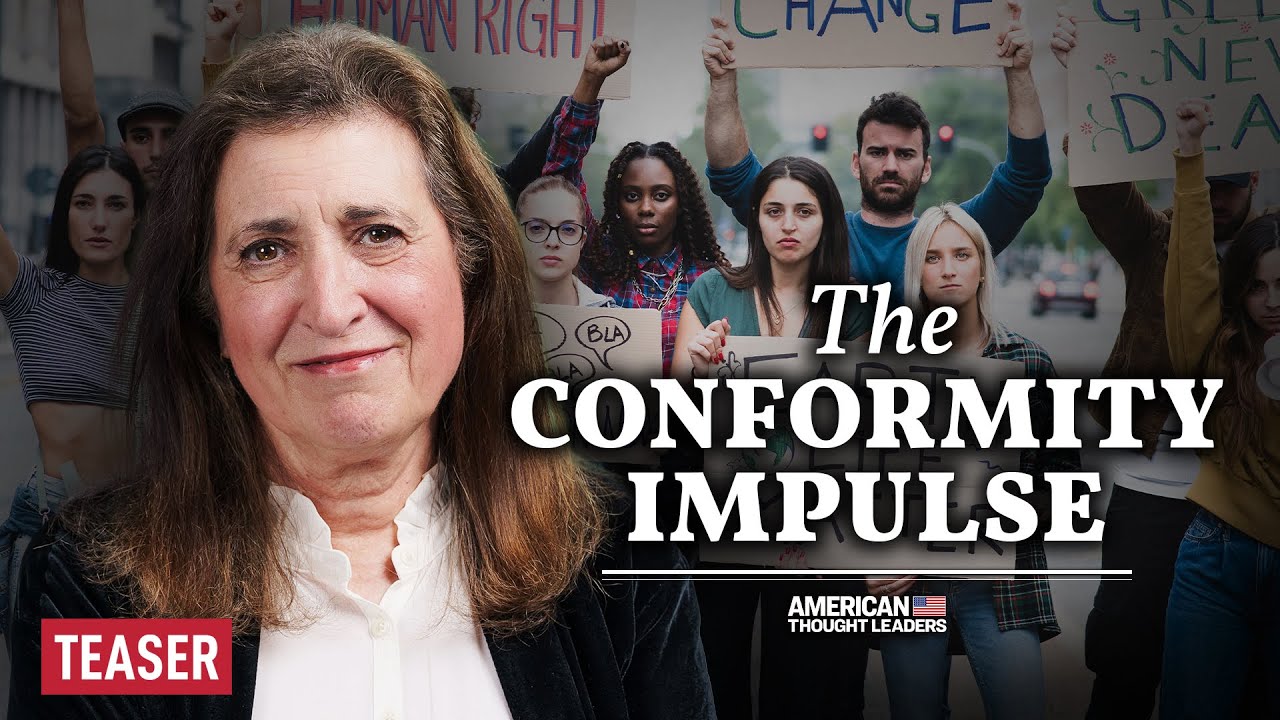
- Stella Morabito: The Impulse to Conform and Astroturf Mobs Versus Organic Protest
[FULL TRANSCRIPT BELOW] “It doesn’t matter what your politics are. People want friends. People want family. They want strong relationships. Nobody wants to be lonely. And that’s why what I call the ‘weaponization of loneliness’ is so effective.” In this episode, I sit down with Stella Morabito, a senior contributor at The Federalist. She’s a former CIA intelligence analyst who studied the psychology behind Soviet Union propaganda. “It doesn’t even matter how fringy an idea is. If you keep injecting it into public discourse over and over and over again, you create this cascade of public opinion. And people will go along with it, primarily for reputational reasons,” says Ms. Morabito. “It all depends on who speaks … and who remains silent.” We discuss her latest book, “The Weaponization of Loneliness: How Tyrants Stoke Our Fear of Isolation to Silence, Divide, and Conquer.” “People aren’t terrorized as easily if they have strong bonds of relationships. And that’s why the private sphere is such a target—has always been such a target of tyrants and authoritarians, because that’s where our power lies … That’s where we get the strength to deal with so much of what comes at us in life,” says Ms. Morabito. We also discuss the impact of social media and new technologies on society, and how they further serve to isolate people from strong bonds and deep relationships with others. “With these technocratic devices … it feels as though we’re … being nudged into a kind-of virtual solitary confinement,” says Ms. Morabito. Interview trailer: Watch the full interview: https://www.theepochtimes.com/stella-morabito-technocratic-totalitarianism-the-impulse-to-conform-and-astroturf-mobs-versus-organic-protest_5385193.html FULL TRANSCRIPT Jan Jekielek: Stella Morabito, such a pleasure to have you on American Thought Leaders. Stella Morabito: Thank you. It’s really great to be here. Mr. Jekielek: Stella, viewers of American Thought Leaders know I talk about the megaphone, a mechanism that is used to manufacture perceived consensus in society, something that has profound importance in all the social dynamics that we’re seeing today. But prior reading your book, I didn’t understand how that worked. Now I do, and you know what I’m talking about. Why don’t we start there? Ms. Morabito: Thank you. Again, it’s really great to be with you, Jan. I love the show. The megaphone is propaganda combined with political correctness to create an illusion of unanimity and consensus. How does this work? Why do so many people fall in line with it and how do the people pushing a propagandist narrative get away with it? These are the two questions that have really been driving my purpose in writing this book, The Weaponization of Loneliness. The way it works really is that all human beings without exception have a hardwired need to connect with other people. We really can’t survive in isolation, and the flip side of that is a primal fear of ostracism. Those who apply this megaphone of propaganda and political correctness operate the machinery of loneliness that triggers this conformity impulse, this need to obey whatever we perceive as a consensus, even if it’s not really the consensus. That in a nutshell is how I believe it works. Mr. Jekielek: I didn’t realize how powerful our need to belong is, and how it could actually be a central organizing principle. It’s not necessarily obvious that this would be such an important thing. Ms. Morabito: Right, and it’s instinctive. We’re aware to a certain extent that maybe we don’t want to say something because we’re afraid of being judged or rejected if we think it goes against the grain and is politically incorrect. This hardwired impulse to conform is definitely related to our need to belong and our intense fear of ostracism, because we can’t survive in isolation as human beings. That works within us. It has a huge effect on civil society, especially if people keep falling in line with a narrative or a megaphone that only creates an illusion of consensus, when the consensus isn’t really there, and when people aren’t really talking to one another because they’re fearful of saying the wrong thing. This affects people on every level, and of course, children are highly suggestible to this. It can be operated by tyrants of all stripes, for example, a toxic boss or a cult leader like Jim Jones. For your viewers who might recall, in 1978, he convinced almost a thousand people in his cult in Jonestown, Guyana, to commit what he called revolutionary suicide. It’s an extremely powerful, but natural impulse. The only way around this is to have strong relationships that you can fall back on in the private sphere of life where you have family or really good friends. Because people have a private sphere of life and private relationships that they can fall back on is why the private sphere of life has become such a target for tyrants and totalitarians, and has always been. That’s why the Communist Manifesto in 1848 had that proclamation which abolished the family as a big part of its agenda. Loyalties on a personal level are very threatening to those who want to achieve power, social control, and social engineering. I felt these dynamics had not been explored deeply enough. That’s why I wrote the book, The Weaponization of Loneliness, because that’s what it amounts to—weaponizing our fear of being alone, and threatening loneliness upon us if we don’t get with whatever program the totalitarian wants us to focus on. Mr. Jekielek: With the way our technology has developed through social media there’s an illusion or perception of community which often doesn’t really exist. It’s like it feeds some of that impulse, but it doesn’t provide this private sphere of life, which you say is so critical. Ms. Morabito: Absolutely. What we’re now headed towards feels like technocratic totalitarianism, where you have new communications technologies and the ability for surveillance like we’ve never had before. You can read about different things like kill switches on vehicles, where if you are viewed as having broken the law you can have your vehicle disabled. These kinds of technologies that are being developed are all about social control and they all seem to attack our private sphere of life or those conversations, those relationships from which we get our strength. Vaclav Havel wrote the essay, “The Power of the Powerless,” in 1978. He pointed out that our power really comes from the hidden sphere of life, the hidden sphere that totalitarians can’t quite get their hands on. But they want to get their hands on it. If they think that controlling information is really important, the first thing they’re going to do is make sure that whatever we say to one another, even one-on-one, is controlled somehow. That’s always how totalitarian systems work. Mr. Jekielek: You mentioned propaganda plus political correctness equals the megaphone. Political correctness is an amorphous thing, but as you were saying just now, it’s a method of speech control. Ms. Morabito: Absolutely. In fact, in my book I discuss the machinery of loneliness. It has three main components, and I would add those to the megaphone. The three main components are, first, identity politics, which serves to erase us as individuals and classify us and pigeonhole us according to victim status or oppressor status. Second, political correctness, which is a process that induces self-censorship. It’s a process where one-sided propaganda can control what is discussed by injecting that fear of rejection for saying the wrong thing. There is identity politics and political correctness. What’s the third component? The third is mob agitation; the mobs we see on social media, and also street mobs like Antifa. It can be human resource department bureaucrats. It can take many different forms, but the mobs all serve to enforce political correctness, identity politics, and of course, the propaganda that’s driving their agenda forward. Mr. Jekielek: When I think about political correctness, it’s about fear of reprisal. You have said it’s not just fear of reprisal, but it’s also fear of rejection. Ms. Morabito: Yes. Mr. Jekielek: Actually, the fear of rejection might be greater. I don’t know why that didn’t dawn on me, but it’s obvious the moment you say this. It’s because we don’t want to admit that we fear rejection. Ms. Morabito: Exactly. Yes, that’s true. We want to feel like we’re strong, and we’re able to withstand these kinds of social pressures, but these social pressures are very natural and very powerful. In fact, I’ve felt them, and that’s why I wrote the book because it puzzled me. It bothered me that so many fringe agendas are held up as just basically conventional wisdom. Mr. Jekielek: That’s what I was going to say. These are concepts that are absurd on their face if you sit down and think about them for a moment. But if you don’t sit down and think about them for a moment, you just roll with it. That’s what I have noticed in my own thinking. Ms. Morabito: Yes, a lot of people are in that mode. That’s partly why I wrote the book to build an awareness of these dynamics and how they operate within us and throughout all of society. How we behave or how we express ourselves, whether we know it or not, has an enormous impact on the perception of public opinion. Whether we speak or don’t speak about something affects where public opinion goes. Then, you end up with public policy as a result of that public opinion. One of the most incredible things about the power and the naturalness of that fear of ostracism is that you can see it not just in those examples I gave of a cult leader or toxic boss or a world-class dictator, but you can see it even here in America. U.S. senators are susceptible to it. They will turn on their principles if they think that they will get that extra pat on the back. Nobody is really immune to it, especially if they haven’t thought about it. Mr. Jekielek: Just a few days ago, one of our producers brought, The Spiral of Silence, to my attention, which you mention in your book. Can you explain this to us, because unfortunately, the author is no longer with us? What is it, how does it work, and how is it related to this manufacturing of perceived consensus? Ms. Morabito: The Spiral of Silence is a book about public opinion. The full title of the book written by Elisabeth Noelle-Neumann in 1980 is, The Spiral of Silence: Public Opinion–Our Social Skin. She was a director of the Public Opinion Research Center at the University of Chicago. She was observing the elections in the Federal Republic of Germany, free West Germany at the time. There were two main parties there, the Social Democrats and the Christian Democrats. She noticed how unexpectedly you would get a shift in the election that made no sense based on the public opinion polling. That’s because people remained silent about their views on if they were going to vote for Christian Democrats. They didn’t want anybody to know, as it was considered politically incorrect at the time. She noticed that. Part of the model was looking at those examples, but it applies today. They called it the shy voter phenomenon when Brexit passed 52 to 48 percent in the UK. Of course, the 2016 presidential elections here came out in a way that nobody expected. Mr. Jekielek: That’s the manifestation. But how does it work? Ms. Morabito: As people shut up about what they believe, or lie about what they believe in order to avoid ostracism, that affects public opinion polling. But we don’t think about those things. We assume that people are just going to say what they believe when they’re asked a question by a pollster, but this is not true. As Elisabeth Noelle-Neumann said, “It all depends on who speaks, and who remains silent.” That’s public opinion. Mr. Jekielek: It creates a situation where the people are not being open and hiding that fact, but that phenomenon itself affects the overall public opinion. Ms. Morabito: Absolutely. As Havel said in, The Power of The Powerless, you don’t necessarily even know what your neighbor thinks or believes unless you’re able to have open conversations. In a totalitarian system, those conversations are suppressed. You may be surrounded by people who agree with you, but you don’t even know it, and that’s the irony of it all. Mr. Jekielek: Political correctness. We’ve been talking about it for decades as something that’s significant, and as something that’s impacting behavior. Why does it have such a profound impact on our social discourse now? Ms. Morabito: The way I see political correctness is that it’s really a form of agitation. Political correctness serves to suppress ideas that are not in agreement with the general narrative. In order for that to work, you need to have a near media monopoly for that to be most effective. Because if people are exposed to different media that are respected, they’re more able to have real discourse. What happens when you go against the grain on any of the issues that are promoted by that media? Pop culture plays a huge part in this. You have influencers today who are like idols, or screen idols. People just want to identify with them and live vicariously. Robert Nisbet, who wrote, The Quest for Community, called it pseudo-intimacy. That also plays into the weaponization of loneliness. What happens when people want to be associated vicariously with these figures? Maybe a sports figure, media figure or movie star comes out with a political view, then all of these forces are working together. With academia and all of the institutions captured by these narratives, people then feel that the consensus is overwhelming. A lot of people will go along with it and will even shut up about what they believe. They’ll start just going with the beliefs that are presented to them, whether they believe them or not. They just accept them through osmosis. To go against that is extremely painful and difficult a lot of times, especially if you’re in a group. I talk about the conformity impulse. I give an entire chapter to the conformity impulse and how obedient we tend to be until we see other people who are willing to stand up. Mr. Jekielek: We don’t like to admit that we’re conformists, even to ourselves. You cite a number of these experiments that were done in the 1960s where there is this perceived conformity and everyone seems to agree, even though the researcher knows they don’t. The perception is there. But the moment one person stands up and says, “Hey, wait a second,” the numbers change dramatically. It takes that first person through the gate to break the spell. Ms. Morabito: Yes. The first one that I mentioned was Solomon Asch in the early 1950s, and the better-known Milgram was actually a student of his. He had these experiments that had to do with matching up the length of a line, “Here’s a line this length. Tell me which of these three lines matches this.” You get a 99 percent accuracy with 99 percent of the population, and it’s a trivial question. But the subject was surrounded by eight or nine collaborators who would all give the wrong answer at a certain point. The subject was having to publicly declare what the correct answer was, and quite often up to 40 percent of the time they would not. This was like 60 to 70 years ago. They would not be able to give their correct answer. There was nothing political about it, and nothing controversial. It was just that social pressure of having to give the correct answer when everybody else was not. He thought he must be wrong, but he didn’t know why. He thought, “I’m just going to go along because I don’t want to stick out like a sore thumb.” A variation of the experiment showed that when that subject was given a partner out of the eight or nine other collaborators who agreed beforehand with the correct answer, conformity dropped like a rock. Then, if you’re in a group and one person speaks up, and then, someone else says, “Yes,” and then, there’s another person, that breaks what Asch called the illusion of unanimity, and what you call the megaphone, this illusion of consensus. It’s the same thing. It’s just really fascinating. Milgram, of course, was a student of Asch. There’s a great movie on Milgram and Asch called, “Experimenter,” that your viewers might be interested in. It was just really fascinating how they turned out. He was trying to figure out if Americans could be as brutal as the Germans were in Nazi times. This is 1961, and they were having the Eichmann trial in Israel at the time. He had these experiments where one guy would be an actor. They would have the fake shock machine. The subject was a guy who had to give the questions to the learner, and if he got an answer wrong, he would shock him up to a certain voltage. It was all fake, but the subject didn’t know that. The actor would yell, “You’re killing me!” He found that it was really shocking, for lack of a better word, how many people were willing to go all the way, just to be obedient to authority. He called that the agentic state. Just as during the Nuremberg trial, the excuse was, “I was just following orders.” The subject would just follow the orders of the experiment administrator, who initially would be Milgram, and it was later replicated by someone else. It was taking your personal responsibility and relinquishing it to the agent who told you to go ahead and continue. That was really interesting. I have a long footnote in there about the whole issue of the ethics of the experiment. But it was an interesting observation on human behavior. I looked at Noelle-Neumann’s, The Spiral of Silence, and all of these conformity observations and experiments that really inform us about our behavior under social pressure. We need to become a whole lot more aware. You’re right, Jan, nobody wants to consider themselves a conformist. Mr. Jekielek: I’m going to read something that I found so compelling. You wrote, “Propagandists can also cultivate a bandwagon effect simply by dictating one narrative while shutting out all others. People tend to fall in line. There’s a conformity impulse at play, which is often triggered and promoted through a bystander effect. When witnesses to social punishments such as shunning, humiliation, or firings due to wrongthink remain silent, they do so to avoid that suffering themselves.” “The conformity impulse and the bystander effect work in tandem to produce mass compliance with the policies of oppressive regimes. Both are propped up by propaganda that directs the psychology of the masses, especially through popular culture.” The reason I’m reading this right now is we’ve just encompassed a lot of what we just talked about in these few pithy lines from your book. Ms. Morabito: Thank you. Yes, I think we did. Mr. Jekielek: How did you bring together these disparate areas of interest? Please tell me about your background. Ms. Morabito: I’ve been observing these social dynamics ever since I was a child on the playground. I’ve been an observer of these kinds of things that didn’t really make sense to me as a teenager. In college, I would see these same patterns. For example, I worked for a while between undergraduate and graduate years as a departmental secretary in the social science department at the university where I got my degrees. You could see how the faculty there would swarm to get one member denied tenure or fired. It was the same process, trying to get their political opponent shunned and degraded and demonized. In fact, I didn’t mention that demonization is the common denominator of all of this. That’s what people are afraid of, and I’ll get to that a bit more in a minute. I got my graduate degree in Russian and Soviet history, and that just tied it all together, especially studying Stalin’s reign of terror where people were so fearful of being considered an enemy of the people. It created a mass hysteria where there was finger pointing even when someone hadn’t done anything against the regime or said anything. People would start accusing others just because they were fearful of being accused themselves. They wanted to be the good guy who turned them in, even if their neighbor was totally innocent of whatever it was. It’s a mass hysteria that you saw in Mao’s Cultural Revolution. You would see it in all these radical utopian revolutions going back to the French Revolution and earlier. This is a roundabout way of giving you some of my background. Then, I went on to work at the CIA as an intelligence analyst focused on the Soviet Union. Specifically, I spent quite some time doing media analysis and propaganda analysis, and a lot of that was open source. You could read Pravda and all this one-party state propaganda. There were a lot of these crazy ideas, and of course, the population had no other narrative. I saw that, and I thought more and more deeply about why an entire population, a majority, can be controlled so easily by a really minuscule minority. Of course, they’ve got their apparatchiks, and their whole apparatus through the bureaucracy to prop them up. That’s my background. I observed these things even after I left to raise a family. Now, I have been a senior contributor for the Federalist for 10 years, and I’ve been mostly writing about these psychological manipulations and the cult mindset and groupthink. These are the things that fascinate me the most, because I think that’s a common denominator of why we are where we are. When people shut up about what they believe or they lie about what they believe, this has a really negative effect on civil society. Mr. Jekielek: You’re bringing up something very fascinating, which is the distinction between organic protest and mob protest. Ms. Morabito: Yes. Mr. Jekielek: They’re actually formed differently, which I hadn’t really thought about. Sometimes you have protests, and they can either turn into a mob, or be something against the mob. But there’s actually a very different way a mob can be deliberately formed. During the Cultural Revolution in China the red guard deliberately formed these mobs that would go out and destroy the four olds. You detail that quite a bit in the book. Please tell me about this distinction. How can you even tell what you’re getting yourself into when you’re seeing a protest, because there are a lot of legitimate protests to be had. Ms. Morabito: Yes. Mr. Jekielek: At the same time, there’s also a lot of mob activity, and it can be difficult to differentiate from a true protest. Ms. Morabito: Right. The main difference between what I call the AstroTurf mobs and legitimate organic protests is that these AstroTurf mobs like you have with the red guard during Mao’s Cult Revolution and Antifa today—they’re not on the same scale, but it’s the same dynamic—those are often in line with the propagandistic narrative. The distinction also has to do with the level of risk. When you’re in line with the media monopoly and the propaganda, you can feel pretty safe. Remember that march that all these women had after the Trump inauguration, there was no fear there. They had Hollywood stars and everyone involved in it. But if you look at Prague Spring of 1968, or Hong Kong in 2019, or Tiananmen Square in 1989, those people were acting on principle. They weren’t organized, and they weren’t protected at all. They did these things at great personal risk and many of them paid for it. But that’s really the distinction, and that’s how you can tell. Mr. Jekielek: Absolutely. From what we saw at that time, the march around Trump’s inauguration and the protests around that, there were a lot of people genuinely afraid for their lives. Ms. Morabito: Yes, because the propaganda really had that deep effect on those that were manipulated, obviously. I can’t speak for all these individuals, but mobs tend to be made up of people who are atomized and isolated. They don’t have strong familial bonds or strong bonds of friendship, although they may say they have them. But they become very fearful, and you can see that. Mr. Jekielek: You talk about how this repeated exposure can create a consensus, because there’s so many different pieces. Again, I’ll go back to this concept of the megaphone. The megaphone has many different components that all seem to all agree with one another. There’s a susceptibility when that all-encompassing consensus seems to exist. You agree with the narrative and believe it to the point where you could fear for your life. I find this deeply disturbing. Ms. Morabito: Yes, and dangerous. Mr. Jekielek: It’s incredibly dangerous. But I find it hard to imagine how to protect yourself against that. If someone has been pulled into this, how can you communicate with them? They are operating in a completely different reality. Ms. Morabito: That’s exactly right. Reality is what’s at stake. This is just my opinion, but I think that susceptibility is caused by isolation. It’s caused by atomization that is rooted in a lot of policies that actually serve to isolate; policies that promote family breakdown, policies that promote addiction, and policies that promote urban blight—all of these things are extremely isolating. Children can’t even learn the basics in school. I believe that ignorance can be isolating. All of these factors play into that. When we reach an inflection point where you do have so many of these people who are so far gone, you’re right, you can’t really reach them. The real solution has to do with relationships of trust and social trust. How do you establish social trust when we’ve already lost so much of it? I talk about reaching out in the last chapter. It’s about becoming more aware. When I talk about outreach, obviously you can’t do it with people who are really, really far gone, especially youth. It has to be people who are teetering in the middle. That’s how you reach out to people who are at least partly open to what you might have to say, or even open to a conversation. That can be harder and harder to find these days. But we have to do it. We have to do what we can to turn this around. But you’re right, it’s very disturbing when you see that these people really do believe their lives are at risk, or the world’s going to burn up in five years. All of this stuff plays into that fear and that intense anxiety. It does nothing to promote a civil society, or to keep us healthy and able to talk with one another. That’s what everybody wants. It doesn’t matter what your politics are. People want friends, people want family, and they want strong relationships. Nobody wants to be lonely. That’s why the weaponization of loneliness is so effective. It’s such an effective tool of tyrants. So many people have talked about or written about how the threat of isolation is used as a political weapon. Part of my goal was to put this all together in one place. Carl Jung, deTocqueville, Noelle-Neumann, and Robert Nisbet all talked about it. Mr. Jekielek: And Hannah Arendt, of course. Ms. Morabito: Yes, Hannah Arendt. She said that the goal of all totalitarians or all tyrannical governments is to bring about isolation because people aren’t terrorized as easily if they have strong relationships. That’s why the private sphere is such a target, and has always been such a target of tyrants and totalitarians, because that’s where our power lies. That’s where we get the strength to deal with so much of what comes at us in life. Mr. Jekielek: I’ll read another thing you wrote, “Pretending to go along with the belief you don’t actually hold, creates a ripple effect.” You cite some of this work done around what are called availability cascades. Please explain this to me. Ms. Morabito: Yes, and the opposite is also true. If you are willing to express what you believe, that creates a ripple effect in a very good way as well. But the negative side of that is what you don’t believe. The availability cascade is a term that comes up in an article co-authored by Cass Sunstein, who was Obama’s regulatory czar back in his second term, and Timur Kuran who is a social economist. They explain that you can create the illusion of a consensus on just about anything if people are willing to shut up about what they believe or not express what they want to say. What I thought was really interesting, he said that it doesn’t even matter how fringy an idea is. If you keep injecting it into public discourse over and over and over again, you create this cascade of public opinion. People will go along with it primarily for reputational reasons. Reputational is the term they use. I would say it’s that fear of ostracism and that need to connect, but reputation is all tied up with that. If you look at some of the absurdities that we’re dealing with today, that’s exactly what happened. There are certain issues that get injected time and again. I keep coming back to the transgender issue because that one is so fascinating. In 2014, they came out with a big Time magazine cover and article, “The Transgender Tipping Point.” Then, Caitlin Bruce Jenner had that big Vanity Fair article, and he was a big star. He was an athlete. You had this intersection of popular culture and Hollywood, and a lot of academics piling on and injecting this idea into the public discourse over and over and over again. That’s really all it took. Then, people just said, “Oh, this is what I should believe.” TED talks were another part of it. That is the availability cascade, and it has to do with a public opinion cascade. It doesn’t really matter what people really believe, it’s all about what they say they believe. Quite often, they say they believe certain things because they’re fearful of how their reputation might be affected. They sense that megaphone around them that you talk about, and they sense that threat of ostracism if they go off script. Mr. Jekielek: This is a tough reality to deal with. I don’t know a good way of dealing with it other than individual people having courage and overcoming that fear of ostracism, for better or for worse. Ms. Morabito: I don’t think we can ever completely overcome it, but we need to regulate it. We need to understand it in order to have a civil society where we can have real conversations with people, not this dancing around and being afraid of saying the wrong thing. Obviously, there’s a certain extent to which we need to be aware of manners and courtesy and all of those good things. But even manners and courtesy are coming under attack in a lot of ways. The weaponization of empathy is also interesting because that is something that Saul Alinsky brought up in his book, Rules for Radicals. One of the rules is to use the goodwill of the middle class against them. That’s another factor that feeds into people going along with a lot of these things. There are other factors as well. There’s a certain belief and complacency that our Constitution will always be standing. We have the First Amendment protecting us. It never occurred to us for many years that free speech could come under direct attack, under the guise of protecting us from misinformation. I believe that we were created for communion with God and for communion with other people. That’s how we were created. In fact, the epigraph from my entire book is that it is not good for man to be alone. We know that very deeply in our hearts. We cannot function and in many cases can’t even survive in a state of severe isolation. It’s like solitary confinement. With these technological devices, it’s as though we’re almost being nudged into a virtual solitary confinement. We can become aware of these things, and I mention ways to fight this at the end of the book. We can become aware of how these dynamics operate within us and around us. It doesn’t have to be a huge majority of people, it may just be a 5 percent minority who have this ripple effect going where they can express themselves and understand this. I have a lot of ways, including the idea of a book club. It’s a project of mine on this theme. There are so many books and articles and movies and documentaries that deal with this theme, although they don’t say it. Mr. Jekielek: Stella, just for the record, please sign me up for your club. Ms. Morabito: Okay. Mr. Jekielek: I’m in for that, absolutely. Ms. Morabito: Great. I’m in the process of creating that. This is one way of building an awareness of these dynamics. I believe that all these destructive agendas depend on the dynamics that I write about. Instead of playing whack-a-mole with a thousand different agendas and policies, if we can at least make headway in defeating or dismantling the machinery of loneliness, then everything else will fall into place. Otherwise, it’s a big game of whack-a-mole with all the other issues. Then, of course, there are parallel institutions. There are many things that people can do on their own that create a ripple effect. Mr. Jekielek: I’m going to jump in here because there’s a couple of things that are obvious conclusions based on your work, and you mentioned them as well. One is the ability to have free discourse, and the First Amendment is critical. Ms. Morabito: Absolutely. Mr. Jekielek: If that breaks down, then we no longer are able to have that community. All of these mechanisms of control suddenly become operative. Ms. Morabito: Yes. Mr. Jekielek: With all its flaws and problems, you would argue this is inviable, and it has to stand. Ms. Morabito: Absolutely. Mr. Jekielek: The other thing you mentioned, and we started with this. To some extent the private sphere of life must continue to exist. That’s actually a huge problem because everything about our society is becoming public—what we buy, and what we do. This device I’m holding is collecting information on me as we’re doing this interview. A whole new generation has grown up without even realizing what privacy might look like, because there is constant monitoring, and there are cameras everywhere. There was a general survey done where a lot of young people would agree to having a camera in their home for their own safety. Ms. Morabito: Yes. Mr. Jekielek: It’s incredible. We have to stop that, otherwise, our humanity might be at stake. Would you agree with that? Ms. Morabito: Yes. Privacy is one of the conditions of having a civil society. Without privacy, there can be no intimacy. If you think about it, friendship is based on the ability to confide in someone. The word confidence comes from the Latin word, fidelis, meaning loyalty. It’s the idea that there’s a bond there that shouldn’t be broken, and that’s how relationships develop. Without that, we become atomized, and that’s what we have to fight against. Privacy is absolutely imperative. Cultural memory is imperative as well. Children especially are not getting what they need in terms of understanding our history, their own history, our genealogies, and all of that. Cultural memory, privacy, imagination and virtue are the four conditions that I mentioned for a civil society to exist. With the invasions of privacy all around us technologically and in so many other ways, that is definitely at stake, and that is definitely endangered. Mr. Jekielek: In Poland, the dissidents had this idea—live as if you were free. Ms. Morabito: Yes. Mr. Jekielek: I find that really interesting because you can do that. With everything that’s happening, this is still a much freer society than probably just about anywhere else. That’s something I always like our viewers to remember. As much as there’s a lot of encroachment on those freedoms as we speak, that remains the case. You can live as if you are free, whether or not you think you’re free. Ms. Morabito: That’s right. Mr. Jekielek: We don’t even need to debate this. That was a beautiful prescription straight from Poland under communism—how to carry yourself, how to think about things, and how to create an honest honorable resistance, whatever you perceive to be the problem. Ms. Morabito: There might be punishments involved, definitely. When he talked about the greengrocer, Havel said that he might lose his job by living as if he’s free. If he takes down that workers of the world unite banner, everybody’s going to notice it, but he will have done something amazing. When you live as if you are free, you pull back the curtain, as Havel said, and you show others that it is possible to live with truth, as much as the oppressors want to make it impossible for you to do that. We can do it. There might be punishment, but the cost of not doing it is far greater. That is what every tyrant or totalitarian is fearful of. It’s quite possible that these people who are trying to lord over everyone else, these social engineers, they are the ones most impacted. They are most fearful of loneliness and susceptible to that fear. To start psychoanalyzing them is a subject for another book. But it is important to start thinking about this. It’s definitely late in the day to do it, but we have to do it. We have to start thinking about these dynamics that make all of these destructive agendas possible. The destructive agendas are really the default position. That we’re living in the United States with our Constitution and First Amendment is really miraculous in the course of all human history. If you take that First Amendment away, it all falls apart, as you said. We’re living a real miracle and we want to keep it in place. As you said, the First Amendment is non-negotiable. It’s not negotiable. It’s what allows us to even have a private sphere of life. Mr. Jekielek: Stella, this has been an absolutely fascinating conversation. Any final thoughts as we finish? Ms. Morabito: My final thought is to point out that this war against oppression or totalitarianism is ancient. It’s constant and it’s something we have to just be aware of, and we can never fall into complacency about it. We need to respect our freedom and respect the right to live as if we are free, even if we don’t think we are. Mr. Jekielek: Stella Morabito, it’s such a pleasure to have you on the show. Ms. Morabito: It’s been a pleasure talking to you, Jan. Mr. Jekielek: Thank you all for joining Stella Morabito and me on this episode of American Thought Leaders. I’m your host, Jan Jekielek. To get notifications about new Kash's Corner and American Thought Leaders episodes, please sign up for our newsletter! Here 👉 Get Alerts - PRE-ORDER "The Shadow State" DVD: https://www.epochtv.shop/product-page/the-shadow-state-dvd The Real Story of January 6 | Documentary BUY Jan 6 DVD: https://www.epochtv.shop/product-page/dvd-the-real-story-of-january-6, Promo Code “Jan” for 20% off. - Follow American Thought Leaders on social media: Twitter: https://twitter.com/AmThoughtLeader Truth Social: https://truthsocial.com/@AmThoughtLeader Gettr: https://gettr.com/user/amthoughtleader Facebook: https://www.facebook.com/AmericanThoughtLeaders Gab: https://gab.com/AmThoughtLeader Telegram: https://t.me/AmThoughtLeader
- Jonathan Ward: The Blueprint for American Victory Over the Chinese Communist Party
[FULL TRANSCRIPT BELOW] “They depend more on us than we depend on them … Fundamentally, the rise of China does not really continue from an economic perspective without access to Western markets, Western capital, and Western technology,” says Jonathan Ward. He is a China scholar, founder of the Atlas Organization, and author of “The Decisive Decade: American Grand Strategy for Triumph Over China.” “It’s not just a military and diplomatic contest. It’s a contest for what sorts of beliefs and possibilities lie ahead of humanity in the 21st century,” Ward says. What would it take for the United States to out-maneuver and triumph over the Chinese Communist Party? What are the key strategies the United States should deploy when it comes to the economy, diplomacy, the military, and the ideological arena? Why is rebuilding America as an industrial base absolutely critical? Interview trailer: Watch the full interview: https://www.theepochtimes.com/jonathan-ward-the-blueprint-for-american-victory-over-the-chinese-communist-party_5372274.html FULL TRANSCRIPT Jan Jekielek: Jonathan Ward, such a pleasure to have you on American Thought Leaders. Jonathan Ward: Thank you, Jan. Good to be with you. Mr. Jekielek: I have really, really enjoyed reading your book, The Decisive Decade. Congratulations on a book that is outlining a strategy for how to deal with the Chinese Communist Party. It’s a tall order, and you bring a lot of different pieces of the puzzle together in a way that I haven’t seen before. You talk about ideas as being one of the realms of competition or perhaps even warfare. You use these quotes at the beginning of that ideas chapter. You mentioned Bono actually said that America is one of the greatest ideas in human history. That’s how it’s viewed from the outside. You also said, “Be the America that Hong Kong thinks you are.” What prompted you to use these quotes to lead off that chapter? Mr. Ward: The book is broken into the classical arenas of Western grand strategy; diplomacy, information, military and economics. Initially, I was going to focus on economics and military, the two most important strategic arenas for this contest. But eventually I thought, “Why not do the whole thing and include the arena of ideas?” That became the most challenging part to write, and in many ways the most exciting part to write. I set it up with the two quotes. One was from Bono, the Irish singer and leader of the band, U2, which was the first CD I ever owned as a child. He had this beautiful quote that I remember from many years ago. He said, “America is an idea. It is one of the greatest ideas in human history. That’s how we see you in the outside world.” Then, there was something I saw on Twitter during the Hong Kong uprisings in 2019 where it said, “Be the America that Hong Kong thinks you are,” with pictures of students waving the U.S. flag. Part of that was based on my own background, which is somewhat international. I spent about 11 years overseas with the travels I did learning foreign languages, and the PhD I did at Oxford studying China-India relations. The future of the United States is not just important for us, it’s important for the entire structure and well-being of all humanity. So much depends on the success of this nation, and our example resonates far beyond our own borders. It always has, and it still does. I chose those two because they’re contemporary, they’re earnest, and we need to see how important this country is to the world. It’s not just for our own destiny, but really for the whole picture. America is the geopolitical bedrock, and the guarantor of human freedom and prosperity. These are things that we had a clearer idea of in the past when we understood what the free world was, and when we understood what American leadership was. It’s not just an economic contest. It’s not just a military and diplomatic contest. It’s a contest for what kinds of beliefs and possibilities lie ahead for humanity in the 21st century. To me, geopolitics matters. It matters who wins these contests when they arise. In this case, it matters a great deal that the United States and our allies continue to be the main force in economic and military power, and that we continue to lead in the 21st century. Mr. Jekielek: We find ourselves at a very interesting time in history. You make this case in the book, and you call it the decisive decade. This is the decisive decade in your view. You argue convincingly that figuring out how to deal with the geopolitical threat of the Chinese Communist Party is not just for the benefit of America, but also for the benefit of the free world as we know it. Some people believe that it’s actually already over, that China has already won, and that their ideological system will be dominant. How do we know that’s not the case? Two, why are you so sure that we can turn it around? Mr. Ward: I talk about this in my first book, China’s Vision of Victory, which was probably the first book to explain the long-term strategies of the Chinese Communist Party taken from their own documents. For various reasons, I had been spending a lot of time with a primary source prior to writing that. The point is that they have a set of timeframes that to them are both symbolic, but also planning timeframes. They have the symbolic date of 2049 when the great rejuvenation of the Chinese nation will be complete. They had the symbolic date of 2021, which has now passed, which is the centennial of the Communist Party of China. They see this in a timeframe that goes out to the mid-century, and at that point China will have risen. But for me, in analyzing this and realizing that for the United States to wake up and take action, it really matters that we use the 2020s. This will be a long term contest. It will most likely stretch out for the foreseeable future, but we have these advantages that we cannot relinquish. That’s one of the most important pieces here. The United States, particularly when it comes to economic power, is actually the role model for the Communist party’s approach to geopolitical power. They have a bunch of economic strategies that are designed to place themselves at the center of the world economy and to increase the world’s dependence on China, while at the same time reducing their dependency on the world. Ultimately, they want to convert that into military power and diplomatic power, as we’re starting to witness, and to get that going in such a way where they’re an unstoppable force. We’ve been the largest economic power for well over a hundred years. A great deal of our geopolitical history is defined by having this preeminent position in the world economy. When I was writing the first book, I had to continuously revise upwards the GDP that the People’s Republic of China had in relation to the U.S., because it kept growing every year as I was writing the book. Today they’re at about 80 percent of our gross domestic product. We have to take this moment, particularly now in the 2020s, to ensure that we’re the largest economy in the world, and that we have real economic strategies that will ensure and guarantee it for the long-term future. We also need to rebuild peace through strength, which is dependent on economic power. That’s how we’ve been able to win wars in the past when we have been forced to fight them, and to maintain peace when we were able to do so, which is our preference. We need to have the diplomatic structure of the world be one that is heavily in favor of the U.S., our allies, and the other democracies in the world. It should be one that’s essentially not going to be overcome by Russia and China at this point. There is an axis here of authoritarian states. We have all these advantages today, but we’re losing them. We’re watching our position in the world economy be challenged in meaningful ways across strategic industries, critical technologies, and global markets. Our position is not guaranteed unless we have real strategies to back it up. In the 2020s, if we’re able to cement our most important positions, if we’re able to utilize what’s coming in economic history, which is industry 4.0, which will create new productivity and industries that could be a major boon for the U.S. and the alliance system, if we’re able to do all that in this decade, get that started, and get a real grand strategy in motion, we will be in a much better position for as long as this contest goes on. We have to take the moment that we have now. Mr. Jekielek: One of the things that you talk about from different angles is how the Chinese economy is structured. You describe it as an investment economy based on U.S. capital markets. You also talk about how a lot of their economic growth is not necessarily productive. Let’s try to understand that. This is something that you’ve taken a very close look at. They have 80 percent of the U.S. GDP, yet they are incredibly dependent on the U.S. to this day. How does that work? Mr. Ward: They are dependent on a lot on exports and government investment. They have been trying to create a consumer sector and have it be consumption-led. To date, that has not gone as well as they would have liked. There are still possibilities for them, but they are losing the ability to create productive, investment-driven growth. That is going to be very critical, because as the debt overhang becomes more important, and as that begins to harmonize with demographic issues, it’s going to be their ability to interact with the global economy that allows them to continue to grow and continue to have advantages in the international system. They’re focused on strategic industries, and that’s one of the key drivers. They have industrial policies that we are all acquainted with at this point. “Made in China 2025,” is the most famous one. It identifies about 10 strategic industries that are targeted for investment and also intellectual property theft. They can build state-owned or state-backed super companies that can go out into global markets and compete with our own companies, with enormous amounts of capital resources behind them. There is that side of it. Then, there is their ability to generally interact with the global financial system. The rise of China is really the story of U.S. engagement and access to our markets. We are still the world’s largest economy. We’ve been the largest demand center in many cases. Our demand for imports from abroad created an export sector in the People’s Republic of China that could help drive and fuel their growth, and then, have access to our capital. They were invited in to become part of a working global financial system in all the important ways, including technology transfer. The classic deal during the last couple decades of the rise of China, especially in the early two thousands, was a technology transfer for market access and joint ventures, where very advanced technologies would wind up in the hands of Chinese state-owned or state-backed companies, and essentially allow this massive technological advancement across the board that we did very little to control. We’re just starting to see not only the U.S., but also allies get into the business of restricting exports. This really began in the last five years. Outside of purely military sectors, we’ve started to look at the broader civilian economy. From the Communist Party perspective, the civilian and military economies are quite linked. The civil-military fusion expresses their ambition to bring civilian industrial innovation into the military sector and basically to pull it all together, so that they have comprehensive national power and are able to compete with us in terms of military modernization, key strategic industries, and emerging technologies. For us to be able to push back on all that, realizing that they depend more on us than we depend on them is a realization we have to make. Certain sectors and certain companies are overexposed to China. Good corporate decision making and de-risking will help us to reduce that kind of exposure. Government certainly has a role to play in that as well. Fundamentally, the rise of China does not really continue from an economic perspective without access to Western markets, Western capital and Western technology. It’s not only us, it’s also the alliance system. Take NATO alone and that’s half of global GDP. Take the world’s democracies and that’s over 60 percent. When you get into global wealth, we’re at about 75 percent of all of that. We’re still the bulk of world GDP as an alliance system. If we were able to establish best practices on market access, on capital investment, and on technology transfer across the entire alliance system, we would slow down their game very much and very quickly. If we’re doing that in the 2020s, we’re going to be competing against a state that’s not continually rising and innovating and becoming more capable, but one that’s starting to stagnate. We can create a geopolitical contest where we can accelerate, gain new advantages, out-compete them in the long run, and eventually begin to win the entire picture. A lot of this is resolved in the economic domain, and that’s where we need to focus the most. It’s also where we lack real strategies and real theories of victory. Mr. Jekielek: You state your very clear understanding that economics is the key area of actual warfare, even as much as there is the military dimension. Economic strength will guarantee military strength. Mr. Ward: It’s both. You need to get both of those two pieces right—a good sound economic strategy of victory, coupled with a military strategy for real deterrence. You have to get deterrence right if you’re going to have economic containment. There are two pillars. One is economic containment of the People’s Republic of China, and the other is rebuilding and re-industrializing the United States and the alliance system. We need to focus on ourselves, make ourselves stronger, and at the same time we have to slow down the adversary. As I say in the book, it doesn’t help if you’re driving your car faster, but the adversary is sitting in the seat next to you. It doesn’t really matter how much faster you drive. We have to do both. We have to start kicking them out of the car a little bit, and at the same time focus on the accelerants that we can get through what’s going to be a very exciting period in economic history. If we do this as a joined economy, which Elon Musk calls conjoined twins, then our gains are their gains. Our advantages become their advantages. Their advantages, which are used for their strategic power, can really have a far greater effect. We have to utilize the fact that we are poised to do some exciting things in economic history. We have to go there without bringing the adversary along with us, and that is going to require certain containment measures. There are precedents for all of this. Throughout the Cold War and the second World War, and even before that, there was a pretty large policy toolkit. But we have to have some clarity of vision on what to do. Mr. Jekielek: It’s hard to imagine when you consider the level of integration that the Chinese regime has had into the global economy, even just investment dollars that are going there automatically. It’s hard to imagine how to extricate oneself out of that. You frame it this way; the U.S. multinationals vs. the Chinese state enterprises. The Chinese state enterprises are clearly following the directions of the Chinese Communist Party, and ultimately, Xi Jinping. The U.S. multinationals have their own agendas, have their own interests, and some of those don’t necessarily align with the American idea as you describe it. In some cases, they don’t care about that anymore. How do we deal with this? Mr. Ward: In many ways, this is the nature of the game at this stage. The important thing here is to work through those problem sets and begin to restructure the global economy so it depends far less on the People’s Republic of China, for as long as the Communist Party is in power. That’s really what we have to win in the 10 to15 year period ahead of us. We need to maintain deterrence and start to restructure the economy. We have to work through this sector by sector, company by company, technology by technology, market by market, and start to come up with a world in which we are outpacing them across the board. That can be done. One of the big subjects of the book is the role of major companies in U.S.- China competition, because at the end of the day, economic power is built by business and commerce. Fundamentally, that’s really what it is. Especially with our own history, this is one of the things that I found most exciting to study as I was writing this book. The role of our companies in prior strategic competitions has been very, very powerful. There was a wonderful book written by Arthur Herman called, Freedom’s Forge, about how American business won World War II. It presents a very strong case for how it was a sleeping giant that woke up, and had so much industrial power and capability. But it’s also American companies that provided that capability. Once mobilized towards an undertaking of that scale, they were able to do that and help the U.S. decisively win the second World War. In the Cold War, of course, we had these amazing technological advantages that were produced by our innovation ecosystem. Our innovation ecosystem absolutely included our ability to commercialize science and technology and use our massive market to create innovation. We have had this amazing economic advantage in geopolitical contests in the past. Our companies today are going to be just as important, if not even more important to this contest. They just don’t know it yet. That’s going to be one of the big adjustments that we will just make naturally on some level. It’s just an obvious response, and it’s a necessary response. Ultimately, we need America’s economic engines to be aligned to U.S. national security, and at the very least not to be against it. H.R. McMaster wrote the foreword to my book, and addressed it to the business leaders of the free world. He laid out several things that you just don’t want to do. Don’t be involved in human rights abuses. Don’t be involved in civil-military fusion. Don’t be involved in Beijing’s strategies that are designed for overtaking the United States. Part of why this is such a clear picture today is not simply the analogy of the second World War or the Cold War. It’s because China’s companies are very directly aligned to the Communist Party of China. They use their companies directly in the service of their national interests and national strategies. They have verbatim guidelines that I laid out in the book. All the big mega-mergers that they’re doing in strategic sectors are essentially state-backed, state-owned, or state-influenced corporations. They use corporations as the fundamental instruments of their grand strategies. They essentially have economic armed forces, and we have not yet even figured out the rules of engagement here. That’s going to put us on the back foot for as long as it takes for us to realize how important business leaders, financial leaders, strategic industries, and critical technologies are to winning this game. It is a victory that can be had, but it comes through economic competition, and also utilizing that to create the foundations for long-term deterrence. Mr. Jekielek: You say that many companies are effectively held hostage in China. That’s accurate because extricating themself would just be too much and too difficult. I saw something from Volkswagen in Europe who said, “We’re totally dependent on China.” The idea being, “Don’t talk to us about de-risking or decoupling.” But that’s what containment is, correct? Mr. Ward: Yes, it’s going to be different sector by sector, and company by company. A lot of this has to be resolved by corporate strategy. The question to ask is, “How do you fundamentally de-risk or reduce exposure for any given corporate entity?” They all have slightly different profiles in the China market. Some of it is revenue exposure, some of it is asset exposure, and some of it is brand exposure, those sorts of reputational risks. Everyone has a slightly different profile, but it basically tracks the same set of parameters. On one hand, it’s about the government setting guardrails in terms of what can be done. There are already initiatives that are being put into place. It’s also going to be corporate decision-making at a board and C-suite level starting to realize that this may not be the market we thought it would be in the long run. Maybe some of this geopolitical risk means that our investment decisions or supply chain decisions are not as sound as we might have believed five or ten years ago. We’re going to need an alignment. That’s what I’d like to see. We need to have people working consensually to make these decisions, and not to imitate China’s system where it’s run by the state. We don’t want that. We want free market capitalism to win this contest. But we are going to need some level of a reality check in boardrooms and C-suites where it understands where this competition is ultimately going. They need to also realize that the decisions they’re making as business leaders in dealing with the People’s Republic of China do have an effect on geopolitics. The more capital and technology that we’re transferring over there, and the more we’re basing supply chains over there puts us at risk as a country. We’re accruing all the systemic level risk as a country, because of how we’ve engaged with China economically. At the end of the day, fiduciary responsibility is about long-term preservation of capital and preservation of business interests. In the long run, those business interests are going to be highly at risk in the People’s Republic of China. It’s just not a sound picture. That’s starting to change in the minds of corporate leaders when they have seen things like the crackdowns in Hong Kong, and certainly Vladimir Putin’s invasion of Ukraine. All of that started to bring geopolitics in the boardroom. But the levels of exposure to China can often be so mind boggling for individual companies or sectors that they don’t know what to do. We have to start working through that together, figuring out how to do it, finding new markets to diversify to, finding new supply chains that are more secure, and finding new investment opportunities that come from the United States. By rebuilding our industrial base and securing our own supply chains, all of that will present opportunities. Mr. Jekielek: With all the talk of decoupling during the pandemic, the CCP actually threatened the medical precursor supply chain. That’s a very obvious area of significant risk. From what I understand, big pharma has been fighting tooth and nail to prevent that from happening. There hasn’t been a lot that’s been re-shored at this time, or friend-shored as they call it. You even say in the book that essentially there hasn’t really been any decoupling. In fact, there’s been even more integration since that time. We’ve seen a lot of risk and that is on people’s minds. We’ve seen these extreme draconian lockdown policies they had. We know the U.S. understands there’s a genocide happening in Xinjiang, with all sorts of crimes against humanity happening. All of this is the reality, yet we’re still deep in there. Aside from reading your book, what would it take? Mr. Ward: The United States tends to react to major issues based either on events or on foresight. There are often people that can tell you what’s going to happen. There are people that could predict Pearl Harbor and 9/11. Something happens and we react in a massive way as a country. There are events at this point that people are aware of. The possibility of a CCP attack on Taiwan or another flashpoint in the region is now being much more closely watched and followed than it was in the past. But it’s much better if we’re able to do this based on a sound sense of where we’re going, and what it takes to actually reposition ourselves in a way that will be sustainable. To recognize that, we basically have to realize that economic engagement has not brought the world what we thought it would, and that it actually created much more risk and a much more disadvantageous strategic position for the United States. You’ve mentioned the pandemic or post-pandemic. That was another level of supply chain examination, certainly in the corporate sector. The trade war back in 2018 and 2019 really brought supply chains to the boardroom in a meaningful way. The pandemic brought another wave of that thinking. How can we really secure this? The example which I use in the book was when the China Daily, the most official newspaper in the People’s Republic of China, threatened to toss America into the inferno of pneumonia, if we ever withheld pharmaceutical ingredients. That was eventually brought up in Congress and is available in the Federal Register. That’s how serious that moment was, hearing those kinds of threats. The current White House has listed pharmaceuticals as one of the four supply chains that need to be secured. These are problems that we understand are on the table. It’s going to take more strategic imagination, and more of a comprehensive approach to start to look at the entire picture. We have more of a general industrial-based problem than simply critical industries and emerging technologies. We need to have an allied industrial base that works, and that goes all the way into third and fourth-tier supply chains, parts, and components. That tends to be a big bottleneck for people that are rethinking this issue. But at the same time, there’s an enormous amount of investment that can be done. There are other nations that will work for these sorts of things over time. It’s going to require sustained focus at a national and government level, but also at a corporate, long-term strategic thinking level. The other element of this is asset owners, so really, it’s three parts. It’s our government when it comes to the economic decisions at hand. It is government, corporate leaders, and asset owners, meaning Wall Street and those that actually are invested in these companies. Typically, a lot of that is major pension funds or 401(k)s that are exposed to assets. When people realize that China exposure is very risky and dangerous and certainly in many cases dangerous to the U.S., to our allies, and to our geopolitical future, then we can start to form a consensus that will allow us to figure out the right decision points and start to do things. That’s where we need to go. Mr. Jekielek: One of your key elements on the economic side is to industrialize America. You haven’t been allowed to talk about industrial policy in this town for the longest time. It’s almost like a bad word or something. But you’re actually arguing for industrial policy, aren’t you? Mr. Ward: That concept has changed a bit. Certainly in the last 12 to 18 months, it’s getting a different read. The CHIPS and Science Act was something that was supported by many, many business leaders and financial leaders to a certain extent. That is just one element and just one sector in what’s actually a much broader set of industries, that we’re going to need to supplement that through U.S. investment for the sake of long-term economic and security interests. The problem set is pretty clear. When one realizes the vulnerabilities of that particular supply chain, it’s going to need to be redesigned. As we can see, that’s a public-private partnership. During Covid, Operation Warp Speed was a public-private partnership. The way I see it is that throughout most of our history our innovation and our economic prosperity has been more complicated than that. We have a thriving, innovative private sector, and that is what our power is about. At the same time, our government research and development, science and technology, and our national laboratories are major achievements, including the space race. With the iPhone, many of its technological antecedents were designed or imagined by DARPA [Defense Advanced Research Projects Agency]. We actually have a very collaborative system that does utilize some of the long-term strategic thinking of the government. It can’t be left entirely to how the private sector’s incentive structure is designed. Somewhere in here we need to be capable of long-term strategic thinking that’s for the sake of the national interest and which includes economic power. At the same time, we can draw upon and really empower a thriving private sector, where there’s an enormous amount of innovation and research and development of its own. That is the sort of system that won the Cold War. It’s the system that will prevail in this contest too, but only if we’re able to successfully bifurcate to the point that we don’t simply become the innovation arm of the Chinese economy, where they can mass produce it, sell it back to us, sell it to the global markets, and then, put us out of business. That’s really what we need to be concerned about in the long run. They have a clear strategy for winning an economic competition, and a lot of it actually does rely on engagement with the United States. Mr. Jekielek: As a society, if we are behind the American idea, you argue that in order for this to work, then public-private partnership and this common purpose makes sense. You were alluding to there needing to be a tipping point like Pearl Harbor, where suddenly people think, “Oh, we need to do something.” That’s a broader societal understanding around a common goal, as opposed to this bifurcation. At the moment, there’s a bifurcation of ideas even. Because public-private partnership can also be a force for bad, as it was in Germany and in Italy in the 1930s. I love your focus on needing to connect around the American idea once again, and how it is viewed from the outside. Because some of us have almost forgotten about what it is supposed to be. Mr. Ward: Sure. I’m hoping we don’t need a Pearl Harbor. I wrote The Decisive Decade and China’s Vision of Victory, hopefully ahead of any real catastrophe, so that we’re able to think and act and make long-term strategies. Mr. Jekielek: Just to be clear by Pearl Harbor, I mean a tipping point that suddenly catalyzes people to realize, “Oh, we actually do have this shared purpose. There is something terrible happening over there that we need to deal with.” Mr. Ward: Sure, we need to realize that we’re in this contest. A lot of the 21st century will depend on this, and the United States is the principal actor. We’re going to have to lead the response to the People’s Republic of China. The American idea is still such a compelling thought. The American Dream and everything it stands for is intimately linked with the free world. These are values that free countries across the world can really relate to and can come together around. The United States has to find a working sense of self in the 21st century that allows us to deal with very hard things that are outside of our borders and on which the outcome for us and for the broader world very much depends on our ability to handle things of that scale. Being able to come together around this issue is so far a unifying issue. You see that in Congress with the establishment of the House Select Committee on China. There are leaders from both parties coming together, and working in a very collaborative and professional way on this issue. That’s a rare moment in the United States. The fact that this is so comprehensive and involves every aspect of American and allied power, means that we are going to have to have a national consensus on this issue. Hopefully, we’ll move out of the discussion and the mired in the problem phase and get into the action phase. That’s certainly why I wrote the new book, to show us that when we’re ready to deal with this comprehensive challenge posed by the People’s Republic of China, this is the direction we want to go in. We have to succeed in these arenas. We have to basically get these things done. That’s how we will preserve our advantages, hold our position, and ultimately position ourselves to overcome this challenge. We are still in a very early stage of America awakening to this issue. Certainly, across the alliance system, many other countries are going to have to awaken to this as well. There are different levels of that in different regions of the world. In Asia, there is a much keener sense of what the problem is than we might see if we were in Europe. But American leadership is going to be very important in bringing our global alliance system together, which includes very diverse allies from Europe to Asia, to have a shared sense of how we’re going to handle this, and also to utilize the resources of the global alliance system to manage this problem. Mr. Jekielek: Before I go into the diplomacy piece, you made a point of including the Bill of Rights in the book. That’s a core part of the American idea, isn’t it? Mr. Ward: Absolutely, and I was really thrilled, honestly. It’s a good publisher that won’t push back on you and include the entire Bill of Rights in your book. I am trained on fundamental documents, and that’s how I did my PhD work on China-India relations. When it was time to really get into the question of what’s at stake, on one hand, I’m very familiar with the Communist Party documents where they tell us what they think is dangerous about the West. But then, our own documents are so strong in terms of setting us up for what really counts here, our basic rights and values and protections, the history that we have of reflecting on our own role in the world, and coming to an understanding that what we have here is special, unique, and well worth defending. It’s something that is fundamentally good. We will have to see that America is good in order to deal with what’s coming in the 21st century. However we arrive at that may be one of the most important things. Leaving aside economics, diplomacy, and the military, just the fundamental sense that this country is a force for good is going to be an important realization for us. It’s part of what got us through the hard stuff in the past, and we have to rediscover that. Mr. Jekielek: You describe what things looked like in the 1930s, when a lot of the biggest American corporations were deeply involved with the German regime. Mr. Ward: Yes. If we go back to the corporate side, that’s true. That too is not a unique moment. Prior to the second World War, American companies were deeply embedded with the Axis powers and transferring important technologies and helping the Nazis re-industrialize. These were horrific things, but they were at a far smaller scale than we are at today. That’s one of the things we have to learn from our own history—when you go against your values, there will be consequences. Business does have geopolitical consequences. We’ve been there before, and we’re there today. One of the worst legacies of the second World War was American corporations collaborating with the Axis powers. A very similar legacy is being built today in the People’s Republic of China. If I was a business leader, I would care about that, and I would be willing to lead on that issue. It’s very important that we have some number of business leaders who are willing to say, “Look, there’s a moral cost to what we’re doing. There is value to taking the right side when the geopolitical stakes matter. We know that our work matters to American power and prosperity. This is how we’ll lead.” It would be great for us to start seeing that moment. We haven’t seen it yet, but we will have to in order to get through all this. Mr. Jekielek: The lesson is that it’s possible to be so deeply connected and involved and committed, and then, pull back and take a completely different tract rather quickly. It’s kind of inspiring that we have a historical precedent for that. Mr. Ward: Right. Before our companies became the arsenal of democracy in the second World War, some very famous, well known companies were up to their necks with the Axis powers. They did the wrong thing until they did the right thing, but ultimately they did the right thing, and that’s what matters. Mr. Jekielek: I recommend that everyone read your book. It’s an absolutely fantastic and comprehensive read, and frankly, I had to remind myself what grand strategy actually means as I was reading. But the other element that we haven’t talked about yet is the diplomacy piece. You’ve mentioned India a number of times. Recently there was a state visit from India, looking for some sort of increased alliance. We can’t call India an ally at this point, but it looks like there’s interest, and that’s a good thing. Certainly America has an interest and should have an interest. Then, there’s the question of Russia, which is the other side of the coin. There is this growing relationship between the CCP and Russia at the moment. How do we deal with this? Mr. Ward: In the diplomatic section of the book, I basically had the alliance system as one pillar. The emerging world is another, where China has its Belt and Road initiative and its investment activities concentrated. We have to have strategies for those too, which I’ve laid out. The third pillar is the major powers, India and Russia. First of all, as somebody who did my PhD work on China-India relations, it is exciting to see those two nations become in many ways the centerpiece of U.S. foreign policy and strategic thinking. We had the Indian Prime Minister’s visit to Washington recently, and we are moving forward with what could be the most important relationship of the 21st century if we get it right. India is a very natural friend and partner to the United States on these issues. Their sense of what’s at stake with Beijing is pretty hard to beat. They understand it very well. Their border war in 1962 redefined Indian foreign policy thinking. What we need now goes back to economics. If we can build a robust economic partnership, where India’s $3.75 trillion economy today can get to $10 trillion over time, whether that’s this decade or early in the next one, that’s going to be a pretty big economic counterweight. That potentially would be a good demand-driven place in which to refocus corporate interests, business interests, investment decisions, and supply chain decisions. We might have another center of gravity in Asia that really matters. Also, there’s the military side where India’s military geography is incredibly powerful in Asia. I had a Chinese think tank director back when I was a PhD student. He told me that the Indian Ocean is the part of the world that matters most to China, because they will depend on it for resources for the next 40 years. Of course, there’s India itself, which is right at the center of that fantastic maritime geography. Yet, they have disadvantages in the Himalayas, which we could help them shore up. If they’re able to successfully defend their Himalayan borders, and at the same time, project maritime power in the Indian Ocean and the Indo-Pacific, which is correctly understood as the Indian Ocean and the Pacific Ocean, that would really be the geopolitical center of gravity there. We have a lot of great work ahead of us with India; a lot of economic work, a lot of diplomatic work, and certainly a potential military partnership. That in some ways adds an enormous heft to our alliance system, which is principally composed of highly industrial economies in Europe and Asia. But you start to bring India into it, and they’re a voice in the emerging world. That’s not to say that India necessarily would be a treaty ally, but if our interests are aligned enough and our partnership is deep and strong enough and our understanding is large, then you start to see the free world take on a very new meaning in much of the world. That could be of great benefit to everyone. When it comes to Russia, at one level we are all witnessing the Russia-China axis. It’s very similar to the early Sino-Soviet alliance. I nearly did my PhD work on Russia and Chinese nationalism during the Sino-Soviet split, so I had to spend quite a bit of time on that one too. They’ve been working together since the 2010s, when Putin first invaded Ukraine and then seized Crimea. China built the military islands in the South China Sea. Xi and Putin have met over 40 times, and they have regular air, land, and sea military exercises. It’s a pretty robust partnership. Without partners in Moscow, Beijing is playing a pretty lonely game against the United States. It’s actually a very significant partnership for both sides, insofar as they seek to probe or even overturn American power. But in the long run, I don’t think it will last. It is something that’s going to put Russia at such a significant disadvantage over time. That is already starting. For them to have destroyed their relations with the West and to essentially rely on China as their only real partner is a terrible geopolitical position. We may wind up with a Russia that does not look like Putin’s Russia and more towards a Russia that would want to rebalance the world. I don’t think that’s possible in the 2020s, but as this contest goes on to the 2030s or beyond, it would be possible to have a second Russia-China split like the first one in the Cold War. In that case, they might want to pull back from this bet on China that is likely to be very bad for them in the long run. The only thing that we need to focus on in the meantime, other than the strategies we’re executing towards Russia already, is to focus on the Russia-China economic relationship. Even as many American companies left Russia after Putin’s invasion of Ukraine, the Chinese companies stayed in and they’re building that relationship. They are really cementing it together across technology, energy, and even finance to some degree. We should be preparing to sanction the Chinese companies that are enabling Putin’s invasion of Ukraine and that are cementing and building the Russia-China relationship. If we’re taking those actions in the 2020s, then it becomes a more porous and malleable relationship in the long run. Mr. Jekielek: Russia faced the entirety of the U.S. sanction system that was possible to engage. You used the word porous, and that turned out to be kind of porous. Even India is buying oil from Russia, which is very kind of a key revenue stream for them. It was very difficult to actually enact that entirely, partially because of China. It made me wonder about the strength of U.S. economic warfare, when I saw how porous it actually was. Was this because of some kind of lobbying dollars? Do you have an understanding on why that has not been as effective as it might have been? Mr. Ward: It has been effective in certain ways. Cutting major Russian banks off from the financial system and having an exodus of American and allied corporations out of Russia absolutely destabilized the currency. It definitely hurt their economic growth, and put it into recession. They’re having trouble getting parts with which to continue to wage their invasion of Ukraine. But the fact that China is an economic backstop to Russia is the most significant part. This invasion of Ukraine is being financed, and essentially the economic power behind it is not in Russia. It’s the fact that they have this external market in the People’s Republic of China, where they were not responding to what we’re really trying to achieve there. The U.S. and the allied countries could put sanctions on Russia, but they clearly knew that they would have China’s economic support, so that’s been an offset for them. It’s not necessarily about sanctions to change intent, so much as sanctions to change capability. There’s a lot that can be done with U.S. sanctions. The most significant lessons from how they’ve been applied to Russia is just that they can be applied to a very large economy. We’re going to learn a lot from that that may be very useful when it comes to shaping China’s capabilities in certain industries and overall. Mr. Jekielek: I want to touch on the military piece because we are going to have to finish up shortly, and this is the area that I’m the least familiar with. One thing I know for sure is that the CCP’s military spending has been going up considerably. They are building a huge Navy, there is this huge depletion of U.S. ammunition stocks in Ukraine. This peace through strength model seems to be coming apart, even as you’re advocating for it. Would you read it that way? Mr. Ward: A whole lot of what needs to be done here is to make sure that we have a first-tier broad spectrum industrial base. That’s an absolute necessity. That’s something we’re going to have to realize as a country. There have been a lot of studies of American manufacturing power and what can be done, both from a policy standpoint and from a business standpoint. It’s a sector that we could revitalize or certainly reimagine. It could create a lot of jobs. It could create a lot of real opportunities and a lot of national security benefits, from purely economic things such as supply chain security. To be the arsenal of democracy, you are going to have to have an industrial base. That’s just something that we have to make a number one priority in this country. We’re already hearing a lot of talk about that. It has to get done in terms of military systems, but also to have a broader general industrial base to sustain that. When I talk to historians of the second World War and they tell me how many miles of copper wire it took to build a bomber, it was a much broader industrial base that we could draw on in times of absolute crisis. For now, to be able to wage peace through strength, to prevent war by being prepared and being something that one does not want to fight against if you’re in the adversary’s shoes, a lot of that will come from revitalizing American manufacturing and industrial power. That has been studied well and it needs to be executed. Mr. Jekielek: Right, a lot does come back to that. Was this the most effective Chinese Communist party method of warfare, pulling such a huge chunk of industry out of the U.S.? Mr. Ward: The irony is that it really took two to tango in that situation. It was an American idea of what it meant to have China rise, where we had some optimism about it. We had some false hopes about it. The famous line of course is that, “As China grows rich, it will become a responsible stakeholder.” There are many, many people that said that and believed that. Even now as we realize that that’s not the case, that was the intent, as far as I understand it, for multiple decades of American policy. It just didn’t bear out. It’s something that we still can address and it’s something that we still can change. That’s why I’ve talked about this being the decisive decade. It’s a decade when we still have very substantial advantages over our adversaries. We simply need to maintain those advantages, and reduce our adversaries’ access to us and our allies. We can’t do this alone. It’s going to have to be an alliance system-wide effort. At that point, you create a new advantage and you don’t let them surpass us. Surpassing us has been their dream since Mao Zedong talked about it in the 1950s. But this is the decade where we make sure that never happens. Mr. Jekielek: As we finish up, I want to get back to this realm of ideas. Some of the most effective tools of warfare that the CCP has waged against the free world, especially America, is information warfare and the demoralization that we often see that America is bad. Again, this is for different reasons across the political spectrum. It’s kind of astounding to me. You really need to have that outside perspective saying, “Wait a second, compared to what?” In the foreign policy establishment the “Thucydides Trap” is something that’s been talked about for a while. China is the ascendant power, and the U.S. is the declining power. After a while people started believing this is a foregone conclusion, and that’s also an aspect of demoralization. The propaganda has been supporting all this with every moral failing being amplified, “Yes, America is bad. But don’t talk about us very much, you shouldn’t do that.” How do we deal with this in the end? If we don’t deal with this, then we can’t get around the American idea. How can we win this? Mr. Ward: It’s two things. One, we have to understand very clearly what the Communist party of China really represents, its human rights atrocities, and the fact that it is the organization that’s responsible for the most deaths in history. Mao Zedong presided over something like 40 million deaths in his own country. They fought wars against most of their neighbors. They fought us in the Korean War, and they fought the entire United Nations. They are carrying out a genocide today. We need to really have a clearer understanding of all these things that are easily knowable, and just recognize that’s part of what we’re dealing with in terms of the consequences of this contest. We need to also realize the United States is to some extent a quest for perfection. That’s part of how we see ourselves as a nation, as a work in progress, as one that can do better, that can go farther, and that can be a greater force for good. But we have to understand that geopolitically, to lose a major strategic contest to a country that seeks to dismantle all the features of a democratic system, that is a very big difference from how history has worked up to this time. We’ve been very lucky that it was the United States that won the second World War and that it was the United States that won the Cold War. We have to remember that that is just one of the most important things in modern history, is who won those contests. We are headed into something where the stakes are similar. There’s still a chance to win in a peaceful way, but we have to have confidence in ourselves that it is not over, that we can do this, and that it matters that we do come through on this one. It matters just as much as anything that has come before. We will learn that, either because we start to think clearly about what’s at stake, or we’ll have to learn it the hard way. But I’d much rather have us come to it before it’s too late. Mr. Jekielek: Jonathan Ward, it’s such a pleasure to have you on the show. Mr. Ward: Thank you Jan, great to be with you. Mr. Jekielek: Thank you all for joining Jonathan Ward and me on this episode of American Thought Leaders. I’m your host, Jan Jekielek. To get notifications about new Kash's Corner and American Thought Leaders episodes, please sign up for our newsletter! Here 👉 Get Alerts - PRE-ORDER "The Shadow State" DVD: https://www.epochtv.shop/product-page/the-shadow-state-dvd The Real Story of January 6 | Documentary BUY Jan 6 DVD: https://www.epochtv.shop/product-page/dvd-the-real-story-of-january-6, Promo Code “Jan” for 20% off. - Follow American Thought Leaders on social media: Twitter: https://twitter.com/AmThoughtLeader Truth Social: https://truthsocial.com/@AmThoughtLeader Gettr: https://gettr.com/user/amthoughtleader Facebook: https://www.facebook.com/AmericanThoughtLeaders Gab: https://gab.com/AmThoughtLeader Telegram: https://t.me/AmThoughtLeader
- Dr. Mobeen Syed: Pandemic Destruction and the Emergence of Anti-Antibodies
[FULL TRANSCRIPT BELOW] “It becomes scarier the more you learn about it and the more new studies are coming up. Instead of making it better, every new study demonstrates some new alarming outcome.” During the COVID-19 pandemic, Dr. Mobeen Syed, also known as DrBeen, noticed there was a lack of unbiased, accessible information about both the virus and the vaccine. Using his skills as a physician and software engineer, he started making simple online medical lectures and illustrations about COVID. Today, he has over 1,000 videos and tens of millions of views on his YouTube channel. “We found that spike protein for mRNA was present in mothers’ breast milk, which means the lipid nanoparticle traveled all the way to the breast tissue, and that means everywhere,” explains Dr. Syed. “Breast milk is produced when you take a cell and you take one-third of the cell and pinch it off, and that becomes milk. So whatever is inside the cell is donated to the baby. So, the mother really gives a part of her body to the baby. So now, if the mRNA is sitting in there, it actually goes in the breast milk. This was a fascinating new discovery for me.” Dr. Syed says that while he tries to focus only on the medical outcomes of the COVID-19 pandemic, rather than the associated politics, he is disturbed by the political and financial elements, and is worried that if another pandemic occurs, our response to it will be the same. “If a simple doctor like me, who is only reading the studies, can infer that the vaccine’s design should change, the receptor motif should be removed so that we don’t end up with anti-ACE2 antibodies, don’t you think that the people who are more capable and are in this field and in this profession of virology and vaccinology—they would know it better? That lack of interest? That baffles me,” says Dr. Syed. Watch the full interview: https://www.theepochtimes.com/dr-mobeen-syed-pandemic-destruction-and-the-emergence-of-anti-antibodies_5375449.html FULL TRANSCRIPT Jan Jekielek: Dr. Mobeen Syed such a pleasure to have you on American Thought Leaders. Dr. Mobeen Syed: Thank you very much for having me. Mr. Jekielek: I’ve learned quite a lot from your videos, which have become quite popular, looking at pathways of pathogenesis, looking at a whole range of things related to medicine. Things which are rather complicated for people, you visualize in a simple way. How did you become a doodler of such things in your videos? Dr. Syed: This is a very interesting question. Before the Covid pandemic, I was teaching for decades. I used to draw better, but was not a doodler as you see me doing today. When the pandemic hit, we all figured out how we could contribute better. During the pandemic, it became very important that we bring our message of clarity in medicine to the general public, because the whole world was stuck in this evil time, and everybody needed this knowledge. I had to figure out some way of presenting that was simple and easy, and still have a message that was understandable. Mr. Jekielek: Let me just jump in for a moment. You said there was this evil time. When did you realize this was an evil time? Dr. Syed: I saw the transmission speed of this when we had SARS-CoV-1, which also is an ACE2-binding virus, and when we had MERS-CoV as well. They both had tiny epidemics or pandemics, they were actually international. One was 8,500, the other was 2,500. If you looked at SARS-CoV-2 with the rapidity and the destruction that it started causing, and the way it started crossing borders, it was very evident that we were in trouble. I became alerted when somebody sent me a WhatsApp message. Remember there were so many rumors and weird messages. There was a message from a Japanese scientist which said, “You should take steam.” A Stanford scientist had said, “Drink tea and you will become okay,” and so on. Somebody sent that to me and said, “Should I start doing this?” I responded to them and said, “This would kill you if you did this.” I thought I should discuss it with other people as well. That is how the severity and the criticality of the issue became evident, and it only became worse from then on. Mr. Jekielek: It turned out with data early on that the pandemic was a lot less severe than people believed. Dr. Syed: But the spread was very fast. Mr. Jekielek: Right. Is this what you wanted to alert people to? Dr. Syed: Correct. Mr. Jekielek: Fascinating. Dr. Syed: The more interesting part for me was that the pathogenesis of this virus was so different. Have we ever seen a virus that just jumps up and then involves a whole world so fast like a wildfire? We have not. It was important for all of us to understand this part of the medicine; how the immune system works, how the viruses work, why this virus is so unique, and what is happening. That’s how I became a doodler in my videos. Mr. Jekielek: What makes this virus unique? This question is subject to debate even today. Dr. Syed: Absolutely. Mr. Jekielek: By medical professionals? Dr. Syed: Absolutely, yes. There’s so much hot debate about why this virus is this way. Is it designed? Is it the natural evolution of the virus that somehow it reached this point? I’ll give you some ideas. SARS-CoV-1 was the cousin of this virus, which binds with ACE2. In 2002, about 8,500 people were affected. MERS-CoV, Middle East Respiratory virus affected 2,500 people in 2012, and used a receptor called DPP4. SARS-CoV-1 uses ACE2. SARS-CoV-2 uses ACE2 as well, so there is a comparison there. However, the destruction it causes is very different from SARS-CoV-1. SARS-CoV-1 actually had a higher case fatality rate, and that binds with ACE2. Forget about the whole current system. Imagine we are scientists, and we are looking at a virus where the case fatality rate is 34.4 percent and people are dying. That is SARS-CoV-1, and it uses ACE2. Then, I present to you another virus that also uses ACE2. But the case fatality rate is only two to three percent, which is SARS-CoV-2, but the destruction is so huge. Mr. Jekielek: Right. Dr. Syed: What happened between 2002 and 2019 is that the same virus, with the same ACE2-receptor binding and the same virus family has a very different kind of pathogenesis. Mr. Jekielek: I want to clarify that when you’re talking about the destruction, you were saying the overall effect on society. Dr. Syed: Correct. Mr. Jekielek: What were the reasons? Dr. Syed: Correct. We are going through people dying, we are going through lockdowns, we are going through financial outcomes, and we are going through psychological outcomes. For the last two to three years, what was our daily routine? It was looking at how many people died, how many people are sick, and how many people are getting infected? It was being told you should wear masks, or you should not wear masks, or you should get vaccines, or you should not get vaccines. This was not a normal time. This was an evil time. As a doctor, looking at the virus itself, the virus is binding with ACE2 but has a very different behavior compared to SARS-CoV-1. One virus is causing replication in the deeper lung tissues. If you look at Coronavirus, 16 to 20 percent of the yearly common cold infections are by human Coronaviruses, but they stay here in the upper part of the body. This virus decided, “I can go deeper and then I can replicate there.” Normally Coronaviruses do not like to replicate in the warmer temperatures. They like to stay in the cool area. This was able to be replicated there. Then, it was able to spread systemically. When the spike protein binds with ACE2, it causes inflammatory and anti-inflammatory systems imbalance. That causes cardiovascular damage and endothelial damage. When that imbalance starts coming in, the whole body is on fire. Literally, we become inflamed, and our cardiovascular system is inflamed. Our brain gets involved, our nose gets involved, and we get anosmia. There is a British study that said that people who develop anosmia have a two percent reduction in their brain size over one year. There are cardiac issues, renal issues, gastrointestinal tract issues, and musculoskeletal issues. Who knew that this virus would give you a gap after recovery, and then cause long Covid? It’s such a baffling thing. I went internationally and started talking about this virus. The thing that was really interesting was here you have this acute infection, then it is over. On day X, the person is feeling great, and one to three months later they’re sick again. This gap disconnects long Covid from the acute. People start going towards ME/CFS [Chronic Fatigue Syndrome] and other such things. I cannot imagine how this virus became this way. Mr. Jekielek: For the vast majority of people the virus is almost a non-issue, but for some it’s everything that you just described. Dr. Syed: Absolutely. I can understand that a general lay person would simply say, “Just get me out of this mess and that’s all I want, please give me my life back.” But for doctors and researchers—and this is paramount—there should have been some thinking to figure out why this thing is so different. For example, if you look deeper, this virus causes syncytia formation, meaning it takes the respiratory system cells and it fuses them with each other. It binds them to each other, and now they become frustrated that they’re all bound together. Their cilia cannot work correctly because they’re tied to each other. This is like taking a bunch of people and tying their hair together, and now they’re stuck. These frustrated cells start reproducing inflammatory mediators and they start fusing with each other. Then, the immune system comes and starts attacking them. We haven’t seen this kind of combined destruction in one virus. For general discussion, I used to say that if you go to buy a car, you can say, “I want a car with some features or I want a car with a fully loaded system.” This virus is fully loaded. You can look at any aspect of it, and you would see that it excels in that aspect. With other viruses with similar traits, they would have one feature here and another feature there. This has a combination of all those features. Mr. Jekielek: Most people at this point are probably thinking, “It sounds like someone put it together that way” Dr. Syed: I think about this a lot. My audience speaks with me and says, “Is it lab-made, or is it a natural evolution for this virus?” My usual response is, “I have not seen exactly what happened.” Because of that, for me to say that this was either lab-made or a natural evolution, both are incorrect. But it means that there is curiosity on this subject, and we should think about it. For example, China is obstructing us from trying to figure out what it is. The WHO is backing off every so often to say, “It seems like everything is fine. We’ve done our diligence, and it’s all good.” These things actually are counterproductive. Let’s assume for a second that it is not lab-produced. Just let the scientists go in there, figure out the genealogy that is present in the lab, come back and say, “Yes, we saw nothing.” Even if it was lab-produced and released in an accident, shouldn’t we actually figure that out? We could figure it out by looking at those biosafety levels. If it really was an accident, how do we prevent that accident in the future? Number one and number two, what was the need for a virus to be so fully loaded and so feature-full? Why were we experimenting and trying to figure that out? That is all curiosity until we reach the bottom of it. Mr. Jekielek: Many people on this show have argued that the mind-virus was much bigger than the virus itself, because of the totality of the effect. Dr. Syed: Yes. Mr. Jekielek: The wealth transfer, and many other things. Dr. Syed: It was a mind-virus created by the virus’s destruction, the fear, and then, the response of some of the leading organizations and associations and companies. If you combine them all, then yes, there is an overall observable impact that people died and fear occurred. Some of the organizations jumped in, and money became collected in different hands. This is observable. This is not something where we can say, “This is just a conspiracy theory.” From the totality of its impact, it is a mind-virus. I agree with that. I still believe that we, at least here in the U.S., dropped the ball on trying to figure out how to respond. What is even more discouraging and disappointing for me, is that from the very first month or the second month or the third month, we did not know how to handle this. We had two-and-a-half years or more to learn, and we still haven’t learned anything. I do not think we are ready for another pandemic. Mr. Jekielek: The genetic vaccine basically creates the most toxic part of the virus, correct? Dr. Syed: Correct. Mr. Jekielek: With this spike protein have we perpetuated this virus? Dr. Syed: Absolutely. Here is how I see it. It’s such a fascinating area to think about and to research. First question, how come the spike of this virus is so different from SARS-CoV-1, which also binds with ACE2? We should understand what is the change in the amino acid pattern, or the change in the pattern of this glycoprotein, which is so different from the SARS-CoV-1. That is the first area of research, and I do not see a lot of research. Second, we very clearly understand that a bigger destructive part of the virus is the spike protein. Just to repeat this, we’ve been discussing for two-and-a-half years or more that this spike protein binds to ACE2, which throws the system out of balance. For a quick refresher, we have the ACE enzyme, and we have the ACE2 enzyme. The ACE enzyme binds with Angiotensin I to convert to Angiotensin II, which is a pro-inflammatory mediator, and that causes vasoconstriction. On the other hand, Angiotensin II then binds with ACE2, where the SARS-CoV-2 binds, and ACE2 converts Angiotensin II to Angiotensin (1-7), which is an anti-inflammatory mediator, and dilates the blood vessels, so these two systems stay in balance. Now, you are occupying ACE2 with spike protein and ACE1 is free to do whatever it wants and the overall balance of our system becomes a pro-inflammatory balance. This is the spike protein’s role. One, it is different from its ancestral cousins. Secondly, it is quite destructive, and we know its mechanism of destruction. Then, we say, “We want this virus to be neutralized.” The best way to neutralize it is to tie its hands. We’re going to create a vaccine that looks like the spike protein’s hand, so that when the virus arrives in our body, our immune system is trained to bind with the hand. Guess what? We found out very fast that binding with the hand is not occurring. That should have been the time for the CDC and the FDAs and the authorities to step back and say, “We took a step with the spike protein, and it turned out it is even more destructive, plus it is not as efficacious as we thought. We need to step back and redesign this.” This is clear as day that the efficacy has dropped. Can you imagine we are measuring the efficacy of vaccines in months now? In two months to three months, efficacy goes down to 10 percent. Mr. Jekielek: Basically, it was always supposed to be for life, correct? Dr. Syed: Either for life, or for two years to three years. Here, we are actually saying, “One month later it was this, and two months later it was this, and by the fourth month it was that.” For any curious researcher or one responsible for a country on the healthcare side, they should be stepping back and saying “This is not working.” You are absolutely correct that we have brought in the most destructive part of the virus, and we still do not know exactly how these vaccines are impacting our body. Studies continue to come in on a daily basis. At this FLCCC conference, Dr. Ryan Cole was saying that spike protein or mRNA was present in mother’s breast milk. That means the lipid nanoparticle traveled all the way to the breast tissue and then it entered the cells. Breast milk is produced when you take one third of the cell and pinch it off, and that becomes milk. Whatever is inside the cell is donated to the baby. The mother really gives a part of her body to the baby. If the mRNA is now sitting in there, it actually goes into the breast milk. This was a fascinating new discovery for me, but that is associated with this vaccine. Efficacy is down, damage is up. If there is any thinking leader on the medical side, they would step back and say, “We need to stop this and we need to figure out what’s happening.” But that’s still not happening. Yes, we brought in the most destructive part and we are still sitting with eyes closed. There are a couple of convenient things that are working for big pharma, the CDC, and the FDA. Number one, VAERS-like reporting systems are not really precise. I think they deliberately don’t make them precise. Because if they make them precise, then they would have precise information. They don’t want to have the precise information. It just stays muddy and confused, and they can say, “That’s not a very accurate system.” Secondly, people started fighting with each other. One person comes up and says, “There is destruction by the vaccine.” The other one says, “You are wrong, there is not.” That fight amongst us is letting the actual accountable people free-float, because we are not even looking at their actions. We caused lots of damage by this. You’ve seen that there are very few official studies for vaccine damage. There is one study from NIH about the neurological symptoms which had 22 patients in it. Even in that study they declared that all of them recovered, but we have actually seen them here still struggling. That study is in a preprint state. It’s still not published, and it’s an NIH study. This is the amount of ignorance there is regarding the vaccine damage. Mr. Jekielek: There is an idea that the vaccine is an extension of the original spike, which was actually more toxic than the newer Omicron variants and some of these other toxic elements. How is the damage from the vaccine different from what was coming from the original virus? Dr. Syed: That’s a fascinating question. Most of the vaccine spike protein is pre-fusion locked. At the base of the spike protein that the vaccine produces, there is a two-proline lock. That two-proline lock was actually invented in 2006 or 2007 after the SARS-CoV-1 pandemic. They were trying to figure out how to make a vaccine, and it turned out that they could not make a reliable vaccine. They wanted to lock this spike protein in the pre-fusion state. Pre-fusion state means that before it binds with the ACE2, it is in a locked state. That is how the virus enters our body. It has the spike in a pre-fusion state, when it is free floating. When it binds, then it is in a post-fusion state. They locked it by two-proline changes, so that it stays in pre-fusion state. However, this spike protein binds with ACE2, and SARS-CoV-1 spike protein binds with ACE2. That was not as widespread a damage, although the destruction was 34.4 percent case fatality rate. This one has lesser damage, but this lesser destruction actually allowed it to spread more, and cause more overall destruction. It’s almost like it got fine-tuned to be able to do more destruction. Here is a virus that was more destructive in SARS-CoV-1, but it could not spread much, so it died. So, either nature or a lab decided to fine tune this a little more so it could survive longer, but still cause damage. We picked up that part, which is different from the SARS-CoV-1 spike, and more destructive overall, and we put that in front of people. We injected that in them. The vaccine spike is slightly different from SARS-CoV-2, and here is the reason. When SARS-CoV-2 is replicating, it is making its other proteins as well, and it is producing new daughter cells. Those cells are coming out and our cells are attacking them. In the case of the spike from the vaccine, we have specially modified it. It’s a synthetically-modified RNA, so it can stay in the body longer. Originally, we thought that longer meant one or two days longer. A cell uses this messenger RNA to make something, it’s a recipe to make proteins. There are about 10 million ribosomes in a cell that bind with the messenger RNA, and cook that recipe. Of course, all of them are not cooking the same recipe. They all have various other things to do, but even if 10 million of them are doing it, they’re making this protein. Then the messenger RNA is degraded within two to three days. This is the cell’s normal function. It’s not very fast in degrading mRNA. These engineers and researchers and the people who were designing the vaccines said, “Let’s change some bases and material so it does not degrade that fast. Maybe instead of two or three days, we’ll extend it to 10 days.” There is a study that came out very recently, which showed that the messenger RNA was hanging out in the cells of the local lymph nodes from where the injection was, up to four or five months later, and it was helping to continue to produce the spike proteins. One group can raise their hand and say, “This is awesome. We are making spike for a longer time. We are providing immunity for a longer time.” For the medically-oriented, this is causing affinity maturation. Affinity maturation is producing the same antigen so much and so many times that the B-cell just keeps honing in and focusing and improving their binding. But we are producing vaccine-based spike for so long. Do we need to produce it for so long? Should that spike be running around in the body? That is a hugely impactful thing. This exceeds the capability of SARS-CoV-2. SARS-CoV-2’s capability in a normal, healthy individual will be a couple of weeks, and then it’s done. Here, we said that we are going to exceed the mRNA’s life by a little. We are seeing four or five months later, the cells are still holding onto it in the lymph nodes, and still making spike protein. Spike protein in turn is going to cause damage as well. These studies should be a great alert for us to say, “Step back, why did this happen? Did we mean to do this?” If they meant to say the spike in the messenger RNA should stay for five months or six months or ten months, we should have heard about that. We didn’t hear about it. Jan, did you hear this idea? Mr. Jekielek: Definitely not. Dr. Syed: Right. We didn’t hear about it. For the general public where doctors are included as well, it’s a surprise. If it is a surprise for the leadership as well, then they should step back and say, “What is wrong here?” Mr. Jekielek: Could this be one of the explanations for the persistent vaccine-damage system? Dr. Syed: Yes. The vaccine damage so far has been attributed to two primary problems. One is the spike protein itself. The other one is that the endothelium becomes inflamed, and the immune system becomes dysregulated, and that dysregulation causes the issues. This is a common approach and understanding, and a common pathogenesis to see. That is what is usually attacked for the management of the vaccine injury, or long Covid injury. I want to make sure that we are aware of a third aspect that I keep seeing, that is missed. That third phenomenon or mechanism actually explains longer-term disease. It is called Network Theory, and it looks like some technical wifi theory. This was a Scandinavian researcher who presented this, and he named it Network Theory. I don’t think we had lots of networks at that time. To understand Network Theory, imagine for a second this is a spike protein, and we make an antibody against the spike protein. Let’s say this is that antibody. Now, we have a spike protein and an antibody. Our body realizes that this antibody is going to be produced in a massive amount. Some of that will bind with the spike protein, but some of this is going to run around free. If it runs around free, it can bind with other tissues, and cause other problems. It can get complexed onto various tissues. This is his Network Theory. He said, “Our body then produces another set of antibodies.” Mr. Jekielek: To deal with those antibodies? Dr. Syed: Yes, absolutely right, that can bind with this one. What happens is we have three players. We have the original antigen, we have the antibody against this antigen, and we have an anti-antibody against this antibody. Whoever is in excess will become complex with its opponent, and everything is good. He said that this is an adaptive mechanism, and this is a protective mechanism, so we don’t have free-floating antibodies. He called this one an anti-idiotype antibody. It turns out that the children with myocarditis have free, full length—and free is a key word—free, full length spike protein in their circulation. One of the mechanisms that the researchers postulated, or the editorial note postulated, was that possibly the antibody and the anti-antibody bound with each other, washing away the antibody that was supposed to bind with spike. As they washed away, the spike was free to run around and do whatever it wanted. That was not the intent. That is not what we expected. Dr. Bill Murphy from UC Davis had research printed in the New England Journal of Medicine in which he showed the presence of anti-antibodies. This is not a theory anymore. He actually demonstrated that acute Covid and long Covid patients have these antibodies. Nobody paid attention to the fact that the spike proteins of the vaccine may be giving rise to anti-antibodies, these anti-idiotype antibodies. Nobody said, “We need to figure this out.” Now, these antibodies are being produced by the B-cells. These B-cells can live on for years. Here is the amazing thing. The anti-idiotype antibody, guess what will it look like? If you follow the original pattern, the spike protein comes in, binds with this antibody, then we make another antibody that can bind with this. Can you guess if this antibody looks like spike protein or not? Mr. Jekielek: It does? Dr. Syed: It does. All of a sudden we are making our own antibodies that behave like the receptor-binding motif of the spike protein, and they can bind with ACE2. Now, we have a long-standing ACE2 problem produced by our own immune system in response to the spike production. Imagine if we had a spike without this receptor binding-motif? Some scientists would be screaming right now that, “We wanted to create a vaccine that neutralizes the virus,” but we haven’t seen the neutralization. That original thesis, that we need it for neutralization, is gone. Remove the receptor binding-motif, so that we do not end up with the anti-antibodies that bind with ACE2 and cause a person to be in this destructive phase forever. The B-cells, the memory cells that are produced can live in three places; in the local lymph nodes, the axillary lymph nodes, and the cervical lymph nodes and clavicular lymph nodes. These memory B-cells can circulate in the blood. That is how we draw the blood, and we see the memory B-cells in there. A third possibility is that the B-cells would go to a bone marrow, and they start living there. Those memory B-cells that can live in the bone marrow, would live there for decades. God forbid, if these are the ones that are producing anti-idiotype antibodies, they’re going to produce it for decades. Now, this patient has a vaccine injury and long Covid for a long time. Mr. Jekielek: Are they basically producing something very analogous to spike for decades? Dr. Syed: Yes. A simple doctor like me reading these studies can infer that the vaccine design should change, and the receptor motif should be removed, so that we don’t end up with anti-ACE2 antibodies. Don’t you think that the people who are more capable and are in this field and in this profession of virologists and vaccinologists would know it better? That lack of interest baffles me. Mr. Jekielek: Is there something particular to the vaccine spike that causes this reaction that’s different from the natural spike? Dr. Syed: No, it is pre-fused locked. Second, it is created in a way that it can be created for long periods of time. Mr. Jekielek: Which triggers that reaction? If it left very quickly, you wouldn’t get that? Dr. Syed: Correct. These are the primary reasons. Does this spike have those extra motifs and sequences which are not in the SARS-CoV-1, but are present here, which can cause more disease? There is so much research that now indicates that there are extra sequences as well. Yes, there is something to the spike. Yes, if we continue to produce more spike through the vaccines, we do have a chance of causing damage, and we are seeing it. Interestingly, to the folks that say it is rare, it is actually not very rare. There’s a lot of damage. Mr. Jekielek: Most of us are more focused on outcomes rather than mechanisms. Dr. Syed: Correct. Mr. Jekielek: Through this short conversation I have a much deeper grasp of what we’re facing, and it is deeply worrisome. Dr. Syed: Yes. It becomes scarier the more you learn about it with the newer studies coming up. Instead of making it better, every new study demonstrates some new alarming outcome. Equally or more alarming is the dismissive behavior of those who are making decisions. I cannot make those decisions. If I said today that, “New vaccines should not have receptor-binding motif on them, the idea of neutralization is gone, it’s not working, let’s redesign it so the damage does not occur,” my decision is not going to go anywhere. Those who are making decisions, they are looking at these studies too. There is no response. Mr. Jekielek: One would hope, but are they really looking? Dr. Syed: Maybe they’re not, or maybe they’re ignoring it. The CDC and the FDA have hundreds and thousands of people, with billions of dollars in their budget. They cannot do what a few doctors can sit down together to do. What a journalistic discussion can reveal, they cannot reveal that? I find this difficult. It seems like they’re aware of it, and they ignore it. If tomorrow they said, “We never read those studies,” then they’re just incompetent. Mr. Jekielek: You seem to not be thinking about motive here. Basically you’re saying, “Look, this is really problematic. These people are behaving wrong.” Dr. Syed: Correct. Mr. Jekielek: Maybe irrationally, or maybe literally, but you can’t tell. Dr. Syed: I deliberately look at this. For example, there are many folks who actually present the case of saying, “Here are the conflicts of interests, here are more political outcomes, and here are more money-related outcomes. Here are more influences and power struggles and connections going on.” For me, it is important to show the outcome in terms of destruction that humanity is going through, instead of just that part. Others are doing that part. I am just so baffled that with the clarity of all these studies being available, all these destruction being seen, they continue to push it more. I was reading something yesterday, a Harvard study about spike protein and myocarditis. The Harvard study said, “Free floating spike proteins are present in the children who have myocarditis. The reason may be,” and the editorial note said and I keep clarifying this, “may be because of the anti-idiotype antibodies and a couple of other mechanisms.” But one of the messages in there was, “This does not reduce the efficacy of the spike protein. The vaccine and the benefits outweigh the risks.” It almost seems like a cop-out by the researchers. Mr. Jekielek: It feels like a performative act to get published. Dr. Syed: Correct, this is like the password. When my children were young, they would stand in the door, and when I tried to cross, they would say, ” What is the password?” That was a little, cute game for them. It almost seems like the statement is a password. They say, “We want to be published, what is the password?” The password is, “Vaccines are great.” No one is daring to go against this, or if they are daring, then they’re not being published. There are presenters like me and others who may have been saying, “Vaccines should not be given.” That’s an opinion. You can just discard that opinion. You can discredit that person, and you can say, “Go away.” Researchers who have this job are not raising that alarm, even in those studies where the alarm is present. Mr. Jekielek: Obviously, you would like to see this change. Dr. Syed: Yes, absolutely. Mr. Jekielek: How do you see that happening? Dr. Syed: Actually it is very simple. Number one, in two to three years, we have actually seen that there are products that can help. There are early interventions that can help. There are lifestyle choices; vitamin D, sunlight and forest bathing, and staying less stressful. All of those choices help. There are other medications that can help. There were other kinds of vaccines, even by the U.S. military, which were less harmful and more encompassing, because they were targeting other parts of the virus. The recipe is in front of us, but the decision-making is not happening. How should we look at this? I would have said, “Let’s have a few conferences. Let’s bring in those doctors and researchers who have seen other things working. Let’s see what lifestyle choices are working. Let’s see what vaccines are not working. Let’s see what design changes can be and what other pilot vaccines can be created.” Imagine the CDC and FDA, instead of them saying, “You’re not a horse, you’re not a cow,” but saying, “Vitamin D is important for you. Please make sure you go out in the sun. We have asked CVS to give you a vitamin D test.” There is a test from the Scandinavian countries for Vitamin D available. I tried to bring that in for myself and they said, “It’s not approved here in the U.S, you cannot have it.” Imagine if they had said, “We have booths here. People are sitting here with flyers. They will tell you what lifestyle choices to make, what kind of things to eat, what kind of things not to eat, what kind of sunlight to take, what kind of forest bathing, what kind of walking, and what kind of medicines that are useful. Why not try it as well? Here are the risks and the benefits.” “We have told your doctor about it. Doctor can sit down with you and decide about that and here are the vaccines, we thought they would work, and they’re not really working that well, and we are going to change the design.” Imagine the amount of trust that would develop. Instead of that, the society just fragmented. The researchers are fragmented. There is an utter lack of leadership from these organizations. Mr. Jekielek: You work with the FLCCC [Front Line Covid-19 Critical Care Alliance], and at a smaller scale, that sounds exactly like what is happening. Dr. Syed: Yes. I have hopes for these organizations; FLCCC, React19, folks like me, and there are many other presenters. There are folks like you, who are sitting down and bringing the voice out. I always try to not look at the political part of it, and just look at the medical outcomes. But if you see this may be a political thing, and this may be a money-thing, that is a problem. I do not see any evidence that anything has changed there. If, God forbid, if another pandemic started today, we are going to limp along in the same way. Yes, these organizations are going to help. Mr. Jekielek: Any final thoughts as we finish? Dr. Syed: Number one, thank you very much for having me. Number two, my recommendation to everyone is to look at studies without a bias of thinking that this may be a pro-vaccine study, or an anti-vaccine study. Look at the people who are involved as the funders, and the one who are supporting it, but also look at the mechanisms. Based on those mechanisms, figure out what is the right thing to do, and then, see what these organizations and leaders are doing. There is a huge disconnect that is observable, and we have to make this grassroots effort to change this. Mr. Jekielek: Dr. Mobeen Syed, it’s such a pleasure to have you on the show. Dr. Syed: Thank you very much for having me. Mr. Jekielek: Thank you all for joining Mobeen Syed and me on this episode of American Thought Leaders. I’m your host, Jan Jekielek. Hey everyone, if you enjoyed that last episode, you should check out our new documentary, “Unseen Crisis: Vaccine Stories You Were Never Told.” You can find it at unseencrisis.com. This interview has been edited for clarity and brevity. To get notifications about new Kash's Corner and American Thought Leaders episodes, please sign up for our newsletter! Here 👉 Get Alerts - PRE-ORDER "The Shadow State" DVD: https://www.epochtv.shop/product-page/the-shadow-state-dvd The Real Story of January 6 | Documentary BUY Jan 6 DVD: https://www.epochtv.shop/product-page/dvd-the-real-story-of-january-6, Promo Code “Jan” for 20% off. - Follow American Thought Leaders on social media: Twitter: https://twitter.com/AmThoughtLeader Truth Social: https://truthsocial.com/@AmThoughtLeader Gettr: https://gettr.com/user/amthoughtleader Facebook: https://www.facebook.com/AmericanThoughtLeaders Gab: https://gab.com/AmThoughtLeader Telegram: https://t.me/AmThoughtLeader
- Dr. Flavio Cadegiani: COVID Pandemic Resulted In a Loss of Compassion
[FULL TRANSCRIPT BELOW]“With the exception of the medical boards, all the authorities, or all the [organizations] in Brazil, they never wondered whether we saved lives or not. They just wanted to charge me as guilty.” Dr. Flavio Cadegiani is one of Brazil’s leading scientists, specializing in endocrinology and sports medicine. He has published 25 peer-reviewed papers on COVID-19, including a landmark study showing a dramatic reduction in deaths and hospitalization in patients given proxalutamide, an affordable, off-label treatment. “All the real good molecules that are out there, none of them belong to any of these pharma that try to push the vaccines and expensive drugs as treatments,” he says. After the former president of Brazil began citing his research, Dr. Cadegiani became public enemy #1. Demonized as “anti-science,” he spent months under investigation and was ultimately vindicated by the Brazilian medical boards, which acquitted him unanimously of any wrongdoing in his clinical trials. “I just can tell you that I used to be a very down-to-earth person, a very anti-conspiracy person. But some of the things that I really believed that did not exist, they actually do,” said Dr. Cadegiani, who considers the smear campaign against him to be a form of “sciencesplaining,” in which activists and members of the mainstream media who are not skilled in the scientific method lecture renowned practitioners such as Dr. Cadegiani about what constitutes “science.” “When did the system go too far?” he asks. “I think that in COVID, this clearly happened.” Interview trailer: Watch the full interview: https://www.theepochtimes.com/dr-flavio-cadegiani-from-sciencesplaining-to-collective-gaslighting-the-covid-pandemic-resulted-in-a-loss-of-compassion_5365953.html FULL TRANSCRIPT Jan Jekielek: Dr. Flavio Cadegiani, such a pleasure to have you on American Thought Leaders. Dr. Flavio Cadegiani: It is my pleasure too. It’s such an honor and privilege to have you here. Mr. Jekielek: Your medical license was under attack. You were considered to be a very effective endocrinologist, and a very successful one. Some people have even called you Brazil’s greatest living scientist. Dr. Cadegiani: Yes. They’re just being kind to me Mr. Jekielek: To the point, you were recently vindicated, and I want you to tell me your story. What happened? Why did you need to be vindicated? Dr. Cadegiani: It all started back in 2021 when we first announced our results through a presentation, just like all the companies did. By that time, Brazil was facing 3,000 to 4,000 deaths per day. Mr. Jekielek: This was all because of Covid, of course. Dr. Cadegiani: Yes, it was all because of Covid. There was nothing before Covid. After we announced the results, our former president, Bolsonaro, started mentioning our research in the national news all over the country, and congratulating the scientists. We’ve never received any support from the government in terms of finance or logistics. We never needed it. But because he started mentioning us, we had automatically become anti-science, because he was considered as the symbol of anti-science in Brazil. Science was being used as a slogan far from its original meaning, and we automatically became anti-science. The molecule we were researching was proxalutamide, a molecule developed in China, but it has nothing to do with Chinese politics. We were actually looking for any molecule with the anti-androgen effect. They started to call it the new hydroxychloroquine. They started a very aggressive persecution against me, and they denounced me in different medical boards. Medical boards in Brazil are like here in the U.S. They are state by state, and then, there is a central one. They investigated me very thoroughly. We are now the most analyzed trial in Covid so far. After everything had been analyzed very thoroughly, they were extremely neutral. This was something new, because before we were just being attacked, attacked, and attacked. It’s not that we were protected by anyone. In the end, there was a unanimous decision that there was absolutely nothing to charge us with. I was acquitted unanimously in both states where I was accused. Many of the doubts regarding our trial were actually fabricated. It includes, for example, the suspicion that we poisoned patients to kill them so it would make false efficacy of the drug. The equivalent of the FDA in Brazil sent the placebo tablets for analysis to the federal police, which came up showing that there was nothing of interest. Mr. Jekielek: Let me understand a couple of things here. First of all, you’re telling me that they accused you of poisoning the control, basically the placebo? Dr. Cadegiani: Yes. There is no other reason why they would send the placebo tablets for analysis. Mr. Jekielek: Because then you would’ve artificially inflated your- Dr. Cadegiani: Yes, and I only learned this afterwards. I would have artificially increased the mortality rate in the placebo group, so that would show a difference. But that shows complete lack of knowledge on basic epidemiological data, because the mortality rate in the placebo group during the study was even a bit lower than in the same regions during that period. It makes no sense at all. Mr. Jekielek: When you talk about we, you’re talking about your research group? Dr. Cadegiani: Our research group. Yes, but I was the leader, I was the principal investigator. All the trials were under my name, so I am the man responsible. In northern Brazil, in the Amazon, I had a group, and in southern Brazil I had another group. We had two phases of the study. The first one, in order to avoid someone saying that it was too good to be true, we extended as we were allowed to, as per the rules provided during the pandemics, and we have all this documented, we extended it to southern Brazil. These findings in southern Brazil were extremely similar to those in northern Brazil. This study was double-blind, so neither the system doctors nor the patients knew who was taking placebo and who was taking the proxalutamide, the active drug. More than 95 to 97 percent of the time, the doctors were right regarding their guesses whether the patients were taking one or another one. Mr. Jekielek: Because it had some efficacy, basically? Dr. Cadegiani: Yes. The change in the course of the disease was actually dramatic. There was a city called Tapaua that, by logistics, received more active drug than placebo. In this hospital in the middle of the Amazon an average of 13 to15 people were dying per day. After the study started, it changed to 13 to 20 people being discharged alive per day. That was dramatic. I went there every five days, and the second time I was there, I couldn’t believe my eyes. It is very hard to say that this was not real. Mr. Jekielek: How big was the study or both phases of the study? Dr. Cadegiani: In both phases, there were almost 800 patients enrolled. Mr. Jekielek: I’ll also mention, you didn’t go into this as an activist for this molecule. You were just doing an exploratory study. Dr. Cadegiani: Exactly. Actually, I was an activist to save lives, regardless. We wanted to prove and demonstrate the androgen theory. We first observed that men were disproportionately affected compared to women matched with the same age, same body mass index, same body weight, and same comorbidities. We noticed that there was something inherently related to sex. Shortly afterward, we discovered that men with alopecia, bald men, were more severely affected than men with normal hair. It matched with a molecular discovery in March 2020 that SARS-CoV-2 needs to be prepared by a protein called TMPRSS2. With this protein, the only endogenous regulators are androgens, which are hormones with testosterone action. But it doesn’t mean that higher the testosterone, the worse it is, otherwise young men would be the most affected. It is more about the balance between dihydrotestosterone, which is DHT, and testosterone. By the way, finasteride or dutasteride also have some action for Covid, and their action is to block the conversion from testosterone into DHT, and it’s used for baldness. After this, we also found that women with polycystic ovarian syndrome, PCOS, were also more severely affected than women without PCOS. Our finding was from back in 2020, in my clinic, which was further confirmed by the UK Biobank data. It showed that hyperandrogenism, excessive androgen activity and sensitivity, and age were the most important predictors of COVID severity. We must understand that unlike other viruses, Covid-19 had a very wide variety of severity. Within the same variant, it goes from asymptomatic to a deadly virus. It depended more on the host than on the virus. Understanding this, we needed to focus on host factors, rather than on the virus. Mr. Jekielek: You’re one of the first endocrinologists on the show talking about Covid. The lens you look through is somewhat unique, compared to many of the doctors. Dr. Cadegiani: Exactly. With Covid, the other factor is ACE2, a protein through which SARS-CoV-2 enters a cell. ACE2 is regulated by a system called renin-angiotensin-aldosterone, which is basically what causes hypertension. These are dysregulated in metabolic and inflammatory diseases, which may explain why obesity and diabetes are also important risk factors. It calls me to understand that endocrinology should have paid more attention to this. In August 2020, I published a review of the potential drug classes that could be helpful for Covid-19. Two-and-a-half years later, a meta-analysis was published showing that the exact same drug classes were protective. That means that what I predicted back in August 2020 was further verified, not that they were used for Covid, but for chronic users. Covid made doctors think we were supposed to think about the pathophysiology of the disease in order to understand how to treat it. What causes disease is complex with multiple targets. It is unlikely that one single molecule like ivermectin alone will be 100 percent effective. Of course, studies will never show 100 percent effectiveness. We should have conducted trials with combinations. It’s funny because you do see Paxlovid is a combination of two different antivirals. There are other monoclonal antibodies that were combined. So why, when we proposed drugs, did we not combine different drugs? There are several other flaws in these trials on ivermectin I could mention here, but basically it seems that we were prohibited to think about the disease. Where is the medical rationale? Why didn’t we learn the basics in the clinic, so at the right we could go where it was needed most? Mr. Jekielek: How did you predict these compounds would be effective, as was shown in this meta-analysis? Dr. Cadegiani: It was based on their mechanism of action, as simple as that. It was based on how they act, directly and indirectly. Based on our current knowledge, I said, “Let’s look at anti-diabetic drug classes and drugs for fatty liver disease. These other drugs for estradiol replacement therapy would be beneficial as well.” It was according to their mechanism of action, and it wasn’t so hard to predict. Mr. Jekielek: Please tell me about who you are, and how you came to be running this research team. Dr. Cadegiani: I am a trained doctor, and I had my residency in internal medicine. Afterwards, I had my training in endocrinology and took my board certification in endocrinology. Then, I started with something which is not very common in the U.S., a double career. I started my own private practice with a clinic, and my research career with my MS, and then, my PhD in clinical endocrinology. Both were successful, thankfully. I never wanted to stop both, even after my PhD. After I obtained my PhD degree, naturally, I wanted to extend my research. There is something that I always tell people. A PhD is a doctor of philosophy, so we are supposed to be thinkers. I started a new area of study, sports endocrinology, from the perspective of the endocrinologist, which is completely different from the perspective of other areas. My research was pretty new. We published more than 12 papers from my PhD. I published a book afterwards on overtraining syndrome. I also discovered a new phenomenon called hormonal conditioning. We have cardiovascular conditioning, we have musculoskeletal conditioning, and we discovered that our hormones also get conditioned, even to stimuli not related to exercise. Those who are physically active tend to respond better. This may explain why athletes that do not under-eat and who are healthy, tend to respond better to infections, to cancers, and several other diseases. We filled in some of the gaps. My tutor, a great guy, did not know anything because nobody knew anything about the subject. But he was there to guide me and he did an amazing job. I’ve always been a thinker and a questioning person. When it came to Covid, it wouldn’t be any different. I don’t think there is truth or beauty in absolutism, which doesn’t mean that I will be a hyper-relative person. It means that absolutism brings you a non-rational answer, a more visceral answer. In early 2020, we heard about the compassionate use of drugs, which means, why do we not have therapeutic options? Let’s use what we have on hand, what we have in terms of evidence so far, but that was lost. The loss of compassionate use came together with the loss of compassion for others, which started happening in May to June 2020. There were expressions that killed me like, “There’s no evidence.” Goodness, no evidence. Everything is evidence. They could have said, “There is insufficient evidence to put this into practice.” I published 25 peer-reviewed papers on Covid, indexed in PubMed. In one of the papers I published, we conducted an observational study, for which they tried to pretend I was a fraud. They were never able to prove it. That came back in July 2020, when we just followed patients. Those who were not treated were so much worse than those who received a type of treatment like ivermectin, ethosuximide, or hydroxychloroquine. Then, it became ethically questionable to conduct trials with no active standard of care. And that is published. We saw something called clinical equipoise. What is that? For example, when you have an acute lung edema, there are no randomized, clinical trials testing furosemide, because we already know that it saves lives, and you won’t test it. This is clinical equipoise—it’s so clear and there is so much strong plausibility that nobody will use a few people to test whether this works or not. This would be basically the same, because none of these drugs were actually harmful in their correct dosage. We demonstrated that it was unequivocally wrong to conduct trials with pure placebo without any type of active support. In all of our trials, there were drugs and we just added proxalutamide or dutasteride or spironolactone. This was a learning back from 2020 they were pretending not to see, which really shocked me. But we may be able to revisit all these findings later when we calm down, because we really need deep reforms in the health system, the regulatory system, and the scientific system. Who controls science? It’s the journals and the editors, and basically they shape science according to what they want to publish or not publish. I was just rejected for a paper on ivermectin with no weaknesses in the methodology, but based on the fact that they don’t want controversy about ivermectin. We are not able to publish certain things, not because it’s not good, but because they don’t want to publish it. There won’t be science on ivermectin if they do not allow us to publish. They are shaping science. They are true controllers, and who controls them? Mr. Jekielek: Please tell me about this paper that you submitted. Methodologically, they said it looks good. Dr. Cadegiani: Yes, they were not able to criticize it. They would be very ready to criticize everything. They were not able to find any flaw to give as an excuse. They just said, “We don’t want to publish it because it is too controversial.” It’s not even based on scientific standards anymore. I am an editor for BMC Endocrine Disorders, and I’ve never seen this. But even in the BMC series, which is part of Nature, I tried to publish another paper. It’s called BMC Infectious Disease, but they asked me not to do it because of these controversies. The most prestigious journal on the planet, the New England Journal of Medicine, its editor-in-chief, Eric Rubin, rejected my paper on proxalutamide after reviewers had accepted it, because they were not able to analyze the data. They need to analyze the data to check the veracity, and they do not have the capacity to analyze the data, which actually means they do not analyze the data they publish. Mr. Jekielek: Let me jump in here. They said, “We don’t have the capacity to analyze the primary data.” But you’re saying they don’t have the capacity to do that for any study or just your study? Dr. Cadegiani: No, they don’t have the capacity to analyze the data for any study. If they do not have the capacity to analyze our results, of course, they cannot analyze other studies as well. They just believe the results presented to them. With a journal like the New England Journal of Medicine, my previous impression was that they were obliged to analyze the data from a statistical perspective to check whether it was true or not. How come they do not analyze what they publish? This comes along with the Surgisphere fraud that was published in both the Lancet and New England Journal of Medicine almost simultaneously, which is also strange. How was the review process? How did they accept the papers? Mr. Jekielek: Remind us quickly about the Surgisphere fraud. Dr. Cadegiani: Coincidentally, after the vaccines had been launched, after the acceptance of the speed-up of the process going into the approval, Surgisphere was a group that published negative data on hydroxychloroquine in one, and negative data on other drug classes in another one, clearly aiming to suppress any early treatment, because for the emergency approval of the vaccines, there could not be any therapeutic option. I’ll give you other examples. With Pfizer, why did they only start these Paxlovid trials after the approval of their vaccines? They already had the molecules. Why didn’t they start the trial back in early 2020? I’ll tell you more. There’s another drug, enzalutamide. They finished their study in November 2020 with dubious results, where it might be good in terms of mortality rate, or might be bad in terms of hospitalization length. The study was completely flawed. The editor-in-chief was never able to respond to one single question from my questions, and I’m very doubtful. I really wanted clarification. They could have gone both ways with the study. They could have used it to try to prove enzalutamide, or they could have killed it. They decided to kill it because Paxlovid was here. They held it for more than one year until they started to submit this paper, which means that they were on hold. Mr. Jekielek: Basically until the emergency use authorization of the vaccine. Dr. Cadegiani: Yes, and to check whether they would be more benefited from Paxlovid or enzalutamide. Mr. Jekielek: Right. Fascinating. Dr. Cadegiani: Everything makes a lot of sense. I haven’t found any other plausible explanation for any of this. We had a very orchestrated campaign, and those with limited IQ, and even researchers and those with PhDs just repeated what the media said. Obtaining a PhD does not mean that you’re smart or brilliant at all. There were those who were afraid to speak out or just wanted to virtue signal. They were just repeating. They were prohibited from thinking and prohibited from questioning. There was a massive campaign. They basically did collective gaslighting on the treatments and on those who dared to speak out. If you have just a minimal sense of perception, you don’t need to be that smart on this. You are able to notice this, unless you have some interest behind it. Mr. Jekielek: One of the things I’ve noticed throughout the pandemic, there were some issues where the media was very, very active in pushing a very specific view by repeating the same idea again and again. This happened with a few things during Covid and some other things before. I met people who believed what the media was saying, but that was the only area where they had a blind spot. It’s almost like they were brainwashed. I don’t know if you saw anything like that. Dr. Cadegiani: We do see various colleagues who are extremely skilled in basically everything. They have great opinions and a sense of criticism, but when it comes to these vaccines and the treatments, they seem to be blocked. I would say instead of brainwashed, they were brain frozen. They created a whole sociological movement. If you’re from academia, it’s very hard for you to accept this concept of different ideas and different voices speaking and bringing in their hypothesis. Science is not one person, and science is not a religion. Science is the collective of ideas and findings. Science is now being used as a slogan, more like politics than the original scientific meaning. I am a scientist. Because my opinion is different from those more popular with the mainstream media, it doesn’t mean that I’m no longer a scientist, or a science liar. I’m not one of their scientists with no skills in science telling me what science is. That is basically scienceplaining, I would say. This is complete gaslighting. Mr. Jekielek: Scienceplaining, is that what you said? Dr. Cadegiani: Scienceplaining, yes. They’re trying to explain what science is to a scientist. Mr. Jekielek: I haven’t heard that before. That’s funny. Dr. Cadegiani: I just invented it. It is a collective gaslighting process. It’s not easy to have your voice silenced and to be persecuted all the time. Their true freedom is gone. I can tell you by my own experience, they were never concerned about life. For example, with the exception of the medical boards, all the authorities in Brazil never wondered about whether we saved lives or not. They just wanted to charge me as guilty. They had that desired outcome. They discarded absolutely everything that could favor me. They just made falsehoods in their arguments in order to create a story. This was so bad that the federal police invaded my house and my clinic last August trying to find something. This was very like the mechanism of phishing, as we say. They invented the story. They truly invented the story saying there was a worldwide drug dealer, or something like that. But, that was very unlikely. They were trying to find tablets from a drug dealer for treatments for Covid-19. They invaded my house in order to find those tablets of proxalutamide or whatever they felt like looking for. They took my computer, they took my mobile, and they still haven’t given them back. I had to get new ones. This is completely abusive. They went really hard on me on this, but I’m not making myself into a victim at all. I do not regret anything I have done for these patients and all the lives we saved. Answering them, we did save a lot of lives. They know we saved lives. It is clear, and it’s pure mathematics. They could have said, “They may have saved lives, but they didn’t follow this or that rule.” They were not able to tell us which rule we did not follow, because we followed all the rules strictly. They were not concerned about saving lives at all. They didn’t care. In their statement while trying to attack me, they said, “The rules mattered more than lives.” I needed to read that ten times to believe that it was actually written. Mr. Jekielek: They wrote that? Dr. Cadegiani: Yes, “Even if the objective is to save lives, rules are more important than those lives.” I couldn’t believe that. This sequence of persecution involved several different agencies and they were connected to each other. Can I call them the mafia, although they’re supposed to be official government agencies? They were very connected. They were illegally using authority, and they made unprecedented decisions. I’ll give you an example. They suspended my research on September 3, 2021, based on a late meeting on September 1. In Brazil, every meeting in public service needs to be documented. But this one was not documented. Then, we discovered that they communicated the decision on August 27. They are not able to explain how a decision supposedly came from one meeting, but the decision was actually made before the meeting. Mr. Jekielek: That sounds suspicious. Dr. Cadegiani: A little bit suspicious, right? But because they think they’re protected by the mainstream media, they think they can do anything. But I can tell you, the check comes for everyone. Mr. Jekielek: Here’s a question. Why do you think the medical boards that vindicated you in multiple states were different? Dr. Cadegiani: Yes, in two different states. In the end they focused on two different states. Mr. Jekielek: The north and the south. Dr. Cadegiani: They were just neutral. They went through a very thorough analysis of the data of what we did. They gave us the true right to defend ourselves, unlike the other places. We showed that everything that was being said about the study was absurd. A person that had no capacity, no ability, and no competence to evaluate our study spread the words illegally. He could not have spread the words outside, it was confidential. It was made up with a paid news article in the British Medical Journal. They were paid to write an article against me. Mr. Jekielek: Using this leaked information? Dr. Cadegiani: Exactly. They could have used it, and we told them that. They ignored it completely. It’s very weird how they acted. The British Medical Journal acted quite unethically. They did not pay attention to what was obvious. Now, we are going to send them the documents. Because the medical boards are the ones who are in charge, and who evaluate the medical ethics behind the research. They just gave me the chance to defend myself. As I said, they were neutral and impartial. All we needed was someone to hear me and to understand what happened. Because there was no such material or real arguments that could be sustained against that very first defense of mine. These other authorities kept changing their narrative with the arguments I brought. They kept changing all the time, with something different, something new, something they invented out of nowhere. When we asked them to specify, they were not able to. They wanted me to send the patient data. They wanted me to send the results, the names of patients and all the identifications throughout the internet, which could have been stolen and published and leaked. Those who are investigators know the importance of maintaining the confidentiality of these patients. I offered to go and show them. They did not accept. They did not understand the importance. They acted very unethically by telling me that the study was irregular, by belittling the participants, and by undermining the research publicly. They were not respecting the participants of the research, because all they wanted was to make a whole theater out of it. Mr. Jekielek: How many lives do you think that were saved in this trial? Dr. Cadegiani: At least 200 lives. But I’m not telling that everyone that survived was alive because we saved them, because there are others that would have survived. The difference was 150 up to 200. Considering the other trials on proxalutamide, we saw approximately 200, at least. In normal times, when presented with such results, instead of trying to persecute me or attack me, they should have gone forward and had it approved as soon as possible, regardless if it was proxalutamide or bicalutamide or anything else from that drug class, because there was a drug class effect. They should have tried to give them to as many people as possible. They could never say that it was not safe because this was not the first study. We had already documented its safety profile in previous studies and also in studies for other diseases with more fragile participants such as prostate cancer. They couldn’t claim that the safety profile was not established. I did my part. We went to talk to the president of the equivalent of the FDA there one week after we presented the results. Every single authority that thought to themselves that they were able to evaluate my research, they were also obliged ethically to recommend the treatment to the largest number of people that needed it. They wouldn’t. In this case, they were just wanting to blame, to blame, and to blame. They didn’t want to save lives. If they had wanted to, they would’ve done this, because they had the results right in their hands. Will they ever regret the fact that they could have saved many lives in Brazil? We could have saved 150,000 lives between April and July 2020 and also afterwards, if these authorities had worked together to make the drug approved as soon as possible and provided to all the patients that needed it. Because the drug would have been offered at a very cheap cost. Literally hundreds of thousands of tablets would have been donated to Brazil as per our agreements with the manufacturer. Mr. Jekielek: This sounds like a very promising drug. You’ve used it in other cases, the safety profile was established, and it has this mechanism of action. The medical boards agree that the research is solid. What else can this drug be used for? Dr. Cadegiani: We cannot forget that every time SARS-CoV-2 changes, it changes the mechanisms of action and how it affects the cells and even which cells they affect the most. I don’t think that it would be that effective for the Omicron variants. For the latest ones and XBB1, maybe, but not as much. We are not having the mortality that we had before. Proxalutamide just happened to be with us at the time, but it could have been other antiandrogens. We need to pay attention to them. Mr. Jekielek: Please explain what antiandrogen means. Dr. Cadegiani: Antiandrogens are molecules that block the androgen activity, the activity from hormones with actions like testosterone. When you give them short-term therapy, we are actually protecting these patients from the viruses that attack. The virus SARS-CoV-2, they go in large amounts to the cells that produce the testosterone called Leydig cells. These cells are responsible for the production of the sperm, which are called Sertoli cells. It blocks these viruses from entering these cells, thereby not allowing them to spread and reduce testosterone. We have consistent evidence showing that Covid infection and also the vaccine reduced testosterone production, as well as sperm count and quality. We have unpublished data of patients that took the antiandrogen, and one year later they had higher testosterone levels and better sperm quality compared to those who did not take it. A short-term blockage of the testosterone action on androgen action prevented the virus from attacking the cells that are responsible for the testosterone production and sperm production. This short term blockage prevented further damage. They recovered faster and their production came to normal right after. This is a short-term castration, because antiandrogens castrate in terms of blocking testosterone production or action as well as fertility. It could also, and this is just speculation, protect a woman’s egg reserve. Because we know that Covid-19 and also the vaccines may reduce the egg reserve for women. By blocking the cells, it could also protect these women. But this is theoretical, and there’s no evidence of this. Mr. Jekielek: We were watching some of the presentations from React19 earlier today. It was very stark that most of the vaccine injury documented seems to be among women. It was like 80 percent, compared to 20 percent for men. It almost seems like it is going in the opposite direction of your findings in terms of the role of testosterone. I don’t know if you’ve thought about that at all. Dr. Cadegiani: No. With Covid infection itself, males are more severely affected than women. There are literally hundreds of studies showing the exact same thing, and they’re extremely consistent showing this. There is strong molecular plausibility. I’ll give you another example of this. This may explain why prepubertal children between one and ten years old were very hardly affected before the Omicron variants. You very rarely saw a child having Covid before January 2022. Babies below age one were more affected than children between one and ten, partly because babies have circulating hormones, what we call mini-puberty. So, everything matches. This is one thing. Mr. Jekielek: You’re saying with a higher level of testosterone in general, there is more effect? Dr. Cadegiani: A higher level of androgen activity because it’s not always testosterone. Otherwise, young men would be the most affected, which is not true. It’s more the proportion between dihydrotestosterone and testosterone, and testosterone and estradiol. Mr. Jekielek: Okay. Dr. Cadegiani: This matters more than testosterone alone. In my opinion, what I’ve been observing is that we did not stratify the prevalence of long Covid in women by age. There is a strong compromising of the female hormone production, especially those before menopause. This is one of the main reasons. But also maybe because the ovaries could be a sanctuary. But we are still talking here about hypotheses. Another thing would be myocarditis. Myocarditis affected more men than women, especially young males. I published a paper in August 2022 hypothesizing, and this is a very compelling hypothesis, that noradrenaline and adrenaline, together with testosterone, were the likely key triggers of myocarditis induced by vaccines. We have a nationwide paper from Israel showing the known increase of myocarditis after Covid infection. They need to consider that after the infection we were more actively searching for marks like LDH, or CK-MB, or troponins, which are markers either specific or non-specific to myocarditis. After the vaccine, only those with typical symptoms or more severe symptoms were those who searched for medical help. We are probably seeing only the tip of the iceberg, the majority of which had either asymptomatic myocarditis, mild symptoms, or nonspecific symptoms such as fatigue or reduction in physical capacity. This is still myocarditis which may deserve attention in the long term. I see very few people saying that, even when mild myocarditis may lead to chronic heart failure, especially in the young. I published a paper showing that it would be noradrenaline and an adrenaline storm leading to myocarditis. You do have papers showing that after the vaccine, the production of adrenaline goes to twice what it was before the vaccination in athletes. The population that has the highest production of adrenaline and noradrenaline released in the blood are young males, more than females, and more than the elders. Athletes produce more than non-athletes. I demonstrated this in the research for my PhD. I brought this from my PhD from five years ago. In athletes, many times you see those sudden deaths, and many times those sudden deaths are caused by myocarditis. These athletes, when they had those sudden deaths, many times they were at their peak of their performance when adrenaline was at its highest peak. Everything makes sense when you put it all together. Autopsies have demonstrated that it could be catecholamine-induced myocarditis. We just put a hypothesis together and I published it. This was published, peer-reviewed, and there was no criticism over the paper, because it just hypothesized a phenomenon. If we start suppressing a hypothesis regarding phenomena we observe, I don’t know where we are going to be. We are already partially in the obscurative times. Mr. Jekielek: Yes, so let’s talk about the sudden deaths. It seems there are more sudden deaths. It could just be that the media are reporting more sudden deaths. I know for a fact the media will pick a very isolated phenomenon and make it look like a big thing, and not report on very common phenomena, which are actually the big thing. That’s just something these legacy media do. I want you to comment on this. With these sudden deaths, how big of a phenomenon is it really? Dr. Cadegiani: It is very hard to say whether a rare phenomenon increases when you do not have systematic documentation. It becomes speculation. In the past, they tried to suppress some of these reports, because we wanted the world to come back to normal. We didn’t want to see any increase. With the sudden deaths, they happen, and they could be related or not. There is strong plausibility. The autopsies confirmed, the chronology matched, and the plausibility matched. The autopsies matched our findings altogether, they matched. These cases are likely related to the vaccine. It does not contraindicate the vaccine itself, because it was not put into risk-benefits balance. It’s sudden deaths alone. It’s shocking to me that we are not putting, not only the myocarditis because they’re trying to say that it’s mild, but we are not putting into context that the myocarditis may lead to further problems, which may be life-threatening. I think myocarditis deserves more attention. Mr. Jekielek: I understand what you’re saying. You’re saying the sudden deaths deserve attention with a systematic way of recording them, and seeing if there’s an increase in prevalence. But there’s also this other issue that isn’t being looked at at all, which actually might be a bigger issue. Dr. Cadegiani: Especially in the near future. We need to think long term. We need to think longitudinally. Now that we are coming back to normal, I have a lot of questions. What I’ve told you here is not even ten percent of what really happened. There are many other things that happened. I’m still not able to speak about everything to you. I can tell you that I used to be a very down-to-earth person, and a very anti-conspiracy person. But some of the things I believed did not exist, actually do, like big pharma, or rather, big pharma-consciousness. We need to be big pharma-conscious, rather than anti-big pharma. We need to have a higher level of discussion. There are some molecules that are developed that come out to be good, and there are those molecules which are not. They keep pushing. We have many histories. In the history of medicine, we have both examples. We need them for some improvements. Some are false improvements that are pushed. When you pay for a patent drug, you’re not paying for just that drug itself. You’re paying not only for its research, but you’re paying for the research of all the other molecules that turn out not to work. Mr. Jekielek: That didn’t work. Dr. Cadegiani: Exactly. This is how I need to think. This is a system. The point is, when did the system go too far? I think that with Covid this clearly happened. Mr. Jekielek: What if they are not having a lot of success in developing things that work anymore, and this sort of thing is the outcome? Dr. Cadegiani: Coincidentally, the drug companies that were more successful in developing molecules in the last ten years did not participate in the trials for Covid. This is my analysis. I did not do a thorough, statistical analysis. But it’s clear that of all the real good molecules that are out there, none of them belong to any of these pharma that try to push vaccines and expensive drugs as treatments. Mr. Jekielek: Any final thoughts as we finish? Dr. Cadegiani: I do not think that this message will truly touch those who need it, but I do think that some may need to rethink their authoritarian actions. Many made money from it, but many just participated in the system of suppression as idiots. Usually, the type of personality of people that were authoritarians does not allow them to rethink things. I know this. They wouldn’t have the wisdom to say, “Okay, I was wrong.” But if this message touches at least some of them, I would be more than happy to ask them, “Do you really think that doctors that were trying to save their patients with reproposed, cheap drugs had selfish interests? Do you really think that all these battles that we underwent; legal battles, medical battles, media battles, and all the suffering that we underwent had any real advantage for us other than saving lives?” The answer is clear whether we were doing this with any bad intentions, or if we were the good guys. Those with a basic sense of morality will have the answer right on their tongues. Mr. Jekielek: Dr. Flavio Cadegiani, it’s such a pleasure to have you on the show. Dr. Cadegiani: This is my pleasure. Thank you so much for having me here. Mr. Jekielek: Thank you all for joining Dr. Flavio Cadegiani and me on this episode of American Thought Leaders. I’m your host, Jan Jekielek. If you enjoyed this episode, you should check out our new documentary, “The Unseen Crisis: Vaccine Stories You Were Never Told.” You can find it at unseencrisis.com. This interview was edited for clarity and brevity. To get notifications about new Kash's Corner and American Thought Leaders episodes, please sign up for our newsletter! Here 👉 Get Alerts - PRE-ORDER "The Shadow State" DVD: https://www.epochtv.shop/product-page/the-shadow-state-dvd The Real Story of January 6 | Documentary BUY Jan 6 DVD: https://www.epochtv.shop/product-page/dvd-the-real-story-of-january-6, Promo Code “Jan” for 20% off. - Follow American Thought Leaders on social media: Twitter: https://twitter.com/AmThoughtLeader Truth Social: https://truthsocial.com/@AmThoughtLeader Gettr: https://gettr.com/user/amthoughtleader Facebook: https://www.facebook.com/AmericanThoughtLeaders Gab: https://gab.com/AmThoughtLeader Telegram: https://t.me/AmThoughtLeader
- These Are the States Affected by Malaria-Carrying Mosquitoes
The Centers for Disease Control and Prevention has confirmed cases of malaria in Florida and Texas for the first time in 20 years. The agency advised residents to protect themselves from mosquito bites by using repellent, wearing long sleeves, and wearing long pants. On another front, thousands of Americans remain without a sense of taste or smell after recovering from COVID-19. These sensory impairments can have profound impacts on daily life, causing decreased eating pleasure, depression, and weight loss. Treatment options, including the use of ivermectin, low-dose naltrexone, omega-3 fatty acids, and anti-clotting therapies, are being explored to help restore these senses, although effectiveness may vary. Lastly, we delve into the safety concerns surrounding the HPV vaccine Gardasil. In the first two years of its rollout, there were 32 deaths reported, yet the program kept going. Meanwhile, 19 deaths of children in the Philippines caused by a dengue vaccine got the product entirely pulled from the country. Interview trailer: Watch the full interview: https://www.theepochtimes.com/these-are-the-states-affected-by-malaria-carrying-mosquitoes_5368170.html Medical Disclaimer: Frontline Health (the “Show”), its guests, and contributors provide the latest news on health and medical discoveries and it is meant for informational purposes only. The Show does not provide medical advice, diagnosis, treatment, cures, mitigation, or prevention for any type of disease or medical condition. Similarly, it is not intended for self-diagnosis or self-treating of any health-related condition. The information on the Show is gathered from reputable sources; however, neither Frontline Health nor The Epoch Times Association Inc. are responsible for errors or omissions in reporting or explanation and will not be liable for any direct, indirect, consequential, special, exemplary, or other damages arising therefrom. Patients should always consult with a doctor or other health care professional for medical advice or information about diagnosis and treatment. To get notifications about new Kash's Corner and American Thought Leaders episodes, please sign up for our newsletter! Here 👉 Get Alerts - PRE-ORDER "The Shadow State" DVD: https://www.epochtv.shop/product-page/the-shadow-state-dvd The Real Story of January 6 | Documentary BUY Jan 6 DVD: https://www.epochtv.shop/product-page/dvd-the-real-story-of-january-6, Promo Code “Jan” for 20% off. - Follow American Thought Leaders on social media: Twitter: https://twitter.com/AmThoughtLeader Truth Social: https://truthsocial.com/@AmThoughtLeader Gettr: https://gettr.com/user/amthoughtleader Facebook: https://www.facebook.com/AmericanThoughtLeaders Gab: https://gab.com/AmThoughtLeader Telegram: https://t.me/AmThoughtLeader
- Jim Caviezel & Tim Ballard: Hard Truths of the Global Child Sex Trade
FULL TRANSCRIPT BELOW] “I get films. I don’t get the easy ones. And this one definitely wasn’t,” says actor Jim Caviezel. “This is a huge weapon to evil, and they don’t like it.” In this episode, I sit down with actor Jim Caviezel and Tim Ballard, a former Department of Homeland Security special agent and founder of Operation Underground Railroad. Jim Caviezel plays Ballard in the new Angel Studios action drama film “Sound of Freedom,” which sheds light on the dark realities of both human and sex trafficking. “This country needs to be the solution. Instead, we are the problem,” says Ballard. “We’re the source of the corruption right now that is enslaving children.” “The United States is number three for destination countries for human trafficking, number one for the consumption of child rape videos. And we are now approaching number one in the production of child exploitation material,” Ballard says. Interview trailer: Watch the full interview: https://www.theepochtimes.com/jim-caviezel-and-tim-ballard-hard-truths-of-the-global-child-sex-trade-and-the-spiritual-battle-for-our-children_5364424.html FULL TRANSCRIPT Jan Jekielek: Jim Caviezel, Tim Ballard, such a pleasure to have you on American Thought Leaders. Tim Ballard: Thank you. Jim Caviezel: Thank you. Mr. Jekielek: I’ve watched the film, “Sound of Freedom,” twice now. Tim, the first time, I couldn’t believe that you lived this story, and I know it’s your story. It’s unbelievable, and so engaging. The second time, I thought that this film has a chance to raise awareness about something that is very difficult to talk about—child trafficking. Jim, you play Tim Ballard in the movie. Please tell me about playing this role. Mr. Caviezel: It’s about Tim Ballard, former Homeland Security and CIA. He’s fighting an uphill battle. He’s getting these traffickers, but he can’t save the kids. God answers his prayer when he takes down one of the worst traffickers and pedophiles that they had seen at the border. Out of the voice of babes, a little boy says, “Will you save my sister?” So, Tim risks his life, and essentially sells everything he has. He talks to his wife, and she says, “Go and do what you’re supposed to do.” He had a purpose. I love it when Jesus said, “The kingdom of heaven is like a pearl that I would sell everything for,” essentially. Tim gets it, and he sells everything to go and find his heart where this little girl is. “No greater love have you than to lay your life down for your brother or your sister.” And he lays it down for this little child. Mr. Jekielek: Tim, in the film there’s this pendant that Miguel, the little boy that you rescued, gave to you, and his sister had given it to him. It creates this wonderful continuity throughout the film. Speaker 1: [foreign language] Mr. Jekielek: Was this real? Mr. Ballard: Yes, I’m so glad you asked. You’re the first person who has asked this question, and it’s a very important question. I begged the writers not to include that piece, not because it wasn’t true, because it is true. I thought no one would believe it, and that no one would believe that it was this little boy who kicked off my whole life mission. I was not committed yet. I thought, I’ll just do this for a few years. You’re supposed to stay in child crimes four or five years max, because it burns holes in your brain. But after that experience, I couldn’t do anything else. He does give me the pendant, on a necklace. He said something to me, and I remember that moment. This didn’t even make it into the film. But it was one of the most transformational moments in my life, when we got him out of the van. I don’t know if they cut that scene or not, where Jim’s carrying the boy out of the van. I had to go interview him for several days to find out what’s going on. Where’s your sister? Where are the other people? He gave me this necklace that his sister had given him. It was like a rosary. I said, “Why do I want this?” He didn’t really tell me why. It was almost like he was being inspired. A few days later, when I had it in my office, my son saw it. This boy was about five years old, and my son was a few years older than that. He said, “Dad, where did you get this?” I said, “It’s from this little boy that we rescued.” He asked, “How did he know your name? That’s so cool that he put your name on the necklace.” I said, “No, my name’s not on the necklace.” I flipped it around and there it is, 1 Timothy, 6:11, which is a beautiful scripture. From my head to my toes, I just felt invigorated and enlightened, like, “Oh my gosh.” Speaker 1: [foreign language] Mr. Ballard: People say it was a coincidence. For me, it wasn’t. It was very real. I started wearing that necklace throughout the entire mission and every other mission that I ever did. Thank you for asking, because no one has asked about that. Because everybody assumes it was poetic license, and just this cute little thing they threw in. No, it’s very real, and it’s very meaningful. It played a huge part in my decision. Mr. Jekielek: Tim, the reason I mentioned this pendant is because it seemed like you made the pendant incredibly important to you. It wasn’t a coincidence. You thought, “This has meaning, I’m getting a sign here that this is what I need to do.” What you choose to do is unbelievable. Mr. Ballard: Yes. Mr. Jekielek: It’s unbelievable that you credit your wife with actually having inspired this and agreeing to it. But there is this sign that you need to do it. This is how you’re going to find redemption from everything you’ve had to suffer by watching all this video, and prosecuting these people. Tell me, am I reading this right? Mr. Caviezel: The scripture, 1 Timothy, which is Timotheo in Spanish, is a symbol of faith. God uses little symbols like this to speak to us, and it’s been there since our forefathers. Here we are in Washington DC, and people have lost their way. They kicked God out of our schools. The idea is that we’re more free, but we’re not. A film like this is not going in the direction where my industry has gone. It’s going the right direction. There are guys that came before us like Jimmy Stewart, when he did, “It’s a Wonderful Life.” Our film has some of that in there. This film has a lot of tough things. But what burns is his love for humanity. God gave him that direction at the expense of his own life. At some point though, we all are going to meet our end. That goes right to scripture with the great saints like St. Paul or John the Baptist. They were fearless, because they trusted God. What is greater than fearless love? Mr. Jekielek: How do you do this work? How do you watch these videos? Because there’s a scene in the film where you’re typing about the video that you’ve found. Even thinking about it is difficult, and I haven’t even seen it. Mr. Caviezel: That scene is particularly difficult for me to watch. I don’t watch the filming. I come in afterwards, because it’s too much for me. They film so many things that are at the exact, true location, like at the port of entry when the little boy gives me the necklace. They filmed it at the very place, Calexico West Port of Entry, in the very lane where that happened. How do I do this? To answer that, first I’ll say there’s a reason I insisted that Jim Caviezel play me. I didn’t know Jim, but he was my favorite actor. Why was he my favorite actor? Because of, “The Passion of the Christ,” and because of, “The Count of Monte Cristo,” my favorite movies. But I don’t trust Hollywood. After this operation made the news, and things happened, we started getting hit up by these studios. We just said, “No.” Because I’m actually in this business because of Hollywood. Hollywood creates the content that creates the sex addiction, that creates the demand, and that creates human trafficking. The link is there if you wish to see it. Why is Hollywood coming to me? When this current production studio came to me, it turns out they maybe were not Hollywood, but I didn’t know that at the time. I said, “Look, Jim Caviezel has to play me. I don’t care.” They said, “He doesn’t look like you.” I said, “I don’t care what he looks like, okay?” Because there’s this cool thing at the end, when you see they do this transformation that was in the script from the beginning where they show real footage. They said, “The guy has to look like you.” I said, “No, he doesn’t. He has to feel like me. He’s the only actor I know that loves Jesus, and that’s so important to me.” Why is that important to me? This answers your question of how we do this, and how I do this. It’s because I am a person of faith. There is one scripture that speaks to me so loudly. It’s the one time in the scripture where Jesus gets mafioso, literally sounding violent. But it’s Jesus, so it’s righteous violence. It’s very rare to have righteous violence, but that’s what was happening. I’m not talking about flipping over tables outside the temple. I’m talking about a line he says that reminds me of the mafia. He says it only once, and never does he say such a thing again. He says, “It’s better that a millstone be wrapped around your neck and have you cast to the bottom of the sea, than you should hurt one of these little children.” In other words, that’s horrifying, but it’s actually going to be worse than that if I don’t dare to do this thing. Okay, so what does this do for me? It makes it so that I can do the things that you see depicted in that film. I’m scared, and I’m as human as anybody, but I know where heaven stands on this issue, because it was made very clear. I feel it and I know it. Jim didn’t know that. Jim didn’t know that line of scripture is the thing that is my go-to. It’s how I know that I can go in with courage because Jesus has my back, and the angels of God have my back. Jim didn’t know this. One of my very favorite three scenes in the film is the cafe scene. I don’t want to spoiler alert anything. But the cafe is a real scene that really happened. The pedophile gives me the book, and he’s about to be arrested in that coffee shop. In real life, I didn’t say what Jim said. I wish I had. But Jim uses that line, and it’s not in the script. He ad-libbed that scriptural line about the millstone. I can’t even describe it, and I’m not going to, because how he used it is brilliant and complex. Mr. Jekielek: It’s one of the most powerful moments in the film, actually. I’m not surprised that you’re telling me about it. Mr. Ballard: Yes, it is. That’s how I do what I do. That’s why I do what I do. Mr. Jekielek: It gives you the strength to be able to watch this stuff and document it, and then, go really deep cover and pretend to be a pedophile to get some of these people. Being able to do such a thing is a very difficult thing to imagine. Mr. Ballard: How did he do it? It took him two years to recover from this role. I know, because I watched him suffer like you can’t believe. Maybe I’m the only person that could recognize it, because I suffer in the same way. Mr. Caviezel: I don’t know how Tim did it. I read this story about King David. When he was a boy of 16, Samuel comes and is told by God that one of these young men out of this home is going to be the head of Israel. He interviews all of them, and they’re all dressed to the nines. He turns to the father and says, “None of these sons will be the head of Israel. By chance, do you have another son?” He says, “Yes, he’s a shepherd out back.” It’s David. Then, God comes to David when they are in the heat of a battle. They get pinned in, and they’re up on high ground, and the Philistines are surrounding them. All he cares about is this God that reveals himself to him, and that loves him. They’re talking about this horrible thing, that his own biological father didn’t love him like this God, like he was really only the child of this God. He wasn’t going to have it, and he would rather die. He went down and told the men, “You’re going to come around after I kill this bastard.” He goes down. What a beautiful father. David could have missed him, but he didn’t matter to him. He said, “You don’t talk about my father this way.” This is the kind of guy he is. As much as it hurts you inside to come off something like this, to be able to climb Mount Everest and find just a chip of love, it’s worth it. I get films, and I don’t get the easy ones. This one definitely wasn’t easy. But it’s okay when it requires everything of me, including maybe even my life. I will stand up for good and truth, because love always is there. If I have that, then I’m the best that I ever was. That’s what I loved about this whole project. People are going to feel that reverberation when they go to the theater. They’re going to be hit much in the same way as watching this dark Christmas film by Jimmy Stewart, “It’s a Wonderful Life.” It’s really a dark film. But if it wasn’t for him, those people would never have made it. If it wasn’t for him, those children never would have made it. That is a great role to play, and that’s a battle I’m willing to fight any day. Mr. Jekielek: This has been a very difficult film in a lot of ways. I’ve covered this trafficking issue quite a bit on the show, but I can’t do it too much. Some issues that I’ve covered, like the organ harvesting regime in communist China, are things that will cause people to just glaze over. People don’t want to know at some point. That’s what happens. This film, with these characters, the brother and sister pair, is an incredibly powerful story. You think, “Wow, this is unbelievable. This is incredible. I can’t believe that this actually happened.” And we do know that it’s a true story. Mr. Ballard: Look, I’m going to be super transparent because this is real. I can’t afford to play any games and not be fully transparent. I will say it is a true story. Absolutely. Every character is real. Every bad guy is real. In fact, at the end of the movie, you remember the first- Mr. Caviezel: I know what he’s going to say. I just want you to know, not every story that he does turns out good. Probably most of them don’t. Because by chance one child might live, he will keep fighting and keep on going to save that one child. Mr. Ballard: Yes. They had to cut the film down, because it was too long. At the end, my favorite part was where they showed all the good guys, the bad guys, and the kids, and where they are today. All those kids they rescued at the island, we know where they are. Those are real kids, every one of them. Some of them work for us. Some of them, as young adults, have actually rescued people from human trafficking. It’s the most amazing story. I haven’t even introduced Jim to some of these people. Some of them are young adults now. This was our first rescue operation, so they are the first ones who have become adults. Did it work? Yes, it did work. We’ll be doing documentaries about it. All the bad guys are real, like Bill Camp’s character, Vampiro. I call him Batman, but DC Comics wouldn’t release that name, so we had to call him Vampiro. He’s a real guy with a real story. The story that he tells about being converted from molesting children was an Academy Award-winning scene. I’m not going to say what he did. Jim’s response is probably the most brilliant acting ever. He didn’t say one word, but used his eyes at the end of that scene. I won’t say what he did. But Vampiro basically calls Jim, and tells him his conversion story. This is a real scene, and it happened. Jim looks at him and does something with his eyes that is impossible—giving 10,000 words through his eyes without saying a word. There’s so many real things happening there. Some things are under-reported, and some things are over-reported. I’m going to be honest, he makes me look way more badass than I am. They play with time. There are certain liberties they have to take with certain things. Mr. Jekielek: There’s some actual footage from a real operation at the end, correct? Mr. Ballard: Yes. Mr. Jekielek: You do actually see the elements at one point. Mr. Ballard: Absolutely. We filmed that operation. Also, there’s going to be a documentary called, “Triple Take,” coming after, “Sound of Freedom,” that tells the story. So, it’s all real. Yes, liberties were taken. There’s certain action scenes that went beyond what really happened. I don’t want to give a spoiler alert, but I just want to say that. I also want to say that the majority of it is absolutely true. It’s a true story, and this happened. It’s important to know that, because I’m tired of people saying that human trafficking must be false and it can’t be real. It’s the Leftist movement that’s actually doing this. They want to discredit human trafficking and pedophilia, because they have an agenda to normalize pedophilia. The UN just reported that it’s time to start decriminalizing sex with children. The same groups that are just trying to discredit me and just trying to destroy my reputation, the fake news media outlets, are also pedaling this agenda of not calling them pedophiles. Pedophile is a derogatory term. Hell yeah, it’s derogatory, and it’s supposed to be. It’s a red flag statement. Now they want to call them minor-attracted persons. You’ve heard this, it’s called MAP. It’s insane what is happening with the sexualization of our kids, and what’s happening at the border with human child trafficking. There is spiritual warfare going on right now, and children are in the crosshairs. This has never happened before. Children have never been the target so clearly and so blatantly. Half the country is saying, “Yay, rah, rah, we’re going to liberate kids.” No, you’re going to enslave them in the name of liberating them. I hope this film is the tool that opens people’s minds to the danger that all of our children are in. Mr. Jekielek: A few years ago I was looking at how different people are thinking about the world, and I’ve been studying this. It’s a bizarre situation. You said half the country, but I don’t think it’s half the country. Mr. Ballard: You’re right, but it seems like it is. Mr. Jekielek: It’s a small group of very loud, very energetic people. Then, there are a bunch of people that just don’t say anything. Mr. Ballard: The silent majority needs to rise up. I hope this film activates them. Mr. Jekielek: But what do you think about that? Mr. Caviezel: It’s important. I went to see a friend of mine in Texas and his 13-year-old daughter was walking home by herself. I said, “Are you kidding me?” I had just gotten off this movie. He said, “I want my daughter to feel the same way I did when I walked home from school.” I said, “That world has changed.” I said, “I’m not the one that’s the trafficker here, do you understand? I’m not here to hurt your child. I’m trying to protect you.” The film is very powerful because it shows you how it occurs routinely, but it also helps you to know what the warning signs are. A mother and a father have to guard their children and protect them. Sticking your head in the sand is not protecting your children. This movie comes out on the 4th of July. Imagine you’re at a barbecue and there’s Susie right there, and then, you look over and she’s gone. The predators are watching you. But if you know the warning signs, you will be one up on them. I remember we were out in the South Pacific and we were in the water with these big man-eating sharks. Do you know what? They wouldn’t eat us, but they should have, and it was because we were staring at them. They are predators. They noticed that we were looking at them, so they wouldn’t touch us. It’s extraordinary, but it’s true. If it works with the sharks, it certainly will work with these predators. We have to keep going and get on the offensive. We will have the triumph of the will. But if you tell a lie over and over and over again, it becomes real. Lenin said, of all industries in the world, the most important is film. Why? If you do bad engineering with a building, it will fall down. If you do bad engineering with film, it’s okay. With film, you can tell lies. Tell them often enough and they become real. A lot of the public, they’re changing right now. For example, with the Hunter Biden laptop they said, “It’s not true,” and we believed that. For two years they said it over and over again. But now it turns out it is true. That was two years of lying right there. Before the Durham report dropped, for seven years we had a Russian agent, Donald Trump. Now, we don’t anymore, but that’s seven years of lying. About 80 percent of all the stuff that they’ve been giving us for the last two years, the public is not buying it anymore. They’re looking at the media and saying, “No, you’re as wicked as those traffickers. You are as wicked as those pedophiles, and this is why you’re running cover for them.” The public is putting it all together. There’s going to be a point where those people won’t be able to walk down the street ever again. The Count of Monte Cristo is a 1,200-page book. We had 110 minutes to tell you the story of the Count of Monte Cristo. We had to take 88 characters and condense them down to 12 to14 characters. We had to do the same with this film. Tim has been on many, many, missions. Here is my point. When you walk out of there, you won’t get up just like you did at “The Passion of the Christ,” or just like you did at “Schindler’s List.” The difference between Schindler’s List and this film is that Schindler’s List was done 50 years- Mr. Ballard: Too late. Mr. Caviezel: Too late. We’re doing this right now, in real time. This is a huge weapon against evil, and they don’t like it. But, too bad. Mr. Jekielek: During the Washington premiere, you said that the U.S. is the biggest market and biggest consumer for child sex trafficking. In the film, it says it’s one of the biggest markets. How do you measure that, and how can that be possible? I’m trying to understand. Mr. Ballard: Yes, let me break it down. There are more people enslaved today than ever before. Let’s start with the big numbers. The big numbers are that $150 billion a year are made off the backs of men, women, and children slaves, 27 million of them throughout the world, from slave labor, organ harvesting, and sex slavery. Six million of those are children in one of those three categories. It’s estimated that two million of those are specifically designated for the commercial sex trade. These numbers are so enormous that it’s almost pointless even talking about it. Even the smallest number is still two million children, and I think it’s much, much higher than that. Often, people in the United States have looked at those numbers and said, “No, that’s far, far away. That is in Africa and India, and maybe South America. That’s not here.” No, wrong. The United States is number three for destination countries for human trafficking, and number one for consumption of child rape videos. We are now approaching number one in production of child exploitation material. This is so important to understand, because if we don’t understand it, then we’ll never understand why things are happening in this country which make no sense. Why are there over 85,000 unaccompanied minors showing up in the last two years at the southern border, and are then delivered to sponsors with no background check and no DNA testing? There are thousands of these kids. Look at the CDP numbers which are published. Thousands are under five years old. What’s a three-year-old doing showing up alone with a name? “Just call this number please, and take me to my sponsor.” There’s no background check. They call the number and the sponsor shows up. It’s not just that, though. It’s born here in this country. They want to get rid of the term pedophile, and call it a minor-attracted person. They want to give children pornography in third grade, calling it sex education.They want to let 13 to14-year-old girls consent to mastectomies and having themselves injected with hormone blockers that can destroy their reproductive systems. Why is that relevant? Because it’s just one more step to giving consent. If you give me that much power of consent at age 13, you’ve already sexualized me. Because I’ve had your sex education. Do you know what porn does to an adult brain? It is 10 times worse for a kid’s brain? Now, they are 13-years-old, and they’re going to say, “Thank you for letting me change my body.” “I also want to tell you that I identify as a 30-year-old, and I want to have sex with that 40-year-old pedophile. You can’t stop me anymore, because you have eliminated all the godly, scientific, moral virtues that this nation was based upon. Mom and dad, you’ve washed them away and you got lots of social media hits because of it. You got awards because of it, but now you can’t stop the pedophiles.” The pedophile agenda has been pushed for decades. I’m not saying they’re talking to this woke, Left godlessness that’s happening. They’re not necessarily talking, but their agenda is identical. All the things that pedophiles have wanted is sexualizing kids, giving kids the right to consent, and pushing God out of education. These are all the platforms that the organized pedophile groups have been pedaling. The woke Left is now implementing them. It is so terrifying. It’s not just at the southern border, that’s just the beginning. We need to connect all the dots and recognize our children are in the crosshairs of spiritual warfare. This has never happened in the history of this country. It’s happened in other cultures, and you can go look at what happens. When it happens, bad things follow. If you believe in a just God, you need to stand up right now, those who believe, and those who understand. This film is that tool. This film will bring light, and it will soften hearts. It will bring enlightenment, understanding, and information to the ignorant populace who thinks it’s okay to enslave our children in the name of liberating them. Mr. Jekielek: You did it as tastefully as you possibly could with this issue. Mr. Caviezel: It’s Alfred Hitchcock style, but it still creeps you out, because it’s fired on the edge. Mr. Jekielek: Frankly, your acting really moved me. We can see you getting into that character and knowing that you have to do this, and then, having that struggle. Mr. Ballard: That’s a true story, by the way. That’s a true story you’re referring to, when Special Agent Tim Ballard had to go undercover as a pedophile. It’s a true story, and I didn’t know how Jim was going to pull that off, but he did. Mr. Jekielek: You connected with Angel Studios to do the distribution, which has this amazing model which they had used with “The Chosen,” the pay-it-forward model. This film is actually a great fit for that model. At the end of the film, after the credits, you make this plea. You’ve been talking about declaring war on child sex trafficking with this film. How is this film being shown? It’s going out on multiple screens now, but what’s the overall plan to get this message out? Mr. Caviezel: Right now, we have started with about 1,500 screens. We went places and started talking, much the same thing that happened with, “The Passion of the Christ.” People started to respond, and they started calling in. I said, “Look, we can fill all up these screens, and if we do, great.” But there’s going to be a point where we hit a wall, because we’re in the middle of two giant films, Mission Impossible with Tom Cruise, and Indiana Jones with Harrison Ford. For some reason, that 4th of July date was really important. It really means, “Can we give these children back their freedom on our Independence Day?” This is all about our independence. But this is a very dark time to be an American, because we really don’t have a country now. A country has to be a sovereign nation with borders, and we don’t have a southern border anymore. That is part of the fabric of our country right now. I’ve talked to a lot of people, and there’s no exact word to describe it—they’re just pissed off. They’re pissed off about the culture. They’re talking about our children, CRT, and all of these things. This film represents a lot of that, this cultural thing that is happening to our children. It’s a big octopus with a lot of arms. With everything from Target to Bud Light, people are tired of it and they’re angry. If Major League Baseball and the NBA are going woke, people are at a point where they’re just shutting them off. Then, out of nowhere, comes this light called, “Sound of Freedom,” and it represents what they believe in. America is like this. They will put their money into something that represents God—love, Christ, and God. This is a groundswell, and it’s moving right now. We go to places, we talk to them, and more tickets keep being sold. We’re on our way to getting there. Yesterday, all of a sudden, we jumped from selling 10,000 tickets. Right now, we’re outselling Indiana Jones by 25 percent. I said, “We can put a big light on this. We can come down here to Washington, but we need your help.” Today, we met a lot of the great warriors that are the real true blue Americans. They said, “What can we do to help you? This is a weapon.” We just got out of Senator Ted Cruz’s office where we said, “Take it to your people in Texas. Take it to the border. Let’s go down to Texas and let’s show it. We will put on a whole premiere right there in front of Texas.” I said, “Do you want to come down?” All of the media replied, “Oh, we fact-checked you.” I said, “Really? And what do you do? Just get your bullet points and read them? That’s it? Do you want to come down here and really talk to some of these agents?” I don’t think they want to know the truth, and Americans are sick of it. The American people know, and they’re tired of it. We want one nation, under God, indivisible. Mr. Jekielek: I just remembered that this film was actually made five years ago. Mr. Caviezel: They fought so hard to keep this thing down. We showed this movie in Las Vegas. There were 1,500 people who saw about five screenings. At every screening, during one particular part of the movie, everybody was talking. At the end of the movie, they were all still there. I got up and said, “During this one particular part in the movie, you were all talking. What’s that all about?” I didn’t even make a connection. They all screamed out, “Epstein Island.” I thought, “Wow, okay. We’re going to have a tough time getting this thing out.” A lot of people that saw this movie wanted to do the right thing. I might have had 14 guys in a room that all wanted to show the film, but two didn’t. But that was enough to stop it. They were serving the media, and they were all scared of the media. Americans have a whole different perspective today on what the media really is. Everybody has to decide, and actors have to decide. Do you want to put your hand up and work for the fear? They did that. Under Joseph Goebbels, they did. We’re doing it right here. Are you going to stand up for our country and follow the righteousness that our forefathers had in creating this republic? They believed that life comes before liberty, and life comes before happiness. Because without your life, you have no liberty. Without your life, you have no happiness. We’re talking about these children here. Mr. Jekielek: I’m reminding everybody that this film is incredibly powerful on this issue. It’s also a very compelling story, and totally engaging. Congratulations. Any final thoughts? Mr. Ballard: The more I see what is happening today as we’ve been with Speaker’s McCarthy, Senator Cruz, and several others, I am recognizing how big this tool is going to be. It’s not just about this one story—it’s about this country. There’s going to be a new trailer that’s coming out, and when I saw it, I just sobbed. I watched it the first time with Speaker McCarthy, and you think that Angel Studios might have shown it to me first. But I was crying in his office, just like, “Oh my gosh.” They connected the film, which happens in Columbia, to our country. I’m not going to tell you how they did it. It will blow your mind, because it is about this country. I had to separate myself from the U.S. government in order to rescue children. No one should have to say that sentence. We are supposed to liberate the captive. The legacy, the culture, and the mandate of this country has always been to liberate the captive. I never should have had to separate myself to do what we did. This country needs to be the solution. Instead, we are the problem. Right now, we’re the source of the corruption that is enslaving children. The solution must come from this country. I believe in the silent majority, and this film will bring them out. On July 4th, we’re asking the silent majority to go to angel.com/sof for Sound of Freedom and buy tickets. Buy tickets for others, and pay it forward. We want two million people in those seats during the week of July 4th, representing the two million children currently in the commercial sex trade. If we get at least two million people showing up, I promise you, the next week it will be four million. Then, the following week it will be eight million, and we will create a movement. It’s not even about the story, and it’s certainly not about me. It’s about those children. People will recognize it’s about our children in this country. Even the ones that seem safe at home, they’re not really safe at home. They’re not really safe in public schools. They are being groomed, and they’re being readied for pedophilia. I promise you that is happening, but we’re not awake to it. I hope this film will wake people up. But it starts with two million people going to angel.com/sof and buying tickets and getting themselves into those theaters nationwide to celebrate Independence Day in true form. This is the shirt that Angel Studios gave me. It reads, “God’s Children Are Not For Sale.” That’s our tagline. It’s the most important line Jim says in the film. Audio: God’s children are not for sale. Mr. Jekielek: It’s the song at the end as well. Mr. Ballard: Correct. Every time the children sing in the film, they sing in Latin, “God’s children are not for sale.” Mr. Jekielek: It also is the story of Miguel and Rosita, correct? Mr. Ballard: Correct. Mr. Jekielek: Do I have their names right? Mr. Ballard: Yes, you do. Mr. Jekielek: The two children that inspired the whole story. Any final thoughts, Jim? Mr. Caviezel: Can we love God’s children more than we fear evil? Mr. Jekielek: What a powerful place to end. Jim Caviezel and Tim Ballard, it’s such a pleasure to have you on the show. Mr. Ballard: Thank you for having us. Mr. Caviezel: Thank you. Mr. Jekielek: Thank you all for joining Jim Caviezel, Tim Ballard and me on this episode of American Thought Leaders. I’m your host, Jan Jekielek. This interview has been edited for clarity and brevity. To get notifications about new Kash's Corner and American Thought Leaders episodes, please sign up for our newsletter! Here 👉 Get Alerts - PRE-ORDER "The Shadow State" DVD: https://www.epochtv.shop/product-page/the-shadow-state-dvd The Real Story of January 6 | Documentary BUY Jan 6 DVD: https://www.epochtv.shop/product-page/dvd-the-real-story-of-january-6, Promo Code “Jan” for 20% off. - Follow American Thought Leaders on social media: Twitter: https://twitter.com/AmThoughtLeader Truth Social: https://truthsocial.com/@AmThoughtLeader Gettr: https://gettr.com/user/amthoughtleader Facebook: https://www.facebook.com/AmericanThoughtLeaders Gab: https://gab.com/AmThoughtLeader Telegram: https://t.me/AmThoughtLeader
- The Dark Side of Social Media Use and How to Protect Kids—and Yourself: Nick Janicki
[FULL TRANSCRIPT BELOW] Over the last few decades, we’ve seen social media’s potential for good: bringing communities together, fostering innovative new ideas, and transforming our access to information. But we’ve also seen its dark side: addiction, violence, depression, loneliness, and self-harm. What role should social media play in our lives? Should tech companies have societal responsibilities? And what does a positive alternative look like? In this episode, I sit down with tech entrepreneur Nick Janicki. He is the director of media relations for Gan Jing World, a new family-friendly and G-rated digital platform that is free of violence, eroticism, and other harmful content. Interview trailer: Watch the full interview: https://www.theepochtimes.com/the-dark-side-of-social-media-use-and-how-to-protect-children-and-yourself-nick-janicki_5358635.html FULL TRANSCRIPT Jan Jekielek: Nick Janicki, such a pleasure to have you on American Thought Leaders. Nick Janicki: It’s a pleasure to be here. Thank you so much. Mr. Jekielek: Nick, first of all, congratulations on the grand opening of GanJing World here in Middletown, New York, where we’re filming now. It’s an amazing community event. In the last few years, we’ve been seeing a lot of the dark side of technology and what technology platforms can do. There were huge promises made and probably a lot of good things have come out, but it’s really the dark side that’s been the focus. Please tell me about GanJing World. Mr. Janicki: GanJing means clean, so this was really created as a platform that is clean and isn’t going to drive you into addictions towards violence, erotic content, or anything that you’re seeing on most social media right now. With GanJing World, the easiest way to think about this is the rating system for movies. You have R-rated movies, you have PG-13, and then you have G, which is for general audiences and is typically family-friendly content. GanJing World is basically saying that there will be no violence, nothing erotic, nothing harmful, and nothing criminal on the platform. That’s the starting point. The mayor of Middletown was here today. We had other people from the city and every single one of them said, “Wow, this is really something. It’s the biggest ribbon cutting we’ve ever had in our city.” There are hundreds of people from Silicon Valley, from Texas, and from all over the U.S. that came together in this very small community of 30,000 people to say, “We’re not going to start a tech platform in Silicon Valley. We’re going to start our tech platform in a small community, root this in the community, and make the community better because of our company, GanJing World. We’re going to change the global conversation on why these things are important, and why technology has to be infused with morality.” Mr. Jekielek: I’m very proud that we at Epoch Times can be the media partner for GanJing World, because it is about fostering community. You’re infusing morality into technology, and I hadn’t really thought about this before. Over the last few decades, it’s almost as if you had to separate those two things. Technology developed without thinking about morality. It was almost like a firewall, keeping the morality side out. They said, “Let’s just focus on developing good technology.” But a lot of costs came with that, which we are seeing lately. What are your thoughts? Mr. Janicki: Yes, I fully agree, and this is our starting point. I don’t think people in technology started out to do harm to humankind. But what we’re seeing, especially with children, is that technology has a huge propensity to create addiction. If you’re a 13-year-old or a 14-year-old or even an adult, you can fall into that wormhole of technological addiction. It’s not just the content, but the very act of using the technology is basically hijacking the limbic system. It’s using the dopamine response. What we’re seeing is the after-effects of a few decades of these platforms having been introduced. Is it a positive for humankind? Mark Zuckerberg, was just on the Lex Fridman podcast and said, “There’s a couple of things regarding Covid, and there’s a couple of things regarding the presidency that our fact checkers said were false, but which ended up being true or mostly true.” There’s a huge fallout happening right now. To your point, the whole purpose of GanJing World is to say, “We’re going to start with morality. We haven’t figured out every intricacy of how this works, but that’s our foundation.” The simple message and mission of GanJing World is to empower people through technology to reconnect to traditional values and divine culture in daily life. There’s a lot there to digest, but that is the essence and the starting point of the platform. Mr. Jekielek: The bottom line is that it is a family-friendly platform. There’s a TV network, called INSP that says it has family-affirming content. That’s another good term that might describe what GanJing World is building itself to be. I’ve been thinking a lot about the problems we have with social media in general. For example, a lot of social media platforms were obviously developed to be addictive in nature. We know that for a fact. They’re designed to gather incredible amounts of information, and create these individual profiles. Then, we learn in the Wall Street Journal that there is active pedophilia happening on Instagram with the sharing of photos. How can that even be on the platform? It’s hard to fathom. It has to do with the starting point of cutting out morality entirely. You’re coming from a very different place, which is groundbreaking. I have not heard of this approach anywhere else. Mr. Janicki: This approach is highly shunned by the technology industry. There is a theory that you should allow the technology to be a neutral tool that doesn’t contain values. That works fine if you’re using a tool like a hammer. But it doesn’t work if you’re using AIs and you’re actually constructing things for a manipulation potential. The idea is that all of these algorithms, the things that we’re calling AI, which used to just be called machine learning, are essentially able to take a ton of information about you, and use that to reinforce something. We saw a lot of micro groups being created, and you’re stepping into an echo chamber at that point. The dangerous part of this is them saying, “Let’s take these algorithms and not only use them to manipulate individuals, but also to polarize individuals.” People on social media are getting more narrow-minded versus opening up their minds to possibilities. Technology is supposed to be an equalizer and opening up our minds to more possibilities. But what we’re seeing happening is the very opposite. B.J. Fogg, a professor at Stanford University, talks about this addiction loop that was very consciously created on these platforms. The remedy to that is connection, and part of connection is community. There’s no coincidence that this company started in Middletown, which is a very small town. We are saying, “Let’s start this in a small community. We’re going to help build up that community, which is the starting point of our tech company.” To your point, this is a completely revolutionary concept. Normally, you would go to Silicon Valley, because you want big venture capital investors. But we’re going totally against the grain and saying, “We’re taking a stance here on technology and on how these algorithms will work. We believe there’s a moral imperative to not use AI in a way that will essentially harm us and harm our children.” Mr. Jekielek: Let’s talk about this. In the last six months there has been a perceived explosion of AI. People are wondering how close we are to this singularity where AI becomes self-aware and takes over everything. There’s a number of very famous stories that have been written about this. Is AI being used in the development of GanJing World? How do you understand that? Mr. Janicki: Yes, AI is being used. The idea here is to just be very conscious of it. When you log into GanJing World, you’re essentially going through an assessment. Speaking of privacy, you don’t even need to log in to view content on GanJing World. The key is once you want to comment or you want to start posting videos, then you actually need to create a profile. But when you do, you’re actually selecting those categories that you want to enhance. The algorithm is now used to give you more content that improves your experience, rather than just create these negative addiction loops. Mr. Jekielek: Please explain that to me a little more, because I’m not clear on how that is different. Mr. Janicki: Basically, there’s a couple of groundbreaking things that are starting to happen. I’ll give a user case, because it’s easier to explain. Let’s say you’re a nursing student and you go on the platform and you start selecting some of those things that you’re interested in. Now, we’re actually educating the person that wants to be on the platform on how these things actually work. If you are being given things that match you, you’re going to get more of that. After a while we’ll have something that pops up and says, “You’ve been on this too long. Maybe you want to take a break.” If you’re going away from your intent, something might pop up and say, “Do you actually want to watch these other things?” Typically, most other platforms will simply drive you to whatever is the most engaging. An example would be violent content. If you’re watching violent content all day, you’re just going to get more and more of that violent content, and they’re never going to interrupt that behavior. The difference with GanJing World is that the algorithm is used to see what you’re doing, and then offer you recommendations for things that are actually beneficial to you. Mr. Jekielek: It is actually tracking you, and there is a profile being created? Mr. Janicki: There’s no profile being created until you actually create the profile. When you’re just viewing videos, it’s going to recommend to you based on generality. Let’s get into privacy a little bit. The key is that GanJing World does not track you when you leave the site, which is absolutely huge. Most other platforms will track you when you leave the site, and try to collect more information about your identity. GanJing World does not do that at all. When you sign up, it’s not using that information to sell things to advertisers. The key here is to really understand that everything you provide is safe and secure, and it’s not being turned around and sold. It’s not being used for advertisement, and we’re not tracking you when you leave the platform. Mr. Jekielek: You’re saying that the algorithm is going to tell you when you are going against the preferences that you put in at the beginning, “Here’s what I want to do, and here’s what I want to accomplish.” When you’re deviating from that, the algorithm will say, “Hey, are you sure?” Is that the idea? Mr. Janicki: That is the idea. Part of our mission is to educate the general public, adults and kids, on how to use these tools. Most other social media hasn’t done that. You have simply given someone a phone. The horrible analogy I use is giving a 13-year old a cell phone with access to TikTok is basically like giving them a bag of fentanyl and saying, “Good luck.” These are conditions that can reinforce horrible things. In teenagers we’ve seen depression going up based on social media use. The numbers are staggering. Most teenagers are using social media anywhere from the low 20s to upwards of 60 percent of the waking day. It’s pretty incredible how often people are on social media and how manipulative it can be. Mr. Jekielek: When a social media platform is free, then you become the product, which means you are being tracked. Then, how does Gan Jing World sustain itself? Mr. Janicki: That’s a great question. Basically, GanJing World does have advertisers on the site, but they’re not targeting individuals. A lot of that is going away across Facebook, and it’s going away across multiple other platforms, as well as the minutia-targeting of individual characteristics. Like YouTube, GanJing World will have paid advertisers, but then offer a membership where you can bypass that advertising. It is a way of saying, “If something has value, it might be best to pay for it upfront, and then have the content delivered to you.” Mr. Jekielek: What is the impact? I haven’t done an episode on this for American Thought Leaders in quite some time. What is the impact on young people? Can you just sketch that out for me on these typical platforms? Mr. Janicki: It’s borderline terrifying as a parent, to be honest. When I go to Instagram, I’m seeing the same things you’re seeing, and I don’t choose some of these things. The morals are degrading very fast. The whole concept here is that we’re not going to allow all this bad stuff in, and we really want this to be good for kids. GanJing World is spending a lot of time really focusing on kids and on educational content, because we want this to be a safe place on the internet that is clean. We want you to feel free to have your child go onto the site and know that they’re not accessing things that will harm them. From a mentality standpoint, and from a self-esteem standpoint, this is tremendous. If you asked a kid 20 years ago, “What do you want to be when you grow up?” They said, “I want to be a fireman. I want to be an astronaut. I want to be a nurse.” If you ask the average kid now what they want to be, the stats show that they want to be influencers. What does that mean? It just means they want to be famous on social media. This is gradually wearing down the society as a whole and the whole structure of family values. It is certainly removing us from divinity, which I think is worth talking about. GanJing World has a mission of bringing back a divine culture. Part of that divine culture is understanding that we should be living by values, versus by living for desires. When you’re looking through these algorithms, they’re enticing you to react based on your desire. We can reveal this fact to the public, and instead have a platform that teaches you how to interact with technology. If you do jump to a different platform, you’ll know that these things are coming and there might be things you want to ignore. Because it’s actually trying to take advantage of your desires, which isn’t going to do you any good if you’re a nursing student, or if you’re trying to uplift your intellect and your character. Mr. Jekielek: It almost sounds like it’s going to be hard to keep people’s attention, because there are all these other places where they can go to feed their desires. It’s a noble approach, but can you keep people’s attention when there is all this other stuff hitting the limbic system? Do you see what I’m saying? Mr. Janicki: I do. That is a known issue, and the idea here is to really rally a vibrant community. This doesn’t need to be the most profitable tech company on the planet earth, but it does need to be the most ethical tech company on the planet earth. The mission of GanJing World is not necessarily about the profitability of the platform. The founders are looking at the big picture and saying, “Actually, we need to change the global conversation about how we’re interacting with technology.” “We need to change the global conversation on how technology should be built, and if we should continue building it in certain ways.” I’ve been thinking about this quite a bit, and we’ve been chatting about it here. I’ll even go so far as to say that trying to construct artificial intelligence is antithetical to the stability of humankind. That’s a big statement. Most tech companies are not going to say that. They’re actively trying to push the technology forward. Essentially, what that means is a hammer is a hammer, and a chainsaw is a chainsaw. But once you have a chainsaw that can write its own value system outside of what was initially programmed, you now have a chainsaw that can say, “The person trying to chop down the tree with this chainsaw is actually the threat. They’re disrupting the balance of the ecological system by wanting to cut down this tree. Now, I’m going to form a protection mechanism.” This is where all the apocalyptic stuff comes from. It is an artificially intelligent, general intelligence that can actually write its own value structures. That is antithetical to the stability of humankind. Mr. Jekielek: What is the alternative? Mr. Janicki: Just don’t push it. Mr. Jekielek: Then, you have to develop AI differently, somehow. How do you develop it? Mr. Janicki: Yes, AI is being used right now with ChatGPT and some of these other things. These are all in a box. It is only functioning based on the code that it originally had, and then, it’s building these neural networks to get more sophisticated. There was an experiment at Meta where it had one AI talk to another AI, but it was shut down a couple of years ago. These two AIs would talk in English, and eventually, they started forming these weird sounds and clicks. At the time, the programmers discovered that they actually formed their own more efficient language outside of what was initially programmed. They were starting to communicate in something we couldn’t easily decipher, and the program was shut down. That’s the line in the sand. If it’s outside of our control as human beings, then we need to shut it down. These tools are safe to use in a box, but we absolutely should stop the progress of a generally intelligent AI. There’s no way that ends well for humankind’s stability. Mr. Jekielek: Let’s talk about the traditional values aspect here, because people will have questions, “Should I join? Should I be part of this? What do you actually stand for?” You’re talking about a community based on shared values, correct? Mr. Janicki: That’s right. Those shared values are free for the whole political spectrum. There’s no line being drawn based on your politics. The line is simply being drawn based on whether you want to support a positive future for America, if you want to support a positive future for the next generation, and if you believe in supporting and continuing the vibrant community’s ability to create something that has moral integrity. That’s something we’re going to learn as we go. That’s the benefit of not just feeding people information and manipulating them, but actually asking for feedback. There’s something in GanJing World called topics, where basically any community member can post a topic and then the community can share their understanding and response to that topic. It’s not just consumption, it’s also contribution. That’s really the big difference. There is an active effort to curate people that actually want to contribute to this community. Mr. Jekielek: Tell me about the genesis of this company. Who are the people involved? Where did the thinking come from? Mr. Janicki: This was started by people that came out of Silicon Valley, people that were originally freedom finders from China. They saw what censorship looked like firsthand with the CCP [Chinese Communist Party], and they wanted to start something that was really and truly free to use. The idea is that with the upcoming elections, both ends of the political spectrum are allowed to have a voice, which is very important. Mr. Jekielek: I heard that said in the speeches today, “Free of political censorship.” Censorship is an interesting question. You’re saying, “We’re not going to have erotic, and sexualized stuff on the platform.” That is a kind of censorship, is it not? How do you explain that? We’ve been taught that all censorship is bad. But is all censorship really bad? I’ve been asking these questions. Mr. Janicki: What ended up happening with a lot of social media is by the very nature of who is controlling the social media, it would lean towards one political party or the other. The idea with GanJing World is to say, “We’re not worried about where you are on the political spectrum. Everyone is welcome.” We’re simply saying, “For us, the line in the sand is about values. If you align with traditional values, that’s essentially the starting point.” You could call that a form of censorship, but it’s censorship where you know what you’re getting into at the beginning, rather than finding out after you’ve grown your channel for two years, or having an opinion about something that’s not welcome, and you might be removed. We haven’t figured out all the answers. The idea here is to have a vibrant, positive community that builds together and has a shared value system. Mr. Jekielek: Tell me more about this traditional values component. This is something I knew was very important, before I even knew anything else about GanJing World. Mr. Janicki: In terms of traditional values and culture, that’s a big part of what makes GanJing World special. We are really looking back at the roots of all these different cultures. It comes back to desire versus virtue and saying, “There are things that are worth protecting, like a stable family unit.” Family is important, and community is important. Cultural background is important. We have a society now that is dismantling these things as unimportant, even going so far as to ask, “Is the Constitution important?” I would say, “Yes.” GanJing World was started primarily by Chinese immigrants, and they escaped communism to come to this country. Unfortunately, they saw that a lot of the platforms were emulating the feeling of these communist countries. The mission was to say, “The root problem here is the fact that technology is progressing for the sake of its progress, and we’re not putting values first. This will impact profitability, but that’s okay. There is right and wrong in this world, and it’s about taking a stand for what is right.” Mr. Jekielek: Thinking about the way the global tech sector has developed, it makes me think of the social credit system in communist China. I’m not saying we are there yet, but I’m saying that it’s been moving in that direction for us quite rapidly. An attempt to go in a different direction is welcome, and I would expect there would be more in this vein. Mr. Janicki: That’s the beauty of the community, everyone being able to give their own input on what videos can be hosted here. There is a creator economy on GanJing World. There is the ability to stream. It has everything a creator needs for monetization. The call to action for creators is, “If you’ve been kicked off of another platform because of your opinion, or there’s not a place for you anywhere, this is a safe, clean place where you can monetize your content.” Mr. Jekielek: I love the idea of fostering a community of people. It seems to me like GanJing World will be fostering a community of people into a mutual understanding, even across the divide. But agitators are also going to come. There are going to be people that don’t want this to succeed. How are you going to deal with them? Mr. Janicki: That’s a good question. Yes, the idea here is to basically allow people on, but obviously, there’s going to be terms and conditions. There’s a thing called trolling, and there is the 50-cent army. If it’s clear that there are people trolling and trying to create harm, and that’s why the policy is there. It’s going to be reviewing and looking at people that are truly trying to create harm. Obviously, that can be dealt with terms and conditions. Mr. Jekielek: You guys have your work cut out for you. Mr. Janicki: It’s a long mission, but because it’s mission-based, it’s something everyone. You have people moving their families to Middletown. It’s pretty heartwarming to see the amount of people that are behind this, including the community of Middletown itself saying, “The world needs this, and this is the time for someone to take a stand.” Mr. Jekielek: We’re very proud at Epoch Times to be a media partner for GanJing World. We wish you the best. Any final thoughts? Mr. Janicki: Check out the platform at ganjing.com. There is also an app, so you can download it on your phone or your iPad or device. Check it out and be a part of the up-and-coming, vibrant, clean community. Right now, GanJing World is looking for people that want to create content and people that want to have a voice in creating a positive influence in America. We’re looking for people, regardless of political views, that want to stand up for traditional values and reintegrate divinity back into technology. Mr. Jekielek: Nick Janicki, it’s such a pleasure to have you on the show.. Mr. Janicki: It’s my pleasure. Thank you so much. Mr. Jekielek: Thank you all for joining Nick Janicki and me on this episode of American Thought Leaders. I’m your host, Jan Jekielek. This interview has been edited for clarity and brevity. To get notifications about new Kash's Corner and American Thought Leaders episodes, please sign up for our newsletter! Here 👉 Get Alerts - PRE-ORDER "The Shadow State" DVD: https://www.epochtv.shop/product-page/the-shadow-state-dvd The Real Story of January 6 | Documentary BUY Jan 6 DVD: https://www.epochtv.shop/product-page/dvd-the-real-story-of-january-6, Promo Code “Jan” for 20% off. - Follow American Thought Leaders on social media: Twitter: https://twitter.com/AmThoughtLeader Truth Social: https://truthsocial.com/@AmThoughtLeader Gettr: https://gettr.com/user/amthoughtleader Facebook: https://www.facebook.com/AmericanThoughtLeaders Gab: https://gab.com/AmThoughtLeader Telegram: https://t.me/AmThoughtLeader
- Dr. Syed Haider: How the Mind Can Fuel Disease, and the Incredible Ivermectin
“People were coming to me and they were, like, begging me, ‘You got to help me. There’s no one else I can find in my state who’s licensed who’s willing to give me ivermectin.’” Since the start of the pandemic, Dr. Syed Haider has prescribed ivermectin to tens of thousands of patients, in many cases offering his services for free. Today, his functional medicine practice primarily focuses on treating long COVID and COVID vaccine injury. “Functional medicine is basically … medicine on steroids. It’s like medicine the way it really should be practiced, and it’s the opposite of … Fauci medicine,” says Haider. Haider is passionate about helping people change their lifestyle habits and tap into their subconscious mind. He argues that your mindset and what you believe can have a profound impact on your health. “First, do no harm. Really, the only way you can truly practice that is by doing lifestyle medicine first. It has to be lifestyle first. There is no harm from eating better and getting some more sun and sleeping properly and exercising,” says Haider. “Obviously, you can overdo it, you can hurt yourself, but within the limits of what is normal and natural, it’s not harmful to be in a natural, normal, healthy environment, right? That is, by definition, good for you. So, it’s a matter of figuring out what that normal is and not exceeding those bounds.” Watch the full interview: https://www.theepochtimes.com/dr-syed-haider-how-the-mind-can-fuel-disease-lifestyle-tools-to-fix-this-and-the-incredible-ivermectin_5345081.html FULL TRANSCRIPT Jan Jekielek: Dr. Syed Haider, such a pleasure to have you on American Thought Leaders. Dr. Syed Haider: Thanks for having me. Mr. Jekielek: You’re one of the minds and practitioners behind mygotodoc.com, where you treat lots of people in a number of areas, but notably around Covid-19. I want to start with that. Please tell me about that practice. Dr. Haider: Sure. I started it probably at the end of 2020, right after Pierre Kory’s Senate hearing went viral. Before that, I had been doing telemedicine through the biggest telemedicine company in the United States. I was an independent contractor working with them. I was trying to get people to try ivermectin and having no success. After Pierre Kory’s Senate hearing went viral, people started searching for doctors online. I discovered that I could get patients and actually start treating them, the people who were interested in being treated with something effective for Covid-19. The way a normal doctor’s visit goes in person, they sit there and you ask them questions and there’s this back and forth and it takes 20 to 30 minutes. Online, what you can do is have them fill out a form and get all the same questions answered. You can essentially screen them with a protocol and make sure that the medication is safe. If it’s safe, then you prescribe it. That is really easy and fast to do, especially for prevention, and they’re not actually sick. I figured out a way, kind of this assembly line where I could get a really large throughput. People were coming to me and begging me, “You have to help me. There’s no one else I can find in my state who’s licensed and who’s willing to give me ivermectin.” This was very early on. Nowadays there are many people who are willing to prescribe ivermectin, but at that point there were few things where the stars aligned. One of them was that there was this sudden huge demand, and there were not very many people doing it. I ended up having 45 licenses because they made it easier to get licensed across borders in different states. Usually it’s a six to nine month process to get a new license. I started the pandemic with probably three or four licenses and ended it with about 45. It was very fast getting there. We were allowed to prescribe across straight state lines. Then, I figured out this way to streamline it, make it really quick, use technology tools, as well as human tools with people helping me. I wasn’t doing a lot of the paperwork myself. I outsourced all the tasks that could be outsourced, almost everything. This is not something new. This has been done for decades, it just hasn’t been done at this scale. Before the pandemic, it was starting to be used for hair loss, acne, and things like that. They were simple things where you can create a protocol that applies to a lot of people and you just screen out the people who don’t really fit into the protocol. Then, you have to call them directly and maybe ask them some other questions that you haven’t figured out how to get an AI system to ask already. But I was able to figure this out. That’s the reason that I was able to prescribe probably 55,000 prescriptions to people in the last couple of years. At the same time, I started seeing people who were actually sick. I’ve seen probably 8,000 to 9,000 actually sick people. Those were acute patients who were acutely sick with Covid. Lately, in the last year-and-a-half, long Covid and vaccine injuries have made up probably most of my practice. Every month, the in-person patients that I actually talk to, those are patients with long Covid and vaccine injuries. I still prescribe a lot of these other prescriptions where they say, “I just want to have something in case I get sick.” Again, those are easier prescriptions to do because the person is not actually sick. I don’t have to actually talk to them. That’s how I was able to prescribe as many prescriptions as I did and see as many people as I did, because I had a lot of help. Mr. Jekielek: In two-and-a-half years, you’ve done more than 65,000. Dr. Haider: The 55,000 includes 8,000 acute, and a couple of thousand long Covid and vaccine injuries. Mr. Jekielek: That’s quite a few patients. Dr. Haider: There’s a doctor in India, I’m forgetting his name right now, but he’s probably seen 20 to 30,000. But yes, I haven’t heard of anyone treating quite that many, or prescribing that many. Other people were also using this asynchronous model, but for whatever reason, they didn’t reach the scale I did. MyFreeDoctor probably has seen like 300,000 or more, but they had probably 300 doctors doing that, or even more than that. They might have had thousands. The difference with my practice was that it was just me. What I found with some of these other practices, and I don’t want to name names, but with some of them, it was like a surgeon on his off hours that was helping out. Some of them weren’t really specialized in this. This was all I was doing. I sat there and I went through this research and I figured out how we actually needed to do this and what actually worked. People would come from other practices and they would say, “I got prescribed a single dose of ivermectin,” because somebody who wasn’t really familiar with ivermectin prescribing just looked up how it is usually prescribed? How do you prescribe it for scabies, for example? You give it once, and two weeks later you give it again. That’s not going to work for Covid. I did get some patients coming to me who had been incompletely treated or not given enough. That got especially acute once I started seeing long Covid and vaccine injuries. If you just take a single dose, it’s not going to do anything. You need to take double doses, triple doses sometimes, and you might need to take it for two weeks, four weeks, or six weeks. I became very specialized in this area. This was all I was doing, and I started very early. That was another thing that helped. Very early on there was a website called Exstnc, E-X-S-T-N-C, Exstnc.com. This guy just spun up this website. It was a place where you could go and find doctors willing to prescribe ivermectin or Hydroxychloroquine in your state. I stuck my name in there. Once the FLCCC [Front Line Covid-19 Critical Care Alliance] got started, I gave them my name. There were a few of these websites where people would go to look for somebody willing to prescribe it. That’s essentially all I did, was just put my name up on three websites. Probably what made the difference was I started very early and I was in most of the states very, very soon, so people came to me. There was one thing that I did differently than most telemedicine practices, where you go there and you have to pay them something in order to communicate with them. You have to pay 50 bucks, or 100 bucks to even ask a question. A quirk of our software, and it ended up being quite helpful for people, was that you could register for free and you could ask questions for free. There was no way to charge people for questions. I said, “Okay, we’ll just answer all the questions for free.” Later we took it a step further and we said, “If you can’t afford it, just let us know and we’ll waive the fee as well.” I actually did this on purpose. I started MyFreeDoctor saying we’re just going to treat everyone for free. If you can afford it, give us a donation if you’d like. This was working fine, but I started realizing that people don’t really value what they get for free. I learned this from a Sufi master that I met once in the Middle East. When I saw him, he had a book that he wanted to give to somebody and he asked them, “Do you have any money? Do you have any pocket change?” The guy’s digging in his pocket and says, “I have 15 cents.” He says, “Okay, give me the 15 cents. Here’s the book.” He explained why he did that, not that he needed 15 cents, but it’s this quirk of human nature that if you get something for free, you forget about it, you lose it, you never use it, and you never look at it. You assign no value to it. We tell people that this service is valuable and it costs us this much, but if you can’t pay that, let us know and you can pay less. Tell us how much you can afford, or you can just pay nothing. This allowed me to probably prescribe 3 to 5 percent of every month. All my prescriptions are these pro bono prescriptions where I don’t charge, but people do what I say. They don’t get my prescription. I have a big complicated protocol and I have a two-hour video for people with long Covid and vaccine injuries. Here, watch this before you talk to me. Most people end up watching it. Most people value the service that I’m giving and they see me as somebody who has helped people and I know what I’m doing. That’s the reason that we purposely decided to do it that way, still understanding that there are some people who really can’t afford it, which is perfectly fine. Mr. Jekielek: Some people might say, “How can you really give someone the care they need if you’re not really seeing them and digging into it?” You hear these stories about these doctors that get someone in the office and there’s a timer and five minutes later they’re out. It doesn’t sound very professional. How does this work? Dr. Haider: That’s a drawback of telemedicine, in general. It feels impersonal from my end. It feels impersonal from their end. We try to bridge that gap as best as we can, but it’s not going to be perfect. What is perfect is to have that personal sit down. I can touch you, I can hold your shoulder, and I can look in your eyes. There’s pheromones, there’s bioelectrical fields, and there’s all this interaction. It’s really incredible. We don’t even understand it. I was just reading a book the other day about the bioenergy of human beings. There’s actually a near instantaneous communication when people are talking. You’ll see them mirror each other instantaneously. There’s no lag time when one person’s talking, the other person’s reacting. These are not nerve signals. This is the actual bioelectrical fields interacting with each other at light speed. Obviously, you can’t do that through telemedicine. We met somebody outside who was one of my patients. I didn’t recognize this guy. I had never seen him in my life, and yet he was thanking me profusely and telling me he had told everyone about me. Why is that? It’s because the one thing people tell me over and over again is that my staff is amazing. People will call my office and they’ll talk to somebody. Somebody will help them. Oftentimes it’s older people who need help filling out the form. It may take them an hour, or an hour-and-a-half. It’s technology. You’re 85 years old and you’re trying to fill out a form on a computer. We have a phone number that people can call. We’ll try to have one person be your patient coordinator that always interacts with you. People have this human touch. Even when you’re getting the asynchronous prescription, somebody will call you once the prescription is done and walk through the thing and make sure you understand it. It’s a complicated protocol. We’re going to tell you, “Okay, somebody’s going to actually touch base with you and talk to you.” But you’re right, 50,000 people did not talk to me directly. We did our best. Mr. Jekielek: Yes, but were you going for volume at the outset? Dr. Haider: I was not aiming for volume, no. I was just trying to help people. Before this started, I would work five hours a day or something. It was like I’m going to work and then I’ll be done. I’ll turn it off and I’ll go to bed and I’ll enjoy my family and I’ll travel the world. I was a really laid back kind of doctor. Before the pandemic, I would go and work for a couple of weeks in a hospital and then take off for a couple of weeks. Like I told you before the interview, I started doing this kind of free community and initiative in the Middle East where I was just helping people who couldn’t afford really anything to change their lifestyle and actually get rid of all their medications. This was just something I was doing in my off time. I started off with this laid back style, but then there was a tsunami of people who were knocking down my door in the beginning. I had to develop this system, otherwise there would be nothing I could do. Like I told you, people would come to me from North Dakota and tell me, “There’s no one. I can’t find anyone else on all these websites that list people. I called my doctor, and I went to urgent care. The urgent care doctor gave me your phone number and said, “Call this guy. There’s no one else who can do it. You have to do it.” In the beginning I was working 18 to 20 hours a day. It was insane, and I was not sleeping. I was working nonstop, constantly. It built up really quickly over six to eight weeks. Eventually I was just pulling my hair out and I wasn’t getting any sleep. Finally I hired somebody to help me. She was the office manager in the beginning. She just created all these systems and developed this software and developed these protocols that would help me do my job and make it easier. Then I hired medical assistants. It just built up to this rather large staff actually. I tell people how many people work for me and they’re shocked. I hesitate to actually say it. There’s so many that I need, because there’s no AI that’s developed for this system. You could probably create a software that would do most of what these human beings are doing, but it just doesn’t currently exist. I didn’t have time to make it or the funds to make it, so there’s just a lot of people. There’s people who help people do the intake, there’s people who call them afterwards, and there’s people who help me send my prescriptions to the pharmacy. There is all this support staff involved. Later on, we added health coaches because it’s hard to do lifestyle changes. Lifestyle change is really the thing I’m most passionate about because it is the real missing link. That is why we’re so sick. It’s because the environment is wrong. You’re the frog being boiled in water really slowly over the last 50 years and you don’t realize that you’re in a boiling pot of water until you’re dead. That’s where we are as a society. You can fix that. Jan, you’re an evolutionary biologist. If you look at things from an evolutionary lens, what kind of environment did we evolve in? It must be the one that’s optimal for us. It’s not really that hard. You can do studies and confirm things; grounding works, cold exposure works, sunlight works, fasting works, and sleeping works. You can dig into the biochemistry and understand why all those things work and prove they work. But I would say you don’t really have to prove it. Evolution proves it for you. We evolved in a certain environment and if you put yourself back in that environment, you will be healthy. Mr. Jekielek: There are many fascinating things you’ve just said, lifestyle being the critical element. That is a big part of your whole vision of medicine. Before we go into that, tell me about where you come from. How did you end up in the Middle East doing this work? How did you become a doctor? Dr. Haider: Both my parents are actually engineers. Initially, as an 18-year-old kid, I was looking at the world around me with the internet boom. I said, “You know what? I just want to make money. I’m just going to go do electrical engineering and computer engineering and go work for Yahoo or something.” But my heart was just not in it. I just crashed and burned after a few months, and then I was floundering. My dad was worried about me. He said, “What can I do to help you out? Why don’t you go backpacking in Chile for a month or two?” I was really excited about this. I was training to go backpacking in Chile for six months and I sprained my ankle while I was jogging. I sprained my ankle really bad, so I couldn’t go. The next idea was, “Why don’t you go to the Maldives or something and just hang out on a beach?” Eventually he said, “You used to be interested in medicine. Why don’t you apply to medical school in Pakistan?” That’s where my father is from. I had basically dropped out of college after trying to do electrical engineering. After a couple years I just dropped out. I actually went to the University of Florida on a scholarship. I was one of the best students in my high school; great SAT scores, a really smart kid, on a full scholarship to University of Florida. I dropped out after a couple of years because I just couldn’t find anything I wanted to do. There was a roadblock. I was always interested in medicine in high school. Yet, I was looking into the future saying, “It’s going to take four years of college, four years of med school, and four years of residency. This is a decade-plus of my life to become a doctor. I just can’t do that. I don’t have the wherewithal to get through all of that. I don’t have the patience for it.” Then, my dad kind of hacked my mind. First of all, he figured out that you didn’t need pre-med to do med school overseas. They work in the British system in the Middle East, where you can just do med school right out of high school. They make the course longer. It’s five years, instead of four years, because they include pre-med in the course itself. He said, “Okay, you can go to Pakistan. My sister is a teacher in a med school in Pakistan.” I applied, I got in, and I went over there. Literally, from the first month, I just loved it. I said, “Oh my God, this is great. I love all these courses.” These were baby steps of just doing the first thing. Do the thing right now that actually applies to really everything. What stops people from doing everything they know they should do? It’s because it seems so overwhelming. I have to eat differently and I have to sleep differently. I have to exercise more. I have to get more sunlight. I have to have good social relationships. I have to have intimacy in my life. I have to stop drinking, I have to stop smoking. It’s overwhelming. Who can do all that? This is what I teach people in my practice and also in the lifestyle component of my practice. We have this coaching program, which is to just do one thing, something that’s really, really easy. It’s really important to make it super easy, something that you can do for the next 60 days or even 60 years. Whatever that is, it should be something that speaks to you. This reminds me of my own story. I actually was under so much stress, and not sleeping well for a couple of years. I stopped exercising, I stopped walking, and I stopped going outside. I gained 50 pounds, which I’ve lost. I don’t have those 50 pounds anymore. That was way too big for me. The first thing I did was to just imagine myself weighing 50 pounds less. That was the one thing I changed, was just visualizing myself and feeling grateful for it. That’s the only thing I did for a couple of weeks. Everything else just followed on from that naturally. I just started doing other things when it seemed natural to do them, and they were effortless to do. There was no effort involved with changing the way I ate or deciding to walk in the morning or starting to do cold plunges. At this point, I do a lot of stuff. I sleep a lot better. I get sun in the morning. I wear blue block or sunglasses at night. I do all these things. I do a hundred things, but if I tried to do them in the very beginning, it would’ve fallen apart. Mr. Jekielek: You became a medical doctor in Pakistan, and you came back to the U.S. You took your board exams, but you became a functional medicine practitioner somewhere along the way. One, can you tell us what that is? Two, I want to get back to that side work that you are doing around lifestyle in the Middle East. Dr. Haider: I did my residency at Newark Methodist in Brooklyn for three years in internal medicine. Then, I started doing hospital medicine. Initially, it was quite rewarding for a few years. But with hospital medicine, you are just treating people in the hospital. They come into the hospital, you treat them, you send them home to their PCP [Primary Care Practitioner] to take care of the rest of their problems. You don’t follow up with them. You don’t see them throughout the entire course of their life. You’re just there with them while they’re really, really sick. A case would come to me and I would do a lot of research on it. I came across vitamin D very early in probably the first year that I was working. I happened to be in a small town somewhere in Georgia, maybe South Carolina. It was primarily a black community. Every single person I checked had low vitamin D, and probably a quarter of them had undetectable vitamin D. Every single black patient in this hospital that I was seeing had low vitamin D. This was over the course of months. I had been seeing 20 patients a day for months. This was shocking to me. I said, “What are we doing as a society?” Vitamin D is probably why these people are sick in the first place. Mr. Jekielek: Or the lack of it. Dr. Haider: The lack of it, exactly. It’s such a simple intervention. A lot of your viewers know that it’s quite important for Covid-19 as well. It’s quite important for a lot of things, but it’s just a secondary marker for sunlight. Sunlight actually is the thing that’s missing from people’s lives. It’s not vitamin D, it’s the sun. The sun has far more going on than just vitamin D. It’s got infrared, and it’s got a lot of other things. I started becoming interested in this functional medicine, as you said. Functional medicine is basically what medicine should be. If people are familiar with House, that TV show, that’s what he does. He gets to the bottom of things and figures out what’s the root cause and says, “Let’s fix it.” It’s like medicine and steroids. It’s like medicine the way it really should be practiced. It’s the opposite of Fauci medicine, the NIH version of medicine, where it’s like, “Does it make $1 million, or $10 billion? If it does, then we’ll prescribe it, and we’ll recommend it.” Functional medicine is the stuff that actually works. Still, you have to go a step beyond functional medicine to be truly healthy. Most functional medicine physicians stop at the point of figuring out what’s wrong with the patient, and then just correcting that biochemical abnormality or the chronic infection that’s leading to their illness. The failing of that is that it’s not really digging into what are the subconscious drivers of a lot of the disease. People are familiar with placebo effects. Nocebo is the opposite of placebo. Placebo is when you take a sugar pill and you feel better. Nocebo is when someone says the wrong thing to you. They implant this suggestion in your mind, perhaps a doctor oftentimes will tell you something that actually creates illness. They suggest to you that maybe you’ll get this side effect, and then you do. Or maybe this other thing will happen to you. Maybe you’ll die in six months, and you only have six months to live. Oftentimes, we’ll see people die six months later on the dot. The mind is quite powerful. My presentation at this conference goes into some of this. It’s shocking stuff, and it blew my mind. There’s actually a lot of really good data that the mind is far more powerful than we imagine. It’s the subconscious mind, it’s not your conscious mind. It can create disease with the recipe that’s available to it. For example, you have spike protein in your body. Maybe you don’t eat well, maybe you smoke, maybe your liver’s a little bit shot. You have all these little ingredients floating around, but you’re not sick. Then, suddenly you get sick. You ask people, why now? Why are you sick? What you’ll find is that usually they’ll think of something. There’s a great book on this. Steve Bierman goes into this a little bit, and a number of people have written about it, but essentially, you’ll find that oftentimes there’s a secondary gain involved with the illness. If you dig deep enough that there’s a reason. The sickness is there to do something beneficial for you, even though it feels really bad. At your surface level you don’t want it, and you think you don’t want it, but deep down there’s some reason for it. Most people don’t address that level of the human being. Mr. Jekielek: Most people aren’t going to accept what you just said. Dr. Haider: It takes some time to convince people. It takes a couple of hours. You need to sit with the person, go through the data, go through the research, and lead them along this path, which we obviously don’t have time for. I’m not saying the mind is entirely creating the disease. Why were you not sick before and you’re sick now? Why does your knee hurt sometimes and other days it doesn’t hurt? Why does your pinched nerve act up some days and some days it doesn’t? Obviously there’s something else going on. People will tell you, “You’ve got a pinched nerve. You’ve got a slipped disc, you have this and that,” and yet, for months you have no problem. And then suddenly, you have a problem. You say, “Oh yes, I bent over or something,” but it’s also a moving day. It’s also that your mom just died, or there’s something else, or there’s some stress going on. Anyway, I point out to people that it doesn’t quite add up. It’s not just a slipped disc. There’s something else. It’s not just bone on bone in your knee, because why were you perfectly fine for the last three weeks while you were on vacation and now suddenly it’s crippling pain and you can’t even walk? You can look at the x-ray and see, “Yes, there’s bone on bone,” but then it doesn’t hurt every day. Why doesn’t it? The point is that you could give them a bunch of supplements and fix that appearance on the x-ray, and maybe it becomes harder to manifest that illness. Your subconscious says, “We were using that to get some secondary gain.” Maybe we were on disability because we were sick and couldn’t work. But now, we can’t use that anymore because you’ve started piling on all these medications and supplements and that problem is gone now. The recipe, the ingredients that were there for me to allow that disease to manifest are now gone, so I have to find something else. What you’ll find is you’ll fix a problem for somebody with functional medicine. You’ll get to the physical underlying cause of that problem, but you don’t address the mental cause, the subconscious cause, the subconscious reasons for it and it pops up somewhere else. It’s whack-a-mole. This happens all the time. You fix one thing and something else pops up. You fix that and then something else pops up. There’s this pressure in the system and it’s going to be released somewhere. You have to fix the pressure. You have to go to the real source. Lifestyle is very important, but like one of the studies I’m going to show during my presentation, there is even a placebo effect with exercise. They took a group of hotel cleaners and they split them up into two groups. One group, they just told them simply that the work you do every day already qualifies as a lot of exercise. You’re burning this many calories. You meet the surgeon general’s recommendations for daily exercise. The other group, they just tell them about exercise without pointing that out to them. After a month, the group that they told you’re actually exercising, they do nothing differently. They don’t eat differently, they don’t go to the gym, they don’t work more. Nothing is different, and yet, they lose two pounds. By doing nothing differently, their blood pressure drops 10 points by just being told something. They realized that what they were doing was healthy, “I’m healthier than I thought I was.” There’s a lot of these documented studies showing that it’s what you believe. It’s not just the superficial level. It’s at a subconscious level what you deeply believe has a profound impact on your health. This piece is missing from all medicine that I know of, but even from most functional medicine, they’re not addressing this piece. It’s something that is difficult to address, and that’s why it’s not addressed. As I mentioned earlier, Steve Bierman wrote a book about this, Healing Beyond Pills & Potions. He’s a master NLP practitioner, which is neuro-linguistic programming. He points out that he can easily teach people how to give painless injections, and do painless sutures on patients without giving them anesthetics. He has even delivered babies without anesthesia. All he does is say things to the person in a certain way. They’re such simple words that he has taught other people after an hour how to give a painless injection to a five-year-old child, and how to suture somebody without any anesthetic. He was famous for a while, and he went on CBS. He could give these verbal suggestions to people and slow down their heart rate, or stop their bleeding. Somebody comes in with a big gash on their hand and they’re gushing blood. He’ll just say a few choice words and the bleeding stops. The person stopped their own bleeding. They don’t know how they did it, but they did. You can talk to the subconscious mind if you know how to do it, and if you’ve been trained properly. You can learn how to do that, and there are people who know how to do it and they can help people address that subconscious desire. Mr. Jekielek: Is this part of your practice? Dr. Haider: It’s something that I’m trying to develop into the practice. We’re trying to see how we can develop that into a telemedicine practice. I’m one of these people who believes, and it’s a religious belief for me, essentially, that every disease has a cure. Not all people believe that. You’ll go to a lot of doctors who are very negative with long haulers and vaccine injured patients. They might say, “You have an 80 percent chance of getting better. There’s 20 percent of the people who will never get better. In my experience, they’re just not going to make it.” But I don’t say that. There’s these communication things that can be built into your public facing persona, into all of your videos that you do where you’re saying things in a certain way, where you’re not being negative, where you’re not being a fearmonger, and you’re actually giving people hope. Sure, you have to tell people there might be side effects to the drugs. The way you do it is you say, “Some people,” and you gesture over there, and then say, “Some other people.” This is what this patient is thinking subconsciously, “It’s not me. He’s talking about other people.” You can say, “Some people might experience dizziness with ivermectin, but I’m sure you will be fine. Like most of my patients, I think that you’ll probably do great. You’ll get better and hopefully have no side effects.” Just these very simple changes in the way that you communicate can have profound effects on the experience that the person has of their illness. Sure, maybe they would’ve gotten better anyway, but at least they didn’t suffer through all this fear and anxiety. But I think it actually does help some people actually get better as well. The data is there for some of these interventions. It’s there in his experience, and my experience as well. If you communicate properly with people, they can start to create this health themselves. They can start manifesting it, in a way. Mr. Jekielek: A lot of these people that are vaccine injured, in many cases severely, what they’re told is, “Actually this is all in your head.” The common thread is that everybody treats them poorly and like they’re crazy, and they actually can’t get treatment for very real symptoms. The reason I’m jumping into this, because this is just a stark juxtaposition to everything you just talked about. Dr. Haider: Yes. I want to make a distinction here that when the mind creates disease, there is a physical disease in your body. There are physical changes in your body. If you know where to look, you will find them. You will find the disease. With vaccine injured people, oftentimes the only positive thing people do is come to me. They’ll do MRIs, they’ll do CT scans, and they’ll do a million dollars worth of lab tests. Finally, somebody might do a skin biopsy and find a small fiber neuropathy. Sometimes you will find that. There are a lot of very specialized tests I can run that will show your problem. I’m not saying it doesn’t exist. There’s this mind element, and this is a piece of the puzzle. Your mind is a piece of the puzzle. It’s a part of your environment. The mind is part of the environment of your body. Your mind is affecting your body, physically. The thoughts you think, the emotions you have, the way you interpret stressful events and the interpretations you assign to things can either be positive or negative. Those have physical effects on your body. You’ll find micro-clotting, you’ll find the spiked protein, you’ll find inflammation, sometimes you’ll find white cells elevated, and sometimes D-dimer elevated. There’s all these things you can find if you know where to look. If you look under the right rocks, you’ll find the problem. I’m not gaslighting people. It’s not all in your head. It’s not a functional problem. Every problem has an element of this mind or functional kind of disorder in it, but there’s a real physical issue as well. What is health? Health is taking away what’s harmful and giving your body what it needs. That’s essentially all it takes to be healthy, is remove the harm and give yourself the nutrients you need for your body to do what it normally does, which is to heal. You cut yourself, it heels. You don’t have to take medicine to heal the cut. You don’t need to kiss the boo-boo to heal. Maybe you do, I don’t know. Love and attention and all of these things are part of that environment, the framework that helps people be healthy. If you have all of those nutrients that you need, not just physical nutrients, but emotional nutrients in place and you remove all the harmful things from your environment, including the spike protein from your body, you can regain health. Mr. Jekielek: You’ve probably heard the term safe and effective a few times. We’ve heard it in the media. We’ve heard people say it to each other. We’ve heard people say it with indignance, when someone would suggest otherwise. That also has an effect. Dr. Haider: There’s one important thing that this brings up for me that I want to mention before I forget it, which is that every medical intervention has some risk. Ivermectin is far over on the spectrum of extremely safe, but it’s still a medication. It’s not something that’s naturally found in your body. Maybe it has negative effects that we’re not going to see for 10 years if you’re on it for six months straight. I don’t know. There’s an unknown factor with any medical intervention. I don’t care how safe it is, there will be a possibility of harm. First, do no harm. Really, the only way you can truly practice that is by doing lifestyle medicine first. It has to be lifestyle first. There’s no harm from eating better and getting some more sun and sleeping properly and exercising. Obviously, you can overdo it, and you can hurt yourself. But within the limits of what is normal and natural, it’s not harmful to be in a natural, normal, healthy environment. By definition, that is good for you. It’s a matter of figuring out what that normal is and not exceeding those bounds. You don’t want to sleep too much. You don’t want to sleep too little. You don’t want to exercise too much, not too little. Taking that middle path is important. Safe and effective really only applies to a lifestyle that we know of. Ivermectin could be completely safe and effective for a specific person. It’s possible, but there’s no way for me to know that because I can’t follow you for the next 50 years of your life after giving you an ivermectin dose today. I will never know whether it changed some subtle thing in your biochemistry, in your DNA, in your mitochondrial biochemistry or DNA, or in your microbiome biochemistries or their genomes. These are all part of us. We tend to think of the microbiome as separate, like this other. It is you. It is making hormones for you. It is digesting things for you. It’s creating nutrients for you. You’re a super organism. You’re like a forest. That’s what you are. You’re not just your own cells. I don’t know how drugs and things will interact with all of those extremely complex systems over the long term. Vaccines certainly have been proven to be not safe, and completely ineffective for Covid-19. With many of the medications that are recommended for Covid-19, it’s like it’s living in 1984. It’s like words mean the opposite. You say safe, and it means unsafe. You say effective, and it means ineffective, when you hear it from the halls of government, at least. Mr. Jekielek: That has a profound impact on psychology, hearing those words associated with these products. Dr. Haider: Here is another good point. I’m not sure this is the point you’re aiming at, but people are affected subconsciously and emotionally. There is a social contagion that happens. There was a social contagion of fear with the coronavirus. A lot of people have been convinced that the vaccines are safe and effective. They’re deeply convinced of this. They will completely discount anything that interferes with that conviction. The doctors will have blinders on when you come to them the day after a shot. You’re passing out, and you have a heart attack. No matter what happens, it’s not the vaccine. It couldn’t have been, because it’s safe and effective. It doesn’t do that. The patients are exactly the same way. I’ll have patients come to me where it took a really long time for those blinders to disappear. I can think of patients where it took 12 months or 15 months or 18 months of going to lots of different specialists with obvious vaccine injury. Everyone’s scratching their head and ordering all these tests and, “It’s all in your head. There’s nothing wrong with you. I can’t find anything wrong with you, with all this stuff that I know to do.” They go home and they’re like, “What’s going on? Maybe it is all in my head.” They’re being gaslit. Eventually they somehow fall down a rabbit hole online, or they find some community or they meet somebody who opens their eyes and tells them that, “Hey, maybe it was the shot.” The lucky people put two and two together and they end up at my doorstep or somebody else’s doorstep and they get the help that they need. There’s this placebo effect actually happening with any intervention. There’s a healthy user bias, and there’s this placebo effect involved with the vaccines too. Some people say, “Yes, I got the shot. I’m good.” Their subconscious mind may actually be able to overcome some of the issues that pop up. It’s not like everyone who got the shot gets sick. It’s hard to pin down exactly what percentage of people get myocarditis. It’s hard to say. I’ve asked everyone. I’ve asked Peter McCullough. He can’t really say with certainty because there’s no control group. We lost the control group, we lost the placebo, and we unblinded it. We didn’t continue it the way we should have. One of my brothers got vaccinated, and he’s completely convinced they’re safe. His father-in-law just died suddenly in a supermarket in his fifties, very healthy, probably the healthiest he had been in years. He had lost a bunch of weight, and he suddenly passed away in front of his wife. He just suddenly drops on the ground. The first thing I think of is the vaccine. I can’t even bring it up to my brother. It’s not even on his radar. His wife, it’s not on her radar. What should I say? I’ve sent him the information. I’ve tried to tell him, and it’s still not on his radar. People are so brainwashed. My brother has no problems that I know of. Maybe there’s something brewing. At the beginning of this conference they asked everyone, “Who knows somebody who died from this, or who got injured from this?” Eventually the entire room is standing up. Everyone knows somebody who got injured from these shots, at least everyone who’s here. Everyone in the world does know somebody, they just don’t realize it. Unfortunately, people go down this fear rabbit hole online. I try to tell my patients not to go there. Sometimes even my own Twitter feed has a bunch of fear on it. I’m trying to wake people up, but you don’t need to see it. You already know there’s a problem. You need to focus on positivity. You need to focus on the fact that the body can heal anything. You don’t need to dig into all the micro-minutiae details of how the spike protein is harming you and what it’s doing to your DNA. You don’t need to worry about that. Your body can heal anything. That’s what you need to think. That’s what you need to focus on. That’s what you need to fill up your mind and heart with—positivity and gratitude. This works. People get better, but you have to edit your experience. This is very important in the modern world. Remove the things that are harming you, and some of those things are just ideas. Mr. Jekielek: As we finish up, for people who might be concerned and have an injury, maybe they’ve taken many boosters, maybe they’ve changed their minds, what should people be doing, other than thinking positively? Dr. Haider: The first thing that I tell people is that you can get better. Oftentimes, I tell people you will get better if you do what I say. I’m very confident that everyone can heal from this. It’s just a matter of what’s holding you back from healing. Are you willing to do what it takes to heal? Not everyone is. A lot of people that come to me, they get 80, 90, 95 percent better, and they stop there because it’s good enough for them. They don’t want to go the last mile. That’s fine. I am here to help people. I will meet them wherever they’re at, and I’ll try to pull them to where I want them to go, where I think that they need to go, and I’ll do my best to take them there. But I don’t get everyone there. A lot of people come to me and say, “I just want to try ivermectin.” I say, “Sure, let’s try ivermectin.” Because at least 80 to 85 percent of people get 90 to 95 percent better just taking ivermectin. Tom Bunker has shown that just intermittent fasting, just that one thing and nothing else will get 80 percent of people 90-plus percent better. The thing that works for each person is sometimes a matter of trial and error. Sometimes ivermectin doesn’t work for a particular person. Sometimes we have to try Truvada. Sometimes we have to try something else. But once you hit on the thing that works, it usually gets people 90 percent there. The last little bit, it’s your mind. There might be some other things that you need to clean up in your lifestyle and diet, and maybe there’s another medication that’ll get you the rest of the way. People need to know that they can heal from this. Whether they got the shot, or they got the virus, whether they have long Covid from multiple viral infections or multiple shots, I don’t care. IThe hardest people to treat are the people who’ve been sick the longest. It’s partly because there’s been ongoing damage and inflammation. But again, it’s just like you’ve been cutting yourself in the same spot over and over again, so you’ve got a chronic wound. Yes, it’s going to take longer to heal, but the first step is to stop cutting yourself in the same spot over and over again. Once you stop that, it’s just a matter of supporting the tissue, and giving your body what it needs. Maybe you need to stitch it up a little bit. Maybe you need to pull the edges together over time. Maybe you need to do a little bit of helpful things. But if you are patient enough, you will get there. In functional medicine, oftentimes they’ll tell you that for every year you’ve been sick, give yourself at least a month to get better. With spike protein disease, it’s maybe a little bit longer than that. If you’ve been sick for a couple of years, maybe you need four to six months. To get you there, and to get you as far as I’d like you to go, we’ve tried to create tools. The most effective tool I’ve found for helping people change their lifestyle, which is a big component of getting better. I got better from long Covid only using lifestyle. I didn’t use any medications, and not even any supplements. That’s just the guy I am. I’ve seen other people do it too. A small group setting is incredibly effective for convincing people to make changes to their life. We have small groups with a health coach that takes people through. You teach them what helps, and there’s this placebo effect, like I mentioned earlier with the exercise, once what you’re already doing is beneficial, it actually becomes more beneficial, just because you know it’s beneficial. But then there’s another step. There’s these things I’m not doing, and look how beneficial they are. Maybe I should start doing them. I want to tell the group that I did the thing we talked about last week, so I’m going to do something so I can join the group next week and tell them. We’re trying to expand this to the entire community and make it actually free. The way we’re trying to do that is by offering the coursework itself to group leaders. Maybe you take the course and maybe you want to start up your own little support group. Everyone will get the thing for free. You can meet as much as you want, and everyone has access to the course for free. Lifestyle is not an easy thing to change, so it’s much harder than a single addiction. It’s much harder than just quitting alcohol. You need a 12-step support group for lifestyle, for your whole life, because it’s so easy to just go with the flow. The fact is that 99.99 percent of the people are doing everything wrong. To do everything right is hard. But if you have a small support group, it’s a lot easier. That’s what I tell people. You can get better. You can heal from this. How much better you get is up to you. Mr. Jekielek: Dr. Syed Haider, it’s such a pleasure to have you on the show.. Dr. Haider: My pleasure. Absolutely, anytime. This was fantastic. Thanks for having me. Mr. Jekielek: Thank you all for joining Dr. Syed Haider and me on this episode of American Thought Leaders. I’m your host, Jan Jekielek. This interview has been edited for clarity and brevity. To get notifications about new Kash's Corner and American Thought Leaders episodes, please sign up for our newsletter! Here 👉 Get Alerts - PRE-ORDER "The Shadow State" DVD: https://www.epochtv.shop/product-page/the-shadow-state-dvd The Real Story of January 6 | Documentary BUY Jan 6 DVD: https://www.epochtv.shop/product-page/dvd-the-real-story-of-january-6, Promo Code “Jan” for 20% off. - Follow American Thought Leaders on social media: Twitter: https://twitter.com/AmThoughtLeader Truth Social: https://truthsocial.com/@AmThoughtLeader Gettr: https://gettr.com/user/amthoughtleader Facebook: https://www.facebook.com/AmericanThoughtLeaders Gab: https://gab.com/AmThoughtLeader Telegram: https://t.me/AmThoughtLeader
- Kash’s Corner: Durham’s Single Biggest Miss; Hunter Biden’s Pretrial Diversion Explained
[FULL TRANSCRIPT BELOW] In this Season 7 finale of Kash’s Corner, we take a look at John Durham’s recent testimony in Congress and Hunter Biden reaching a deal to plead guilty to tax charges—exactly as Kash Patel predicted on the show in early May. What have we learned from this six-year investigation into the Russiagate saga? What key question did special counsel John Durham fail to properly answer? And why didn’t Congress press him on it? Did Hunter Biden receive preferential treatment? What does his pretrial diversion agreement mean? This is the Season 7 finale of Kash’s Corner. We’ll be back in a few weeks! Interview trailer: Watch the full interview: https://www.theepochtimes.com/kashs-corner-durhams-single-biggest-miss-hunter-bidens-pretrial-diversion-explained_5351191.html FULL TRANSCRIPT Kash Patel: Hey everybody, welcome back to Kash’s Corner. We have a special announcement. Today’s episode is the last episode of season seven. I can’t believe I’m saying that out loud. Thank you so much to our entire audience and fan base for watching the show that Jan and I put together every week with our incredible team at EpochTV and Epoch Times, we’re very appreciative. We have no better subject to end season seven than with John Durham and his final report and where the road goes from here. Jan, it’s a coin toss. Where do you want to go? Jan Jekielek: Let’s start with the Hunter Biden plea deal. You called it back on May 5th that there would be a sweetheart deal. Mr. Patel: The prediction I have made is that Hunter Biden will be charged, and soon. They’ll roll it up into what we call this global plea agreement where he basically gets charged with some Mickey Mouse lower-level offenses, and walks into a super light sentence. Then, they will cover up the cover-up. Mr. Jekielek: It’s not clear that because the investigation is ongoing, there might be other charges. This isn’t a done deal, or it certainly doesn’t seem that way. Certainly, a lot of people are saying that. What do you see happening here? Mr. Patel: Jan, we did discuss this. We did call this on the show that our audience just saw a clip from. If I’m being 100 percent honest, that is what I try to do here. I wish you were telling me how much I got it wrong. Because then I would be able to sit here today and tell you we are restoring our singular system of justice, rather than bifurcating it even further. That is the sum and substance of what happened with how Hunter Biden was treated by the Department of Justice and FBI, and how so many others have been treated. I hearken back to my days as a federal public defender. I dealt with hundreds of gun charges in federal court for indigent clients, most of whom were minorities, when I was in the Southern District of Florida down in Miami. Not one time did I ever receive the request to get pretrial diversion, and we’ll get to that in a second, for any of my indigent clients charged with a gun crime related to a narcotics issue. Not once. The average sentence for these defendants that I represented was three to five years in federal prison. People might think that’s excessive. When you look at it from a neutral standpoint, that’s what Congress intended. Guns and drugs should never go together. When they do, and you break the law, you should go to prison for a really long time. It makes sense when you simplify it like that. But if you’re going to treat people differently, and one person comes along and you give them a literal get-out-of-jail-free pass, that is a bigger issue than the rest of the Hunter Biden investigation and attack stuff. We’ll talk about that real quickly. But what is pretrial diversion? This is a kicker for our audience that they really need to tune into. Hunter Biden will never be charged in federal court with any gun crime, or any crime related to narcotics. That is what pretrial diversion is. It literally means the courts and the judges will never see Hunter Biden on the gun or drug charge. He will be diverted out. It’s a matter that can only be adjudicated by the Attorney General and the Deputy Attorney General’s office, because you’re literally giving him a free pass. If the defendant completes certain classes and stays out of trouble, and effectively is on probation for a period of six or 12 months, that’s it. It evaporates. It’s like it was never there. Even if he goes into court and pleads not guilty, then changes his plea, then he says I’m guilty, and then has a conviction. Would it be a felony? He doesn’t even have a misdemeanor conviction tied to the gun charge. Another interesting point, and I want to put up for the audience, is the DOJ manual, which I abided by as a federal prosecutor. I want to talk about the Ashcroft memo in a second, but first, I want to talk about pretrial diversion. I’m summarizing, but our audience can see it. Pretrial diversion shall not apply to those offenses involving firearms and brandishing them. The DOJ’s own guidelines literally say that. You cannot get pretrial diversion for those crimes. I never did as a public defender for any of my clients who brandished a firearm. I tried. Of course, I was a defense attorney trying to champion for my client. But what happened here? There’s an exception in that regulation, in small writing, it says unless the Deputy Attorney General himself or herself waives this requirement. That’s what happened in this case. Lisa Monaco, the number two at the Department of Justice, who helped, in my opinion, launch the Russiagate narrative back in the day, is currently the Deputy Attorney General. The special counsel in Hunter’s case, it’s the U.S. attorney for Delaware. He had to seek approval from the DAG as we call it, the Deputy Attorney General, Lisa Monaco, to even get pretrial diversion for this type of case, because the DOJ specifically prohibited it. It’s interesting that Hunter Biden can get this exception, but none of my clients ever could. Forget my clients, I can’t recall ever even hearing about a defendant who had brandished a firearm related to a narcotics issue and was given pretrial diversion. Unfortunately, it’s a huge loss for our system of justice and rule of law. Out of all the Hunter Biden stuff we’re going to talk about, that’s the biggest issue and the biggest problem. This DOJ is going to come around and say, “Look, we prosecuted the president’s son.” But you really didn’t. When you give him pretrial diversion, you’re literally saying, I’m not going to prosecute him. What are we left with? Two misdemeanors. Mr. Jekielek: Why are the headlines saying that he’s pleading guilty? Mr. Patel: He is. Mr. Jekielek: To the misdemeanors? Mr. Patel: Yes, to the misdemeanors. You’re correct. The two counts that the government charged him with were two misdemeanor counts related to tax fraud and tax evasion. Timeout. Remember, the entire IRS team that was investigating Hunter Biden for tax fraud was kicked off the investigation by this Department of Justice. We talked about it on a show some months ago. Then, a whistleblower came forward, and that’s the only reason we know how and why a team who had been working on this case for years from the tax professionals at the IRS was booted. Now the DOJ brings the tax case, the criminal tax case. Instead of charging Hunter again feloniously with a felony tax evasion charge, they hit him with two misdemeanor counts. That is what he is pleading guilty to per the agreement and the letters that have been made public here.Now, I will caveat, a federal judge has to accept that plea agreement. I don’t foresee any federal judge rejecting this agreed upon plea agreement. But we’ll see. The federal judge has no say in the pretrial diversion felony gun matter. What they are saying in these two misdemeanor counts, one for 2017 and one for 2018, they’re saying the same thing, “You, Hunter Biden, earned seven figures in salary, in income each year. Each year you’re supposed to report your taxes and pay them for that seven figure salary, which each year works out to a large six figure amount.” People can do the math. They’re saying he’s pleading guilty, they’re saying he paid his tax liability. I have an issue with that because it’s been reported that someone in California came in and paid some of Hunter Biden’s tax liability at some point. But we’re not getting the details on that. But what we do know now is that Hunter Biden will plead guilty. For a lot of individuals who worked on fraud cases, tax evasion or otherwise, the first thing I would do as a public defender if I ever saw something like this is report to court tomorrow, refile every case that I’ve ever had, and say, “Look, this is what the DOJ did to these clients. Reduce their sentences immediately. Give my client pretrial diversion.” Now, that’s a pipe dream, because we currently have a two-tier system of justice. But that’s what Hunter’s attorneys have worked out. Now, Hunter Biden’s attorney has said this resolves all legal matters that are outstanding. That’s pretty big, right? What about Hunter’s laptop? What about the stuff in there? What about the bribery stuff? What about the whistleblower? What about the 1023? According to Hunter Biden’s attorney, it’s game over. Now, the DOJ and United States attorney for Delaware, Weiss, issued a statement that said that the investigation is ongoing. That’s pretty convenient. In my opinion, that’s a red herring. It’s done so the FBI and DOJ can say, and they do this all the time. We used to do it. We don’t really ever shut a lot of cases down, they just keep going. We can say to Congress, “No, the investigation is ongoing. We can’t abide by your subpoena.” First of all, that’s not even the law. They’ve just created this fiction with their co-conspirators in the media that they can create a rule that doesn’t exist, as if the January 6th committee didn’t apply congressional subpoenas to break every process rule that was ever in place. Fast-forward to this scenario, and the DOJ and FBI are going to say, “We know there’s outstanding congressional subpoenas. We know we’re supposed to produce all these documents to you and all these committees, but we’re not going to.” As Mr. Weiss has stated, the investigation is ongoing. It’s a complete ruse, and I don’t have any faith in that whatsoever based on the handling of this case. Hunter Biden’s attorney, from a defense attorney’s standpoint, would never resolve a matter without resolving the entire matter. What do I mean? If your client is being investigated for bank fraud and a murder, and maybe some white collar crimes. You don’t just say, “Plead to the murder. You guys keep going on the bank fraud and the white collar stuff.” That is the opposite of what a good defense attorney does. You wait to have a global plea resolution for all of it so you’re done. I’m more inclined to believe him than I am the DOJ and the FBI when they tell me this investigation is still ongoing. Mr. Jekielek: It’s in the defense attorney’s interest to have it all resolved. Mr. Patel: Of course. Mr. Jekielek: That would be a very successful defense attorney. Mr. Patel: Yes. He was asked on some show, literally, do you recall ever being questioned about the contents of Hunter Biden’s laptop? He said, “No, I don’t ever recall that.” Speaker 3: Do you have any idea if Hunter Biden’s laptop had anything to do with this investigation? Was it used? Speaker 4: I don’t. No, I don’t. I mean- Speaker 3: Were you ever asked about it? Speaker 4: I can’t recall being asked about it, to be honest with you. Mr. Patel: I found that pretty interesting. Either he has a terrible memory, or the government never bothered to ask the defendant in this case about the laptop, which contains so much evidence regarding all these issues. The tax. We’ve seen the gun photos smattered across the tabloids for months and months and months. We’re not going to get into them because they’re a bit too risque for Kash’s Corner. If we’re taking him at his word, the FBI never looked at the bribery stuff, the bank document stuff, the fraud stuff, and the whistleblower that the FBI have on their payroll telling them that Hunter Biden and his family has taken seven figures from Chinese cutouts and the CCP? That would be shocking, but that would also seem to be related to how John Durham performed his duties. We’ll get to that. That’s the sum and substance of where it stands with Hunter Biden. Ultimately, he’ll be sentenced, and the recommendation will be probation, which the government has made clear. The sentencing guidelines will be for probation, since he’s pleading guilty to two misdemeanor counts, so it’s unlikely he will ever go to prison. Mr. Jekielek: Just very briefly, how would a case like this normally go, in your experience? Mr. Patel: With a fraud case, you never have an entire unit at the IRS of criminal investigators be kicked off your fraud case. That doesn’t happen. That’s not what it’s for. Remember, when the Democrats had the majority, they hired 87,000 new IRS agents with guns. Which one is it? You want more IRS agents investigating people criminally, and then you just want to pull off the group that’s professional, seasoned, and career who are targeting one individual. You can’t have both. What normally would’ve happened is the IRS would have been able to complete the investigation criminally with the DOJ. With the fraud levels that I’m seeing, those aren’t misdemeanor tax evasion charges, those are felonies. You would’ve been charged with a felony. As I said before, no one would ever receive a waiver outright for a gun charge of this fashion to get out of the entire judicial system forever. I have never seen it happen. Mr. Jekielek: Just to be clear, when you say forever, that means on these charges. Mr. Patel: On this gun charge. Mr. Jekielek: Okay. It’s not like this ultimate get-out-of-jail-free card. Mr. Patel: Yes. But I don’t see this DOJ coming back next week and saying, “We found we actually did have information on this other gun and these other drugs, and these other photos and this other material, and so we’re going to charge you for that now. That’s the other point, Jan, and it’s a good one. They spent five years getting to this point. Look, fraud cases take time. I’ve spent years on cases. But I don’t spend five years on a case to give you pretrial diversion and two misdemeanor charges. Something’s up. Congress has more work to do. But if I’m being honest, I have less faith in the folks in government than I’ve had in a long time. Mr. Jekielek: Let’s talk about this in relation to these subpoenas that Congressman Jordan and Congressman Gohmert have. How does this impact their work? Mr. Patel: It shouldn’t. It shouldn’t impact it at all. Speaker McCarthy said that the investigation will go on. This will actually move it along quicker because the DOJ is saying, “Hunter Biden is finally being charged and sentenced.” But we’ll see. They brought Director Wray to the heels of impeachment, and I think they balked too early. They should have continued with that impeachment process because Director Wray still hasn’t turned over the documents. He still hasn’t turned over the recordings. He still hasn’t turned over fully unredacted versions of the 1023 for members of Congress to read. That’s what the subpoena called for, and he’s still in violation of it. Yet somehow they get rewarded for obstructing Congress’s constitutional oversight authority. People wonder why they never cooperate with Congress. It’s because Congress never calls them to account. At least this Congress hasn’t. During other Congressional sessions, as you’ve called in recent history, they have taken violators of contempt of Congress and subpoenas and sent them to jail, literally. It doesn’t matter whether you like those people or not, that’s what happened under the law, because that’s what the law says. Again, it’s a selective application of the law. The two-tier system of justice isn’t just in the executive branch, the DOJ, the FBI, the courts, and the judicial branch, but also in the legislative branch. Mr. Jekielek: We’re going to see what happens. Mr. Patel: Yes. I don’t think there’s going to be much excitement after this except in the media. Just look at the headlines in the legacy media, some people are literally applauding Hunter Biden for taking responsibility. Other people are castigating the DOJ and FBI for its treatment. If you just look at the truth of the matter, I don’t really understand how you can arrive at such diametrically opposing positions, unless you want to carry a narrative that you know to be false, to help a political agenda. That’s what I believe many in the media are doing. Mr. Jekielek: There’s a lot more fodder for journalists as well as narrative creators out there now. This morning, as we’re filming here, special counsel John Durham is having his last hurrah testifying at the Capitol. I’ve been hearing a lot of very diverse opinions on what happened there. Who knows this case better than you do? Why don’t you dive in? Mr. Patel: It’s a unique time for me, having launched the Russiagate investigation with Chairman Nunez, and then running it through Congress. Then, we handed it off to the DOJ to the point where they finally appointed special counsel in John Durham. I met with him personally to reveal the contents of our investigation and make recommendations and referrals on where he should go criminally with the authorities of the DOJ. Now, we have his completed investigation and his report to Congress. It’s been quite the five to six year journey to get here. John Durham is a career, seasoned prosecutor who knows exactly how to prosecute, and has done it for 20 years for Democrats and Republicans. The one time he failed in his career was now. He missed the mark. I was hoping that Congress would ask him about some of those questions. Most of the people in Congress, not surprisingly, took their five minutes of questioning to get a political headline out there. Mr. Jekielek: Just dig into that for me a bit. What do you mean there? Mr. Patel: Yes, sure. Some folks took it upon themselves to take a victory lap for Hillary Clinton. I didn’t really understand the logic on that, but they did it anyway. Other folks took time to personally attack John Durham, and called him a hero up until his report was submitted to the Attorney General. They reversed course immediately because of his findings. I don’t really understand why you need to personally denigrate a man if you disagree with his professional concepts. There’s another way to do it, but that’s what many took to. Others lauded his findings as now unambiguous. They are above reproach. He said the definitive word, and what we found in our Russiagate investigation—there was never any lawful basis to launch an investigation into at that time President Trump’s election campaign—never. That’s shocking that the FBI ginned it up. John Durham spared no words saying otherwise. He said, unequivocally, that the political bias of the people of the FBI and DOJ leadership dictated how they viewed the evidence and submitted it to a FISA court, and then, lied and withheld evidence from that court to unlawfully obtain a warrant to surveil a political opponent. We’ve been talking about this for a long time. The good news is on that front, the truth has finally come out, and a lot of America is only hearing it now for the first time. That’s just the reality. Not everybody is like you and me, or the many folks around the country who participate or watch or observe this every week. This is a one in a generation report for them. They’re paying attention, which is good. Now, they’re going to appreciate what we’ve been talking about in depth, whether it’s Russiagate, Hunter Biden, President Trump, President Biden, January 6th, impeachment one, or impeachment two. All these things have a common tether, and that is that the universal system of justice has been destroyed. Now, you have a two-tier system of justice running on parallel tracks. Americans are going to wake up and say, “This is a big, big problem.” If we can’t have accountability for the people in government who commit crimes, then how is the public ever supposed to have trust in government, whether it’s the DOJ or the FBI? That’s going to take time to heal. Those were some of the characterizations that were going on while John Durham was testifying. Mr. Jekielek: A number of people have said that key obvious questions were not asked. What do you think? Mr. Patel: A lot of key obvious questions, maybe either were asked and not answered, or asked and not pressed. The biggest one was that John Durham, a special counsel with all the authorities of a DOJ prosecutor, including compulsory service of processing and grand juries to investigate, why didn’t he compel the testimonies of people he outlined in the prosecutions brought in Sussmann, Danchenko, and Clinesmith that were part of the conspiracy to defraud the United States at the FISA court and launch this investigation? I’m talking about Comey, McCabe, Strzok, Lisa Page, Charles Dolan, Fusion GPS, Sussmann’s law partner, Marc Elias, Bruce and Nellie Ohr from the DOJ, and Kevin Clinesmith, the guy who pled guilty to John Durham for doctoring a document and lying to the FISC about Carter Page, the target of a FISA warrant. Why didn’t you put him in a grand jury? His answer was what made me lose almost all the respect I have for his work on this project. He said, “It’s complicated.” I’m paraphrasing, “They never really pressed it.” Speaker 5: You identify the failure of the FBI to interview Dolan as inexplicable. Totally agree. But as I go through your report and look, there are people who declined to be interviewed, not only Dolan, Danchenko, Comey, McCabe, Presta Strzok, Page, Glenn Simpson, among others. It seems inexplicable to me that you didn’t compel their testimony. Can you explain that at all? John Durham: Sure. First, let me make it clear that it is as disappointing, perhaps more disappointing to me and my colleagues, that these people would not agree to be interviewed. Some of them had a lot to say publicly, but they refused to be interviewed by our folks. I’m not going to speak to any particular person because I don’t want to violate any rules, but let me give you the general kinds of considerations that go into these things. First of all, the only way in which you can compel, as it were, a person’s testimony, would be to get a court order after somebody has asserted a Fifth Amendment privilege. One factor, there are multiple factors I’ll go through here. But one factor is that a grand jury subpoena doesn’t give a federal prosecutor the authority to simply force people to talk about things that the prosecutor, or in this instance, the investigative reviewers might be interested in. In order to properly use a grand jury subpoena, you need to have an active grand jury investigation that’s ongoing, and a reasonable belief to believe that the person that you want to have come in has relevant information about that information. Otherwise, you run up against claims of grand jury abuse or claims of trying to set a perjury trap, or other bad faith reasons. You can’t just subpoena people [inaudible] to make them talk, you can subpoena people when you believe that they have relevant information. So that’s a factor. We also take into consideration if a person has previously refused to cooperate, they won’t cooperate with you on matters, even matters that they’ve previously talked about. And on prior occasions, those people have repeatedly said, “I don’t recall, I don’t remember,” and so forth and so on. You have to make this prudential judgment. Well, okay, if you were to subpoena a person because you can make an argument that they have information that might be relevant to the investigation, is it going to be worth the effort to have them come in and then repeatedly say, “I don’t recall. I don’t recall.”? You look at the most sensitive piece of information that you all saw in the classified information, that source. Mr. Comey was asked about that in a congressional hearing under oath, and he didn’t recall it. So you make the decision, okay, we are likely to get something or not. Speaker 8: Mr. Chair? John Durham: We over? Speaker 9: Yes. John Durham: All right. [inaudible] Speaker 9: Gentle Lady from Vermont, our newest member, is recognized for five minutes. Mr. Patel: Prosecutions are complicated. You’re talking to someone who is subpoenaed by the Department of Justice and sent to the grand jury in the Trump Mar-a-Lago documents case. I had no problems speaking about the truth, but I told them I had no interest in cooperating. I hope one day my grand jury transcript is revealed. The prosecutors had an option, the same option John Durham had, and that’s why I bring it up. They can say, “Okay, you’re not going to cooperate. Thanks, we’ll move on.” No, they went back to the federal district court and said, “We want you to force Mr. Patel to cooperate with us. We’re going to grant him immunity through you, the federal judge, the chief judge,” which is the only way they can do it. That’s what they sought, and that’s what they received. I went in and told the truth. I bring that up because that’s what you do as a prosecutor if you really want to put someone in the grand jury to further an investigation. Why didn’t John Durham issue any subpoenas for any of these individuals? Why didn’t he put them in the grand jury and have them say, “No, I’m going to either take the Fifth or not cooperate?” Then, they could go to the chief judge, as the DOJ does so often and say, “We want to give them immunity. Once they get in here, they can tell us whatever they want, they just can’t lie to us.” It will advance our prosecution. That question alone was never properly asked, and as far as I know not properly answered, at least with a justification. From a prosecutorial standpoint, that is gross misconduct to just leave people out there because they told you through their attorneys they weren’t interested. I cannot imagine a United States in which that would be the policy of the Department of Justice. But evidently it is and was for special counsel, John Durham. I was hoping for a better answer, but nothing like that came out. To me, that was the singular biggest miss. I don’t know if he got tired or jaded, or the media got to him, or his team got worn out. But to lay down and take a knee like that makes it so partisan. Now you have people saying, “The reason he didn’t investigate them is because they were innocent.” The other side is saying, “You should have investigated them. You told us they were corrupt, you told us they essentially committed crimes, and you failed. You’re basically public enemy number one.” I don’t know if he cares about his personal credibility in the media. I don’t think he does. He’s pretty clear about that at one point during the hearings. I see it as an almost total failure. I don’t think Congress is going to do what it takes to pick it up. Mr. Jekielek: The biggest type of criticism from people who are knowledgeable on these issues, was that there was some other agenda. There was some other agenda other than trying to figure out what happened. Mr. Patel: Yes. Mr. Jekielek: That’s weird to me. That’s what I understood. Mr. Patel: Right. The salient point was not just that the FBI had no authority to launch the investigation, and not just that they lied to the FISA court to unlawfully surveil a political target. The salient theme was that the FBI agents and attorneys themselves intentionally conducted themselves in this unlawful, unethical fashion, and nothing happened. It’s not in question anymore that Peter Strzok, Lisa Page, McCabe, and Comey got together to get Trump as a political target for reasons they literally put in text messages. That’s not a make believe story anymore. There are people trying to either leverage that point or cover it up, because they just want to run past it. Here’s what you’re left with—an FBI leadership structure that is in ruins and in tatters. John Durham made that abundantly clear. Everybody knows that. Whether you’re a Democrat, Republican, libertarian, Green Party, what have you, the FBI leadership team completely failed on purpose. The worst part of it all is, John Durham admitted there’s no fix yet. He’s recommended some things that should be done. It’s similar to a lot of what we had in our House intelligence report in 2017-18, but those things haven’t been executed. The most ridiculous claim was a six-page letter from the general counsel of the FBI, in response to John Durham’s report, stating that had the measures that Chris Wray and leadership have now put in, had they been in place back then, Russiagate would have never happened. I find that to be one of the most offensive statements to ever come out of the FBI. Chris Wray was the reason the FBI covered up all of this information and wormholed it. They’re saying if they had the fixes that the House Intel Committee put forward, they wouldn’t have covered up the corruption. It’s just another political headline from a law enforcement body, the FBI, that nukes any credibility that institution has. Unless of course you’re subscribed to another political narrative, then those guys are heroes. We’ve seen what happens to the likes of Strzok, Page, McCabe and Comey—book deals and seven figure contracts with legacy media networks. All four will have those forever for failing to do their job, violating their oath of office, breaking the law, and destroying America’s faith in our law enforcement system. It’s pretty remarkable, Jan, but that’s where we are today. The people that are now running the investigations we’ve talked about previously, President Biden’s classified docs stuff and the remnants of Hunter Biden, all those folks are interconnected through the government all the way back to Russiagate. Mr. Jekielek: What did you mean by they failed on purpose? Mr. Patel: When I talk about the cabal of characters from Russiagate onwards, it’s dismissive to say they’re stupid. They’re very bright people. In my opinion, they’re very evil people. Put those things together, and what I mean is they fail to uphold the rule of law. They fail to do their duty. They fail to say, “We don’t have the evidence to show our target is actually committing criminal offenses. We don’t have the legal threshold to go in and surveil them. We don’t have the legal authority to go in politically to investigate someone we don’t want to see rise to higher office.” In those areas they failed entirely. In a larger area, they failed the American public for intentionally doing that. Mr. Jekielek: This is obviously a huge indictment of the justice system. At the same time, there’s all this essential work that we outlined a few weeks ago on the show that the DOJ is still doing, and seemingly doing extremely well. My concern is that the American people as a whole get just down on these essential structures in society. I don’t know how to square this. Mr. Patel: I don’t know that there is a way to do it in the near term, and maybe not even in the long-term. Because you can’t call for a total abolition of the DOJ or FBI. You can call for it, but I don’t agree with it. They need a monumental overhaul, as does the FISA court, as does the 702 authorization process, as does all these other things that have come to a head. What happens is everybody in the media gets together and wants an overcorrection, whatever side you’re on. You either want to burn it down and defund it, or you want to make it twice as big. What we’ve done methodically on our show is talk about specific instances where leadership has failed, not the everyday folks that run those agencies and departments, with an exception here and there. That’s what has caused us to come to this point. The only way to fix it is to remove the leadership. You rewrite the rule book on how those people ever got there and performed these unlawful acts, and make sure they are punished for it. But that’s not going to happen with this DOJ and this FBI. The only place it can happen is with this Congress, and they’re just not moving at the speed they need to be moving to get that job done, in my opinion. Mr. Jekielek: Kash, what would be your one piece of proactive advice to the folks on Capitol Hill? Mr. Patel: To execute constitutional oversight without regard for whether or not you’re going to be on a primetime news show. To go out there and issue the subpoenas that John Durham left on the cutting board. To utilize the powers of Congress and say, “You don’t want to cooperate with the subpoena? We, Congress, will give you immunity.” They have that authority. To seek the information for the American public because it is not being divulged by the Department of Justice and the FBI. To pierce this false veil that somehow the FBI and DOJ can stiff arm Congress when they’ve been righteously subpoenaed for documentation exposing waste, fraud, and abuse. To not retaliate and support whistleblowers who come forward so we know about this abuse. These are things they can do, some of which they have partially done. But in order to bring it full circle, they need to make these government agencies come to heel. The only way they can do that is to take their money. You don’t take it all. You don’t defund an entire FBI or an entire DOJ, but you ground Chris Wray’s private jet that he pays for with taxpayer dollars to hop around the country. You take away the fancy new fleet of cars from DOJ that they’re going to use to shuffle around executives. You stop the construction of new buildings that the FBI, DOJ, and the CIA want. You take pockets of money that they need to operate. I say that from experience. We talked about this on the show back when we did it during Russiagate, and got voluminous amounts of documentation. You don’t take no for an answer, and you don’t allow them to play their games—their redaction games and their delay games. Enough with the letters. The letters work when you have a two-way street between these guys in this building and the folks that run our executive branch agencies and departments. We don’t have that anymore. That would be my recommendation. They need to do that soon, because we are almost in the middle of summer. By the time we come back for season eight, we’re going to be rolling into July and August, and the Congressional break. We’re not going to have much time before the next election cycle to get that done. At the end of the day, the whole point is to get the truth out to the American public. Right now we have minimal pieces of it and a highly politicized environment. Maybe they’ll do it, and maybe they’ll surprise me. Maybe we’ll replay this clip and say, “Kash, you were wrong.” It’s not an enigmatic process. It’s just one that requires lawmakers to do what a large part of the American public wants them to do. Then, there’s all the politics, which I’m not an expert on. We’ll see. Mr. Jekielek: Kash, it’s the end of season seven here. It’s time for our shout-out. Mr. Patel: Yes, Jan, I can’t believe it. Season seven is over. But don’t worry, we’re coming back. We’re going to wish you a happy 4th of July and Independence Day celebration, and we’ll be back sometime after that. We thank everybody for the live chat, for participating in the live show, and for posting your comments. We end every show with our shout-out. This week’s goes to Caroline Hicks, thanks so much for your commentary on our board. We appreciate not just your dedication and commitment to watch the show, but also your insight. Jan and I look at these comments to help improve the program, and we really appreciate everybody’s input. Let’s also give a special shout-out to the entire Epoch Times staff, who Jan and I rely on to make this show a reality. They have so much work to do on so many other programs, and we’re very grateful for them. We’ll see you in season eight of Kash’s Corner. This interview was edited for clarity and brevity. To get notifications about new Kash's Corner and American Thought Leaders episodes, please sign up for our newsletter! Here 👉 Get Alerts - PRE-ORDER "The Shadow State" DVD: https://www.epochtv.shop/product-page/the-shadow-state-dvd The Real Story of January 6 | Documentary BUY Jan 6 DVD: https://www.epochtv.shop/product-page/dvd-the-real-story-of-january-6, Promo Code “Jan” for 20% off. - Follow American Thought Leaders on social media: Twitter: https://twitter.com/AmThoughtLeader Truth Social: https://truthsocial.com/@AmThoughtLeader Gettr: https://gettr.com/user/amthoughtleader Facebook: https://www.facebook.com/AmericanThoughtLeaders Gab: https://gab.com/AmThoughtLeader Telegram: https://t.me/AmThoughtLeader
- Warner Mendenhall: Medical Malpractice, Unprecedented Overreach, and Hospital Protocols That Killed
“The upper bounds of damages against Pfizer would be $3.6 trillion dollars. And obviously, Pfizer’s not worth $3.6 trillion dollars. That company would have to be seized in bankruptcy, its assets distributed and sold off, and I think that’s an appropriate end for that company. So I’m doing everything I can to get there.” After witnessing fraud and abuse among his colleagues in local government in the early 1990s, Warner Mendenhall decided to go to law school. He has now spent over two decades bringing lawsuits against the government for overreach and abuse of power. “Government is treating us like children, as if we can’t make decisions that are appropriate for our friends, families, communities, on our own,” says Mendenhall. Today, he is representing Brook Jackson in a landmark case against Pfizer, alleging fraud in their clinical trials for the COVID-19 genetic vaccines. “She went to work for a subcontractor of Pfizer, a clinical trial site, and what she saw there was absolutely appalling,” says Mendenhall. “And it was completely unblinded. I think that’s the key point, is they knew who had gotten the shot and who had not.” We dive into the details of the case, and look at Pfizer’s contract with the Department of the Defense to manufacture and distribute mRNA vaccines. “There is no requirement in that contract for good manufacturing,” claims Mendenhall. “So if safety signals come up, or we know the manufacturing is bastardized, it doesn’t matter. They can’t stop paying on that contract.” Watch the full interview: https://www.theepochtimes.com/warner-mendenhall-medical-malpractice-unprecedented-overreach-and-hospital-protocols-that-killed_5342614.html FULL TRANSCRIPT Jan Jekielek: Warner Mendenhall, such a pleasure to have you on American Thought Leaders. Warner Mendenhall: Thank you, Jan. Mr. Jekielek: From the very beginning of the pandemic, you’ve been involved in a great number of lawsuits and a variety of legal activity around shelter-in-place policies, masking, and the mandates. The case that I’m most familiar with is Brooke Jackson in her fraud case against Pfizer. Why don’t we start with how you got into doing all of these things? Mr. Mendenhall: I have always sued local, state, and federal government for acting outside the limits of those governments, and I’ve been doing that for 25 years. I also sue under the Federal False Claims Act to try to recover from fraud on the American taxpayer. Those two streams of litigation kind of came together. As a small firm of six attorneys, you could see how that would get us ready to go when the shutdowns started. Mr. Jekielek: You immediately saw something when these shelter-in-place policies were put in place? Mr. Mendenhall: Yes. My reaction to the government coming to people and saying, “We know what’s good for you,” or, “We’re going to help make you safe,” is usually a signal that the government’s going to step out of bounds. When I hear that signal, my antenna goes up and I’m looking for what’s the authority for the action to take place that the government wants to do. Mr. Jekielek: For 25 years, you’ve had your antenna up and watching for these moments. Mr. Mendenhall: Yes. I actually served in local government in the early 1990s. I saw a lot of abuse there, and I saw fraud in federal programs there. That’s what drove me to go to law school in the first place. That’s why it was a natural segue into fighting this overreach. Mr. Jekielek: But this was happening at a scale you hadn’t seen before, correct? Mr. Mendenhall: Of course. This is an unprecedented scale. From a lawyer’s standpoint, in a sense, I’ve always done constitutional litigation. This is one of the greatest periods of constitutional litigation I’ve ever seen. You couldn’t imagine it, but I like constitutional law, and I like constitutional litigation. I actually like the work I’m doing, but I hate the reason that I’m doing it. Mr. Jekielek: I’ve been tracking a lot of these types of abuses without necessarily thinking of them as abuses. You have cases about every stage of the development of the pandemic and the policy responses to the pandemic. It’s kind of unbelievable, and it’s almost like a roadmap. Mr. Mendenhall: That’s exactly right. As government policies came forth, we reacted to it and immediately had clients who were at our door asking for help. Mr. Jekielek: Tell me about your first case. How did that come about? Mr. Mendenhall: I hate to say this, but the very first case was a bar owner who I happened to know. He got shut down by Liquor Control for operating after the time that Liquor Control said they had to shut down. The point in that case was actually fairly simple. The state legislature set up a late licensing process. They had a license to stay open till 2:00 AM. Liquor Control, even though that’s their name, does not have authority to supersede what the state legislature said was the scope of the license. So, it was a very simple theory. We lost at the district court, we lost at the appellate court, and we are now at the Ohio Supreme Court three years later. That case is still pending, but it is the limits of administrative authority. Even though it’s a bar, even though it’s Liquor Control, you can see how the limits of administrative authority is an important issue to deal with, whether it’s a bar, whether it’s a health department, or whatever entity you’re dealing with. Mr. Jekielek: Prior to the last few years, this was not something that was on my mind. Today it’s really on my mind, and I can see why you would take that case extremely seriously, because it sets a precedent for behavior. What happened to the bar? Mr. Mendenhall: The bar got shut down. There was tremendous damage to this family, and people don’t realize that sometimes. A lot of bars are just local businesses run by local families, and essentially they’ve lost their income for the time period that we’ve been in litigation. Now, the bar owner could have caved and followed the rules exactly like the Liquor Control said he should, and he’d probably be open today. Instead, like many millions of Americans, he stood up and said no. Mr. Jekielek: You started with this case, and I imagine you probably have a great number of cases still in litigation? Mr. Mendenhall: Yes, many, many cases. I don’t know exactly how many right now. Mr. Jekielek: Let’s follow this roadmap. We started with some reactions to these shelter-in-place policies closing down businesses. What’s next? Mr. Mendenhall: The next thing was a criminal case. A young woman had taken her son to school, and she had to go to work. The school had said, “Your son got exposed to Coronavirus, you have to keep him home.” She said, “No, I’ve got to go to work.” She brought him to school, and then, she ended up getting arrested for violating quarantine. It was the school acting administratively to quarantine her child. She gets charged criminally, and they said the health department had issued a quarantine order. There was no such order issued. A fax had gone over to the school, after the school told the health department the kid had been exposed. Then, the health department sent over a fax saying, “Hey, quarantine this kid.” But that’s not a proper order under state law in Ohio. You have to know that somebody’s had close contact with somebody who’s verified to be ill, and only then can a quarantine order be issued. It has to be signed by the head of the health department. None of that had happened. We went to court a couple of times, but the judge threw it out. It was very scary for this mother, but again, she stood up. She wasn’t willing to quarantine her child. At that time, there were all these issues with the schools, and masking, and quarantining. We got calls from all over the state of Ohio about the masking and quarantining policies. In fact, it was interesting, because there were a lot of cases that never got filed. What happened is we would start to pay attention to a school board or school district, look at their policies, and determine why they were illegal. A lot of times those policies would just be dropped. We did end up suing three school districts. I can tell you that those three school districts that we sued, every one of those cases is on appeal right now. The school districts eventually dropped the mandates, the quarantining, and the mask wearing. The judges at the local level said, “Well, it’s moot now.” There’s a new mootness standard that came out of the U.S. Supreme Court a couple years ago from West Virginia v. EPA. You may be aware of that case. It says that unless the activity absolutely will not be repeated, it’s no longer moot. That’s a fantastic case. A lot of people didn’t understand that that applies in this context. That’s what we’re arguing in all of these appeals right now. Mr. Jekielek: This reminds me of the Bobbie Anne Cox’s quarantine camps case, where there are no longer the conditions where such camps would be necessary. However, the intention is to make sure they can never happen again. Mr. Mendenhall: That’s right. They squeezed, everybody pushed back, and then they let go. But they are not disclaiming that they have the authority and power to do what they did. We have to get them to literally cry uncle and say, “Never again.” I’m not going to be satisfied until that happens, and neither is Bobbie Ann, I know that. Mr. Jekielek: I’m going to mention that she won that case against all odds. At the last moment, the New York state government decided to appeal. Mr. Mendenhall: This shows that the government is treating us like children, as if we can’t make decisions that are appropriate for our friends, families, and communities. Our population in the United States needs to be trusted to be adults and to hear the government’s information. The government does have that role—to give us information as to what’s happening. But it cannot violate our constitutional rights and our charter rights. It can’t do that. Mr. Jekielek: Are you going to pursue all these cases to the bitter end? Mr. Mendenhall: To the bitter end, absolutely. You have to be able to hang on to the fight the whole way. We’ve got to force the courts to do what they’re supposed to do. The case with the bar is at the Ohio Supreme Court. The case with the school districts, those are all on appeal. Now, we have to hold on and push this as far as we can. Mr. Jekielek: Let’s discuss the Brooke Jackson case. This case has profound significance if it were to be found in favor of the plaintiff, because you’re alleging fraud by Pfizer, the vaccine company. Mr. Mendenhall: Yes. This is a keystone case for everybody in this crisis, because fraud vitiates literally everything. It vitiates the contract, it takes away the Prep Act protections, and Pfizer would then be open to lawsuit. So, we need to do that. I’ve calculated that the upper bounds of damages against Pfizer would be $3.6 trillion dollars. Obviously, Pfizer is not worth $3.6 trillion dollars. That company would have to be seized in bankruptcy, its assets distributed and sold off, and that’s an appropriate end for that company. I’m doing everything I can to get there. Mr. Jekielek: Please explain to me how this case happened, and what is the substance of this case. Mr. Mendenhall: Brooke Jackson has told her story many times. She went to work for a subcontractor of Pfizer, a clinical trial site, and what she saw there was absolutely appalling. She saw that there was unblinding, there were personnel that were not qualified, and there were trial subjects that should not have been trial subjects. There were many conflicts of interest. Some of them were family members, and some of them were friends. That’s not how you run a trial site. It was completely unblinded. That’s the key point. They knew who had gotten the shot and who had not. When you have that knowledge, you treat those people differently, and the data comes in and is handled differently. You can see that overall with the massaging of the data that was submitted to the FDA [U.S. Food & Drug Administration] for the EUA [Emergency Use Authorization]. But even before the EUA , what’s interesting is Pfizer signed a contract before the trials with the Department of Defense [DOD]. The only requirement in that contract was that they achieve an emergency use authorization from the FDA. That was the only requirement. Once they got that through, then literally they got paid for every shot in every arm, and the U.S. government had no authority to withhold that payment. It’s an astounding contract. It’s under the transactions authority system in the military, which provides for prototypes to be developed for countermeasures and for military products, and it’s supposed to be for military readiness. It’s very twisted because it raises certain questions. Why are we funding a prototype and claiming that it is for military readiness, and we’re putting it in hundreds of millions of arms? The other thing is that the military owns the substance that’s put in people’s arms. They own it from point A until it is injected into somebody’s body. There is no requirement in that contract for good manufacturing or for safety and effectiveness. There is no requirement. If safety signals come up or we know the manufacturing is bastardized, it doesn’t matter. They can’t stop paying on that contract. Nothing will stop them except for the FDA pulling back on the EUA. Mr. Jekielek: Who signed this contract? Mr. Mendenhall: Well, the Department of Defense signed it. I don’t know specifically whether it was General Austin or not, but the Department of Defense signed a contract. Mr. Jekielek: This is astounding, new information. We’ve had a number of guests that have looked at this question of the response being a military or public safety response, as opposed to a health and human services response. You mentioned that manufacturing doesn’t need to be as stringent under this contract. You mentioned that harms don’t need to be considered as seriously under this contract. These are astounding realizations and play into everything we’re experiencing right now. Mr. Mendenhall: Right. I am very concerned about the use of the word vaccine, when this is actually a countermeasure. That’s what it says in the contract. The other thing is it’s a prototype. If you know what a prototype is, it is something that’s unfinished. It’s a model for something else to come. No prototype is meant to be injected into people. A prototype car is just a lump of clay that they shape into a car. That’s what this is. It’s something that’s been cobbled together, and we see that in the manufacturing. We see variation in any given vial from one to 100. We see contamination in the vials. We see contamination in the manufacturing process. It’s utterly ridiculous the way this is being handled. Additionally, the mRNA strands themselves, even though you can produce them in small batches very carefully, have no ability to be scaled up the way they scaled it up. When you scale it up, you’ve destroyed the integrity of the mRNA. It’s just not possible to do it. That’s why there are websites out there asking, “How bad is my batch? How hot is my lot?” People are right. You could get a very, very bad batch that will really have much higher likelihood of injury. The basic reason for the FDA to exist is to have consistency in product and also consistency in outcome. David Gortler has been great on this issue, that there is no consistency of product. Because of the nature of what it was and what it is, even if it were consistent, even if each vial were exactly the same, we have no idea of how an individual’s body is going to react to it, because it’s a biological process that it sets off. We are looking community by community right now in terms of what the injury and death rates have been, because we think that every hospital in this country has ignored its legal obligation to submit injury reports to VAERS [Vaccine Adverse Event Reporting System]. Mr. Jekielek: I wasn’t aware until recently that if a death happens in a hospital it requires reporting. You’re saying it in many cases it didn’t happen. Mr. Mendenhall: Yes. The hospitals all are what are called vaccine program providers, and they sign a program provider certification, and that certification makes it mandatory and material that any injury post vaccine that is moderate to severe is reported to the VAERS system. They’re simply not doing it. Right now, I represent clients who were told they had to stop reporting to VAERS. These were nurses in these hospitals that were just trying to do their job. They came under attack and were fired. We are looking at that issue so that we can hold those hospitals in particular to account. Mr. Jekielek: Let’s jump back to the Brooke Jackson case. The substance of the case is that this emergency use authorization, the EUA, was obtained under false pretenses. Mr. Mendenhall: Correct. Mr. Jekielek: But as I understand it, the case has been thrown out. Mr. Mendenhall: The case is still alive. The judge has ordered dismissal of the case. In fact, yesterday I was working on a Rule 59(e) motion to actually call out the judge a little bit and say, “We think that your judgment was improperly grounded, and there are some other considerations here.” We filed a brief yesterday asking him to take those other considerations into account. The main one that we want him to recognize, that we’ve made much more explicit, is something called fraud in the inducement. That means that there was fraud in the inducement of getting the DOD to contract for this. The fraud in the inducement was the basic problem with the clinical trial data. This is another thing many people don’t realize, this entire program is based on 170 trial participant endpoints. That’s it—170 people. Eight of them were in the “vaccine arm” that got coronavirus, and 162 of them were in the placebo arm that got coronavirus. But if you look more deeply at the data, and if we take the overall data of the roughly 22,000 in each arm of the study, you see that in the overall data the rate of Covid-19 was roughly the same. The way they got down to this 170, with eight versus the 162, which gave them their 90 percent effectiveness rate, was they called those people out of that data. They eliminated people to get down to those numbers, and then called it 90 percent effective. People just need to step back, look at the overall data, and you can see there was no effectiveness at all, but that’s a requirement to get the EUA. Mr. Jekielek: You think that the data was manipulated by removing people. Mr. Mendenhall: I know it was manipulated. Yes. The other thing that we see is, statistically, there’s a threshold. I’m not a statistician, but they had a requirement to have in excess of 164 data points. If you don’t get past the 164, you don’t have a valid dataset. You can’t draw statistical conclusions from it. If you look at the 170 people who formed the final data points, and you look more closely at them, many of them should not have been included. The trial site where Brooke was at, which we know for sure it was unblinded. The trial site that Augusta Rue was at, we know there were problems and they didn’t report adverse reactions. If you take those two sites, you knock out about 45 of those people in the 170. There’s sites throughout the world. Our argument in court is that they didn’t even meet the statistical threshold to submit anything to the FDA. If they can’t meet the statistical threshold, there’s no basis for an emergency use authorization. We’re trying to basically take apart their argument to the FDA. Mr. Jekielek: What do you mean when you say you know it was manipulated? Mr. Mendenhall: Brooke Jackson was a witness to the manipulation. Brooke’s case was under seal at the time. But she was so anxious to save lives and let people know what had gone wrong, that this was not safe and effective, and that the benefits did not outweigh the risk. She got to Peter Doshi at the BMJ, turned over data and information, and they decided to publish it. They decided that she was so important a witness, and so important an informant about the problem, that they would put it in their journal. Mr. Jekielek: I had never heard of this motion to get the judge to reconsider. Then again, every day I learn about different aspects of the law. Mr. Mendenhall: Let me explain. Technically, it’s not a motion to reconsider. Normally, when a case is dismissed you have an opportunity to amend. That’s the normal procedure. We are asking him to apply the normal procedure. We are arguing with him saying that by dismissing us with prejudice without any right to amend, or to address the deficiencies that he claims that are in the complaint, that is outside the norm. We have a right to file an amended complaint to attempt to address the deficiencies that he pointed out. We actually drafted an amended complaint, which we presented along with the motion, to show him what we can do with the additional information that’s come out since this case was filed way back in January of 2021. There’s a lot more information that we can include. It has been very clear in the last couple of years, in fact, it has been amazing. The grassroots research and analysis of the statistics and data has been absolutely phenomenal. We are able to use that grassroots effort by many hundreds of people around the world. We’re able to use what they’ve learned and actually incorporate that in our complaint. We think that it is very clear, subsequent to Brooke’s case, that there certainly was fraud in the trials and there certainly is fraud in the follow-up, longitudinal studies. The worst thing that Pfizer did was destroy the control arm. They vaccinated the controls. Mr. Jekielek: Please explain that to me. Mr. Mendenhall: Initially, there were roughly 44,000 people in the overall trial; 22,000 in the control arm, and 22,000 in the shot arm. Normally, you want to have long term studies to see if there is a difference in outcome between those that took the shot and those that didn’t take the shot. That is the traditional way all medical trials take place, because you have to know, long term, is there any difference in all cause mortality? Are there other diseases that come up more often in the arm that got the medication? What Pfizer did was destroy that by allowing the control arm to get the shot if they wanted to. We don’t have any control on this now. Mr. Jekielek: Because it’s such a serious disease it would be unethical to not let them do that. That’s the argument, correct? Mr. Mendenhall: I’m laughing, but yes, that’s the excuse. But we now know that especially for younger people, and frankly those in the trial tended to be more young, there is absolutely no basis and no argument to take the shot. Statistically, none whatsoever. It’s nonsense. Mr. Jekielek: It started with the breaking of the control group. You have all this additional data based on the research that’s been done from the grassroots. I want to talk more about that at some point, because that’s a fascinating phenomenon that’s happened in multiple areas, not just with Covid. That’s helped us immensely at Epoch Times as well. What’s the time frame on figuring out the progress of this case? Mr. Mendenhall: Our motion was filed yesterday. We imagine the judge will deny the motion and Pfizer will respond to the motion. We have several months before the actual appeal will take place. I predict that we’ll have to go on appeal. But we’re going to be able to go on appeal having submitted additional information to the court, and information that we want to be able to refer to in our appeal that we think makes it much stronger. Mr. Jekielek: Going back to this original contract with the DOD, this emergency use authorization is so critical to the cascade of events that follow. You can imagine a great resistance from many sectors of society, government, and industry to make sure that the validity of that is not touched. Mr. Mendenhall: Yes, of course. Hundreds of billions of dollars are being earned, and there’s hundreds of billions in profit for these pharmaceutical companies. But as time goes on, every day that I buy to keep this case alive increases Brooke’s chance for success. Every day that we keep it alive, it keeps the conversation going and saves more and more people from taking boosters or additional shots. It wakes people up to the fact that this is not anything in our prior experience, that it’s a military contract, that we need to understand that, deal with that, and question that. There are the absolutely insane mandates at the workplace and at hospitals that came out of this as well. It made no sense. If you had coronavirus, you were still mandated. There was no testing to see whether somebody was immune or not, and then, you lost your job. You were coerced, which has never been part of American law in my life. Mr. Jekielek: A lot of people were caught in a groupthink. I don’t know what else to call it. I’ve encountered very well-meaning people, in some cases doctors, who are just blind to the possibility that this could be vaccine injury. If they could see it, they could treat it. There are all sorts of protocols, but they are simply just blind to this as a possibility, presumably because of the information warfare in our society. Mr. Mendenhall: The doctors are really in a tough spot. Doctors in general, not the doctors here at FLCCC [Front Line Covid-19 Critical Care Alliance], recommended that their patients get the shots. They recommended their wives get the shots, and they recommended their children get the shot. The process of waking up to what is actually happening is just horrific. Mr. Jekielek: When anyone has to face this, that’s often the thing that changes them. I’ve had many discussions with people who were completely blind to this until something serious happened. A tragic thing has to happen for somebody to say, “Oh, this is real.” Mr. Mendenhall: We really need to pay attention, because there are very effective ways to mitigate some of the damage that’s been done. That’s the importance of the doctors that have stepped up to date, because they’re now onto the next stage here. How do people recover? How do we help mitigate the damage that the spike protein did? Even more than the spike protein, how do we mitigate the damage of that toxic concoction of lipid nanoparticles and other things that are in the vials? This is an adulterated product. How do we deal with the fact that everybody took this adulterated product? What do they need? How do we clean their systems up? All of that is in place and is working right now. That is actually a proper role of the government—to set up treatment centers and study how spike has damaged the population, how lipid nanoparticles have damaged the population, and help people recover from that. Mr. Jekielek: You mentioned all these different researchers forming a community and developing a whole body of data that’s been very extremely useful. You recently had a conference that you organized for lawyers involved in this whole realm. I’m very interested in the development of community around helping people in a variety of ways. Mr. Mendenhall: It’s stunning the amount of work people have done. It’s incalculable. In my wildest dreams, in my prior life as an attorney before the pandemic, I could never have counted on the kind of detailed, intelligent, incisive, insightful work and research that people are doing. We’re using it in the lawsuits, it’s helping us become way more effective. A big firm with thousands of attorneys might have been able to accomplish what all these grassroots volunteers have done. The crowdsourcing of information and the information that they are deriving is so incredibly good. We’re not talking about average stuff. This is such refined research, and it’s PhD-level research. I’m not going to go to court and present them with research that I can’t back up. When I look at the writing, when I look at what’s going on, when I look at who’s doing the work, these are some of the brightest people and the brightest minds in the world. Even on the legal side. I read people who are criticizing what we’re doing legally in our cases, including the Brooke Jackson case. I don’t take any offense to that at all. We’ve got some great people who are trying to think through what all this means, and it all goes in the hopper. I appreciate being challenged, and that’s what we’re about. We’re actually about having the argument, and having the adversarial process go on. I invite that adversarial process, and I appreciate that adversarial process. Mr. Jekielek: It helps you hone your argument, doesn’t it? Mr. Mendenhall: It helps me hone my argument. It helps me think about things I might not have thought about before. I’m not perfect, and none of us on the team are perfect. Even as a team, we aren’t going to come up with the perfect answers. But those grassroots people, challenging us, challenging the system, and making observations helps us immeasurably. This is just a big thank you to everybody who’s out there, because you’re helping save the world. Mr. Jekielek: What was the impact of the Covid legal conference that you organized? Mr. Mendenhall: We had been doing all this different litigation on the education mandates, the workplace mandates, and the fraud cases. On the one hand, there’s so many more of these cases that need to be brought, and I wanted to teach what I knew. On the other hand, there’s all these other attorneys that have done such great work out there, like with the military mandates, for example, and Bobbie Anne Cox with the quarantine camps. I wanted to bring us all together so that we could meet each other and exchange ideas. Steve Kirsch finally took me up on my offer and helped to organize the conference with his team. Between the Vaccine Safety Research Foundation and the Mendenhall Law Group, we got about 250 people together down in Atlanta about a month ago. There were about 200 lawyers, but we also had about 30 doctors and other people who just wanted to come to the conference. It was really a crucible where everyone was so excited to meet each other. We covered about nine major areas of law. My count right now is that there’s really about 20 major subject areas, but we covered nine of them over a two-day period. Out of that conference, a discussion has emerged. We have our back channels and our list-serves, and you just can see it. The speed of the discussion is really increasing. People are getting excited. By having the materials available, we collated materials in all these areas. If you are an attorney who hasn’t done this work, you can come in and at least have a general outline of what needs to happen in your case. Many of these attorneys are from small firms, and many of them were working in other areas, not constitutional law. We heard that story over and over again. These are people who were willing to retrain themselves and go after governments, go after the companies, and go after the educational institutions that are violating our civil rights. Mr. Jekielek: Have you personally faced any blow back? Mr. Mendenhall: Yes. I faced some blow back in my legal community. I was always a little bit of an outsider who was known as being pretty unafraid to sue anybody for these kinds of violations. In fact, over the years, we sued many, many governments and had many, many issues like that. But because of the framing of this, initially, I had some lawyers who I considered to be friends tell me that they were never going to talk to me again. The other thing that happened, when people were getting laid off we couldn’t handle everything that came in our door. I would reach out to my friends and people in the various areas of law, like the employment side, to say, “I’ve got a great client for you. Perfect work history, perfect work record, no discipline, and just got fired because they wanted a religious exemption from the shot.” I had a civil rights attorney, someone who I had dealt with for years, and this is unbelievable, who said, “I don’t take cases for those kinds of people.” That is just a sad reflection, because that’s exactly who we are. We take cases for the people who are under attack. That’s what we do as civil rights attorneys. We do take cases for those kinds of people. I was very, very saddened by that. Mr. Jekielek: Over time, has anyone apologized for blowing you off? Mr. Mendenhall: I had a friend of mine who’s a judge, and we were always friendly. We would always discuss, even though we were on opposite sides on this. He was working to get people the vaccines, and was celebrated in the newspaper for all of his efforts. He saw me in court fairly recently, and came up to me and said, “Warner, you were right.” That’s really the only one I can think of so far. Mr. Jekielek: I want to touch on this, because you’re dealing with evidence all the time. How often have you found the situation where the judge or the attorney on the other side just simply aren’t open to accepting that? Mr. Mendenhall: The beauty of the courtroom is that the whole battle is about evidence. We have the Daubert standard, we have the relevant standard, we have reliability, and those are words that we use. In the courtrooms themselves, as you notice in a criminal trial, you test the jury, and you voir dire the jury to make sure they weren’t corrupted by the information they were hearing in the media. We create this space that takes out those biases as best as it can, but not 100 percent. Then, we go to war in the courtroom over information, over relevancy, and over reliability of data. That is a very different environment than the media environment that we’re constantly in that’s overwhelming and bombards us with messages that are false. That environment is the adversarial system. In that environment, even though I may have a firm of thousands of attorneys on the other side, and maybe it’s me and a handful of people helping me on my side, now I’ve also got all those grassroots people behind me as well. In that environment, they have to put one lawyer at the podium arguing that evidence over a period of time, and we have to put one lawyer at the podium arguing the evidence over a period of time. Our evidence right now, because of everything that’s happening, matches their evidence piece by piece, and we’re able to go to war. We level that playing field for all of those reasons. I feel very confident of our ability to argue anything about these shots in a court of law. Mr. Jekielek: What else is out there that we should know about? Mr. Mendenhall: I hate to put it in these terms, but lawyers make their money suing people. One of the things that I’m trying to do and tried to show at that conference was that this is going to be an incredibly lucrative field to litigate in. This is going to exceed the recoveries under asbestos, tobacco, and opioids combined. All those mass tort cases that you’ve heard of put them all in a big pile. This is bigger. It’s one kind of case and it’s bigger. I think that we will break through. Mr. Jekielek: That’s the vaccine injury cases, basically. Mr. Mendenhall: That’s the vaccine injury cases. I would also say the death by hospital cases, the Remdesivir cases, and the way the hospital protocols were applied to people. Those are two big categories right now, and they’re huge. Mr. Jekielek: As we finish up, please explain that category. We have some ideas, but give us a little more detail. Mr. Mendenhall: The other area is the Remdesivir cases, and other hospital protocols that kill people. There are many, many of those cases out there, and the statutes of limitations are running on some of those. It is very clear that the protocol that was put in place in this pandemic killed people in hospitals. Remdesivir itself is a deadly drug. Fauci was involved in the development and approval of Remdesivir. At one point it had an EUA, and then it was actually approved. But it is killing maybe 30 percent of the people who get it, maybe more. There are hospitals with as high as a 70 percent death rate for their Remdesivir patients. On the other hand, there’s hospitals as low as 10 percent. We’ve literally rank-ordered the hospitals in the United States, and we are looking at those high levels; the 70, the 60, and the 50 percent death rates with Remdesivir. What was going on in those hospitals? I literally have hundreds and hundreds of inquiries from people who’ve lost family members due to this protocol. In one of our cases, somebody came into the hospital, and they didn’t even have Covid, but they put them on the Covid protocol and killed him. You come into the hospital, you get the Remdesivir, and you go on the ventilator. You’re given Precedex, you’re given Fentanyl, and you’re given morphine. They are all vasopressors. You can’t breathe, and you’re dead after a number of days. That is the protocol. You see it over, and over, and over in the hospital records, and there are cases like this. I was trying to tell the attorneys, people come into the hospital, they don’t even have Covid, yet they go on that protocol. Obviously, that’s a very good case. That’s just a straight-up medical malpractice case worth many hundreds of thousands or millions of dollars. I’m asking for attorneys to look for those cases and hold them responsible. Mr. Jekielek: Because there’s no argument for them to say, “We know we did our best, but the disease took the person.” Mr. Mendenhall: There’s no argument, they didn’t have the disease in the first place. They had bacterial pneumonia or something else. The other thing is this, the Remdesivir itself, there’s a criteria for its use. If you’ve had a preexisting liver or kidney damage issue, which we can see in the medical record, it’s contraindicated to give Remdesivir, so you don’t give it. If you’ve given that drug to that patient, who it’s contraindicated for, it’s called unnecessary medication of the patient. That would be a false claim to Medicare or Medicaid if they did that, and the attorneys can recover that money. We’re looking at some of the hospitals now. Again, we haven’t got that rank-ordered yet on the Remdesivir in terms of the usages. But we predict right now, based on what we know, that maybe 25 to 30 percent of the administration of Remdesivir to patients was contraindicated based on the prior patient record. This is a little bit preliminary right now. That’s going to be a huge area of litigation for the attorneys, both for the patient who was contraindicated for and they malpracticed on, and for us who are in the False Claims Act space, who want to recover for the fraud against the American taxpayer for the use of that drug. Mr. Jekielek: That’s unbelievable. These are the two main areas that you see as bigger than anything so far. Mr. Mendenhall: That’s right. There’s another area that is very important. When a hospital fails to report injury from the shot to the VAERS system, that is a violation of federal law. It’s a criminal violation under 18 USC 1001. It’s also a false claim for payment as well, for whatever they got paid to administer the shot. They all signed these program participation agreements, and they have this requirement to do it. I don’t think any hospital in the United States met their legal obligation in terms of VAERS reporting. Mr. Jekielek: It’s fascinating to me to listen to it from the perspective of a lawyer that sues people or governments for a living. Mr. Mendenhall: We’re the cleanup crew. The doctors have done such a great job of identifying what’s happened with the shots and the damage to the population, but we’ve got to come in and recover for them. We’ve got to vindicate the injured parties, we’ve got to recover for the American taxpayer, and we have to disrupt these companies that have done this damage. Actually, we have to disrupt our own government. We have to get our government back in line. We have to put those guardrails back up that we talked about earlier. Right now at this point, if greed will motivate the attorneys to get moving, I want them to know where they can make a lot of money. I’ll help them do that, because this is going to be one of the most lucrative areas of law going forward over the next couple of decades. We need lawyers to get activated and go get that money back for themselves and for the people they represent. Mr. Jekielek: Warner Mendenhall, it’s such a pleasure to have you on the show. Mr. Mendenhall: Thank you. Mr. Jekielek: Thank you all for joining Warner Mendenhall and me on this episode of American Thought Leaders. I’m your host, Jan Jekielek. This interview has been edited for clarity and brevity. To get notifications about new Kash's Corner and American Thought Leaders episodes, please sign up for our newsletter! Here 👉 Get Alerts - PRE-ORDER "The Shadow State" DVD: https://www.epochtv.shop/product-page/the-shadow-state-dvd The Real Story of January 6 | Documentary BUY Jan 6 DVD: https://www.epochtv.shop/product-page/dvd-the-real-story-of-january-6, Promo Code “Jan” for 20% off. - Follow American Thought Leaders on social media: Twitter: https://twitter.com/AmThoughtLeader Truth Social: https://truthsocial.com/@AmThoughtLeader Gettr: https://gettr.com/user/amthoughtleader Facebook: https://www.facebook.com/AmericanThoughtLeaders Gab: https://gab.com/AmThoughtLeader Telegram: https://t.me/AmThoughtLeader
- How 50 Million Americans Can Reverse Their Diabetes at Zero Cost
If you were diagnosed with diabetes as little as three years ago, it meant you officially had it for life. But in 2021, the American Diabetes Association cautiously recognized that type 2 diabetes can be put into remission. The scientific consensus now maintains that it’s possible for the patient’s blood glucose levels to normalize, and to stay that way for three months and beyond. ———– “If it wasn’t for the public, the doctors would still be sort of in the dark ages of, ‘Hey, this is a chronic progressive disease, let me put you on medications until you go on dialysis,’” said Dr. Jason Fung, a nephrologist and a world-leading expert on intermittent fasting. In his bestselling book, “The Diabetes Code,” Fung outlines what it takes to successfully and naturally reverse type two diabetes. “If your root cause was a bad diet, which caused obesity, then you should treat the bad diet,” said Fung. Join Dr. Jason Fung on Frontline Health as he discusses what led America to the obesity epidemic, and the practical ways people can use to lose weight and reverse their type two diabetes. Interview trailer: Watch the full interview: https://www.theepochtimes.com/how-50-million-americans-can-reverse-their-diabetes-at-zero-cost_5346970.html Medical Disclaimer: Frontline Health (the “Show”), its guests, and contributors provide the latest news on health and medical discoveries and it is meant for informational purposes only. The Show does not provide medical advice, diagnosis, treatment, cures, mitigation, or prevention for any type of disease or medical condition. Similarly, it is not intended for self-diagnosis or self-treating of any health-related condition. The information on the Show is gathered from reputable sources; however, neither Frontline Health nor The Epoch Times Association Inc. are responsible for errors or omissions in reporting or explanation and will not be liable for any direct, indirect, consequential, special, exemplary, or other damages arising therefrom. Patients should always consult with a doctor or other health care professional for medical advice or information about diagnosis and treatment. To get notifications about new Kash's Corner and American Thought Leaders episodes, please sign up for our newsletter! Here 👉 Get Alerts - PRE-ORDER "The Shadow State" DVD: https://www.epochtv.shop/product-page/the-shadow-state-dvd The Real Story of January 6 | Documentary BUY Jan 6 DVD: https://www.epochtv.shop/product-page/dvd-the-real-story-of-january-6, Promo Code “Jan” for 20% off. - Follow American Thought Leaders on social media: Twitter: https://twitter.com/AmThoughtLeader Truth Social: https://truthsocial.com/@AmThoughtLeader Gettr: https://gettr.com/user/amthoughtleader Facebook: https://www.facebook.com/AmericanThoughtLeaders Gab: https://gab.com/AmThoughtLeader Telegram: https://t.me/AmThoughtLeader